
Preserving Authenticity: The Challenge of Teaching Traditional Shaolin Taolu Today

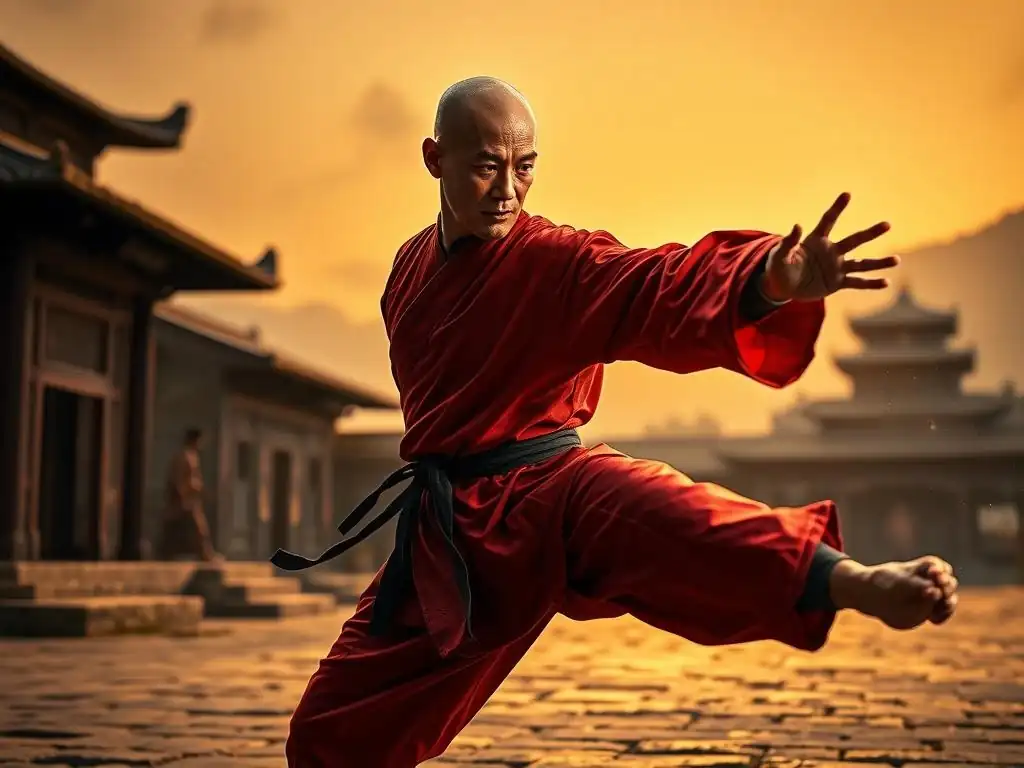
Welcome to Martial Arts Mastery, your gateway to the world's most compelling combat disciplines! Delve into the heart of martial arts, where tradition meets innovation. In this article, we confront a critical issue: the Shaolin Taolu teaching authenticity challenges faced in preserving these ancient forms. Can the true essence of Shaolin Taolu survive in the modern world? Explore the nuances, debates, and practical solutions as we unravel this complex question and invite you to consider how we can safeguard the legacy of these powerful techniques.
- Understanding Shaolin Taolu: A Foundation of Chinese Kung Fu
- The Core Challenges of Authenticity in Shaolin Taolu Teaching
- Factors Contributing to the Erosion of Authentic Shaolin Taolu
- Strategies for Preserving Authenticity in Shaolin Taolu Instruction
- The Importance of Qualified Instructors in Shaolin Taolu
- Practical Approaches to Teaching Authentic Shaolin Taolu
- Balancing Tradition and Modernity in Shaolin Taolu Training
- The Role of Shaolin Taolu in Self-Defense and Physical Conditioning
- Case Studies: Examples of Successful Shaolin Taolu Preservation
- Conclusion: The Ongoing Quest for Authentic Shaolin Taolu
-
Frequently Asked Questions
- What are the primary challenges in teaching authentic Shaolin Taolu today?
- How does MartialArtsMastery.org address the question of " Shaolin Taolu teaching authenticity"?
- What role does oral tradition play in maintaining the authenticity of Shaolin Taolu?
- How can instructors ensure they are not diluting the essence of Shaolin Taolu when teaching?
- What are some practical self-defense strategies derived from Shaolin Taolu, and how are they preserved?
- Final Reflection: The Enduring Spirit of Shaolin
- Unleash Your Inner Warrior: Embrace the Shaolin Legacy!
Understanding Shaolin Taolu: A Foundation of Chinese Kung Fu
Defining Shaolin Taolu: Forms, Sequences, and Combat Applications
Shaolin Taolu refers to the prearranged sequences of movements practiced within the Shaolin martial arts system. These forms, also known as patterns or sets, are not merely acrobatic displays but serve as comprehensive training manuals. Each Taolu is a carefully composed series of stances, footwork, hand strikes, kicks, joint locks, throws, and evasive maneuvers, designed to be practiced solo. The complexity varies greatly, from fundamental sets like the "Five Stance Form" (五步拳 - Wǔ Bù Quán) to intricate, weapon-based forms.
The primary purpose of Shaolin Taolu is multifaceted. It is a method for developing physical attributes such as strength, flexibility, balance, coordination, and endurance. Crucially, it is also the repository for the techniques and principles of Shaolin combat. By practicing Taolu, practitioners internalize the transitions between movements, understand the flow of energy (Qi), and learn the potential applications of each posture or sequence in a self-defense context. While modern interpretations sometimes emphasize performance, the historical foundation lies in practical martial skill development.
The Historical Significance of Shaolin Taolu in Shaolin Temple Training
Shaolin Taolu holds a central place in the history of the Shaolin Temple's martial arts tradition, which spans over 1,500 years. For centuries, these forms were the primary means by which the accumulated knowledge and techniques of the temple were preserved and transmitted from generation to generation. Monks dedicated years, often decades, to mastering these sets under the guidance of elder practitioners.
The development of Taolu was intrinsically linked to the temple's defensive needs and the monks' disciplined lifestyle. Forms were created or refined based on combat experience and philosophical understanding, serving not only as physical training but also as a form of moving meditation and discipline. Famous historical sets like the "Small Hong Fist" (小洪拳 - Xiǎo Hóng Quán) and "Big Hong Fist" (大洪拳 - Dà Hóng Quán) are considered foundational and have been practiced within the temple for hundreds of years, embodying the core principles of Shaolin Kung Fu.
Shaolin Taolu as a Cultural Heritage: Beyond Physical Techniques
Beyond its function as martial training, Shaolin Taolu is recognized as a significant piece of intangible cultural heritage. It embodies centuries of Chinese history, philosophy, and artistic expression. The movements often reflect principles from Chan Buddhism (which originated at Shaolin), such as mindfulness, discipline, and the integration of mind and body.
Furthermore, many Taolu sets are steeped in lore and history, sometimes named after historical events, mythological figures, or the masters who developed them. Practicing these forms connects the practitioner to a rich lineage and a unique cultural worldview. Understanding the historical context, the philosophical underpinnings, and the stories behind the movements is crucial for a truly authentic practice and is a key aspect often overlooked, contributing to Shaolin Taolu teaching authenticity challenges.
The Core Challenges of Authenticity in Shaolin Taolu Teaching
Dilution of Traditional Techniques: A Modern Problem of Interpretation
One of the most significant Shaolin Taolu teaching authenticity challenges today is the dilution of traditional techniques. As Shaolin Kung Fu has spread globally and commercialized, the subtle details and internal mechanics that give the movements their power and effectiveness are often lost. Techniques might be simplified, exaggerated for performance aesthetics, or stripped of their original combat applications.
For example, a block that traditionally involves precise body structure, rootedness, and internal force might be performed as a simple, weak arm wave. A powerful palm strike might become a superficial push. The intricate footwork designed for evasion or positioning might be replaced by simpler steps. This loss of detail fundamentally changes the nature and effectiveness of the Taolu, making it less of a martial art and more of a choreographed dance.
The Impact of Modern Training Methods on Shaolin Taolu's Original Intent
Modern training methods, while potentially offering benefits like efficiency, can sometimes conflict with the original intent of Shaolin Taolu. Traditional training emphasized long-term dedication, rigorous physical conditioning through bodyweight and isometric exercises, and a deep focus on internal energy (Qi) cultivation alongside external form. The goal was holistic development and practical martial skill.
Today, training might prioritize learning many forms quickly, focusing on external flashiness, speed, or acrobatic elements over rootedness, power generation, and understanding applications. Students might use modern gym equipment instead of traditional conditioning methods, or spend insufficient time on fundamental stances and basic techniques. This shift in focus alters the very feel and purpose of the training, moving away from the deep, integrated development that characterized traditional Shaolin practice.
Misinterpretation of Movements: Preserving Correct Form and Function
Another critical challenge in Shaolin Taolu teaching authenticity challenges is the misinterpretation of movements. Without proper guidance from a knowledgeable instructor steeped in the tradition, students can easily misunderstand the function or underlying principle of a technique within a form. A defensive posture might be performed with incorrect alignment, leaving the practitioner vulnerable. A movement intended to set up a joint lock might be executed without the necessary leverage or angle.
Consider the "pressing hand" movement (按手 - Àn Shǒu) found in many forms. If taught incorrectly, it might be performed as a weak downward push. Authentically, it involves rooted structure, coordinated body weight, and focused intent to disrupt an opponent's balance or energy. This misinterpretation of function turns a potentially powerful technique into an empty gesture, eroding the martial efficacy embedded within the Taolu.
Factors Contributing to the Erosion of Authentic Shaolin Taolu
The Influence of Commercialization on Shaolin Kung Fu
The global popularity of Shaolin Kung Fu has unfortunately led to significant commercialization, which often prioritizes profit and mass appeal over the preservation of authentic techniques and principles. Many schools and performance troupes emphasize flashy acrobatics, simplified forms, and short-term training programs that cannot possibly convey the depth of the art.
This market-driven approach creates a demand for speed, performance, and superficial attractiveness, which can dilute the rigorous, patient training required for authentic mastery. Instructors facing financial pressure may feel compelled to teach what sells, rather than what is traditionally correct. This commercial influence is a major factor contributing to Shaolin Taolu teaching authenticity challenges worldwide.
The Difficulty of Replicating Historical Training Environments
The traditional training environment within the Shaolin Temple was one of intense discipline, communal living, long hours of practice, and constant immersion in the art under the direct supervision of masters. Monks lived a life centered around cultivation – both martial and spiritual. This environment fostered deep focus, physical resilience, and the slow, meticulous absorption of knowledge through observation and repetition.
Replicating this level of immersion and discipline in a modern urban setting is extremely difficult. Contemporary students typically have limited time, face numerous external distractions, and come from cultures with different expectations regarding learning pace and lifestyle commitment. This gap between the historical environment and modern reality makes it challenging to transmit the art with the same depth and intensity, impacting Shaolin Taolu teaching authenticity.
The Role of Lineage and Transmission in Maintaining Authenticity
Historically, the authenticity of Shaolin Taolu was maintained through a strict lineage system and direct, personal transmission from master to disciple. Knowledge was passed down over years, often decades, through close mentorship, with the master constantly correcting subtle errors and guiding the student's internal development.
The breakdown of these strict lineage structures, the rise of large class sizes, and the lack of lifelong commitment from many modern students disrupt this traditional transmission process. Knowledge can become fragmented, incomplete, or misinterpreted when passed through less experienced or less dedicated individuals. The personal corrections and nuanced understanding gained through close mentorship are often lost, creating significant Shaolin Taolu teaching authenticity challenges.
Strategies for Preserving Authenticity in Shaolin Taolu Instruction
Emphasizing Foundational Principles and Body Mechanics
A crucial strategy for preserving authenticity in Shaolin Taolu instruction is to place a strong emphasis on foundational principles and body mechanics. Before learning complex forms, students must master the basic stances (e.g., Horse Stance, Bow Stance, Empty Stance), footwork patterns, hand shapes, and fundamental body alignment. These basics are the building blocks upon which all Shaolin techniques are built.
By dedicating significant time to rigorous fundamental training, instructors ensure that students develop the necessary physical structure, rootedness, and coordination. This allows them to perform Taolu movements with correct power generation, balance, and precision, rather than just mimicking external shapes. Mastering these fundamentals is essential for addressing Shaolin Taolu teaching authenticity challenges from the ground up.
Integrating Historical Context and Philosophical Understanding
To teach Shaolin Taolu authentically, instructors must integrate the historical context and philosophical understanding behind the movements. Students should learn about the origins of the forms, their names, the stories associated with them, and the influence of Chan Buddhism and traditional Chinese philosophy on the art.
Understanding the "why" behind the techniques – their combat applications, their connection to principles like Yin and Yang, emptiness and fullness, hard and soft – provides depth and meaning to the physical practice. This not only enriches the student's experience but also helps preserve the cultural and intellectual heritage embedded within the Taolu, preventing it from becoming a purely physical exercise devoid of its deeper significance.
Rigorous Training in Basic Skills and Conditioning
Authentic Shaolin Taolu training requires a high level of physical conditioning and mastery of basic skills. Instructors must incorporate rigorous conditioning exercises (stretching, strength training, endurance drills) and repetitive practice of fundamental techniques (basic punches, kicks, blocks) into the curriculum.
Without the physical capacity and fundamental skill base developed through dedicated basic training – such as holding stances for extended periods (e.g., 30 minutes or more for advanced students) or practicing basic strikes thousands of times – students cannot execute Taolu movements with the required power, speed, precision, or stamina. Prioritizing this foundational physical development is vital for overcoming Shaolin Taolu teaching authenticity challenges.
The Importance of Qualified Instructors in Shaolin Taolu
Identifying Authentic Lineages and Reputable Teachers
The quality of the instructor is paramount in preserving the authenticity of Shaolin Taolu. It is crucial for students to seek out teachers who have trained extensively within a recognized, traditional Shaolin lineage, ideally having spent significant time at the Shaolin Temple itself or with a master directly linked to it.
Identifying reputable teachers involves looking beyond flashy demonstrations. Seek instructors with a verifiable training history, a deep understanding that goes beyond performance, an emphasis on fundamentals and practical applications, and adherence to traditional ethics. Be cautious of those who promise quick mastery or focus solely on external appearance or acrobatics. Finding such qualified guidance is key to navigating Shaolin Taolu teaching authenticity challenges.
The Role of Mentorship and Direct Transmission
The traditional master-disciple relationship and direct transmission are invaluable for maintaining authenticity. A true master can observe a student's body structure, correct subtle errors in real-time, and pass on nuanced understanding that is difficult to convey through standardized methods or written materials alone.
This personal guidance, often cultivated over many years, allows the student to internalize the principles and techniques, developing the correct "feeling" and "intent" behind the movements, not just the external shape. Without this direct, personalized transmission, subtle but critical details essential for the art's effectiveness and authenticity can be lost.
Continuing Education and Research for Instructors
Even experienced instructors must remain committed to continuing education and research. The martial arts landscape is vast, and historical texts, rediscovered documents, or insights from other knowledgeable practitioners can shed new light on older practices.
Dedicated instructors actively seek to deepen their understanding of Shaolin history, philosophy, and technical details. This might involve studying historical manuals, connecting with other masters, or even engaging in academic research related to the art. By continuously refining their own knowledge base, instructors are better equipped to preserve and transmit the authentic essence of Shaolin Taolu to their students.
Practical Approaches to Teaching Authentic Shaolin Taolu
Slow and Deliberate Practice: Focusing on Precision
A highly effective practical approach to teaching authentic Shaolin Taolu is to emphasize slow and deliberate practice, especially in the initial stages. Students should be encouraged to perform movements slowly, focusing intently on body alignment, weight distribution, muscle engagement, breath coordination, and the precise trajectory of limbs.
Practicing slowly allows students to internalize the correct mechanics, develop heightened body awareness, and build the necessary structural integrity. Rushing through forms to learn them quickly leads to sloppy technique, reinforces errors, and prevents the development of true power and rootedness. Precision at a slow pace is the foundation for effective movement at speed.
Partner Drills and Applications: Understanding Combat Intent
To ensure Shaolin Taolu is understood as a martial art and not just a performance, incorporating partner drills and application practice is essential. Instructors should break down movements from the forms and have students practice them with a partner to understand their potential self-defense applications.
Examples include practicing a block from a form against a partner's simulated strike, drilling a joint lock sequence derived from a Taolu movement, or understanding how footwork patterns are used for evasion or closing distance. This hands-on application clarifies the combat intent behind the movements, preventing the forms from becoming abstract sequences and reinforcing their practical value.
Regular Assessment and Feedback: Maintaining Standards
Maintaining authenticity requires consistent evaluation and correction. Instructors must provide regular, detailed feedback to students, identifying and correcting errors in posture, movement mechanics, timing, and underlying intent. This can be done through formal assessments or informal corrections during class.
Without diligent correction, students will inevitably develop and solidify incorrect habits, leading to a divergence from authentic technique over time. This ongoing process of refinement is vital for ensuring that the standards of traditional Shaolin Taolu are upheld and that students are truly learning the art as it was intended.
Balancing Tradition and Modernity in Shaolin Taolu Training
Adapting Training Methods for Contemporary Students
While preserving tradition is key, successful Shaolin Taolu instruction in the modern world often requires adapting teaching methodologies to be accessible and effective for contemporary students. This might involve incorporating insights from modern sports science for conditioning, using visual aids like videos (for reference, not primary learning), or structuring classes to fit modern schedules.
This adaptation must be done carefully, ensuring that the core principles, techniques, and philosophical essence of Shaolin Kung Fu are not compromised. For instance, explaining the biomechanics of a technique using modern scientific terms might be helpful, but altering the technique itself for convenience would be detrimental to authenticity.
Maintaining the Essence of Shaolin Kung Fu in a Changing World
The "essence" of Shaolin Kung Fu includes its core principles: rootedness, flexibility, coordinated body movement, internal power generation, practical combat effectiveness, and the underlying philosophical approach rooted in Chan Buddhism. Maintaining this essence is paramount in a changing world.
While external forms may see minor variations over centuries or across different lineages, the fundamental principles and the spirit of diligent, disciplined training must be preserved. This involves ensuring that teaching emphasizes not just the external shape of the movements but also the internal mechanics, energy flow, and practical application, addressing Shaolin Taolu teaching authenticity challenges head-on.
The Future of Authentic Shaolin Taolu Instruction
The future of authentic Shaolin Taolu instruction depends on the dedication of practitioners and instructors worldwide. Preservation efforts will likely rely on continued rigorous training within traditional frameworks, international collaboration among reputable schools, the strategic use of technology for documentation and scholarly study (not as a replacement for direct instruction), and a persistent emphasis on quality and depth over commercial quantity.
The quest for authentic Shaolin Taolu is ongoing. The future lies in fostering a global community committed to upholding the art's integrity through diligent practice, historical research, ethical transmission, and a deep respect for its rich heritage, ensuring it thrives beyond fleeting trends.
The Role of Shaolin Taolu in Self-Defense and Physical Conditioning
The Practical Applications of Taolu Movements in Combat
While Shaolin Taolu is not a sparring system itself, it contains a vast and sophisticated library of combat techniques. Within the flowing sequences are embedded strikes, blocks, joint locks, throws, sweeps, and evasions. Each movement, when understood correctly, has a potential application in a self-defense scenario.
Practicing Taolu helps practitioners develop muscle memory, balance, coordination, and the ability to transition smoothly between techniques. By isolating movements from the forms and practicing them in partner drills (as mentioned earlier), students learn how to apply these techniques effectively under pressure. Taolu builds the physical and mental foundation necessary for practical combat effectiveness.
The Benefits of Taolu Training for Health and Fitness
Beyond its martial applications, Shaolin Taolu training offers significant benefits for physical conditioning and overall health. The demanding stances and movements build exceptional leg and core strength. The dynamic stretching and flexibility exercises improve range of motion. The continuous movement enhances cardiovascular endurance and stamina.
Furthermore, Taolu practice improves balance, coordination, agility, and proprioception (awareness of one's body in space). The focused, meditative aspect of practicing forms can also help reduce stress and improve mental clarity. It is a holistic system that promotes physical fitness, mental discipline, and overall well-being.
Shaolin Taolu as a Comprehensive Martial Arts System
Shaolin Taolu should be viewed as a comprehensive system for developing a well-rounded martial artist. It integrates physical conditioning, a library of combat techniques, mental discipline, focus, and a deep connection to cultural and philosophical principles into a single practice methodology.
Simply learning the external movements misses the true value. Authentic Shaolin Taolu training develops strength, skill, and character simultaneously. It is a path of self-cultivation that addresses both the external 'hard' aspects of martial arts and the internal 'soft' aspects, making it a remarkably complete system for personal development and self-defense.
Case Studies: Examples of Successful Shaolin Taolu Preservation
Case Study: Shi Yan Ming and the USA Shaolin Temple
An notable example of preserving authentic Shaolin Taolu in a Western context is the USA Shaolin Temple, founded in New York City in 1994 by Shifu Shi Yan Ming. A 34th-generation Shaolin Temple monk who trained extensively at the original temple, Shifu Yan Ming brought the traditional methods and philosophy to the United States.
His approach emphasizes rigorous foundational training, demanding physical conditioning, deep study of Chan philosophy, and understanding the practical combat applications of the movements. The school requires significant dedication and long-term commitment from students, focusing on quality and depth over speed or performance flashiness. This model demonstrates that authentic transmission is possible outside of China with dedicated leadership and adherence to traditional principles, despite the inherent Shaolin Taolu teaching authenticity challenges in a foreign environment.
Case Study: The Shaolin Temple's Efforts in Documenting and Preserving Taolu
The original Shaolin Temple in China has undertaken significant efforts, particularly since the late 20th and early 21st centuries, to document and preserve its vast collection of Taolu. Recognizing the risk of knowledge loss due to historical upheaval and modernization, the temple has systematically recorded many forms.
These efforts include creating detailed written manuals, producing video recordings, and developing digital archives of various Taolu sets. The purpose is to standardize forms for teaching, prevent techniques from being forgotten, and provide resources for scholarly study and future transmission. These institutional initiatives are crucial for the long-term preservation of the art's authenticity on a large scale.
Analyzing the Success Factors in these Preservation Efforts
Analyzing successful preservation efforts like those of Shifu Shi Yan Ming and the Shaolin Temple reveals common factors. These include a direct lineage connection to the source, a strong emphasis on fundamental training and rigorous conditioning, the integration of philosophy and practical application, the demand for long-term commitment from practitioners, and proactive efforts in documentation and transmission.
Successful preservation requires a multi-faceted approach that combines the best of traditional training methodologies with strategic adaptation for the modern world. It relies on the dedication of individuals and institutions committed to upholding the integrity and depth of Shaolin Taolu against the pressures of dilution and commercialization.
Conclusion: The Ongoing Quest for Authentic Shaolin Taolu
The Responsibility of Practitioners and Instructors
The preservation of authentic Shaolin Taolu is not solely the responsibility of institutions or famous masters; it rests on the shoulders of every practitioner and instructor. Students have a responsibility to seek out qualified teachers, train diligently, and cultivate patience and humility. They must prioritize understanding and internalizing the art over simply collecting forms or seeking quick results.
Instructors, in turn, have a profound responsibility to teach with integrity, prioritizing authenticity, foundational principles, and the art's holistic nature over commercial gain or popularity. They must commit to their own continuous learning and ethical transmission. Through conscientious effort at every level, the challenges to Shaolin Taolu teaching authenticity can be met.
The Enduring Legacy of Shaolin Kung Fu
Despite the challenges of modernization, commercialization, and transmission, the enduring legacy of Shaolin Kung Fu, as embodied in its Taolu, remains powerful. Its resilience over centuries speaks to the depth and effectiveness of its system. The holistic approach – integrating physical, mental, and spiritual cultivation – continues to resonate with people seeking more than just physical exercise.
The wealth of knowledge contained within authentic Shaolin Taolu offers profound benefits for self-defense, health, and personal development. As long as there are dedicated individuals committed to rigorous training and ethical teaching, the core principles and practices of this ancient art will continue to inspire and transform lives.
Resources for Further Study of Shaolin Taolu and Authentic Training
For those interested in further exploring Shaolin Taolu and authentic training, seeking out reputable schools with verifiable lineages is paramount. While online resources and books exist, they should be used to supplement, not replace, direct instruction from a qualified teacher.
Look for materials authored or endorsed by recognized Shaolin masters or institutions. Be critical of sources that overemphasize performance, promise rapid mastery, or lack clear lineage information. Visiting the Shaolin Temple itself or associated cultural centers, if possible, can also provide valuable insight. The journey towards authentic Shaolin Taolu training is a lifelong commitment to diligent practice and continuous learning.
Frequently Asked Questions
What are the primary challenges in teaching authentic Shaolin Taolu today?
The primary challenges involve balancing historical accuracy with modern training methodologies, ensuring students understand the philosophical underpinnings, and preventing dilution of techniques through misinterpretation.
How does MartialArtsMastery.org address the question of " Shaolin Taolu teaching authenticity"?
MartialArtsMastery.org addresses this by providing detailed historical overviews, exploring the philosophical context of Taolu, and offering training tips geared towards maintaining authenticity.
What role does oral tradition play in maintaining the authenticity of Shaolin Taolu?
Oral tradition is crucial, as it transmits nuanced details and historical context often absent from written records, ensuring a deeper understanding of the art.
How can instructors ensure they are not diluting the essence of Shaolin Taolu when teaching?
Instructors must prioritize thorough research, seek guidance from reputable sources, and emphasize the importance of understanding the underlying principles, not just the movements.
What are some practical self-defense strategies derived from Shaolin Taolu, and how are they preserved?
Practical self-defense strategies are preserved by focusing on the combative applications of Taolu movements, emphasizing realistic scenarios, and ensuring that training includes sparring and application drills.
Final Reflection: The Enduring Spirit of Shaolin
The journey through the challenges of preserving authenticity in Shaolin Taolu teaching reveals a truth far deeper than mere technique. It highlights the delicate balance between honoring ancient traditions and adapting to the evolving needs of modern students. The struggle to maintain the integrity of Shaolin's martial arts heritage in a world of globalization and instant gratification is a testament to the enduring power of dedication and respect.
This topic resonates profoundly because it speaks to the universal human desire to connect with something meaningful and lasting. The preservation of Shaolin Taolu isn't just about preserving movements; it's about preserving a philosophy, a history, and a way of life. The responsibility to pass this on rests on the shoulders of teachers and students alike. To truly learn Shaolin, you must not only master the form, but also understand the heart and mind behind it.
This quote encapsulates the essence of the challenge: it's not enough to simply mimic the movements; one must embody the spirit of Shaolin.
As we conclude this exploration, I invite you to consider your own role in preserving authenticity, not just in martial arts, but in all aspects of your life. How can you honor the traditions that have shaped you while embracing the opportunities of the present? Let the spirit of Shaolin inspire you to seek depth, meaning, and genuine connection in all that you do, ensuring that the wisdom of the past continues to illuminate the path forward.
Unleash Your Inner Warrior: Embrace the Shaolin Legacy!
Thank you for delving into the heart of Shaolin Taolu and its modern-day challenges. We hope you’ve gained valuable insights into preserving this ancient art. Now, it’s time to translate knowledge into action.
Here's how you can contribute to the enduring legacy of Shaolin:
- Commit to rigorous practice: Dedicate yourself to mastering the fundamentals of a chosen Shaolin Taolu form. Consistent effort is key to understanding and preserving its authentic essence.
- Explore historical archives: Delve deeper into the art’s rich history through research; engage with documentation and expert commentary to expand your knowledge.
- Share your Shaolin journey: Connect with fellow enthusiasts online or in person to share your experiences, insights, and passion for authentic Shaolin practices.
Ready to take your first step towards preserving the Shaolin legacy today?