
Lian Huan Quan (Continuous Fist): Unlocking Flow and Connection in Shaolin Kung Fu

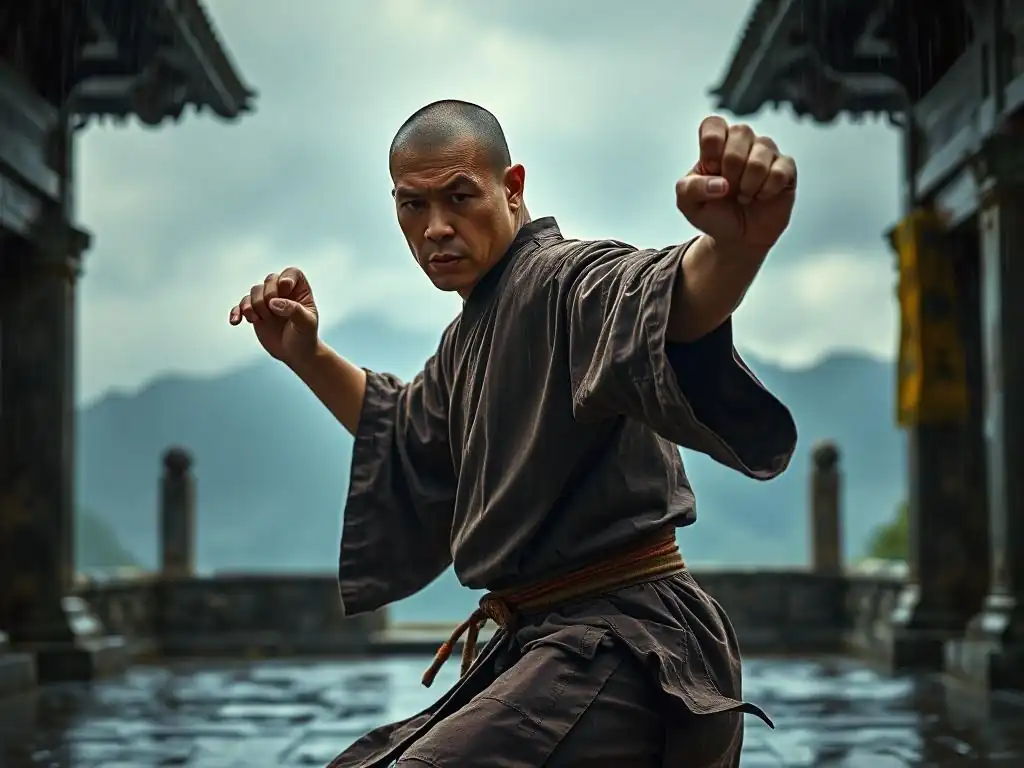
Welcome to Martial Arts Mastery, your gateway to unlocking the secrets of combat disciplines worldwide. Prepare to delve into the rich tapestry of martial arts history, technique, and philosophy. Today, we explore the captivating world of Shaolin Kung Fu, specifically its emphasis on fluid motion and interconnected sequences. Ever wondered how Lian Huan Quan, the "Continuous Fist" form, cultivates this seamless flow? Join us as we dissect its intricate movements and uncover the profound principles that underpin Shaolin's legendary power and grace.
- Xiao Hong Quan (Small Red Fist): Foundational Form of Shaolin Kung Fu
- Introduction to Xiao Hong Quan: The Cornerstone of Shaolin Training
- Historical Context and Origins of Xiao Hong Quan
- Key Principles and Techniques of Xiao Hong Quan
- Analyzing the Structure and Sequence of Xiao Hong Quan
- Benefits of Practicing Xiao Hong Quan for Martial Arts Mastery
- Training Methods and Drills for Xiao Hong Quan
- Xiao Hong Quan vs. Other Shaolin Forms: A Comparative Analysis
- Mastering Xiao Hong Quan: Tips and Strategies for Advanced Practice
- Conclusion: The Enduring Legacy of Xiao Hong Quan in Shaolin Kung Fu
-
Frequently Asked Questions
- What is Lian Huan Quan and how does it relate to Shaolin Kung Fu flow movement?
- How does practicing Lian Huan Quan contribute to self-defense strategies?
- What are some key philosophical underpinnings of Lian Huan Quan within the broader Shaolin Kung Fu tradition?
- How does Lian Huan Quan differ from other martial arts styles in its approach to flow movement?
- What are some training tips for mastering the flow movement in Lian Huan Quan?
- Final Reflection: Embracing the Unbroken Circle
- Unleash Your Inner Flow: Step into the Lian Huan Quan Journey!
Xiao Hong Quan (Small Red Fist): Foundational Form of Shaolin Kung Fu
Introduction to Xiao Hong Quan: The Cornerstone of Shaolin Training
What is Xiao Hong Quan? Exploring the Fundamental Form
Xiao Hong Quan, meaning "Small Red Fist," stands as one of the most ancient and fundamental forms (Taolu) within the vast curriculum of traditional Shaolin Kung Fu. It is not merely a sequence of movements but a comprehensive primer designed to introduce practitioners to the core principles, stances, and basic techniques that underpin the entire Shaolin system. Often considered the entry point into the formalized training of Shaolin forms, Xiao Hong Quan lays the groundwork for strength, stability, and coordination essential for all subsequent practice. It emphasizes solid structure, correct body mechanics, and the development of rooted power.
This foundational form typically comprises a relatively short sequence, often cited as having around 20 to 30 distinct movements depending on the specific lineage or school. Despite its brevity and apparent simplicity, mastering Xiao Hong Quan requires significant dedication to detail. Each stance must be stable, each block firm, and each strike delivered with intent. The form serves as a physical alphabet, teaching the practitioner the basic building blocks of Shaolin technique before they move on to combine these elements into the more complex and dynamic sequences that characterize advanced Shaolin Kung Fu flow movement.
The Significance of Basic Training in Shaolin Kung Fu Development
The emphasis placed on basic training within Shaolin Kung Fu cannot be overstated, and Xiao Hong Quan is the embodiment of this philosophy. Before practitioners can hope to execute complex aerial maneuvers, intricate joint locks, or achieve the seamless Shaolin Kung Fu flow movement seen in advanced forms, they must first build a robust physical and mental foundation. Basic training, as encapsulated by forms like Xiao Hong Quan, focuses on developing fundamental attributes such as muscular strength, particularly in the legs and core, flexibility in the joints and ligaments, and overall body coordination.
Furthermore, basic training instills crucial mental discipline. The repetitive nature of practicing stances, single techniques, and foundational forms cultivates patience, perseverance, and the ability to focus intensely on detail. This mental fortitude is just as vital as physical prowess in the long journey of martial arts mastery. Without a solid grounding in these basics, attempts at more advanced techniques or achieving the fluid Shaolin Kung Fu flow movement will lack power, stability, and practical effectiveness. The body must be conditioned and the mind trained to receive and execute the more complex instructions that follow.
Xiao Hong Quan's Role as the First Form (Taolu) Taught
In the traditional Shaolin curriculum, Xiao Hong Quan holds a unique and critical position as one of the very first, if not the first, formalized empty-hand form (Taolu) taught to new students. Its placement at the beginning of the training path is deliberate, serving as the bridge between fundamental conditioning exercises (like stances and basic hand drills) and the vast library of Shaolin forms that follow. It provides a structured sequence where students can begin to apply the individual basic techniques they have learned within a connected, albeit simple, pattern.
By learning Xiao Hong Quan first, students are introduced to the concept of combining defensive and offensive movements, transitioning between stances, and coordinating breath with action in a practical context. This initial form helps students develop body awareness and spatial orientation necessary for performing longer and more intricate forms.
It sets the standard for precision and power generation that will be expected in all subsequent training. Mastering Xiao Hong Quan is considered a prerequisite, proving that a student has grasped the essential physical and mental discipline required before progressing to forms like Da Hong Quan or those exhibiting a more pronounced Shaolin Kung Fu flow movement.
Historical Context and Origins of Xiao Hong Quan
Tracing the Roots of Xiao Hong Quan in Shaolin Temple History
Pinpointing the exact origin date of Xiao Hong Quan within the long and storied history of the Shaolin Temple is challenging, as many early martial arts developments were transmitted orally or through fragmented texts. However, historical accounts and martial arts genealogies suggest that foundational forms like Xiao Hong Quan have existed in some iteration for centuries, likely developing during the Ming (1368-1644) or Qing (1644-1912) dynasties as the Shaolin Temple solidified its martial arts curriculum. It is believed to have evolved from earlier, even more basic training methods used by the monks for physical conditioning and self-defense.
Xiao Hong Quan represents the distillation of core Shaolin fighting principles into a compact, teachable sequence. While specific names and sequences might have varied over time and across different halls within the temple, the fundamental techniques and strategic concepts embodied in the "Small Red Fist" have remained remarkably consistent. Its development is intrinsically linked to the practical needs of the monks for both physical fitness and effective combat skills in an often turbulent historical environment, predating the more elaborate or performance-oriented Shaolin Kung Fu flow movement forms that emerged later.
Standardization and Transmission of the Small Red Fist Style
Over the centuries, the techniques and structure of Xiao Hong Quan underwent processes of refinement and standardization within the Shaolin Temple. This was often facilitated by prominent abbots and martial monks who codified existing practices to ensure consistent teaching and transmission across generations. While minor variations might exist between different Shaolin lineages or those who left the temple to teach elsewhere, the core sequence and principles of the standard Xiao Hong Quan taught today share a common root.
Key figures in Shaolin history, although not specifically credited with creating Xiao Hong Quan, were instrumental in preserving and transmitting it. Masters like Abbot Shi Xing Zheng (1906-1987) played a vital role in the modern era, helping to revive and standardize many traditional Shaolin forms, including Xiao Hong Quan, after periods of disruption.
The transmission typically occurred directly from master to disciple within the monastic environment, ensuring the techniques and underlying philosophy were passed down with fidelity. This consistent transmission has allowed Xiao Hong Quan to remain a cornerstone, preparing countless students for the development of more advanced skills, including the dynamic Shaolin Kung Fu flow movement.
Legendary Practitioners and Masters of Xiao Hong Quan
While Xiao Hong Quan is a foundational form, mastery of it is a hallmark of a skilled Shaolin practitioner. Legendary figures in Shaolin history, though often celebrated for their expertise in more complex or specialized techniques, undoubtedly achieved profound mastery of forms like Xiao Hong Quan as the basis of their skill. For example, the famed monk San Da Chan (circa late Qing Dynasty), known for his exceptional fighting ability, would have certainly built his formidable skills upon a perfect understanding and execution of basic forms like Xiao Hong Quan.
In more recent history, masters like Shi De Yang, a prominent disciple of Shi Xing Zheng, teach Xiao Hong Quan as the essential first step, emphasizing its critical role in developing genuine Shaolin skill. While not "legendary practitioners of Xiao Hong Quan" in the sense of specializing only in this form, these masters' ability to perform and teach Xiao Hong Quan with deep understanding demonstrates its enduring importance.
Their own high level of skill in the broader Shaolin system, including advanced techniques and fluid Shaolin Kung Fu flow movement, is a direct testament to the effectiveness of starting with and mastering these fundamental building blocks.
Key Principles and Techniques of Xiao Hong Quan
Understanding the Core Movements: Punches, Kicks, and Blocks
Xiao Hong Quan is a curriculum in miniature, introducing practitioners to the fundamental offensive and defensive techniques of Shaolin Kung Fu. The form incorporates a variety of basic hand techniques, including the straight punch (冲拳, chōng quán), the block punch (格挡拳, gé dǎng quán), and sometimes palm strikes (掌, zhǎng). These are executed from stable stances, emphasizing linear power and directness. Blocking techniques are equally fundamental, featuring movements like the outward block (外摆手, wài bǎi shǒu), downward block (下砸手, xià zá shǒu), and parries, designed to deflect incoming attacks effectively and efficiently.
Basic kicking techniques are also introduced, typically involving low to mid-level kicks such as the front kick (正踢腿, zhèng tī tuǐ) or a simple side kick (侧踢腿, cè tī tuǐ). These movements are designed to build leg strength, balance, and hip rotation.
The focus in Xiao Hong Quan is not on elaborate or high-flying techniques, but on the precise execution of these core movements, understanding their immediate practical application, and ensuring they are rooted in a strong, stable foundation. Mastering these basic actions is the first step towards developing the coordinated power necessary for more complex techniques and achieving a fluid Shaolin Kung Fu flow movement later on.
The Importance of Correct Posture and Stance in Xiao Hong Quan
Correct posture and stable stances are arguably the most critical principles emphasized in Xiao Hong Quan. Forms like the Horse Stance (马步, mǎ bù), Bow Stance (弓步, gōng bù), and Empty Stance (虚步, xū bù) are foundational and appear repeatedly throughout the sequence. Maintaining the correct height, width, and alignment in each stance is paramount, as it provides the necessary base for generating power, absorbing force, and transitioning effectively between movements. A weak stance compromises every technique executed from it.
Practicing these stances within the context of Xiao Hong Quan helps develop immense leg strength, improves balance, and teaches the practitioner how to sink their weight and connect their body to the ground. This rootedness is essential not only for delivering powerful strikes and blocks but also for developing the stability and control required for the dynamic transitions and continuous motion characteristic of advanced Shaolin Kung Fu flow movement. The phrase "the roots are in the feet" is a guiding principle, and Xiao Hong Quan directly trains this concept.
Developing Basic Power Generation (Fa Jing)
Xiao Hong Quan introduces the initial concepts of Fa Jing (发劲), or explosive power generation, although in its most fundamental form. Unlike the nuanced, whip-like Fa Jing found in more advanced forms or internal styles, the power generation in Xiao Hong Quan is primarily focused on coordinating body weight, skeletal alignment, and muscular contraction to deliver force. This involves sinking the weight into the stance, rotating the waist, and extending the limb with synchronized breath.
For example, executing a straight punch from a solid bow stance involves driving power from the back leg, through the hips and torso rotation, and channeling it into the arm. This teaches the student that power does not come solely from the arm muscles but from the entire body working as a unified unit.
While the explosive release might be less pronounced than in higher-level techniques, the fundamental principle of generating power from the ground up and through body integration is firmly established in Xiao Hong Quan, providing the basis for developing more sophisticated Fa Jing and contributing to the powerful execution within Shaolin Kung Fu flow movement.
Coordinating Breath with Movement for Efficiency
The coordination of breath with movement is a subtle yet vital element introduced in Xiao Hong Quan. While not as overtly emphasized as in some internal martial arts, conscious breathing is fundamental to efficient and powerful execution in Shaolin Kung Fu. Generally, exhalation is coordinated with the execution of techniques (like strikes or blocks) to add power and expel tension, while inhalation occurs during transitions or preparation phases.
In Xiao Hong Quan, students are encouraged to breathe naturally but with awareness, ensuring that they are not holding their breath during strenuous movements. Learning to synchronize breath with the physical actions helps to regulate energy, maintain stamina throughout the form, and improve the fluidity of transitions.
This early practice of breath control lays the groundwork for the more sophisticated breathwork required for internal power development and the sustained, dynamic Shaolin Kung Fu flow movement found in advanced forms. It teaches the body and mind to work in harmony, making each technique more effective and the overall form more cohesive.
Analyzing the Structure and Sequence of Xiao Hong Quan
Deconstructing the Form: Sections and Their Significance
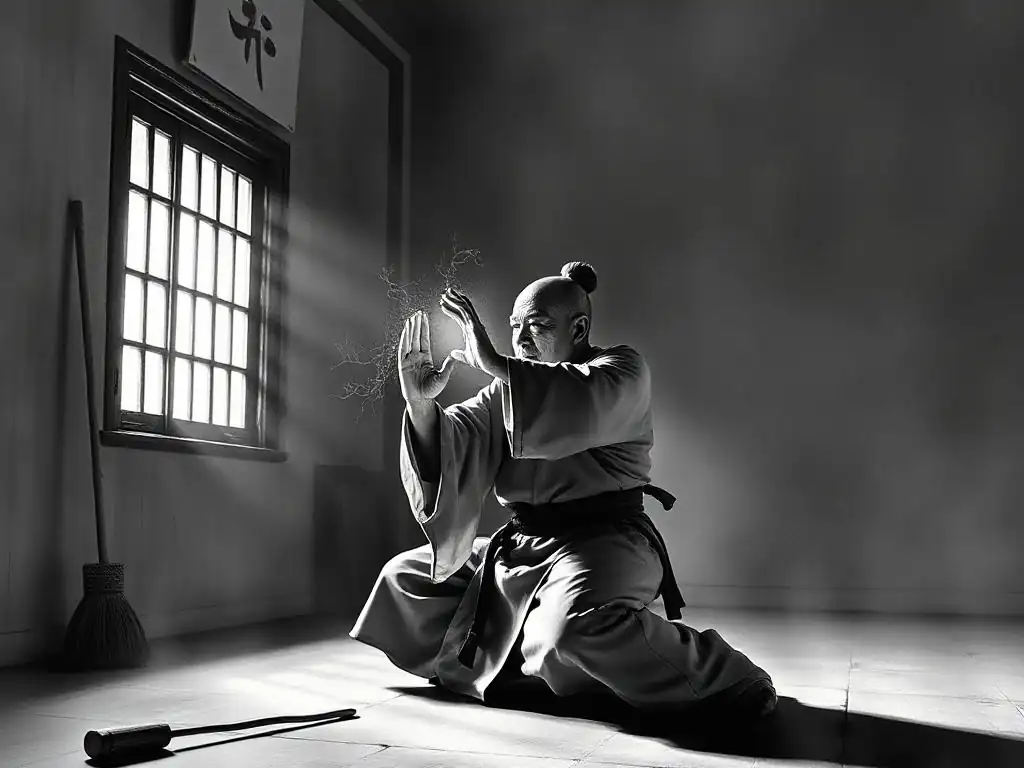
Xiao Hong Quan, despite its relative brevity, is typically structured into several distinct sections, often marked by changes in direction or a brief pause. While the exact number and demarcation of sections can vary slightly between lineages, a common structure might involve an opening sequence establishing fundamental stances, followed by sections focusing on linear movements (advancing and retreating with strikes and blocks), perhaps a section involving turns and directional changes, and concluding with a finishing sequence.
For instance, a common pattern involves moving forward, executing a series of punches and blocks, turning to address a different direction with similar techniques, and then concluding.
Each section serves a specific pedagogical purpose. The initial section establishes the practitioner's foundation and readiness. Subsequent sections introduce movement through space while maintaining structural integrity. Turns challenge balance and coordination during transitions. The concluding section often reinforces a strong finishing stance and a sense of completeness. Analyzing these sections helps students understand the flow and logic of the form, seeing how basic techniques are strung together to form practical defensive and offensive sequences, providing a rudimentary understanding of how to connect movements, a precursor to developing Shaolin Kung Fu flow movement.
Identifying Key Combat Applications in Xiao Hong Quan Movements
Every movement in traditional Shaolin forms, including the seemingly simple ones in Xiao Hong Quan, has underlying combat applications. While the form is primarily for solo training, the sequences simulate defensive and offensive scenarios. For example, the combination of a downward block followed by a punch can be interpreted as defending against a low attack (like a kick) and immediately counter-attacking. An outward block followed by a strike could be defending against an incoming punch to the head or body and simultaneously attacking.
Stances themselves have applications; the bow stance provides a stable platform for forward power, while the empty stance allows for quick changes in weight and direction. Even simple transitions between stances contain defensive footwork or positioning. Identifying these applications helps the practitioner understand the "why" behind each movement, moving beyond mere choreography to appreciate the practical self-defense strategies embedded within the form. This practical understanding is crucial for making the techniques effective in application and contributes to the intelligent execution required for genuine Shaolin Kung Fu flow movement.
Common Mistakes and How to Avoid Them in Xiao Hong Quan Practice
Practitioners learning Xiao Hong Quan often encounter common pitfalls. One frequent mistake is failing to sink the weight adequately into stances, resulting in a high, unstable base. This can be corrected by consciously lowering the hips, ensuring the weight is distributed correctly (e.g., 70/30 in a bow stance), and practicing holding stances for extended periods. Another error is relying solely on arm strength for strikes and blocks instead of engaging the whole body; this is addressed by focusing on hip rotation and driving power from the legs and core during technique execution.
Lack of coordination between breath and movement is also common; students might hold their breath or breathe irregularly. This is improved by mindful practice, consciously exhaling on effort and inhaling during transitions, gradually making it a natural part of the form. Finally, rushing through movements or lacking focus leads to sloppy technique and missed details. This requires cultivating patience and discipline, emphasizing quality over speed, and practicing each movement slowly and deliberately before attempting to increase tempo. Avoiding these mistakes is vital for building the correct foundation necessary for developing effective Shaolin Kung Fu flow movement later.
Benefits of Practicing Xiao Hong Quan for Martial Arts Mastery
Building a Solid Foundation in Shaolin Kung Fu Principles
Practicing Xiao Hong Quan is synonymous with building the bedrock of Shaolin Kung Fu. It systematically introduces the fundamental principles that govern all higher-level techniques and forms. These principles include rootedness in stances, proper body alignment for structural integrity, coordinated power generation from the ground up, the synergy of offense and defense, and the integration of breath with movement.
Without a deep understanding and physical embodiment of these basics through forms like Xiao Hong Quan, a practitioner's progress in Shaolin Kung Fu will be severely limited. Trying to learn advanced forms or engage in sparring without this foundation is akin to attempting complex calculus without understanding basic arithmetic. Xiao Hong Quan ensures that the fundamental 'language' of Shaolin is learned correctly from the start, making the acquisition of more complex skills, including the dynamic Shaolin Kung Fu flow movement, significantly more achievable and effective.
Developing Strength, Flexibility, and Coordination
Xiao Hong Quan is a comprehensive physical conditioning tool disguised as a martial arts form. Regular practice significantly enhances physical attributes essential for martial arts. The low stances and dynamic transitions build formidable leg strength and endurance, crucial for stability and mobility. The stretching inherent in many movements, combined with proper warm-ups, improves flexibility in the hips, shoulders, and spine.
The sequential nature of the form, requiring the execution of multiple techniques while moving and changing direction, greatly improves overall body coordination, balance, and proprioception (awareness of one's body in space). A practitioner consistently training Xiao Hong Quan will notice tangible improvements in their physical capabilities – stronger legs, more flexible joints, and better control over their body's movements. These physical developments are indispensable for executing the complex and varied movements found in advanced Shaolin Kung Fu flow movement.
Cultivating Discipline and Mental Focus
Beyond the physical benefits, Xiao Hong Quan is a powerful tool for cultivating mental discipline and focus. The requirement for precise execution of each movement, the need to remember the sequence, and the emphasis on consistent, dedicated practice instill patience and perseverance. Repeating the form numerous times, striving for perfection in every detail, trains the mind to stay present and concentrate on the task at hand, filtering out distractions.
This mental training is invaluable, not only in martial arts but in life. It builds resilience, improves concentration, and develops a strong work ethic. The discipline learned through the rigorous practice of Xiao Hong Quan translates directly into the ability to tackle more challenging forms and training methods. This focused, disciplined approach is absolutely necessary for achieving the high level of skill and awareness required to execute authentic Shaolin Kung Fu flow movement effectively and mindfully.
Preparing for More Advanced Forms and Combat Applications
Xiao Hong Quan serves as the essential gateway to the rest of the Shaolin Kung Fu curriculum. The principles, techniques, and physical attributes developed through its practice are directly transferable to more advanced forms and combat applications. For instance, the stances learned are the same stances used in Da Hong Quan or forms like Pao Chui (Cannon Fist), albeit often with more dynamic transitions. The basic punches and blocks are the building blocks for more intricate hand techniques and combinations.
Mastering Xiao Hong Quan ensures that when a student encounters a more complex form featuring rapid transitions, multiple strikes in sequence, or subtle internal power generation, they possess the fundamental stability, power, and body control to learn it effectively. It prepares the body and mind for the increased demands of forms that emphasize continuous motion and sophisticated connections between techniques – in essence, it builds the engine for developing a true Shaolin Kung Fu flow movement. It also provides a vocabulary of techniques that can be applied and adapted in practical self-defense scenarios.
Training Methods and Drills for Xiao Hong Quan
Warm-up Exercises and Flexibility Training for Xiao Hong Quan
Before practicing Xiao Hong Quan, a thorough warm-up is essential to prepare the body and prevent injury. This typically involves light cardio (like jogging in place or jumping jacks) for 5-10 minutes to raise the heart rate and warm the muscles. This should be followed by dynamic stretching, such as arm circles, leg swings, torso twists, and hip rotations, focusing on movements that mimic those found in the form.
Specific flexibility training targeting areas crucial for low stances and wide movements is also important. This includes stretches for the hamstrings, quadriceps, hip flexors, and groin. Holding static stretches for 20-30 seconds after the muscles are warm can improve range of motion necessary for deep stances and powerful kicks. Example stretches include seated forward bends, butterfly stretch, lunges, and shoulder rotations. Proper preparation ensures the body can execute Xiao Hong Quan's movements safely and effectively, facilitating the development of the physical capacity needed for Shaolin Kung Fu flow movement.
Basic Stance Training and Footwork Drills
Dedicated practice of foundational stances is non-negotiable when training Xiao Hong Quan. This involves holding stances like the Horse Stance, Bow Stance, and Empty Stance for increasingly longer durations, starting with maybe 30 seconds and working up to several minutes per stance. Focus should be on maintaining correct alignment, sinking the weight, and relaxing the upper body.
Footwork drills involve practicing the transitions between these stances without executing techniques. This includes stepping forward into a Bow Stance, retreating into an Empty Stance, turning in a Horse Stance, and shifting weight smoothly. Drills can also involve simple linear or lateral steps used in the form. Practicing stance work and transitions separately builds the leg strength, balance, and coordination needed for the dynamic movements within Xiao Hong Quan and provides the fundamental footwork patterns that underpin effective Shaolin Kung Fu flow movement.
Partner Drills for Blocking and Striking
While Xiao Hong Quan is a solo form, its techniques are derived from combat applications. Partner drills help bridge the gap between solo practice and practical use. Simple drills can involve one partner throwing a basic, pre-arranged punch or kick, and the other practicing the corresponding block from Xiao Hong Quan, focusing on timing, distance, and generating power upon impact.
Another type of drill involves one partner holding a pad or focus mitt, and the other practicing strikes from the form (like straight punches or block punches), emphasizing proper body mechanics and Fa Jing. These drills allow practitioners to feel the application of the techniques, receive feedback on their power and accuracy, and develop a sense of timing and distance relative to an opponent. While basic, these partner drills reinforce the combat effectiveness of Xiao Hong Quan's movements and contribute to the development of practical skill that informs effective Shaolin Kung Fu flow movement in application.
Solo Practice and Form Refinement
The majority of Xiao Hong Quan training involves solo practice of the form itself. This begins with learning the sequence of movements accurately, focusing initially on correct posture, stance, and technique execution at a slow, deliberate pace. As the sequence is memorized and basic accuracy is achieved, practice shifts towards refining the details.
Refinement involves focusing on the connection between movements, ensuring smooth transitions, coordinating breath, and gradually increasing speed and power while maintaining structural integrity. Practitioners should practice the form repeatedly, paying attention to feedback from their own body – checking stance height, hip rotation, shoulder relaxation, etc. Filming oneself can be a useful tool for identifying areas needing improvement. Consistent, mindful solo practice is the primary method for internalizing Xiao Hong Quan and developing the foundation necessary for genuine Shaolin Kung Fu flow movement.
Xiao Hong Quan vs. Other Shaolin Forms: A Comparative Analysis
Comparing Xiao Hong Quan with Da Hong Quan (Big Red Fist)
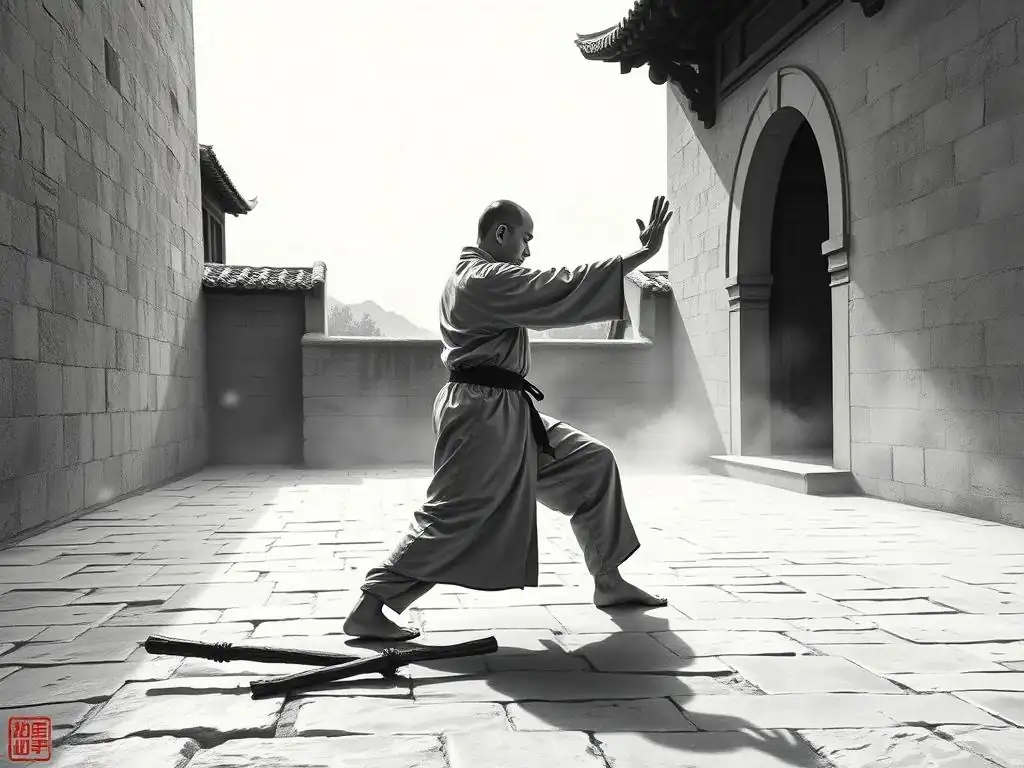
Da Hong Quan, or "Big Red Fist," is often considered the direct progression from Xiao Hong Quan within the Shaolin curriculum. While sharing the fundamental principles and many basic techniques, Da Hong Quan is significantly longer and more complex. It builds upon the stances and movements of Xiao Hong Quan but introduces more intricate combinations, faster transitions, and a wider range of techniques, including more dynamic footwork and body evasions.
Think of Xiao Hong Quan as the basic grammar and vocabulary, while Da Hong Quan is the first essay. Xiao Hong Quan establishes the core mechanics; Da Hong Quan applies them in more varied and extended sequences. The power generation in Da Hong Quan is often more developed and requires greater coordination. While Xiao Hong Quan focuses heavily on rooted stability and clear separation of techniques, Da Hong Quan begins to introduce more continuous motion, hinting at the beginnings of Shaolin Kung Fu flow movement by linking sequences more seamlessly.
Contrasting the Emphasis on Simplicity and Complexity in Different Shaolin Styles
Shaolin Kung Fu encompasses a vast array of forms, ranging from the stark simplicity of foundational sets like Xiao Hong Quan to the elaborate complexity of forms mimicking animals (like Tiger or Crane forms) or those emphasizing specific weapons or principles (like Pao Chui or Rou Quan). Xiao Hong Quan sits firmly at the simple end of this spectrum, focusing on a limited set of core techniques executed from solid, fundamental stances. Its value lies in this simplicity, allowing beginners to focus entirely on mastering the basics without being overwhelmed.
In contrast, forms like Qi Xing Quan (Seven Star Fist) or Hua Quan (Flower Fist) feature much more intricate footwork, complex hand combinations, higher kicks, and acrobatic elements. These forms demand a higher level of physical conditioning, coordination, and a deeper understanding of Shaolin principles. They showcase the dynamic and fluid aspects of Shaolin Kung Fu flow movement to a much greater extent than Xiao Hong Quan. The contrast highlights the progressive nature of the Shaolin curriculum, where mastery of simplicity is the necessary precursor to handling complexity.
Why Xiao Hong Quan is Essential Before Learning Other Forms
The traditional Shaolin training methodology dictates that Xiao Hong Quan is fundamental and should be mastered before moving on to more advanced forms. This is not arbitrary; it's based on sound pedagogical principles. Xiao Hong Quan provides the necessary physical conditioning – building the leg strength, core stability, and flexibility required for the demands of later forms. It instills the correct body mechanics for generating power safely and effectively.
Crucially, it teaches the student the fundamental "language" of Shaolin movement – the correct stances, the basic strikes and blocks, and how to transition between them. Without this foundational vocabulary and grammar, learning more complex forms becomes incredibly difficult, prone to errors in technique and structure, and less effective in application.
Mastering Xiao Hong Quan ensures the practitioner has the physical capacity, technical understanding, and mental discipline to genuinely benefit from training in forms that require more advanced skill and exhibit sophisticated Shaolin Kung Fu flow movement. It is the essential first step on the path to deeper Shaolin mastery.
Mastering Xiao Hong Quan: Tips and Strategies for Advanced Practice
Refining Technique and Enhancing Speed and Power
Once the basic sequence and movements of Xiao Hong Quan are memorized, the focus shifts to refinement. This involves meticulously examining each posture, angle, and transition. Are the stances low enough? Is the waist rotating fully? Is the shoulder relaxed during the punch? Refining technique means striving for perfect alignment, balance, and structural integrity in every moment of the form.
Simultaneously, practitioners can begin to enhance speed and power. This is not about rushing, but about executing techniques with greater efficiency and force. Speed comes from minimizing unnecessary movement and tightening transitions.
Power is increased by improving Fa Jing – coordinating the body's kinetic chain more effectively, sinking weight, and using the spring-like action of the stances and torso rotation. Drills focusing on single techniques or short combinations from the form, executed explosively, can help develop this. This refinement is crucial for the techniques within Xiao Hong Quan to be truly effective and to build the capability for powerful Shaolin Kung Fu flow movement.
Developing Accuracy and Precision in Strikes and Blocks
Beyond speed and power, accuracy and precision are hallmarks of advanced Xiao Hong Quan practice. Accuracy refers to hitting the intended target point, whether in a strike or a block. Precision involves the exact angle, trajectory, and timing of the movement. Practicing techniques from the form on a target (like a padded post or focus mitts) helps develop accuracy and provides tactile feedback on the quality of the strike or block.
Visualizing opponents and target points during solo form practice also enhances precision. Imagining the line of attack one is blocking or the specific point on an opponent one is striking makes the movements more intentional and realistic. This level of detail ensures that the fundamental techniques of Xiao Hong Quan are not just performed, but are honed into reliable, effective tools. Developing this precision in basic movements is foundational for the complex targeting and defensive strategies embedded in advanced Shaolin Kung Fu flow movement applications.
Understanding the Deeper Meaning Behind Each Movement
True mastery of Xiao Hong Quan goes beyond physical execution; it involves understanding the underlying principles, combat applications, and even philosophical nuances of each movement. Why is this stance used here? What specific attack is this block defending against? How does this transition set up the next technique?
Contemplating these questions during practice deepens the practitioner's connection to the form and transforms it from a sequence of physical actions into a dynamic expression of martial strategy and Shaolin philosophy. Studying applications with a teacher or experienced practitioner is invaluable for gaining this insight. Understanding the "why" behind the movements allows the practitioner to perform the form with greater intent, intelligence, and internal connection, moving towards the integration of mind, body, and spirit that characterizes true Shaolin Kung Fu flow movement.
Conclusion: The Enduring Legacy of Xiao Hong Quan in Shaolin Kung Fu
The Importance of Mastering the Fundamentals
The journey through Shaolin Kung Fu is a testament to the power of fundamentals, and Xiao Hong Quan stands as the primary example of this principle. Its enduring importance lies in its ability to build a robust physical foundation, instill essential mental discipline, and introduce the core techniques and principles that are indispensable for all subsequent training. Attempting to bypass or rush through the mastery of Xiao Hong Quan leaves critical gaps in a practitioner's skill set, hindering their ability to reach higher levels of proficiency.
Mastering the basics taught in Xiao Hong Quan—solid stances, correct body mechanics, fundamental power generation, and coordinated movement—is not just about learning this specific form; it's about developing the fundamental physical and mental attributes required for martial arts mastery in any style. It teaches patience, perseverance, precision, and the critical connection between stability and power. This mastery of fundamentals is the absolute prerequisite for developing the fluidity, adaptability, and effectiveness seen in genuine Shaolin Kung Fu flow movement.
Xiao Hong Quan as a Gateway to Shaolin Philosophy
While seemingly a purely physical form, Xiao Hong Quan also serves as an introduction to the deeper philosophical underpinnings of Shaolin Kung Fu. The emphasis on discipline, perseverance, and attention to detail reflects the monastic values of rigorous training and self-improvement. The coordination of breath and movement hints at the connection between external action and internal energy (Qi).
The practical applications embedded within the form teach principles of defense, timing, and strategic positioning. Practicing the form mindfully, focusing on the present moment and the precise execution of each technique, is a form of moving meditation, cultivating mindfulness and inner peace. Thus, Xiao Hong Quan is more than just a fight choreography; it is a vehicle for personal growth, teaching lessons in physical mastery, mental fortitude, and the integrated philosophy that defines the Shaolin tradition.
The Ongoing Relevance of Xiao Hong Quan in Modern Kung Fu Training
In the contemporary landscape of martial arts, where flashy techniques and competitive sparring often take center stage, the fundamental value of forms like Xiao Hong Quan remains undiminished. It continues to be taught as a cornerstone in traditional Shaolin schools and by practitioners worldwide who understand the necessity of a strong foundation. In an era where many seek quick results, the deliberate, foundational training provided by Xiao Hong Quan offers a vital counterbalance, emphasizing the long-term process of genuine skill development.
For anyone serious about learning authentic Shaolin Kung Fu, Xiao Hong Quan is not an optional beginner's form to be quickly discarded, but a lifelong practice to be continually refined. Its principles are applicable to all other forms and techniques, including the cultivation of sophisticated Shaolin Kung Fu flow movement. The strength, stability, and understanding gained from mastering Xiao Hong Quan provide the enduring base upon which all higher levels of Shaolin skill are built, ensuring its place as an essential part of the tradition for generations to come.
Frequently Asked Questions
What is Lian Huan Quan and how does it relate to Shaolin Kung Fu flow movement?
Lian Huan Quan, also known as Continuous Fist, is a fundamental Shaolin Kung Fu form that emphasizes continuous, flowing movements. It serves as a crucial building block for developing fluidity and connection within Shaolin Kung Fu practice.
How does practicing Lian Huan Quan contribute to self-defense strategies?
Practicing Lian Huan Quan enhances reflexes, coordination, and the ability to adapt to unpredictable situations. The continuous flow translates into a more responsive and effective self-defense capability, allowing for seamless transitions between techniques.
What are some key philosophical underpinnings of Lian Huan Quan within the broader Shaolin Kung Fu tradition?
Lian Huan Quan embodies the Shaolin philosophy of unity and interconnectedness. The continuous flow represents the constant change and adaptation necessary for overcoming challenges, both physical and mental.
How does Lian Huan Quan differ from other martial arts styles in its approach to flow movement?
Unlike some styles that focus on isolated techniques, Lian Huan Quan prioritizes the seamless linking of movements. This fosters a holistic approach to combat, emphasizing adaptability and the ability to maintain momentum.
What are some training tips for mastering the flow movement in Lian Huan Quan?
Focus on smooth transitions between postures, emphasizing proper body mechanics and breath control. Regular practice and visualization exercises can further enhance fluidity and connection within the form.
Final Reflection: Embracing the Unbroken Circle
The essence of Lian Huan Quan, as explored in this article, transcends mere physical technique; it embodies a philosophy of continuous movement and interconnectedness. This principle of unbroken flow, so central to Shaolin Kung Fu, resonates deeply in our modern world, a world increasingly defined by rapid change and constant interaction. The ability to adapt, to connect, and to maintain a fluid response to the challenges before us is not just a martial art skill, but a vital life skill.
The practice of Lian Huan Quan, and the pursuit of Shaolin Kung Fu flow movement more broadly, has profoundly shaped our understanding of how we interact with the world. It teaches us to see the connections between seemingly disparate elements, to find rhythm in chaos, and to cultivate a sense of inner harmony amidst external pressures. The art of moving like water is the art of living.
This ancient wisdom, reflected in the continuous fist, reminds us that adaptability and resilience are the keys to navigating life's ever-changing currents.
Now, as you step away from this exploration of Lian Huan Quan, I invite you to consider how you can cultivate a similar sense of flow in your own life. How can you embrace the unbroken circle, connecting with others, adapting to change, and finding harmony in the midst of the storm? Let the principles of Shaolin Kung Fu flow movement inspire you to move with grace, strength, and unwavering connection in all that you do.
Unleash Your Inner Flow: Step into the Lian Huan Quan Journey!
Thanks for exploring the dynamic world of Lian Huan Quan with us! We hope you've discovered the beauty and power hidden within this continuous style of Shaolin Kung Fu. Now, let's put that knowledge into action and deepen your connection to this fascinating art.
Here's how you can continue your Lian Huan Quan journey:
- Commit to memory the foundational sequence showcased in the article. Practice each movement deliberately, focusing on maintaining that unbroken connection between techniques.
- Share your favorite aspect of Lian Huan Quan with a fellow martial artist or on social media, sparking a discussion about the importance of flow in combat and life.
- Consider researching variations of Lian Huan Quan across different Shaolin lineages, to broaden your understanding of its historical evolution.
What’s one specific aspect of flow do you find the most challenging to integrate into your daily training, and how do you plan to overcome it?