
Reading Maai: How Aikido Teaches Strategic Positioning and Awareness

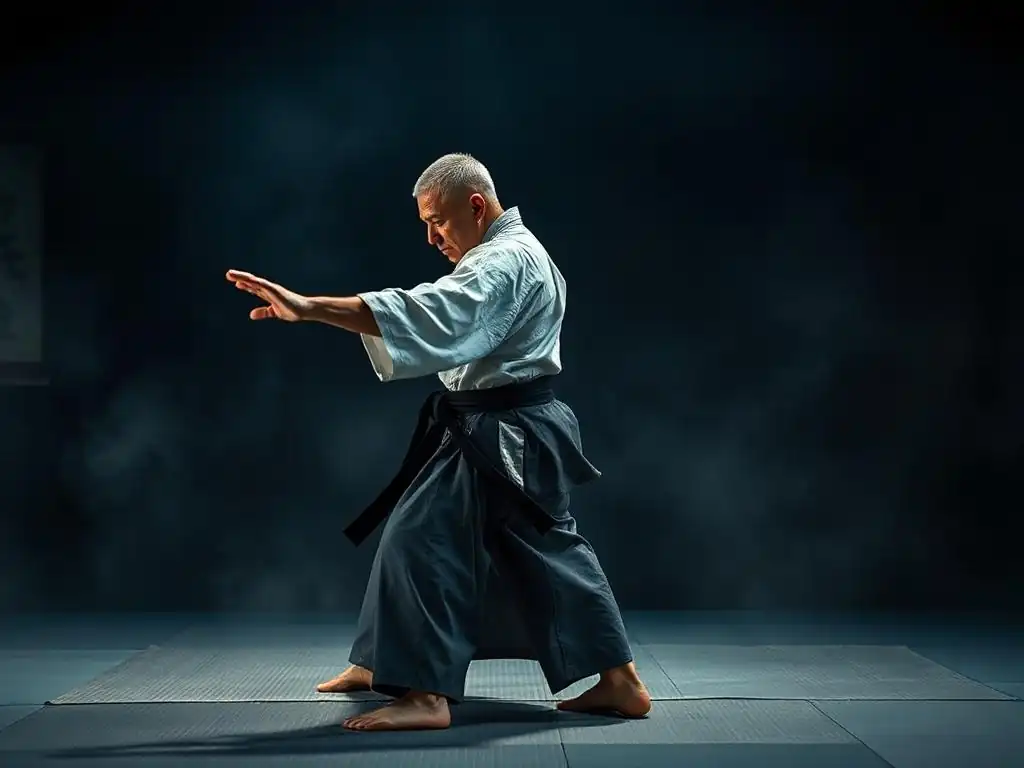
Welcome to Martial Arts Mastery, your definitive resource for all things martial arts!
Delve into the subtle yet powerful world of Aikido and discover how it refines not just physical technique, but also your perception of space and timing. This article explores the crucial role of Aikido strategic positioning awareness training, revealing how mastering maai – the concept of combative distance – unlocks a deeper understanding of both self-defense and personal growth. Are you ready to sharpen your senses and elevate your practice?
- Understanding Maai in Aikido: Strategic Positioning for Enhanced Awareness
- Aikido Principles and Strategic Advantage: Beyond Physical Technique
- Developing Strategic Awareness Through Aikido Practice Drills
- Aikido Strategic Positioning Awareness Training: Practical Applications
- Benefits of Mastering Maai for Overall Aikido Skill
- Advanced Concepts in Aikido Maai and Strategic Positioning
- Integrating Aikido's Strategic Principles into Daily Life
- Conclusion: Aikido as a Path to Strategic Mastery Through Maai and Awareness
-
Frequently Asked Questions
- What is Maai in the context of Aikido strategic positioning awareness training?
- How does Aikido training enhance strategic positioning awareness?
- Why is awareness so important in Aikido strategic positioning?
- What are some practical applications of Aikido's strategic positioning and awareness training outside of the dojo?
- How does Aikido's philosophical underpinning relate to strategic positioning and awareness?
- Final Reflection: Embracing the Art of Harmonious Positioning
- Master Your Maai: Begin Your Aikido Journey Today!
Understanding Maai in Aikido: Strategic Positioning for Enhanced Awareness
Defining Maai: Distance, Timing, and Intent in Aikido
Maai, often translated as "combative distance," is a foundational concept in Aikido and many other Japanese martial arts. However, its meaning extends far beyond simple physical separation. Maai encompasses the dynamic interplay of distance, timing, and the reading of an opponent's intent. It's not a fixed point but a fluid, ever-changing relationship between practitioners, crucial for effective Aikido strategic positioning awareness training. Mastering maai allows an Aikidoka to enter, blend, and execute techniques safely and effectively, ensuring they are neither too close to be overwhelmed nor too far to initiate a response.
Proper maai dictates the window of opportunity for action. For example, against a Shomenuchi (overhead strike), the ideal maai allows the Aikidoka just enough time to perceive the attack, move off the line of force, and initiate a counter-movement, perhaps a step to the side (irimi) or a turning motion (tenkan). If the distance is too short, the strike lands before a response is possible.
If it's too long, the attacker can adjust or withdraw. The awareness of this optimal distance, combined with the timing of the opponent's movement and the intent behind it, is the essence of effective maai.
The Importance of Spatial Awareness in Aikido Training
Spatial awareness is the conscious understanding of one's body in relation to the surrounding environment and other people. In Aikido, this awareness is paramount for safety and effectiveness. It involves knowing not only where your own limbs are but also the proximity and potential actions of your training partner(s), the boundaries of the mat, and even obstacles within the dojo. This heightened sense of space is continuously refined through repetitive practice of footwork, body movements, and partner drills, forming a critical component of Aikido strategic positioning awareness training.
Developing spatial awareness allows an Aikidoka to navigate complex situations, whether practicing a technique with a partner or responding to multiple attackers in a hypothetical scenario. It enables intuitive adjustments to distance and angle, preventing collisions and ensuring that movements are efficient and purposeful. For instance, during a free-flowing practice (Jiyu Waza), awareness of other practitioners on the mat prevents accidental contact and allows seamless transitions between interactions, highlighting the practical application of spatial understanding.
How Maai Cultivates Strategic Positioning Skills
Maai training is inherently strategic positioning awareness training. By constantly adjusting distance and timing relative to a partner's movement, the Aikidoka learns to occupy the most advantageous position. This isn't about finding a static "sweet spot," but rather about dynamically moving to a position from which the opponent's attack is neutralized, their balance is compromised, and a technique can be applied. This constant adjustment builds an intuitive understanding of spatial relationships under dynamic conditions.
Consider the practice of Tsuki (straight punch) defense. Learning to enter just as the punch is extending, moving to the side of the attack line while maintaining connection, requires precise maai. This isn't merely reactive; it's strategic positioning. The Aikidoka positions themselves in a way that makes the attacker's forward momentum work against them, setting up techniques like Kotegaeshi or Iriminage. This iterative process of moving, assessing distance and timing, and repositioning refines the ability to gain and maintain strategic advantage through intelligent movement, a core outcome of dedicated Aikido strategic positioning awareness training.
Aikido Principles and Strategic Advantage: Beyond Physical Technique
Centerline Control: A Key Element of Aikido Strategic Positioning
Maintaining and controlling the centerline is a fundamental principle in Aikido, directly linked to strategic positioning. The centerline is an imaginary line running vertically through the center of the body. In combat, protecting one's own centerline while threatening or controlling the opponent's centerline is a primary objective. Effective Aikido strategic positioning awareness training emphasizes moving off the line of attack to protect your own center, while simultaneously seeking angles to control the opponent's center, disrupting their stability and power generation.
By moving off the direct line of an attack, such as stepping to the side of a front kick (Mae Geri), the Aikidoka not only avoids the impact but also gains a positional advantage. From this oblique angle, they can access the opponent's centerline more easily than if facing them directly. Techniques often involve turning the opponent so their centerline is exposed or using pressure to control their balance along this axis. This focus on centerline mechanics is a sophisticated aspect of strategic positioning that goes beyond simple spatial maneuvering.
Reading Your Opponent's Intent: Developing Anticipatory Awareness
Anticipatory awareness, or the ability to sense an opponent's intention before they fully commit to an action, is a crucial skill cultivated in Aikido. While not psychic ability, it's a highly refined sensitivity developed through countless hours of partner practice. By observing subtle cues – changes in breathing, muscle tension, eye focus, or shifts in weight – an experienced Aikidoka can often predict the type and direction of an impending attack, enhancing their Aikido strategic positioning awareness training.
This ability to "read" intent allows the Aikidoka to initiate their movement with the attack, rather than purely reacting to it. This concept, known as "Aiki," involves blending with the opponent's energy. Moving simultaneously with the attacker, but off their line of force, allows the Aikidoka to arrive at a superior strategic position just as the opponent's power is peaking, effectively neutralizing their force and setting up the technique with minimal effort. This anticipatory awareness is a hallmark of advanced Aikido practice.
Utilizing Circular Movement for Strategic Repositioning in Aikido
Aikido is renowned for its emphasis on circular movements. Unlike linear arts that often meet force with force, Aikido uses rotations and pivots to redirect incoming energy. This circular footwork and body movement is a core method for strategic repositioning, allowing the Aikidoka to constantly adjust maai, evade attacks, and gain advantageous angles relative to their partner. This dynamic, fluid movement is integral to successful Aikido strategic positioning awareness training.
Techniques like Tenkan (turning the body 180 degrees or more) or Irimi (entering deeply) combined with pivots are prime examples. When faced with a strong push or strike, stepping off the line and rotating allows the Aikidoka to move behind the attacker or to their flank, completely changing the dynamic of the encounter. This circular repositioning disrupts the opponent's base and momentum, making them vulnerable, while the Aikidoka maintains their balance and control, illustrating the power of movement in strategic advantage.
Developing Strategic Awareness Through Aikido Practice Drills
Footwork Drills for Optimal Maai and Positioning
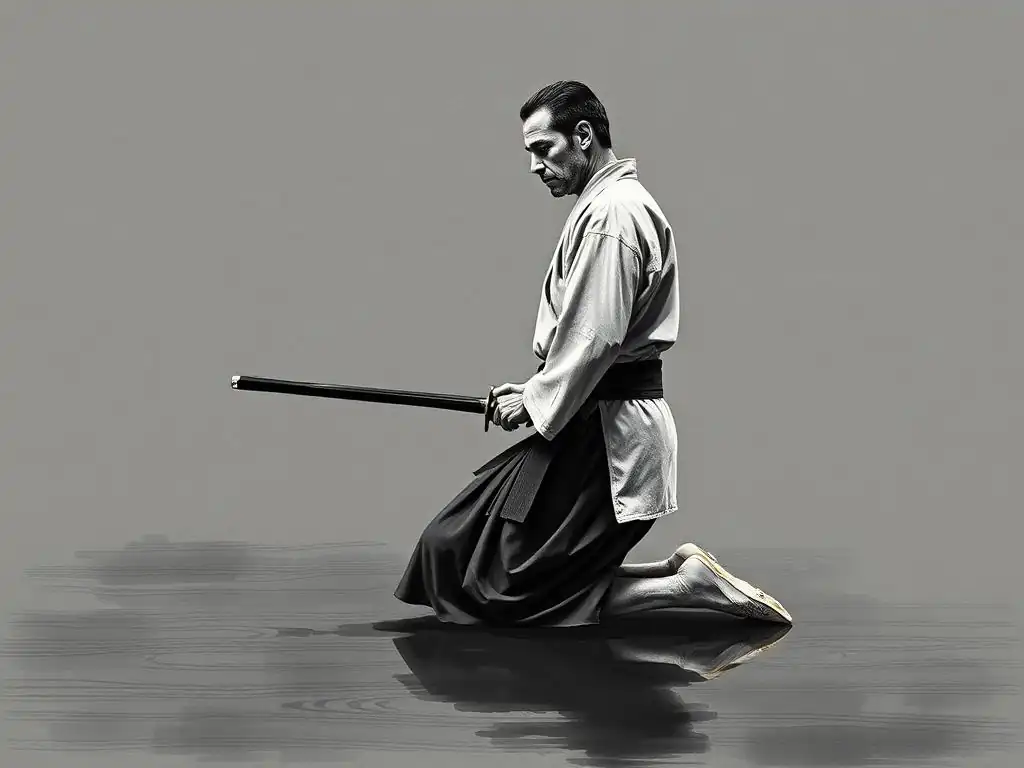
Fundamental footwork is the bedrock of effective maai and strategic positioning in Aikido. Drills like Tsugi Ashi (following foot), Ayumi Ashi (walking step), and Tenkan (turning) are practiced extensively, often independently before integrating with partners. These drills build muscle memory and coordination, enabling the Aikidoka to move quickly and smoothly to adjust distance and angle relative to a perceived or actual threat. Consistent practice of these movements is vital for Aikido strategic positioning awareness training.
Practicing these steps involves not just moving the feet but coordinating the entire body. For instance, a clean Tenkan requires simultaneous hip rotation, weight transfer, and arm movement to maintain balance and readiness. Drills might involve stepping around an imaginary center point, moving in response to a partner's non-committal approach, or practicing entering (Irimi) from various distances. This constant rehearsal of basic movements underpins the ability to execute complex strategic maneuvers effortlessly during dynamic practice.
Partner Exercises for Practicing Distance Management and Timing
Partner exercises are where maai truly comes to life. Drills involving specific attacks like Yokomenuchi (side-of-the-head strike) or Katatedori (single-hand grab) are practiced repeatedly, focusing intently on the precise timing and distance required for successful entry and technique execution. The uke (attacker) learns to provide a committed attack, while the nage (defender) focuses on reading the attack, entering at the correct maai, and initiating the technique with the movement. This interactive feedback loop is key to practical Aikido strategic positioning awareness training.
Exercises might start slowly, with the uke initiating the attack and the nage practicing their initial movement and entry, pausing to check their maai. Gradually, speed increases, requiring quicker perception and reaction. Drills might also involve varying the attack speed or distance slightly, forcing the nage to adapt their response. This constant interaction with a partner providing realistic (within training context) input is indispensable for developing practical distance management and timing skills.
Integrating Ukemi (Breakfalls) to Enhance Awareness of Body Position
While primarily a safety skill, Ukemi (the art of receiving techniques and falling safely) also significantly enhances strategic positioning awareness training. Learning to fall involves a deep understanding of one's own body in space, how to distribute weight, manage momentum, and protect vulnerable points. As uke, constantly being thrown or pinned requires acute awareness of balance being broken (Kuzushi) and the resulting trajectory, which directly informs understanding of nage's positioning.
Practicing Ukemi from various techniques and angles provides uke with invaluable insight into why certain strategic positions are effective for nage. They feel the leverage applied, the angles used, and the precise moment balance is lost. This experiential understanding from the receiving end complements the active practice of nage, providing a more complete picture of strategic dynamics. A skilled uke is not just a passive partner but an active participant whose awareness of their own position and balance contributes significantly to the learning process for both practitioners.
Aikido Strategic Positioning Awareness Training: Practical Applications
Adapting Maai to Different Attack Scenarios
Effective maai is not one-size-fits-all; it must be adapted based on the type of attack. A punch (Tsuki) requires a different entry angle and timing than a grab (Katatedori) or a strike with a weapon (though weapon defense is often taught at higher levels). Aikido strategic positioning awareness training includes practicing defenses against a variety of attacks to understand how the optimal maai shifts. For example, defending against a front kick requires significant distance management and sidestepping, while defending against a wrist grab might necessitate closing distance quickly to break balance.
Training against multiple attackers further refines this adaptability. In such scenarios, maai becomes even more complex, requiring constant adjustment relative to all potential threats. The Aikidoka must position themselves to minimize exposure to simultaneous attacks, using the movement of one attacker to potentially shield them from another, or using circular movement to keep all attackers within their field of vision. This teaches dynamic, multi-party strategic positioning.
Using Strategic Positioning in Self-Defense Situations
While dojo practice occurs in a controlled environment, the principles of Aikido strategic positioning and awareness are highly applicable to self-defense. In a real-world encounter, awareness of surroundings (obstacles, escape routes), potential weapons, and the attacker's physical state and intent becomes critical. The ability to instinctively manage distance – creating space to assess, or closing it to control – is a direct application of maai. Aikido strategic positioning awareness training provides the foundation for making these rapid, informed decisions under pressure.
For instance, if confronted, an Aikidoka might instinctively adopt a non-confrontational stance while subtly adjusting their maai to be just outside the attacker's immediate reach, allowing time to react or de-escalate. If physical engagement is unavoidable, the ability to move off the line of attack, control distance through circular motion, and seek advantageous angles (like getting to the side or rear of the attacker) are direct results of Aikido training, enabling control without relying solely on strength.
Maintaining Awareness Under Pressure: The Aikido Mindset
Aikido training, particularly the rigorous practice of techniques and falls, cultivates a calm yet alert state of mind – often referred to as Fudoshin (immovable mind) or Zanshin (lingering awareness). This mental composure is vital for maintaining strategic positioning awareness under the stress of potential conflict. Panicking or freezing inhibits the ability to perceive the situation accurately and execute appropriate movements. Aikido strategic positioning awareness training isn't just physical; it's deeply psychological, building resilience and clarity.
Through repeated exposure to dynamic, sometimes uncomfortable, situations in the dojo, practitioners learn to manage adrenaline and maintain a state of relaxed alertness. This allows them to continue "reading" the situation, adjusting maai, and positioning themselves effectively even when surprised or feeling threatened. The emphasis on harmonious blending rather than forceful confrontation also encourages a mindset focused on control and de-escalation where possible, supported by confident positioning.
Benefits of Mastering Maai for Overall Aikido Skill
Improved Reaction Time and Reflexes
Consistent practice of maai, which requires split-second decisions based on distance and timing, significantly sharpens reaction time and reflexes. Because the optimal maai is often a narrow window, the Aikidoka must learn to perceive the attack and initiate their movement almost simultaneously. This constant demand for rapid, accurate response trains the nervous system to react more quickly and efficiently, a direct benefit of dedicated Aikido strategic positioning awareness training.
Drills like "entering practice" where uke provides a rapid, committed attack, force nage to react instantly and correctly. Over time, the hesitation diminishes, and the response becomes almost automatic. This improved reactivity translates into greater fluidity and effectiveness in executing techniques, as the initial movement is initiated at the precise moment necessary to blend with the opponent's energy.
Enhanced Ability to Control the Encounter
Mastering maai grants the Aikidoka a superior ability to control the dynamic of an encounter. By dictating the distance and timing, they can prevent the opponent from effectively launching their attacks or gaining leverage. Strategic positioning allows the Aikidoka to consistently occupy angles where they are strong and the opponent is weak, essentially guiding the flow of the interaction towards a resolution favorable to the Aikidoka. This control is a primary outcome of effective Aikido strategic positioning awareness training.
Instead of being passively reactive, the Aikidoka actively manages the space. They can draw an opponent in, step out of range, or move to the side, all to control the engagement. This control isn't about physical restraint initially, but about positional dominance that allows techniques to be applied with minimal force once the opponent's balance and intention are compromised.
Increased Confidence and Composure in Aikido Practice
As proficiency in maai and strategic positioning grows, so too does the Aikidoka's confidence. Knowing that you can effectively manage distance, time your movements, and find advantageous positions provides a deep sense of capability. This confidence isn't arrogance, but a quiet assurance born from repeated successful practice. This enhanced self-assurance is a natural result of diligent Aikido strategic positioning awareness training.
This increased confidence leads to greater composure, particularly in more dynamic or challenging practice scenarios. Instead of feeling overwhelmed, the practitioner can remain calm, observe the situation, and apply their skills effectively. This composure further enhances their ability to maintain awareness and make sound strategic decisions, creating a positive feedback loop that accelerates learning and skill development.
Advanced Concepts in Aikido Maai and Strategic Positioning
Kuzushi (Breaking Balance) and its Relation to Maai
Kuzushi, the principle of breaking an opponent's balance, is inextricably linked to maai and strategic positioning. Effective kuzushi often relies on first achieving superior maai and position. By moving to an angle or distance that compromises the opponent's structure or base – for instance, getting off their front or rear line – the Aikidoka creates the conditions necessary to break their balance with minimal effort. Aikido strategic positioning awareness training at advanced levels focuses on using maai to create opportunities for kuzushi.
Consider an opponent standing squarely. Breaking their balance directly forward or backward requires significant force. However, by using maai to step to their side (e.g., using Irimi), the Aikidoka can apply pressure or extension along a line where the opponent has less stability, requiring far less effort to achieve kuzushi. The strategic position gained through maai makes the subsequent balance break significantly easier and more effective.
Strategic Use of Atemi (Strikes) to Control Distance
While Aikido is known for its throws and joint locks, Atemi (strikes) are an integral, though often less emphasized, part of its curriculum. Atemi are not typically used for inflicting damage in the same way as striking arts, but rather as tools for distraction, creating openings, and crucially, controlling maai and managing strategic positioning. Using Atemi strategically is part of advanced Aikido strategic positioning awareness training.
A quick, non-committal strike towards the face or eyes (like a soft Shomenuchi or Tsuki) can cause an opponent to flinch or momentarily shift their weight, creating a brief window or changing the maai just enough for the Aikidoka to enter or apply a technique. Similarly, a strike towards the body might cause them to cover up, altering their posture and making them vulnerable to a throw. Atemi are thus used tactically to manipulate the opponent's reaction and facilitate advantageous positioning.
Blending and Entering: Advanced Techniques for Strategic Advantage
Blending (Awase) and Entering (Irimi) are core Aikido concepts that represent advanced applications of maai and strategic positioning. Blending involves harmonizing one's movement and energy with the opponent's, while Irimi involves moving deeply into their space, often to their side or rear. These are not just physical techniques but sophisticated strategies for gaining immediate positional advantage, honed through dedicated Aikido strategic positioning awareness training.
Instead of meeting an attack head-on, the Aikidoka using blending moves with the attack, redirecting its energy while simultaneously entering. For example, against a strong grab, instead of pulling away, the Aikidoka might step into the grab, turning and leading the opponent's energy in a circle. This simultaneous blending and entering, executed with precise maai and timing, allows the Aikidoka to instantly move from a position of potential disadvantage to one of overwhelming strategic superiority, often before the opponent fully understands what has happened.
Integrating Aikido's Strategic Principles into Daily Life
Applying Awareness and Positioning in Everyday Situations
The heightened awareness and understanding of strategic positioning cultivated in Aikido practice can be surprisingly relevant to everyday life. Being aware of your physical space, how you position yourself in groups or crowded areas, and how others are positioned around you can enhance personal safety and comfort. This everyday application is a subtle but valuable outcome of Aikido strategic positioning awareness training.
For example, choosing where to stand in a queue, how to sit in a meeting to have a good view and be able to move easily, or simply being aware of who is behind you while walking are all forms of applying positional awareness learned on the mat. It's about occupying space mindfully and strategically, not just physically but also in interactions, positioning yourself for better communication or understanding.
Cultivating a Mindful Approach to Interactions
Aikido's emphasis on reading intent and blending with energy fosters a more mindful approach to interpersonal interactions. Just as on the mat, being present, observing subtle cues, and understanding the "maai" or dynamic distance in a conversation can lead to more effective communication and less conflict. This mindful awareness is a direct transfer from dedicated Aikido strategic positioning awareness training.
Learning to "blend" with someone's emotional energy, acknowledging their perspective before offering your own, or knowing when to create "distance" by pausing or changing the subject are analogous to managing maai in physical practice. This teaches a non-confrontational yet assertive way of navigating social dynamics, focusing on harmony and mutual respect while maintaining one's own center.
The Philosophical Connection Between Aikido and Strategic Thinking
Beyond physical techniques, Aikido embodies a philosophy centered on harmony, non-aggression, and the strategic use of energy. The principles of maai, blending, and strategic positioning reflect a broader life philosophy of navigating challenges not by meeting force with force, but by moving intelligently, adapting, and finding solutions that lead to positive outcomes for all involved where possible. This philosophical depth underlies the practical Aikido strategic positioning awareness training.
O-Sensei Morihei Ueshiba, the founder of Aikido, envisioned it as a path to peace and reconciliation. The strategic principles taught are not just for physical conflict but for resolving conflict in all its forms. Learning to see challenges from different angles, to adapt your approach based on the circumstances (maai), and to use situations to create positive movement (blending and entering) are powerful life skills derived from the core strategic lessons of Aikido.
Conclusion: Aikido as a Path to Strategic Mastery Through Maai and Awareness
Frequently Asked Questions
What is Maai in the context of Aikido strategic positioning awareness training?
Maai is a Japanese term that refers to the optimal distance between two opponents. It's about understanding and controlling that space to gain a strategic advantage in Aikido.
How does Aikido training enhance strategic positioning awareness?
Aikido training emphasizes body positioning and movement, forcing practitioners to constantly adjust their stance and distance relative to their training partner. This constant adjustment cultivates heightened awareness of their surroundings.
Why is awareness so important in Aikido strategic positioning?
Awareness allows the practitioner to anticipate an opponent's movements and intentions. This anticipation enables them to choose the most effective strategic position for defense or offense.
What are some practical applications of Aikido's strategic positioning and awareness training outside of the dojo?
The principles of Maai and awareness can be applied to everyday situations, such as negotiations, conflict resolution, and even driving defensively.
How does Aikido's philosophical underpinning relate to strategic positioning and awareness?
Aikido's emphasis on non-violence and harmony encourages a mindful approach to conflict. Strategic positioning and awareness become tools for defusing situations rather than escalating them.
Final Reflection: Embracing the Art of Harmonious Positioning
The principles of maai, the strategic positioning and awareness so central to Aikido, extend far beyond the dojo mat. Understanding and applying these concepts in our daily lives offers a powerful framework for navigating complex situations and achieving desired outcomes. Just as a skilled Aikidoka anticipates an opponent's movements, we too can learn to read the subtle cues of our environment and position ourselves for success, both personally and professionally.
The enduring influence of Aikido lies in its ability to cultivate a deep sense of presence and adaptability. This practice has profoundly shaped my own understanding of interaction, emphasizing the importance of mindful engagement and strategic response. True victory is victory over oneself; that is, the cultivation of inner strength. One must first purify one's own heart.
- Morihei Ueshiba, Founder of Aikido. This quote encapsulates the essence of Aikido, reminding us that true mastery begins with self-awareness and a commitment to continuous improvement, principles that resonate deeply in all aspects of life.
Now, consider how you can incorporate the lessons of maai into your own journey. Reflect on the spaces you occupy, the interactions you engage in, and the opportunities that lie before you. Embrace the art of harmonious positioning, cultivate your awareness, and move forward with intention and grace. The power to strategically navigate your life, like a skilled Aikidoka, is within you.
Master Your Maai: Begin Your Aikido Journey Today!
Thank you for exploring the art of Maai and its profound connection to Aikido. We hope this article has illuminated the path toward enhanced strategic positioning and awareness in your martial arts practice. Now, let's translate knowledge into action.
- Enroll in a local Aikido class to experience Maai firsthand and develop your intuitive sense of distance and timing. This is the cornerstone of mastering Maai.
- Experiment with different stances and movements during your next practice session, focusing on how they impact your control of Maai. Record your observations.
- Share this article with a fellow martial artist and discuss how you can both integrate Maai principles into your training. Let's build a stronger community!
What small adjustment will you make in your next training session to immediately improve your control of Maai?