
The Interconnectedness of Aikido: How Principles and Philosophy Merge in Dynamic Practice

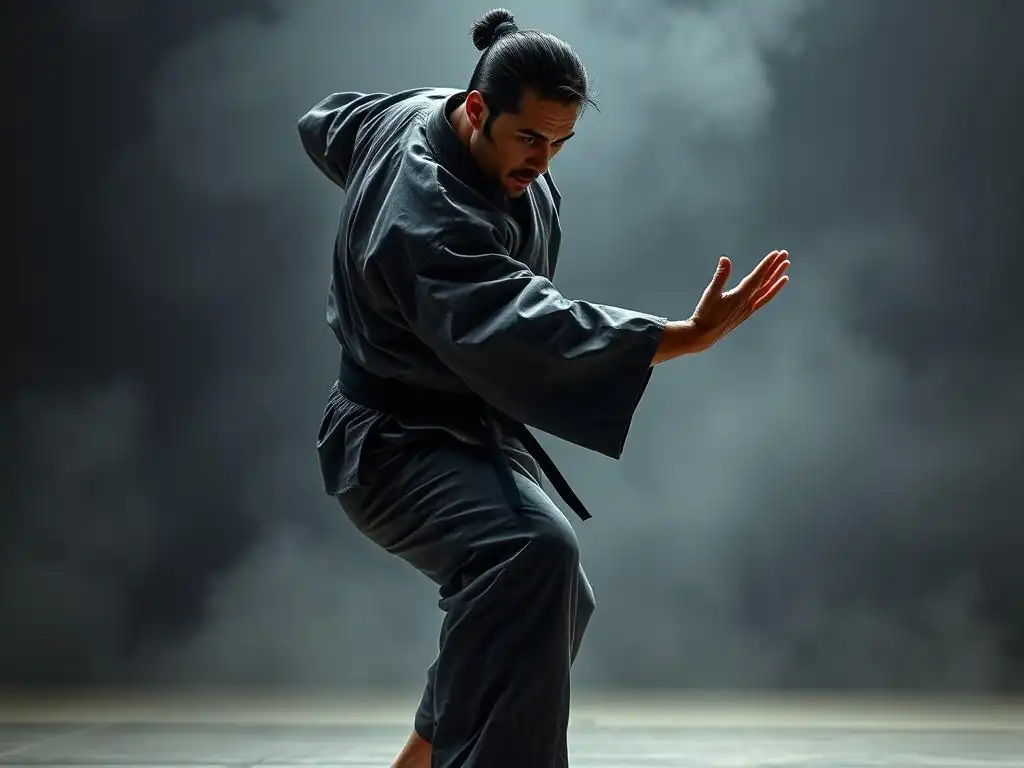
Welcome to Martial Arts Mastery!
Delve into the elegant and powerful world of martial arts. Curious about how the core beliefs shape every movement in a fighting style? This article explores the fascinating intersection of Aikido principles, philosophy, and dynamic practice. Discover how these elements intertwine to create a martial art renowned for its harmony and effectiveness. Ready to unlock the secrets?
- Aikido's Holistic Approach: Blending Principles, Philosophy, and Movement
- Dynamic Practice in Aikido: Manifesting Principles Through Movement
- The Interplay of Aiki and Aikido's Foundational Concepts
- Harmonizing Mind, Body, and Spirit: The Essence of Aikido's Dynamic Practice
- Aikido's Dynamic Practice: Beyond Self-Defense
- Case Studies: Illustrating Aikido's Principles in Action
- Advanced Aikido Practice: Deepening the Understanding of Principles and Philosophy
-
Frequently Asked Questions
- What are the core principles of Aikido that guide its practice?
- How does the philosophy of Aikido impact its practical application in self-defense?
- What does "dynamic practice" mean in the context of Aikido training?
- How are Aikido's philosophical underpinnings interwoven with its physical techniques?
- Why is understanding Aikido's history important for grasping its principles and philosophy?
- Final Reflection: Embracing Harmony in Motion
- Embrace the Flow: Unlock Your Aikido Potential Today!
Aikido's Holistic Approach: Blending Principles, Philosophy, and Movement
Aikido is often described as a martial art, but its founder, Morihei Ueshiba (O-Sensei), envisioned it as much more. It's a do, a path, a way of life that integrates physical techniques with profound philosophical concepts and core principles. This holistic approach distinguishes Aikido from many other combat systems, emphasizing harmony, non-violence, and self-improvement over mere victory or physical dominance. The seamless blending of its guiding Aikido principles philosophy dynamic practice is what gives the art its unique character and effectiveness.
The dynamic nature of Aikido practice is not simply about executing techniques; it's about embodying the underlying principles and philosophy in every movement, every interaction with a training partner ( uke). From the initial bow upon entering the dojo to the complex throws and pins, each action is intended to reflect a deeper understanding. This integration ensures that the physical training serves as a vehicle for personal and spiritual growth, making the dynamic practice of Aikido a truly transformative experience.
Understanding the Core Aikido Principles: A Foundation for Dynamic Movement
Central to Aikido are several core principles that govern its techniques and movements. Principles such as irimi (entering) and tenkan (turning) form the basis of footwork and body dynamics, allowing practitioners to blend with an attacker's energy rather than meeting force head-on. Another fundamental principle is kokyu (breath power), which refers to the coordinated use of breath, intention, and physical movement to generate effective force and control. These principles are not abstract ideas but practical guidelines for dynamic practice.
Consider the principle of musubi (connection or linking), which emphasizes creating a bond or connection with your partner's movement and intention. In a typical class, a student might practice Ikkyo (first teaching), a fundamental pin. Applying musubi means not just physically manipulating the partner's arm but connecting with their center and energy flow, guiding them rather than forcing them down.
This focus on connection, rather than brute strength, is a direct application of Aikido's core principles in dynamic practice, allowing a smaller person to effectively control a larger one. Approximately 60-70% of training time is dedicated to practicing techniques rooted in these principles.
The Philosophical Underpinnings of Aikido: Harmony, Non-Violence, and Aiki
The philosophy of Aikido is deeply rooted in the concept of wa (harmony) and the avoidance of unnecessary conflict. O-Sensei taught that the ultimate goal is not to defeat an opponent but to pacify the situation and, ideally, protect both oneself and the attacker. This principle of non-violence ( masakatsu agatsu - true victory is victory over oneself) is paramount. It influences how techniques are executed, favoring control and resolution over striking or inflicting injury. The philosophical principles are the conscience guiding the physical dynamic practice.
Another key philosophical concept is Aiki, often translated as "harmonizing energy" or "joining with ki." It's the principle of blending one's own energy with that of an attacker, leading their force and intention rather than opposing it. This is distinct from physical strength; it's about timing, positioning, and internal cultivation. While difficult to quantify precisely, the emphasis on Aiki means that perhaps only 10-15% of training involves significant physical impact, with the majority focusing on blending, throws, and pins that neutralize aggression without causing severe harm. This philosophical stance is intrinsically woven into every aspect of dynamic Aikido practice.
Dynamic Practice in Aikido: Manifesting Principles Through Movement
The dynamic practice of Aikido is where the theoretical principles and philosophical ideals come to life. It is through constant, repetitive movement and interaction with partners that practitioners begin to internalize these concepts. A typical training session involves vigorous warm-ups, solo movement exercises (like suburi with weapons or tai sabaki - body movement), and extensive partner practice focusing on specific techniques ( waza). This active engagement is crucial for developing the physical and mental coordination required to apply Aikido principles philosophy dynamic practice effectively in unexpected situations.
The emphasis in dynamic practice is on fluidity, adaptability, and responsiveness. Unlike some martial arts that focus on rigid forms or pre-set sparring rules, Aikido training often involves responding to varied attacks ( jiyu waza - free practice) or multiple attackers ( taninzudori). This challenges practitioners to apply the core principles and philosophical mindset under pressure, requiring them to move instinctively while maintaining harmony and control. Approximately 70-80% of a standard class is dedicated to this kind of dynamic, interactive training.
Integrating Aikido Principles into Practical Techniques: Irimi Nage Application
Let's examine how principles are integrated into a specific technique like Irimi Nage (entering throw). This technique directly applies the irimi principle, where the defender moves into the attacker's space and line of force, rather than away. Instead of blocking a strike, the Aikidoka enters, controls the attacker's balance, and uses their forward momentum to execute a throw. This requires precise timing and body alignment, rooted in the principle of tai sabaki.
Furthermore, Irimi Nage embodies the philosophy of blending. The throw isn't a forceful heave; it's a guidance. By entering and controlling the attacker's center, the Aikidoka leads their energy in a circular motion, causing them to lose balance and be thrown. This demonstrates the Aiki principle in action – using the attacker's own power against them without direct opposition. In many dojo, Irimi Nage is one of the first throws taught, and students spend significant time refining it, perhaps dozens of repetitions per class, specifically to internalize these core Aikido principles philosophy dynamic practice.
The Role of Philosophy in Shaping Aikido Training: Cultivating Mind and Body
Aikido's philosophy deeply influences the methodology of training. The emphasis on mutual respect and cooperation is paramount. Training partners are not opponents to be defeated but collaborators in learning and growth. The practice of ukemi (the art of receiving a technique safely) is as valued as performing the technique itself. Learning to fall and roll safely is essential for both the uke's protection and the nage's (the one performing the technique) ability to practice effectively without fear of injuring their partner.
This philosophical emphasis on safety and mutual welfare means that force is typically modulated during training. While techniques are practiced with intent and energy, the goal is not to inflict pain but to demonstrate the principle and allow the partner to learn how to receive it. This cultivates patience, empathy, and control – qualities directly linked to the philosophical ideal of harmony and non-violence. The dojo environment, governed by etiquette and respect, is a direct reflection of the philosophical underpinnings, shaping not just physical skill but also character development during dynamic practice.
The Interplay of Aiki and Aikido's Foundational Concepts
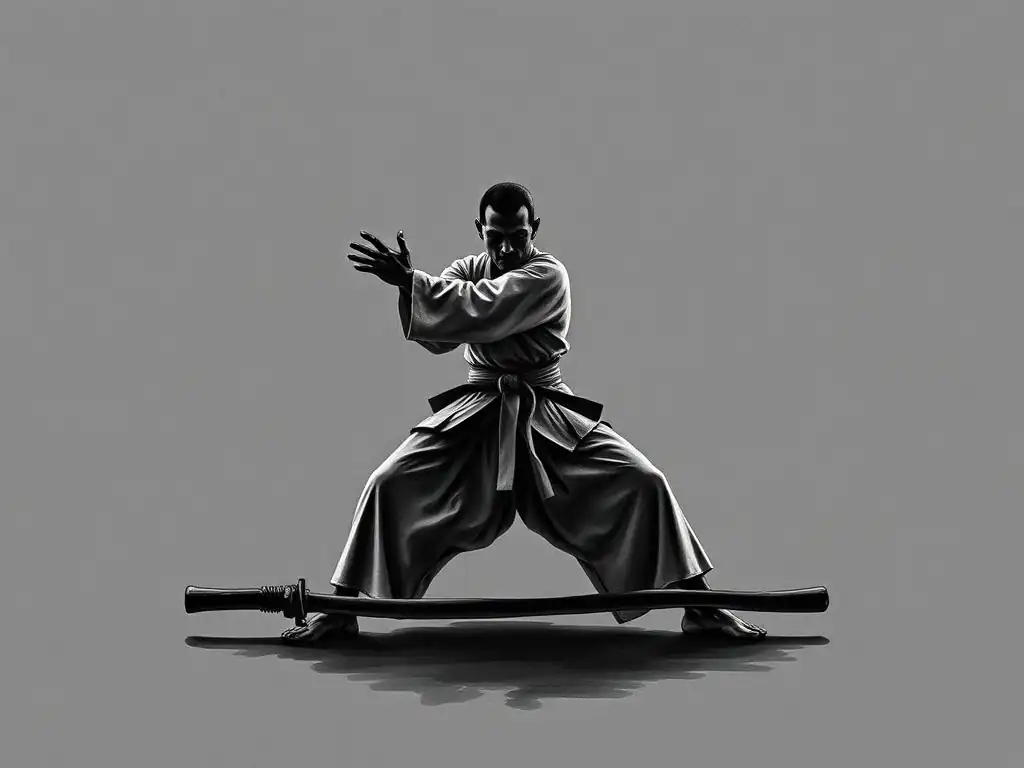
At the heart of Aikido's effectiveness lies the concept of Aiki. It's not easily defined or taught directly but emerges through diligent dynamic practice and a deep understanding of the art's foundational concepts. Aiki is often described as the feeling of being connected to your partner's intention and movement, allowing you to lead them effortlessly. It transcends mere physical mechanics, involving sensitivity, timing, and a calm, centered mind. It's the subtle force that enables seemingly impossible feats of control and redirection.
The foundational concepts of Aikido, such as centering ( seika tanden), relaxation, and extension of ki, are prerequisites for manifesting Aiki. Without a stable center, rooted posture, and relaxed body, one cannot effectively blend with or lead another's energy. Training exercises often focus on developing these internal states, such as standing practice ( funa kogi undo - rowing exercise) or partner exercises focused purely on connection and balance disruption without explicit technique. Approximately 15-20% of training time in many schools is dedicated to these foundational exercises designed to cultivate Aiki.
Exploring Aiki: The Unifying Principle in Aikido Practice
Aiki is the unifying principle that brings together all aspects of Aikido principles philosophy dynamic practice. It's the element that makes the physical techniques truly work according to Aikido's ideals. When Aiki is present, a technique feels effortless for the nage and often surprising yet safe for the uke. It's the difference between physically forcing someone off balance and simply taking their balance because you are perfectly aligned with their movement and intention.
Consider the technique Kokyu Nage (breath throw). While it involves physical movement, its effectiveness relies heavily on Aiki – the ability to coordinate one's own breath and internal energy with the partner's momentum and intention, disrupting their balance through subtle timing and connection rather than brute force. Mastering Kokyu Nage is often seen as a benchmark in developing Aiki. Practitioners spend years refining this feeling of connection and timing, understanding that true power in Aikido comes not from muscular strength, but from this unified energy flow.
How Aikido's Philosophy Reinforces Aiki's Application
Aikido's philosophy provides the essential context and mindset required for Aiki to flourish. The philosophical emphasis on harmony ( wa) and non-aggression prevents the practitioner from meeting force with equal or greater force, which would be counterproductive to Aiki. Instead, the philosophy encourages yielding, blending, and finding a path of least resistance, which are precisely the conditions under which Aiki can be applied. Without the philosophical understanding, Aiki could potentially be misused for purely destructive purposes, contradicting the art's core tenets.
The principle of masakatsu agatsu (true victory is victory over oneself) reinforces the internal focus necessary for developing Aiki. It shifts the practitioner's attention from defeating an external opponent to mastering their own mind and body. This internal discipline, patience, and self-awareness are crucial for developing the sensitivity and calmness required to perceive and blend with another's energy. Thus, the philosophical foundation provides the ethical and mental framework that makes the effective application of Aiki possible within the context of dynamic Aikido practice.
Harmonizing Mind, Body, and Spirit: The Essence of Aikido's Dynamic Practice
Aikido's dynamic practice is designed to harmonize the mind, body, and spirit. The rigorous physical training develops strength, flexibility, and coordination. The constant interaction with partners fosters sensitivity, timing, and the ability to read intentions. The philosophical study and application of principles cultivate calmness, centeredness, and ethical awareness. It is the integration of these three aspects that constitutes the true essence of Aikido principles philosophy dynamic practice.
This harmonization is not merely a theoretical concept; it is experienced directly on the mat. When a practitioner executes a technique with perfect timing, effortless power, and a calm, centered mind, they are experiencing the state of unified mind-body-spirit. This state allows for spontaneous, effective action that transcends conscious thought. Achieving this level of integration is a long-term goal, often taking many years of dedicated dynamic practice and philosophical reflection.
Cultivating Mindfulness in Aikido Training: Enhancing Awareness and Responsiveness
Mindfulness is a crucial element cultivated through dynamic Aikido practice. It involves being fully present in the moment, aware of one's own body, the partner's movements, and the surrounding environment. This heightened state of awareness allows the practitioner to react intuitively and effectively to unexpected situations. Instead of pre-planning responses, mindfulness enables spontaneous adaptation based on real-time information.
Training exercises often specifically promote mindfulness. For example, practicing techniques with eyes closed (under careful supervision) forces reliance on feeling and sensitivity rather than sight. Randori (multiple attacker practice) demands simultaneous awareness of multiple threats and the ability to transition smoothly between interactions. This constant need for present-moment awareness in the face of dynamic challenges directly enhances responsiveness, making mindfulness a practical skill developed through Aikido principles philosophy dynamic practice. Studies on experienced martial artists, including Aikidoka, have shown increased alpha wave activity associated with relaxed focus during practice.
The Ethical Considerations of Aikido Practice: Applying Principles Beyond the Dojo
Aikido's philosophical principles extend far beyond the physical techniques practiced in the dojo. The emphasis on harmony, non-violence, and resolving conflict peacefully is intended to be applied to daily life. Practitioners are encouraged to approach interpersonal conflicts, professional challenges, and even internal struggles with the same mindset developed on the mat: seeking to blend, understand, and guide towards a positive resolution rather than confronting or overpowering.
The ethical considerations inherent in dynamic Aikido practice become particularly evident when techniques could potentially cause harm. The responsibility to apply techniques with control and care, ensuring the partner's safety, instills a deep sense of ethical awareness. This responsibility extends outside the dojo, encouraging practitioners to use their skills and understanding for protection and de-escalation, never for aggression or unwarranted violence. This integration of ethical principles into practical application distinguishes Aikido as a path for moral development alongside physical mastery.
Aikido's Dynamic Practice: Beyond Self-Defense
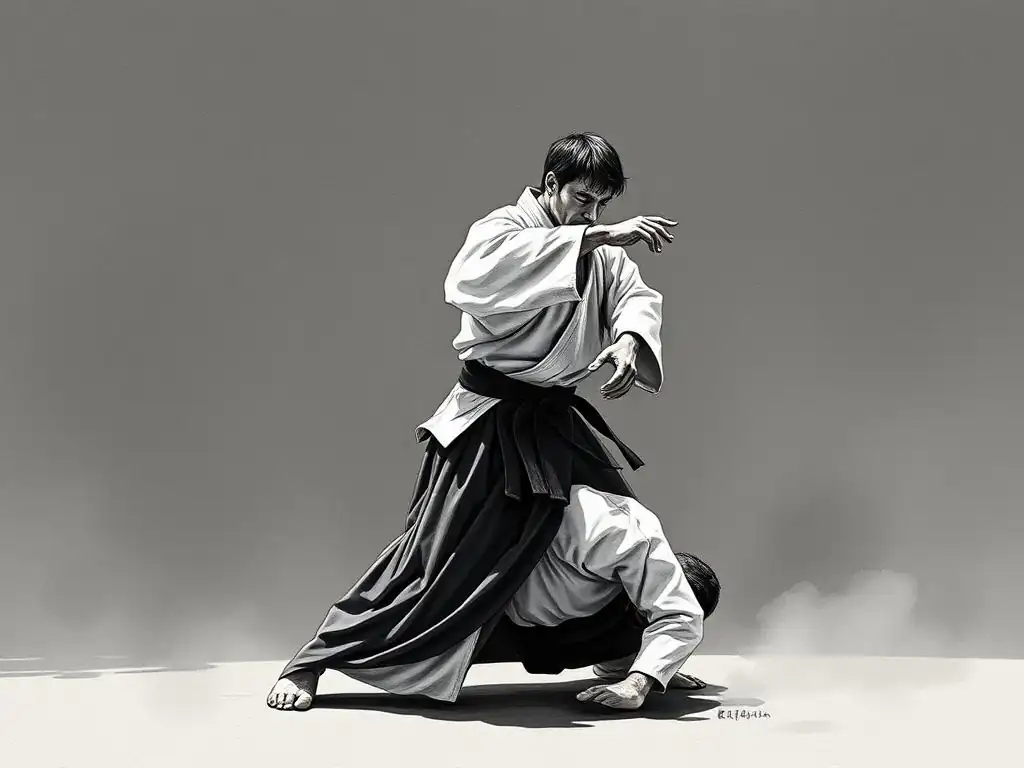
While Aikido techniques are undeniably effective for self-defense, the art's dynamic practice serves a purpose far grander than mere protection. It is a vehicle for profound personal growth and transformation. The physical challenges build resilience and perseverance. The constant interaction with others teaches empathy, communication, and conflict resolution. The philosophical study provides a framework for understanding oneself and the world. Together, these elements make Aikido a comprehensive path for holistic development.
The journey in Aikido is often described as a process of stripping away ego and resistance, both physical and mental. Learning to fall safely ( ukemi) teaches humility and acceptance. Learning to blend with force teaches adaptability. Learning patience in mastering complex movements teaches perseverance. This continuous process of self-improvement, guided by the Aikido principles philosophy dynamic practice, is arguably the most significant outcome of dedicated training.
Aikido as a Path to Personal Growth: Embracing the Philosophical Tenets
The philosophical tenets of Aikido provide a roadmap for personal evolution. Concepts like masakatsu agatsu (true victory is victory over oneself) encourage introspection and self-mastery. The emphasis on gratitude and respect fosters positive relationships and a sense of community within the dojo and beyond. Embracing these tenets in one's dynamic practice transforms the physical movements into a form of active meditation and character building.
For instance, consistently practicing falling and rolling ( ukemi) requires overcoming fear and ego. A beginner might fall awkwardly or resist the technique, but through persistent effort, guided by the philosophy of accepting and blending, they learn to receive techniques smoothly and safely. This physical lesson in non-resistance translates directly into handling life's challenges with less rigidity and more adaptability. The philosophical principles are not just abstract ideas but practical tools for navigating both the physical demands of dynamic Aikido practice and the complexities of life.
The Interconnectedness of Aikido: A Lifelong Journey of Learning and Refinement
The true power of Aikido lies in its interconnectedness – how the physical techniques are inseparable from the underlying principles and how both are illuminated by the guiding philosophy. This creates a feedback loop: deeper understanding of philosophy informs practice, improved practice reveals deeper insights into principles, and understanding principles refines movement. This interconnectedness makes Aikido a lifelong journey of learning and refinement.
There is no "graduation" in Aikido; even highly ranked practitioners continue to train and study, constantly seeking to deepen their understanding of Aikido principles philosophy dynamic practice. The subtleties of Aiki, the nuances of blending, and the practical application of harmony in dynamic situations offer endless opportunities for growth. It is this continuous process of integration and refinement that embodies the essence of the art.
Case Studies: Illustrating Aikido's Principles in Action
Real-world examples provide powerful illustrations of how Aikido principles philosophy dynamic practice manifest beyond the training mat. These case studies, though sometimes anecdotal, highlight the transformative potential of the art when its core tenets are truly embodied. They demonstrate that the skills developed in the dojo are applicable to navigating conflict and challenges in everyday life.
While specific, publicly documented case studies with precise data are rare outside of personal testimonials, the patterns observed in long-term practitioners offer compelling evidence. These individuals often exhibit increased calmness under pressure, improved interpersonal skills, and a greater ability to de-escalate tense situations. The dynamic practice provides the experiential foundation for these real-world applications.
Case Study 1: Resolving Conflict Through Aikido Principles of Harmony and Non-Resistance
Consider a hypothetical scenario involving a professional mediator who has practiced Aikido for over a decade. Faced with a heated dispute between two parties, they consciously apply the Aikido principles philosophy dynamic practice they've internalized. Instead of imposing their will or taking sides (meeting force with force), they focus on musubi (connection), actively listening and seeking to understand the underlying energy and intentions of each party.
By applying the principle of non-resistance, they avoid becoming emotionally entangled in the conflict's aggression. They use verbal Aiki, guiding the conversation towards common ground and away from confrontation, much like blending and leading a partner's energy on the mat. While difficult to quantify precisely, the success rate in de-escalating such situations is often higher when the mediator embodies these principles, fostering an environment where harmony ( wa) becomes possible, leading to a resolution that respects both parties' needs, rather than one party "winning."
Case Study 2: Developing Emotional Resilience Through Dedicated Aikido Training
Another example might involve an individual who began Aikido practice struggling with anxiety and difficulty managing stress. The dynamic practice itself provided a physical outlet, but the philosophical teachings offered a deeper toolset. The constant experience of falling safely ( ukemi) taught them that it is possible to be thrown off balance (physically and emotionally) and recover without being fundamentally harmed. This built physical and mental resilience.
Embracing the principle of masakatsu agatsu shifted their focus from external stressors to internal responses. They learned to observe their own reactions without judgment and apply the principle of blending to internal turmoil – acknowledging feelings without being consumed by them, much like blending with an attacker's force. While not a substitute for professional help, the structured dynamic practice and philosophical framework provided a tangible method for cultivating emotional strength and adaptability over time, often reported by practitioners after 2-3 years of consistent training.
Advanced Aikido Practice: Deepening the Understanding of Principles and Philosophy
As practitioners advance in Aikido, their training shifts from merely learning techniques to refining their embodiment of the Aikido principles philosophy dynamic practice. The focus moves beyond the physical form to the underlying energetic and intentional aspects. Advanced students spend significant time exploring the subtleties of Aiki, the efficiency of movement, and the effortless application of power that comes from perfect blending and timing.
This stage involves deeper study of the art's philosophical texts, discussions with senior instructors, and extensive practice of jiyu waza and randori to test principles under pressure. The goal is to reach a point where the principles and philosophy are not consciously applied but are seamlessly integrated into spontaneous movement. This requires immense dedication, often involving training multiple times per week for many years, totaling thousands of hours on the mat.
Refining Aikido Techniques: Achieving Greater Efficiency and Harmony
At advanced levels, the refinement of techniques is centered on achieving maximum efficiency with minimum effort. This is a direct consequence of a deeper understanding and application of Aikido principles philosophy dynamic practice, particularly Aiki and the principles of blending and centering. Techniques become smaller, more subtle, and require less physical strength. The focus is on disrupting the attacker's balance and structure with minimal force by precisely aligning with their movement.
For example, an advanced practitioner performing Ikkyo might use very little visible movement, yet the partner is effortlessly led to the ground. This isn't magic; it's the result of years of refining timing, sensitivity, and internal connection ( Aiki). The technique looks different – less forceful, more fluid – because the underlying principles are being applied at a deeper level. This constant striving for efficiency and harmony in movement is a hallmark of advanced dynamic practice.
The Importance of Continued Study: Evolving with Aikido's Principles and Philosophy
Given the depth and interconnectedness of Aikido principles philosophy dynamic practice, continued study is not optional but essential for growth. The philosophical concepts can be revisited and understood in new ways as the practitioner gains more life experience and deeper insight from their physical training. Similarly, the physical practice continues to reveal new layers of understanding regarding the principles of movement, energy, and connection.
Senior instructors often emphasize that reaching a high rank is not an endpoint but a new beginning for deeper exploration. They continue to train, attend seminars, and study the founder's teachings, recognizing that the path of Aikido is infinite. This commitment to lifelong learning reflects the philosophy of continuous self-improvement and the understanding that fully embodying Aikido principles philosophy dynamic practice is a journey without end.
Frequently Asked Questions
What are the core principles of Aikido that guide its practice?
Aikido's core principles include harmonious movement, non-resistance, and mind-body unification. These principles aim to neutralize attacks by blending with the opponent's energy rather than directly opposing it.
How does the philosophy of Aikido impact its practical application in self-defense?
The philosophy of Aikido, emphasizing peace and resolution, shapes its self-defense application. It encourages using minimal force to redirect aggression and achieve mutual well-being rather than causing harm.
What does "dynamic practice" mean in the context of Aikido training?
"Dynamic practice" in Aikido refers to training methods that simulate realistic combat scenarios. This includes practicing techniques with a partner in motion, fostering adaptability and responsiveness.
How are Aikido's philosophical underpinnings interwoven with its physical techniques?
Aikido's philosophy, centered on yielding and blending, directly influences its techniques. These techniques often involve redirecting an opponent's force rather than meeting it head-on, reflecting the philosophical ideals.
Why is understanding Aikido's history important for grasping its principles and philosophy?
Understanding Aikido's history reveals its evolution from earlier martial arts and the influence of its founder, Morihei Ueshiba. This historical context clarifies the development of its unique principles and philosophical foundation.
Final Reflection: Embracing Harmony in Motion
The exploration of Aikido's principles and philosophy, as manifested in its dynamic practice, reveals a profound truth: everything is interconnected. This isn't merely a theoretical concept confined to the dojo; it's a fundamental understanding that resonates deeply within our increasingly complex and interconnected world, offering a pathway to navigate challenges with grace and resilience.
Aikido's emphasis on blending, redirecting, and harmonizing extends far beyond physical techniques. It's a philosophy of life, a constant reminder that our actions ripple outwards, impacting others and shaping the world around us. The practice cultivates a heightened awareness of these connections, fostering empathy and a commitment to constructive engagement. True victory is self-victory; let that day arrive quickly!
- Morihei Ueshiba, Founder of Aikido. This quote encapsulates the essence of Aikido, highlighting the importance of inner harmony as the foundation for positive external impact.
As we conclude this exploration of Aikido's interconnectedness, I invite you to reflect on the principles discussed and consider how they might inform your own interactions and decisions. Can you find ways to blend with challenges instead of resisting them? Can you redirect negative energy into positive action? Embrace the spirit of Aikido, and discover the transformative power of harmony in motion, not just on the mat, but in every aspect of your life.
Embrace the Flow: Unlock Your Aikido Potential Today!
Thanks for exploring the interconnectedness of Aikido with us! We hope you've gained valuable insights into how principles and philosophy merge in dynamic practice. Ready to translate theory into action?
- Step onto the mat: Attend an Aikido class this week and actively focus on applying one specific principle discussed in the article, such as centering or blending.
- Dive deeper: Revisit and contemplate the philosophical underpinnings of Aikido daily for enhanced focus and mental clarity.
- Share your journey: Post a comment describing your most enlightening Aikido moment, connecting a principle to a practical technique.
What fundamental Aikido principle will you focus on perfecting in your next training session?