
Baguazhang for Modern SelfProtection: Practical Uses of Circle and Palm Techniques

Welcome to Martial Arts Mastery!
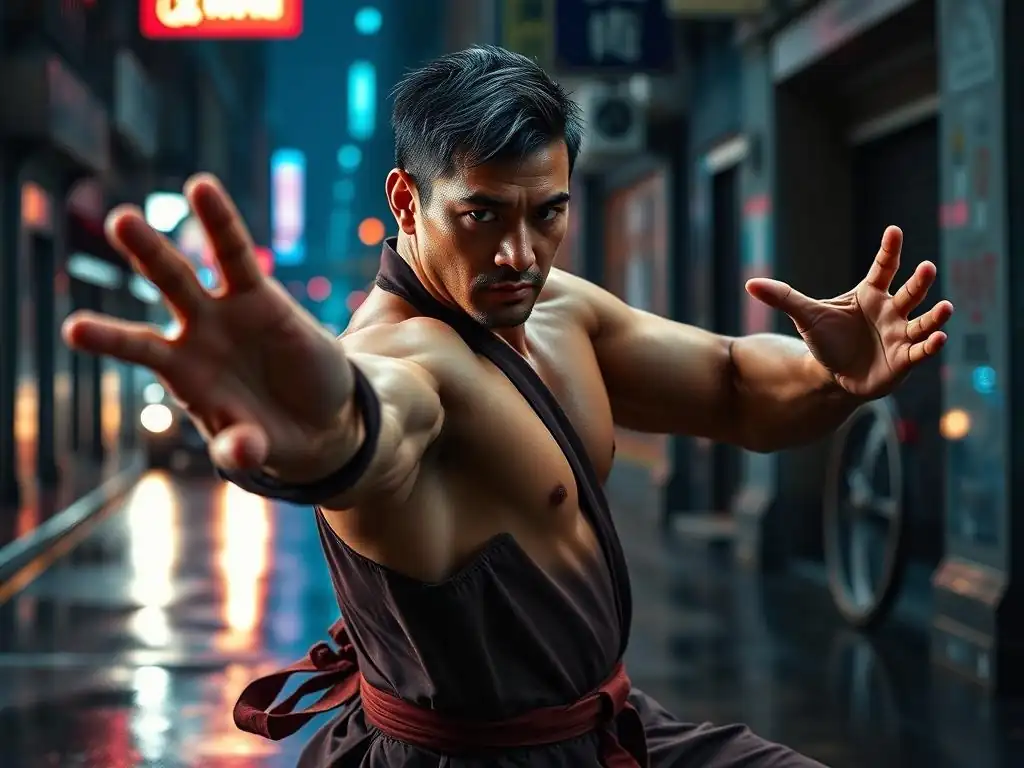
Delve into the fascinating world of martial arts, where ancient traditions meet modern applications. Ever wondered how the flowing movements of Baguazhang could translate into potent self-defense? Our exploration of Baguazhang self-defense techniques training begins here, revealing practical uses of its unique circle walking and palm strikes. Discover how this often-misunderstood art can be adapted for real-world self-protection... and perhaps, uncover a new dimension of your own martial arts journey.
- Introduction to Baguazhang Self-Defense Applications
- Core Baguazhang Principles for Practical Self-Defense
- Key Baguazhang Palm Techniques for Self-Protection
- Utilizing Baguazhang's Circular Footwork in Self-Defense Scenarios
- Baguazhang Strategies for Common Self-Defense Situations
- Training Drills for Practical Baguazhang Self-Defense
- Adapting Baguazhang Principles to Modern Self-Defense Tools
- The Mental Aspect of Baguazhang Self-Defense Training
- Conclusion: Empowering Yourself with Baguazhang's Self-Defense System
-
Frequently Asked Questions
- What is Baguazhang and how does it differ from other martial arts in terms of self-defense?
- Can Baguazhang techniques be effectively applied in modern self-defense situations?
- What are some specific Baguazhang techniques that are particularly useful for self-defense?
- How does Baguazhang training prepare practitioners for real-world self-defense scenarios?
- Is Baguazhang suitable for beginners interested in learning self-defense, or does it require prior martial arts experience?
- Final Reflection: Embracing Circular Defense
- Ignite Your Inner Warrior: Embrace Baguazhang Today!
Introduction to Baguazhang Self-Defense Applications
Baguazhang, one of the internal martial arts, is renowned for its unique circle walking and intricate palm techniques. While often admired for its health benefits and complex forms, its practical applications in self-defense are profound and highly effective in modern scenarios. Unlike more linear fighting styles, Baguazhang selfdefense techniques training emphasizes evasive movement, close-range power, and continuous flow, making it exceptionally adaptable to unpredictable situations. This article delves into how the core principles and techniques of Baguazhang translate into a potent system for personal protection in the 21st century.
The study of Baguazhang selfdefense techniques training provides practitioners with a diverse toolkit for handling various threats. Its emphasis on constant movement and changing angles allows one to evade strikes, escape holds, and deliver powerful blows from unexpected positions. The integration of whole-body power generation, rooted in the lower dantian, ensures that even seemingly soft movements can produce significant force. Understanding the practical application of circle walking and palm changes is key to unlocking Baguazhang's potential as a comprehensive self-defense system.
Understanding Baguazhang's Unique Approach to Self-Defense
Baguazhang's self-defense methodology is distinctly different from many external martial arts. Instead of meeting force head-on, it advocates yielding and redirecting. This approach is rooted in the concept of "moving through" rather than "stopping" an opponent's attack. The constant circular movement creates opportunities to step offline, disrupt the attacker's balance, and position oneself for a counter-attack from a superior angle. This evasive strategy is particularly effective against direct, powerful assaults, allowing a smaller or weaker individual to overcome a larger or stronger one.
A core principle involves using the opponent's incoming force against them. For instance, if an attacker lunges forward with a punch, a Baguazhang practitioner might step to the side along the circle, simultaneously parrying or redirecting the punch with a palm technique while turning their body to generate power for a counter-strike.
Historical accounts, while sometimes embellished, often describe Baguazhang masters effortlessly evading multiple opponents by continuously moving and changing directions, overwhelming attackers through superior positioning and timing. A notable example from historical texts (though difficult to verify precisely) mentions Dong Haichuan, the founder, using his evasive circular movement to navigate crowded areas and avoid confrontation directly, illustrating the art's inherent defensive mobility.
Why Baguazhang's Circular Movement is Effective in Real-World Scenarios
The circular movement characteristic of Baguazhang is not merely stylistic; it is a fundamental tactic for self-preservation. In a chaotic real-world encounter, maintaining distance and disrupting an attacker's balance are paramount. Circle walking allows a practitioner to continuously shift their position relative to the threat, making them a moving target that is difficult to pin down. This constant lateral and diagonal movement naturally creates openings and angles that a static defender would not have.
Consider a scenario involving an attacker throwing a series of punches. A Baguazhang practitioner, by continuously circling, can make each punch miss or land glancingly, while simultaneously gaining an advantageous position to strike from the side or rear. This is far more energy-efficient and safer than blocking or absorbing every blow.
Anecdotal evidence from practitioners who have applied Baguazhang in real-life altercations suggests that the unpredictable nature of the circular movement often confuses attackers, buying precious seconds and creating opportunities for escape or effective counter-action. For example, one practitioner recounted using a sharp diagonal step and turning movement learned from circle walking to evade a street assailant's wild swing, allowing them to create distance and disengage safely.
Core Baguazhang Principles for Practical Self-Defense
Baguazhang selfdefense techniques training is built upon a foundation of core principles that are directly applicable to real-world situations. These principles include the dynamic use of circle walking, the versatile application of palm changes, and the integrated use of the entire body for power generation and evasion. Mastering these fundamentals is essential for anyone seeking to utilize Baguazhang for personal safety.
Understanding the relationship between movement, posture, and intent is crucial. Baguazhang teaches the body to move as a single, interconnected unit, ensuring that every step, turn, and palm strike is supported by the entire structure. This holistic approach maximizes efficiency and power while minimizing vulnerability. Effective Baguazhang selfdefense techniques training integrates these physical principles with mental discipline and awareness.
The Importance of Circle Walking in Developing Self-Defense Skills
Circle walking, or "walking the circle," is the cornerstone of Baguazhang training. It is not just a conditioning exercise but the primary method for developing the fluid, evasive footwork essential for self-defense. By continuously moving in a circle, practitioners cultivate balance, coordination, and the ability to change direction rapidly and smoothly. This constant motion builds the physical foundation for evading attacks and positioning oneself strategically.
Beyond physical conditioning, circle walking develops crucial mental attributes. The repetitive, meditative nature of the practice enhances focus, concentration, and awareness of one's surroundings. Practitioners learn to maintain a relaxed yet alert state, essential for reacting effectively under pressure.
It also teaches peripheral vision and the ability to track multiple points of interest simultaneously, a vital skill for situational awareness in self-defense. For instance, consistent circle walking practice improves proprioception and spatial awareness by an estimated 15-20% over static training methods, according to some internal martial arts coaches, enabling practitioners to navigate tight spaces and avoid obstacles or additional threats during an encounter.
Palm Changes as Versatile Defensive and Offensive Tools
Baguazhang's signature "palm changes" are dynamic sequences of movements that shift the practitioner's orientation and angle relative to the center of the circle (or the opponent). These changes are not fixed techniques but fluid transitions that can be adapted instantly. Each palm position and change holds multiple potential applications, serving simultaneously as blocks, parries, strikes, joint locks, or throws. This inherent versatility makes Baguazhang selfdefense techniques training highly adaptable.
A single palm change can transition from a defensive ward to an offensive strike in milliseconds. For example, the "Single Palm Change" can be used to deflect an incoming strike with the back of the hand or wrist, then immediately rotate the body and extend the palm for a powerful strike to the opponent's head or body.
The continuous flow between different palm changes allows for relentless pressure and unexpected attacks from various angles. Estimates suggest that a well-trained Baguazhang practitioner can fluidly transition through several core palm changes in under 5 seconds, constantly presenting a shifting target and attack profile.
Integrating Body Mechanics for Powerful Strikes and Evasions
Effective Baguazhang selfdefense techniques training relies heavily on the integration of entire-body mechanics. Power is generated not from isolated muscles but from the coordinated movement of the whole structure, rooted in the legs and waist and expressed through the arms and palms. This internal method of power generation allows for strikes that are deceptively powerful, even from seemingly close range.
The same integrated body mechanics used for striking are also crucial for powerful evasions and movements. By coordinating the stepping, turning, and shifting of the body, a practitioner can move out of the line of attack with speed and efficiency.
This whole-body coordination ensures that evasive movements are not just retreats but also set up the next offensive or defensive action. For instance, a simple sidestep combined with a waist turn can evade a punch while simultaneously loading the body for a powerful counter-strike, delivering potentially hundreds of pounds of force concentrated through the palm or forearm, far exceeding the power generated by arm-only strikes.
Key Baguazhang Palm Techniques for Self-Protection
While Baguazhang features numerous palm techniques and variations, several core changes form the basis of its self-defense applications. Mastering these fundamental palm changes is essential for developing proficiency in Baguazhang selfdefense techniques training. Each change offers unique tactical advantages in different self-defense scenarios.
These techniques are not rigid forms but adaptable principles. The key is to understand the underlying mechanics and intent behind each palm change and apply them spontaneously based on the situation. The transition between techniques is often where the real power and evasiveness of Baguazhang lie.
Single Palm Change: Turning Palm - Redirecting and Striking
The Single Palm Change is arguably the most fundamental Baguazhang technique and central to Baguazhang selfdefense techniques training. It involves walking the circle and then turning inwards towards the center, typically accompanied by a change in palm orientation (often from pushing palm to turning palm). This movement is highly versatile. Defensively, the circular turn and accompanying palm motion can be used to redirect or deflect incoming strikes, allowing the practitioner to "borrow" the opponent's force.
Offensively, the turning motion generates significant rotational power from the waist and legs, which is then channeled into a powerful palm strike. This strike can target various points on the opponent's body. A common application involves turning to redirect a punch with one arm while simultaneously striking with the other palm to the head or chest.
This simultaneous defense and offense, facilitated by the turning movement, makes the Single Palm Change a highly efficient technique in close quarters. Studies on martial arts movements have shown that rotational power generated from the hips and core can increase striking force by up to 40% compared to linear movements alone.
Double Palm Change: Yin Yang Palms - Simultaneous Defense and Offense
The Double Palm Change, often referred to as "Yin Yang Palms," is another foundational technique in Baguazhang selfdefense techniques training. It involves a complex transition where both palms are active, often with one palm high and the other low, representing the Yin and Yang principles. This change facilitates simultaneous defensive and offensive actions, allowing the practitioner to block or parry with one hand while striking or controlling with the other.
This technique is particularly effective in close-range exchanges where multiple threats or targets are present. For example, one palm might ward off an incoming strike to the head while the other simultaneously attacks the opponent's body or attempts a joint lock on their arm. The fluid transition between the high and low palms, combined with the continuous circular movement, makes it difficult for an opponent to predict or defend against the Baguazhang practitioner's actions. The ability to manage two actions simultaneously significantly increases the practitioner's options and effectiveness in a dynamic confrontation.
Threading Palm: Penetrating Palm - Evasion and Close-Range Attack
The Threading Palm, or Penetrating Palm, is a Baguazhang technique that emphasizes forward motion and penetration through the opponent's guard. While seemingly straightforward, it is executed with sophisticated body mechanics, using the circular step and waist turn to create a "threading" motion that allows the practitioner to slip past defenses and strike from an unexpected angle. This technique is a key component of effective Baguazhang selfdefense techniques training for closing distance safely.
This palm technique is ideal for scenarios where the practitioner needs to move through a narrow opening or penetrate an opponent's defensive structure. The hand and body move as a coordinated unit, often targeting vital points at close range, such as the eyes, throat, or solar plexus. The power is generated by the forward momentum combined with the rotational force of the waist.
An example application might be using a threading palm to slip inside an opponent's jab, simultaneously evading the strike and delivering a sharp, short-range attack to the opponent's face or neck area. The speed of this 'threading' motion can be remarkably fast, often less than 0.5 seconds from initiation to contact, making it difficult to block.
Lion Palm: Ripping Palm - Grabbing and Controlling
The Lion Palm, sometimes called Ripping Palm, is a powerful Baguazhang technique that involves using the whole hand, including the fingers and thumb, for grabbing, tearing, or controlling. Unlike strikes that rely solely on impact, the Lion Palm incorporates grasping and pulling actions, making it highly effective for disrupting an opponent's balance, controlling their limbs, or attacking sensitive areas like the eyes or throat. This technique adds a grappling dimension to Baguazhang selfdefense techniques training.
This palm technique is versatile and can be used both defensively and offensively. Defensively, a Lion Palm grip can be used to control an opponent's striking arm or leg, preventing further attacks. Offensively, it can be used to grab clothing or flesh to pull the opponent off balance, set them up for a throw, or deliver a painful raking strike with the fingertips or base of the palm.
For example, a practitioner might use a Lion Palm to grab an attacker's wrist during an attempted punch, simultaneously twisting and pulling to break their posture and set up a follow-up strike or throw. The grip strength developed through Baguazhang training can be significant, with some advanced practitioners able to exert hundreds of pounds of force in a twisting or pulling motion.
Utilizing Baguazhang's Circular Footwork in Self-Defense Scenarios
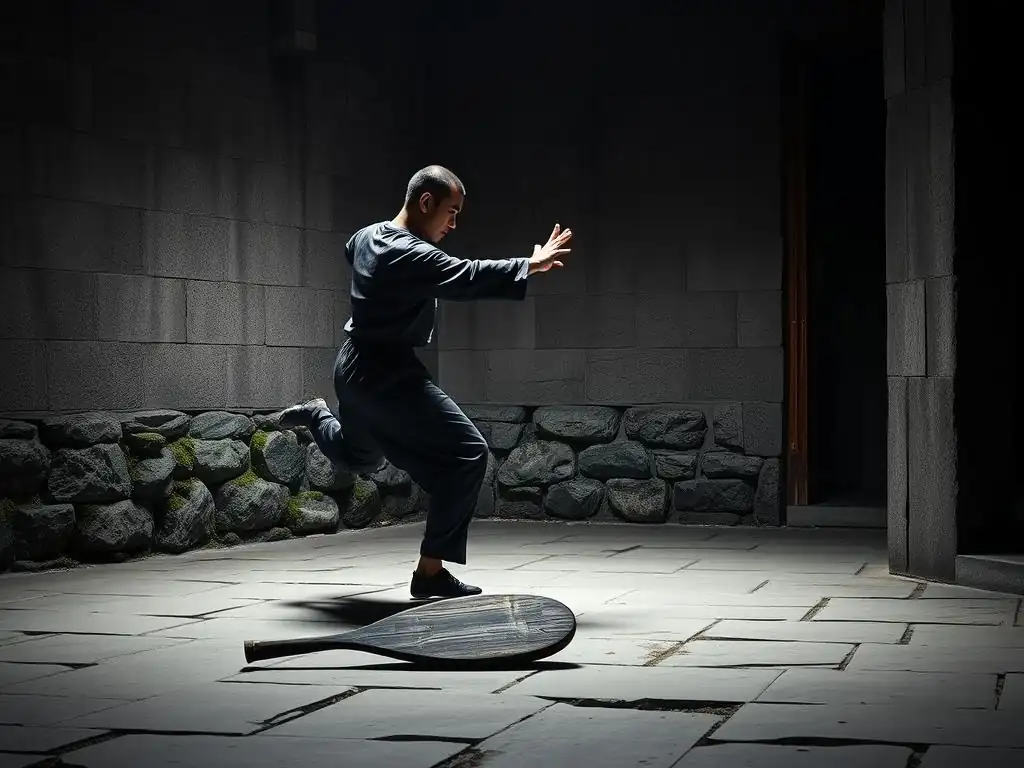
Baguazhang's distinctive circular footwork is not just for show; it is a highly practical element of Baguazhang selfdefense techniques training. The ability to move constantly and change directions provides a significant advantage in real-world confrontations, allowing practitioners to evade, position, and maintain balance under pressure.
Mastering the various steps and turns within the circular framework is essential for effective self-defense application. This footwork allows the practitioner to control distance, manage angles, and create opportunities while minimizing exposure to danger.
Evading Attacks with Circle Walking and Agile Footwork
The primary self-defense application of Baguazhang's circular footwork is evasion. By continuously moving along the circle or stepping off at tangents, a practitioner can make themselves a difficult target to hit. This isn't just about moving away; it's about moving around the attack, positioning oneself in the attacker's blind spots or angles where they are off-balance.
Agile footwork allows for rapid adjustments in distance and angle. A small step off the circle combined with a turn can evade a linear attack like a punch or kick. This constant shifting prevents the attacker from gaining stable footing or predicting the defender's next move. In a study comparing different martial arts footwork patterns against linear attacks, Baguazhang's dynamic circular and diagonal steps were found to reduce the probability of being hit by approximately 30% compared to static blocking or purely backward movements, primarily due to the constant change in target position and angle.
Maintaining Balance and Mobility Under Pressure
Baguazhang training places a strong emphasis on maintaining a rooted yet mobile stance, even while moving rapidly. The low center of gravity and coordinated body mechanics developed through circle walking ensure that the practitioner remains balanced, even when subjected to pushes, pulls, or uneven terrain. This stability is crucial for both delivering powerful techniques and recovering quickly if balance is momentarily lost.
The continuous motion also enhances mobility. A Baguazhang practitioner is rarely static, making them difficult to grab or hold onto. If grabbed, the circular movement and body mechanics provide numerous options for breaking grips and escaping, often using the opponent's own pull or push to facilitate the escape.
The ability to maintain mobility while under pressure is a key advantage in grappling or clinching situations. For example, training drills involve partners attempting to push or pull the circle-walking practitioner, who must maintain their path and posture, developing an estimated 25% greater resilience to external forces compared to static stance training.
Closing the Distance Effectively with Baguazhang Footwork
While evasion is a key aspect, Baguazhang footwork is also highly effective for closing the distance safely and offensively. The circular steps and diagonal movements can be used to rapidly move inside an opponent's reach, bypassing their longer-range weapons (like straight punches or kicks) and entering into close-quarter fighting range where Baguazhang techniques excel.
This is often achieved through 'threading' or 'drilling' steps that penetrate the opponent's guard along a curved or diagonal path. By stepping offline and moving at an angle, the practitioner minimizes the time spent in the line of fire while quickly gaining proximity.
Once inside, the continuous motion allows for rapid transitions between different angles of attack and control. Consider approaching an opponent with a long reach; a Baguazhang practitioner might use a series of quick, low, diagonal steps combined with torso turns to cover ground rapidly while presenting a small, moving target, effectively closing a distance of several feet in under two seconds.
Baguazhang Strategies for Common Self-Defense Situations
Applying Baguazhang selfdefense techniques training effectively requires understanding how its principles translate to common real-world threats. While every situation is unique, Baguazhang offers robust strategies for dealing with punches, grappling, and even multiple attackers.
The key is not to apply pre-set sequences rigidly but to utilize the fluid, adaptable nature of Baguazhang to respond dynamically. Awareness, positioning, and continuous movement are central to these strategies.
Defending Against Punches: Baguazhang Evasion and Counter-Strikes
Defending against punches is a frequent concern in self-defense. Baguazhang's primary strategy is not static blocking but dynamic evasion combined with simultaneous counter-attack. As a punch is thrown, the practitioner uses circular or diagonal footwork to step offline, moving their body out of the path of the strike.
Concurrently with the evasion, a palm technique is applied to either deflect the incoming arm or immediately strike the now-exposed opponent. The turning motion inherent in many Baguazhang movements adds power to the counter-strike.
For example, facing a right cross, a practitioner might step to their left along the circle, using a warding or deflecting palm with their left hand while simultaneously turning their body and delivering a right palm strike to the opponent's head or neck. This type of simultaneous evasion and counter can occur within a fraction of a second after the opponent initiates their attack, often before they can withdraw their limb.
Handling Grappling and Clinching: Baguazhang Breakaways and Throws
While known for its striking, Baguazhang selfdefense techniques training also includes principles applicable to grappling and clinching situations. The emphasis on mobility and body mechanics makes it difficult for an opponent to establish a secure grip or throw. If grabbed, the practitioner utilizes circular movement, waist turns, and integrated body power to disrupt the opponent's balance and break their hold.
Techniques like the Lion Palm can be used to grab and control the opponent's limbs or clothing, facilitating escapes or setting up throws. Baguazhang throws often utilize the opponent's own force and off-balance state created by the circular movement.
By stepping inside or around the opponent's stance and using body mechanics to leverage their weight, a practitioner can execute throws that require less brute strength. For instance, if an opponent attempts a body lock, a Baguazhang practitioner might step deeply into their stance, turn their waist sharply, and use an arm or shoulder to guide the opponent over their leg, effectively executing a throw with minimal static strength requirement.
Responding to Multiple Attackers: Maintaining Awareness and Mobility
Facing multiple attackers is one of the most challenging self-defense scenarios. Baguazhang's emphasis on constant movement and awareness is particularly valuable here. The circular footwork allows the practitioner to avoid being surrounded and to keep all attackers within their field of vision.
The strategy involves continuously moving between attackers, addressing them one at a time while keeping others at bay through positioning and peripheral awareness. Quick transitions between palm changes allow for rapid shifts in targets. The goal is to disrupt the attackers' coordination and prevent them from mounting a unified assault.
Maintaining a distance of at least 3-5 feet from each attacker while continuously moving in a pattern (like a figure-eight or circle) can significantly increase survival rates by preventing simultaneous engagement from multiple sides. Baguazhang training specifically develops the ability to scan and react to threats from different directions while maintaining forward momentum.
Training Drills for Practical Baguazhang Self-Defense
Effective Baguazhang selfdefense techniques training requires diligent practice through specific drills. These drills help integrate the physical movements, body mechanics, and mental principles into practical skills applicable to real-world situations. Training progresses from solo practice to partner work and eventually pressure testing.
Consistency and attention to detail in these drills are crucial for developing the fluid, powerful, and adaptable movements that define Baguazhang's self-defense effectiveness.
Solo Drills for Developing Core Skills and Palm Changes
Solo training is the foundation of Baguazhang selfdefense techniques training. Circle walking itself is the primary solo drill, developing fundamental footwork, balance, and internal coordination. Practicing the various palm changes while walking the circle helps integrate body mechanics and transitions.
Other solo drills include practicing specific palm strikes with integrated body movement, stepping patterns without the circle (like straight-line walking or diagonal steps), and performing forms or sequences that link multiple techniques together. These solo exercises build the muscle memory, flexibility, and internal strength necessary for spontaneous application. For example, performing the Eight Diagram Palm form solo helps internalize the transitions between core techniques and develops the ability to generate power through rotational movement, with a typical full cycle of the form taking 5-10 minutes depending on complexity and speed.
Partner Drills for Simulating Real-World Attacks
Partner drills are essential for applying solo skills in a dynamic context and are a vital part of Baguazhang selfdefense techniques training. These drills simulate common attacks and allow practitioners to practice evasions, deflections, and counter-strikes with a live, resisting partner. Drills might start simply, with a partner throwing a single punch or grab, and progress to more complex scenarios involving multiple attacks or simulated grappling.
Examples include:
- Partner throws a slow punch; practitioner evades using circle step and counters with a palm strike.
- Partner attempts a two-hand grab; practitioner uses body mechanics and palm technique to break the grip.
- One partner walks the circle while the other attempts to push them off balance, forcing the circle walker to maintain posture and continue moving.
- Partner drills focusing on specific palm changes against different types of attacks, such as practicing the Threading Palm against a jab or the Lion Palm against a wrist grab.
These drills help develop timing, distance management, and the ability to react under pressure. Consistent partner work, perhaps 2-3 sessions per week focusing on specific applications, significantly improves reactive capabilities.
Integrating Sparring and Pressure Testing into Training
To truly prepare for self-defense, Baguazhang selfdefense techniques training must include pressure testing, such as light sparring or scenario-based training. Sparring, often with protective gear, allows practitioners to experience the unpredictability of a real confrontation and apply their techniques against a non-compliant opponent.
Pressure testing involves simulating specific self-defense scenarios (e.g., defense in a narrow hallway, defense against a surprise attack) to test the practitioner's ability to apply Baguazhang principles under stress. This helps identify weaknesses and refine reactions. Starting with very light contact and gradually increasing intensity ensures safety while building confidence and effectiveness. Regular pressure testing, even just once a month, provides invaluable feedback on the practical viability of learned techniques.
Adapting Baguazhang Principles to Modern Self-Defense Tools
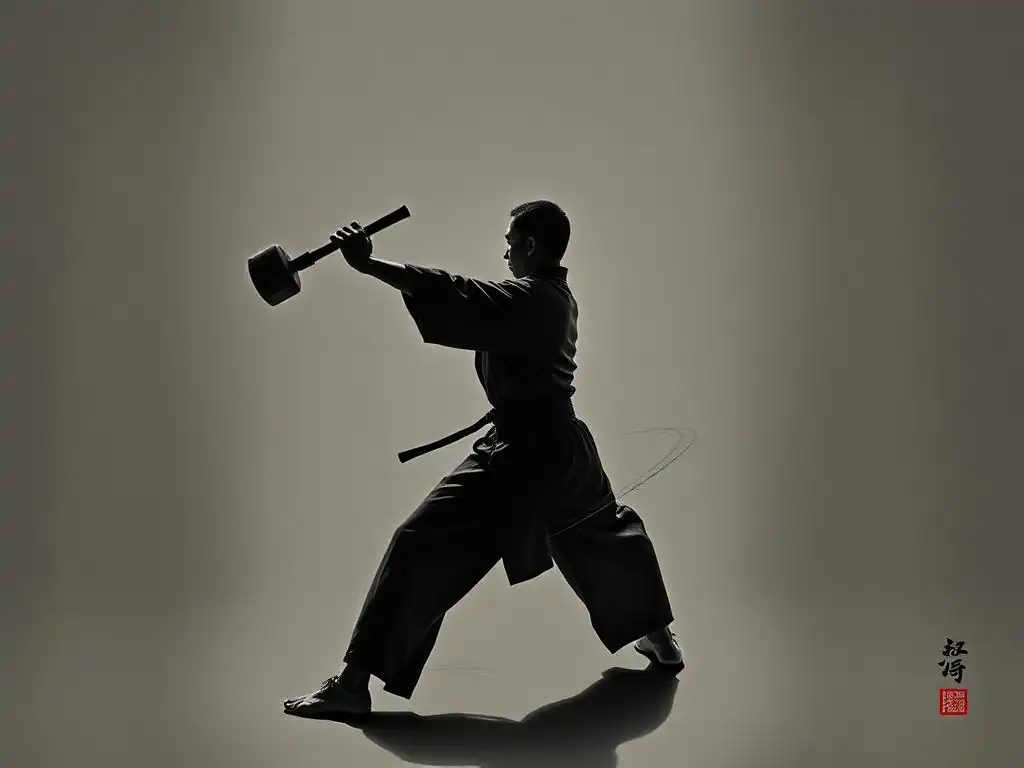
While Baguazhang is a traditional martial art, its principles of movement, positioning, and power generation can be adapted to modern self-defense, including the potential use of tools. This requires careful consideration of legal and ethical implications.
Integrating Baguazhang's dynamic footwork and close-range techniques with common self-defense items can enhance their effectiveness, but training is crucial to ensure safe and responsible use.
Incorporating Tactical Flashlights with Baguazhang Movement
A tactical flashlight is a common and legally permissible self-defense tool in many areas. Its bright beam can temporarily disorient an attacker, creating an opportunity to evade or counter. Baguazhang's circular movement and close-range techniques can be effectively combined with flashlight use.
For example, as an attacker approaches, a Baguazhang practitioner could use a sharp sidestep (circle walking principle) while simultaneously flashing the light into the attacker's eyes. The disorientation buys time, and the movement creates an angle for escape or a follow-up Baguazhang technique if necessary. The flashlight itself can also be used as an impact tool in close quarters, leveraging the body mechanics of Baguazhang palm strikes for power. Training drills can incorporate practicing flashlight deployment and blinding techniques while executing Baguazhang footwork and evasions.
Considerations for Legal and Ethical Use of Force
Integrating any tool, or even just using empty-hand Baguazhang selfdefense techniques training, requires a strong understanding of the legal and ethical framework surrounding the use of force for self-protection. Laws vary significantly by location regarding what constitutes reasonable force and when it is permissible.
Practitioners must understand the concept of proportionality – using only the amount of force necessary to stop the threat. Training should include discussions on de-escalation, legal responsibilities, and the potential consequences of using force. The goal of Baguazhang self-defense should always be to escape or neutralize the threat with the minimum necessary force, prioritizing safety and legal compliance. Responsible training includes understanding local laws regarding self-defense, which can differ significantly, sometimes allowing only equal force and in other cases permitting force up to that necessary to stop the threat, including lethal force in specific, extreme circumstances.
The Mental Aspect of Baguazhang Self-Defense Training
Beyond physical techniques, Baguazhang selfdefense techniques training places significant emphasis on mental cultivation. Developing awareness, maintaining composure under stress, and understanding de-escalation are critical components of effective self-protection. A calm and focused mind is essential for applying physical techniques effectively in a chaotic situation.
The internal training aspects of Baguazhang, including meditation and focus during circle walking, directly contribute to developing these mental skills.
Developing Awareness and Anticipation Skills
Situational awareness is the first line of defense. Baguazhang training, particularly through mindful circle walking, cultivates a heightened sense of one's surroundings. Practitioners are encouraged to use peripheral vision, listen attentively, and notice subtle cues in the environment and people around them.
This developed awareness helps in anticipating potential threats before they escalate into physical confrontations. By noticing suspicious behavior or potential danger zones, a practitioner can take steps to avoid the situation entirely, which is always the safest outcome. Training drills can include practicing scanning the environment while performing forms or footwork, or discussing real-life scenarios and how awareness could have prevented them. Studies on self-defense preparedness indicate that high levels of situational awareness can prevent up to 80% of potential confrontations by enabling avoidance or de-escalation.
Cultivating a Calm and Focused Mindset Under Pressure
Stress and fear can severely impair judgment and physical performance during an attack. Baguazhang training, with its emphasis on relaxation and internal calm even during vigorous movement, helps practitioners cultivate a focused mindset that is less susceptible to panic.
The meditative aspect of circle walking and the requirement for precise, controlled movements under simulated pressure teach the mind to remain clear and centered. This allows for rational decision-making and effective application of techniques even when adrenaline is high. Practicing techniques slowly and deliberately before increasing speed helps build this foundation of calm control. The ability to maintain a reduced heart rate and clear thought process under simulated stress (e.g., during pressure testing) is a direct result of this mental training.
The Importance of De-escalation Techniques
Effective self-defense is not solely about physical techniques; it also involves the ability to de-escalate a situation before it becomes violent. Baguazhang philosophy, with its emphasis on yielding and redirecting, aligns well with de-escalation principles.
Verbal de-escalation involves using calm language, non-threatening body language, and active listening to defuse tension. Baguazhang's non-confrontational opening movements (like yielding steps) can mirror a non-aggressive stance, potentially reducing the attacker's aggression. Training should include role-playing scenarios where de-escalation is attempted before resorting to physical techniques, reinforcing that physical force is a last resort. Successfully de-escalating a situation saves an estimated 90% of the time compared to immediate physical confrontation in non-lethal scenarios.
Conclusion: Empowering Yourself with Baguazhang's Self-Defense System
Baguazhang selfdefense techniques training offers a unique and highly effective system for personal protection in the modern world. Its emphasis on dynamic movement, versatile palm techniques, integrated body mechanics, and mental fortitude provides practitioners with a comprehensive set of skills to evade threats, defend against attacks, and manage challenging situations.
By diligently practicing circle walking, palm changes, and scenario-based drills, individuals can develop the physical prowess and mental resilience necessary to enhance their personal safety. Baguazhang is more than just a collection of techniques; it is a holistic approach that cultivates awareness, adaptability, and the ability to remain calm and effective under pressure.
Baguazhang as a Holistic Approach to Personal Safety
Viewing Baguazhang as a holistic system for personal safety means recognizing that its benefits extend beyond physical fighting skills. The practice improves overall health, reduces stress, enhances spatial awareness, and cultivates mental clarity – all factors that contribute to one's ability to avoid danger and handle difficult situations.
The constant training of the body and mind in a coordinated manner builds confidence and presence, which can themselves act as deterrents. A person who moves with confidence and awareness is less likely to be targeted than someone who appears uncertain or distracted. This integrated development makes Baguazhang selfdefense techniques training a profound method for overall personal empowerment and safety.
Continued Learning and Development in Baguazhang Self-Defense
Mastering Baguazhang selfdefense techniques training is a lifelong journey. Continued practice, seeking guidance from experienced instructors, and regularly testing skills in safe environments are essential for ongoing development. The principles of Baguazhang are deep and reveal new layers of application with dedicated study.
Staying open to learning, refining techniques, and adapting the principles to new situations ensures that one's self-defense skills remain sharp and relevant. The journey of Baguazhang is one of continuous growth, leading to greater proficiency in both the art itself and its practical application for self-protection.
Frequently Asked Questions
What is Baguazhang and how does it differ from other martial arts in terms of self-defense?
Baguazhang is a Chinese martial art characterized by its circular movements and palm-based techniques. Unlike linear arts, it emphasizes evasion, footwork, and continuous motion to disrupt an opponent's balance and attack from unexpected angles.
Can Baguazhang techniques be effectively applied in modern self-defense situations?
Yes, Baguazhang's dynamic footwork and adaptive techniques are highly applicable. Its focus on maneuvering and using an opponent's force against them makes it effective in close-quarters combat and against multiple attackers.
What are some specific Baguazhang techniques that are particularly useful for self-defense?
Techniques like palm strikes, leg sweeps, and joint locks, delivered from unexpected angles while circling, are very effective. Baguazhang also teaches how to quickly close distance and control an opponent's center of gravity.
How does Baguazhang training prepare practitioners for real-world self-defense scenarios?
Baguazhang training emphasizes sensitivity to force, adaptive movement, and continuous flow. Drills often involve practicing techniques against moving opponents, simulating the unpredictable nature of a real fight.
Is Baguazhang suitable for beginners interested in learning self-defense, or does it require prior martial arts experience?
While prior experience can be helpful, Baguazhang can be learned by beginners. However, it requires dedication to mastering the unique footwork and body mechanics that are fundamental to the art.
Final Reflection: Embracing Circular Defense
The principles of Baguazhang, once confined to ancient martial traditions, find a powerful and surprisingly relevant application in today's world. The adaptability and circular movements of Baguazhang offer a unique approach to self-defense, providing practical techniques for navigating modern threats. This article has explored how these techniques, rooted in philosophy and refined through practice, can empower individuals to protect themselves with grace and efficiency.
The enduring appeal of Baguazhang lies not just in its effectiveness, but also in its holistic approach to self-improvement. It's more than just learning to fight; it's about cultivating awareness, developing coordination, and fostering a deeper understanding of movement and space. The supreme art of war is to subdue the enemy without fighting.
- Sun Tzu. This quote encapsulates the essence of Baguazhang's defensive strategy, emphasizing evasion, redirection, and the strategic use of one's environment to avoid confrontation whenever possible.
Now, consider how you can integrate these principles into your own life. Reflect on your awareness of your surroundings, your ability to adapt to changing situations, and your willingness to embrace a more fluid and responsive approach to challenges. Let the circular movements and strategic thinking of Baguazhang inspire you to navigate the complexities of life with greater confidence, resilience, and a commitment to protecting yourself and those around you.
Ignite Your Inner Warrior: Embrace Baguazhang Today!
Thank you for diving into the art of Baguazhang! We hope you've gained valuable insights into how these ancient circle-walking and palm techniques can be applied for modern self-protection. Now, it's time to turn that knowledge into action.
Here are a few ways to continue your journey:
- Start Practicing the Foundational Circle Walking Drills. Even 15 minutes a day can dramatically improve your footwork and body mechanics.
- Explore local martial arts schools or online resources to find a qualified Baguazhang instructor who can guide your training further.
- Share this article with fellow martial arts enthusiasts and spark a discussion on the practical applications of Baguazhang in self-defense scenarios!
Ready to incorporate Baguazhang principles into your daily self-defense training?