
Ring Craft for Shorter Fighters: Getting Inside and Staying Safe


Welcome to Martial Arts Mastery!
Ever felt like David facing Goliath in the ring? Ring Craft for Shorter Fighters: Getting Inside and Staying Safe dives deep into the boxing strategy smaller fighters can use to turn their physical disadvantage into a tactical advantage. Discover how to close the distance, control the inside game, and protect yourself from long-range attacks. Intrigued? Your journey to mastering the art of leverage and strategic positioning starts here.
- Boxing Strategy for Shorter Fighters: Introduction to Ring Craft
- Mastering the Art of Closing the Distance in Boxing
- Defensive Ring Craft Techniques for Shorter Boxers
- Inside Fighting Techniques: Where Shorter Fighters Thrive
- Advanced Ring Generalship for Shorter Fighters
- Training Drills and Sparring Tips for Enhancing Ring Craft
- Case Studies: Legendary Shorter Boxers and Their Ring Craft Mastery
- Developing a Winning Boxing Strategy: The Shorter Fighter's Mindset
- Conclusion: Ring Craft as the Key to Success for Shorter Boxers
-
Frequently Asked Questions
- How can a shorter boxer effectively close the distance against a taller opponent?
- What are some key defensive strategies for shorter boxers when fighting at close range?
- What types of punches are most effective for shorter boxers fighting taller opponents?
- How important is stamina for a shorter boxer trying to implement their strategy?
- What mental attributes are essential for a shorter boxer facing a taller opponent?
- Final Reflection: Mastering the Inner Circle
- Unleash Your Inner Ring Warrior!
Boxing Strategy for Shorter Fighters: Introduction to Ring Craft
Understanding the Challenges Faced by Shorter Boxers
Shorter boxers inherently face a significant challenge in the ring: reach disadvantage. When standing at distance, a taller opponent can typically land jabs and straight punches while remaining out of range of the shorter fighter's offense. This fundamental difference dictates much of the boxing strategy smaller fighters must adopt.
It's not just about height; it's about the length of the arms and the ability to control the distance from afar. For instance, a boxer who is 5'7" might commonly face opponents who are 5'11" or 6'0", potentially giving the taller fighter a 4-6 inch reach advantage, sometimes even more depending on arm length relative to height. This gap must be bridged effectively for the shorter fighter to have any chance of landing meaningful punches.
Furthermore, fighting from the outside against a taller, longer opponent often leads to absorbing punishment without being able to retaliate. The shorter boxer might find themselves constantly trying to chase the taller fighter or repeatedly running into jabs. This isn't a sustainable boxing strategy smaller fighters can rely on for success over multiple rounds.
It drains energy, accumulates damage, and makes it difficult to score points or land fight-ending blows. Therefore, the core problem for a shorter boxer is overcoming the spatial control exerted by a longer reach and forcing the fight into a range where their own attributes become advantageous.
Why Ring Craft is Crucial for Smaller Fighters' Success
Ring craft is the strategic use of the boxing ring, including positioning, movement, and understanding distance, to gain an advantage over an opponent. For smaller fighters, it's not just important; it's absolutely critical. Without superior ring craft, a shorter boxer is likely to be outmaneuvered, out-jabbed, and ultimately out-fought by taller opponents who can maintain their preferred range. A well-executed boxing strategy smaller fighters employ must revolve around dictating where the fight takes place and how the distance is managed.
Exceptional ring craft allows the shorter boxer to negate the opponent's reach advantage by effectively closing the distance, controlling the inside range, and avoiding prolonged exchanges at long range. It involves intelligent footwork, angles, feints, and defensive movements that allow the fighter to get inside the taller opponent's reach safely.
Once inside, the dynamics shift, and the shorter fighter can often leverage their potential advantages in power, speed in close quarters, and ability to work the body. This mastery of space and movement is the cornerstone of a successful boxing strategy smaller fighters can use to level the playing field and secure victories.
Mastering the Art of Closing the Distance in Boxing
Footwork Drills for Closing the Gap: A Smaller Fighter's Advantage
Effective footwork is the engine of a smaller fighter's ability to close the distance safely and efficiently. Drills focusing on explosion, agility, and directional changes are paramount. The "in-and-out" drill, for example, involves quickly stepping forward into striking range and then immediately stepping back out, simulating closing the gap and then creating space again.
Practicing this repeatedly helps develop the timing and speed needed to penetrate the opponent's reach. Another essential drill is the lateral movement shuffle, moving side-to-side while maintaining balance and guard. This allows a shorter fighter to circle and find angles to enter, rather than just attacking head-on into a jab.
Pivoting is also a critical footwork skill. A quick pivot can help a smaller boxer change direction rapidly, avoid an incoming punch, or create an angle to step inside their opponent's lead foot, which is a prime position for launching an attack. Combining these movements – a quick step forward, a slight angle change with a shuffle, and a pivot off the lead foot – forms the basis of getting past a longer jab and into range.
Regularly drilling these movements builds the muscle memory and coordination necessary for this crucial part of a shorter boxer's strategy. Dedicating 20-30 minutes per session solely to footwork drills can dramatically improve a fighter's ability to close the distance.
Angling and Cutting off the Ring: Boxing Tactics for Shorter Reach
Simply walking forward isn't an effective way to close the distance against a skilled, taller opponent. They will likely just jab and move away. Instead, shorter fighters must use angles and actively cut off the ring. This involves moving diagonally or laterally to limit the opponent's escape routes and force them towards the ropes or corners. By taking away space, the shorter fighter makes the ring smaller, reducing the effectiveness of the taller boxer's movement and reach advantage. This requires anticipating where the opponent wants to go and positioning yourself to block that path.
Cutting off the ring effectively means understanding ring geography and using your feet to shepherd your opponent. Instead of following them directly, you move to where they will be.
For instance, if an opponent is circling away to your left, you don't chase them in a straight line; you angle towards the ropes on your left, forcing them to either change direction towards the center (where you can cut them off again) or run out of room. This intelligent positioning is a key boxing strategy smaller fighters use to control the fight's location and create opportunities to get inside their opponent's guard.
Feinting and Setting Traps to Lure Opponents In
Feinting is an indispensable tool for a shorter fighter looking to close the distance. Feints are deceptive movements designed to elicit a reaction from the opponent, such as making them flinch, parry, or move in a predictable way. A simple shoulder feint, a slight dip as if preparing to punch, or a step forward can cause a taller opponent to react, perhaps by jabbing or retreating. This reaction can create an opening or reveal their defensive habits. By feinting, the shorter fighter isn't just trying to land a punch; they are gathering information and creating opportunities to step in.
Setting traps involves using a feint or a sequence of movements to bait the opponent into a specific action that the shorter fighter can then capitalize on. For example, a shorter boxer might feint a jab to the body, hoping the opponent drops their guard slightly, then step in with a quick lead hook to the head.
Or, they might pretend to exit the range, hoping the opponent steps forward to pursue, only to pivot and meet them with a combination. These tactics require patience and observation but are vital components of a sophisticated boxing strategy smaller fighters can employ to overcome reach disadvantages and initiate close-range exchanges on their terms.
Defensive Ring Craft Techniques for Shorter Boxers
Head Movement and Slipping Punches: Essential Defense Skills
Once a shorter fighter begins to close the distance, they become vulnerable to the opponent's punches, particularly straight shots and uppercuts thrown as they step in. Therefore, exceptional head movement is non-negotiable. Slipping involves moving the head and upper body slightly to the side to narrowly avoid an incoming punch, allowing it to pass by harmlessly. This isn't just a defensive maneuver; it's often used to create angles for counter-attacks. For a shorter boxer, slipping as they enter range allows them to evade the jab or straight right and land safely inside.
Practicing slipping requires countless repetitions, often using drills with a partner throwing slow punches or using a slip bag. Mastering the rhythm of dipping, weaving, and rolling under punches is crucial. A shorter fighter needs to be able to move their head off the center line constantly, making themselves a difficult target while they bridge the gap. This dynamic head movement, combined with intelligent footwork, forms the primary defensive layer for a smaller fighter attempting to penetrate a taller opponent's reach. It's a core element of any effective boxing strategy smaller fighters adopt.
Effective Guarding and Blocking Strategies for Close-Range Combat
While head movement is vital, a solid guard is equally important, especially once inside. At close range, punches come from different angles – hooks to the head and body, uppercuts, and short, chopping shots. A shorter fighter needs a compact, high guard that protects the chin and temples, while also being adaptable for blocking body shots. The peek-a-boo style, where the hands are held high and tight to the face, is often favored by shorter, aggressive fighters as it offers excellent head protection and allows for quick transitions from defense to offense.
Blocking at close range often involves using forearms and elbows to absorb or deflect punches. The goal isn't just to stop the punch but to minimize its impact and ideally tie up the opponent's hands briefly, creating opportunities for the shorter fighter to land their own shots. Effective blocking also involves protecting the body.
A shorter fighter often has a larger target area for body shots when fighting inside, so keeping elbows tucked and using forearms to cover the ribs and stomach is critical. A strong, adaptive guard is a necessary component of the defensive boxing strategy smaller fighters use in the trenches.
Using the Shoulder Roll to Deflect and Counter Punches
The shoulder roll is an advanced defensive technique popularized by fighters like Floyd Mayweather Jr., though it has roots in older styles. It involves using the lead shoulder to deflect incoming straight punches, particularly the jab or straight right, while simultaneously positioning the fighter to counter with their rear hand. For a shorter fighter, this technique can be particularly effective against taller opponents who rely heavily on their jab. By rolling the shoulder, the fighter can deflect the punch and slightly angle their body away, reducing the target area.
While the shoulder roll is often associated with longer-limbed fighters, shorter boxers can adapt it as part of their boxing strategy smaller fighters use to frustrate opponents. It requires excellent timing and body control. When done correctly, it not only deflects the punch but also allows the shorter fighter to maintain their forward pressure or step in closer as the opponent's arm extends. It's a defensive tool that fluidly transitions into offense, allowing the shorter fighter to land counters as they continue their advance or settle into the inside range.
Inside Fighting Techniques: Where Shorter Fighters Thrive
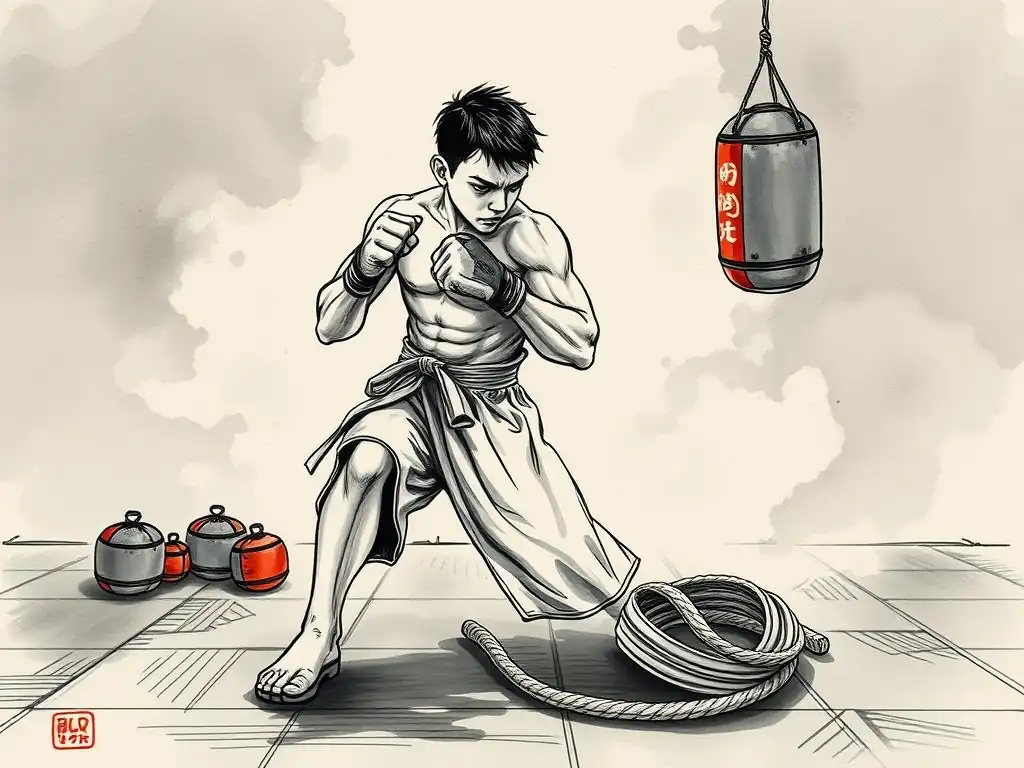
Mastering the Art of Infighting: Close-Range Boxing Techniques
Infighting, or fighting in the pocket, is the realm where a well-prepared shorter boxer can turn the tables on a taller opponent. Once inside the opponent's reach, the taller fighter's height and reach advantage are significantly diminished, sometimes even becoming a disadvantage due to limited leverage for long punches. Infighting is characterized by short, sharp punches – hooks, uppercuts, and body shots – thrown with leverage generated from hip rotation and leg drive, even in confined spaces.
Effective infighting requires constant pressure, head movement, and a high work rate. The shorter fighter needs to stay glued to their opponent, preventing them from creating space to extend their punches. This involves intelligent use of footwork to maintain proximity and hand fighting to control the opponent's arms. Mastery of infighting is a core component of a successful boxing strategy smaller fighters employ to neutralize reach and maximize their own power in close quarters. It's a gritty, demanding style that favors toughness and relentless pressure.
Body Shots: A Key Weapon for Shorter Boxers
Body shots are particularly effective for shorter fighters working on the inside. They are often easier to land than headshots when fighting at close range, and they can have a cumulative effect that wears down a taller opponent. Repeated hooks to the liver or solar plexus can sap an opponent's energy, slow their movement, and eventually compromise their guard, creating openings for headshots. Uppercuts to the chin or body are also potent weapons from a shorter fighter's arsenal when fighting inside.
A consistent attack to the body forces the taller opponent to lower their guard, leaving their head exposed. It also drains their stamina, making it harder for them to maintain distance or generate power in later rounds. For a shorter boxer, mixing head and body attacks is crucial. Landing a solid body shot can often set up a subsequent headshot as the opponent reacts to the pain or discomfort. This focus on the body is a fundamental part of the offensive boxing strategy smaller fighters utilize once they have successfully closed the distance.
Clinching and Dirty Boxing Tactics: Controlling the Inside Game
Clinching is often seen as a way to rest or stop an opponent's attack, but for a shorter fighter, it can be a tactical tool to control the fight's rhythm and location. When a taller opponent tries to create space to land long punches, a shorter fighter can initiate a clinch to smother their offense. However, clinching isn't just about holding; it can involve 'dirty boxing' – legal tactics used within the clinch to gain an advantage.
This can include short punches or uppercuts as the clinch is broken, using forearms to create space or control the opponent's posture, or tying up the opponent's arms to prevent them from punching effectively. While not always aesthetically pleasing, intelligent clinching and dirty boxing are vital for a shorter fighter to manage the inside space, prevent the opponent from regaining control of the distance, and create small windows for their own offense. It's a crucial part of the control aspect in the boxing strategy smaller fighters use to dominate the inside.
Advanced Ring Generalship for Shorter Fighters
Reading Your Opponent's Intentions and Anticipating Moves
Advanced ring generalship involves more than just physical techniques; it's about the mental game and strategic intelligence. For a shorter fighter, being able to read an opponent's intentions is vital for anticipating their movements and reactions. This means observing their stance, weight distribution, eye movements, and subtle shifts before they launch an attack or attempt to move away. Does the opponent lean forward slightly before jabbing? Do they always step to their left after throwing a combination? These tells provide crucial information.
Anticipating moves allows the shorter fighter to react proactively rather than reactively. Instead of just blocking a jab, they might slip it and already be stepping inside. Instead of chasing a retreating opponent, they might angle off to cut them off because they anticipated the direction of escape. This level of anticipation comes from experience, careful observation during the fight, and studying opponents beforehand. Developing this skill significantly enhances the effectiveness of any boxing strategy smaller fighters implement, allowing them to stay one step ahead.
Controlling the Pace and Rhythm of the Fight
Shorter fighters often benefit from a high-paced, aggressive fight that favors their ability to work inside. Taller opponents with longer reaches often prefer a slower, more measured pace where they can control distance with their jab. Therefore, a key aspect of ring generalship for a shorter boxer is imposing their preferred pace and rhythm on the opponent. This can be done through relentless pressure, a high volume of punches (especially to the body), and constantly attempting to close the distance.
Conversely, if the shorter fighter needs a moment to recover or break the opponent's momentum, they might use a tactical clinch or defensive movement to slow things down temporarily before re-engaging. Controlling the rhythm means preventing the taller fighter from settling into a comfortable pattern and forcing them to fight at a pace they are not prepared for. This strategic manipulation of the fight's tempo is a sophisticated element of the boxing strategy smaller fighters use to dictate terms in the ring.
Using the Ring to Your Advantage: Positioning and Movement Strategies
A skilled shorter fighter doesn't just move; they move with purpose, constantly using the geography of the ring to create advantages. This involves intelligent positioning relative to the ropes, corners, and the center of the ring. For example, avoiding getting trapped on the ropes is paramount, as this severely limits movement and allows the taller opponent to tee off. Instead, the shorter fighter wants to trap their opponent on the ropes or in corners.
Using angles to cut off the ring, as discussed earlier, is a primary example of using the ring to advantage. Another is strategically placing yourself just out of range of the opponent's power hand, forcing them to constantly reposition. The center of the ring offers the most space for movement, but sometimes strategically pressuring an opponent towards the edge is necessary to limit their options. Masterful ring generalship means treating the ring not just as a platform, but as a strategic tool to isolate, trap, and overwhelm the taller opponent, refining the boxing strategy smaller fighters rely on.
Training Drills and Sparring Tips for Enhancing Ring Craft
Shadow Boxing Drills for Developing Footwork and Head Movement
Shadow boxing is one of the most fundamental yet effective ways to develop ring craft, especially footwork and head movement. For a shorter fighter, shadow boxing should focus heavily on simulating scenarios where they need to close the distance safely. This means practicing stepping in with slips and rolls, changing angles rapidly, and simulating cutting off the ring. It's not just about throwing punches; it's about moving as if a live opponent is present, reacting to imaginary jabs, and practicing entry techniques.
Incorporating specific footwork patterns like shuffle steps, pivots, and diagonal movements while throwing combinations helps integrate movement and offense. Spending dedicated rounds in shadow boxing focusing only on defensive movement while advancing or retreating is also beneficial. Visualizing a taller opponent and practicing how to get past their reach during shadow boxing builds the necessary motor skills and mental rehearsal crucial for implementing a successful boxing strategy smaller fighters need.
Partner Drills for Practicing Closing the Distance and Infighting
Partner drills are essential for applying ring craft concepts against a moving target. Drills where a taller partner uses only their jab and movement, and the shorter fighter focuses solely on slipping the jab and stepping into range, are invaluable. The partner doesn't need to throw hard, just simulate the reach and movement of a taller opponent. Another drill involves one partner staying static and the other practicing circling, cutting off angles, and stepping in while maintaining defensive posture.
Once inside, partner drills can focus on infighting exchanges, practicing short hooks and uppercuts, hand fighting, and using the clinch tactically. One partner might simulate trying to create space while the shorter fighter practices staying tight and working the body. These drills allow a shorter boxer to practice their boxing strategy smaller fighters use in a controlled environment, building confidence and refining technique before live sparring.
Sparring Strategies for Implementing Ring Craft Techniques
Sparring is the ultimate test and training ground for ring craft. For a shorter fighter, specific sparring strategies can help hone their skills against taller opponents. One strategy is to dedicate rounds specifically to practicing getting inside – focusing only on safely closing the distance, even if it means not throwing many punches initially. Another approach is to spar with a specific goal, like spending at least one minute per round fighting exclusively on the inside.
Sparring partners should ideally vary in height and style, but regular work with taller partners is crucial. Communicate with your sparring partner and coach about focusing on certain aspects, like practicing slipping jabs while advancing or working on body shots from close range. Sparring isn't just about fighting; it's about deliberate practice of your chosen boxing strategy smaller fighters refine through repeated, focused application in realistic scenarios.
Case Studies: Legendary Shorter Boxers and Their Ring Craft Mastery
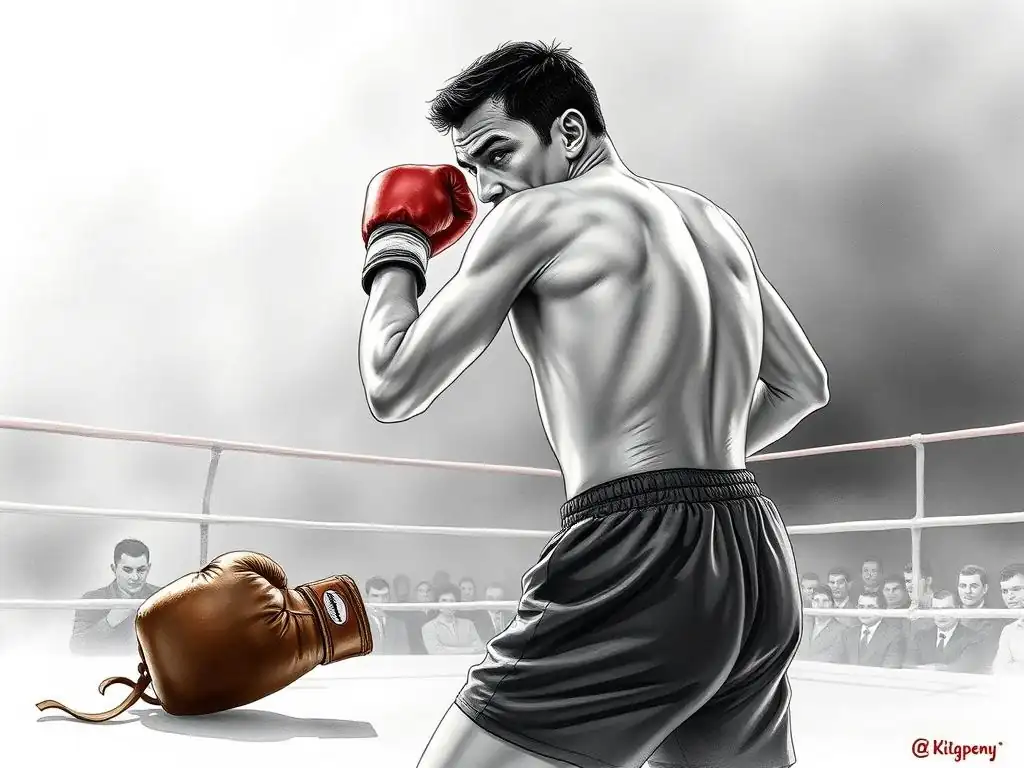
Mike Tyson: Analyzing His Footwork and Defense
Mike Tyson, despite often being significantly shorter than his heavyweight opponents (e.g., 5'10" vs. opponents often 6'3" or taller), was a master of getting inside and devastating opponents. His "peek-a-boo" style, characterized by a high guard, constant head movement (slips, rolls, and weaves), and explosive in-and-out footwork, was central to his boxing strategy smaller fighters can learn from. Tyson didn't just walk in; he used rapid, often diagonal steps and feints to penetrate his opponent's reach. His head movement was legendary; he would slip incoming jabs and immediately explode forward into punching range.
Consider his fight against Michael Spinks in 1988. Spinks was undefeated, taller, and had a longer reach. Tyson didn't try to box him from the outside. Instead, he used intense pressure, head movement to evade Spinks's jab, and explosive forward movement to get inside almost instantly.
Once there, he unleashed brutal combinations, primarily hooks and uppercuts. His ability to cover distance rapidly while simultaneously defending against the jab was a prime example of high-level ring craft for a shorter fighter. His movement and defense weren't separate from his offense; they were integrated into a seamless system for getting inside and destroying opponents.
Roberto Duran: Studying His Infighting and Ring Generalship
Roberto Duran, known as "Manos de Piedra" (Hands of Stone), was another shorter fighter (typically 5'7") who dominated larger opponents across multiple weight classes through sheer aggression, toughness, and unparalleled infighting skills. Duran's ring craft was less about elusive movement and more about relentless, intelligent pressure and suffocating opponents on the inside. His boxing strategy smaller fighters often emulate involved constantly stepping forward, cutting off the ring with disciplined footwork, and forcing exchanges in close quarters.
Duran was a master of fighting in the pocket. He would use subtle head movement and a tight guard to get past the initial line of defense, then unleash brutal combinations to the body and head. His ability to fight effectively with limited space, generating immense power from short range, was legendary.
His ring generalship involved constantly forcing the fight where he wanted it – on the ropes, in corners, or simply chest-to-chest in the center. He wore opponents down physically and mentally with his relentless pace and punishing inside attack, a testament to the effectiveness of his aggressive, pressure-based boxing strategy smaller fighters can study.
Lessons Learned from Boxing Greats: Applying Their Techniques to Your Game
Studying fighters like Tyson and Duran reveals common threads in the boxing strategy smaller fighters use to succeed:
- Aggressive Intent: They didn't shy away from closing the distance; they embraced it.
- Superior Footwork: While different in style (Tyson's explosiveness vs. Duran's relentless pressure), both used footwork to dictate distance and position.
- Exceptional Defense Geared Towards Offense: Their head movement and guard allowed them to get inside safely and launch attacks, not just survive.
- Mastery of the Inside: They were comfortable and highly effective once they were in the pocket, specializing in short, powerful punches, especially to the body.
- Ring Generalship: They controlled the space and pace of the fight, forcing opponents into uncomfortable positions.
These legends demonstrate that height disadvantage is not a barrier to success in boxing, but a challenge that requires a specific, well-practiced boxing strategy smaller fighters can develop through dedication to ring craft, defensive skill, and aggressive inside fighting. Applying their principles means focusing training on these areas, tailoring techniques to your own physical attributes and style.
Developing a Winning Boxing Strategy: The Shorter Fighter's Mindset
Visualization and Mental Preparation for Ring Craft Success
Developing a winning boxing strategy smaller fighters rely on starts in the mind. Visualization is a powerful tool. Before training or sparring, spend time mentally rehearsing the techniques you want to use. Picture yourself slipping a jab and stepping inside, landing a body shot, or cutting off the ring effectively. Visualize success in navigating the distance and controlling the inside fight. This mental rehearsal helps build confidence and prepares the mind to execute complex movements under pressure.
Mental preparation also involves developing resilience and focus. Fighting a taller opponent can be frustrating if they constantly move away or tie you up. A shorter fighter needs to maintain discipline, stick to the game plan, and avoid getting discouraged. Developing a focused mindset that is constantly observing the opponent and looking for openings, rather than getting overwhelmed by the challenge, is crucial for implementing a sophisticated boxing strategy smaller fighters depend on for victory.
Adapting Your Strategy Based on Your Opponent's Style
While having a core boxing strategy smaller fighters can rely on is important, flexibility is key. Not all taller opponents fight the same way. Some might be defensive out-boxers, constantly moving and jabbing. Others might be aggressive and willing to exchange on the inside despite their reach. A shorter fighter must be able to adapt their approach based on the specific opponent. Against a runner, cutting off the ring becomes paramount. Against an aggressive taller fighter, defensive responsibility while stepping in might be the priority.
This requires intelligence and observation during the fight. Pay attention to what the opponent does when you feint, how they react when you step in, and where they prefer to move. Be prepared to adjust your timing, angles, and punch selection accordingly. A rigid strategy will fail against a versatile opponent; the ability to adapt in real-time is a hallmark of advanced ring craft and a necessary part of the boxing strategy smaller fighters employ.
Building Confidence and Aggression in the Ring
Confidence is vital for any boxer, but especially for a shorter fighter who must overcome a physical disadvantage. Confidence comes from preparation – knowing you have drilled your footwork, head movement, and infighting skills thoroughly. Successful execution in sparring also builds confidence. Every time you successfully slip a jab and get inside, your belief in your boxing strategy smaller fighters use grows.
Aggression, properly channeled, is also a powerful asset for a shorter fighter. It's not about being reckless, but about having the assertiveness to close the distance, impose your will, and fight on your terms. A hesitant shorter fighter will struggle to get past a taller opponent's reach. Cultivating a mindset that embraces the challenge of getting inside and believes in the effectiveness of your close-range game is crucial for executing the necessary boxing strategy smaller fighters need to win. This mental fortitude, combined with physical preparation, creates a formidable force in the ring.
Conclusion: Ring Craft as the Key to Success for Shorter Boxers
In the world of boxing, where inches in reach can seem like miles, ring craft serves as the ultimate equalizer for shorter fighters. It is the sophisticated application of movement, positioning, defense, and offense to overcome the inherent physical disadvantage of reach and height. A well-executed boxing strategy smaller fighters employ is fundamentally built upon a mastery of ring craft – the ability to safely and effectively close the distance, control the inside space, and dictate the terms of the engagement.
From the explosive footwork and head movement of a Mike Tyson to the relentless pressure and infighting prowess of a Roberto Duran, legendary shorter boxers have demonstrated that success is not about fighting taller opponents at their game, but about forcing them to fight at yours. By dedicating training to developing impeccable footwork, dynamic defense, aggressive yet intelligent inside fighting, and strategic ring generalship, shorter boxers can transform a potential weakness into a significant strength.
Ring craft is not merely a set of techniques; it is the comprehensive boxing strategy smaller fighters must embrace to thrive and achieve mastery in the ring.
Frequently Asked Questions
How can a shorter boxer effectively close the distance against a taller opponent?
Shorter boxers need to master footwork and head movement to get inside. Utilize angles and feints to disrupt the taller fighter's range and create openings for attack.
What are some key defensive strategies for shorter boxers when fighting at close range?
Close-range defense involves slipping punches, weaving, and utilizing a high guard to protect the head. Constant movement and angling are crucial to avoid being a stationary target.
What types of punches are most effective for shorter boxers fighting taller opponents?
Body shots and uppercuts are highly effective when fighting inside. Short, compact hooks and overhand rights can also be powerful weapons in close quarters.
How important is stamina for a shorter boxer trying to implement their strategy?
Stamina is absolutely critical. Shorter fighters must expend more energy to close the distance and maintain pressure, requiring superior conditioning to sustain their attack throughout the fight.
What mental attributes are essential for a shorter boxer facing a taller opponent?
Aggressiveness, persistence, and mental fortitude are key. A shorter boxer needs to be confident in their ability to execute their game plan and not be discouraged by reach disadvantages.
Final Reflection: Mastering the Inner Circle
The strategies discussed throughout this article, focusing on ring craft for shorter fighters, are not merely theoretical exercises; they are essential tools for survival and success in a sport increasingly dominated by reach and size. In a world where physical advantages often dictate outcomes, understanding how to effectively close the distance, control the inside, and minimize damage becomes paramount for smaller boxers aiming to defy expectations and achieve greatness.
The impact of these techniques extends beyond the ring, influencing how we approach challenges in life where we might feel outmatched or disadvantaged. The ability to adapt, strategize, and leverage our strengths, even when facing seemingly insurmountable odds, is a lesson that resonates deeply. As Bruce Lee famously said: Adapt what is useful, reject what is useless, and add what is specifically your own.
This philosophy perfectly encapsulates the spirit of ring craft for shorter fighters – a constant evolution and personalization of technique to overcome limitations.
Now, consider how you can apply these principles of strategic adaptation and resilience in your own life. Are there areas where you feel outmatched? What unique strengths can you leverage to close the distance and achieve your goals? Embrace the spirit of the shorter fighter; be resourceful, be persistent, and never underestimate the power of a well-crafted strategy. The ring, and life, rewards those who dare to defy expectations.
Unleash Your Inner Ring Warrior!
Thanks for diving deep into the art of ring craft! We hope you've gained valuable insights into how shorter fighters can dominate inside the ring. Now, it's time to put that knowledge into action.
- Commit to drilling the peek-a-boo guard for 15 minutes, three times this week to sharpen your defensive skills and close the distance confidently.
- Share this article with a sparring partner and discuss how you can both implement these tactics in your next session.
- Reflect on your past sparring sessions: what was the most challenging aspect of getting inside, and how can you apply these principles to overcome it?