
Suburi Drills: Honing Your Basic Kendo Strikes for Power and Accuracy

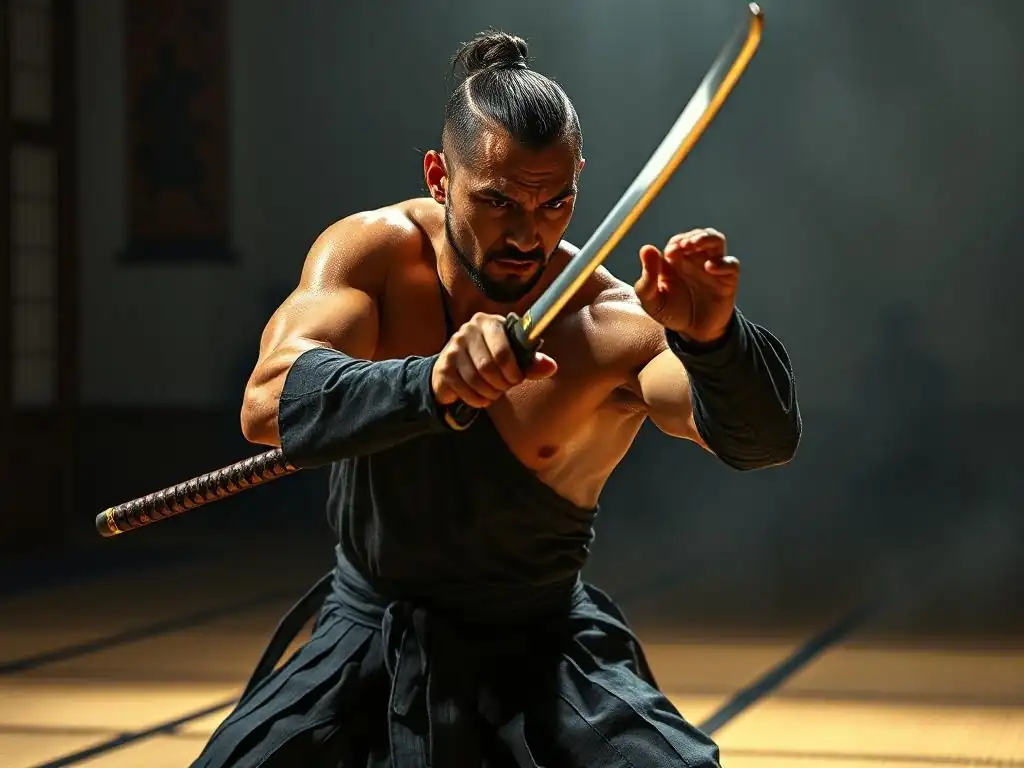
Welcome to Martial Arts Mastery, your ultimate resource for delving into the fascinating world of combat disciplines. Explore the rich tapestry of martial arts, from ancient traditions to modern techniques. Intrigued by the path to mastery? Then prepare to unlock your potential, starting with a deep dive into how Kendo suburi drills power can revolutionize your basic strikes, building both precision and force. Discover the secrets within – your journey to enhanced skill begins now!
- Introduction to Kendo Suburi: The Foundation of Powerful Strikes
- Mastering the Fundamental Kendo Suburi Techniques
- Developing Power and Accuracy with Kendo Suburi Drills
- Advanced Suburi Drills for Kendo
- Common Mistakes to Avoid in Kendo Suburi Practice
- Integrating Suburi into Your Kendo Training Routine
- The Benefits of Consistent Kendo Suburi Practice
- Kendo Suburi for Different Skill Levels
- Equipment Considerations for Effective Suburi Training
- Conclusion: The Enduring Importance of Suburi in Kendo Training
-
Frequently Asked Questions
- What is suburi in Kendo and why is it important?
- How do suburi drills specifically contribute to increased power in Kendo strikes?
- What are some common types of suburi drills practiced in Kendo?
- How often should a Kendo practitioner perform suburi drills?
- Can suburi drills be modified to focus on specific weaknesses in a Kendo practitioner's technique?
- Final Reflection: The Enduring Power of Repetition
- Unleash Your Inner Kendo Master: It Starts Now!
Introduction to Kendo Suburi: The Foundation of Powerful Strikes
Suburi, the practice of swinging the shinai (bamboo sword) repeatedly, is an absolutely fundamental element of Kendo training. It is not merely a warm-up exercise but the bedrock upon which all effective Kendo technique is built. Through consistent and focused suburi, practitioners develop the physical conditioning, muscle memory, and mental focus required to execute powerful, accurate, and timely strikes. It's the silent, often monotonous, work that translates into dynamic action during keiko (practice) and shiai (matches).
Mastering the basic movements of Kendo through dedicated suburi practice is essential for anyone serious about their path in this martial art. It hones the body's mechanics for striking, builds the necessary strength and stamina, and refines the critical coordination between the hands, arms, core, and legs. Without a solid foundation in suburi, a Kendo practitioner's techniques will lack depth, power, and accuracy, hindering progress significantly.
What is Suburi in Kendo? Understanding the Basics
Suburi literally translates to "bare swing" or "empty swing." In Kendo, it refers to the repetitive practice of swinging the shinai or a heavier suburito (a heavier wooden sword specifically for suburi) in various prescribed patterns. The primary goals are to develop correct form, build physical strength and endurance, and cultivate proper tenouchi (the grip and hand action at the moment of impact).
This practice is deceptively simple in concept but profound in its impact. It involves executing strikes to target areas like the head ( men), wrists ( kote), body ( do), and throat ( tsuki) against thin air, focusing entirely on the mechanics of the swing, the coordination of the body, and the explosive snap of the wrists at the imaginary point of impact. Many Kendo dojo incorporate hundreds, sometimes even thousands, of suburi repetitions into their weekly training regimen, highlighting its central importance.
Why Suburi Drills are Crucial for Kendo Practitioners
Suburi drills are crucial because they isolate and refine the core mechanics of striking without the complexity of an opponent or defensive actions. This allows practitioners to focus solely on developing the physical attributes and muscle memory necessary for effective technique. Consistent suburi builds the specific strength in the shoulders, arms, wrists, and core needed for powerful strikes and the endurance required to maintain technique throughout extended periods of practice or competition.
Furthermore, suburi is fundamental for developing proper kamae (stance) and footwork ( ashi-sabaki) in coordination with the strike. The repetitive nature helps synchronize the body's movement, ensuring that power is generated efficiently from the ground up and channeled into the tip of the shinai. It's the repetitive motion of Kendo suburi drills that builds the power and accuracy necessary for competitive Kendo and effective self-defense applications.
Mastering the Fundamental Kendo Suburi Techniques
The foundation of Kendo striking lies in a few core suburi movements. Mastering these forms the basis for all subsequent technical development. Each fundamental suburi targets a specific primary strike area and develops the unique biomechanics required for that strike.
Proper execution of these basic suburi types is paramount before moving onto more complex variations. Focus should always be on quality over quantity, ensuring correct posture, grip, and body movement with each swing. This focused repetition is what translates into effective striking in live practice.
Sho-men Uchi Suburi: Perfecting the Head Strike
Sho-men uchi suburi is arguably the most fundamental and frequently practiced suburi. It simulates striking the top of the opponent's head ( men). The movement involves raising the shinai high above the head with straight arms, maintaining a balanced kamae, and bringing the shinai down in a powerful, vertical arc, snapping the wrists downwards at the imaginary point of impact.
This drill is critical for developing vertical cutting power, coordination between the arms and body, and correct tenouchi. Practitioners often perform hundreds of sho-men uchi suburi repetitions in a single session, focusing on maintaining a consistent rhythm, full extension of the arms, and a strong, grounded stance throughout the movement. It's a primary method for developing Kendo suburi drills power originating from the core.
Kote Uchi Suburi: Developing Precision in Wrist Strikes
Kote uchi suburi focuses on the strike to the opponent's wrist ( kote). This strike requires a slightly different angle and often involves stepping forward with the strike. The suburi simulates this motion, emphasizing a more horizontal or diagonal cut depending on the specific target area on the wrist.
Practicing kote uchi suburi helps develop the precision and timing needed for this quick, often opportunistic strike. It refines the coordination of the forward step with the swing and strengthens the wrist action required for a sharp, effective cut. Developing accuracy in kote strikes through this suburi is key, as it is a frequent opening in sparring.
Do Uchi Suburi: Strengthening the Body Strike
Do uchi suburi practices the strike to the opponent's side ( do). This strike is unique as it often involves a sweeping cut across the body and requires significant body rotation and coordination. The suburi simulates the upward and diagonal swing needed to strike the target area on the protective gear.
This drill builds rotational power from the core and hips, essential for a strong do strike. It also helps practitioners understand the timing and body mechanics required for striking while potentially moving past the opponent. Regular do uchi suburi contributes significantly to overall body coordination and power generation in Kendo techniques.
Tsuki Suburi: Enhancing Thrusting Technique and Control
Tsuki suburi focuses on the thrusting strike to the throat area ( tsuki). This technique is more advanced and dangerous, requiring precise control. The suburi involves extending the shinai directly forward with force, ensuring the tip travels in a straight line and the thrust is controlled and powerful.
Practicing tsuki suburi develops the specific muscle groups used in thrusting, improves accuracy in targeting a small area, and cultivates the control necessary to perform this strike safely and effectively. It requires strong shoulder and core engagement and meticulous attention to maintaining a stable posture throughout the thrust. Mastery of tsuki through suburi is a mark of an advanced practitioner.
Developing Power and Accuracy with Kendo Suburi Drills
Merely swinging the shinai is not enough; suburi must be performed with a conscious focus on developing both power and accuracy. This involves attention to the fundamental principles of Kendo movement and mechanics.
Achieving powerful and accurate strikes through suburi requires integrating the entire body into the movement, not just the arms. It's about efficient force transfer and precise control at the point of impact.
Proper Posture and Grip for Maximum Power in Suburi
Correct posture ( kamae) is the foundation for generating power in any Kendo strike, including suburi. Maintaining a balanced, grounded stance with a straight back allows for efficient transfer of energy from the legs and core through the arms to the shinai. The grip ( tsukagawa) should be firm but not tense, with the left hand at the end of the handle and the right hand slightly below the guard ( tsuba).
The grip is crucial for both power and control. The left hand provides the primary pulling force, while the right hand acts more as a guide and provides supplementary push. A common instruction is to grip the shinai as if holding a bird – firm enough so it doesn't escape, but not so tight as to crush it. This relaxed but firm grip allows for the necessary wrist action ( tenouchi) that generates snap and power at the end of the swing. Incorrect posture or a death grip will significantly inhibit the development of Kendo suburi drills power.
Generating Power from the Core: Engaging Your Body in Suburi
True power in Kendo strikes originates from the core and lower body, not just the arms. During suburi, the movement should initiate from the hips and core, driving the arms through the swing. This involves coordinating the forward movement of the body (if stepping) with the downward swing of the shinai.
Engaging the abdominal muscles and maintaining a strong, stable core throughout the movement ensures that the force generated by the legs and hips is efficiently transferred. Think of the body as a single unit, with the energy flowing smoothly from the ground up through the core and out through the shinai. This integrated body movement is essential for developing significant Kendo suburi drills power and prevents relying solely on weaker arm muscles, which leads to fatigue and less effective strikes.
Maintaining Correct Tenouchi (Hand Action) for Accurate Strikes
Tenouchi is the subtle but critical action of the hands, particularly the wrists, at the precise moment the shinai would strike the target. It involves a downward snapping motion of the wrists, primarily driven by the left hand, which causes the shinai to whip and deliver a sharp, powerful impact with the leading third of the blade ( datotsu-bu).
Practicing this wrist snap during suburi is vital for developing accuracy and the characteristic "crack" of a good strike. Without proper tenouchi, strikes will be weak, lacking the necessary cutting action. Suburi allows practitioners to isolate and perfect this hand movement, ensuring that the power generated by the body is effectively focused at the tip of the shinai for maximum accuracy and impact. Consistent focus on tenouchi during Kendo suburi drills refines both power application and targeting precision.
Advanced Suburi Drills for Kendo
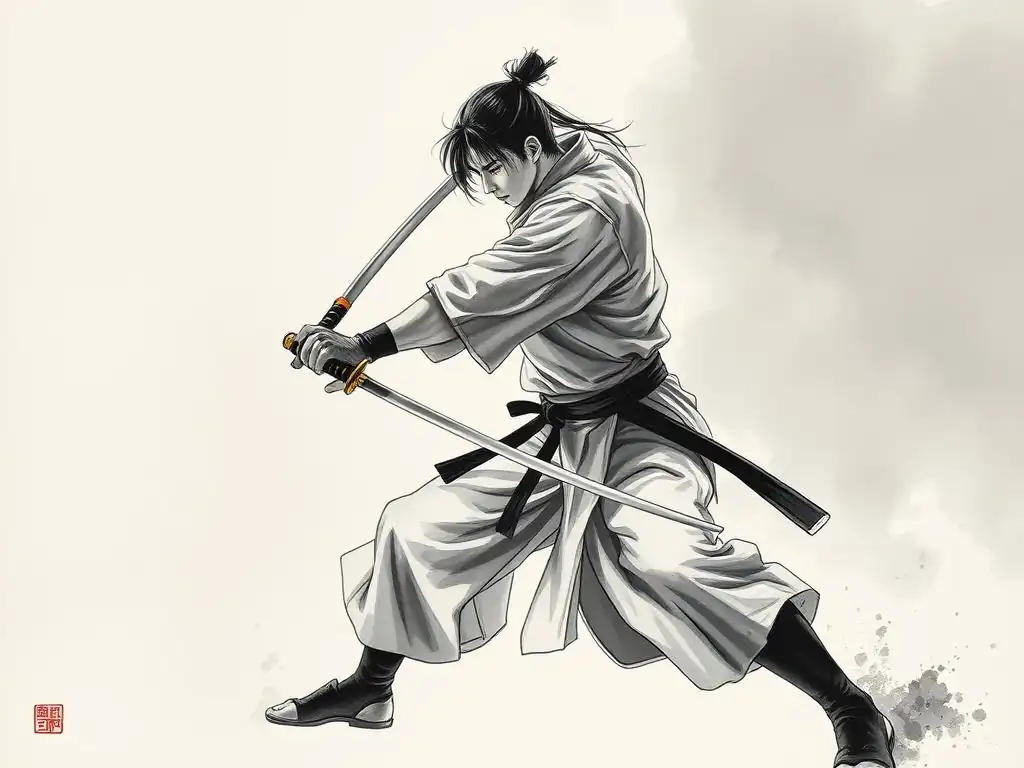
Once the fundamental suburi techniques are ingrained, practitioners can move on to more advanced variations. These drills build upon the basics, adding elements of speed, endurance, directional changes, and complexity to further refine technique and physical conditioning.
Advanced suburi pushes the practitioner physically and mentally, simulating the demands of continuous action and requiring greater coordination and stamina.
Haya Suburi: Increasing Speed and Stamina
Haya suburi (fast suburi) is a drill focused on speed and endurance. It involves performing rapid, continuous sho-men uchi swings, often with a slight upward bounce or jump between swings ( fumikomi-ashi is usually omitted or modified). The emphasis is on maintaining rhythm, speed, and correct form despite fatigue.
This drill significantly boosts cardiovascular endurance and builds explosive speed in the arms and shoulders. A typical haya suburi set might involve 50-100 rapid swings performed consecutively. Regular practice of haya suburi is crucial for developing the stamina needed to maintain effective technique throughout a long keiko session or competition and contributes directly to increasing the speed component of Kendo suburi drills power.
Happo Suburi: Practicing Strikes in All Directions
Happo suburi (eight-direction suburi) involves striking towards eight different directions around the practitioner. Starting from kamae, the practitioner might step and strike forward, backward, left, right, and diagonally, performing a men or kote strike with each step.
This drill develops awareness of one's surroundings and the ability to strike effectively from various angles while maintaining balance and control. It improves footwork coordination with the strike and prepares the practitioner for dynamic movement in keiko or shiai. Happo suburi adds a spatial dimension to the development of Kendo suburi drills power and accuracy.
Continuous Suburi: Building Endurance and Mental Fortitude
Continuous suburi involves performing a high volume of repetitions of various suburi types without significant breaks. This could mean performing 50 sho-men, followed immediately by 50 kote, 50 do, and then perhaps 50 haya suburi, repeating the cycle multiple times.
The primary goal is to build mental toughness and physical endurance. Practicing suburi when fatigued teaches the practitioner to maintain correct form and spirit despite physical discomfort. This drill is a test of willpower and significantly increases overall stamina, essential for sustained performance in Kendo.
Common Mistakes to Avoid in Kendo Suburi Practice
While suburi is fundamental, it's easy to develop bad habits without careful attention. Recognizing and correcting these mistakes is crucial for effective training and preventing injury.
Common errors often involve sacrificing form for speed or quantity, leading to inefficient movement and hindering the development of true power and accuracy.
Overextension and Loss of Balance
A frequent mistake is overextending the body or arms during the swing, especially in sho-men uchi. This leads to a loss of balance and makes the practitioner vulnerable. The strike should finish with the body remaining stable and centered, ready for the next action.
Overextension can also strain joints and muscles. Proper suburi maintains the core stability learned in kamae throughout the movement, ensuring that the power generated is controlled and the body remains upright and balanced. A task list for checking balance might include:
- [ ] Are my feet firmly planted at the end of the swing?
- [ ] Is my upper body leaning forward excessively?
- [ ] Can I immediately move after the strike finishes?
Incorrect Grip and Hand Action
Holding the shinai too tightly or too loosely inhibits proper tenouchi. A grip that is too tense prevents the necessary wrist snap, resulting in a weak, pushing strike rather than a sharp cut. Conversely, a grip that is too loose lacks control.
Ignoring or improperly executing tenouchi is another major error. Without the final wrist snap, the suburi lacks the crucial element that translates body power into a sharp, effective impact. Focusing on the feeling of the shinai tip accelerating rapidly at the bottom of the swing is key. Many beginners struggle with this, but dedicated suburi practice is the primary way to correct it.
Rushing the Movements and Sacrificing Accuracy
Especially when performing high-volume suburi or haya suburi, there's a temptation to rush through the repetitions. This often leads to sloppy form, incomplete movements, and a loss of focus on the technique itself. Quantity should never come at the expense of quality.
While speed is a goal in some drills, accuracy and correct form are always paramount. Rushing prevents the practitioner from internalizing the correct mechanics, hindering the development of genuine Kendo suburi drills power and precision. It's better to perform fewer repetitions correctly than many incorrectly.
Integrating Suburi into Your Kendo Training Routine
Suburi is not a standalone exercise but an integral part of a complete Kendo training regimen. It serves various purposes throughout a typical practice session and should also be incorporated into individual training.
Regular, structured suburi practice complements paired keiko and theoretical study, providing the physical foundation and muscle memory needed to effectively apply techniques.
Warming Up with Suburi Before Keiko (Practice)
Suburi is an excellent way to warm up the body before engaging in more dynamic keiko. A set of 50-100 sho-men uchi can loosen the shoulders, activate the core, and get the blood flowing. It also helps set a mental focus for the practice session.
Starting with basic suburi allows practitioners to mentally transition into Kendo mode, leaving outside distractions behind and focusing on the physical and mental demands of training. It prepares the muscles and mind for the intensity of sparring or technique drills.
Using Suburi for Cool-Down and Recovery
Performing a smaller set of relaxed suburi repetitions at the end of keiko can aid in cooling down. Gentle swings help to stretch the muscles used during practice and promote blood circulation, potentially assisting in recovery.
This post-practice suburi can also be a time for reflection, performing swings slowly and deliberately, focusing on feeling the movement and identifying areas for improvement noted during keiko.
Incorporating Suburi into Individual Training Sessions
While dojo practice is essential, individual suburi training outside of structured classes is highly beneficial. Even just 15-20 minutes a day of focused suburi can significantly accelerate progress.
Individual practice allows practitioners to focus intently on specific aspects of their technique without the distractions of a group setting. Using a mirror or even recording oneself can help identify and correct subtle flaws in posture, grip, or movement. Dedicated personal Kendo suburi drills practice is often the key to unlocking deeper levels of power and accuracy.
The Benefits of Consistent Kendo Suburi Practice
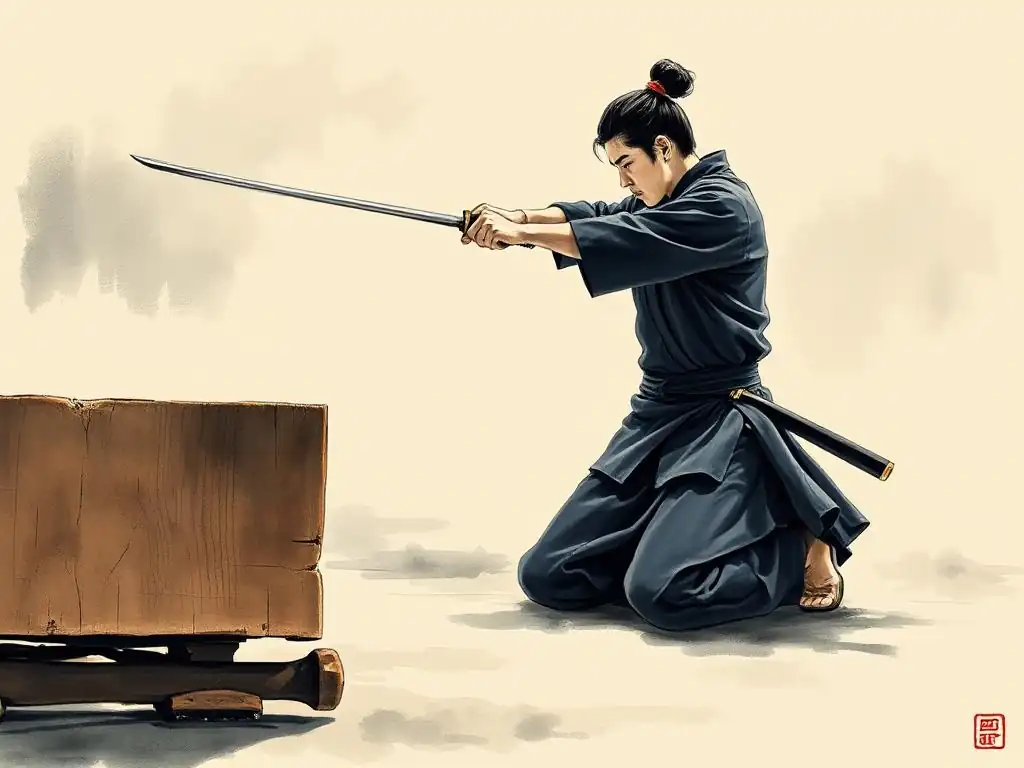
The rewards of diligent suburi practice are manifold, impacting every aspect of a Kendo practitioner's ability and development.
These benefits extend beyond mere physical improvements, fostering mental discipline and a deeper understanding of Kendo principles.
Improved Striking Technique and Accuracy
Consistent suburi refines the mechanics of each strike. Through repetition, the body learns the most efficient path for the shinai, the correct angle of attack, and the precise timing of tenouchi. This leads to strikes that are not only more powerful but also land more consistently on target areas.
The muscle memory developed through thousands of repetitions allows the practitioner to execute strikes instinctively and accurately in the dynamic environment of keiko or shiai. It hones the ability to judge distance and timing, ensuring the datotsu-bu makes contact at the correct point.
Increased Power and Stamina
Suburi is a primary method for building the specific physical conditioning required for Kendo. The repetitive swinging motion builds strength in the shoulders, arms, and core. Drills like haya suburi specifically target speed and endurance.
Developing Kendo suburi drills power comes from integrating the entire body's movement and applying proper tenouchi. Consistent practice increases the ability to generate force and maintain that force over extended periods, allowing practitioners to execute strong strikes even when fatigued.
Enhanced Mental Focus and Discipline
Suburi is often described as a form of moving meditation. The repetitive nature requires significant mental focus to maintain correct form and spirit throughout many repetitions. It cultivates patience, perseverance, and self-awareness.
Pushing through the physical and mental fatigue of high-volume suburi builds mental fortitude and discipline, qualities essential for overcoming challenges both within Kendo and in life. This mental training aspect is just as important as the physical benefits.
Kendo Suburi for Different Skill Levels
The application and focus of suburi practice evolve as a practitioner progresses through the ranks of Kendo.
While fundamental principles remain constant, the specific drills and the goals of suburi practice shift to address the needs of different skill levels.
Suburi Drills for Beginners: Establishing a Solid Foundation
For beginners (typically Kyu grades), suburi is primarily about learning the basic movements, establishing correct posture and grip, and developing fundamental body mechanics. The focus is on quality and understanding the form, rather than speed or power.
Beginners will spend considerable time on sho-men uchi, ensuring they understand the full range of motion, the role of the left and right hands, and basic footwork coordination. Repetitions might be lower, perhaps 50-100 per session, with emphasis on deliberate, controlled movements.
Suburi Drills for Intermediate Practitioners: Refining Technique and Power
Intermediate practitioners (higher Kyu grades and early Dan grades) use suburi to refine the basic techniques, increase speed and power, and begin incorporating more complex movements. This is where the focus shifts towards developing genuine Kendo suburi drills power through better body integration and stronger tenouchi.
Intermediate training includes higher volumes of sho-men uchi (e.g., 200-300+), introduction to haya suburi for speed and endurance, and practicing kote and do suburi with more focus on timing and application. They start to link movements more fluidly.
Suburi Drills for Advanced Kendo: Polishing Performance and Exploring Variations
Advanced practitioners (higher Dan grades) use suburi to maintain peak physical condition, polish subtle aspects of their technique, and explore advanced variations like happo suburi or specific suburi tailored to personal technical goals.
At this level, suburi is about maintaining efficiency, refining the explosive snap of tenouchi, and keeping the body conditioned for the demands of high-level keiko and competition. Advanced practitioners might perform thousands of suburi repetitions weekly, using it as a constant benchmark for their physical and technical state.
Equipment Considerations for Effective Suburi Training
While suburi can theoretically be done with any stick, using appropriate Kendo equipment enhances the effectiveness and safety of the practice.
The right tools provide the correct weight, balance, and feel necessary to simulate actual Kendo striking mechanics accurately.
Choosing the Right Shinai for Suburi
A standard shinai is perfectly suitable for most suburi practice, especially for beginners and general conditioning. It provides the familiar weight and balance used in keiko.
For developing greater strength and Kendo suburi drills power, many practitioners use a suburito. These are heavier, thicker wooden swords designed specifically for suburi. Their increased weight provides greater resistance, building specific muscle strength more quickly than a standard shinai. However, it's crucial to maintain correct form when using a suburito to avoid injury.
The Importance of Proper Kendo Attire and Footwear
While not strictly necessary for all individual suburi practice, wearing appropriate Kendo attire ( kendogi and hakama) and footwear ( tabi or bare feet on a proper floor) promotes the correct physical feeling and mindset. Practicing in bare feet on a suitable wooden floor, for example, is crucial for developing proper footwork ( ashi-sabaki) and grounding.
Training in attire and on surfaces similar to those used in regular keiko ensures that the mechanics developed during suburi are directly transferable to paired practice. It reinforces the connection between the fundamental movements and their application in a Kendo context.
Conclusion: The Enduring Importance of Suburi in Kendo Training
Suburi is far more than a simple warm-up; it is the lifeblood of Kendo technique. From a beginner learning the basic swing to an advanced practitioner refining minute details, consistent and focused suburi practice is indispensable. It is the silent engine that drives progress, building the physical strength, stamina, accuracy, and mental discipline required to excel.
The dedication applied to Kendo suburi drills directly correlates to the power and effectiveness seen in a practitioner's strikes. It is through the thousands of solitary swings that the body internalizes the principles of the sword, forging not just a strong strike, but a strong spirit. Embrace the repetition, focus on the fundamentals, and the rewards of powerful and accurate Kendo will follow.
Frequently Asked Questions
What is suburi in Kendo and why is it important?
Suburi are fundamental swinging drills in Kendo. They are crucial for developing proper form, muscle memory, and generating power in your strikes.
How do suburi drills specifically contribute to increased power in Kendo strikes?
Suburi build core strength and proper body mechanics. This translates to more efficient energy transfer and greater impact force when executing datotsu (strikes).
What are some common types of suburi drills practiced in Kendo?
Common types include shomen suburi (overhead strike), sayu-men suburi (side head strikes), and hasso-gaeshi suburi (figure-eight movements). Each focuses on different aspects of the swing and target acquisition.
How often should a Kendo practitioner perform suburi drills?
Regular practice is key. Ideally, suburi should be incorporated into daily training, even for short periods, to maintain muscle memory and technique.
Can suburi drills be modified to focus on specific weaknesses in a Kendo practitioner's technique?
Yes, suburi can be adjusted to address specific issues. For example, focusing on footwork during the swing or emphasizing the kiai (spirit shout) can improve overall performance.
Final Reflection: The Enduring Power of Repetition
The essence of Kendo, and indeed many disciplines, lies in the mastery of fundamentals, and suburi drills are the bedrock of that mastery. While modern training methods often emphasize complex techniques and strategic sparring, neglecting the foundational movements leads to instability and ultimately limits potential. The enduring relevance of suburi drills in today's Kendo practice underscores the timeless truth that consistent, focused repetition is the key to unlocking true power and accuracy.
This dedication to the basics has profoundly shaped the cultural landscape of Kendo, instilling values of discipline, perseverance, and respect. My own journey in Kendo has been a testament to the transformative power of suburi, witnessing firsthand how these seemingly simple movements cultivate not only physical prowess but also mental fortitude. Repetition is the mother of skill,
a proverb that resonates deeply with the spirit of Kendo, reminding us that consistent effort, even in the most basic of forms, yields extraordinary results.
Therefore, I invite you to reflect on the principles of suburi and consider how they might apply to your own pursuits. Whether you are a seasoned Kendoka or simply seeking to improve in any area of life, embrace the power of repetition, focus on the fundamentals, and witness the remarkable growth that unfolds. Let the spirit of Kendo guide you towards a path of continuous improvement and unwavering dedication.
Unleash Your Inner Kendo Master: It Starts Now!
Thanks for exploring the world of suburi with us! We hope you've gained valuable insights into how these fundamental drills can significantly enhance your kendo skills. Now, it's time to put that knowledge into action.
Here's how you can continue your kendo journey:
- Commit to just 15 minutes of focused suburi practice daily. Consistency is key to building muscle memory and refining your technique.
- Record a video of yourself performing your best suburi and compare it to videos of expert kendo practitioners. Identify areas for improvement and actively work on them in your next practice session.
- Share your favorite suburi drill or tip in the comments below, inspiring others to deepen their practice.
What small adjustment will you make to your suburi practice this week to unlock even greater power and precision?