
The Elusive Power of Shun Shi Zhang: Advanced Applications and Strategies

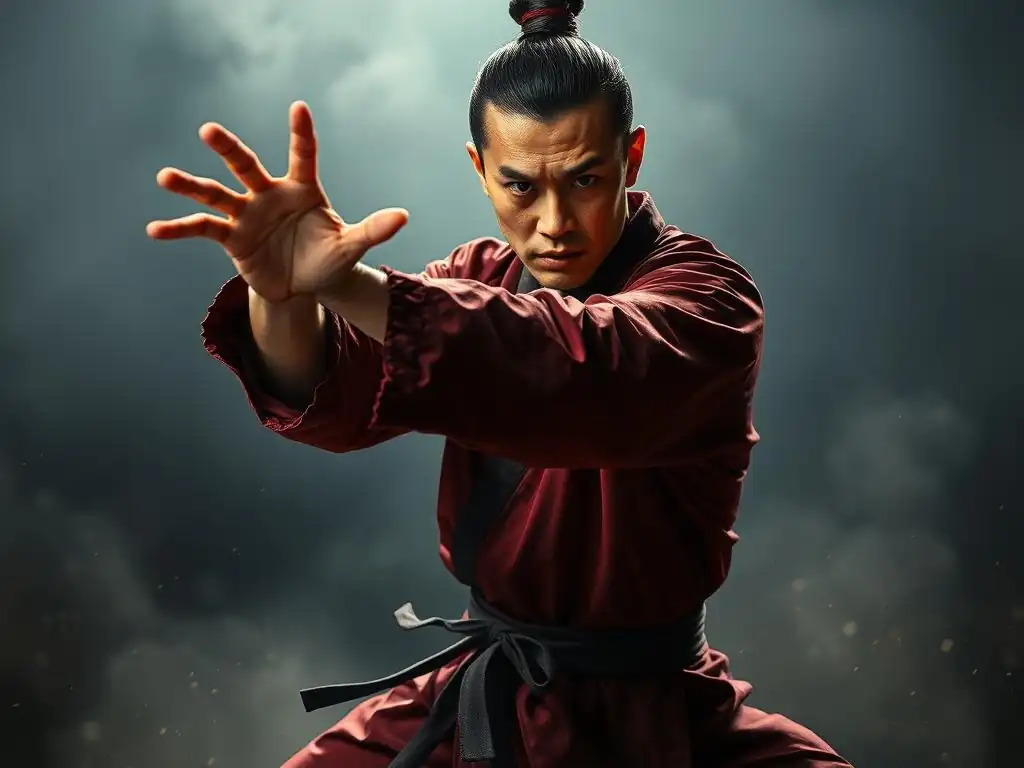
Welcome to Martial Arts Mastery, where the path to understanding the world's fighting arts begins. Prepare to delve into the depths of discipline, history, and technique. Intrigued by the subtle yet devastating power of internal martial arts? Then you've come to the right place. This exploration begins with a focused look at Shun Shi Zhang techniques, unlocking secrets of movement and force you may have never considered. What makes these advanced applications so effective, and how can you integrate them into your own practice? Discover the answers within, and prepare to elevate your mastery.
- The Adaptive Power of Baguazhang Palm Techniques: Advanced Applications and Strategies
- Understanding Adaptive Palm Techniques in Baguazhang
- Advanced Adaptive Palm Techniques and Applications
- Tactical Applications of Adaptive Palms in Combat
- Adaptive Palm Drills and Training Methods
- Adaptive Palms vs. Other Baguazhang Palm Techniques: A Comparative Analysis
- Common Mistakes and How to Avoid Them in Adaptive Palm Practice
- The Philosophical Underpinnings of Adaptive Palm Techniques
- Case Studies: Legendary Baguazhang Practitioners and Adaptive Palm Mastery
-
Frequently Asked Questions
- What exactly are Shun Shi Zhang techniques, and what martial art are they associated with?
- Why are Shun Shi Zhang techniques considered "elusive" or difficult to master?
- What are some key principles that underpin the effective application of Shun Shi Zhang techniques?
- How do Shun Shi Zhang techniques differ from more common punching or striking methods in martial arts?
- Can Shun Shi Zhang techniques be used for self-defense, or are they primarily for demonstrations and forms?
- Final Reflection: Mastering the Unseen Force
- Unleash Your Inner Shun Shi Zhang Master!
The Adaptive Power of Baguazhang Palm Techniques: Advanced Applications and Strategies
Understanding Adaptive Palm Techniques in Baguazhang
What are Adaptive Palm Techniques? The Fundamentals Explained
Adaptive palm techniques in Baguazhang represent a core principle of the art: yielding to and redirecting an opponent's force rather than meeting it head-on. These techniques are not static postures but fluid transitions and changes that respond directly to the incoming energy, angle, and intent of an attacker. Unlike power-generation methods focused purely on generating maximum outward force, adaptive palms prioritize sensitivity, timing, and the ability to merge with and control the opponent's momentum.
This approach allows a smaller or weaker practitioner to neutralize attacks from larger or stronger opponents by utilizing their own energy against them. A prime example within this category are the various Shun Shi Zhang techniques, often translated as "Following-Yielding Palm" or "Accommodating-Force Palm," which embody the very essence of adaptation and responsiveness.
The fundamental mechanics involve specific hand shapes—like the Dragon Palm, Ox Tongue Palm, or Piercing Palm—used not just for striking but for sensing, adhering, controlling, and changing. The practitioner learns to read the opponent's structure and energy through physical contact, however slight, and instantly adapt their palm shape, angle, and movement to exploit openings or neutralize threats. This requires deep training in ting jin (listening energy) and hua jin (transforming/neutralizing energy).
For instance, when an opponent pushes with approximately 50 pounds of force, an adaptive palm technique wouldn't resist with 60 pounds, but might subtly shift angle and apply perhaps 5-10 pounds of counter-pressure to guide the force harmlessly past or off-line, simultaneously setting up a counter-attack. Mastery of these fundamental Shun Shi Zhang techniques begins with cultivating this sensitivity and the ability to respond with minimal effort.
The Significance of Adapting to the Opponent's Force
Adapting to an opponent's force is paramount in Baguazhang because it aligns with the art's foundational principles rooted in Taoist philosophy and the concept of the Bagua (Eight Trigrams), which symbolizes constant change and interrelation. Instead of rigidly opposing force with force, which often leads to a brute-strength contest, adaptation allows the practitioner to become like water – flowing around obstacles, finding the path of least resistance, and ultimately controlling the situation.
This principle is vital in dynamic, unpredictable combat scenarios where an opponent's attack might vary in speed, power, and direction. Trying to block or stop a powerful incoming strike head-on carries a high risk of injury, especially against a larger adversary.
By adapting, the Baguazhang practitioner leverages the opponent's own energy. If an attacker throws a punch with significant forward momentum, an adaptive palm technique, perhaps a variation of Shun Shi Zhang, might subtly guide the punch off its intended line while simultaneously disrupting the attacker's balance or structure. This requires precise timing and sensitivity, often developed through dedicated tui shou (pushing hands) or sensing hands drills.
Through consistent practice, practitioners can learn to feel the subtle shifts in an opponent's weight distribution or the direction of their force flow and respond instantaneously, often within fractions of a second—a response time often cited in master-level demonstrations as appearing almost prescient. This reactive capability makes adaptive palm techniques incredibly efficient and versatile.
Adaptive Palms and Circle Walking: Maintaining Balance and Momentum
The practice of adaptive palm techniques is inextricably linked with Baguazhang's signature circle walking. Circle walking provides the mobile platform from which all techniques are launched and defended. As the practitioner walks the circle, they are constantly shifting weight, changing direction, and maintaining a dynamic, balanced structure.
This constant movement makes the practitioner a difficult target and allows them to continually change angles relative to their opponent. Adaptive palm techniques, including specific Shun Shi Zhang techniques, are applied while circle walking, allowing the practitioner to evade incoming attacks by stepping offline, change the distance, and simultaneously apply a palm technique to control or counter.
Maintaining balance and momentum during circle walking while simultaneously executing complex palm changes is a significant training challenge. The lower body provides the stable yet mobile base, while the upper body and palms execute the intricate defensive and offensive maneuvers. For example, as an opponent lunges, a Baguazhang practitioner might step inside the circle, using a yielding palm to guide the lunge past them, all while continuing their circular motion.
This requires the practitioner's center of gravity to remain low and stable, typically maintained by keeping the knees bent and the torso upright but relaxed. The continuous momentum of the circle walk fuels the fluidity of the palm techniques, allowing for seamless transitions between yielding, controlling, and striking, making techniques like Shun Shi Zhang incredibly difficult for an opponent to predict or defend against.
Advanced Adaptive Palm Techniques and Applications
Mastering the Basic Palm Changes
Mastering the basic palm changes is the foundation for all advanced adaptive palm techniques, including sophisticated Shun Shi Zhang techniques. Baguazhang's eight fundamental palm changes form the core curriculum, each representing a distinct principle and set of applications (e.g., Single Change Palm, Double Change Palm, Following Body Palm, etc.). Each change involves specific footwork patterns combined with coordinated body movements and palm transitions.
Achieving mastery means executing these changes not just mechanically, but with fluidity, power generation (where appropriate), and the ability to transition instantly from one to another based on the situation. This stage of training typically requires several years, with dedicated practitioners often spending 1-2 hours daily refining these basic transitions.
True mastery involves understanding the subtle variations within each palm change and how they can be adapted. For instance, the Single Change Palm isn't just one movement; it can be performed high, low, inside, or outside, each variation having different applications for blocking, striking, or controlling. Practitioners must learn to feel the correct body alignment and energy flow for each variation.
This is often practiced through solo forms, partner drills focusing on specific transitions, and eventually free-form applications. Achieving proficiency in the basic palm changes, including the foundational Shun Shi Zhang techniques embedded within them, is essential before attempting more complex applications, as they provide the fundamental vocabulary of movement and energy manipulation.
Integrating Body Mechanics for Enhanced Power
While adaptive palm techniques emphasize yielding and redirection, they are not passive. They often transition immediately into powerful counter-attacks. Integrating proper body mechanics is crucial for generating significant power after yielding or redirecting. This involves using the whole body—the rooting through the legs, the rotation of the waist, the spiraling of the torso and arms—to deliver force through the palm.
The power does not come solely from the arm but is generated from the ground up, channeled through the body, and expressed through the palm strike or control. This is a hallmark of internal martial arts like Baguazhang. For example, a seemingly soft, yielding palm might suddenly torque the opponent's joint or structure using rotational force generated by the entire body.
Advanced Shun Shi Zhang techniques specifically leverage this body-wide integration. A yielding movement with the palm might simultaneously involve a subtle shift in stance and a coiling of the torso. As the opponent's force is neutralized or redirected, the body instantly uncoils, releasing explosive power through the palm.
This kind of power generation is often referred to as 'shock power' or 'vibrating power,' capable of causing significant internal disruption even without appearing overtly forceful. Developing this level of body integration requires extensive solo practice, focusing on aligning the joints and coordinating movements, as well as partner drills designed to apply force while maintaining connection and structure. Practicing applications against weighted bags or pads, focusing on transferring whole-body power upon contact, is also part of this training phase, often involving hundreds of repetitions of specific movements.
Advanced Footwork for Evasive Maneuvers
Advanced adaptive palm techniques rely heavily on sophisticated footwork for evasiveness and positioning. Baguazhang's footwork is characterized by stepping, circling, and changing direction rapidly. This allows the practitioner to constantly adjust their angle relative to the opponent, moving offline to evade attacks while simultaneously gaining a superior position for applying adaptive palm techniques or follow-up strikes. Simple sidesteps and pivots evolve into complex weaving patterns, diagonal entries, and rapid changes of direction (e.g., kou bu - inward step, bai bu - outward step). The feet are constantly active, providing both mobility and rooting.
The interplay between adaptive palms and evasive footwork is symbiotic. As an opponent attacks, the footwork creates the initial evasion, shifting the practitioner out of the line of fire. Simultaneously, the adaptive palm connects, guides, or controls the incoming limb.
This combined action disrupts the opponent's balance and structure while keeping the Bagua practitioner safe and in a position of advantage. For instance, if an opponent throws a right cross, a practitioner might step offline to their left (using a bai bu or similar step) while using a left adaptive palm (perhaps a Shun Shi Zhang variation) to parry or guide the punch past their head. This requires the footwork and palm technique to be perfectly coordinated, often practiced thousands of times in solo drills and with partners, focusing on speed and precision.
Tactical Applications of Adaptive Palms in Combat
Using Adaptive Palms to Deflect and Redirect Attacks
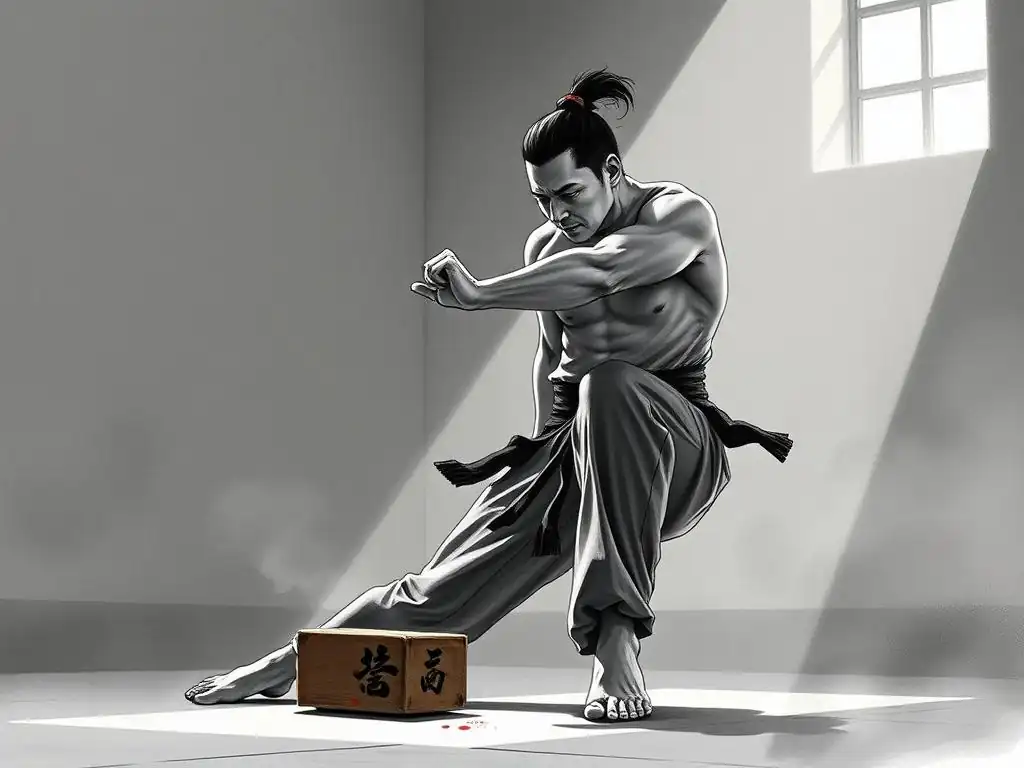
One of the primary tactical applications of adaptive palm techniques, including Shun Shi Zhang techniques, is their use in deflecting and redirecting incoming attacks. Instead of a hard block that stops the force abruptly, an adaptive palm meets the incoming force with sensitivity and fluidity, guiding it off its intended trajectory.
This is akin to deflecting a fast-moving object with a gentle touch at the right angle and timing. The goal is not to absorb the force but to divert it, causing the opponent's attack to miss its target or even cause them to lose balance due to their own momentum being misdirected.
Consider an opponent throwing a powerful straight punch. An adaptive palm might meet the forearm or wrist with a slight angle and yielding pressure, combined with stepping offline. This causes the punch to slide past the practitioner's body.
If done correctly, the opponent's forward momentum, perhaps 100-150 pounds of force channeled into the punch, is used against them, pulling them slightly off-balance or leaving them overextended. This deflection and redirection must be executed with precise timing, typically within the first 0.5 seconds of the attack's trajectory, to be effective. This tactical application is constantly drilled, starting slowly to build sensitivity and gradually increasing speed and power, often involving thousands of repetitions against various types of attacks.
Adaptive Palms as a Counter-Attacking Strategy
Adaptive palm techniques are rarely just defensive; they are inherently designed to transition immediately into counter-attacks. Once an opponent's force has been neutralized or redirected, they are momentarily vulnerable. This is the window of opportunity for the Baguazhang practitioner to strike. The same palm or body movement used for adaptation often becomes the setup or the initial phase of a counter-strike or control technique. The fluidity of the transitions means there is no pause between defense and offense. This makes Shun Shi Zhang techniques particularly effective, as the "yielding" phase seamlessly flows into the "following" or "attacking" phase.
For example, after using an adaptive palm to redirect a punch, the practitioner might instantly change the palm shape and angle to strike a vital point, apply a joint lock, or disrupt the opponent's balance further. If an opponent's arm is guided past the body, the practitioner might immediately apply pressure to the elbow or shoulder joint while stepping behind them, leading to a throw or submission. This requires the practitioner to constantly be aware of potential follow-ups as they adapt.
The timing is critical; the counter-attack must begin almost simultaneously with the completion of the redirection, typically within milliseconds. Training drills often focus on these specific defense-to-offense transitions, practicing dozens of different scenarios from various angles and attack types.
Adaptive Palms in Close-Quarters Combat Scenarios
In close-quarters combat, where space is limited and exchanges are rapid, adaptive palm techniques truly shine. Baguazhang excels in fighting at close range, using its circular movement and intricate hand techniques to navigate within the opponent's personal space. Adaptive palms allow the practitioner to manage the chaos of close-range exchanges, where multiple strikes or grappling attempts might occur simultaneously. By staying connected and sensitive, the practitioner can feel the opponent's intentions and force generation at their source and adapt instantly, preventing attacks from fully developing or disrupting the opponent's structure before they can generate significant power.
In a clinch or grappling situation, for instance, Shun Shi Zhang techniques can be used to subtly shift body weight, apply pressure to weak points, or create small angles that disrupt the opponent's base. Instead of trying to out-muscle a stronger opponent, the practitioner uses sensitive palm contact to feel pushes, pulls, and shifts in balance, responding by yielding, adhering, or redirecting to maintain their own structure and control the opponent's.
This might involve using palm pressure on the sternum to create space, applying leverage to the elbow or shoulder to prevent a strike, or using a subtle palm strike to the neck or ribs while maintaining control. These techniques are often low-amplitude but highly effective due to their precise application based on sensitivity, a skill honed through hundreds of hours of close-range partner drills.
Adaptive Palm Drills and Training Methods
Partner Drills for Developing Sensitivity and Timing
Partner drills are indispensable for developing the sensitivity ( ting jin) and timing required for effective adaptive palm techniques, including mastering Shun Shi Zhang techniques. These drills often start slowly and focus purely on feeling the partner's energy and responding appropriately. Basic drills might involve one partner applying gentle, steady pressure while the other practices yielding and redirecting without losing connection.
More advanced drills introduce varying levels of force, direction, and speed, requiring the practitioner to adapt on the fly. Pushing hands ( tui shou) is a classic example, where partners maintain contact and attempt to unbalance each other using yielding, adhering, and issuing energy.
Specific adaptive palm drills might focus on a single type of incoming attack, like a straight punch or a grab, and practice multiple ways to adapt using different palm shapes and footwork. For instance, a drill might involve a partner throwing a slow punch, and the practitioner practices three different Shun Shi Zhang variations to deflect it. As proficiency increases, the speed and power of the attack are increased, and the response time is reduced.
These drills emphasize maintaining connection and sensing the partner's intent through physical contact, a skill that can take hundreds of hours of dedicated practice to develop to a high level. A common goal in such drills is to be able to predict the partner's next move within milliseconds based on subtle physical cues.
Solo Practice: Refining Palm Changes and Footwork
While partner drills are crucial for sensitivity, solo practice is essential for refining the mechanics of palm changes and footwork. Practicing the Baguazhang forms (which contain sequences of palm changes and footwork) is the primary method. Solo practice allows the practitioner to focus on their own body mechanics, ensuring correct alignment, smooth transitions, and proper energy flow without the external variable of a partner.
It is where the practitioner internalizes the movements, making them second nature. Repeating the basic eight palm changes, as well as more complex variations and the various Shun Shi Zhang techniques embedded within them, hundreds or thousands of times builds muscle memory and fluidity.
Beyond forms, solo drills might involve practicing specific footwork patterns in isolation, focusing on speed, agility, and maintaining balance while changing direction. Practicing palm strikes against the air or a wall bag, focusing on generating power from the whole body after a simulated yield or redirection, is also important. Shadowboxing, where the practitioner simulates applying adaptive techniques against an imaginary opponent, helps integrate palm movements with footwork and body mechanics in a dynamic setting. Consistent solo practice, often 30-60 minutes daily, is fundamental to developing the precision and fluidity necessary for effective application of adaptive palm techniques.
Integrating Adaptive Palms into Baguazhang Form Practice
Integrating the principles of adaptive palms into Baguazhang form practice transforms the forms from mere sequences of movements into dynamic, applicable techniques. When practicing forms, the practitioner should visualize potential opponents and attacks, performing each movement not just as a step and a palm change, but as a response to a specific scenario. Each palm movement should be understood in terms of how it could yield, adhere, control, or strike.
This turns the solo form into a moving meditation and a practical training exercise. The various Shun Shi Zhang techniques inherent in the forms should be practiced with mindful awareness of their adaptive function.
For example, when performing a movement that involves a yielding palm followed by a strike, the practitioner should imagine feeling an incoming force, yielding to it with sensitivity, and then instantly coiling and uncoiling their body to deliver the counter-strike. This requires understanding the applications of each movement within the form. Many Baguazhang schools teach form applications alongside the form itself to facilitate this integration.
Practicing the forms with this level of mindful application, focusing on the principles of adaptation and responsiveness, significantly enhances the practitioner's ability to apply these techniques in real-world situations. This integrated practice should ideally constitute a significant portion of training time, perhaps 40-50% of solo practice.
Adaptive Palms vs. Other Baguazhang Palm Techniques: A Comparative Analysis
Contrasting Adaptive Palms with Power Generation Techniques
Baguazhang encompasses a range of palm techniques, some focused on yielding and adaptation (like Shun Shi Zhang techniques), and others primarily focused on generating maximum striking power. While adaptive palms prioritize redirecting force and setting up opportunities, power generation techniques, such as certain types of shock palms or penetrating palms, focus on delivering a devastating strike upon contact. The key difference lies in the intent and application at the moment of contact with the opponent's force. Adaptive palms meet force with yielding to redirect, while power generation techniques meet force (or an opening) with focused, explosive energy.
However, these two categories are not mutually exclusive. Adaptive palms often transition into power generation techniques. A successful redirection using a Shun Shi Zhang might immediately be followed by a powerful palm strike to a vulnerable target.
The adaptive movement creates the opening and positioning for the power strike to be most effective. Training involves developing proficiency in both, understanding when to yield and when to issue power, and how to seamlessly transition between the two. While perhaps 60% of initial training focuses on the yielding aspect of adaptive palms to build sensitivity, advanced training integrates the rapid transition to powerful finishing techniques.
Adaptive Palms and their Relationship to Evasive Techniques
Adaptive palms are closely related to evasive techniques in Baguazhang, as both aim to avoid a head-on clash with the opponent's force. Evasive techniques primarily use footwork and body movement (like circling or stepping offline) to move the practitioner out of the line of attack entirely. Adaptive palms, while often combined with evasive footwork, specifically deal with the incoming force through physical contact, yielding to and redirecting it. Evasion creates distance and positioning; adaptive palms manage the force upon contact.
Think of evasion as stepping away from a thrown object, and adaptive palms as subtly guiding the object past you without getting hit directly. Both are crucial components of Baguazhang's defensive strategy. Evasive footwork often initiates the defense, and adaptive palms handle the immediate interaction if the opponent closes distance or the evasion isn't sufficient on its own. Many Shun Shi Zhang techniques inherently combine subtle evasive body shifts with the yielding palm action. Developing proficiency requires training both aspects together, ensuring that footwork and hand techniques are perfectly coordinated, a skill that can take years to master.
When to Use Adaptive Palms Over Other Baguazhang Palms
Choosing when to use adaptive palms (like Shun Shi Zhang techniques) versus other palm techniques depends entirely on the context of the encounter, the opponent's actions, and the practitioner's goals. Adaptive palms are generally preferred when:
- The opponent is significantly stronger or larger.
- The opponent is attacking with great force and momentum.
- The practitioner needs to maintain control of the opponent's limb or structure.
- The goal is to redirect force to create an opening for a counter or throw.
- In unpredictable, close-quarters exchanges where sensitivity is key.
Other palm techniques, such as direct power strikes, might be preferred when:
- An clear opening exists and a quick finishing blow is possible.
- The opponent's structure is already compromised or off-balance.
- The practitioner has a significant size or strength advantage (though Bagua typically avoids relying on this).
- The goal is a direct, forceful impact rather than redirection.
A skilled Baguazhang practitioner doesn't exclusively use one type; they seamlessly integrate adaptive palms, evasive movement, and power generation techniques as the situation demands. The mastery lies in the ability to instantly read the situation and apply the appropriate technique, often transitioning between them within milliseconds. This requires extensive sparring and application practice against various opponents and attack types, often involving thousands of simulated exchanges.
Common Mistakes and How to Avoid Them in Adaptive Palm Practice
Addressing Errors in Body Alignment and Posture
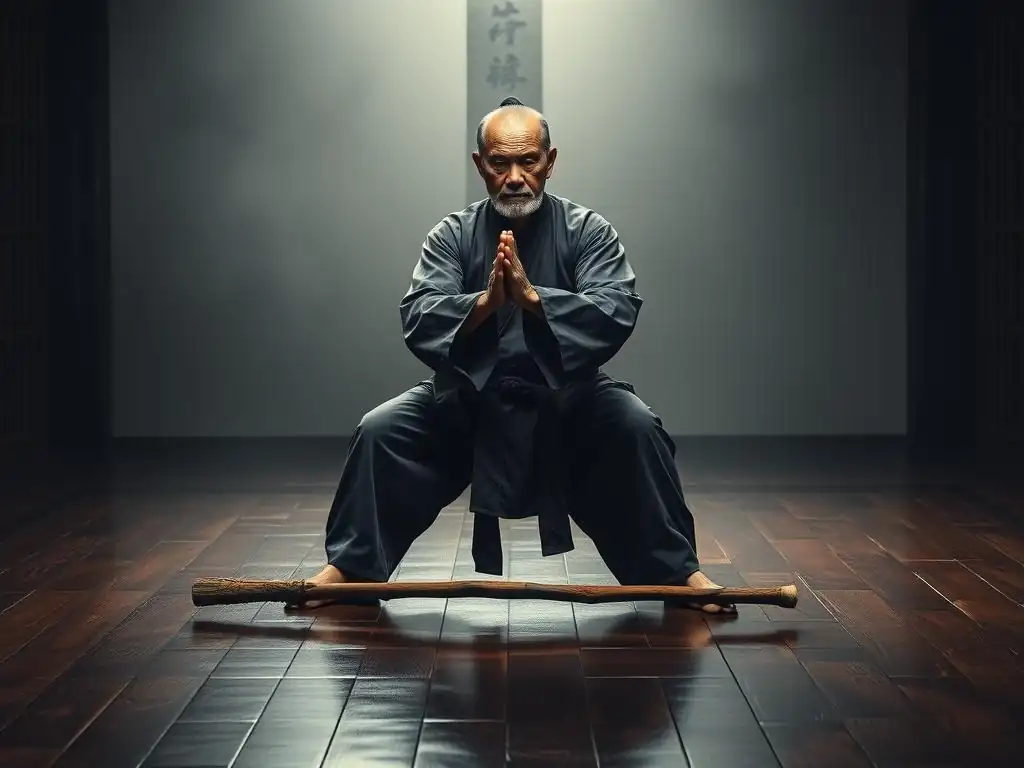
A common mistake in practicing adaptive palm techniques, including Shun Shi Zhang techniques, is improper body alignment and posture. This often manifests as rigidity, losing the connection between the upper and lower body, or failing to maintain a stable but mobile base.
Poor alignment prevents the practitioner from effectively channeling force (both yielding and issuing) and makes them vulnerable to being easily unrooted or unbalanced by the opponent's force. For example, if the shoulders are tense or the waist is stiff, the subtle yielding motions of the palm cannot be properly supported by the whole body, resulting in a weak or ineffective technique.
To address this, practitioners must consistently focus on maintaining the core Baguazhang posture principles: head suspended from above, shoulders relaxed and sinking, elbows dropping, waist relaxed and turning, kua (hips/groin) open and sinking, knees bent, and weight rooted through the bubbling well point of the foot. Solo practice, particularly slow, mindful circle walking and form practice, is crucial for internalizing these principles. Using a mirror or having an instructor provide feedback can help identify postural errors.
Partner drills should begin slowly, focusing on maintaining structure and connection while responding to force, rather than trying to move the partner. Practicing against a wall or a partner applying gentle, steady pressure can help reinforce proper structural alignment, aiming to maintain perfect balance against forces up to 50-100 pounds without significant muscular tension.
Correcting Incorrect Footwork and Stance
Another frequent error is incorrect footwork and stance. This includes taking steps that are too large or too small, losing rooting during transitions, failing to coordinate footwork with palm movements, or having a stance that is too high or too low, compromising mobility or stability. Incorrect footwork hinders the practitioner's ability to evade, change angles, and generate power from the ground, rendering adaptive palm techniques less effective. For instance, if the step is mistimed when redirecting an attack, the practitioner might end up in a poor position, unable to follow up or vulnerable to the opponent's next move.
Correction involves dedicated footwork drills, both solo and with partners. Practitioners should spend significant time (e.g., 20-30 minutes per practice session) practicing the basic Baguazhang steps (circle walking, kou bu, bai bu, etc.) focusing on maintaining a consistent height, smooth transitions, and keeping the weight balanced. Partner drills focusing specifically on evasive footwork combined with basic palm contact help integrate the two. Instructors should provide specific feedback on step size, angle, and timing. Video recording one's own practice can also be a useful tool for self-correction. Mastery requires the footwork to become intuitive, requiring thousands of repetitions.
Overcoming Resistance and Tension in Execution
A key challenge in developing adaptive palm techniques, including effective Shun Shi Zhang techniques, is overcoming the natural tendency to resist incoming force with muscular tension. This resistance defeats the principle of yielding and adaptation, turning the encounter into a contest of strength. Tension also restricts fluidity of movement and prevents the practitioner from sensing the opponent's energy effectively. Indicators of this mistake include stiff arms, locked joints, holding breath, and a rigid torso.
Overcoming tension requires conscious relaxation and focused practice on the principle of song (松), or relaxed sinking. Slow, mindful practice of forms and partner drills, focusing solely on maintaining relaxation while responding to force, is essential. Beginners might practice yielding to very light pressure (e.g., 5-10 pounds) from a partner, ensuring their body remains soft and connected.
As proficiency grows, the ability to remain relaxed while dealing with greater force increases. Techniques like Qigong or Zhan Zhuang (standing meditation) can also help cultivate relaxation and energy flow. Recognizing tension in one's own body and consciously releasing it during practice is a continuous process that can take years, aiming for a state where the body feels heavy and rooted yet light and mobile.
The Philosophical Underpinnings of Adaptive Palm Techniques
The Principles of Yielding and Adaptability
At the heart of adaptive palm techniques in Baguazhang lie the profound philosophical principles of yielding and adaptability, deeply rooted in Taoist thought, particularly the concepts from the I Ching and the Tao Te Ching. Yielding is not surrender; it is intelligent non-resistance. It recognizes that opposing a superior force directly is often inefficient or impossible.
Instead, one yields, like a flexible branch bending in the wind, allowing the force to pass harmlessly. This yielding creates an opportunity, as the opponent's committed force leaves them momentarily exposed. Adaptability is the ability to instantly change one's response based on the ever-changing circumstances, like water conforming to any container.
These principles are embodied in techniques like Shun Shi Zhang (Following-Yielding Palm). "Shun" means to follow, accord with, or go along with; "Shi" means force, power, or momentum; "Zhang" means palm. Thus, it is the palm technique that follows and yields to the opponent's force. This requires a mindset shift away from aggressive confrontation towards sensitive interaction and strategic response.
It's about harmonizing with the force, not fighting it. This philosophical approach informs every physical movement, making the techniques effective not just through mechanics but through an underlying strategic intelligence. Understanding and embodying these principles is considered as important as the physical training itself.
Applying Adaptive Concepts to Everyday Life
The principles learned through practicing adaptive palm techniques, such as yielding, adaptability, sensitivity, and flowing with change, are highly applicable to everyday life. Just as one learns to yield to an opponent's physical force in Baguazhang, one can learn to yield to difficult situations, challenging personalities, or unexpected obstacles in life instead of rigidly resisting them. This doesn't mean being passive, but rather finding the path of least resistance, adapting one's approach, and using the energy of the situation to one's advantage.
For instance, facing a difficult conversation (an "incoming force"), instead of meeting aggression with aggression (a "hard block"), one might practice "yielding" by listening calmly, acknowledging the other person's perspective, and then "redirecting" the conversation towards a constructive outcome. Dealing with unexpected problems (a "sudden attack") requires "adaptability," quickly assessing the situation and changing one's plan rather than getting stuck in rigid thinking.
The sensitivity developed in feeling an opponent's energy translates to increased emotional intelligence and the ability to sense the dynamics in social interactions. Practicing adaptive palm techniques thus becomes a form of moving meditation that cultivates mental and emotional resilience, allowing practitioners to navigate life's challenges with greater fluidity and effectiveness.
A Path to Self-Mastery Through Martial Arts
Practicing adaptive palm techniques within Baguazhang is more than just learning self-defense; it is a path to self-mastery. The physical demands require discipline, perseverance, and patience. Overcoming the natural instinct to resist force teaches humility and strategic thinking. Developing sensitivity requires introspection and awareness of one's own body and energy, as well as the ability to perceive others. The continuous process of identifying and correcting errors in posture, footwork, and tension builds self-awareness and the capacity for self-improvement.
Furthermore, the philosophical principles of yielding, adaptability, and flowing with change challenge rigid thinking and emotional reactivity, fostering mental and emotional flexibility. The constant practice of maintaining balance and composure under pressure, whether physical or mental, builds inner strength and resilience. Mastery of Shun Shi Zhang techniques and other adaptive palms is not just about defeating an opponent; it's about mastering oneself – one's physical body, one's mind, and one's reactions to the world. This holistic development is the ultimate goal of dedicated martial arts practice.
Case Studies: Legendary Baguazhang Practitioners and Adaptive Palm Mastery
[Case Study 1: Analyzing Dong Haichuan's Use of Adaptive Techniques]
Dong Haichuan (circa 1798-1882), the widely acknowledged founder of Baguazhang, is legendary for his seemingly effortless ability to evade multiple attackers simultaneously and defeat opponents without apparent force. While specific, detailed accounts of his Shun Shi Zhang techniques or adaptive palm applications are often anecdotal, historical texts and accounts from his students emphasize his extraordinary movement, evasion, and ability to stick to opponents.
One common description recounts Dong facing several attackers armed with spears or swords; instead of blocking or meeting the weapons head-on, he would reportedly circle around them with incredible speed and agility, using subtle hand and body movements to deflect or control the weapons while getting inside their guard to neutralize them.
These accounts strongly suggest a profound mastery of adaptive techniques. His ability to evade multiple linear attacks from different directions simultaneously points to an exceptional level of sensitivity, timing, and footwork—the core components of adaptive strategies.
The descriptions of him "sticking" to opponents imply a high degree of ting jin (listening energy) and nian jin (adhering energy), allowing him to feel the opponent's intentions and structure through contact and adapt instantly. While precise technical manuals from his era are rare, the consistent theme in historical accounts is his reliance on circular movement, evasion, and the ability to neutralize force rather than oppose it, all hallmarks of advanced adaptive palm and body techniques.
[Case Study 2: Examining Historical Records and Their Depiction of Cheng Tinghua's Palm Changes]
Cheng Tinghua (1848-1900), one of Dong Haichuan's most famous disciples and the founder of the Cheng style of Baguazhang, was known for his powerful yet fluid style, heavily influenced by his background as a wrestler. Historical accounts and the techniques preserved in the Cheng style lineage provide insight into his application of adaptive palm techniques, often integrated with throwing and grappling. Cheng was reportedly able to defeat much larger opponents, often by getting inside their defenses and using his unique body mechanics and palm applications to unbalance and throw them.
Depictions of Cheng's techniques often show him using palm changes in close quarters to control an opponent's limbs or torso, disrupting their structure. For instance, a common application in Cheng style involves using a yielding palm to meet an incoming strike, simultaneously stepping inside, and then using a combination of palm pressure on the opponent's body and rotational force from the circle walk to execute a throw. This demonstrates how adaptive palms were used not just for redirection but as entries into grappling scenarios.
While exact figures on the size difference between Cheng and his opponents are often estimations (some accounts suggest he could handle opponents 1.5 times his weight), the consistent theme is his ability to use sensitivity and leverage, facilitated by adaptive palm applications and his wrestling background, to overcome brute strength. His style exemplifies how Shun Shi Zhang techniques can be integrated with other martial skills.
Lessons Learned from the Masters: Applying Their Wisdom to Your Training
The case studies of masters like Dong Haichuan and Cheng Tinghua offer invaluable lessons for practitioners of adaptive palm techniques and Shun Shi Zhang techniques today. Firstly, they highlight the absolute centrality of movement, particularly circle walking and evasive footwork. Neither master relied on standing their ground; their effectiveness came from their dynamic mobility.
This emphasizes the need for dedicated footwork training. Secondly, their ability to handle larger opponents points to the importance of sensitivity and leveraging the opponent's force rather than relying on one's own strength. This underscores the necessity of slow, focused partner drills to develop ting jin and hua jin.
Finally, the variations in their styles (Dong's emphasis on evasion, Cheng's integration with wrestling) show that while the core principles of adaptation are universal, their application can be personalized. Modern practitioners should strive to understand the principles behind the techniques taught by the masters and apply them in ways that suit their own body type and context, rather than simply mimicking movements.
This requires deep study, dedicated practice (often involving thousands of hours over many years), and the guidance of experienced instructors who understand the underlying philosophy and body mechanics of these advanced Baguazhang methods. The wisdom of the masters lies not just in their techniques, but in the principles of effortless power, constant adaptation, and self-cultivation they embodied.
Frequently Asked Questions
What exactly are Shun Shi Zhang techniques, and what martial art are they associated with?
Shun Shi Zhang techniques refer to a set of advanced palm strike techniques often associated with various Chinese martial arts, but are most prominently found in certain styles emphasizing internal power. The name literally translates to "Following the Situation Palm".
Why are Shun Shi Zhang techniques considered "elusive" or difficult to master?
They are considered elusive because they require a deep understanding of body mechanics, internal energy cultivation, and precise timing. Mastery demands years of dedicated practice beyond simple physical movements.
What are some key principles that underpin the effective application of Shun Shi Zhang techniques?
Key principles include yielding, redirecting force, and generating power from the core. Emphasis is placed on understanding the opponent's intent and exploiting openings with minimal effort.
How do Shun Shi Zhang techniques differ from more common punching or striking methods in martial arts?
Unlike conventional punches, Shun Shi Zhang emphasizes using the entire body to generate power, relying on internal alignment and relaxed force rather than brute strength or speed from the limbs.
Can Shun Shi Zhang techniques be used for self-defense, or are they primarily for demonstrations and forms?
While visually appealing in forms, Shun Shi Zhang techniques are highly effective for self-defense. Their focus on efficient power generation and targeting vital points makes them potent tools for practical application.
Final Reflection: Mastering the Unseen Force
The exploration of Shun Shi Zhang techniques transcends mere martial arts instruction; it delves into the very essence of timing, leverage, and unseen force. Today, in a world obsessed with brute strength and immediate gratification, understanding these principles offers a profound counterpoint, reminding us that true power lies not in dominance, but in subtle mastery and the strategic application of minimal effort for maximum impact.
The influence of Shun Shi Zhang extends far beyond the dojo. Its principles of yielding, redirecting, and harnessing momentum resonate deeply with the challenges we face in navigating complex relationships, overcoming obstacles, and achieving our goals. The supreme art of war is to subdue the enemy without fighting,
as Sun Tzu wisely stated. This philosophy, mirrored in Shun Shi Zhang, encourages us to seek elegant solutions, to find strength in adaptability, and to transform apparent weakness into a source of formidable power.
Now, consider how you can apply these lessons in your own life. Are you facing a seemingly insurmountable challenge? Perhaps by embracing the principles of Shun Shi Zhang – by yielding to the initial force, redirecting its energy, and leveraging its momentum – you can discover a path to success that was previously hidden. Embrace the unseen force within you, and unlock your own potential for mastery.
Unleash Your Inner Shun Shi Zhang Master!
Thank you for delving into the advanced applications of Shun Shi Zhang. We hope you've gained valuable insights into mastering this elusive art. Now, it's time to translate that knowledge into action and elevate your practice!
Here's how you can continue your Shun Shi Zhang journey:
- Embark on the "Silent Step" challenge: Dedicate 15 minutes daily to practicing Shun Shi Zhang techniques in complete silence, focusing solely on the feeling and precision of each movement.
- Share your newfound Shun Shi Zhang knowledge! Lead a practice session or discussion with fellow martial artists at your dojo and exchange experiences on mastering specific techniques.
- Revisit the fundamentals: Review a lower-level Shun Shi Zhang form or principle to refine your foundation. This can often reveal new nuances and insights when approached with advanced understanding.
Ready to take your Shun Shi Zhang mastery to the next level? What unexpected benefits have you experienced since incorporating Shun Shi Zhang into your martial arts routine?