
Tai Sabaki in Action: Analyzing Movement in Aikido Masters

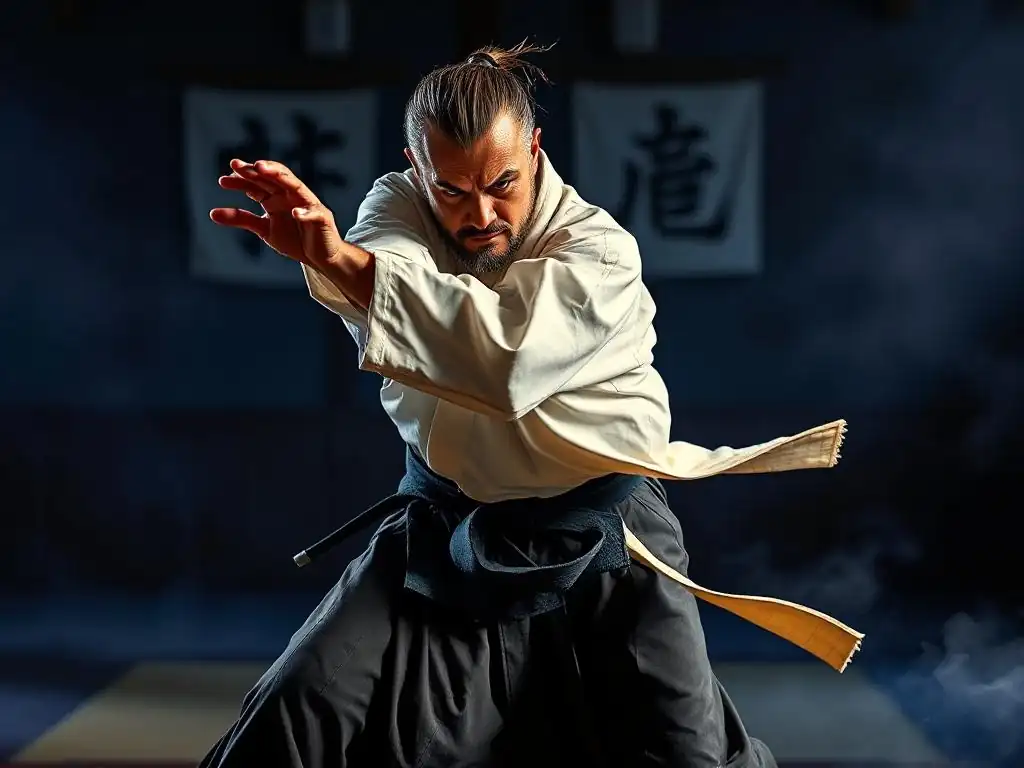
Welcome to Martial Arts Mastery, your gateway to understanding the intricate world of combat arts. Delve into the elegance and efficiency of Aikido, where technique transcends brute force. Ever wondered how Aikido masters achieve such effortless movement? This article unveils the secrets behind Aikido movement analysis techniques, specifically focusing on tai sabaki, offering insights that could revolutionize your understanding and practice. Prepare to unlock the principles of motion and discover the hidden depth within each graceful step.
- Introduction to Tai Sabaki: The Core of Aikido Movement
- Aikido Masters and Their Unique Tai Sabaki Styles
- Detailed Aikido Movement Analysis Techniques: A Comparative Study
- Practical Applications of Tai Sabaki: Enhancing Your Aikido Practice
- Advanced Tai Sabaki Concepts: Beyond Basic Movement
- Tai Sabaki and Aiki Principles: The Connection
- Conclusion: Mastering Aikido Movement Through Tai Sabaki
-
Frequently Asked Questions
- What is Tai Sabaki and why is it important in Aikido?
- How does Tai Sabaki contribute to Aikido's emphasis on non-resistance?
- What are some key elements to consider when performing Tai Sabaki effectively?
- How can Aikido movement analysis techniques help improve one's Tai Sabaki?
- Where can I find more resources on Aikido movement analysis techniques and Tai Sabaki?
- Final Reflection: The Dance of Harmony and Adaptation
- Master the Art: Unlock Your Aikido Potential Now!
Introduction to Tai Sabaki: The Core of Aikido Movement
Understanding Tai Sabaki Principles in Aikido
Tai sabaki, often translated as "body management" or "body movement," is absolutely fundamental to the practice of Aikido. It is not merely about shifting weight or taking a step; it encompasses the strategic positioning and dynamic relocation of one's entire body relative to an attacker's movement and energy. At its core, tai sabaki allows the Aikidoka to enter, blend, and control the interaction without meeting force head-on, adhering to the principle of non-resistance.
Effective tai sabaki is the key that unlocks complex techniques, enabling practitioners to move off the line of attack, create advantageous angles, and maintain balance while disrupting the opponent's equilibrium. It is through mastering these principles that one can truly begin to apply Aikido effectively in dynamic situations.
The principles of tai sabaki are deeply intertwined with the philosophical underpinnings of Aikido, emphasizing harmony and blending rather than direct confrontation. Concepts like irimi (entering) and tenkan (turning) are specific applications of tai sabaki, representing distinct methods of body movement to neutralize an attack. Irimi often involves moving directly towards the attacker's center while simultaneously shifting off the line of attack, typically at a 45-degree angle.
Tenkan, on the other hand, utilizes a pivoting motion, often a 180-degree or 360-degree turn, to redirect the attacker's force past oneself. Analyzing the precise timing, angle, and structure maintained during these movements is crucial for understanding how Aikido techniques function, forming the basis for effective Aikido movement analysis techniques.
The Importance of Body Positioning and Footwork in Aikido Movement
Precise body positioning is paramount in Aikido, serving as the foundation upon which all techniques are built. Correct posture, alignment, and distribution of weight are essential for stability, power generation, and responsiveness. An Aikidoka's center of gravity, often referred to as hara, must remain grounded and connected to the movement.
Poor positioning can lead to being easily unbalanced or resorting to muscular strength, which contradicts Aikido's principles. Maintaining a strong, yet flexible, structure allows the practitioner to receive and redirect force efficiently, highlighting the importance of analyzing how masters utilize subtle shifts in posture and alignment as part of their overall Aikido movement analysis techniques.
Footwork, or ashi sabaki, is the mechanism by which body positioning is achieved and maintained throughout an exchange. It involves more than just stepping; it's about moving the feet in a coordinated manner to facilitate the desired body movement. Common footwork patterns include ayumi ashi (walking step), tsugi ashi (following step), and okuri ashi (sending step), each serving specific purposes in generating momentum, closing distance, or creating space.
The timing and direction of these steps, in conjunction with the overall body turn or shift, dictate the effectiveness of the tai sabaki. Studying the intricate details of foot placement and weight transfer employed by skilled practitioners is a fundamental aspect of Aikido movement analysis techniques, revealing the underlying mechanics of powerful and effortless execution.
Aikido Masters and Their Unique Tai Sabaki Styles
Analyzing the Tai Sabaki of Morihei Ueshiba: Precision and Efficiency
Morihei Ueshiba, the founder of Aikido, is renowned for his incredibly precise and efficient tai sabaki. His movements, particularly in his later years, appeared almost supernatural, characterized by minimal effort yet devastating effectiveness. His tai sabaki often emphasized irimi, entering deep into the attacker's space while simultaneously pivoting off the line of force.
This allowed him to control the attacker's balance from a dominant position almost instantly. Analysis of historical footage shows a strong connection to his aiki principles, where blending with the initial intention of the attack was key, rather than waiting for full commitment. His steps were often small and deceptively simple, but perfectly timed and angled to disrupt the attacker's structure with minimal visible effort.
O-Sensei's tai sabaki was a masterclass in utilizing the attacker's momentum. He rarely met force with force. Instead, his body movements were designed to merge with the incoming energy and guide it into a throw or pin.
For example, in techniques like shihonage, his initial entry and pivot (a form of tai sabaki) would seamlessly redirect the attacker's forward or grasping energy into a circular plane, leading directly into the technique's execution. The precision lay in the exact angle of entry and the timing of the pivot, often executed within milliseconds of the attack beginning. Studying these subtle yet critical details is paramount when applying Aikido movement analysis techniques to his demonstrations, revealing the profound depth of his physical and spiritual understanding.
Morihei Ueshiba's Specific Aikido Movement Analysis Techniques
Examining O-Sensei's movements requires focusing on several key elements. One is his use of the triangle step ( sankaku ho), a foundational footwork pattern that allows for stable, omni-directional movement. This step, often a 45-degree shift, facilitated rapid changes in direction and angle, enabling him to evade attacks and enter simultaneously. Another critical aspect is his centeredness; despite dynamic movement, his hara remained stable, providing a powerful core from which all movement emanated. His pivots were executed with the feet relatively close together, maintaining balance and allowing for rapid rotations.
Furthermore, analyzing his hand and arm movements in conjunction with his tai sabaki reveals how he guided the attacker's energy. His hands were not just for executing techniques but were integral to the blending process, often described as extensions of his center.
As his body moved off the line, his hands would receive and redirect the attacker's contact point, seamlessly leading them into the technique's trajectory. This integrated approach, where footwork, body rotation, and hand movements worked in perfect concert, is a hallmark of his style and a key focus for anyone undertaking Aikido movement analysis techniques to understand the founder's art.
The Fluid Movement of Kisshomaru Ueshiba: A Study in Blending
Kisshomaru Ueshiba, the second Doshu, played a pivotal role in systematizing and spreading Aikido globally. His tai sabaki, while rooted in his father's principles, often appeared smoother and more overtly circular. He placed a strong emphasis on nagashi (flowing) and musubi (tying together), blending with the attack from its inception and guiding the attacker's energy into continuous circular motion.
His movements were characterized by large, sweeping turns ( tenkan) that enveloped the attacker, bringing them off balance through centrifugal force and redirection rather than sharp, angular entries. This style made the techniques appear less disruptive and more like a natural extension of the attacker's own movement.
The fluidity in Kisshomaru Doshu's tai sabaki was a conscious development aimed at making Aikido accessible to a wider audience while preserving its core principles. His body mechanics emphasized relaxation and continuous motion, using the entire body as a unit to generate power through rotation and weight transfer. His footwork often involved larger, more pronounced steps and pivots compared to O-Sensei's later style, facilitating the continuous circular flow. Observing his demonstrations provides excellent material for Aikido movement analysis techniques focused on blending, flow, and the effective use of circular momentum to control an opponent.
Kisshomaru Ueshiba's Approach to Aikido Body Movement and Evasion
Kisshomaru Doshu's approach to body movement heavily relied on evasion through circular deflection. Rather than meeting an incoming strike or grab, his tai sabaki would immediately move with the force, leading it in a curve. This is evident in techniques like kokyunage, where his body rotation and step would guide the attacker's forward momentum into an off-balance state, allowing for an effortless throw. His evasion wasn't just about getting out of the way; it was about using the movement to initiate the technique, turning defense directly into offense.
His footwork patterns often emphasized the tenkan pivot, using a substantial turn to get behind or alongside the attacker, effectively neutralizing their forward momentum and creating a dominant angle. The coordination of his hand movements with these large body turns was seamless, ensuring that the connection with the attacker was maintained throughout the redirection process. This focus on continuous, flowing movement and effective evasion through circular tai sabaki provides a distinct perspective for those studying Aikido movement analysis techniques, showcasing a different but equally valid interpretation of Aikido's principles compared to the founder's often more abrupt and precise entries.
Detailed Aikido Movement Analysis Techniques: A Comparative Study
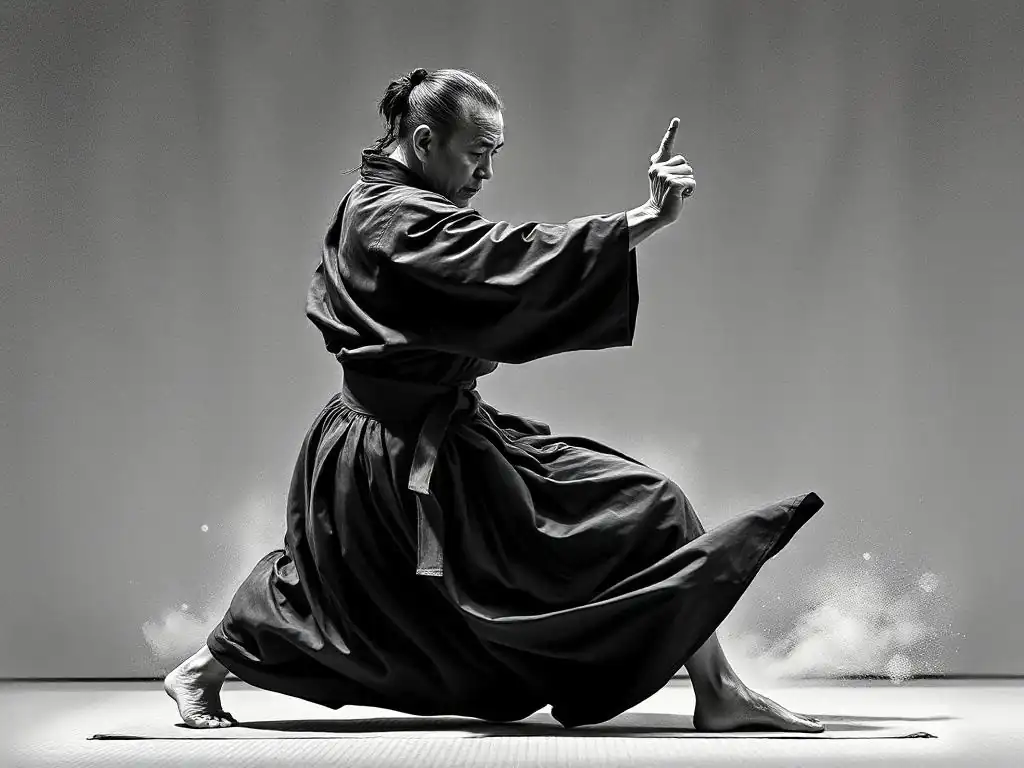
Comparing and Contrasting Tai Sabaki in Different Aikido Styles
While the fundamental principles of tai sabaki (irimi, tenkan, blending, centering) are universal in Aikido, their execution and emphasis vary significantly across different styles or lineages. For instance, styles derived more directly from O-Sensei's pre-war or immediate post-war teaching, such as Yoshinkan Aikido, often feature more linear irimi movements and a stronger emphasis on core stability and powerful, decisive execution.
Their tai sabaki might appear more rooted and less overtly flowing compared to styles stemming from Kisshomaru Doshu's later developments. Analyzing the distinct footwork patterns (e.g., the characteristic "stamping" step sometimes seen in Yoshinkan entries vs. the smoother steps in Aikikai) is a key part of comparing these approaches using Aikido movement analysis techniques.
In contrast, styles like Iwama Ryu (now often referred to as Takemusu Aikido) retain a strong emphasis on the connection between empty-hand techniques and weapon training, which influences their tai sabaki. Their movements often incorporate a more grounded, stable posture and footwork that facilitates the seamless transition between unarmed and weapons practice.
The angles and timing of their entries might differ subtly, reflecting the principles necessary for handling a bokken or jo. Comparing video examples of the same technique performed across these different styles, paying close attention to the initial step, body angle, and pivot type, provides practical experience in applying Aikido movement analysis techniques to discern stylistic variations.
Identifying Key Elements of Effective Aikido Body Movement
Effective Aikido body movement, regardless of style, consistently exhibits several key elements. Firstly, connection: maintaining a physical and energetic connection with the attacker throughout the movement, allowing for sensitive redirection of force. Secondly, centering: movement originates from and returns to a stable core, ensuring power and balance. Thirdly, timing: executing the tai sabaki at the precise moment the attacker's energy is committed but before their technique is fully realized. Fourthly, angle: choosing the optimal angle of entry or evasion to disrupt the attacker's balance and create an advantageous position.
Other crucial elements include relaxation (tension inhibits flow and power), extension (projecting energy through the movement), and zanshin (remaining aware and prepared throughout and after the movement). When applying Aikido movement analysis techniques, practitioners should look for how these elements are integrated.
For example, observing how a master maintains a relaxed posture even during dynamic rotations, or how their eyes and body language indicate continuous awareness. Breakdown of complex techniques into their fundamental tai sabaki components – the initial step, the subsequent pivot or shift, the accompanying hand movements – allows for a systematic understanding of effective Aikido body movement.
Practical Applications of Tai Sabaki: Enhancing Your Aikido Practice
Drills and Exercises to Improve Aikido Movement Skills
Improving tai sabaki requires dedicated practice beyond simply executing techniques. Specific drills can isolate and refine the core movement patterns. A fundamental drill is solo tenkan practice, focusing on maintaining balance and a stable center while pivoting 180 or 360 degrees. This can be done stationary initially, then moving forward and backward, and eventually incorporating hand movements. Another essential is the irimi step drill, practicing entering at a 45-degree angle while keeping the lead hand forward and maintaining a strong posture. This helps develop the crucial entering movement used in many techniques.
Partner drills are also vital. Practicing simple entries and pivots without completing a technique, perhaps just guiding the partner off balance, allows focus solely on the tai sabaki itself. For example, having a partner grab your wrist and practicing only the irimi or tenkan movement to break their balance or create an opening, without applying a throw or pin. Task lists for practice sessions could include:
- [ ] 50 solo tenkan pivots (left and right)
- [ ] 50 solo irimi steps (left and right)
- [ ] Partner wrist grab: practice irimi evasion (20 repetitions)
- [ ] Partner shoulder grab: practice tenkan evasion (20 repetitions)
- [ ] Practice ayumi ashi and tsugi ashi while maintaining posture (5 minutes)
These structured exercises are effective Aikido movement analysis techniques for personal improvement, breaking down complex skills into manageable components.
Integrating Tai Sabaki into Aikido Techniques: A Step-by-Step Guide
Integrating refined tai sabaki into full Aikido techniques is the ultimate goal. This involves consciously applying the principles and movements practiced in drills during partner practice. A step-by-step approach can be effective:
- Analyze the Technique: Identify the primary tai sabaki required for the technique (e.g., irimi for ikkyo entry, tenkan for shihonage).
- Focus on the Entry: During practice, initially prioritize the quality of the very first step and body turn relative to the attacker's movement. Is the angle correct? Is the timing right? Are you off the line of attack?
- Connect Movement and Technique: Ensure the tai sabaki flows directly into the control or throw. The body movement shouldn't be separate from the technique but should be its foundation.
- Maintain Connection: Throughout the technique, use subtle tai sabaki adjustments to maintain balance and control over the attacker.
- Receive Feedback: Ask your partner or instructor for specific feedback on your movement, focusing on aspects like balance, angle, and timing.
Using Aikido movement analysis techniques during practice involves not just performing the technique, but critically evaluating how your body is moving and why it's effective or ineffective. For example, if an ikkyo entry feels forced, analyze if your irimi step was deep enough or if your body turn was timed correctly with the attacker's forward momentum. This analytical approach transforms simple repetition into meaningful learning and refinement.
Advanced Tai Sabaki Concepts: Beyond Basic Movement
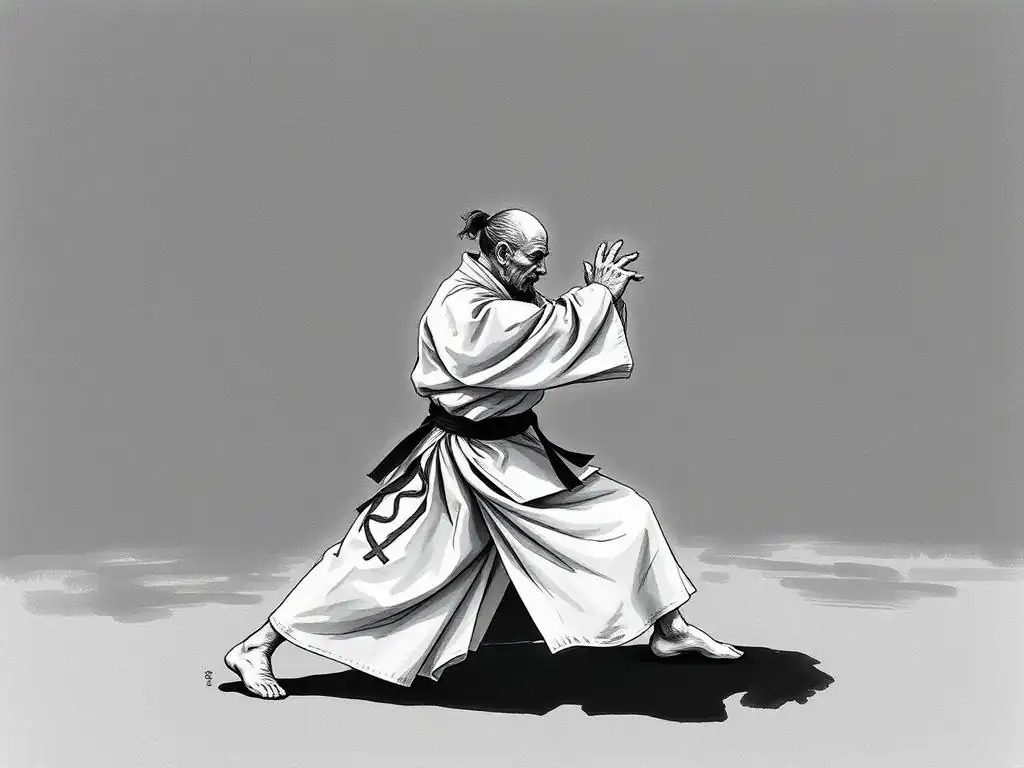
Exploring Subtle Variations in Aikido Footwork and Body Shifting
Beyond the basic irimi and tenkan, advanced tai sabaki involves subtle variations in footwork and body shifting that are often less visible but highly effective. One such concept is shikaku (dead angle), the ability to move into a position where the attacker cannot effectively respond or maintain balance. This requires acute sensitivity to the attacker's posture and intent, and using minimal movement to exploit their momentary instability. Subtle shifts in weight distribution without obvious steps, or tiny adjustments in angle (a few degrees rather than 45 or 180) can achieve this.
Another advanced concept is kuzushi through movement alone. While kuzushi (breaking balance) is usually associated with specific hand techniques, masters can achieve it purely through superior tai sabaki, drawing the attacker into a position where they are inherently unstable, often using circular motion or leading their energy past their base.
Analyzing video of high-level practitioners reveals these micro-adjustments – a slight lean, a subtle hip rotation, a tiny step off-line – that create significant imbalance in the opponent. These nuanced movements require a deep understanding of body mechanics and energy flow, representing a higher level of proficiency in Aikido movement analysis techniques.
Adapting Tai Sabaki to Different Attack Scenarios
Advanced practitioners fluidly adapt their tai sabaki based on the specific attack and the attacker's energy. A rigid adherence to one type of step or turn is ineffective against diverse attacks (strikes, grabs, multiple attackers) or attackers of different sizes and speeds. Adapting tai sabaki means choosing the most appropriate movement principle (irimi, tenkan, or a blend) and executing it with precise timing and angle for the given situation. Against a strong forward push, a deep irimi might be ideal. Against a swinging strike, a large tenkan might be necessary to evade and redirect.
Adapting also involves understanding distance and timing in relation to the attack. The tai sabaki used to counter a short-range grab will differ significantly from that used against a long-range strike. Advanced Aikidoka can instantly assess these factors and initiate the most effective body movement. This level of adaptive tai sabaki comes from extensive experience and the ability to read the opponent's intentions through their initial movements. Studying how masters handle unexpected or complex attacks provides valuable insights for applying Aikido movement analysis techniques to dynamic, unpredictable scenarios.
Tai Sabaki and Aiki Principles: The Connection
How Tai Sabaki Embodies the Essence of Aikido
Tai sabaki is arguably the most physical expression of Aikido's core principles, particularly aiki. Aiki, often described as "harmonizing with energy," is not a technique itself but a state of connection and non-resistance that allows one to control an opponent's force. Tai sabaki provides the means to achieve this state.
By moving off the line of attack and blending with the attacker's energy through appropriate footwork and body rotation, the Aikidoka avoids conflict and creates an opening to apply a technique rooted in harmony, not opposition. The flowing, circular movements inherent in much of Aikido's tai sabaki directly reflect the principle of redirecting energy rather than blocking it.
Consider the principle of masakatsu agatsu ("true victory is self-victory"). Mastering tai sabaki is a path towards this. It requires overcoming the natural instinct to tense up or meet force directly, instead cultivating relaxation, sensitivity, and the ability to move harmoniously under pressure. Effective tai sabaki is not about overpowering the opponent but about controlling the interaction through superior positioning and timing, achieved through disciplined self-mastery of one's own body and movement. Thus, analyzing the quality of one's tai sabaki provides a direct measure of how well one is embodying the fundamental essence of Aikido.
Utilizing Tai Sabaki to Achieve Aiki
Utilizing tai sabaki is the practical method for achieving the state of aiki in a physical exchange. When an attacker initiates a movement, the Aikidoka uses tai sabaki to immediately enter their space ( irimi) or turn with their energy ( tenkan), creating a connection that allows the Aikidoka to lead. This connection, established through precise body movement, is the conduit for aiki. Instead of the attacker's energy being met by a solid wall (resistance), it is met by a moving, adaptable structure that guides it into a different direction.
For example, in a forward attack, a well-timed irimi step and body turn allows the Aikidoka to enter past the attacker's front foot, disrupting their forward balance and creating a connection at their shoulder or arm that can then be led. The tai sabaki ensures that the Aikidoka's structure remains stable while the attacker's is compromised. The non-resistant nature of the movement prevents the attacker from gaining leverage.
This active application of tai sabaki to blend and lead the attacker's energy is the physical manifestation of aiki, enabling techniques to be performed with minimal force. Analyzing these subtle interactions through Aikido movement analysis techniques reveals the mechanism by which aiki is made manifest.
Conclusion: Mastering Aikido Movement Through Tai Sabaki
The Ongoing Journey of Refining Aikido Movement Analysis Techniques
Mastering Aikido movement is an ongoing journey, and refining one's Aikido movement analysis techniques is integral to this process. It involves moving beyond simply learning the shapes of techniques and delving into the underlying principles of body dynamics, timing, and spatial relationship embodied in effective tai sabaki. By systematically analyzing the movements of skilled practitioners, both live and through video, and by diligently practicing foundational movement drills, students can gain a deeper understanding of how power is generated, balance is broken, and harmony is achieved in Aikido. This analytical approach transforms practice from mere repetition into insightful exploration.
The journey requires patience, keen observation, and constant self-reflection. It's about developing a sensitivity to one's own body movement and its effect on a partner, as well as learning to read the subtle cues in an attacker's posture and intention that inform the optimal tai sabaki response.
As practitioners advance, their focus shifts from the external form of the movement to its internal quality – the connection to the center, the relaxation, the extension of ki. Refining Aikido movement analysis techniques is not just an academic exercise; it's a practical method for unlocking greater fluidity, effectiveness, and a deeper connection to the principles that define Aikido.
Further Resources for Studying Tai Sabaki in Aikido
To further your study of tai sabaki and enhance your Aikido movement analysis techniques, consider exploring various resources. Historical footage of Morihei Ueshiba and Kisshomaru Ueshiba, while sometimes challenging to interpret due to film quality, offers invaluable glimpses into their movement principles. Contemporary masters from different lineages provide diverse perspectives on applying tai sabaki effectively. Many dojos offer specific classes or seminars focused on fundamentals like posture, footwork, and body mechanics, which are direct studies in tai sabaki.
Books and articles by senior instructors often delve into the nuances of body movement and connection, providing theoretical frameworks for understanding the physical dynamics of Aikido. While visual learning is crucial, supplementing it with theoretical knowledge can deepen comprehension. Engaging in discussion with experienced practitioners and instructors about specific movement challenges or observations can also provide valuable insights. Remember that the most profound understanding often comes from dedicated, mindful practice on the mat, applying analytical observation to your own body and interactions.
Frequently Asked Questions
What is Tai Sabaki and why is it important in Aikido?
Tai Sabaki is a core movement technique in Aikido that involves body shifting and evasion. It's crucial for redirecting an opponent's attack and creating openings for techniques.
How does Tai Sabaki contribute to Aikido's emphasis on non-resistance?
By using Tai Sabaki, Aikido practitioners avoid direct confrontation, instead blending with and redirecting the attacker's force. This aligns with the principle of using minimal force to achieve maximum effect.
What are some key elements to consider when performing Tai Sabaki effectively?
Key elements include maintaining balance and posture, understanding timing and distance, and executing smooth, fluid movements to neutralize an attack.
How can Aikido movement analysis techniques help improve one's Tai Sabaki?
Analyzing movements of Aikido masters allows practitioners to understand the subtleties and nuances of Tai Sabaki. This analysis helps refine their own technique and improve efficiency.
Where can I find more resources on Aikido movement analysis techniques and Tai Sabaki?
MartialArtsMastery.org provides articles, videos, and other resources dedicated to Aikido techniques, including detailed analyses of Tai Sabaki and other essential movement principles.
Final Reflection: The Dance of Harmony and Adaptation
The intricate dance of Tai Sabaki, as explored through the lens of Aikido masters, is not merely a historical artifact or a set of techniques confined to the dojo. It represents a profound understanding of movement and adaptation that resonates deeply within our increasingly dynamic world. The principles of yielding, redirecting, and harmonizing with force are not just applicable in martial arts; they are essential for navigating the complexities of modern life, where flexibility and responsiveness are paramount.
The enduring influence of Tai Sabaki extends far beyond the mat, shaping our understanding of conflict resolution, negotiation, and even personal growth. Its emphasis on blending with an opponent's energy, rather than directly confronting it, offers a powerful metaphor for navigating interpersonal relationships and overcoming challenges. As Morihei Ueshiba, the founder of Aikido, wisely stated: True victory is victory over oneself.
This quote encapsulates the essence of Tai Sabaki, highlighting the importance of self-mastery and inner harmony as the foundation for effective action.
Therefore, let us not confine the lessons of Tai Sabaki to the realm of martial arts. Instead, let us embrace its principles of adaptability, harmony, and self-mastery in our daily lives. Consider how you can apply these concepts to your own challenges, whether in your relationships, your career, or your personal growth. Embrace the dance, find your balance, and discover the power of yielding to overcome.
Master the Art: Unlock Your Aikido Potential Now!
Thank you for delving into the world of Tai Sabaki and gaining insights into the movements of Aikido masters. You've taken the first step towards refining your technique. Now, let's translate that knowledge into action.
- Record and analyze your own Tai Sabaki. Compare your movements to those discussed in the article and identify areas for improvement.
- Explore other articles on Martial Arts Mastery for further insights into Aikido principles and techniques.
- Share this article with fellow Aikido practitioners and spark a discussion on applying these principles in training.
What specific Tai Sabaki drill will you focus on perfecting this week, and how will you measure your progress?