
The Silent Language of Ukemi: Communicating with Your Partner

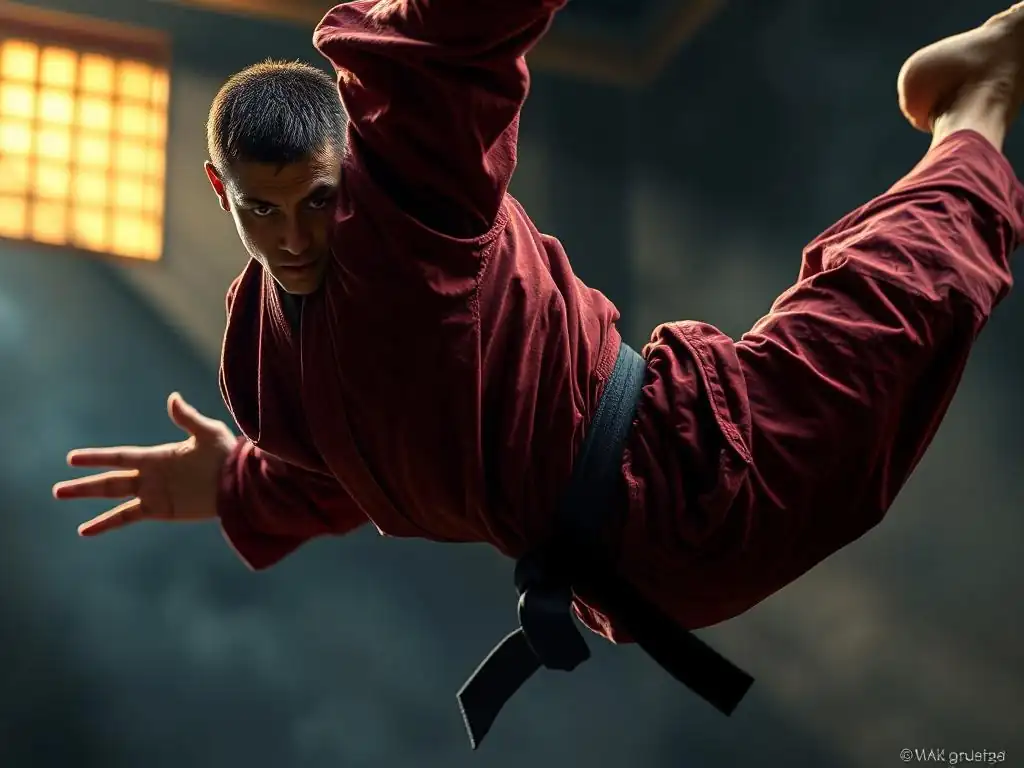
Welcome to Martial Arts Mastery, your gateway to the world's fighting arts!
Ever wondered how a fall can become a dance, a controlled descent instead of a painful impact? This month, we delve into the Ukemi falling technique basics, exploring how this foundational skill transcends mere survival and becomes a silent dialogue with your training partner. Discover the secrets to mastering this crucial art and unlock a deeper understanding of safety and control within your martial arts journey. Intrigued? Keep reading to learn more!
- Ukemi Falling Technique Basics: More Than Just Falling
- The Communication Aspect of Ukemi
- Types of Ukemi and Their Communicative Nuances
- The Role of Body Language in Ukemi
- Improving Ukemi for Better Partner Communication
- Common Mistakes in Ukemi that Hinder Communication
- Ukemi and Respect: A Foundation of Partnership
- Beyond the Mat: Applying Ukemi Principles to Everyday Life
- Mastering Ukemi: A Journey of Continuous Improvement in Martial Arts
-
Frequently Asked Questions
- What is Ukemi and why is it important in martial arts?
- How does Ukemi contribute to effective communication with a training partner?
- What are some of the basic Ukemi techniques that beginners should learn?
- How does mastering Ukemi enhance self-defense capabilities beyond simply avoiding injury?
- What role does proper body positioning and technique play in executing Ukemi effectively?
- Final Reflection: Embracing the Art of the Fall
- Ignite Your Connection: Master the Ukemi Dialogue!
Ukemi Falling Technique Basics: More Than Just Falling
Understanding Ukemi in Aikido and Other Martial Arts
Ukemi, often translated as "receiving the body" or "breakfall," is a fundamental skill across many martial arts, particularly those involving throws, joint locks, and dynamic movement like Aikido, Judo, and Hapkido. It's not merely about hitting the ground safely after being thrown or unbalanced; it's a complex interplay of relaxation, timing, and energy management.
Mastering Ukemi falling technique basics allows a practitioner to safely absorb impact, dissipate force, and return to a stable position, minimizing the risk of injury during training and application. This critical skill forms the bedrock upon which more advanced techniques can be practiced with intensity and confidence.
While the specific methods of Ukemi vary between disciplines – Aikido often emphasizes rolling falls (Kaiten Ukemi), while Judo incorporates more slapping falls (Mae Ukemi, Yoko Ukemi) – the underlying principles remain consistent. The goal is always to protect the head, spine, and joints by distributing the force of the impact across a larger surface area, often the entire side of the body or the back, while simultaneously using the arms to slap the mat and absorb residual energy. Developing these fundamental Ukemi techniques is paramount before engaging in free practice or higher-impact drills.
The Importance of Safe Falling Techniques for Martial Arts Practice
The ability to fall safely is arguably the most crucial skill for longevity and progress in martial arts training. Without reliable safe falling techniques, practitioners are constantly at risk of injury, which can lead to setbacks, fear, and ultimately, discontinuation of practice. Injuries from improper falls, such as sprains, fractures, or concussions, are unfortunately common among beginners who have not dedicated sufficient time to mastering Ukemi falling technique basics. Dedicated practice reduces this risk dramatically.
In many dojos, a significant portion of initial training, sometimes estimated at 10-15% of early class time, is dedicated solely to drilling basic Ukemi. This emphasis highlights its foundational importance. Furthermore, studies and anecdotal evidence from martial arts communities suggest that a large percentage of training-related injuries, potentially up to 30-40% in grappling arts, could be significantly reduced or avoided entirely through consistent, proper Ukemi practice. Investing time in these safe falling techniques is not just about survival; it's about creating a secure environment for learning and growth, allowing both partners to train harder and more effectively.
The Communication Aspect of Ukemi
Ukemi as a Form of Non-Verbal Communication in Partnered Drills
Beyond its function as a safety mechanism, Ukemi serves as a sophisticated form of non-verbal communication between training partners. In dynamic partnered drills, the way Uke (the one receiving the technique) performs Ukemi provides immediate feedback to Nage (the one applying the technique). A relaxed, fluid roll or fall indicates that Nage's technique was applied correctly, with appropriate timing, direction, and force. Conversely, a stiff, awkward, or resistant fall can signal that Nage's technique was off-balance, poorly timed, or applied with excessive or insufficient force.
This constant feedback loop is essential for mutual learning and refinement. Nage learns to adjust their technique based on how Uke responds through their Ukemi, while Uke learns to receive techniques more effectively and safely. Consider a basic Aikido ikkyo (first technique) application. If Uke performs a smooth forward roll (Mae Ukemi) after being led down, it tells Nage their control and direction were effective. If Uke stiffens or tries to resist, resulting in a jarring fall, it communicates that Nage might be using too much muscular force rather than leverage or timing.
Responding to Your Partner's Technique: The Ukemi Feedback Loop
The interaction between Nage and Uke, facilitated by Ukemi, creates a dynamic feedback loop that is central to partnered martial arts training. Uke's Ukemi is not a passive reaction but an active response that informs Nage's subsequent actions and adjustments. A responsive Ukemi allows Nage to feel the effect of their technique clearly, enabling them to refine subtle nuances in timing, angle, and pressure. This is particularly vital when practicing more complex throws or joint controls.
For instance, in Judo, a well-executed Osoto Gari (major outer reaping) throw relies on Nage breaking Uke's balance. Uke's subsequent Yoko Ukemi (side fall) or Ushiro Ukemi (backward fall) communicates the effectiveness of Nage's balance disruption. If Uke recovers too quickly or falls awkwardly, Nage receives implicit feedback that their entry, timing, or reaping action needs adjustment. This continuous cycle of action (Nage's technique) and reaction (Uke's Ukemi) fosters mutual understanding and accelerates learning for both individuals, building a deeper connection than verbal instruction alone could achieve.
Types of Ukemi and Their Communicative Nuances
Mae Ukemi (Forward Roll): Signaling Commitment and Flow
Mae Ukemi, the forward roll, is a fundamental Ukemi falling technique basics skill taught early in many arts, especially Aikido. Executed correctly, it involves tucking the head, rolling over one shoulder and across the back, and distributing the momentum into a smooth, continuous motion that ends back on the feet or knees. The act of initiating a clean Mae Ukemi signals Uke's understanding and acceptance of Nage's forward-driving technique.
Performing a relaxed and fluid Mae Ukemi communicates trust in Nage and a willingness to flow with the technique's energy. A stiff, jerky, or hesitant forward roll, conversely, can signal tension, fear, or a lack of commitment to the movement. For Nage, seeing a partner execute a good Mae Ukemi confirms that their projection or leading technique was applied with appropriate direction and control, encouraging them to explore variations or increase intensity slightly, knowing their partner can receive it safely.
Ushiro Ukemi (Backward Fall): Communicating Stability and Acceptance
Ushiro Ukemi, the backward fall, is essential for receiving techniques that break balance to the rear, common in arts like Judo and Aikido. This technique involves collapsing the structure, often sitting down rapidly, tucking the chin, and slapping the mat with one or both arms to absorb impact as the back contacts the ground. It requires letting go of forward posture and accepting the rearward momentum.
A controlled Ushiro Ukemi communicates Uke's ability to yield and break their structure safely when pushed or pulled backward. It shows they are not rigidly resisting the rearward force. A hesitant or uncontrolled backward fall, perhaps leading to hitting the head or tailbone, signals resistance, poor balance recovery, or a lack of understanding of how to receive that specific type of rearward breakfall. For Nage, a good Ushiro Ukemi confirms their technique successfully disrupted Uke's rearward stability.
Yoko Ukemi (Side Fall): Indicating Balance and Awareness
Yoko Ukemi, the side fall or breakfall, is widely used in arts like Judo and Aikido to receive techniques that off-balance the partner to the side, such as sweeps, reaps, or side throws. It involves falling directly to the side, tucking the head, and slapping the mat firmly with the arm on the side of the fall just before impact. This breakfall technique is crucial for distributing force across the side of the body.
A crisp, timely Yoko Ukemi communicates Uke's awareness of their lateral balance being broken and their readiness to protect themselves. The firmness and timing of the arm slap are particularly communicative; a strong, well-timed slap indicates good energy dissipation and control, while a weak or late slap suggests hesitation or insufficient commitment to the fall. Nage receives feedback on the effectiveness of their side-directed technique based on the quality of Uke's Yoko Ukemi.
Kaiten Ukemi (Rotary Fall): Communicating Evasion and Redirecting Force
Kaiten Ukemi, or rotary falls (both forward and backward), are particularly prominent in Aikido and focus on receiving techniques through continuous, rolling movement rather than a static breakfall. These techniques involve a circular motion that allows Uke to evade the direct line of force and redirect their momentum into a roll, often returning to a standing or kneeling position smoothly.
Performing a fluid, continuous Kaiten Ukemi communicates Uke's ability to blend with Nage's energy and redirect it through circular motion. It shows they are yielding and moving dynamically with the technique rather than absorbing impact directly. A stiff or incomplete Kaiten Ukemi, where the roll is broken or awkward, signals tension, a lack of flexibility, or an inability to follow the circular energy of the technique. This type of Ukemi profoundly communicates partnership and mutual flow.
The Role of Body Language in Ukemi
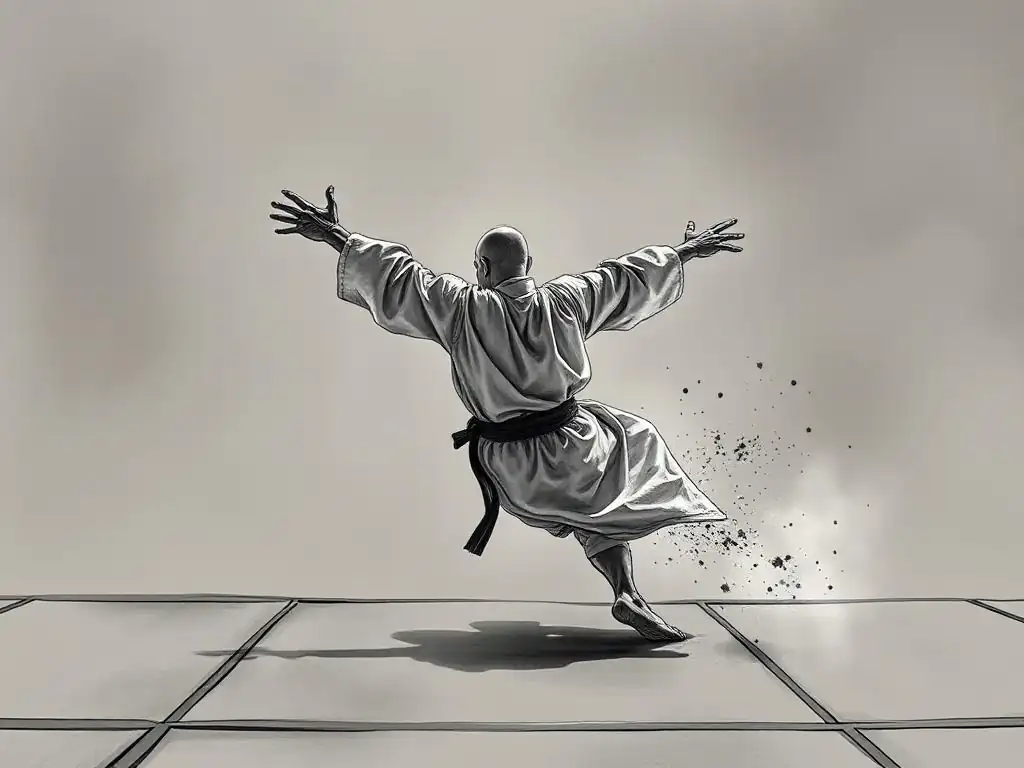
Maintaining a Connection: Eye Contact and Body Alignment During Ukemi
Even as Uke is falling or rolling, subtle elements of body language maintain a connection with Nage and communicate crucial information. Eye contact, where safe and possible (often before or immediately after the fall), can signal readiness, trust, and awareness. More significantly, maintaining a degree of structural integrity or alignment during the fall, even in relaxation, communicates Uke's controlled acceptance of the technique.
For example, in a forward roll, maintaining a relatively tight tuck and rolling smoothly along the correct line communicates control and attentiveness. A sprawling or uncontrolled roll, where limbs flail, signals a loss of control or a disconnection from Nage's energy. Similarly, in a side fall, keeping the body relatively aligned rather than twisting communicates that Uke is actively managing the fall, not simply collapsing. This subtle body language ensures that Ukemi is a continuation of the interaction, not just an endpoint.
Communicating Discomfort or Misunderstanding Through Ukemi
Ukemi can also be the primary way Uke communicates discomfort, pain, or a misunderstanding of the technique being applied. Tensing up the body is a common unconscious signal of discomfort or fear. If Uke receives a technique and performs a stiff, resistant fall, it is a clear non-verbal message to Nage that something is wrong – perhaps the technique is being applied too forcefully, at an incorrect angle, or is causing pain.
Similarly, an abrupt or incomplete Ukemi, such as cutting a roll short or landing heavily, can indicate that Uke did not understand the intended direction or timing of the technique. While verbal communication is always an option, especially during practice, being able to read these signals in a partner's Ukemi is vital for Nage to adjust their approach immediately. This silent feedback mechanism allows partners to train safely and effectively even when pushing their limits, ensuring that Ukemi falling technique basics are integrated into the flow of practice.
Improving Ukemi for Better Partner Communication
Drills to Enhance Responsiveness and Sensitivity in Ukemi
Improving Ukemi relies heavily on dedicated drilling, often starting with solo practice before moving to partnered exercises. Solo drills focus on the mechanics of the fall or roll, ensuring body alignment, tucking, and slapping are correct. Partnered drills then introduce the element of responsiveness. Simple exercises like having a partner gently push or pull you off balance in various directions to practice spontaneous Yoko or Ushiro Ukemi are crucial.
More advanced drills might involve Nage applying techniques very slowly, allowing Uke to focus entirely on receiving the energy and executing a clean Ukemi. Practicing with varying levels of force (always starting gentle) helps Uke learn to adjust their relaxation and timing. A common drill involves Nage simply taking Uke's wrist or lapel and leading them off balance without applying a full technique, prompting Uke to initiate Ukemi based purely on the subtle shift in balance and direction. This sensitivity training is key to improving the communicative aspect of Ukemi falling technique basics.
Focusing on Balance and Timing for Clear Communication
Excellent Ukemi is deeply intertwined with balance and timing. Uke must be sensitive to when their balance is being broken and initiate Ukemi at the right moment – not too early (which could disrupt Nage's technique) and not too late (which increases the risk of a hard fall). This precise timing is a critical part of the non-verbal conversation. Initiating Ukemi at the perfect moment communicates that Uke is attuned to Nage's movement and understands the technique's trajectory.
Improving balance through specific exercises (like standing on one leg, walking on narrow lines) enhances Uke's awareness of their own stability and thus, when it is compromised. Drilling techniques repeatedly, with Nage focusing on precise timing and Uke on responsive Ukemi, refines this interaction. A well-timed Ukemi allows Nage to complete their technique smoothly, reinforcing the positive feedback loop and demonstrating a high level of partnership in the Ukemi falling technique basics.
Partnered Breathing Drill: Cultivating Synchronization and Sensitivity
While not directly a Ukemi technique, practicing synchronization drills, such as partnered breathing exercises or simple walking/blending drills where partners move together in harmony, significantly enhances the sensitivity and connection needed for effective Ukemi. By learning to move and breathe together, partners develop a shared rhythm and a heightened awareness of each other's physical state and intentions.
This cultivated sensitivity translates directly to Ukemi. Uke becomes more attuned to the subtle shifts in Nage's weight, tension, and intent that precede a technique, allowing for a more relaxed and timely Ukemi. Nage, in turn, becomes more sensitive to Uke's responses, feeling the moment Uke yields or becomes unbalanced. This deeper physical and energetic connection fostered by synchronization drills makes the non-verbal communication through Ukemi clearer and more fluid, elevating the practice of Ukemi falling technique basics from a mere safety drill to a true dialogue.
Common Mistakes in Ukemi that Hinder Communication
Tensing Up: Blocking the Flow of Energy
One of the most common and detrimental mistakes in Ukemi is tensing up the body. When Uke stiffens in anticipation or fear of a fall, they create resistance that works against the natural flow of the technique. This not only makes the Ukemi awkward and potentially dangerous but also sends a clear negative signal to Nage. A tense Uke communicates fear, distrust, or an unwillingness to yield.
This tension blocks the smooth transfer of energy that is fundamental to many martial arts. Instead of blending with Nage's force and redirecting it into a safe fall or roll, a tense Uke absorbs the impact directly, increasing the risk of sprains or muscle strains. For Nage, feeling a partner tense up disrupts their technique and makes it harder to apply smoothly and safely. Learning to relax into the fall is a crucial aspect of mastering Ukemi falling technique basics and improving partner communication.
Improper Breakfalls: Sending Confusing Signals
Executing Ukemi with improper technique, such as failing to tuck the chin, not slapping the mat correctly, or rolling too stiffly, sends confusing and potentially alarming signals to the partner. A breakfall where the head is not protected, for instance, instantly communicates a high risk of injury, causing Nage to hesitate or pull back on the technique, disrupting the flow of practice.
Similarly, a poorly timed or weak mat slap in a Yoko Ukemi might suggest Uke is not effectively dissipating the impact force, implying they are hitting the ground harder than necessary. These technical flaws in Ukemi falling technique basics not only endanger Uke but also make it difficult for Nage to gauge the effectiveness and safety of their own technique. Consistent, technically correct Ukemi provides clear, reliable feedback.
Lack of Awareness: Disconnecting from Your Partner's Intent
A significant barrier to effective communication through Ukemi is a lack of awareness of the partner's intentions and movements. If Uke is not paying attention, is distracted, or is simply going through the motions without truly feeling the technique being applied, their Ukemi will be disconnected and unresponsive. This lack of sensitivity means Uke is reacting late or inappropriately, failing to provide Nage with accurate feedback.
This disconnection communicates a lack of engagement in the partnership. Effective Ukemi requires Uke to be present, feeling how Nage is breaking their balance, the direction of the force, and the timing of the technique. When Uke is truly aware and responsive, their Ukemi becomes a smooth, integrated part of the interaction, allowing both partners to learn and improve together. Improving this awareness is key to unlocking the full communicative potential of Ukemi falling technique basics.
Ukemi and Respect: A Foundation of Partnership
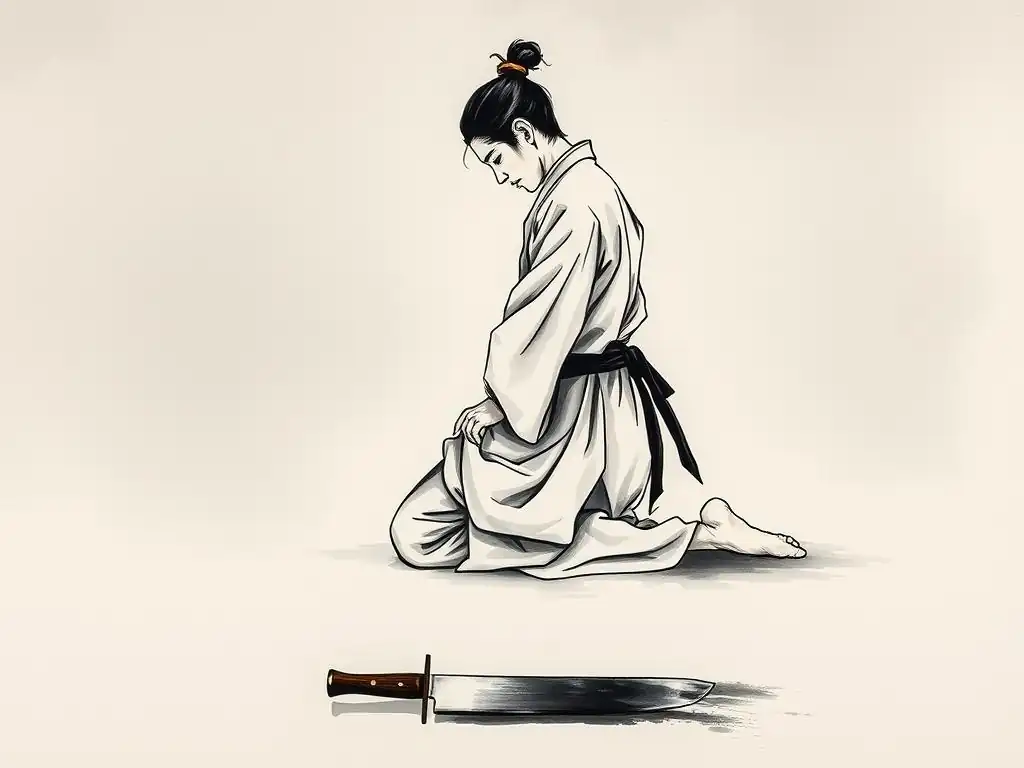
Showing Respect Through Controlled and Attentive Ukemi
Performing controlled, attentive, and safe Ukemi is a profound way of showing respect for your training partner. By demonstrating that you can receive techniques safely and reliably, you are communicating trust in your partner and valuing their safety as much as your own. A partner who consistently executes solid Ukemi allows Nage to practice with confidence, knowing their efforts are received responsibly.
This level of care in executing Ukemi falling technique basics fosters a training environment built on mutual respect. It shows you are taking the practice seriously and are committed to being a good partner. Conversely, sloppy or careless Ukemi can be interpreted as a lack of respect for the partner's efforts and potential disregard for their safety. In martial arts, where physical interaction is central, this non-verbal expression of respect through diligent Ukemi practice is fundamental.
Building Trust Through Consistent and Reliable Responses
Consistency and reliability in Ukemi are essential for building trust between training partners. When Nage knows that Uke will consistently perform safe, responsive Ukemi regardless of the technique or intensity (within safe limits), they can relax and focus on refining their own movements. This predictability builds a strong foundation of trust, allowing both partners to push their boundaries and explore techniques more deeply.
Over time, this consistent, reliable communication through Ukemi strengthens the partnership. Partners learn each other's rhythms, tendencies, and limits. This shared understanding, built fall by fall, allows for more advanced and dynamic practice. The ability to trust your partner's Ukemi is as important as trusting your own technique, highlighting how mastering Ukemi falling technique basics is not just about individual skill but about fostering effective, trusting partnerships.
Beyond the Mat: Applying Ukemi Principles to Everyday Life
Resilience and Adaptability: Learning from Falls in All Aspects of Life
The physical skill of Ukemi teaches resilience and adaptability, qualities applicable far beyond the dojo. Learning to fall safely is, in essence, learning to manage unexpected impacts and recover quickly. This physical resilience mirrors the mental and emotional resilience needed to navigate challenges and setbacks in life. Just as a martial artist learns to absorb the shock of a physical fall, we can learn to absorb the shock of metaphorical "falls" – failures, disappointments, or unexpected difficulties.
The adaptability inherent in Ukemi involves adjusting your body and mindset instantly to the forces acting upon you. In life, this translates to being flexible and able to adapt to changing circumstances rather than rigidly resisting them. Practicing Ukemi falling technique basics cultivates a mindset that views a fall not as an end, but as an opportunity to recover, learn, and continue moving forward.
Communicating Effectively Through Body Language and Awareness
The emphasis on non-verbal communication and heightened awareness in Ukemi also has parallels in everyday interactions. Being attuned to another person's body language, subtle cues, and underlying intentions is key to effective communication in any context. Just as Uke reads Nage's energy to perform Ukemi, we can improve our interpersonal skills by being more present and sensitive to the non-verbal signals from others.
Furthermore, understanding how our own body language communicates, consciously or unconsciously, is a lesson learned from Ukemi. The tension or relaxation we display in Ukemi reflects our internal state; similarly, our posture, gestures, and expressions in daily life communicate volumes to those around us. Cultivating the awareness and control over our physical presence, honed through practices like Ukemi falling technique basics, empowers us to communicate more clearly and intentionally in all aspects of life.
Mastering Ukemi: A Journey of Continuous Improvement in Martial Arts
Mastering Ukemi falling technique basics is not a destination but a continuous journey that parallels the martial arts path itself. It requires ongoing practice, refinement, and a willingness to always learn from each fall. Even experienced practitioners continue to work on their Ukemi, seeking greater relaxation, efficiency, and responsiveness. This dedication reflects an understanding that Ukemi is fundamental not only to safety but also to the depth of partnered training.
The journey of mastering Ukemi is one of increasing sensitivity, trust, and non-verbal fluency with your partners. It transforms the act of falling from a potential hazard into a dynamic, communicative exchange. Embracing the practice of Ukemi falling technique basics with diligence and attention unlocks deeper levels of understanding, fosters stronger partnerships, and ultimately enriches the entire martial arts experience. It is the silent language that speaks volumes about skill, respect, and mutual growth.
Frequently Asked Questions
What is Ukemi and why is it important in martial arts?
Ukemi is the art of falling safely. It's vital because it minimizes the risk of injury during throws, sweeps, and other techniques. Mastering Ukemi allows for continued training.
How does Ukemi contribute to effective communication with a training partner?
Ukemi isn't just about falling; it's about receiving your partner's technique. A good Ukemi shows you understand the force and direction of the throw, allowing for a safe and productive training session. It helps build trust and cooperation.
What are some of the basic Ukemi techniques that beginners should learn?
Beginners should focus on forward rolls (Mae Ukemi), backward rolls (Ushiro Ukemi), and side falls (Yoko Ukemi). These cover the most common types of falls and provide a solid foundation for more advanced techniques.
How does mastering Ukemi enhance self-defense capabilities beyond simply avoiding injury?
Beyond preventing injury, Ukemi allows you to maintain awareness and potentially transition into a counter-attack. A skilled practitioner can use Ukemi to regain their footing or even create an opening.
What role does proper body positioning and technique play in executing Ukemi effectively?
Proper body positioning is crucial. Maintaining a rounded back, tucking the chin, and using your arms to absorb impact are key elements. Correct technique distributes force evenly, preventing localized injuries.
Final Reflection: Embracing the Art of the Fall
The exploration of Ukemi, far beyond just falling technique basics, reveals a profound language of trust and communication. What begins as a physical skill transforms into a powerful metaphor for navigating life's inevitable stumbles, both on and off the mat. The ability to fall gracefully, to absorb impact and rise again, is a lesson deeply relevant in our current world, where resilience is paramount.
This silent language of Ukemi, the unspoken dialogue between partners, has subtly but significantly influenced the martial arts community and beyond. It's a reminder that vulnerability, when embraced with skill and understanding, can be a source of strength. The best fighter is never angry.
- Morihei Ueshiba. This quote encapsulates the essence of Ukemi: a calm acceptance of the present moment, allowing for a controlled and effective response, whether in a martial arts context or in the face of life's challenges.
Now, consider the lessons learned from the art of Ukemi. How can you apply the principles of controlled falling, of trusting your partner, and of embracing vulnerability to your own life? Let the spirit of Ukemi guide you to face challenges with grace, resilience, and a deeper understanding of the silent language that connects us all.
Ignite Your Connection: Master the Ukemi Dialogue!
Thank you for diving deep into the silent language of Ukemi! We hope this exploration has illuminated the subtle yet powerful ways you can communicate with your partner through movement and responsiveness. Now, let's put that knowledge into action!
- Prioritize your partner's safety: Actively focus on guiding and supporting your partner during Ukemi, ensuring a safe and controlled fall.
- Document you personal evolution: Keep a journal about any revelation during yours and your partner's ukemi practices. Track improvements, challenges, and new insights.
- Share your newfound understanding: Invite fellow martial artists to discuss Ukemi’s role in communication on the Martial Arts Mastery forums.
What adjustments will you incorporate into your next training session to enhance the unspoken communication between you and your partner?