
Kyokushin Leg Kicks: A GameChanger in SelfDefense Scenarios

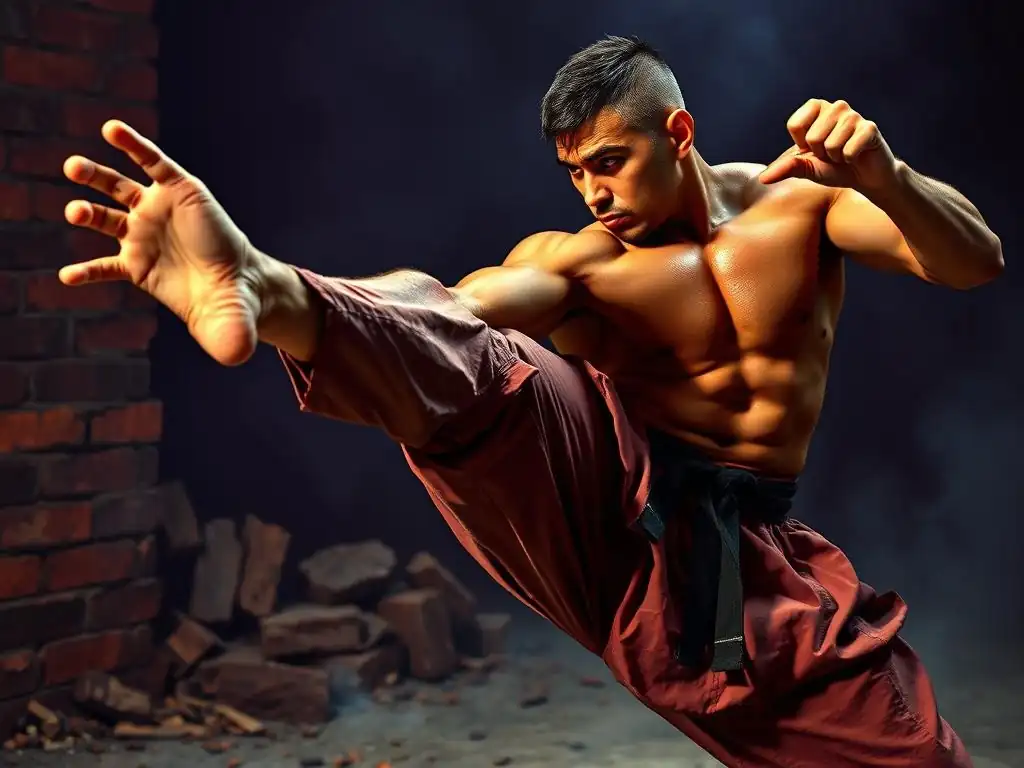
Welcome to Martial Arts Mastery, your gateway to the world's fighting traditions!
Dive deep into the devastating power of Kyokushin Karate, where raw strength meets unwavering spirit. Ever wondered how mastering Kyokushin leg kick techniques can fundamentally alter the dynamics of a self-defense situation? Prepare to unlock the secrets behind this game-changing element, explore its practical applications, and discover how it can elevate your martial arts prowess. The journey to mastery begins now...
- Introduction to Kyokushin Karate and Self-Defense Applications
- The Power of Leg Kicks in Kyokushin Karate
- Key Kyokushin Leg Kick Techniques for Self-Defense
- Footwork and Body Mechanics for Powerful Kyokushin Leg Kicks
- Training Drills for Mastering Kyokushin Leg Kicks in Self-Defense
- Common Mistakes to Avoid When Practicing Kyokushin Leg Kicks
- Real-World Self-Defense Scenarios: Kyokushin Leg Kicks in Action
- Kyokushin Leg Kicks vs. Other Martial Arts Leg Kick Styles
- Conclusion: Elevating Your Self-Defense with Kyokushin Leg Kick Techniques
-
Frequently Asked Questions
- What makes Kyokushin leg kicks particularly effective in self-defense situations?
- What are some fundamental Kyokushin leg kick techniques that beginners should learn?
- How does Kyokushin training prepare practitioners to execute effective leg kicks under pressure?
- Are Kyokushin leg kicks legal and permissible in self-defense situations?
- How do Kyokushin leg kicks differ from leg kicks in other martial arts?
- Final Reflection: Embracing the Power of Kyokushin Leg Kicks
- Ignite Your Self-Defense: Master Kyokushin Leg Kicks Now!
Introduction to Kyokushin Karate and Self-Defense Applications
Understanding Kyokushin's Full-Contact Philosophy
Kyokushin Karate, founded by Sosai Mas Oyama, is renowned globally for its full-contact approach to training and competition. Unlike many traditional karate styles that emphasize point sparring, Kyokushin practitioners engage in bouts where powerful, bone-jarring techniques are permitted, excluding direct strikes to the face with the hands (though kicks are allowed). This philosophy stems from Oyama's belief that true understanding and application of karate techniques could only be achieved through rigorous, realistic combat simulation. The emphasis is on developing physical toughness, mental fortitude, and devastating power through relentless conditioning and sparring.
This dedication to full contact means that Kyokushin training inherently prepares practitioners for the physical demands of a real confrontation. Students learn to absorb impacts, maintain composure under pressure, and deliver strikes with significant force. The curriculum focuses on practical, effective techniques designed to end a fight quickly, making it highly relevant for self-defense. The development of powerful Kyokushin leg kick techniques is a prime example of this pragmatic approach, as these strikes are devastatingly effective in weakening or disabling an opponent.
The Importance of Practical Self-Defense in Kyokushin Training
While Kyokushin is a competitive sport, its roots and primary goal lie in practical self-defense. Sosai Oyama designed the style to be effective in real-world scenarios, emphasizing techniques that work under pressure and against resistance. This includes not just striking, but also understanding distance management, timing, and the psychological aspects of confrontation. The rigorous conditioning builds physical resilience, crucial for surviving a violent encounter, while sparring teaches students to apply techniques dynamically against a moving, resisting opponent.
Training in Kyokushin goes beyond learning forms (kata) and basic drills (kihon); it is heavily centered around kumite (sparring). This live practice is where students learn to apply Kyokushin leg kick techniques, hand strikes, and blocks in a chaotic environment, simulating the unpredictability of a street fight. The ability to deliver powerful kicks while maintaining balance and absorbing counter-attacks is honed through countless rounds of sparring. This practical application solidifies Kyokushin's standing as a highly effective martial art for self-protection.
The Power of Leg Kicks in Kyokushin Karate
Why Leg Kicks are Crucial for Self-Defense
Leg kicks are a cornerstone of Kyokushin's offensive arsenal and are particularly crucial in self-defense situations for several compelling reasons. Firstly, targeting the legs immediately impacts an attacker's mobility and base, which are fundamental to their ability to stand, move, and generate power. A well-placed low kick to the thigh can significantly reduce an attacker's speed and stability within seconds, making it difficult for them to pursue, maintain balance during strikes, or even stand. This can create the necessary opening to escape or neutralize the threat.
Secondly, leg kicks are often less visible than punches aimed at the head or body, making them harder to block or evade effectively, especially for an untrained aggressor. The conditioning of Kyokushin practitioners' shins allows them to deliver these kicks with immense force, capable of causing considerable pain and damage, such as deep bruising, muscle incapacitation, or even hairline fractures over repeated impacts. These Kyokushin leg kick techniques provide a versatile tool for controlling distance and disabling an opponent without necessarily needing to engage in a prolonged, close-quarters struggle.
Kyokushin Leg Kick Techniques: Breaking Down the Fundamentals
Mastering Kyokushin leg kick techniques requires a deep understanding of body mechanics, power generation, and conditioning. The fundamental principle involves generating force from the ground up, rotating the hips, and snapping the leg forward with maximum velocity and mass behind the strike. The primary striking surface is typically the lower shin bone, which is progressively conditioned through rigorous training, often involving striking heavy bags, conditioning poles, or even practicing tameshiwari (breaking techniques) to a lesser extent over time.
The core Kyokushin leg kick techniques include the low roundhouse kick (Gedan Mawashi Geri), middle roundhouse kick (Chudan Mawashi Geri), high roundhouse kick (Jodan Mawashi Geri), and variations like the inside leg kick (Uchi Mawashi Geri). Each technique targets different areas and serves distinct purposes in combat. Proper execution involves pivoting the supporting foot, driving the hip into the target, and maintaining a strong guard to protect against counter-attacks. Consistent practice of these fundamentals is essential for developing the speed, power, and accuracy needed for effective application in self-defense.
Key Kyokushin Leg Kick Techniques for Self-Defense
Low Kick (Gedan Mawashi Geri): The Foundation of Kyokushin Leg Attacks
The Gedan Mawashi Geri, or low roundhouse kick, is arguably the most frequently used and devastating Kyokushin leg kick technique in both sparring and self-defense. It targets the opponent's thighs, typically the outside (lateral) or inside (medial) aspect. The goal is to accumulate damage, progressively weakening the attacker's legs until their mobility is severely compromised. Kyokushin emphasizes delivering these kicks with full power, using the hardened shin bone as the primary weapon. Even a few well-placed low kicks can dramatically shift the dynamics of an encounter.
In a self-defense scenario, the low kick offers a relatively safe target below the primary line of defense (the hands protecting the head). It is faster to execute than higher kicks and requires less balance, making it ideal for unpredictable environments.
A study in combat sports noted that repetitive low kicks can reduce an athlete's sprint performance by over 30% after just a few rounds, illustrating the rapid debilitating effect on leg function. Applying this principle, Kyokushin practitioners use this technique to quickly degrade an attacker's ability to stand, chase, or throw powerful strikes, buying crucial time or creating an opportunity to escape.
Mastering the Low Kick for Maximum Impact
Mastering the low kick involves perfecting the mechanics of power generation, hip rotation, and striking surface. Power originates from the ground: pushing off the supporting foot, pivoting 180 degrees (or more) to drive the hip through the target. The kicking leg snaps forward and across the body, aiming to strike with the lower shin, roughly 2-4 inches above the ankle bone, into the thick muscle of the thigh. Maintaining a tight core and guard is vital to transfer maximum force and protect against counters.
Repetition is key to mastery. Kyokushin training involves thousands of repetitions on heavy bags, focus mitts, and partner drills. Conditioning the shins through striking hard surfaces over time increases pain tolerance and bone density, allowing for strikes that would incapacitate someone without conditioning. For example, while precise force measurements vary, a well-executed Kyokushin low kick from a seasoned practitioner can deliver impact forces equivalent to several hundred pounds, concentrated on a small area. This level of power, combined with precise targeting, makes the low kick incredibly effective.
Target Areas for Effective Low Kicks in Self-Defense
In self-defense, the most effective target areas for the Kyokushin low kick are the lateral (outside) and medial (inside) aspects of the thigh, specifically the quadriceps and hamstring muscle groups.
- Lateral Thigh (Outside): Striking the outside of the thigh targets the vastus lateralis muscle and can compress nerves against the femur, causing intense pain and temporary paralysis ("dead leg"). Repeated blows can severely impede walking and balance. This is a common target in Kyokushin kumite due to its accessibility.
- Medial Thigh (Inside): Striking the inside of the thigh targets the adductor muscles and can be extremely painful and debilitating. This area is often less conditioned than the outside thigh in non-practitioners and can affect an attacker's ability to close their legs or maintain a stable stance.
Targeting the common peroneal nerve near the knee joint on the outside of the lower leg can also cause temporary foot drop and loss of function, though this is a smaller, more precise target. Focusing on the large muscle groups of the thigh offers a larger margin of error and significant debilitating effect, making these the primary targets for Kyokushin leg kick techniques in self-defense.
Middle Kick (Chudan Mawashi Geri) Variations for Self-Defense
The Chudan Mawashi Geri, or middle roundhouse kick, targets the torso area, typically the ribs or solar plexus. While perhaps less focused on mobility disruption than the low kick, it is a powerful technique for inflicting pain, disrupting breathing, and potentially ending a confrontation quickly by impacting vital areas. Kyokushin middle kicks are delivered with the same full-power commitment as low kicks, utilizing hip rotation and shin conditioning.
In a self-defense context, the middle kick can be used to create distance or incapacitate an attacker who is closing in. A hard kick to the ribs can cause severe pain, potential fractures, and difficulty breathing, instantly halting an aggressor's advance. A kick to the solar plexus can temporarily paralyze the diaphragm, knocking the wind out of someone. These Kyokushin leg kick techniques to the body offer a powerful option when the legs are not accessible or when a more immediate stopping power is required against an upper-body threat.
Chudan Mawashi Geri to the Body: Disrupting an Attacker's Balance
Delivering a Chudan Mawashi Geri to an attacker's body serves not only to inflict pain but also significantly disrupt their balance and structure. When a powerful kick lands on the side of the torso, especially the floating ribs, the force travels through their core, potentially twisting them off balance. This is particularly effective if the attacker is moving forward or already slightly unstable. The sudden impact and resulting pain can cause them to recoil, stumble, or drop their guard.
Consider a scenario where an attacker is attempting to grab or push. A swift middle kick to their side can break their posture and forward momentum. The force of the kick, estimated to be capable of exceeding 1000-1500 pounds of force in high-level practitioners under controlled lab conditions (though street application varies), landing on the relatively unprotected ribs or abdomen can easily cause them to double over, lose their footing, or abandon their attack. This application of Kyokushin leg kick techniques provides a powerful defensive countermeasure.
Using the Middle Kick to Control Distance in a Confrontation
The middle kick is also an excellent tool for controlling distance in a self-defense situation. If an attacker is attempting to close the gap quickly, a well-timed middle kick can intercept their movement, pushing them back and restoring valuable space. This is particularly useful when facing multiple attackers or needing to create an opportunity to escape. By extending the leg and striking with power, you create a barrier and apply force that pushes the opponent away.
Imagine being cornered; a powerful Chudan Mawashi Geri can create the space needed to break free and run. Unlike a punch, which requires closer proximity, the middle kick allows you to strike effectively from a slightly greater range, keeping the attacker at bay. This tactical use of Kyokushin leg kick techniques for distance management is a vital skill learned through sparring and is highly applicable to real-world self-defense scenarios.
High Kick (Jodan Mawashi Geri) Applications and Considerations
The Jodan Mawashi Geri, or high roundhouse kick, targets the head. This is perhaps the most dramatic and potentially fight-ending Kyokushin leg kick technique, capable of causing instant knockout due to the impact on the brain. It requires significant flexibility, balance, and control to execute effectively and safely. While less common in spontaneous self-defense than low or middle kicks due to its higher risk profile, it remains a powerful option in certain circumstances.
In Kyokushin competition, high kicks are often decisive, leading to Ippon (full point) wins. The speed and power generated can be immense. However, the risk of losing balance or being countered is also higher. Applying this technique in self-defense requires careful consideration of the situation, the environment, and the attacker's state.
When and How to Utilize Jodan Mawashi Geri in Self-Defense Scenarios
Utilizing a Jodan Mawashi Geri in self-defense is generally a high-risk, high-reward proposition, best reserved for specific situations. It is most effective when the attacker is either stationary, off-balance, or distracted, presenting an open target to the head. It can be employed as a sudden, unexpected strike after setting it up with other techniques, or as a desperate measure if other options are unavailable. Executing it requires commitment: pivoting strongly on the supporting foot, lifting the knee high, and snapping the leg out and around to strike the head with the instep or lower shin.
An example might be if an attacker is leaning forward or has their head exposed while attempting a grappling maneuver. A swift high kick delivered with power can potentially end the threat immediately. Kyokushin training emphasizes generating incredible speed and force in these techniques; a well-trained practitioner can deliver a high kick striking the head with hundreds of pounds of force, easily capable of causing a knockout. However, the element of surprise and proper timing are paramount for success.
The Risks and Rewards of High Kicks in Close-Quarters Combat
The primary reward of a successful high kick in self-defense is the potential for an immediate, fight-ending knockout. This allows for rapid neutralization of the threat and provides an opportunity to escape. However, the risks in close-quarters combat or unpredictable environments are significant.
- Risk of Imbalance: Lifting the leg high compromises your base, making you vulnerable to being pushed over, swept, or grabbed. Falling in a street fight can be extremely dangerous.
- Risk of Counter: While the kick is in motion, your guard is partially down, and your head is potentially exposed as you rotate. An attacker could counter with a quick punch or grab your leg.
- Environmental Factors: Uneven ground, obstacles, or limited space make high kicks more difficult and risky to execute effectively.
Despite the risks, the potential reward of instantly stopping an attacker makes the high kick a technique that Kyokushin practitioners train extensively. Understanding when not to use it is as important as knowing how to execute it, highlighting the importance of scenario-based training in applying these Kyokushin leg kick techniques.
Inside Leg Kick (Uchi Mawashi Geri) Techniques
The Uchi Mawashi Geri, or inside roundhouse kick, targets the inside of the opponent's thigh or knee joint. Similar to the outside low kick, its primary purpose is to damage the leg and compromise mobility, but it approaches the target from a different angle. This can be particularly effective against certain stances or when the outside of the leg is guarded. The technique involves pivoting the supporting foot and swinging the kicking leg in an arc from the outside inward, striking with the shin.
Targeting the inside thigh muscles (adductors) is painful and weakens the attacker's base, making it harder for them to maintain stability or move laterally. Kicking the inside of the knee joint is a more dangerous technique aimed at potentially damaging the ligaments and structure of the knee, immediately incapacitating the leg. Kyokushin training incorporates this angle of attack to provide practitioners with versatile options for targeting the lower body, adding another layer to their arsenal of Kyokushin leg kick techniques.
Effective Uchi Mawashi Geri Applications for Self-Defense
The Uchi Mawashi Geri is particularly effective in self-defense when facing an attacker who is squared up or guarding the outside of their legs. The inward angle of the kick can bypass their guard more easily.
- Disrupting Stance: A hard inside low kick can force an attacker to shift their weight, disrupting their offensive posture and making them less stable. This can create opportunities for follow-up techniques or escape.
- Targeting the Knee: While potentially causing severe injury, a kick aimed at the inside of the knee can immediately compromise the joint's stability. This is a high-force impact area. For example, a force exceeding 500-800 pounds applied to the side of the knee can risk ligament damage. In a life-threatening situation, this immediate incapacitation might be necessary.
- Setting up Other Techniques: Repeated inside leg kicks can force an attacker to adjust their stance or guard, potentially opening up other targets, such as the outside leg or the body.
Mastering the Uchi Mawashi Geri adds a crucial dimension to a Kyokushin practitioner's ability to control an engagement using Kyokushin leg kick techniques, providing options regardless of the attacker's stance or defense.
Footwork and Body Mechanics for Powerful Kyokushin Leg Kicks
Generating Power from the Ground Up
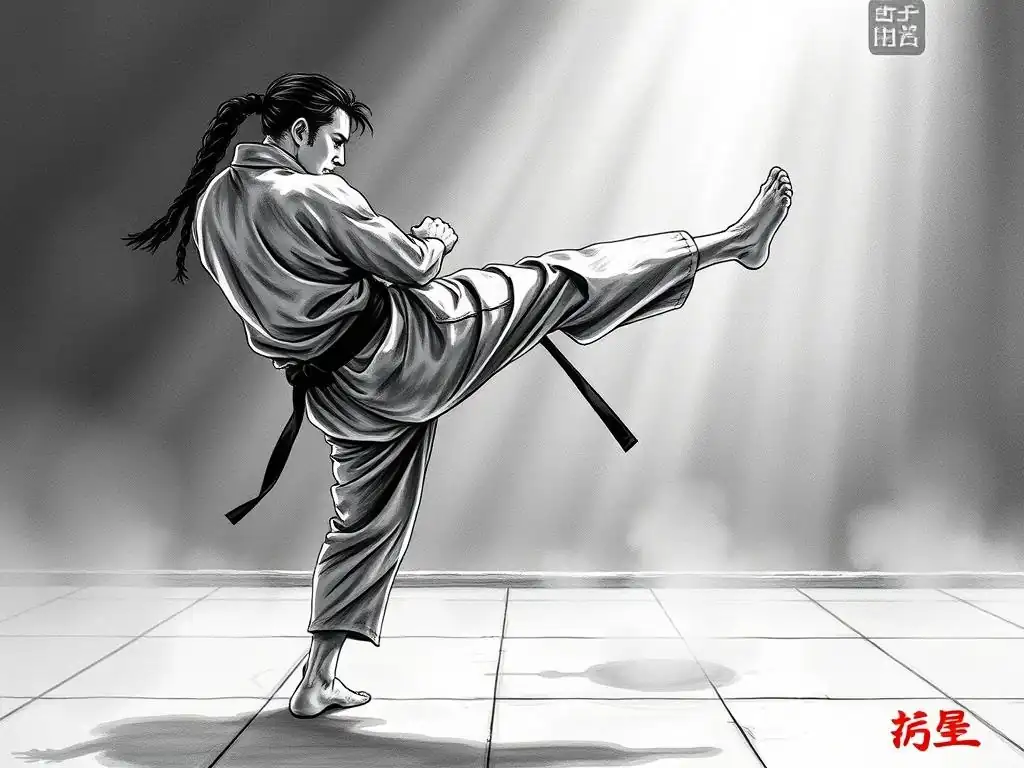
The immense power behind Kyokushin leg kick techniques doesn't come solely from leg strength; it's generated through efficient use of the entire body, starting from the ground. The process begins with the supporting foot, which pivots sharply (often 90-180 degrees or more) on the ball of the foot. This pivot allows the hips to rotate fully. The rotation of the hips is the engine of the kick, transferring rotational energy from the core through the leg. As the hips turn, the kicking leg is propelled forward and around in an arc.
Simultaneously, the body's weight shifts onto the supporting leg, and the upper body often counter-rotates slightly to maintain balance and add torque. The arm on the kicking side might swing back to increase momentum, while the opposite arm maintains a guard. The final snap of the lower leg adds velocity. This coordinated movement, from the pivot to the snap, ensures that the maximum possible force is delivered through the shin bone into the target. Without proper footwork and hip rotation, even a strong leg will produce a weak kick.
Maintaining Balance and Stability While Kicking
Maintaining balance and stability is critical when executing Kyokushin leg kick techniques, especially in the dynamic and unpredictable environment of self-defense. A loss of balance leaves you vulnerable to counter-attacks or falling. Kyokushin training emphasizes developing a strong core and supporting leg strength. During the kick, the supporting leg must be firmly rooted, and the core muscles engaged to stabilize the torso and prevent wobbling.
Training drills often involve kicking repeatedly while standing on one leg or holding challenging postures to build this essential stability. The non-kicking arm plays a role by helping to counterbalance the weight of the kicking leg. Learning to recover quickly if a kick misses or is blocked is also part of this training. The ability to throw powerful Kyokushin leg kick techniques while remaining stable allows practitioners to follow up effectively or defend themselves immediately after the strike, rather than being caught off guard.
Footwork Drills to Improve Leg Kick Speed and Accuracy
Effective footwork is integral to delivering fast and accurate Kyokushin leg kick techniques. Drills focus on developing explosive movement and precise positioning.
- Shuffle Step Kicks: Practicing a quick shuffle step forward or backward before kicking helps close or create distance rapidly while setting up the kick.
- Pivot Drills: Repeatedly practicing the 180-degree pivot on the ball of the foot without kicking builds speed and fluidity in hip rotation.
- Cutting Angles: Moving off the line of attack with a diagonal step before throwing a kick makes the technique harder to read and provides a better angle on the target.
- Switch Stance Kicks: Quickly switching the lead leg and immediately throwing a kick from the new stance adds unpredictability and speed.
These drills, practiced thousands of times, condition the muscles for explosive movement and teach the body efficient transitions, ensuring that Kyokushin leg kick techniques can be deployed swiftly and accurately when needed in a confrontation.
Training Drills for Mastering Kyokushin Leg Kicks in Self-Defense
Partner Drills for Developing Leg Kick Power and Timing
Partner drills are essential for developing the practical application of Kyokushin leg kick techniques, focusing on power, timing, and targeting against a moving, reacting opponent.
- Pad Holding: A partner holds a thickly padded target (like a Thai pad or body shield) on their thigh or body. The practitioner delivers full-power low or middle kicks, focusing on driving through the target. The holder provides feedback on power and placement. Goal: Develop maximum force and penetration.
- Defensive Drills: One partner practices throwing low kicks while the other practices blocking with their shin or checking (lifting their knee). This teaches both offensive application and defensive counters. Goal: Learn to land kicks against resistance and defend against incoming leg attacks.
- Timing Drills: The partner moves unpredictably (forward, backward, side-to-side), and the practitioner must time their leg kicks to land effectively, often on a moving target. Goal: Improve timing and ability to hit dynamic targets.
These drills simulate the interaction with an opponent, allowing practitioners to refine their Kyokushin leg kick techniques in a semi-live environment before full sparring.
Bag Workouts to Improve Leg Kick Conditioning and Technique
Heavy bag workouts are fundamental for building the conditioning, power, and muscle memory required for effective Kyokushin leg kick techniques.
- Power Rounds: Deliver continuous, full-power low and middle kicks to the heavy bag for set rounds (e.g., 2-3 minutes). Focus on hip rotation and driving through the bag. Goal: Build explosive power and endurance.
- Technique Rounds: Slow down slightly and focus on perfect form – proper pivot, hip drive, guard, and striking surface. Vary targets (low, middle). Goal: Refine mechanics and accuracy.
- Combination Drills: Practice throwing leg kicks in combination with hand strikes (e.g., jab-cross-low kick). Goal: Integrate Kyokushin leg kick techniques into fluid combinations.
- Conditioning Rounds: Focus on sheer volume, throwing as many hard kicks as possible within a round. This builds shin toughness and muscular endurance. Goal: Develop physical resilience and kicking stamina.
Consistent bag work, perhaps 3-5 times a week, is crucial for developing the physical attributes needed to use Kyokushin leg kick techniques effectively in self-defense.
Incorporating Leg Kicks into Kyokushin Sparring (Kumite)
Sparring (Kumite) is the ultimate training ground for applying Kyokushin leg kick techniques under pressure. In Kyokushin kumite, low and middle kicks are constantly exchanged, often with significant force.
- Live Application: Sparring allows practitioners to test their timing, distance, and technique against resisting opponents. They learn which setups work, how to react to counter-attacks, and how their kicks affect different body types.
- Developing Resilience: Receiving powerful leg kicks in sparring is part of the conditioning process. Practitioners learn to absorb blows, recognize the signs of damage, and continue fighting, building mental and physical toughness vital for self-defense.
- Strategic Use: Sparring teaches the strategic deployment of Kyokushin leg kick techniques – when to attack the legs, when to use middle kicks, and how to mix them with hand techniques. For instance, landing 10-15 solid low kicks on an opponent's thigh in a typical sparring round can significantly impair their movement for subsequent rounds, mirroring the effect desired in self-defense.
Kumite is where the theory and practice of Kyokushin leg kick techniques converge, providing invaluable experience in applying these powerful tools in a dynamic, combative environment.
Common Mistakes to Avoid When Practicing Kyokushin Leg Kicks
Poor Stance and Balance: How to Correct Them
One of the most common mistakes in executing Kyokushin leg kick techniques is neglecting the importance of a strong stance and maintaining balance. A weak base leads to kicks lacking power and leaves the practitioner vulnerable.
- Issue: Not pivoting the supporting foot enough (or at all) restricts hip rotation, resulting in a weak, arm-like swing instead of a powerful, body-driven kick. It also strains the knee of the supporting leg.
- Correction: Consciously over-emphasize the pivot during practice drills. Ensure the heel of the supporting foot points towards the target after the pivot. Drill the pivot motion separately thousands of times.
- Issue: Leaning too far back or to the side during the kick compromises balance and reduces power transfer.
- Correction: Engage the core muscles. Keep the torso relatively upright and centered over the supporting leg. Practice slow-motion kicks focusing on maintaining a stable posture. Use the non-kicking arm for balance.
Correcting poor stance and balance is fundamental to unlocking the full potential of Kyokushin leg kick techniques and ensuring safety.
Telegraphing Kicks: Strategies for Concealing Your Intentions
Telegraphing, or making your intention obvious before you execute a technique, is a mistake that drastically reduces the effectiveness of Kyokushin leg kick techniques in self-defense. Common tells include dropping the hands, looking at the target, or taking a large preparatory step.
- Issue: Dropping the guard just before kicking.
- Correction: Maintain a high, tight guard throughout the kick execution. Practice throwing kicks while keeping both hands up and protecting the head and body.
- Issue: Looking down at the target (leg) before kicking.
- Correction: Keep your eyes focused forward, observing the attacker's upper body and overall movement. Use peripheral vision for lower targets.
- Issue: Taking a large, obvious chamber or wind-up.
- Correction: Aim for a more direct, explosive chamber and execution. Incorporate fake hand strikes or body feints to distract the attacker before throwing the kick. Practice throwing kicks with minimal pre-movement.
Minimizing telegraphing makes Kyokushin leg kick techniques faster, more surprising, and significantly harder for an attacker to defend against.
Neglecting Leg Conditioning: Building Durable Kicking Power
A critical component of effective Kyokushin leg kick techniques is leg conditioning, particularly hardening the shins. Neglecting this aspect means kicks will be painful to deliver, lack power, and potentially injure the kicker.
- Issue: Kicking with soft shins causes pain upon impact, leading to hesitant or weak kicks.
- Correction: Engage in progressive shin conditioning. Start by lightly striking soft surfaces like heavy bags or padded poles. Gradually increase force and potentially move to slightly harder surfaces over many months or years. This process builds pain tolerance and increases bone density. Caution: This must be done gradually and under qualified supervision to avoid serious injury.
- Issue: Weak supporting leg muscles lead to poor balance and reduced power.
- Correction: Incorporate strength training focusing on the legs and core – squats, lunges, calf raises. Practice balance drills.
- Issue: Lack of flexibility restricts the range of motion, limiting kick height and speed.
- Correction: Regular stretching routines focusing on the hips, hamstrings, and quadriceps are essential.
Building durable kicking power through consistent conditioning is non-negotiable for effective Kyokushin leg kick techniques in any application, especially self-defense where maximum impact is desired.
Real-World Self-Defense Scenarios: Kyokushin Leg Kicks in Action
Case Studies: How Kyokushin Practitioners Used Leg Kicks to Defend Themselves
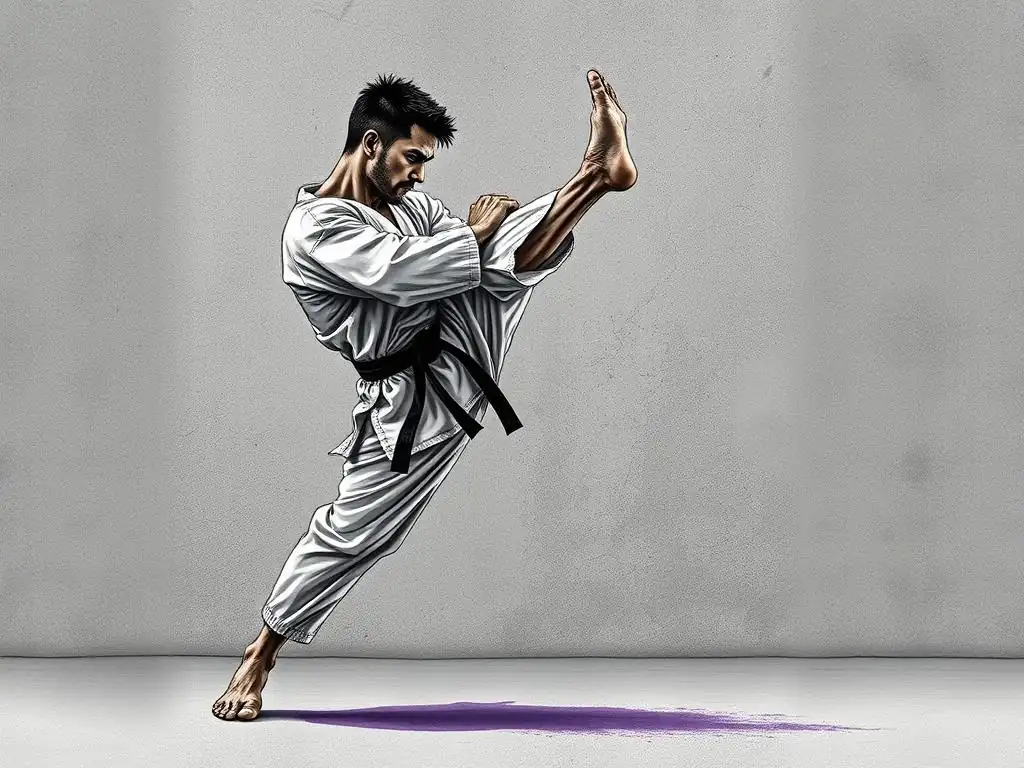
While specific verifiable street fight "case studies" of Kyokushin practitioners using leg kicks are difficult to document publicly, the principles demonstrated in Kyokushin's full-contact sparring provide a strong basis for understanding their effectiveness. Consider scenarios inspired by common street confrontations:
- Scenario 1: The Aggressive Closer.: An attacker is verbally abusive and rapidly advancing, attempting to intimidate and potentially strike. A Kyokushin practitioner, maintaining calm, uses a well-timed Gedan Mawashi Geri to the attacker's lead thigh as they step forward. The sudden, intense pain and disruption to their stance stop the forward momentum. The attacker is forced to address the damage to their leg, creating an opportunity for the practitioner to disengage and escape. This application leverages the low kick's speed and power to immediately impact mobility.
- Scenario 2: The Grappling Attempt.: An attacker attempts to grab hold or initiate a tackle. As they reach or lunge, the Kyokushin practitioner executes a powerful Chudan Mawashi Geri to the side of their ribs. The impact breaks the attacker's posture, potentially winding them or causing enough pain to release their grip or abandon the tackle attempt. This uses the middle kick's stopping power and ability to disrupt structure.
- Scenario 3: Creating Space.: Facing a narrow escape route with an attacker blocking the way. A powerful low kick to the attacker's leg forces them to momentarily buckle or shift weight. This brief distraction and shift in position creates a crucial opening, perhaps 1-2 feet of space, allowing the practitioner to burst past and escape.
These examples illustrate how applying fundamental Kyokushin leg kick techniques—trained for full contact—can effectively address common threats in self-defense by targeting mobility, disrupting structure, and creating opportunities for escape.
Adapting Kyokushin Leg Kick Techniques to Different Self-Defense Situations
Effective self-defense isn't just about having powerful techniques; it's about adapting them to the specific situation. Kyokushin leg kick techniques offer versatility in this regard.
- Environment: In confined spaces (like a hallway), low kicks are often more practical than high kicks due to limited room for chambering and follow-through. Uneven ground requires more emphasis on balance during execution.
- Attacker's State: Against an untrained attacker, even moderately powerful leg kicks can be highly debilitating as they lack conditioning. Against a trained opponent, speed, timing, and targeting less conditioned areas become more crucial.
- Attacker's Apparel: Thick clothing might slightly reduce the impact of a kick, but the force delivered by a conditioned shin is still significant. Kicking through clothing to reach the muscle or bone is the aim.
- Multiple Attackers: Low kicks can be used to quickly target the legs of multiple opponents to slow them down or create space. A quick series of low kicks to different attackers' legs can buy time to assess the situation or find an escape route.
Adapting the angle, power, and target of Kyokushin leg kick techniques based on the specific self-defense context maximizes their effectiveness and aligns with Kyokushin's pragmatic approach to combat.
Kyokushin Leg Kicks vs. Other Martial Arts Leg Kick Styles
Comparing Kyokushin Leg Kicks to Muay Thai Leg Kicks
Both Kyokushin Karate and Muay Thai are renowned for their powerful leg kicks, but there are notable differences in technique, application, and emphasis.
| Feature | Kyokushin Leg Kicks | Muay Thai Leg Kicks |
|---|---|---|
| Primary Target | Thighs (low), Ribs/Solar Plexus (middle), Head (high) | Thighs (low), Ribs/Liver/Arms (middle), Head (high) |
| Striking Surface | Predominantly lower shin bone | Predominantly lower shin bone, sometimes instep (high) |
| Hip Rotation | Strong, often 180+ degree pivot | Very strong, full hip commitment |
| Chamber | More direct, less overt chamber in many applications | Often a more pronounced chamber/swing |
| Follow-Through | Powerful snap and recoil | Often drives through the target with less recoil |
| Stance | Lower, stable stances common | Wider, often more upright stance |
| Conditioning | Intense shin conditioning is fundamental | Extremely intense shin conditioning is fundamental |
While both styles develop devastating leg kicks, Muay Thai often emphasizes driving through the opponent with less immediate recoil, sometimes referred to as a "chopping" motion, particularly for low kicks. Kyokushin often utilizes a powerful snapping motion alongside the drive.
Kyokushin's emphasis on low kicks to the thigh is arguably as central as in Muay Thai, though Muay Thai also heavily targets the arms (to break guard) and liver (with oblique kicks), which are less common primary targets in standard Kyokushin kumite. Both styles produce practitioners with incredibly durable shins and powerful Kyokushin leg kick techniques (or Muay Thai equivalents) that are highly effective.
Contrasting Kyokushin Leg Kicks with Taekwondo Leg Kicks
Taekwondo also features a wide array of impressive kicking techniques, including roundhouse kicks, but its application and emphasis differ significantly from Kyokushin's leg kicks.
| Feature | Kyokushin Leg Kicks | Taekwondo Leg Kicks (Roundhouse) |
|---|---|---|
| Primary Goal | Power, damage, KO, mobility disruption | Speed, scoring points (often head/body protectors) |
| Striking Surface | Conditioned shin bone | Instep or ball of the foot (depending on target/style) |
| Hip Rotation | Strong, powerful drive | Fast, whip-like rotation |
| Chamber | Direct, focused on power | High chamber often used for speed and target variation |
| Follow-Through | Powerful snap and recoil | Fast recoil for quick follow-up or balance recovery |
| Stance | Lower, rooted, focused on stability for power delivery | More mobile, balanced for rapid, diverse kicking |
| Conditioning | Intense shin conditioning is fundamental | Focus on flexibility, speed, and foot conditioning |
Taekwondo's competitive rules reward speed and accuracy, often using the instep to score points on padded targets. While Taekwondo kicks are incredibly fast and versatile, they are not typically delivered with the same bone-jarring, shin-on-shin force characteristic of Kyokushin or Muay Thai leg kicks, as the primary striking surface is different and shin conditioning to the same degree is not a central focus. Kyokushin leg kick techniques are designed for maximum impact and damage to an unpadded target, making them fundamentally different in application and required conditioning compared to the point-scoring focus of many Taekwondo kicks.
Conclusion: Elevating Your Self-Defense with Kyokushin Leg Kick Techniques
The Importance of Consistent Training and Practical Application
Mastering Kyokushin leg kick techniques for self-defense is not a quick process; it requires consistent, dedicated training. The power, conditioning, and timing needed to effectively utilize these techniques in a real confrontation are developed over years of rigorous practice. Regular attendance at a qualified Kyokushin dojo is crucial, providing access to experienced instructors, training partners, and the necessary equipment like heavy bags and pads.
Consistency builds the muscle memory for proper technique, strengthens the supporting structures, and progressively conditions the striking surfaces. Practicing realistic scenarios (within safe training limits) helps bridge the gap between dojo training and street application. Without consistent effort, the powerful Kyokushin leg kick techniques remain just theory; only through diligent practice do they become potent tools for self-protection.
Further Resources for Learning Kyokushin Leg Kick Techniques
For those serious about learning and mastering Kyokushin leg kick techniques, seeking instruction from certified Kyokushin dojos affiliated with recognized international organizations is highly recommended. These dojos follow established curricula and safety protocols for conditioning and sparring.
Additional resources often include instructional books and DVDs by reputable Kyokushin masters (though these should supplement, not replace, in-person training). Watching footage of high-level Kyokushin kumite provides visual examples of Kyokushin leg kick techniques applied under pressure. However, the most valuable resource is always hands-on instruction and consistent practice under the watchful eye of a qualified Kyokushin black belt. Embracing the full-contact philosophy and rigorous training methodology is key to truly harnessing the power of Kyokushin leg kick techniques for self-defense.
Frequently Asked Questions
What makes Kyokushin leg kicks particularly effective in self-defense situations?
Kyokushin leg kicks are effective due to their focus on power and damage to the legs, crippling an attacker's mobility. They can quickly neutralize an opponent's stance and reduce their ability to attack or escape. This makes them a crucial element in a practical self-defense strategy.
What are some fundamental Kyokushin leg kick techniques that beginners should learn?
Beginners should focus on the low kick (gedan geri), aiming for the opponent's thigh. Mastering the roundhouse kick (mawashi geri) to the lower legs is also essential. These techniques provide a solid foundation for more advanced kicks.
How does Kyokushin training prepare practitioners to execute effective leg kicks under pressure?
Kyokushin training emphasizes conditioning and sparring, building resilience to pain and improving reaction time. This allows practitioners to execute leg kicks effectively even in stressful self-defense scenarios. The focus is on realistic combat simulation.
Are Kyokushin leg kicks legal and permissible in self-defense situations?
The legality of any self-defense technique depends on the specific laws and circumstances. Kyokushin leg kicks are generally permissible if used as a reasonable and proportionate response to an imminent threat. It's crucial to understand local self-defense laws and act accordingly.
How do Kyokushin leg kicks differ from leg kicks in other martial arts?
Kyokushin leg kicks are characterized by their full-contact delivery and emphasis on power. Unlike some other martial arts, Kyokushin focuses on inflicting significant damage to the opponent's legs, aiming to disable them quickly. The goal is to end the confrontation efficiently.
Final Reflection: Embracing the Power of Kyokushin Leg Kicks
The exploration of Kyokushin leg kick techniques reveals more than just a martial arts strategy; it unveils a potent tool for self-defense that is increasingly relevant in today's unpredictable world. The ability to effectively utilize leg kicks can significantly alter the dynamics of a confrontation, providing a crucial advantage in protecting oneself and others. This isn't just about physical prowess; it's about empowering individuals with the knowledge and skills to confidently navigate potentially dangerous situations.
The impact of Kyokushin's leg kick philosophy extends beyond the dojo, influencing how we perceive vulnerability and resilience in the face of adversity. The discipline required to master these techniques fosters a deeper understanding of personal strength and the importance of proactive self-preservation. As Bruce Lee famously said: Adapt what is useful, reject what is useless, and add what is specifically your own.
This sentiment perfectly encapsulates the spirit of Kyokushin, encouraging practitioners to not only learn the techniques but also to adapt them to their own unique strengths and circumstances.
Now, consider how you can integrate the principles of Kyokushin leg kicks into your own life, even if you're not a martial artist. Reflect on the importance of preparation, strategic thinking, and the unwavering commitment to protecting yourself and those you care about. Embrace the spirit of resilience and adaptability that Kyokushin embodies, and empower yourself to face life's challenges with confidence and unwavering determination.
Ignite Your Self-Defense: Master Kyokushin Leg Kicks Now!
Thank you for exploring the power of Kyokushin leg kicks with us. We hope this article has opened your eyes to their incredible potential in self-defense. Now, it's time to translate knowledge into action and elevate your martial arts journey:
- Immediately start practicing the low kick on a heavy bag or with a partner (safely, of course!). Aim for consistent, controlled power.
- Explore Kyokushin dojos near you and consider attending a trial class to experience the full intensity of this art firsthand.
- Share this article with fellow martial artists or friends interested in self-defense—spread the knowledge!
Which Kyokushin leg kick are you most excited to incorporate into your training, and what adjustments will you make for real-world self-defense scenarios?