
MuneGatame: The Chest Hold Pin in Judo Explained


Welcome to Martial Arts Mastery, your comprehensive guide to the captivating world of combat. Delve into the rich history, intricate techniques, and profound philosophies that define martial arts across the globe. Ever wondered about the subtle power of a seemingly simple hold? This week, we're unraveling the intricacies of a crucial Judo technique. Prepare to expand your understanding as we explore the MuneGatame – the chest hold pin – in Judo, revealing its strategic applications and historical context. Curious to learn how this fundamental pin can be a game-changer? Read on to master the MuneGatame!
- Understanding MuneGatame: A Comprehensive Guide to the Judo Chest Hold Pin
- The Mechanics of MuneGatame: How the Judo Chest Hold Works
- Step-by-Step Guide: Performing the MuneGatame Pin
- MuneGatame Variations and Setups in Judo
- Defending Against MuneGatame: Escapes and Counters
- MuneGatame in Judo Competition: Strategies and Tactics
- Training Drills for Mastering MuneGatame
- MuneGatame vs. Other Judo Pins: A Comparison
- The Importance of Proper Training and Safety when Practicing MuneGatame
- MuneGatame: A Powerful Pinning Technique for Judo Mastery
-
Frequently Asked Questions
- What is MuneGatame in Judo?
- How does MuneGatame differ from other Judo pins like Kesa-Gatame?
- What are the key elements to successfully executing MuneGatame?
- What are some common mistakes to avoid when performing MuneGatame?
- Is MuneGatame an effective self-defense technique outside of Judo competition?
- Final Reflection: Mastering Mune-Gatame for Enduring Judo Skill
- Master the Mune Gatame: Your Next Judo Breakthrough!
Understanding MuneGatame: A Comprehensive Guide to the Judo Chest Hold Pin
What is MuneGatame in Judo? An Introduction
MuneGatame, often translated as "chest hold," is one of the fundamental Osae-Komi-Waza (pinning techniques) in the grappling aspect of Judo, known as Katame-Waza. It is a core technique taught early in a judoka's training, recognized by its strong control over the opponent's torso and head.
The primary objective of MuneGatame, like other pins, is to hold the opponent (Uke) flat on their back, preventing them from escaping or initiating offensive movements, and to secure a hold long enough to score points or even achieve an Ippon (full point) in competition. Understanding the nuances of the Judo MuneGatame technique explained is crucial for effective groundwork.
This pinning technique involves Tori (the person applying the hold) lying across the upper body of Uke, typically with Tori's chest pressing down on Uke's chest or upper abdomen. Tori's arm wraps around Uke's neck, controlling their head and upper body, while the other arm extends down to control Uke's arm or belt area, preventing escape.
The effectiveness of MuneGatame lies in the leverage created by Tori's body weight distributed strategically over Uke, making it difficult for Uke to bridge, turn, or slip out from underneath. Mastering this basic yet powerful hold is a stepping stone to learning more complex pinning strategies in Judo.
MuneGatame: A Key Pinning Technique in Katame-waza
Within the Judo curriculum, MuneGatame holds significant importance as one of the shihō gatame (four-corner holds) variants, although it's often taught as a distinct technique alongside Hon-Gesa-Gatame, Kami-Shiho-Gatame, and Yoko-Shiho-Gatame. Its inclusion in the Gokyo of Kodokan Judo highlights its foundational status. Proficiency in MuneGatame provides a judoka with a reliable method to neutralize an opponent's movement on the ground, offering a stable platform from which to transition to other pins, apply chokes (Shime-Waza), or armlocks (Kansetsu-Waza), though the primary goal remains the pin itself.
MuneGatame is particularly effective because it controls Uke's head and upper body simultaneously, limiting their ability to generate power for escape attempts. Unlike some other pins that might allow more upper body mobility, the chest-to-chest pressure and head control inherent in the Judo MuneGatame technique explained make it a stifling hold. Judo practitioners spend considerable time drilling this technique to develop the necessary pressure, control, and endurance required to maintain the pin against a struggling opponent, making it a cornerstone of effective Katame-Waza.
The Mechanics of MuneGatame: How the Judo Chest Hold Works
Proper Body Positioning for a Successful MuneGatame
Correct body positioning is paramount for a successful MuneGatame. Tori should lie across Uke's upper body, typically with their chest centered over Uke's sternum or slightly higher. Tori's head should be close to Uke's head, often turned to the side to avoid headbutts and maintain a low profile. Tori's legs should be spread wide for stability, forming a strong base. One leg might be extended back for balance, while the other can be bent with the knee near Uke's hip or shoulder. This wide stance prevents Uke from easily turning Tori over.
The goal is to maximize the surface area of contact and weight distribution. Tori's hips should be low to the ground, creating downward pressure through their core and chest onto Uke. This low center of gravity makes Tori difficult to shift. Tori's back should be relatively straight, not arched, to maintain structural integrity and facilitate the transfer of weight. Proper alignment ensures that Tori's weight is effectively used to pin Uke rather than simply lying on top of them without control. This optimized positioning is key to the stability and effectiveness of the Judo MuneGatame technique explained.
Hand Placement and Grip Variations for MuneGatame
Standard hand placement in MuneGatame involves one arm wrapping firmly around Uke's head and neck, with the hand reaching towards Uke's opposite shoulder or even gripping Tori's own gi lapel for a more secure lock. This arm controls Uke's head movement, preventing them from bridging up effectively. The other arm typically extends down Uke's side. A common grip for this second arm is on Uke's belt or the edge of their gi skirt, near the hip. This grip prevents Uke from turning towards that side and helps maintain the chest-to-chest connection.
Variations exist depending on the situation and Uke's resistance. Instead of gripping the belt, the second arm might control Uke's far arm by the wrist or sleeve, preventing them from using it to push or frame. Another variation involves gripping Uke's gi pants near the knee or ankle to further restrict hip movement. The key principle is that both arms work in concert with the body position to neutralize Uke's potential escape routes. Experimenting with these grip variations during training helps a judoka understand how to adapt the Judo MuneGatame technique explained to different opponents and situations.
Utilizing Body Weight and Leverage in MuneGatame
The effectiveness of MuneGatame heavily relies on the strategic application of body weight and leverage. Tori doesn't just lie on Uke; they actively drive their weight downwards through their chest and core. This pressure is concentrated on Uke's sternum and diaphragm, making it difficult for Uke to breathe deeply or generate explosive power for bridging. The leverage comes from Tori's limbs acting as anchors and control points. The arm around the head creates a fulcrum that restricts neck movement and prevents Uke from sitting up.
Simultaneously, the grip with the other hand on Uke's belt or gi acts as another point of control, preventing Uke from rotating their hips. Tori's wide leg base provides stability and allows Tori to adjust their weight distribution dynamically. By shifting weight slightly towards Uke's head or hips as needed, Tori can counter Uke's escape attempts. Maintaining low hips ensures that Tori's core strength can be used to maintain pressure, rather than relying solely on arm strength, which is less sustainable. This intelligent use of weight and leverage is fundamental to locking down the Judo MuneGatame technique explained.
Step-by-Step Guide: Performing the MuneGatame Pin
Step 1: Setting Up the MuneGatame Position
The setup for MuneGatame often begins from a position where Uke is on their back, perhaps after a throw or a scramble on the ground. Tori needs to quickly move into a position where they are perpendicular or slightly angled across Uke's upper body. A common entry is from Uke's side, stepping over Uke's legs or moving around their head. As Tori settles into position, their chest should align over Uke's chest. Tori's base needs to be wide and stable from the outset, with legs spread to prevent being easily rolled.
Simultaneously with settling their body, Tori must secure the essential controls. One arm immediately wraps around Uke's head and neck, pulling it close to Tori's chest. The other arm reaches down Uke's side to secure a grip, commonly on the belt or gi. Speed and decisiveness in this initial transition are crucial; hesitation allows Uke time to defend or escape. Establishing a solid base and the primary grips are the critical first actions in applying the Judo MuneGatame technique explained effectively.
Step 2: Controlling Your Opponent's Movement
Once the initial position and grips are established, the focus shifts to controlling Uke's movement and preventing escape attempts. The arm around Uke's head should maintain constant pressure, pulling Uke's head towards Tori's chest. This prevents Uke from gaining head control or bridging with power. The other arm's grip on the belt or gi is used to keep Uke's hips anchored and prevent them from turning into Tori or shrimping away. Tori's chest pressure should be heavy and directed downwards, making it uncomfortable for Uke to breathe or move.
Tori's legs play a vital role in control. By keeping a wide base and adjusting leg position, Tori can counter Uke's attempts to bridge or shrimp. If Uke tries to bridge, Tori can lower their hips further and increase chest pressure. If Uke tries to shrimp, Tori can widen their base on that side or adjust their grip to follow Uke's movement. Constant awareness of Uke's body language and subtle shifts allows Tori to anticipate and shut down escape routes before they gain momentum. Maintaining relentless, intelligent pressure is key to controlling Uke in the Judo MuneGatame technique explained.
Step 3: Applying Pressure for the Pin
Applying effective pressure is the core of maintaining MuneGatame and working towards a score. The pressure comes primarily from Tori's body weight channeled through their chest onto Uke's sternum and diaphragm. Tori achieves this by keeping their hips low and driving their weight downwards, not relying solely on upper body strength. The arm around the head also contributes pressure by pulling Uke's head into Tori's chest, limiting Uke's ability to elevate their torso.
Effective pressure isn't just static; it's dynamic. As Uke struggles, Tori must adjust their pressure to counter the resistance. If Uke tries to turn left, Tori might shift slightly more weight onto their right side to block the movement. If Uke bridges forcefully, Tori lowers their hips and increases downward drive. The goal is to make Uke feel constantly smothered and unable to find space to maneuver. Consistent, directed pressure is what makes the Judo MuneGatame technique explained a formidable pin.
Step 4: Maintaining the MuneGatame Hold
Maintaining the MuneGatame hold requires endurance, strategic breathing, and constant vigilance. A judoka needs to be able to hold the position against a resisting opponent for the required time to score: typically 10 seconds for Yuko (no longer used in IJF rules but relevant in some contexts), 15 seconds for Waza-ari, and 20 seconds for Ippon in competitive Judo. This requires significant physical conditioning. Tori must breathe deeply and calmly to conserve energy, while Uke is likely struggling and expending a lot of energy.
Vigilance involves constantly monitoring Uke's attempts to escape. Is Uke trying to grab Tori's arm? Is Uke trying to bridge and roll? Is Uke shrimping? Tori must react instantly to shut down these attempts by adjusting grips, shifting weight, and maintaining a low, stable base. The arm controlling the head and the arm controlling the body/belt must work together to keep Uke flat and immobile. Successful maintenance of the Judo MuneGatame technique explained often comes down to patience, pressure, and timely adjustments.
MuneGatame Variations and Setups in Judo
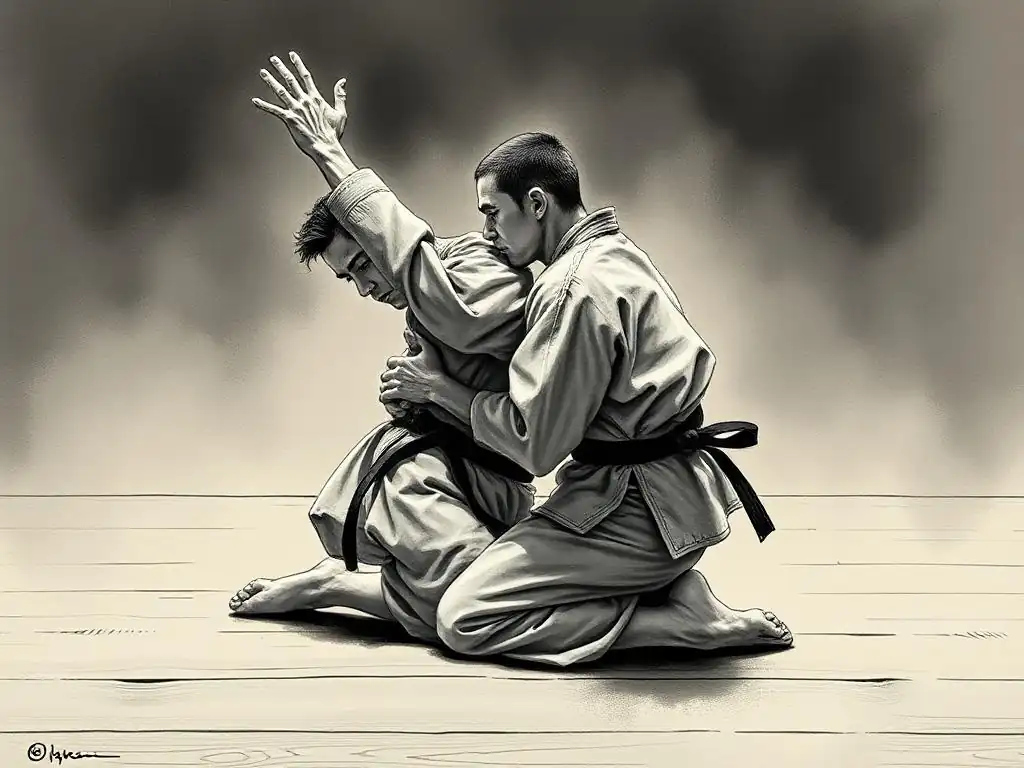
Transitioning into MuneGatame from Different Positions
MuneGatame is a versatile pin that can be transitioned into from numerous positions. A common scenario is transitioning after a throw (Nage-Waza) where Uke lands on their back, such as Ouchi Gari or Kosoto Gari, where Tori is already close to Uke's side. Tori can quickly drop into the MuneGatame position, securing the head and body control before Uke recovers. Another frequent transition occurs during ground fighting scrambles (Ne-Waza), where Tori manages to get side control on Uke.
From a side control position, Tori can often slide their chest over Uke's, secure the head and belt grips, and establish MuneGatame. Even from being in Uke's guard, if Uke's posture is broken down, Tori might be able to pass the guard and immediately transition into a pin like MuneGatame. The key is recognizing the opportunity when Uke is flat on their back or momentarily incapacitated, and quickly moving into the dominant chest-over-chest position. Practicing these transitions is vital for effectively applying the Judo MuneGatame technique explained in a dynamic situation.
Common MuneGatame Setups from Ippon Seoi Nage and Uchi Mata
Two classic Judo throws that often provide excellent opportunities to transition directly into MuneGatame are Ippon Seoi Nage (one-arm shoulder throw) and Uchi Mata (inner thigh throw). After a successful Ippon Seoi Nage where Uke is thrown over Tori's back and lands flat, Tori is often already in a position to drop quickly to the ground alongside Uke. Tori can then slide their chest over Uke's upper body, secure the head control with the arm that was around Uke's arm/shoulder during the throw, and establish the belt/gi grip with the other hand.
Similarly, following a dynamic Uchi Mata throw, especially if Uke lands with significant force on their back, Tori is often in a favorable position to follow Uke to the ground. As Uke lands, Tori can drop their weight, slide into the chest-over-chest alignment, wrap the arm around Uke's head from the side they landed on, and secure the lower body grip. These specific throw-to-pin transitions are practiced extensively in Judo because they leverage the momentum and positioning gained from the throw to immediately establish a strong pin like the Judo MuneGatame technique explained.
Adapting MuneGatame to Different Body Types and Skill Levels
Adapting the MuneGatame technique is crucial as opponents vary significantly in size, strength, and experience. Against a smaller, lighter opponent, Tori might need to be careful not to apply excessive pressure that could cause injury, focusing more on positional control and preventing movement. Against a larger, stronger opponent, Tori must rely heavily on leverage, low hips, and precise weight distribution rather than just brute force. The wide leg base becomes even more critical for stability against a powerful bridge.
Skill level also dictates adaptation. Against a novice, a basic application of MuneGatame might suffice. Against an experienced judoka, Uke will be actively trying to escape from the moment the pin is initiated. Tori must be prepared for immediate and intelligent escape attempts, constantly adjusting grips, pressure, and base. For instance, if Uke is known for bridging and rolling, Tori must maintain exceptionally low hips and strong head control. If Uke prefers shrimping, Tori must focus on blocking the hips and maintaining the belt grip. Mastering the Judo MuneGatame technique explained involves learning these adaptations.
Defending Against MuneGatame: Escapes and Counters
Recognizing the MuneGatame Setup
Defending against MuneGatame begins with recognizing the setup as early as possible. This often happens immediately after being thrown or during a ground scramble where Tori is attempting to establish side control or transition to a pin. Key indicators that Tori is going for MuneGatame include Tori attempting to get their chest over yours, their arm reaching for your head/neck, and their other arm reaching for your belt or hip area. Early recognition allows Uke to initiate defensive actions before the pin is fully established.
Another sign is Tori trying to get their legs into a wide, stable base around your body. If you feel Tori settling their weight heavily on your chest and beginning to secure grips, it's a strong indication that MuneGatame is being applied. Reacting within the first few seconds is critical; the longer Tori holds the pin, the harder it becomes to escape. Understanding the mechanics of the Judo MuneGatame technique explained from Tori's perspective is invaluable for Uke in anticipating and defending against it.
Escaping the Chest Hold Pin: Techniques and Strategies
Escaping MuneGatame requires creating space and disrupting Tori's control. One common escape is the bridge and roll. Uke attempts to bridge their hips powerfully upwards while simultaneously turning their head towards the side Tori's head is on. The goal is to lift Tori's weight and roll them over. This requires significant strength and timing, often targeting the moment Tori's weight is slightly off-balance.
Another strategy is shrimping (Ebi). Uke tries to create space by sliding their hips away from Tori, usually by turning onto their side slightly and using their legs to push off the mat. This can help create enough room to pull an arm free, turn further, or recover guard. Uke might also try to use their arms to frame against Tori's neck or chest to create distance, though this is difficult against a well-applied MuneGatame. Ultimately, escaping the Judo MuneGatame technique explained often involves a combination of bridging, shrimping, and hand fighting to break grips and create space.
Countering MuneGatame: Turning the Tables
Countering MuneGatame goes beyond just escaping; it involves using the escape attempt to transition into a dominant position or apply a technique of your own. For example, if Uke successfully bridges and creates space, they might immediately try to scramble on top of Tori, reversing the position. If Uke manages to shrimp out and create significant distance, they might try to stand up or pull Tori into their guard.
A more direct counter might occur during the escape. If Uke successfully bridges and rolls Tori, they could end up in a side control or even mount position on Tori. Alternatively, as Uke escapes and Tori is momentarily off-balance, Uke might be able to apply a submission hold like an armlock or choke, though this is less common directly from a pin escape and more likely during the subsequent scramble. The effectiveness of countering the Judo MuneGatame technique explained depends heavily on Uke's ability to transition quickly and capitalize on Tori's vulnerability during the escape sequence.
MuneGatame in Judo Competition: Strategies and Tactics
When to Utilize MuneGatame in a Judo Match
MuneGatame is typically utilized in a Judo competition when the match goes to the ground (Ne-Waza) and Tori has successfully put Uke on their back. The most common scenario is after a throw where Uke lands supine and Tori follows them down quickly. It can also arise during ground transitions, such as passing Uke's guard or scrambling from a disadvantageous position into a dominant one. The decision to go for MuneGatame versus another pin might depend on Uke's posture, the angle of approach, and Tori's personal preference or strengths.
MuneGatame is often chosen for its perceived stability and control, particularly effective against opponents who rely heavily on bridging power for escapes. It's a solid choice when the primary goal is to secure a pin and score points, rather than immediately transitioning to a submission (though submissions can follow). Recognizing the right moment to transition from a scramble or throw into the precise position required for the Judo MuneGatame technique explained is a key tactical skill.
Scoring with MuneGatame: Achieving Ippon
To score with MuneGatame in a Judo competition under current IJF rules, Tori must hold Uke flat on their back within the designated contest area. A hold lasting 10 seconds scores Waza-ari (formerly Yuko was 10s, Waza-ari 15s), and a hold lasting 20 seconds scores Ippon, immediately ending the match. Uke must be on their back, and Tori must maintain control with their body and grips, preventing Uke from turning onto their front or escaping.
The referee will call "Osae-Komi" (pinning) when the criteria are met and start the clock. If Uke escapes, the referee calls "Toketa" (hold broken). Achieving the full 20-second Ippon with the Judo MuneGatame technique explained requires significant physical and mental endurance from Tori to maintain pressure and control against a maximally resisting opponent for what can feel like a very long time in competition.
Avoiding Penalties While Applying MuneGatame
While applying MuneGatame, judoka must be mindful of rules to avoid penalties (Shido). The primary concern is ensuring the hold is legal and does not involve prohibited actions. This includes not intentionally injuring Uke, not applying pressure to Uke's mouth or nose to impede breathing (beyond the natural chest pressure), and not using techniques that could hyperextend joints or spine. Tori must maintain a legitimate pinning posture and not simply lie on Uke passively without active control.
Another potential issue is maintaining the hold within the contest area. If Uke manages to move the pin towards the edge of the mat, Tori must adjust or the referee may call "Sono Mama" (stop action) and potentially restart the ground work in the center, or penalize if Tori is deemed to be intentionally pushing Uke out. Understanding the referee's criteria for "Osae-Komi" and "Toketa" is vital to ensure the Judo MuneGatame technique explained is applied legally and effectively in a competitive setting.
Training Drills for Mastering MuneGatame
Solo Drills to Improve MuneGatame Technique
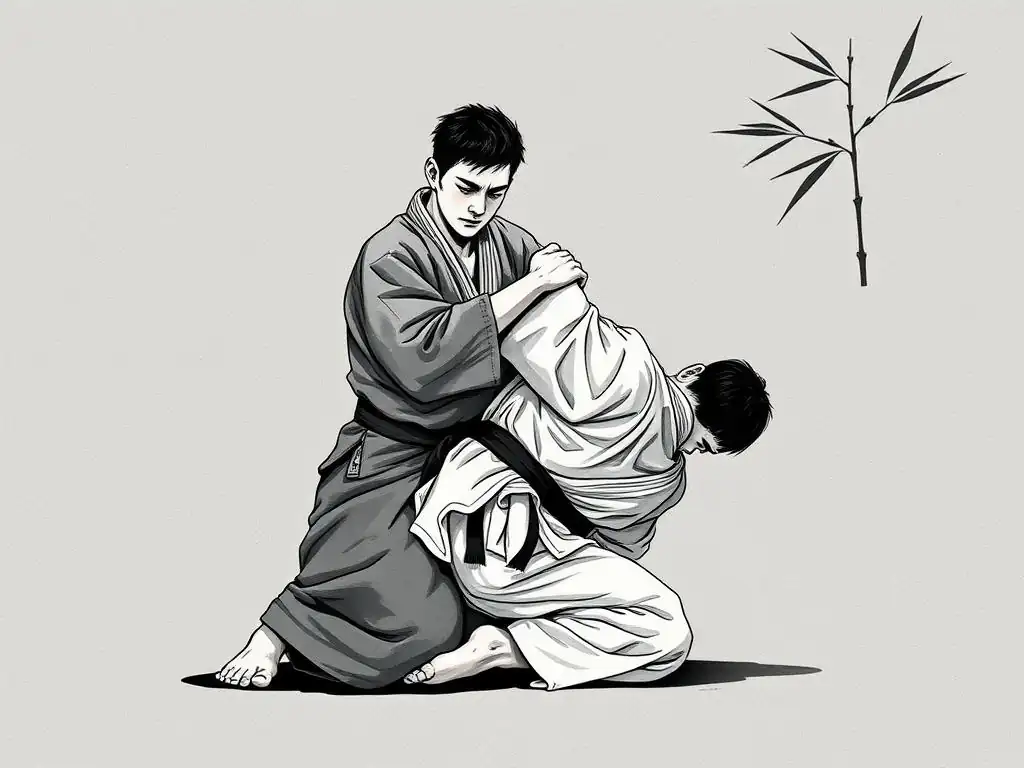
While MuneGatame is a partner-dependent technique, solo drills can help refine specific aspects. One beneficial solo drill involves practicing the entry and body positioning. Using a mat or a rolled-up gi as a substitute for Uke, a judoka can practice quickly transitioning from standing or kneeling to the chest-over-chest position, focusing on getting their hips low and establishing a wide base. This helps build muscle memory for the crucial initial movements.
Another solo drill focuses on developing core strength and the ability to maintain pressure. Lying on the back with knees bent, simulate the position of being pinned, focusing on bridging and shrimping movements. Conversely, in a push-up like position but lower to the ground, practice maintaining a stable core and applying downward pressure through the chest, simulating the feeling of driving weight onto an opponent. These exercises, while not replicating a live opponent, help condition the body for the specific demands of the Judo MuneGatame technique explained.
Partner Drills for Practicing MuneGatame Setups and Transitions
Partner drills are essential for mastering MuneGatame. Basic drills involve one partner (Uke) lying flat while the other (Tori) practices entering the MuneGatame position from various angles (e.g., from the side, from the head) and quickly securing the grips and base. Initially, Uke offers minimal resistance, allowing Tori to focus on mechanics. As proficiency increases, Uke can offer light resistance, such as attempting to bridge or shrimp slowly, prompting Tori to practice adjusting pressure and grips.
More advanced partner drills integrate MuneGatame into transitions from throws or scrambles. For instance, practice a light Uchi Mata throw followed immediately by Tori dropping into MuneGatame. Or simulate a guard pass scenario where, upon clearing Uke's legs, Tori immediately transitions to secure the pin. These drills, performed repeatedly with increasing intensity, build the timing and reflexes needed to apply the Judo MuneGatame technique explained effectively in a dynamic situation.
Sparring Exercises to Enhance MuneGatame Application
Specific sparring exercises, often called Randori, are crucial for applying MuneGatame under realistic pressure. Ne-Waza Randori, focusing solely on groundwork, allows judoka to practice transitioning into MuneGatame, maintaining the pin against a fully resisting opponent, and dealing with various escape attempts. Starting from specific positions, such as side control or after a simulated throw, can help isolate the practice of entering the pin.
In full Randori (including standing techniques), the opportunity to apply MuneGatame arises more spontaneously after a successful throw or a transition to the ground. Practicing in this live environment helps judoka develop the awareness to spot opportunities for the pin and the ability to apply the Judo MuneGatame technique explained quickly and effectively against an opponent who is actively resisting and trying to implement their own strategy. It's where the technique is tested under the closest conditions to competition.
MuneGatame vs. Other Judo Pins: A Comparison
MuneGatame vs. Hon-Gesa-Gatame: Key Differences
MuneGatame and Hon-Gesa-Gatame (Scarf Hold) are both foundational Osae-Komi-Waza in Judo, often taught early. The key difference lies in the body orientation and control points. In Hon-Gesa-Gatame, Tori lies alongside Uke, perpendicular or slightly angled, controlling Uke's head with one arm wrapped around the neck/shoulder and the other arm controlling Uke's arm or belt near the hip. Tori's chest is usually alongside Uke's torso, not directly on top.
In contrast, MuneGatame involves Tori lying across Uke's upper body, with their chest directly pressing down on Uke's chest. While both involve head control and a grip on the lower body, the central chest pressure and the direct chest-to-chest connection are defining features of the Judo MuneGatame technique explained, distinguishing it from the side-lying posture of Hon-Gesa-Gatame. MuneGatame can feel more stifling due to the direct chest pressure, whereas Gesa-Gatame variations often offer slightly more mobility for Tori but can be more susceptible to certain bridging escapes.
MuneGatame vs. Kuzure-Gesa-Gatame: Advantages and Disadvantages
Kuzure-Gesa-Gatame is a variation of Hon-Gesa-Gatame, meaning "broken" or "modified" Scarf Hold. It often involves different arm placements, such as controlling Uke's arm across their body rather than gripping the belt, or using a different grip around the head. The fundamental side-lying body position remains similar to Hon-Gesa-Gatame.
Compared to Kuzure-Gesa-Gatame, MuneGatame's direct chest pressure can be a significant advantage, making it very difficult for Uke to breathe or bridge powerfully upwards. The direct control over the center of Uke's torso is a key strength. However, MuneGatame can sometimes be slightly less stable laterally than a well-applied Gesa-Gatame variation, and some judoka find it harder to maintain the intense chest pressure for the full 20 seconds compared to the structural stability offered by the Gesa-Gatame posture. Both have their place, and understanding the Judo MuneGatame technique explained alongside its counterparts is crucial for a complete judoka.
MuneGatame vs. Yoko-Shiho-Gatame: Choosing the Right Pin
Yoko-Shiho-Gatame (Side Four-Quarter Hold) is another fundamental pin where Tori lies perpendicular to Uke, but facing Uke's side, not across their chest. Tori controls Uke's arm with one arm and Uke's leg with the other, with their side pressing into Uke's side. This pin controls Uke's lateral movement and ability to turn.
Choosing between MuneGatame and Yoko-Shiho-Gatame often depends on the entry and Uke's position. If Tori ends up with their chest across Uke, MuneGatame is the natural choice. If Tori ends up perpendicular to Uke's side, Yoko-Shiho-Gatame is more accessible. MuneGatame offers strong central pressure and head control, making bridging difficult.
Yoko-Shiho-Gatame offers excellent lateral control and can be easier to transition into from certain positions. Both are vital tools, and a judoka should be proficient in applying and transitioning between them. The Judo MuneGatame technique explained focuses on the direct chest control, a distinct feature compared to the side control of Yoko-Shiho-Gatame.
The Importance of Proper Training and Safety when Practicing MuneGatame
Preventing Injuries While Training MuneGatame
Proper training and safety protocols are paramount when practicing any Judo technique, including MuneGatame. For Tori, common issues can arise from poor posture or excessive strain on the back and knees if the technique is applied incorrectly or with too much force without proper body mechanics. For Uke, the primary risk is discomfort or injury from excessive pressure on the chest or neck, or from being rolled forcefully during escape attempts if Tori doesn't maintain control.
To prevent injuries, warm-up and cool-down routines are essential. Techniques should be practiced slowly and deliberately at first, focusing on correct form before adding speed or resistance. Tori must learn to apply pressure using body weight and leverage, not just muscular force, which is less controlled and more tiring. Uke must learn how to fall or yield safely if an escape attempt is unsuccessful and they are being rolled. Understanding the principles behind the Judo MuneGatame technique explained with a focus on safe application is non-negotiable.
Partner Communication and Safety Protocols for MuneGatame Practice
Effective communication between partners is critical during MuneGatame practice. Uke should feel comfortable signaling discomfort or the need to stop (tapping out) if the pressure is too much or if they feel trapped in a dangerous position. Tori must be attentive to these signals and release the hold immediately. Partners should agree on the level of resistance before starting a drill.
Safety protocols also include ensuring the training area is clear and the mats provide adequate cushioning. Avoiding jewelry and ensuring gis are properly tied reduces the risk of snagging or accidental injury. When practicing transitions or escapes, partners must work together to control the movements and prevent collisions or awkward falls. Responsible practice of the Judo MuneGatame technique explained relies heavily on mutual respect and clear communication between training partners.
The Importance of a Qualified Judo Instructor for Learning MuneGatame
Learning MuneGatame, like all Judo techniques, should be done under the guidance of a qualified and experienced Judo instructor. An instructor can demonstrate the correct body mechanics, hand placements, and pressure points with precision. They can observe students practicing and provide immediate feedback, correcting errors in posture or application that could lead to inefficiency or injury.
An instructor also understands how to progress the training safely, starting with basic compliance drills and gradually introducing resistance and dynamic scenarios. They can teach the subtle details of weight distribution, leverage, and timing that are difficult to grasp from books or videos alone. Learning the Judo MuneGatame technique explained from a certified professional ensures that the foundational principles are understood and applied correctly, building a strong and safe basis for further Judo development.
MuneGatame: A Powerful Pinning Technique for Judo Mastery
Mastering MuneGatame is a significant step towards proficiency in Judo's groundwork. It is a fundamental pin, recognized for its stability and the intense pressure it allows Tori to apply on Uke's upper body. Its effectiveness stems from the precise combination of body positioning, strategic grip, and the intelligent utilization of weight and leverage. From securing the initial position after a throw to maintaining control against a resisting opponent, each step of the Judo MuneGatame technique explained requires dedicated practice and attention to detail.
While seemingly simple, the nuances of adapting MuneGatame to different opponents and situations, transitioning into it from various entries, and maintaining it for the required time against determined escape attempts highlight its depth. Paired with a solid understanding of defense and counter-attacks, proficiency in MuneGatame provides a judoka with a reliable method to control opponents on the ground and score valuable points in competition. It remains a vital component of the Judo syllabus and a powerful tool in the arsenal of any skilled judoka.
Frequently Asked Questions
What is MuneGatame in Judo?
MuneGatame is a Judo Osaekomi-waza, or holding technique, where you control your opponent by pinning them with your chest. It's a powerful pinning position when executed correctly.
How does MuneGatame differ from other Judo pins like Kesa-Gatame?
Unlike Kesa-Gatame which focuses on controlling an arm and head, MuneGatame emphasizes using your chest for control, making it a more direct and sometimes easier pin to maintain against certain escapes. The primary difference is the point of contact and control.
What are the key elements to successfully executing MuneGatame?
The key elements are maintaining a low center of gravity, distributing your weight effectively, and ensuring your chest is firmly pressed against your opponent's chest to restrict movement. Proper posture is crucial.
What are some common mistakes to avoid when performing MuneGatame?
Common mistakes include being too high up on your opponent, allowing them space to bridge, and not controlling their arms effectively. Avoid leaving gaps for escape and maintain constant pressure.
Is MuneGatame an effective self-defense technique outside of Judo competition?
While primarily a Judo technique, the principles of MuneGatame – controlling an opponent's body and restricting their movement – can be adapted for self-defense scenarios, particularly in grappling situations. It's all about controlling the center.
Final Reflection: Mastering Mune-Gatame for Enduring Judo Skill
The intricacies of Judo, often distilled to explosive throws, are equally defined by the subtle control and strategic dominance found in techniques like Mune-Gatame. Understanding and mastering this chest hold pin is not merely about adding another tool to one's arsenal, but about cultivating a deeper appreciation for the art of leverage, control, and the patient pursuit of victory on the mat. In a world increasingly focused on instant gratification, the deliberate and calculated nature of Mune-Gatame serves as a potent reminder of the power of perseverance.
The impact of Mune-Gatame extends beyond the competitive arena. Its principles of control and pressure, applied with precision and respect, resonate with broader life lessons about managing conflict and achieving goals through thoughtful strategy. The ability to maintain composure and exert influence, both physically and mentally, is a skill applicable far beyond the dojo. The ultimate aim of Judo is to discipline the body and mind, to develop self-confidence, and thereby to make a contribution to society.
- Jigoro Kano. This quote perfectly encapsulates the spirit of Judo, and Mune-Gatame, when practiced with intention, contributes to this holistic development.
As you step off the mat, consider how the principles of Mune-Gatame can inform your approach to challenges in your own life. Can you apply the same patience, control, and strategic thinking to overcome obstacles and achieve your goals? Let the mastery of this technique not only enhance your Judo skills, but also inspire you to cultivate a stronger, more resilient, and more thoughtful version of yourself.
Master the Mune Gatame: Your Next Judo Breakthrough!
Thank you for delving into the intricacies of Mune Gatame with us. You've now unlocked valuable insights into this powerful chest hold pin. Ready to translate theory into triumph?
Here's how you can take the next steps:
- Drill the Mune Gatame entry at least 15 minutes per training session this week. Focus on fluid transitions from common grappling positions.
- Share this article with your Judo training partners and discuss your favorite setups for Mune Gatame.
- Try to find one video of a high-level competitor using the Munen Gatame successfully in competition and share this link in the comments section.
Which key detail about Mune Gatame will you focus on perfecting in your next practice?