
Are Taekwondo Patterns Truly Effective for SelfDefense? A Deep Dive Analysis

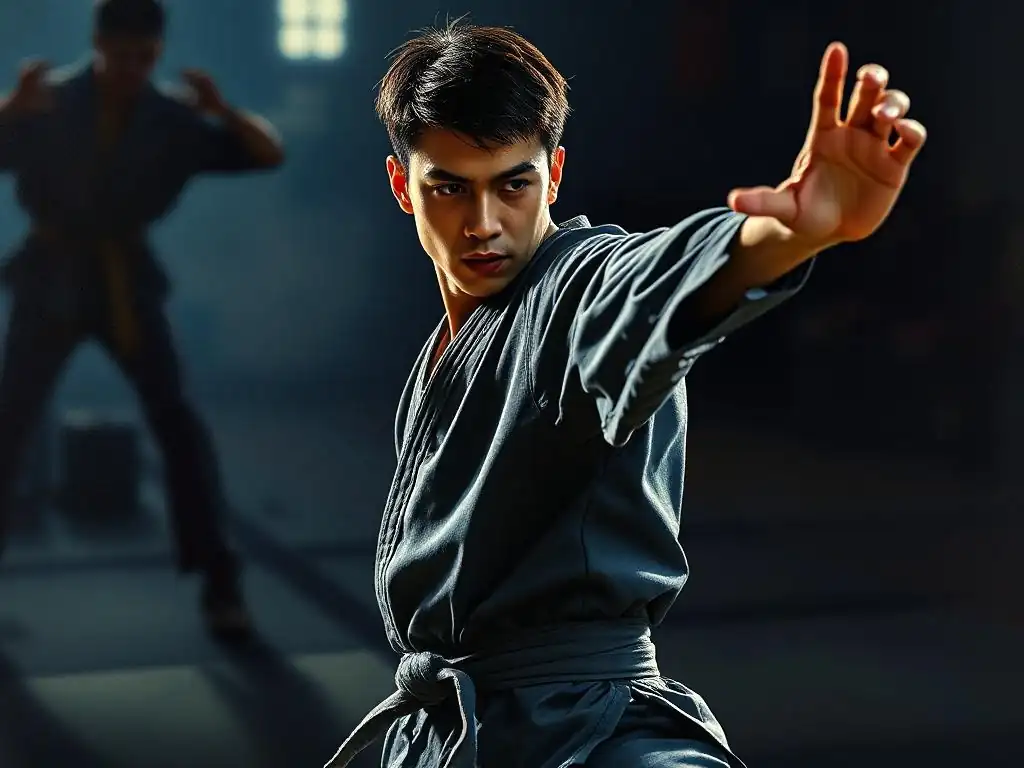
Welcome to Martial Arts Mastery, your ultimate resource for unlocking the secrets of combat. Ever wondered if those intricate Taekwondo patterns you've diligently practiced can translate into real-world self-defense? Prepare to have your assumptions challenged. This analysis delves deep into the effectiveness of Taekwondo patterns for self-defense, exploring their historical context, practical applications, and potential limitations. Discover if these forms are truly a path to mastery, or if there's more to the story...
- Introduction: The Role of Taekwondo Patterns (Poomsae)
- Understanding Taekwondo Patterns: A Foundation for Combat?
- The Argument for Taekwondo Patterns in Self-Defense
- The Counter-Argument: Limitations of Taekwondo Patterns for Self-Defense
- Bridging the Gap: How to Make Taekwondo Patterns More Effective for Self-Defense
- Taekwondo Patterns vs. Self-Defense Specific Training: A Comparison
- Case Studies: Taekwondo Practitioners in Real-World Self-Defense Situations
- Optimizing Taekwondo Training for Self-Defense: A Practical Guide
- Conclusion: The Balanced Perspective on Taekwondo Patterns and Self-Defense
-
Frequently Asked Questions
- Are Taekwondo patterns (Poomsae) directly applicable in real-world self-defense situations?
- What are the primary benefits of practicing Taekwondo patterns for self-defense?
- How can Taekwondo students bridge the gap between pattern practice and practical self-defense application?
- Do all Taekwondo patterns offer the same level of self-defense relevance?
- What are some key considerations when adapting Taekwondo pattern techniques for self-defense?
- Final Reflection: Unveiling the Practicality of Taekwondo Patterns
- Unleash Your Inner Warrior: It's Time to Act!
Introduction: The Role of Taekwondo Patterns (Poomsae)
Taekwondo, renowned globally for its dynamic kicks and athletic techniques, incorporates a fundamental element known as patterns, or poomsae (in World Taekwondo) and hyung (in other styles like ITF). These pre-arranged sequences of movements are practiced solo, simulating combat scenarios against imaginary opponents.
While central to grading and competitive performance within the art, their direct applicability to real-world self-defense situations is a subject of ongoing discussion among practitioners and martial arts experts alike. The question arises: do these intricate, prescribed forms genuinely equip an individual for the unpredictable chaos of a street encounter, or are they primarily a tool for technical refinement and tradition?
This deep dive analysis seeks to explore the complex relationship between Taekwondo patterns and practical self-defense. We will examine the intended purpose of poomsae within the Taekwondo curriculum, analyze the arguments for and against their effectiveness in combative scenarios, and consider how training methodologies can influence the translation of pattern practice into useful self-defense skills. Understanding this connection is crucial for any Taekwondo practitioner aiming to utilize their training for personal safety beyond the dojang.
World Taekwondo's Perspective on Taekwondo and Self-Defense
World Taekwondo (WT), formerly the World Taekwondo Federation (WTF), officially recognizes self-defense ( hoshinsool) as one of the core components and goals of Taekwondo training, alongside physical fitness, mental discipline, and competitive sport. Their curriculum structure often includes specific self-defense techniques and drills in addition to patterns and sparring. The patterns themselves are viewed as embodying the fundamental techniques, principles of movement, and strategic concepts that form the building blocks of effective self-defense within the Taekwondo system.
From the WT perspective, the consistent practice of Taekwondo patterns is intended to internalize proper body mechanics, power generation, and defensive/offensive sequences. While not a direct simulation of a live attack, poomsae are considered a vital method for developing the foundational physical and mental attributes necessary for self-protection. The precision and balance required in patterns are seen as transferable skills that contribute to a practitioner's ability to execute techniques effectively under pressure, although they are typically supplemented by other training methods like sparring and specific self-defense drills to bridge the gap to real-world application.
Defining Taekwondo Patterns: Poomsae, Hyung, and Their Purpose
Taekwondo patterns are standardized sequences of stances, blocks, strikes, and kicks performed in a specific order and direction. In World Taekwondo, these are called poomsae, with a series of Taegeuk patterns for color belts and Yudanja (black belt) patterns like Koryo, Keumgang, Taebaek, etc. The International Taekwon-Do Federation (ITF) uses the term hyung (or tul), with patterns named after historical figures or events, such as Chon-Ji, Dan-Gun, and Toi-Gye. Despite the different names and specific movements between organizations, their fundamental purpose is largely similar.
The primary purposes of practicing Taekwondo patterns include technical mastery, physical conditioning, and mental discipline. Patterns teach practitioners correct stances, the proper execution of techniques, transitions between movements, and breath control. They also serve as a physical record of the art's techniques and history. Furthermore, the focus and concentration required to perform a pattern correctly cultivate mental fortitude and discipline. While their direct link to self-defense is debated, their role in building a strong technical foundation and developing essential physical attributes for any combative application is widely acknowledged within the Taekwondo community.
The Core Question: Do Taekwondo Forms Translate to Real-World Self-Defense?
This central question lies at the heart of the discussion regarding Taekwondo patterns and self-defense effectiveness. On one hand, proponents argue that the fundamental principles and techniques embedded within patterns are directly applicable. They contend that the muscle memory developed through repetition, the emphasis on strong stances and balance, and the practice of defensive and offensive movements, albeit against an imaginary foe, build a critical foundation for reacting effectively in a real threat scenario.
Conversely, skeptics point to the static, pre-arranged nature of patterns as a major limitation. Real-world attacks are dynamic, unpredictable, and rarely follow a script. An assailant doesn't wait for you to complete a sequence of blocks and strikes.
They argue that patterns lack the necessary elements of timing, distance management against a moving target, adaptability to various body types and attack angles, and the crucial element of pressure testing inherent in live sparring or situational self-defense drills. Therefore, while patterns build physical skills, the question remains whether those skills can be effectively deployed when needed most without specific training focused on dynamic, unpredictable encounters.
Understanding Taekwondo Patterns: A Foundation for Combat?
Taekwondo patterns are not merely dance routines; they are intended to be simulations of combat, albeit highly stylized ones. Each movement within a pattern is meant to represent a block, strike, kick, or combination thereof, often directed at specific angles corresponding to potential attacks. Understanding patterns requires looking beyond the aesthetic performance and delving into the intended application, often referred to as hanbeon kyeorugi (one-step sparring) or pattern application ( poomsae application).
The idea is that by practicing these sequences, the practitioner internalizes the proper mechanics and transitions, preparing them to execute similar movements reactively in a real situation. For example, a specific block and counter sequence in a pattern is designed to be a response to a particular type of attack. While the pattern itself is fixed, the underlying principle – block, then counter – is a core self-defense strategy. The challenge lies in extracting these principles and applying them spontaneously and effectively when faced with a non-compliant, resisting opponent.
The Historical Context of Taekwondo Poomsae: From Tradition to Modern Practice
The origins of Taekwondo patterns are deeply rooted in the history of Korean martial arts and influences from neighboring countries like Japan and China. Early Korean martial arts, such as Taekkyon and Subak, likely had their own forms or sequences. When modern Taekwondo was formalized in the mid-20th century, after the Japanese occupation, the founders incorporated elements from various Kwans (schools), many of which had been influenced by Japanese karate patterns (kata). The hyung used in early Taekwondo, and still in ITF, show clear parallels to karate kata.
Over time, particularly with the development of World Taekwondo, the poomsae system evolved. The Taegeuk poomsae were developed to standardize forms across different schools and replace earlier patterns like the Palgwe forms. This evolution sometimes emphasized aesthetic performance and sport application, particularly as Taekwondo gained prominence as an Olympic sport. While the historical purpose was clearly rooted in combative training, the modern practice in many schools balances this with requirements for competition and belt promotion, which can sometimes shift the focus away from practical self-defense application towards precision and form for judging criteria.
Key Elements of Taekwondo Patterns: Stances, Blocks, and Strikes
Taekwondo patterns are built upon a foundation of core techniques: stances, blocks, and strikes. Proper stances, such as the walking stance ( ap seogi), front stance ( ap kubi), back stance ( dwit kubi), and fighting stance ( gyeorugi seogi), are crucial for balance, stability, and generating power. Patterns meticulously drill transitions between these stances, teaching the practitioner how to maintain equilibrium while moving and executing techniques.
Blocks ( makgi) are designed to deflect or intercept incoming attacks. Patterns include a variety of blocks, such as low block ( arae makgi), middle block ( momtong makgi), high block ( olgul makgi), and knife-hand block ( sonkal makgi). Strikes ( jirugi) and kicks ( chagi) represent offensive techniques.
Patterns incorporate basic strikes like the middle punch ( momtong jirugi), as well as various kicks, although the dynamic, athletic kicks Taekwondo is known for are sometimes simplified or adapted within the pattern structure compared to their application in sparring. The combination of these elements within a sequence is intended to teach defensive and offensive strategies in a structured format.
The Emphasis on Precision and Technique in Taekwondo Forms
A defining characteristic of Taekwondo pattern practice is the strong emphasis on precision and correct technique. Every movement has a prescribed path, angle, and finishing point. Stances must be the correct length and width, blocks must end at the proper height and distance from the body, and strikes must utilize correct hip rotation and body weight transfer for maximum power. Instructors often spend considerable time correcting minute details in a student's form.
This focus on precision aims to build perfect muscle memory for each technique. The theory is that if a technique is practiced thousands of times with perfect form in a pattern, it will be executed correctly under pressure. This relentless pursuit of technical perfection is seen as vital for ensuring that when a technique is needed for self-defense, it is performed efficiently and powerfully.
For example, the correct execution of a low block in a pattern ensures the practitioner develops the muscle memory to quickly and powerfully defend against a low attack, like a kick to the leg, in a real situation. The dedication required to achieve this precision also builds patience and attention to detail, valuable traits in any endeavor, including high-stress situations.
The Argument for Taekwondo Patterns in Self-Defense
Despite the criticisms regarding their static nature, there are compelling arguments supporting the value of Taekwondo patterns as a component of self-defense training. These arguments center on the fundamental physical and mental attributes that consistent pattern practice cultivates, attributes that are undoubtedly beneficial in a combative situation.
While not a direct simulation, patterns provide a structured environment for developing core competencies. They instill a deep understanding of fundamental movements and body mechanics that can be adapted and applied dynamically. The discipline required to master complex sequences also translates into mental toughness, a crucial element for facing threats.
Developing Muscle Memory and Body Mechanics Through Poomsae
One of the strongest arguments for Taekwondo patterns in self-defense is their effectiveness in developing muscle memory. By repeating sequences of blocks, strikes, and movements thousands of times in a pattern, the body learns to perform these actions automatically, without conscious thought. This reflexive action is invaluable in a self-defense situation where split-second reactions are critical.
For example, consistently practicing a middle block followed by a punch in a pattern helps solidify the neural pathways for that specific combination. If faced with a similar incoming strike in a real scenario, the practitioner's body is more likely to react instinctively with a block and counter, rather than freezing or fumbling.
While the context is different, the ingrained physical response provides a crucial starting point for defense. A study published in the Journal of Strength and Conditioning Research (though not specifically on Taekwondo patterns, general motor learning studies) shows that high-repetition, deliberate practice significantly enhances motor skill automaticity and performance under stress.
Improving Balance, Coordination, and Stance Stability
Taekwondo patterns demand excellent balance and coordination. Moving between stances, executing kicks, and performing simultaneous blocks and strikes require significant proprioception and control. Consistent pattern practice inherently improves these physical attributes. Strong, stable stances are fundamental to generating power for strikes and kicks, as well as maintaining balance when under attack or attempting to evade.
Consider the execution of a turning kick ( dollyeo chagi) within a pattern. While not performed with the full power or target acquisition needed in sparring, the pattern practice refines the balance on the supporting leg, the coordination of the hip turn, and the control of the kicking leg.
This improved balance and coordination are directly transferable to self-defense, allowing a practitioner to stay on their feet during a struggle, deliver techniques effectively, and recover quickly if off-balanced. Anecdotal evidence from experienced instructors suggests that students who diligently practice patterns demonstrate noticeably better balance and coordination compared to those who focus solely on sparring.
Cultivating Focus, Discipline, and Mental Resilience
Beyond the physical, Taekwondo patterns are a powerful tool for cultivating mental attributes essential for self-defense: focus, discipline, and mental resilience. Performing a complex pattern requires intense concentration to remember the sequence, execute movements precisely, and maintain proper breathing. This training in focus helps practitioners develop the ability to concentrate under pressure, a vital skill when facing a threat.
The discipline required to practice patterns correctly, even when repetitive, builds mental toughness. It teaches perseverance and attention to detail. This discipline translates into the ability to remain calm and focused in a stressful self-defense situation, making rational decisions rather than panicking.
Furthermore, successfully mastering increasingly complex patterns builds confidence and mental resilience, reinforcing the belief in one's ability to overcome challenges, both in the dojang and potentially in a real-world confrontation. A survey of martial arts practitioners (though not specific to Taekwondo patterns) published in the Journal of Applied Sport Psychology indicated a strong correlation between consistent training in forms and increased self-efficacy and reduced anxiety in stressful situations.
Building a Foundation for Taekwondo Sparring and Advanced Techniques
Taekwondo patterns serve as a foundational curriculum for both sparring ( gyeorugi) and more advanced self-defense techniques. The basic blocks, strikes, and stances learned and refined in patterns are the building blocks used in dynamic sparring exchanges. While the application differs greatly, the pattern instills the correct mechanics of a punch or a block before it's applied against a moving, resisting opponent.
Advanced self-defense techniques in Taekwondo often involve joint locks, throws, or ground defenses, which are not explicitly performed in standard patterns. However, the balance, body control, and understanding of movement principles developed through pattern practice are essential prerequisites for learning and executing these more complex techniques safely and effectively. Thus, patterns provide the fundamental vocabulary of movement and technique upon which the more dynamic and applied aspects of Taekwondo, including practical self-defense, are built. They ensure that when a student moves to sparring or self-defense drills, they already possess a baseline level of technical proficiency in the core movements.
The Counter-Argument: Limitations of Taekwondo Patterns for Self-Defense
While patterns offer significant benefits in developing foundational skills, critics raise valid points about their inherent limitations when it comes to direct application in real-world self-defense scenarios. These limitations primarily stem from the controlled and pre-arranged nature of pattern practice compared to the unpredictable reality of a violent encounter.
The disconnect between performing a fixed sequence against an imaginary opponent and reacting dynamically to a live threat is often cited as the biggest hurdle. Without training that specifically addresses unpredictability and resistance, the skills developed in patterns may remain confined to the structured environment of the dojang.
The Static Nature of Poomsae vs. Dynamic Real-World Threats
One of the most significant criticisms is the static and pre-arranged nature of Taekwondo patterns. In a pattern, the "opponent" is imaginary, the timing is set, and the sequence of movements is fixed. Real-world threats, however, are dynamic, unpredictable, and rarely follow a script. An assailant is a thinking, reacting individual who will move, resist, and attack in ways that are not predetermined.
Performing a perfect pattern involves executing techniques at specific points in space and time relative to an invisible attacker. A real attacker might grab, push, pull, or attack from an unexpected angle or range. The techniques practiced in a pattern, while mechanically sound, may not be immediately adaptable or effective against this kind of fluid, non-compliant opposition.
For example, a block practiced at a specific height in a pattern might be useless if the actual attack comes from a slightly different angle or height. This fundamental difference between static practice and dynamic reality is a major limitation for relying solely on pattern training for self-defense.
Lack of Adaptability to Unpredictable Attacks
Following from the static nature, Taekwondo patterns inherently lack the element of adaptability required for self-defense. Patterns teach a specific response to a specific, albeit imaginary, attack. They do not train the practitioner to assess a situation, identify an unpredictable threat, and adapt their response on the fly.
A real self-defense situation might involve multiple attackers, weapons, or attacks that are not standard martial arts techniques (e.g., a tackle, a headlock, or a wild haymaker). Patterns do not train practitioners to handle this variability. While the individual techniques within a pattern might be useful, the sequence itself is rigid.
Effective self-defense requires the ability to improvise, combine techniques in novel ways, and react to unexpected changes in the situation. Training solely through patterns does not adequately prepare a person for this level of required adaptability. For instance, a pattern might show a high block followed by a punch, but if the attacker switches to a low attack after the high block, the pattern's sequence is no longer relevant, and the practitioner needs to react outside of the learned choreography.
Absence of Pressure Testing and Live Sparring Scenarios
A critical missing element in traditional Taekwondo pattern practice, when viewed through a self-defense lens, is the absence of pressure testing and live sparring against a resisting opponent. While patterns simulate combat, they do not replicate the physical and psychological stress of facing a real threat.
Sparring ( gyeorugi), a core component of Taekwondo, introduces the element of a live, reacting opponent and is much closer to pressure testing, though often within sport rules. However, even sport sparring differs significantly from a self-defense encounter, which has no rules and different objectives. Training solely in patterns means the practitioner has not experienced the feeling of being genuinely attacked, the need to react under duress, or the physical struggle against resistance.
This lack of pressure testing means that while the techniques might be technically perfect in isolation, their practical effectiveness and the ability to execute them while under stress in a chaotic situation remain untested. A systematic review of martial arts training methods published in the British Journal of Sports Medicine highlighted that training methods incorporating unpredictable stimuli and resistance are more effective for developing reactive skills.
The Potential for Over-Reliance on Pre-Arranged Movements
Exclusive or over-reliance on Taekwondo patterns for self-defense can lead to a dangerous dependency on pre-arranged movements. If a practitioner's primary training involves executing fixed sequences, they may struggle to react effectively when a situation deviates from the expected pattern. They might try to force the situation to fit the pattern they know, rather than reacting appropriately to the reality of the threat.
This is often referred to as "pattern-bound" behavior. Instead of seeing the pattern as a library of techniques and principles to be applied flexibly, the practitioner might rigidly attempt to perform a sequence, which can be slow and ineffective against a dynamic attacker. For example, if a pattern involves stepping forward to block, a practitioner might hesitate or fail to react if the attacker steps back.
True self-defense requires fluid, adaptable responses, not the strict adherence to a choreographed sequence. Relying solely on patterns for self-defense can instill a false sense of security based on performing well in a controlled environment, without the necessary skills to adapt to uncontrolled chaos.
Bridging the Gap: How to Make Taekwondo Patterns More Effective for Self-Defense
Recognizing the limitations of Taekwondo patterns for self-defense does not necessitate abandoning them. Instead, the focus should be on integrating pattern training with methodologies that bridge the gap between the structured environment of the dojang and the unpredictable nature of real-world threats. By adapting how patterns are taught and practiced, their foundational benefits can be leveraged more effectively for practical self-protection.
This involves shifting the perspective from viewing patterns solely as performance or grading requirements to seeing them as a repository of combative principles and techniques that need to be applied dynamically. Incorporating elements of unpredictability, resistance, and situational awareness into training is key to making Taekwondo patterns self defense relevant.
Integrating Dynamic Movement and Footwork into Poomsae Practice
Traditional Taekwondo patterns are often performed with precise, almost static stances and movements. To make them more applicable to self-defense, practitioners should focus on integrating dynamic movement and realistic footwork. This means practicing the transitions between techniques with the speed and agility required to cover distance, evade attacks, and find advantageous angles against a moving opponent.
Instead of merely stepping from one fixed stance to the next, practice moving with realistic footwork patterns – shuffling, pivoting, and circling – while executing the pattern's techniques. For example, practicing a block while simultaneously moving off the line of attack, rather than just stepping forward into a block. This helps develop the ability to move and react dynamically, making the techniques learned in the pattern more viable in a fluid encounter. Instructors can incorporate drills where students perform pattern sequences while moving freely within a space, reacting to verbal cues representing different attack angles.
Applying Self-Defense Principles to Taekwondo Forms
Practitioners should be taught to understand the underlying self-defense principles within each movement of a Taekwondo pattern. Each block, strike, or stance transition is intended to serve a combative purpose – defending against a specific type of attack, creating an opening, or gaining a positional advantage. Analyzing patterns from this functional perspective, rather than just aesthetic form, is crucial.
Instead of simply performing a movement, ask: What specific attack is this technique defending against? What is the most likely follow-up attack, and how does the next movement in the pattern address it? How can this sequence be adapted if the attacker is closer, further, or attacking from a different angle? Discussing and practicing pattern applications ( poomsae application) with a focus on realistic scenarios helps unlock the self-defense potential hidden within the choreography. This can involve analyzing specific sequences and drilling them as potential responses to common threats like grabs, pushes, or swings.
Incorporating Partner Drills and Sparring to Enhance Practical Application
To truly bridge the gap, pattern training must be supplemented with partner drills and sparring. Partner drills allow practitioners to practice techniques from patterns against a live, albeit compliant or semi-compliant, partner. This helps develop timing, distance management, and the feeling of applying techniques against resistance.
Sparring, particularly free sparring or scenario-based sparring, introduces the crucial element of unpredictability and pressure. While sport sparring has rules, training that includes light-contact or scenario-based sparring allows practitioners to test techniques and reactions in a dynamic environment. This is where the muscle memory developed in patterns can begin to translate into usable skills. For example, practicing a specific block from a pattern in a partner drill where the partner throws a realistic strike helps refine the technique's timing and effectiveness against a moving target. Combining Taekwondo patterns self defense training with live application is essential.
Focusing on Realistic Scenarios and Combative Applications
Ultimately, making Taekwondo patterns more effective for self-defense requires a training focus on realistic scenarios and combative applications. This means moving beyond performing the pattern as a fixed sequence and instead using it as a library of movements to be applied creatively in various situations.
Training should include drills that simulate common self-defense scenarios, such as defending against grabs, shoves, or simple strikes, and applying techniques learned in patterns within these contexts. This might involve practicing specific pattern sequences as responses to different types of attacks or using individual techniques from patterns as part of a larger self-defense strategy that includes awareness, de-escalation, and escape. Prioritizing functional application over perfect form in these scenarios helps practitioners develop the adaptability and spontaneity needed for real-world self-defense, making Taekwondo patterns self defense training truly practical.
Taekwondo Patterns vs. Self-Defense Specific Training: A Comparison
When evaluating the effectiveness of Taekwondo patterns for self-defense, it's useful to compare their characteristics with training methods specifically designed for self-defense. While both aim to prepare individuals for physical threats, they often differ significantly in their approach, focus, and methodology. Understanding these differences helps clarify the role patterns can play and where dedicated self-defense training excels.
Neither approach is inherently superior; their effectiveness depends on the individual's goals and the integration of different training elements. A comprehensive approach to self-defense might involve drawing strengths from both methodologies.
Taekwondo Patterns: Strengths and Weaknesses in Self-Defense Contexts
Strengths:
- Develops Foundational Mechanics: Excellent for building precise muscle memory for basic blocks, strikes, and stances.
- Improves Physical Attributes: Enhances balance, coordination, flexibility, and physical conditioning.
- Cultivates Mental Discipline: Fosters focus, perseverance, and attention to detail.
- Preserves Tradition: Connects practitioners to the history and technical depth of the art.
- Structured Learning: Provides a clear, progressive curriculum for technical development.
Weaknesses:
- Static and Predictable: Does not replicate the dynamic, unpredictable nature of real attacks.
- Lack of Pressure Testing: Techniques are not practiced under the physical and psychological stress of resistance.
- Limited Adaptability: Sequences are fixed and may not translate well to varied or unexpected threats.
- Focus on Aesthetics: Can sometimes prioritize form for judging over functional application.
- Imaginary Opponent: Does not train timing, distance, or reaction against a live threat.
In the context of Taekwondo patterns self defense, patterns provide the 'what' and 'how' of techniques in isolation but struggle with the 'when,' 'why,' and 'against whom' in a real fight.
Self-Defense Training: Strengths and Weaknesses in Martial Arts Contexts
Strengths:
- Focus on Realism: Prioritizes practical techniques applicable to common street threats (grabs, shoves, strikes, multiple attackers).
- Pressure Testing: Often incorporates scenario-based drills and resistance training to simulate stress.
- Adaptability: Emphasizes reacting to unpredictable situations and adapting techniques.
- Efficiency: Often focuses on gross motor skills and simple, effective movements under duress.
- Situational Awareness: Typically includes training on de-escalation, avoidance, and recognizing threats.
Weaknesses:
- May Lack Technical Depth: Some programs might prioritize quick fixes over developing deep technical mastery.
- Less Emphasis on Physical Conditioning: May not provide the same level of overall physical development as a traditional martial art.
- Limited Scope: Often focuses solely on self-defense scenarios, potentially neglecting the broader physical, mental, and philosophical aspects of martial arts.
- Less Structured: Can sometimes lack the clear, progressive curriculum found in traditional arts like Taekwondo.
- Less Historical/Traditional Focus: Typically modern and application-focused, without the deep lineage or traditional forms.
Dedicated self-defense training excels at preparing individuals for specific threats under pressure, but may not offer the comprehensive physical and mental development inherent in the structured practice of arts like Taekwondo with its patterns.
Combining Taekwondo Poomsae with Practical Self-Defense Techniques
The most effective approach for a Taekwondo practitioner seeking robust self-defense skills is to combine the strengths of pattern training with practical self-defense methodologies. Taekwondo patterns provide an invaluable foundation of technique, balance, coordination, and mental discipline. These attributes are highly beneficial, but they need to be translated into practical application through specific training.
This combination involves using the techniques and principles from patterns as a starting point, but then practicing them in dynamic drills, against resisting partners, and within realistic scenarios. For example, taking a block and counter sequence from a pattern and practicing it as a response to a live attack from a partner, focusing on timing and distance rather than just perfect form.
Integrating sparring, scenario-based training, and self-defense specific drills alongside regular pattern practice allows the practitioner to leverage the foundational benefits of patterns while developing the crucial adaptability and pressure-tested skills needed for real-world self-defense. This integrated approach maximizes the potential of Taekwondo patterns self defense training.
Case Studies: Taekwondo Practitioners in Real-World Self-Defense Situations
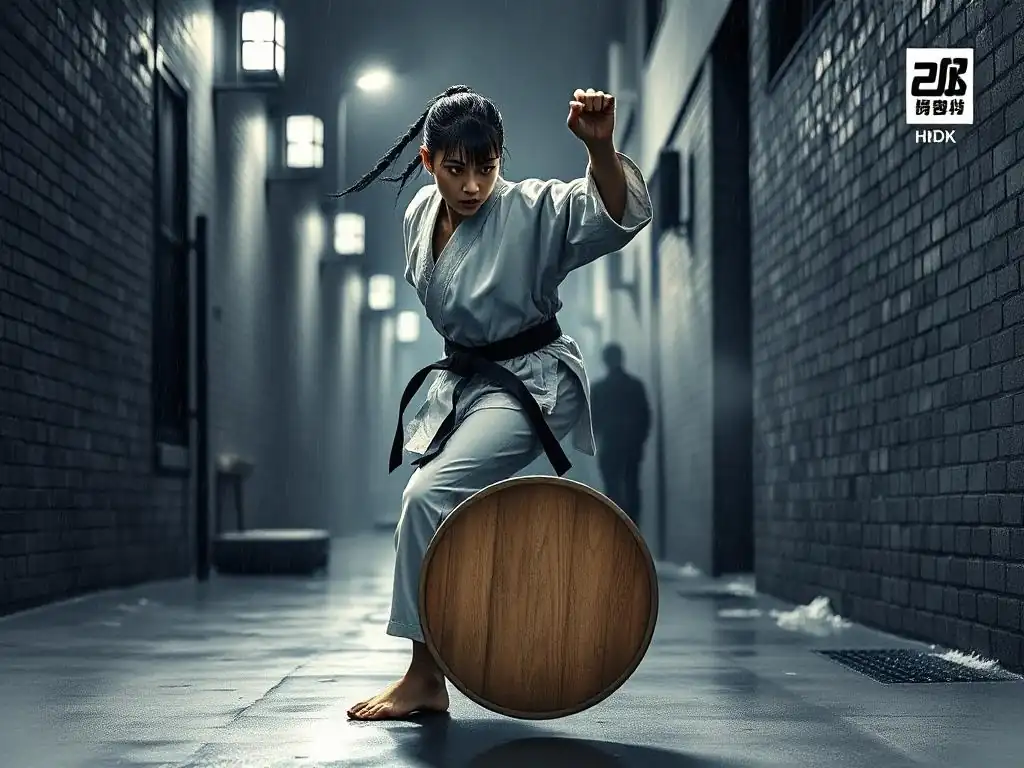
Analyzing how Taekwondo training, including the principles derived from patterns, has been utilized (or potentially could be utilized) in real-world self-defense situations provides valuable insight. While specific, documented cases directly attributing success solely to pattern practice are rare, examining hypothetical but realistic scenarios allows us to analyze the potential application and limitations.
These case studies are illustrative examples based on common self-defense scenarios and the techniques found within Taekwondo patterns. They are designed to highlight how pattern-developed skills might come into play and where they might need supplementation from other training methods.
Illustrative Case Study 1: Analysis of a Taekwondo Practitioner's Self-Defense Encounter
Consider a hypothetical scenario in a moderately crowded urban park. A Taekwondo black belt, 'A,' is approached aggressively by an individual demanding their belongings. The situation escalates, and the assailant attempts a forward shove followed by a wide swing.
Analysis: In this scenario, the Taekwondo practitioner's training in patterns could be highly relevant. The strong stances practiced in patterns provide a stable base to resist the initial shove. The awareness cultivated through focusing on movements in patterns might contribute to recognizing the threat early. The muscle memory for a middle block ( momtong makgi) and a subsequent counter-strike (like a punch or front kick) is directly applicable to defending against the wide swing.
The balance developed through pattern practice would be crucial if the shove was forceful or unexpected. While the pattern itself wouldn't be performed, the individual techniques and the ability to execute them with power and stability, honed through patterns, could be the key to defending effectively. The practitioner would need to selectively apply techniques learned in patterns, not perform a sequence.
The limitation here is the unpredictability of the attacker's actions after the initial swing. If the attacker followed up with a grapple or a different type of attack not directly addressed by the practiced block-counter sequence, the practitioner would need adaptability beyond the fixed pattern. This highlights the need for sparring and scenario training to complement pattern practice.
Illustrative Case Study 2: Analyzing the Effectiveness of Taekwondo Patterns in a Street Fight Scenario Involving a Black Belt
Imagine another hypothetical scenario: a Taekwondo black belt, 'B,' is confronted in a narrow alleyway by two individuals. One attempts a grab from the front, while the other moves to flank.
Analysis: This scenario presents a more complex challenge, particularly concerning multiple attackers, which patterns do not explicitly address. However, elements from Taekwondo patterns could still be valuable. The ability to maintain balance and execute techniques from various stances (practiced in patterns) is crucial in a confined space. A technique like a knife-hand block ( sonkal makgi) followed by a side kick ( yeop chagi), both found in patterns, could potentially be used to create space or defend against the flanking attacker. The hip rotation and power generation drilled in patterns are essential for making any strike or kick effective.
The significant limitations here are the lack of training in dealing with multiple opponents and the dynamic nature of grappling attempts. Patterns don't train evasive footwork against multiple threats or defenses against grabs and holds effectively. While the individual techniques from patterns might be useful if space is created, the practitioner would need skills developed through sparring, ground defense training, and specific self-defense drills (like breakfalls and defenses against grabs) to effectively navigate this scenario. This case underscores that while Taekwondo patterns provide a technical base, they are insufficient on their own for complex, multi-person self-defense situations.
Lessons Learned: Applying Taekwondo Poomsae Principles in Self-Defense
These illustrative cases suggest that Taekwondo patterns do contain techniques and principles that can be applicable in self-defense. The key lesson is that the value of patterns lies not in performing the sequence itself during an attack, but in the physical and mental attributes they develop and the library of techniques they represent.
Successful application of Taekwondo patterns self defense principles in a real scenario depends on the practitioner's ability to:
- Recognize and select the appropriate technique from their pattern "vocabulary."
- Adapt the technique to the specific timing, distance, and angle of the real attack.
- Execute the technique effectively while under physical and psychological pressure.
- Combine techniques fluidly and improvise as needed.
- Supplement pattern training with sparring, partner drills, and scenario-based practice that simulates the unpredictability and resistance of real threats.
Pattern practice builds the tools (techniques, balance, power), but other training methods teach how to use those tools effectively in the chaotic environment of self-defense.
Optimizing Taekwondo Training for Self-Defense: A Practical Guide
For Taekwondo practitioners whose goals include effective self-defense, simply practicing patterns for technical perfection or competition is not enough. While patterns are a valuable part of the curriculum, they must be integrated into a broader training regimen that explicitly addresses the demands of real-world threats. This involves supplementing traditional pattern practice with methods that introduce unpredictability, resistance, and realistic scenarios.
Optimizing Taekwondo patterns self defense training means consciously working to bridge the gap between the controlled environment of the dojang and the uncontrolled nature of a street encounter. This requires a proactive approach to training that goes beyond the minimum requirements for belt progression.
Supplementing Taekwondo Patterns with Sparring and Contact Drills
Consistent sparring and contact drills are essential supplements to pattern practice for developing self-defense skills. Sparring, even light point sparring, helps practitioners develop timing, distance management, and the ability to react to a moving opponent. It introduces the element of pressure and the need to think and react spontaneously.
Going beyond sport sparring, incorporating contact drills that simulate common attacks (like padded strikes or controlled grabs) allows practitioners to practice techniques from patterns with realistic force and against resistance. For example, practicing a rising block from a pattern against a partner using a padded stick or arm swing. This helps translate the mechanical movement learned in the pattern into a functional defensive action under duress. Regular, focused sparring and contact drills are crucial for making the techniques learned in Taekwondo patterns self defense viable.
Incorporating Scenario-Based Training and Pressure Testing
Scenario-based training involves practicing self-defense techniques within simulated real-world situations. This could include scenarios like defending against an attack in a confined space, dealing with a push or shove, or responding to a surprise attack from the side or rear. These scenarios should be practiced with increasing levels of intensity and unpredictability (controlled and safe, of course).
Pressure testing involves performing techniques or sequences while under physical and psychological stress. This could be achieved through drills that involve fatigue, surprise attacks, or having to perform techniques while slightly off-balance. While challenging, pressure testing helps practitioners discover what techniques work for them under stress and builds the mental fortitude needed to function in a high-stakes situation. Integrating scenario-based training and pressure testing alongside Taekwondo patterns self defense practice makes the training much more applicable.
Developing Awareness, Evasion, and De-escalation Skills
Effective self-defense begins long before any physical technique is needed. Awareness, evasion, and de-escalation are often the most important self-defense skills, and they are not explicitly taught through pattern practice. Training should include developing situational awareness – being mindful of one's surroundings and potential threats.
Practicing evasion techniques, such as recognizing danger and creating distance, is paramount. Learning de-escalation strategies – using verbal communication and body language to calm a situation and avoid physical conflict – is also crucial. While Taekwondo patterns focus on physical responses, a comprehensive self-defense approach must prioritize avoiding the physical confrontation entirely whenever possible. Integrating discussions, role-playing, and drills focused on these non-physical aspects of self-defense is vital for any practitioner serious about personal safety.
Cross-Training with Other Martial Arts for a Well-Rounded Self-Defense Approach
For those prioritizing comprehensive self-defense, supplementing Taekwondo training with elements from other martial arts can be highly beneficial. Taekwondo excels at striking, particularly with the legs, and developing strong stances and balance through patterns. However, arts like Judo or Wrestling are superior for grappling and throws, Brazilian Jiu-Jitsu for ground fighting, and systems like Krav Maga or Kali for weapon defense and dealing with common street attacks.
Cross-training allows a practitioner to fill the gaps inherent in any single style. While Taekwondo patterns provide a strong foundation in striking mechanics and physical attributes, exposure to grappling or weapon defense training provides a more complete skill set for the wide range of threats one might encounter in a real self-defense situation. This doesn't mean abandoning Taekwondo or its patterns, but rather adding complementary skills to create a more robust and adaptable self-defense capability, enhancing the overall effectiveness of Taekwondo patterns self defense training when combined with other methods.
Conclusion: The Balanced Perspective on Taekwondo Patterns and Self-Defense
The question of whether Taekwondo patterns are truly effective for self-defense elicits a nuanced answer. On their own, performing patterns in a vacuum provides a strong foundation in fundamental techniques, physical conditioning, balance, coordination, and mental discipline. These are undeniably valuable attributes that contribute to a person's overall physical capability and self-confidence, which are foundational to self-defense.
However, the static, pre-arranged nature of traditional pattern practice means they are not a direct simulation of real-world combat and have inherent limitations in preparing someone for the unpredictability, resistance, and pressure of a violent encounter. Relying solely on pattern training for self-defense can lead to a dangerous over-reliance on fixed sequences that may not be applicable when needed most.
Re-evaluating the Role of Taekwondo Poomsae in a Comprehensive Self-Defense Strategy
Taekwondo patterns should be viewed as a vital component within a comprehensive self-defense strategy, rather than the entirety of it. Their role is to build the technical vocabulary, physical capacity, and mental fortitude upon which practical self-defense skills can be built. They are akin to learning the alphabet and basic grammar before writing complex sentences or engaging in spontaneous conversation.
A strategy focused on effective Taekwondo patterns self defense involves understanding the combative application of each pattern movement, supplementing pattern practice with dynamic partner drills, consistent sparring (including realistic scenarios), and dedicated self-defense training that incorporates pressure testing, awareness, evasion, and de-escalation. The goal is to internalize the principles and techniques from patterns so they can be applied adaptively and effectively in chaotic, unpredictable situations, rather than attempting to perform the pattern itself.
The Importance of Context, Training Methodology, and Individual Skill
The effectiveness of Taekwondo patterns for self-defense is highly dependent on several factors: the specific context of the threat, the training methodology employed by the instructor and student, and the individual practitioner's skill level and dedication. In a simple, one-on-one striking encounter, the techniques and attributes honed through patterns (like a strong block and powerful counter) could be highly effective. In a complex scenario involving multiple attackers, weapons, or grappling, the direct utility of pattern sequences diminishes significantly without supplementary training.
Furthermore, an instructor who teaches the combative applications of patterns and integrates them with sparring and self-defense drills will produce students far better prepared for self-defense than one who focuses solely on patterns for aesthetic or competitive performance. Ultimately, the individual practitioner's commitment to diverse training – embracing patterns for their foundational benefits while actively seeking training methods that simulate real-world pressure and unpredictability – determines how effectively their Taekwondo patterns self defense skills translate to practical safety.
World Taekwondo's Final Thoughts on Taekwondo's Self-Defense Potential.
While World Taekwondo is widely known for its emphasis on sport sparring, the organization officially maintains that self-defense remains a fundamental pillar of Taekwondo. They view the rigorous training in patterns, alongside sparring and specific self-defense techniques, as contributing to a practitioner's overall ability to defend themselves. The precision, power, and discipline developed through mastering poomsae are considered essential attributes that underpin effective physical responses.
World Taekwondo encourages schools and instructors to teach the practical applications of patterns and integrate them with dynamic self-defense drills. The official curriculum often includes sections on hoshinsool (self-defense), recognizing that Taekwondo training must extend beyond competitive sport to fulfill its promise as a comprehensive martial art capable of providing individuals with the skills and confidence to protect themselves in dangerous situations. Thus, from World Taekwondo's perspective, Taekwondo patterns are not the only element of self-defense, but they are an indispensable part of the foundation upon which effective self-protection capabilities are built.
Frequently Asked Questions
Are Taekwondo patterns (Poomsae) directly applicable in real-world self-defense situations?
While Poomsae build fundamental skills like stances and techniques, their direct application in a dynamic self-defense scenario is often limited. They require significant adaptation and training to be truly effective.
What are the primary benefits of practicing Taekwondo patterns for self-defense?
Poomsae enhance muscle memory, improve balance and coordination, and build a strong foundation in basic Taekwondo techniques. These elements are crucial for self-defense, even if the pattern itself isn't directly used.
How can Taekwondo students bridge the gap between pattern practice and practical self-defense application?
Students should engage in sparring, scenario-based training, and learn how to adapt pattern techniques to unpredictable real-world situations. Pressure testing techniques against resisting opponents is also vital.
Do all Taekwondo patterns offer the same level of self-defense relevance?
Some patterns emphasize powerful strikes and defensive blocks more than others. Analyzing the techniques within each pattern and understanding their potential applications is key.
What are some key considerations when adapting Taekwondo pattern techniques for self-defense?
Focus on speed, power, and efficiency. Adapt stances for mobility, prioritize targeting vital points, and learn to seamlessly transition between techniques in a fluid and responsive manner.
Final Reflection: Unveiling the Practicality of Taekwondo Patterns
The journey through the intricacies of Taekwondo patterns and their self-defense applications has revealed a complex reality. While the traditional forms offer a foundation in technique and discipline, their direct translation to real-world self-defense scenarios requires critical evaluation and supplementary training. The debate surrounding their effectiveness continues, highlighting the need for a balanced approach that bridges the gap between theory and practical application.
The influence of Taekwondo patterns extends beyond the dojang, shaping practitioners' understanding of movement, balance, and power generation. This exploration has reinforced my belief that true mastery lies not just in the flawless execution of forms, but in the ability to adapt and apply those principles under pressure. Knowing is not enough; we must apply. Willing is not enough; we must do.
- Johann Wolfgang von Goethe. This quote encapsulates the essence of this discussion: the knowledge gained from patterns must be actively translated into practical self-defense skills.
As we conclude this deep dive, I invite you to reflect on your own training and understanding of Taekwondo patterns. Are you merely performing the movements, or are you actively seeking to understand the underlying principles and their application in self-defense? Embrace a critical and inquisitive mindset, and strive to bridge the gap between form and function. The true potential of Taekwondo patterns lies not just in their aesthetic beauty, but in their ability to empower you with the skills and confidence to protect yourself and others.
Unleash Your Inner Warrior: It's Time to Act!
Thank you for exploring the depths of Taekwondo patterns with us. We hope this analysis has empowered you with fresh insights and a deeper understanding of their potential for self-defense. Now, it's your turn to translate knowledge into action!
Here’s how you can continue your journey:
- Prioritize Live Sparring: Integrate your pattern knowledge by actively applying the techniques in controlled sparring sessions. Focus on adapting the movements to realistic combat scenarios.
- Record Your Performance: Film yourself performing a specific pattern and critically analyze your strengths and areas for improvement in application and power generation.
- Share your perspective: Engage in constructive discussions online and with your training partners, sharing your thoughts and techniques to discover new ideas.
What's one concrete step you'll take this week to bridge the gap between pattern practice and practical self-defense application?