
Tiger Style in Combat: Practical SelfDefense Applications and Strategies


Welcome to Martial Arts Mastery, your gateway to the profound world of combat arts!
Delve into the captivating realm where discipline meets devastating power. Are you ready to unlock the secrets of the Tiger and harness its ferocity for practical self-defense? This journey begins now, as we explore the Tiger Claw selfdefense strategies and their real-world applications. Discover how to channel the tiger's spirit, honing your reflexes and mastering techniques that could save your life. Prepare to be inspired and informed – the path to mastery awaits!
- Introduction to Tiger Style Kung Fu for Self-Defense
- Tiger Claw Self-Defense Strategies: Core Principles
- Mastering Essential Tiger Claw Techniques for Self-Defense
- Practical Self-Defense Scenarios: Applying Tiger Style Techniques
- Training Drills for Enhancing Tiger Style Self-Defense Skills
- The Mental Aspect of Tiger Style Self-Defense
- Conclusion: Embracing the Tiger for Effective Self-Defense
-
Frequently Asked Questions
- How effective is Tiger Claw as a self-defense technique?
- What are the key targets when using Tiger Claw for self-defense?
- What are some of the benefits of using Tiger Style over other martial arts styles for self-defense?
- Does Tiger Claw require extensive training to be effective in a self-defense situation?
- Are there any legal considerations when using Tiger Claw for self-defense?
- Final Reflection: Embracing the Tiger Within
- Unleash Your Inner Tiger: Start Mastering Self-Defense Today!
Introduction to Tiger Style Kung Fu for Self-Defense
The Essence of Tiger Claw Techniques in Martial Arts Mastery
Tiger Style, a cornerstone of traditional Chinese martial arts, particularly within the Shaolin system, is renowned for its raw power, aggressive tactics, and formidable hand techniques. At its core lies the distinctive Tiger Claw, a hand formation and method of striking and seizing that embodies the ferocity and strength of the tiger.
Unlike styles focusing solely on open-hand strikes or closed fists, the Tiger Claw utilizes the entire hand – fingertips, palm, and wrist – to attack vulnerable points, rip, tear, and grasp opponents, making it exceptionally versatile in close-quarters combat. This emphasis on devastating hand applications forms the bedrock of effective Tiger Claw self-defense strategies.
The historical development of Tiger Style is deeply intertwined with the animal imitation styles of Kung Fu, evolving from observations of the tiger's hunting prowess and physical attributes. Practitioners sought to emulate the tiger's explosive power, low stances, and direct, powerful movements.
The Tiger Claw itself is not merely a shape but a dynamic technique requiring significant conditioning, often involving rigorous training methods like striking sandbags, iron rings, or specialized pots filled with sand or gravel to harden the hands and fingers. This dedication to physical conditioning is paramount, enabling the practitioner to deliver techniques capable of disabling an attacker swiftly and decisively, which is crucial for practical self-defense.
Understanding the Tiger's Strengths: Power and Precision
The effectiveness of Tiger Style in self-defense stems from its focus on combining immense power with targeted precision. The power is generated from a strong, rooted stance and coordinated body mechanics, driving force through the core and into the extremities. Unlike some styles that rely on speed and evasion, Tiger Style often meets force with force or uses power to overwhelm an opponent's structure. This isn't brute strength alone, but rather intelligent application of force, much like a tiger using its full body weight and muscle mass in an attack.
Precision in Tiger Style combat involves targeting vulnerable anatomical points rather than simply hitting large muscle groups. The Tiger Claw, in particular, is designed to attack soft tissue, nerve points, and joints. Specific targets include the eyes, throat, groin, temples, and limb joints. The ability to deliver powerful strikes or grabs to these areas can instantly disrupt an attacker's ability to continue, making Tiger Claw self-defense strategies highly efficient for neutralizing threats quickly. This combination of raw power and precise targeting creates a potent system for personal protection.
Tiger Claw Self-Defense Strategies: Core Principles
Emulating the Tiger: Aggressive Offense and Unyielding Defense
A key principle underlying Tiger Claw self-defense strategies is the emulation of the tiger's predatory nature, which translates to an aggressive and forward-moving approach. While defense is important, Tiger Style often emphasizes meeting an incoming attack with a simultaneous or immediate counter-attack, turning defense into offense. The mindset is one of overwhelming the opponent with powerful, relentless techniques. This doesn't mean reckless charging, but rather a strategic application of aggression to seize the initiative and control the confrontation.
This unyielding defense isn't passive blocking; it involves powerful parries, deflections, and simultaneous strikes designed to disrupt the attacker's balance and structure while setting up further attacks. The practitioner aims to maintain a strong, stable base while delivering force, preventing the attacker from easily penetrating their guard. This blend of aggressive initiative and resilient defense forms the tactical core of Tiger Style, making its Tiger Claw self-defense strategies particularly effective in situations where a decisive response is needed.
The Importance of Stance and Footwork in Tiger Style Combat
Solid stances are fundamental to generating the explosive power characteristic of Tiger Style. Stances like the Horse Stance (Ma Bu), Bow Stance (Gong Bu), and Tiger Stance (Hu Bu) provide a low center of gravity, stability, and a strong base from which to launch powerful attacks or absorb impacts. A well-executed stance ensures that the force generated by the body is efficiently channeled into the techniques, maximizing their impact. Training often involves holding these stances for extended periods to build leg strength and endurance, crucial for maintaining power throughout a confrontation.
Footwork in Tiger Style is dynamic and powerful, focusing on short, strong steps that allow for rapid changes in direction and closing or creating distance effectively. Movements are often characterized by powerful forward steps, sudden shifts, and grounded transitions, reflecting the tiger's ability to stalk and pounce. Proper footwork ensures that the practitioner is always in a position to deliver maximum power while maintaining balance and avoiding the opponent's attacks. Mastering these foundational elements of stance and footwork is essential for implementing effective Tiger Claw self-defense strategies.
Developing Crushing Power: Conditioning for Tiger Claw Strikes
Developing the formidable hand strength required for effective Tiger Claw techniques is a cornerstone of the style's training. This conditioning goes beyond general strength training and involves specific methods aimed at hardening the fingers, knuckles, palm, and wrist, while also developing the musculature needed for gripping and tearing. Traditional methods include striking hard surfaces like sandbags filled with progressively harder materials (sand, gravel, ball bearings), performing push-ups on fingertips, and using specialized tools like iron rings or jars filled with beans or sand to develop grip strength.
The goal of this rigorous conditioning is to transform the hands into potent weapons capable of inflicting significant damage to soft tissue and bone. For instance, consistent striking of a sandbag hardens the striking surfaces and strengthens the tendons and ligaments, allowing for greater force generation without self-injury. Developing crushing power in the grip, often through exercises like squeezing grippers or lifting weights with fingertips, enables the practitioner to execute powerful grabs and tearing techniques. This dedication to physical preparation is what makes the Tiger Claw a truly devastating tool within Tiger Style self-defense strategies.
Mastering Essential Tiger Claw Techniques for Self-Defense
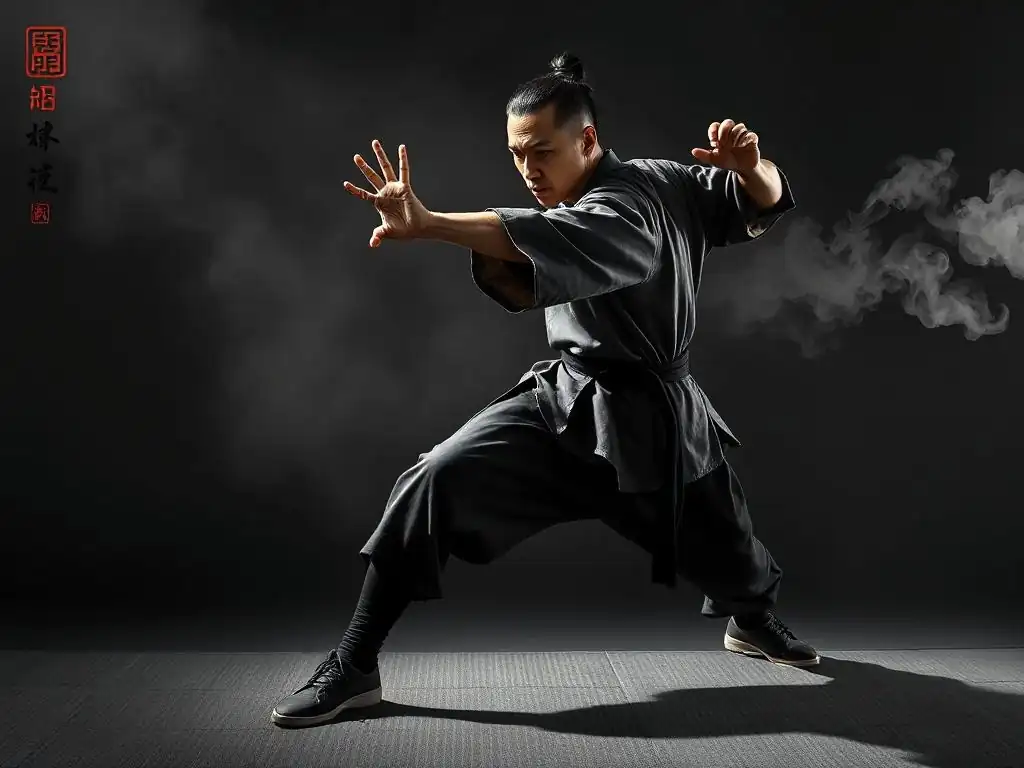
The Tiger Claw Strike: Anatomy and Applications
The basic Tiger Claw strike, often delivered with explosive power, involves forming the hand into a claw shape, with fingers slightly bent and tense, and striking with the fingertips, palm heel, or a raking motion. The strike is typically launched from a low, powerful stance, utilizing body weight and hip rotation to maximize force. The impact area can vary depending on the specific application, but the intention is often to disrupt, tear, or disable. This technique is a primary tool in Tiger Claw self-defense strategies, offering versatility in attacking various targets.
Targeting Vulnerable Points: Eyes, Throat, and Groin
One of the most direct applications of the Tiger Claw strike is targeting vulnerable soft tissue points. A quick, sharp strike with the fingertips towards the eyes can cause immediate incapacitation or distraction, buying crucial time for escape or follow-up. A powerful claw directed at the throat, specifically the trachea or carotid arteries, can have severe consequences, disrupting breathing or blood flow.
Similarly, a low clawing strike to the groin is a classic, highly effective self-defense technique across many styles, immediately debilitating an attacker regardless of their size or strength. These precise applications highlight the efficiency of Tiger Claw self-defense strategies against common threats.
Variations of the Tiger Claw Strike: Straight Claw, Hooking Claw, Raking Claw
Beyond the basic direct strike, Tiger Style employs variations like the Straight Claw (Hu Zhao), a direct thrust often aimed at the face or chest; the Hooking Claw, which involves a circular or hooking motion to grab or tear at flesh or clothing; and the Raking Claw, a technique where the fingers are dragged across the opponent's skin, aiming for pain compliance or tearing. Each variation serves a specific purpose in combat, allowing the practitioner to adapt to different ranges and opponent reactions.
For example, a raking claw across the face can cause immediate pain and disorientation, while a hooking claw can be used to pull an opponent off balance or control a limb. Mastering these variations enhances the practitioner's repertoire for effective Tiger Claw self-defense strategies.
Tiger Claw Grabs and Seizes: Controlling the Opponent
Tiger Claw techniques are not limited to striking; they are equally effective for gripping, seizing, and controlling an opponent. The strong grip developed through conditioning allows the practitioner to latch onto limbs, joints, or clothing with immense force. Once a grip is established, it can be used to manipulate the opponent's body, disrupt their balance, or set up joint locks and throws. This ability to transition seamlessly from striking to grappling or controlling is a significant advantage in practical self-defense scenarios, where control can be paramount.
Joint Locks and Submissions Inspired by the Tiger
The powerful grip of the Tiger Claw can be applied to execute painful and effective joint locks. By seizing a wrist, elbow, or shoulder joint, the practitioner can apply pressure in specific directions to hyperextend or twist the joint, causing pain and potentially leading to a submission or break. Techniques might involve grabbing the opponent's arm with a claw grip and applying leverage over the practitioner's forearm or shoulder.
While traditional Tiger Style doesn't typically focus on ground fighting submissions in the same way as BJJ, its standing joint manipulation techniques are potent tools for incapacitating an attacker or forcing them to release their hold on you. These joint locks are integral to advanced Tiger Claw self-defense strategies.
Breaking an Opponent's Balance with Tiger Claw Techniques
Using the Tiger Claw to seize and pull or push is an excellent method for breaking an opponent's balance. By grabbing onto a limb, the head, or even clothing, the practitioner can use their body weight and rooted stance to forcefully pull or redirect the attacker, causing them to stumble or fall. For instance, a powerful claw grip on the shoulder or lapel can be used in conjunction with a rapid step backward or to the side to unweight the opponent.
This disruption of balance makes the attacker vulnerable to follow-up strikes, throws, or escape. Mastering these seizing and unbalancing techniques is a critical component of effective Tiger Claw self-defense strategies.
Incorporating Tiger Style Blocks and Parries for Enhanced Defense
While aggression is a hallmark, Tiger Style also incorporates powerful defensive movements. Blocks and parries in Tiger Style are typically strong, rooted actions designed not just to stop an attack but often to simultaneously redirect or control the opponent's limb. They are delivered with body power, ensuring that even powerful incoming strikes can be effectively neutralized. These defensive techniques flow directly into offensive actions, embodying the style's principle of simultaneous defense and attack.
Deflecting Attacks with Power and Precision
Tiger Style blocks often use the forearm or the reinforced hand/wrist to deflect or absorb incoming strikes. Unlike soft, yielding blocks, they are delivered with firmness and structure, aiming to disrupt the attacker's force and balance. For example, a powerful outward block using the forearm can deflect a punch while simultaneously pivoting the body to create an opening for a counter-attack. Precision comes in using the correct angle and timing to meet the incoming force effectively, minimizing impact on the defender while maximizing disruption to the attacker.
Transitioning from Defense to Offense Using Tiger Claw Movements
A key aspect of Tiger Style is the seamless transition from defensive actions to aggressive Tiger Claw self-defense strategies. A block or parry is rarely the end of a sequence; it is merely a setup for the next move.
For example, after parrying an incoming punch with the forearm, the same hand or the other hand might immediately transition into a Tiger Claw strike to the face or throat, or a grab on the arm to set up a joint lock or throw. This fluid movement between defense and offense, driven by the versatility of Tiger Claw techniques, makes the style highly adaptable and effective in dynamic self-defense situations.
Practical Self-Defense Scenarios: Applying Tiger Style Techniques
Defending Against Common Street Attacks with Tiger Claw Methods
Applying Tiger Claw self-defense strategies requires adapting the techniques to unpredictable, real-world scenarios. Street attacks often lack the structure and formality of martial arts sparring, emphasizing the need for direct, powerful, and decisive responses. Tiger Style's focus on gross motor skills, power generation, and targeting vulnerable areas makes it well-suited for these situations. The goal is typically rapid incapacitation or creating an opportunity to escape.
Tiger Claw Defense Against a Punch
Against a wild haymaker or a direct punch, a Tiger Style practitioner might use a powerful forearm block to deflect the attack outwards, simultaneously stepping in or to the side to gain a better angle. Immediately following the block, a Tiger Claw strike could be launched towards the attacker's eyes or throat.
Alternatively, a powerful parry could be used to redirect the punch, followed by a grab on the arm with a Tiger Claw grip to control the limb and set up a joint lock or close-range strike to the body or head. The emphasis is on meeting the attack with force and immediately counter-attacking.
Tiger Claw Defense Against a Grab
If grabbed from the front, side, or rear, Tiger Claw techniques offer several responses. Against a wrist grab, a practitioner might use explosive power and body mechanics to rip their hand free using a specific wrist-breaking technique, then immediately follow up with a Tiger Claw strike to the face. Against a body grab, techniques might involve striking vulnerable targets like the groin or eyes with available limbs while simultaneously attempting to break the grip.
A powerful Tiger Claw grab on the attacker's hand or arm could also be used to apply pressure or a joint lock, forcing them to release their hold. These techniques prioritize immediate, decisive action to break free and neutralize the threat.
Tiger Claw Defense Against a Knife Attack
Defending against weapons, especially knives, is extremely dangerous and requires specialized training. However, the principles of Tiger Claw self-defense strategies can be adapted. The focus would be on avoiding the blade's path while simultaneously attempting to control the weapon-bearing limb and neutralize the attacker.
Techniques might involve using powerful forearm deflections or parries to redirect the knife hand away from the body, immediately followed by a Tiger Claw grab on the wrist or hand to attempt to control the weapon. Simultaneously, strikes to vulnerable areas like the eyes or throat with the free hand or leg kicks could be used to incapacitate the attacker. The goal is always to survive, prioritizing escape if possible after disrupting the attack.
Utilizing the Environment in Self-Defense Situations
Effective self-defense isn't just about techniques; it's also about using your surroundings to your advantage. Tiger Style practitioners, while emphasizing direct confrontation, also understand the importance of tactical positioning and using the environment as a tool or obstacle.
Using Walls and Obstacles to Your Advantage
In a close-quarters confrontation, using a wall can prevent an attacker from circling behind you and can provide a solid backing for generating power in your techniques. You could also use obstacles like furniture or parked cars to create distance, funnel an attacker into a predictable path, or even use them as improvised weapons or shields if absolutely necessary. A Tiger Style practitioner might use a powerful push or pull technique (like a Tiger Claw grab and yank) to drive an attacker into a wall, disrupting their balance and creating an opening.
Creating Distance and Escape Routes
While Tiger Style is known for its close-range power, a key outcome of successful Tiger Claw self-defense strategies is often creating an opportunity to escape. After delivering a disabling strike or breaking an opponent's balance, the practitioner should immediately assess if escape is the safest option. Using powerful, explosive movements to create distance after a successful technique is vital. Awareness of surroundings, including potential escape routes, is just as important as mastering the physical techniques themselves. The environment is a tool for survival, not just a backdrop for combat.
Training Drills for Enhancing Tiger Style Self-Defense Skills

Developing proficiency in Tiger Claw self-defense strategies requires consistent, dedicated training that goes beyond simply learning forms. Drills are essential for developing speed, accuracy, power, timing, and the ability to apply techniques under pressure.
Partner Drills for Developing Speed and Accuracy
Partner drills are crucial for practicing Tiger Claw techniques against a moving, resisting opponent. Drills might involve one partner throwing controlled punches or grabs while the other practices specific Tiger Claw blocks, parries, and immediate counter-attacks (like eye strikes or throat grabs, practiced with control and targeting pads). Sensitivity drills, where partners lightly touch and react to each other's movements, help develop the tactile awareness needed for seizing and controlling techniques. Practicing transitions between strikes, grabs, and joint locks with a partner allows for realistic application and timing development.
Solo Training for Conditioning and Technique Refinement
Solo training is fundamental for building the physical attributes and perfecting the mechanics of Tiger Style. This includes rigorous conditioning exercises like fingertip push-ups, gripping exercises (using weights, grippers, or traditional jars), and striking various types of bags (sand, gravel) to harden the hands and build explosive power. Practicing forms (katas) helps refine body mechanics, stance transitions, and the flow of techniques. Shadow boxing, focusing specifically on Tiger Claw movements and combinations, allows for repetition and refinement of strikes, grabs, and defensive actions without a partner.
Integrating Tiger Claw Techniques into Sparring Sessions
Integrating Tiger Claw techniques into sparring is vital for developing the ability to apply them in a dynamic, unpredictable environment. Sparring should be conducted safely, often using protective gear and focusing on controlled application of techniques to avoid injury. Light contact sparring can help develop timing, distance management, and the ability to react spontaneously.
Drills focusing specifically on transitioning from a block or parry into a Tiger Claw counter, or practicing breaking grips and following up, are excellent for building practical self-defense skills. Full-contact application of debilitating techniques like eye strikes or throat grabs is obviously not possible in sparring, but practicing the setup and targeting against pads or designated safe zones helps.
The Mental Aspect of Tiger Style Self-Defense
Beyond physical techniques, the mental fortitude and mindset cultivated in Tiger Style training are critical for effective self-defense. Emulating the tiger's predatory focus, courage, and determination prepares the practitioner to face threats head-on with confidence and resolve.
Cultivating Aggressiveness and Focus
Tiger Style training instills a sense of controlled aggression – the ability to act decisively and powerfully when threatened, rather than freezing or hesitating. This isn't about uncontrolled rage, but a focused intensity aimed at neutralizing the threat. Developing this mindset involves pushing physical and mental limits in training, practicing techniques with full intent, and visualizing successful outcomes in self-defense scenarios. This cultivated aggressiveness, combined with laser-like focus on the target and the immediate situation, is a powerful psychological weapon.
Maintaining Composure Under Pressure
While cultivating aggression, Tiger Style also emphasizes maintaining composure under duress. Panic is detrimental in a self-defense situation. Training methods that simulate stress, such as intense sparring or drills that require quick decision-making, help practitioners learn to manage adrenaline and think clearly when under pressure. A calm mind allows for better assessment of the situation, more precise application of techniques, and the ability to adapt if the initial strategy doesn't work. The rootedness taught in stances extends to mental stability.
Developing Awareness and Intuition
Awareness of one's surroundings and the ability to read an opponent's intentions are crucial for avoiding danger in the first place, and for reacting effectively if an attack occurs. Tiger Style training, through partner work and scenario-based drills, helps develop this sensitivity and intuition. Learning to recognize pre-attack indicators, understanding body language, and being constantly aware of potential threats in the environment are vital skills. This heightened state of awareness allows the practitioner to potentially de-escalate or evade before a physical confrontation becomes necessary, or to react instantly and appropriately if it does.
Conclusion: Embracing the Tiger for Effective Self-Defense
The Enduring Legacy of Tiger Style Kung Fu
Tiger Style Kung Fu, with its emphasis on power, precision, and aggressive application, represents a potent and historically significant system for combat and self-protection. Its techniques, particularly the iconic Tiger Claw, have been refined over centuries, proving their effectiveness in various martial contexts. The legacy of Tiger Style is carried forward by practitioners who dedicate themselves not only to mastering the physical techniques but also to embodying the spirit of the tiger – strong, focused, and resilient. This tradition continues to provide valuable lessons in physical conditioning, technical application, and mental fortitude, all essential for personal safety.
Further Exploration of Tiger Claw Self-Defense Strategies
For those interested in practical self-defense, exploring Tiger Claw self-defense strategies offers a powerful avenue for development. While requiring dedication to conditioning and technical mastery, the principles and techniques provide a direct and effective means of neutralizing threats. Studying under qualified instructors is paramount to learning the nuances of power generation, targeting, and safe application. Further exploration might involve delving deeper into specific conditioning regimens, analyzing historical applications of Tiger Claw techniques, or integrating Tiger Style principles into broader self-defense training. The path of the tiger offers a challenging yet rewarding journey towards enhanced personal security.
Frequently Asked Questions
How effective is Tiger Claw as a self-defense technique?
Tiger Claw is highly effective when applied correctly, focusing on vital points and utilizing powerful strikes to disable an attacker. It's a close-quarters combat technique.
What are the key targets when using Tiger Claw for self-defense?
The primary targets include the eyes, throat, and groin. Tiger Claw aims to inflict maximum pain and disruption quickly.
What are some of the benefits of using Tiger Style over other martial arts styles for self-defense?
Tiger Style emphasizes direct and aggressive attacks, making it useful in situations where immediate action is required. It's also relatively easy to learn the basic principles.
Does Tiger Claw require extensive training to be effective in a self-defense situation?
While mastery requires dedication, basic Tiger Claw techniques can be learned relatively quickly, providing a foundation for practical self-defense. Regular practice is still crucial.
Are there any legal considerations when using Tiger Claw for self-defense?
Always use Tiger Claw defensively and only when facing an immediate threat. Ensure your actions are proportional to the threat and within the bounds of the law.
Final Reflection: Embracing the Tiger Within
The exploration of Tiger Style in combat, and specifically Tiger Claw self-defense strategies, transcends mere martial arts technique. It speaks to a primal instinct for survival, a deep-seated connection to our inherent power, and a practical approach to personal safety that remains profoundly relevant in today's uncertain world. The principles of focus, precision, and controlled aggression, embodied by the tiger, offer a powerful framework for navigating potential threats and empowering individuals to protect themselves.
The influence of martial arts, and particularly styles that draw inspiration from the animal kingdom, extends far beyond the dojo. It shapes our understanding of strength, agility, and the importance of inner discipline. This exploration of Tiger Claw has personally reinforced the belief that true strength lies not just in physical prowess, but in the mental fortitude to assess, react, and adapt. The supreme art of war is to subdue the enemy without fighting.
- Sun Tzu. This quote encapsulates the essence of Tiger Style – not just about inflicting damage, but about strategically neutralizing threats with efficiency and grace.
Now, as you reflect on the techniques and philosophies discussed, consider how you can integrate the spirit of the tiger into your own life. Embrace the focus, the precision, and the unwavering determination that define this powerful style. Let the lessons learned not only enhance your self-defense capabilities but also empower you to face life's challenges with courage, confidence, and the unwavering belief in your own inner strength. The tiger's spirit resides within us all; it is time to awaken it.
Unleash Your Inner Tiger: Start Mastering Self-Defense Today!
Thank you for exploring the potent world of Tiger Style. Now that you've discovered its practical applications, it's time to transform knowledge into action. Let's turn that newfound insight into real-world self-defense skills!
Here's how you can continue your journey:
- Practice the Tiger Claw striking techniques – Dedicate at least 15 minutes a day to hone these strikes. Focus on precision, speed, and power.
- Share this article with a friend who's interested in martial arts or self-defense and discuss the techniques together. Mutual learning enhances understanding!
- Attend a local martial arts seminar or workshop focusing on animalistic styles to further explore the unique forms and strategies.
What's one Tiger Style technique you're excited to incorporate into your self-defense training this week? Share your thoughts in the comments below!