
Using Common Objects as Weapons: Krav Maga's Improvised Defense

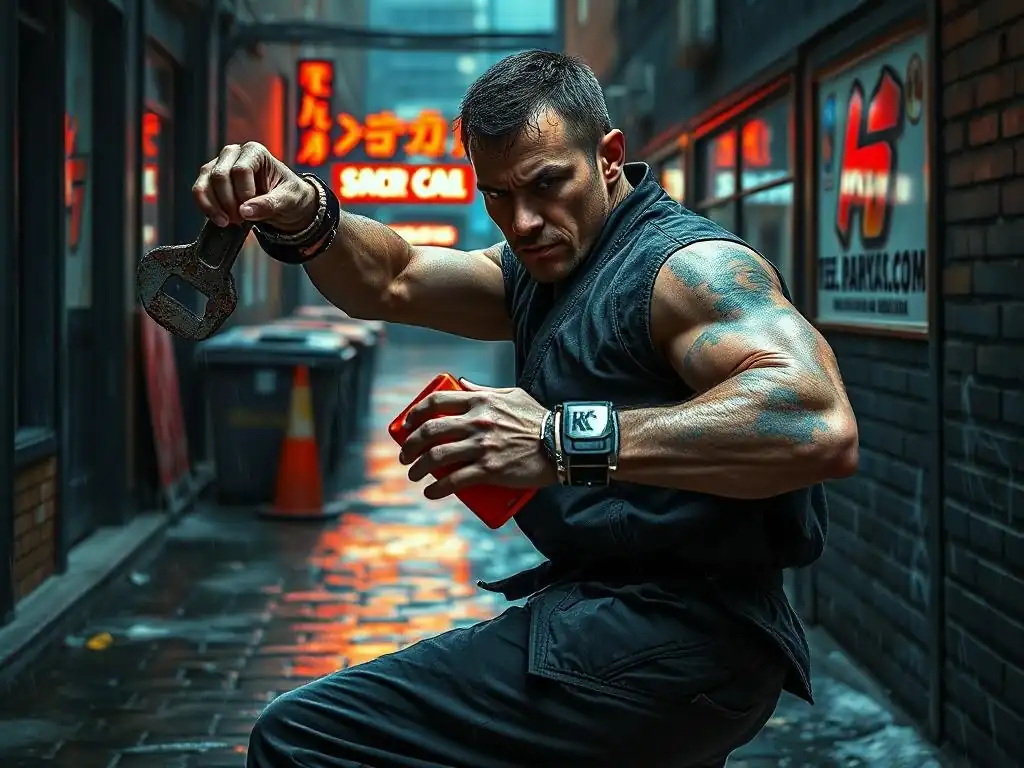
Welcome to Martial Arts Mastery, your gateway to a world of combat knowledge! Delve into the fascinating realm where everyday objects become tools of survival. Ever wondered how a seemingly harmless pen could be a potent defensive weapon? Our in-depth exploration of Krav Maga improvised weapon defense unlocks the secrets of turning the ordinary into the extraordinary. Prepare to discover how this practical, real-world system empowers you to protect yourself with resourcefulness and skill. Explore further and master the art of adaptation!
- Krav Maga Improvised Weapons: Turning the Everyday into Defense
- Everyday Objects, Extraordinary Defense: Krav Maga's Arsenal
- Krav Maga Training for Improvised Weapon Scenarios
- Advanced Krav Maga Improvised Weapon Strategies
- The Philosophy Behind Krav Maga's Improvised Weapon Approach
- Mastering Krav Maga's Improvised Weapon Defense: A Summary
-
Frequently Asked Questions
- What is the core principle behind Krav Maga's improvised weapon defense?
- Why is Krav Maga so focused on improvised weapons?
- What are some examples of common objects used in Krav Maga improvised weapon training?
- How does Krav Maga training prepare practitioners to use improvised weapons effectively?
- Is Krav Maga improvised weapon defense only for trained martial artists?
- Final Reflection: Embracing Everyday Empowerment
- Empower Yourself: Transform the Everyday into Defense!
Krav Maga Improvised Weapons: Turning the Everyday into Defense
Understanding the Core Principle: Adaptability in Krav Maga
Krav Maga, renowned for its practical, no-nonsense approach to self-defense, places immense value on adaptability. This core principle dictates that effective self-protection isn't limited to formal techniques but extends to utilizing whatever resources are available in a given situation. The philosophy is simple: in a real-world threat scenario, you might not have a traditional weapon or even space and time for complex maneuvers. Therefore, the ability to quickly assess your environment and leverage common objects as tools for defense becomes paramount. This fundamental concept is central to the efficacy of Krav Maga improvised weapon defense.
This adaptability is not just about finding an object; it's about having the mindset and training to recognize its potential application under stress. Krav Maga practitioners are taught to see everyday items not merely for their intended purpose but as potential extensions of their body, capable of delivering impact, creating distance, or facilitating escape. This resourcefulness is drilled into students, enabling them to transform ordinary objects into effective defensive instruments, a cornerstone of the Krav Maga improvised weapon defense system. The emphasis is always on survival and neutralizing the threat efficiently, using whatever means necessary and available.
The Importance of Awareness in Improvised Weapon Use
Situational awareness is arguably the most critical component of effective Krav Maga improvised weapon defense. Before you can even consider using an object defensively, you must first be aware of your surroundings, identifying potential threats and potential tools. This means constantly scanning your environment, understanding the layout of the space, and noticing objects that could be utilized if a threat emerges. A high level of awareness allows for pre-emptive identification of improvised weapons, reducing reaction time should an attack occur.
Beyond simply spotting objects, awareness also involves understanding the context of the threat. Is it a close-quarters ambush or an attack from a distance? Is the attacker armed? This information dictates which object might be most effective and how it should be used. For example, a rolled-up magazine might be useful for creating distance against an unarmed attacker, while a sturdy pen could be more effective for targeted strikes against a determined aggressor in a confined space. Developing this heightened state of awareness through consistent training is fundamental to mastering Krav Maga improvised weapon defense scenarios.
Everyday Objects, Extraordinary Defense: Krav Maga's Arsenal
Pens and Pencils: Precision Strikes with Improvised Tools
Pens and pencils are ubiquitous, found in pockets, bags, and offices everywhere, making them prime candidates for Krav Maga improvised weapon defense. Their small size makes them easy to conceal and deploy quickly. While seemingly innocuous, their rigid, pointed structure can be used to deliver sharp, focused force to vulnerable areas of an attacker's body. The grip is typically simple, often just a closed fist around the object, allowing for quick deployment even under duress.
Using a pen or pencil effectively in a self-defense situation requires understanding basic striking principles. The goal isn't necessarily deep penetration but rather causing immediate pain and disruption to create an opportunity to escape or neutralize the threat. Think of them as force multipliers for your hand, concentrating energy into a small point. This technique is a core element in Krav Maga improvised weapon defense drills focusing on small, everyday items.
Targeting Vulnerable Points with a Pen or Pencil
Krav Maga emphasizes striking vulnerable areas where even limited force can have significant impact. With a pen or pencil, targets like the eyes, throat, or soft tissue points such as the carotid sinus area on the neck are primary objectives. A sharp jab to the eye, for instance, can cause immediate, debilitating pain and temporary blindness, buying crucial seconds.
Other effective targets include nerve points, the temples, or even a hard thrust into the chest or ribs. The effectiveness comes from surprise and the concentration of force. Training involves practicing rapid, decisive movements towards these small, high-impact areas, ensuring that the Krav Maga improvised weapon defense using a pen is instinctive and accurate under pressure.
Keys: Enhancing Grip and Delivering Effective Strikes
Keys, another common item carried by most people, offer surprising utility in Krav Maga improvised weapon defense. Holding a set of keys firmly in a closed fist, with one or more keys protruding between the fingers or from the bottom of the fist, transforms your natural striking tool (the fist) into a more damaging instrument. This simple modification can significantly enhance the impact of hammer strikes or palm heel strikes.
The hard, metallic edges and points of keys can cause lacerations or concentrated blunt force trauma. While not designed for deep penetration like a pen, they can tear skin, cause pain upon impact, and make an attacker less willing to continue their assault. This application of keys is a practical example taught in Krav Maga improvised weapon defense courses.
Using Keys for Pressure Points and Joint Locks
Beyond simple strikes, keys can also be used to apply pressure to sensitive points or assist in joint manipulation techniques. Holding a single key or a small bunch can allow you to apply focused pressure on nerve points or soft tissue during a struggle, potentially causing enough pain to break a grip or create an opening.
In certain close-quarters situations, keys can be used to enhance leverage or pain compliance in basic joint locks or controls taught in Krav Maga. For example, pressing the edge of a key into a sensitive spot like the base of the skull or collarbone while applying a control technique can significantly increase its effectiveness. This layered approach is characteristic of Krav Maga improvised weapon defense, using simple objects to augment fundamental techniques.
Belts: Control and Restraint in Close-Quarters Combat
A belt, particularly a sturdy leather one, is a versatile item that can be used in Krav Maga improvised weapon defense for creating distance, striking, or even control and restraint. Swinging a belt can keep an attacker at bay or deliver a painful lashing strike. However, its real strength in a close-quarters struggle lies in its flexibility and strength.
Once an attacker is close, a belt can be used to entangle limbs, secure a temporary restraint, or even as an improvised garrote in extreme, life-threatening situations. The buckle can also be used as a striking implement, delivering a heavy, concentrated blow. Learning to quickly unbuckle and deploy a belt is part of training for Krav Maga improvised weapon defense.
Belt Chokes and Restraints in Krav Maga
In dire circumstances where disengagement isn't possible and the threat is severe, a belt can be used for control or as an improvised choking device. Wrapping a belt around an attacker's limbs can restrict their movement, allowing you to escape or gain a dominant position.
While highly dangerous and only to be used as a last resort when facing lethal force, a belt can be applied as a chokehold. This requires specific technique to be effective and is taught in advanced Krav Maga as a method to incapacitate a determined aggressor when your life is in immediate danger. Such techniques highlight the 'whatever it takes' philosophy of Krav Maga improvised weapon defense.
Newspapers and Magazines: Creating Distance and Disruption

Even seemingly soft objects like rolled-up newspapers or magazines can serve a purpose in Krav Maga improvised weapon defense. Rolled tightly, they become surprisingly rigid and can be used as a baton-like instrument to strike, block, or create distance. While unlikely to cause serious injury, the impact can be painful and disorienting.
Their primary use is disruption and creating a barrier. A sharp, unexpected strike to the face or hands with a rolled magazine can break an attacker's focus and momentum, giving you precious seconds to flee or transition to another technique. This type of Krav Maga improvised weapon defense focuses on breaking the attacker's initiative.
Blocking and Striking with Rolled-Up Newspapers
A rolled newspaper or magazine can be used to block incoming strikes, particularly against bladed weapons or blunt objects, offering a minimal layer of protection to the forearm or hand. While not a robust shield, it can potentially deflect or slow down an attack.
More effectively, they are used for striking. A strong thrust or whipping motion towards the attacker's face or throat can be highly disruptive. Think of a rapid poke to the eyes or a sharp strike across the bridge of the nose. The noise and visual distraction alone can be beneficial. Practicing quick, sharp movements with a rolled object is part of Krav Maga improvised weapon defense training.
Water Bottles: Blunt Force and Distraction Techniques
A full or partially full plastic water bottle is another common item with potential in Krav Maga improvised weapon defense. A sturdy plastic bottle, especially if it contains liquid, can deliver a surprisingly effective blunt force strike. The weight of the water adds mass to the impact.
Beyond striking, the contents of the bottle can also be used as a distraction. Splashing water into an attacker's face can momentarily blind and disorient them, providing an opportunity to escape or follow up with another technique. This dual-purpose utility makes the water bottle a practical, albeit temporary, improvised tool.
Using a Water Bottle for Impact and Diversion
To use a water bottle for impact, grip it firmly and deliver hammer strikes or whipping motions to vulnerable areas like the face, head, or collarbone. While unlikely to cause serious injury, the blunt force can be painful and disruptive, similar to being struck with a small, yielding club.
The diversion tactic involves quickly opening the bottle and splashing the contents directly into the attacker's eyes. This requires speed and proximity but can be highly effective in breaking their concentration and allowing for an immediate follow-up or escape. Both techniques are explored in Krav Maga improvised weapon defense scenarios.
Krav Maga Training for Improvised Weapon Scenarios
Drills to Develop Instinctive Reactions
Effective Krav Maga improvised weapon defense relies heavily on developing instinctive reactions. Training incorporates specific drills designed to build muscle memory and reduce hesitation when identifying and using everyday objects defensively. These drills often start with simple object recognition exercises and progress to integrating object use into basic defensive movements.
For example, a drill might involve a practitioner being presented with various objects (a pen, keys, a book) and having to quickly identify which one is most suitable for a simulated threat scenario (e.g., a close-range grab) and then practicing the appropriate defensive action using that object. Repetition is key to making the use of Krav Maga improvised weapons second nature.
Key Jab Defense: Rapid Response Drill
This drill focuses on the rapid deployment of keys as a striking tool. The practitioner holds keys in their fist. A training partner simulates a sudden close-range threat, like a grab or punch. The practitioner's task is to immediately respond by delivering a sharp, focused jab or hammer strike using the keys to a designated target area on the training partner (wearing protective gear). The emphasis is on speed, surprise, and targeting.
- ✅ Practice quick hand-to-fist transition with keys.
- ✅ Execute rapid, focused strike upon simulated attack.
- ✅ Target vulnerable points (e.g., padded face mask, body protector).
Pen Strike Variation: Multiple Angle Attacks
This drill expands on the pen strike, practicing its use from various angles and positions. Starting from different postures (standing, seated, on the ground) and under different simulated attack types (front attack, side grab), the practitioner practices deploying and striking with a training pen (e.g., a marker with the cap on) to vulnerable points. This ensures adaptability, a core tenet of Krav Maga improvised weapon defense, regardless of the attack angle.
# Simple representation of strike practice angles
strike_angles = ["front jab", "upward thrust", "downward strike", "side poke"]
target_points = ["eyes", "throat", "neck", "soft ribs"]

for angle in strike_angles:
    print(f"Drilling {angle} with pen.")
    for target in target_points:
        print(f"  - Targeting {target}")
Scenario-Based Training: Applying Improvised Weapon Skills
Putting improvised weapon techniques into realistic context is crucial. Krav Maga training heavily utilizes scenario-based drills that simulate real-world threat situations in varied environments (e.g., a narrow hallway, a crowded room, a parking lot). Practitioners are presented with a scenario and must react using whatever is available in that simulated environment, including identifying and utilizing improvised weapons.
These scenarios help practitioners learn to manage stress, make rapid decisions, and integrate improvised weapon use seamlessly into their overall self-defense strategy. It's not just about performing a single technique but about applying the principles of Krav Maga improvised weapon defense dynamically within a complex, unpredictable situation.
Simulating Real-World Self-Defense Situations
Scenario training can range from simulating a street mugging where a backpack strap is used as a weapon, to an office confrontation where a stapler or letter opener becomes a defensive tool. Training partners act out realistic attacker behavior, and the environment might be set up to mimic a specific location.
**Scenario Example:** Attacked in a simulated parking garage.
*   **Environment:** Cars, concrete pillars, potentially a shopping cart.
*   **Available Improvised Weapons:** Car keys, umbrella, perhaps a tire iron if accessible, shopping cart.
*   **Training Objective:** Identify and utilize an available object (e.g., keys for strikes, umbrella for distance/strikes, cart for barrier/impact) while defending against an attacker.
Legal Considerations: Understanding the Use of Force
While Krav Maga teaches effective self-defense, it also emphasizes the legal and ethical implications of using force, especially when employing Krav Maga improvised weapon defense techniques. Understanding the laws regarding self-defense in your jurisdiction is critical. Generally, the level of force used must be reasonable and proportionate to the threat faced.
Using an improvised weapon, particularly one that could cause significant injury, falls under the legal concept of using force. Practitioners are taught that the goal is survival and escape, not retribution. The use of any force, including improvised weapons, should cease once the threat is neutralized or you can safely disengage and escape.
Knowing Your Rights and Responsibilities
It is essential for anyone practicing Krav Maga improvised weapon defense to be aware of their local laws concerning self-defense and the use of force. This includes understanding concepts like:
- Proportionality: Using force that is reasonable in relation to the threat.
- Duty to retreat: Whether you are required to attempt to escape before using force (laws vary by location).
- Reasonable belief: Acting based on a reasonable belief that you are in danger.
Consulting local legal resources or authorities is recommended to fully understand these critical aspects before relying on any self-defense technique, including Krav Maga improvised weapon defense. Ignorance of the law is not a valid defense.
Advanced Krav Maga Improvised Weapon Strategies
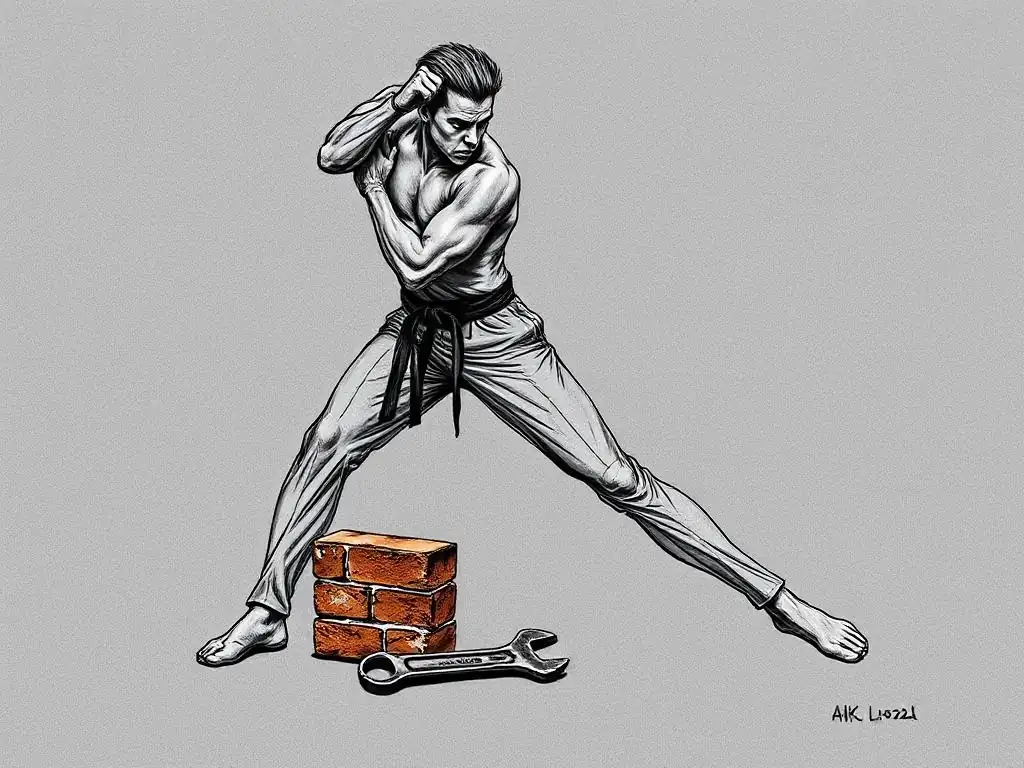
Combining Improvised Weapons with Hand-to-Hand Combat
In a dynamic self-defense situation, it's rare that a single technique or tool will suffice. Advanced Krav Maga improvised weapon defense involves seamlessly integrating the use of objects with standard hand-to-hand combat techniques. An improvised weapon might be used to create an opening, followed immediately by strikes, grabs, or takedowns, or vice versa.
For instance, a quick splash of water from a bottle might precede a palm-heel strike or a defense against a choke. A pen strike might be used to break an attacker's grip before transitioning into a joint lock or control. This fluid combination makes the defender unpredictable and maximizes the impact of their actions.
Seamless Transitions Between Techniques
Training for this involves drills that start with an improvised weapon action and immediately flow into an unarmed technique, and drills that start with an unarmed defense and transition to using an available object. This requires significant practice to ensure there are no pauses or hesitations that an attacker could exploit.
*   Use improvised weapon to disrupt.
*   Follow immediately with strike/control.
*   Disengage or escalate as needed.
Defending Against an Attacker Using an Improvised Weapon
Krav Maga improvised weapon defense also covers how to defend yourself when the attacker is the one using an improvised weapon. This requires recognizing the potential threat posed by common objects in an attacker's hands and applying appropriate defensive tactics, often involving deflecting the object, controlling the attacker's limb, and neutralizing the threat.
Techniques focus on minimizing injury from the improvised weapon while simultaneously gaining control of the attacker or creating an opportunity to escape. This might involve gross motor movements to block or redirect the attack, followed by close-quarters techniques to secure the attacker's arm and disarm them if possible.
Turning the Tables on an Aggressor
In some scenarios, defending against an improvised weapon attack might involve turning the attacker's tool against them or using the defense to transition into your own Krav Maga improvised weapon defense. For example, if an attacker swings a belt, the defense might involve controlling the belt arm and using your own keys for a counter-strike.
The principle is to adapt to the incoming threat and use it as an opportunity. By controlling the attacker's weapon-bearing limb, you can often neutralize their advantage and transition to your own offensive or defensive strategy, potentially using an improvised weapon of your own if available.
Mental Conditioning: The Mindset for Effective Improvised Defense
Beyond physical technique, a critical element of Krav Maga improvised weapon defense is mental conditioning. Self-defense situations are inherently stressful and often involve fear and adrenaline. The ability to remain relatively calm, think clearly, and access training under pressure is paramount.
Training incorporates stress drills designed to simulate the psychological aspects of an attack, helping practitioners develop resilience and the ability to function effectively despite fear. This mental toughness allows for rapid assessment of the situation and environment, facilitating the instinctive identification and use of Krav Maga improvised weapons.
Maintaining Calm Under Pressure
Techniques for developing this mindset include:
- Stress inoculation: Gradually exposing practitioners to increasing levels of stress during training scenarios.
- Visualization: Mentally rehearsing defensive scenarios, including the use of improvised weapons.
- Focus on the objective: Training the mind to prioritize survival, escape, and threat neutralization above all else.
Developing a strong, resilient mindset is as important as mastering the physical techniques in Krav Maga improvised weapon defense. It's the ability to act decisively when it matters most.
The Philosophy Behind Krav Maga's Improvised Weapon Approach
Resourcefulness and Adaptability as Core Values
The integration of improvised weapons is deeply rooted in Krav Maga's core philosophy of resourcefulness and adaptability. Founded in real-world combat scenarios, Krav Maga was designed to be effective for anyone, anywhere, regardless of physical size or strength, and crucially, regardless of available tools. This necessitated a system that didn't rely solely on traditional martial arts weapons or even unarmed techniques, but could leverage the environment.
This approach teaches practitioners to be proactive problem-solvers in a crisis. It instills the confidence that they are not helpless even when seemingly unarmed, because the potential for defense exists in the common objects around them. This emphasis on using what's available is a defining characteristic of effective Krav Maga improvised weapon defense.
Empowering Individuals Through Practical Self-Defense
Ultimately, the focus on Krav Maga improvised weapon defense is about empowering individuals. By demonstrating that effective defensive tools are often within arm's reach, the system builds confidence and reduces the feeling of vulnerability. It shifts the perspective from feeling defenseless without a traditional weapon to recognizing the potential for defense in the everyday.
This practical approach makes self-defense accessible and applicable in a wider range of real-life situations. It reinforces the idea that survival is the priority and that being resourceful is a key component of personal safety. This empowerment through practical, adaptable skills is a central goal of Krav Maga training.
Mastering Krav Maga's Improvised Weapon Defense: A Summary
Mastering Krav Maga improvised weapon defense requires a combination of awareness, training, and a resourceful mindset. It's about seeing the world not just as it is, but for its potential, especially under threat. The techniques are simple and brutal, designed for maximum effectiveness with minimal training time, leveraging the principles of surprise, pain, and disruption.
From pens and keys for precision strikes to belts and water bottles for control and impact, everyday objects can become vital tools when your safety is on the line. Coupled with scenario training and mental conditioning, this aspect of Krav Maga provides a comprehensive layer of self-protection, ensuring that practitioners are prepared to defend themselves using whatever the situation provides. The ability to effectively use Krav Maga improvised weapons is a testament to the system's practicality and adaptability.
Key Takeaways for Effective Self-Protection
Here are some essential points to remember regarding Krav Maga improvised weapon defense:
- Be constantly aware of your surroundings and potential threats and tools.
- Practice identifying common objects that could serve as improvised weapons.
- Train instinctive reactions to quickly deploy and use available objects.
- Understand the vulnerable points on an attacker's body for effective targeting.
- Know your local laws regarding self-defense and the use of force.
- Develop a resilient mindset to function under stress.
- Integrate improvised weapon use seamlessly with unarmed techniques.
- Remember that the goal is always survival and escape.
Frequently Asked Questions
What is the core principle behind Krav Maga's improvised weapon defense?
The core principle is using everyday objects as tools for self-defense. Krav Maga emphasizes adaptability and resourcefulness in unpredictable situations.
Why is Krav Maga so focused on improvised weapons?
Krav Maga's focus stems from its origin in real-world combat scenarios. It prepares individuals to defend themselves even when conventional weapons are unavailable.
What are some examples of common objects used in Krav Maga improvised weapon training?
Examples include pens, keys, belts, chairs, and even rolled-up newspapers. The training focuses on leveraging their offensive and defensive capabilities.
How does Krav Maga training prepare practitioners to use improvised weapons effectively?
Training involves learning to identify potential weapons, understanding their impact points, and practicing techniques to maximize their effectiveness in a stressful situation.
Is Krav Maga improvised weapon defense only for trained martial artists?
While formal training is highly recommended, the principles can be learned by anyone. The emphasis is on simple, effective movements that can be quickly deployed in an emergency.
Final Reflection: Embracing Everyday Empowerment
The exploration of Krav Maga's improvised weapon defense reveals a profound truth: power resides not just in specialized tools, but in the awareness and resourcefulness to transform the ordinary into the extraordinary. In a world that often feels unpredictable, understanding how to leverage common objects for self-defense offers a tangible sense of control and empowerment, extending far beyond the confines of a martial arts studio.
The principles of Krav Maga, particularly its focus on adaptability and utilizing the environment, have deeply impacted how we perceive our surroundings. This approach transcends mere physical defense; it cultivates a mindset of preparedness and resilience, reminding us that ingenuity can be our greatest weapon. Improvise, adapt, overcome.
- Clint Eastwood, a sentiment that perfectly encapsulates the spirit of Krav Maga's approach to self-defense.
Now, consider the implications of this knowledge in your own life. How can you cultivate a greater awareness of your surroundings? How can you train yourself to see potential tools and defensive strategies in the everyday objects around you? The power to protect yourself and others lies within you; embrace the principles of Krav Maga, hone your awareness, and transform the ordinary into a source of strength and security.
Empower Yourself: Transform the Everyday into Defense!
Thanks for diving into the world of improvised Krav Maga! Now that you're armed with the knowledge to turn ordinary objects into powerful tools for self-defense, it's time to put that potential into practice. Let's take your training to the next level:
- Start actively identifying potential improvised weapons in your daily environment. Look around your home, workplace, and even your car – a pen, a set of keys, a belt – see them with new eyes.
- Share this article with friends or family and discuss how you could realistically apply these principles in different scenarios. Help each other think outside the box.
- Consider enrolling in a beginner's Krav Maga class to refine your skills and build confidence under expert guidance. It's time to put these principles into action.
What's the most unexpected object you now see as a potential self-defense tool, and how would you use it?