
Sifu David Chan on Mastering Wing Chun's Chi Sao: An InDepth Discussion

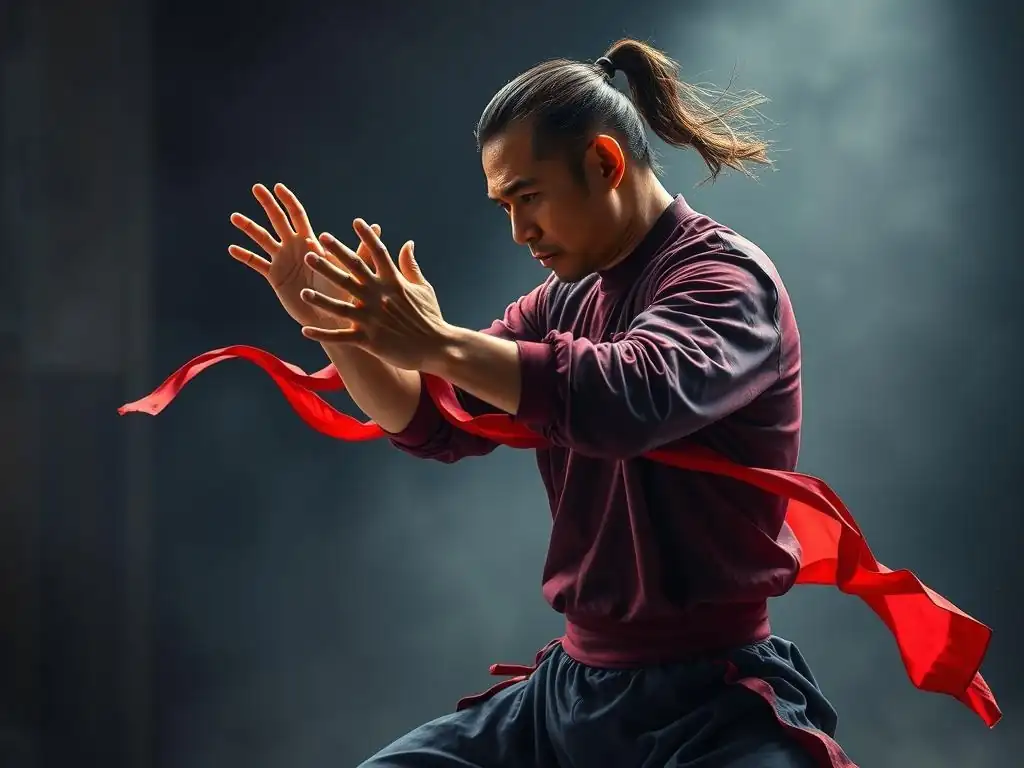
Welcome to Martial Arts Mastery, where we delve into the heart and soul of combat traditions! Prepare to explore the intricate world of martial arts, from its historical roots to its practical applications. Today, we're honored to present an in-depth discussion with Sifu David Chan, a leading expert, as he unlocks the secrets of Wing Chun chi sao. But what makes this unique training method so effective? Discover the philosophy and techniques behind this core practice and how it can elevate your own martial arts journey. Dive in and unlock the mastery within!
- Introduction to Wing Chun Chi Sao with Sifu David Chan
- The Significance of Chi Sao in Wing Chun Training
- Sifu Chan's Approach to Teaching Wing Chun Chi Sao
- Advanced Concepts in Wing Chun Chi Sao
- Chi Sao as a Dynamic Exchange: Offensive and Defensive Strategies
- The Mental Aspect of Chi Sao Training
- The Future of Wing Chun Chi Sao: Sifu Chan's Vision
- Conclusion: Embracing the Art of Chi Sao for Martial Arts Mastery
-
Frequently Asked Questions
- How does Chi Sao contribute to a practitioner's overall Wing Chun skill?
- What are the key principles Sifu David Chan emphasizes when teaching Chi Sao?
- Why is Chi Sao considered more than just a sparring drill in Wing Chun?
- How does Chi Sao training differ from traditional sparring in other martial arts?
- What are some common mistakes beginners make when learning Chi Sao, and how can they be avoided?
- Final Reflection: Embracing the Flow of Wing Chun
- Unleash Your Inner Wing Chun Master!
Introduction to Wing Chun Chi Sao with Sifu David Chan
Understanding the Core Principles of Chi Sao: A Wing Chun Perspective
Wing Chun chi sao, often translated as "sticking hands," is far more than just a drill; it is the living heart of the Wing Chun system. Its fundamental purpose is to develop sensitivity and intuitive reflexes through constant contact with an opponent.
Unlike sparring, where techniques are applied at a distance, Wing Chun chi sao involves maintaining contact with the opponent's arms or body, allowing practitioners to "feel" their energy, structure, and intent. This tactile feedback is crucial for developing the ability to react instantaneously to changes in pressure, direction, and force, enabling simultaneous defense and offense, a hallmark of Wing Chun.
At its core, Wing Chun chi sao emphasizes several critical principles: maintaining the centerline, controlling the opponent's structure, developing relaxed power (ging), and achieving simultaneous attack and defense. The goal isn't merely to push or pull, but to understand how force is applied and redirected, finding openings while protecting one's own vulnerable areas. Through consistent Wing Chun sticking hands practice, practitioners learn to adhere to the opponent, occupying the space and denying them leverage, transforming incoming force into an advantage rather than a threat.
Sifu Chan's Journey into Wing Chun and Chi Sao Mastery
Sifu David Chan's dedication to Wing Chun began decades ago, rooted in a deep fascination with its practical efficiency and unique approach to combat. His initial training focused heavily on the foundational forms – Siu Lim Tao, Chum Kiu, and Biu Jee – understanding that these provided the essential structure and principles necessary for effective application. However, it was in the practice of Wing Chun chi sao that the system truly came alive for him, revealing the dynamic interplay of energy and strategy that defines Wing Chun.
His journey into Wing Chun chi sao mastery involved countless hours of dedicated practice, initially with senior students and later with experienced instructors. Sifu Chan often recounts spending up to four hours daily in sticking hands drills during his formative years, exploring the subtle nuances of pressure, angle, and timing. This relentless focus allowed him to internalize the principles, moving beyond rote technique to develop genuine sensitivity and intuitive reaction, which he now imparts to his own students learning Wing Chun chi sao.
The Significance of Chi Sao in Wing Chun Training
Developing Sensitivity and Reflexes through Wing Chun's Chi Sao
Sensitivity is arguably the most crucial skill developed through Wing Chun chi sao training. By maintaining constant physical contact, practitioners learn to read the opponent's intentions and movements before they fully manifest. This isn't a visual cue; it's a tactile one, feeling changes in pressure, tension, and direction through the point of contact. This high level of proprioceptive feedback allows for a reaction speed that is significantly faster than relying solely on visual or auditory cues, making Wing Chun sticking hands an unparalleled tool for developing martial reflexes.
Consider a common scenario in Wing Chun chi sao: the opponent attempts to apply pressure forward. A sensitive practitioner doesn't resist force with force, but rather feels the direction of the pressure and subtly redirects or yields, simultaneously occupying the space the opponent just vacated. This ability to instantly adapt to incoming force, known as "listening energy" (ting jing), is honed exclusively through repetitive, focused Wing Chun chi sao practice. It transforms defensive reactions from conscious decisions into instinctive, almost involuntary movements.
Bridging the Gap: Chi Sao as a Link Between Forms and Fighting
Wing Chun forms provide the blueprint for the system's techniques, structure, and principles. They teach the proper angles, body mechanics, and generation of force. However, forms are solo exercises. The transition from the static, solo movements of the forms to the dynamic, unpredictable environment of actual combat is where Wing Chun chi sao plays its vital role. Chi sao acts as the essential bridge, allowing practitioners to test and apply the principles learned in the forms against a resisting, dynamic opponent in a controlled environment.
In Wing Chun sticking hands, the techniques practiced in Siu Lim Tao, Chum Kiu, and Biu Jee are put into action. The hand shapes, footwork patterns, and structural integrity developed in the forms are pressure-tested and refined through constant interaction. For instance, the proper Tan Sao (dissipating hand) or Bong Sao (wing arm) structure, learned in the forms, is challenged by an opponent's force in chi sao. This allows the practitioner to understand how these structures function under pressure and when to apply them, making the abstract principles of the forms tangible and applicable in a dynamic exchange.
Beyond Technique: The Strategic Importance of Wing Chun Sticking Hands
While often seen as a sensitivity drill, Wing Chun chi sao is deeply strategic. It's a dynamic negotiation of space, pressure, and centerline control. The goal is not just to feel, but to use that sensitivity to gain a tactical advantage. This involves understanding leverage, disrupting the opponent's balance, and creating openings for attack while maintaining one's own defensive structure. Wing Chun sticking hands teaches practitioners to fight from a position of advantage, constantly seeking to occupy the most favorable angles and control the critical centerline.
The strategic depth of Wing Chun chi sao lies in its emphasis on simultaneously defending and attacking. Instead of a block-then-strike sequence, chi sao trains the practitioner to integrate these actions. If the opponent applies pressure, the sensitive response isn't just a block, but a redirecting action that simultaneously creates an opportunity to strike. This layered approach, where every defensive movement contains an offensive potential, is a core strategic element of Wing Chun and is developed almost exclusively through dedicated Wing Chun chi sao practice.
Sifu Chan's Approach to Teaching Wing Chun Chi Sao
Key Drills and Exercises for Developing Chi Sao Skills
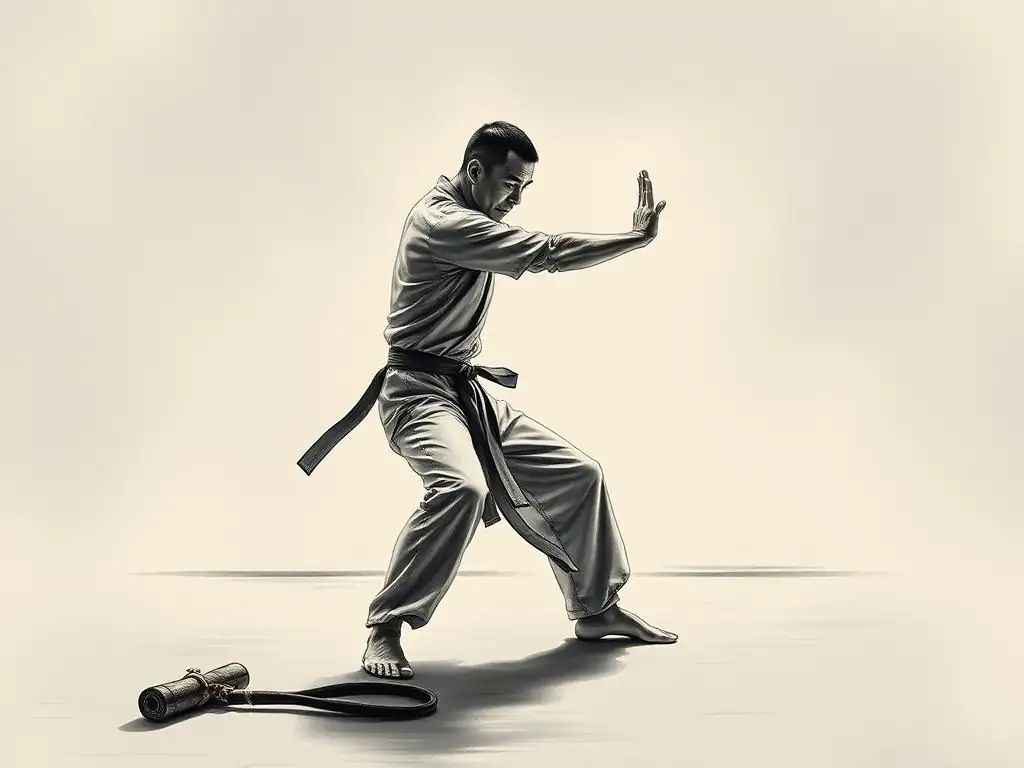
Teaching Wing Chun chi sao effectively requires a progressive approach, starting with foundational sensitivity drills before moving to more complex interactions. Sifu Chan typically begins students with single sticking hands (Daan Chi Sao), focusing on developing basic tactile sensitivity and understanding the concept of 'sticking' to the opponent's arm while maintaining proper structure. This isolates the feeling in one arm, making it easier to learn.
Once single sticking hands are comfortable, students progress to double sticking hands (Poon Sao), the continuous rolling motion that forms the basis of most Wing Chun chi sao exchanges. Within Poon Sao, various specific drills are introduced:
- Rolling hands (Poon Sao) focusing purely on sensitivity and flow.
- Lap Sao (grabbing hand) and Jut Sao (jerking hand) applications within the flow.
- Testing structure against pressure from various angles.
- Introducing passive resistance and later, active counters.
These drills systematically build the necessary attributes for effective Wing Chun sticking hands: sensitivity, structure, timing, and the ability to apply force correctly.
Common Mistakes to Avoid When Learning Wing Chun Chi Sao
Learning Wing Chun chi sao involves overcoming several common hurdles. One of the most frequent mistakes is applying excessive muscular tension. New practitioners often try to use brute force to resist or overpower their partner, which defeats the purpose of developing sensitivity and relaxed power (ging). Wing Chun emphasizes efficiency; tension hinders the ability to feel and react quickly.
Another significant error is neglecting proper structure and footwork. Beginners might lean, lose their balance, or fail to maintain correct angles. Wing Chun sticking hands requires a stable, mobile base and aligned body structure to effectively absorb, redirect, and issue force. Without this foundation, the chi sao becomes ineffective pushing and pulling. SFurthermore, many students become too focused on specific techniques rather than the underlying principles of sensitivity and control, failing to adapt when the situation changes, a critical skill developed through focused Wing Chun chi sao practice.
Adapting Chi Sao Training for Different Body Types and Skill Levels
Effective Wing Chun chi sao instruction acknowledges that students come with diverse physical attributes and prior experiences. Training cannot be a one-size-fits-all approach. For individuals with different body types – taller vs. shorter, stronger vs. lighter – the application of force and angles in Wing Chun sticking hands might feel different, requiring adjustments in posture or distance, though the core principles remain constant.
For varying skill levels, the complexity and intensity of Wing Chun chi sao drills must be scaled. Beginners focus on basic sensitivity and structure with minimal resistance. Intermediate students work on incorporating techniques and dealing with passive resistance. Advanced practitioners engage in more dynamic, unpredictable exchanges, exploring advanced concepts like reading intent and transitioning seamlessly to striking. Sifu Chan emphasizes that while the principles of Wing Chun chi sao are universal, the practice must be tailored to the individual's development stage and physical characteristics to foster optimal learning and mastery.
Advanced Concepts in Wing Chun Chi Sao
Utilizing Structure and Force Generation in Wing Chun's Sticking Hands
Beyond basic sensitivity, advanced Wing Chun chi sao involves a sophisticated understanding and application of structure and force generation. It's not just about feeling the opponent's force, but about using one's own body structure to absorb, redirect, or amplify force efficiently. This means maintaining proper alignment from the ground up, ensuring that force travels through the skeletal structure rather than relying on muscular strength alone.
Advanced practitioners in Wing Chun sticking hands learn to generate 'short power' (ging) – explosive force delivered over a very short distance. This isn't achieved through wind-up motions, but through coordinated body mechanics, utilizing torque and relaxation followed by sudden tension. Applying this specific type of force within the confined space of Wing Chun chi sao requires immense practice and understanding of how to leverage body mass and structure against the opponent's contact point, making each touch potentially devastating.
Footwork and Body Mechanics in Chi Sao: Maintaining Balance and Power
While Wing Chun chi sao focuses on arm contact, effective practice is impossible without precise footwork and integrated body mechanics. The feet provide the necessary mobility and stability. Constant small adjustments in stance and position are required to maintain balance, control distance, and gain advantageous angles. Wing Chun footwork, such as the 'turning stance' (Juen Ma) and 'advancing/retreating steps' (Jing Cheui Ma / Teui Cheui Ma), are crucial for following the opponent, evading force, and setting up power generation.
Body mechanics in Wing Chun sticking hands involve the coordinated movement of the entire body as a single unit. The waist, hips, and shoulders work together with the footwork to generate power and maintain structural integrity. Advanced practitioners can shift their weight and turn their stance almost imperceptibly to redirect incoming force or launch an attack. This seamless integration of footwork, body rotation, and hand techniques is what allows advanced Wing Chun chi sao players to dominate the exchange.
Developing Sensitivity to Intent: Reading Your Opponent in Chi Sao
Perhaps the most subtle and advanced skill in Wing Chun chi sao is developing sensitivity not just to physical force, but to the opponent's intent. This goes beyond feeling pressure; it's about reading the subtle muscular tensions, shifts in weight, and psychological cues that precede a committed action. It's an intuitive understanding of what the opponent plans to do before they fully execute it, allowing for pre-emptive action.
This level of sensitivity in Wing Chun sticking hands is cultivated over years of practice with a variety of partners. It involves learning to distinguish between feints, committed attacks, and defensive reactions based on minute physical signals. By becoming highly attuned to these subtle shifts, an advanced Wing Chun chi sao practitioner can intercept an attack before it gathers momentum or exploit an opening the moment it begins to form, effectively fighting "in the gaps" of the opponent's actions.
Chi Sao as a Dynamic Exchange: Offensive and Defensive Strategies
Controlling the Centerline in Chi Sao: A Fundamental Wing Chun Principle
Controlling the centerline is perhaps the single most important strategic principle in Wing Chun, and its application is paramount in Wing Chun chi sao. The centerline is the imaginary line running vertically down the center of your body, containing vital targets. In chi sao, the goal is to protect your own centerline while simultaneously attacking or controlling the opponent's. By maintaining a dominant position relative to the centerline, you limit the opponent's attacking options and create direct lines for your own attacks.
In Wing Chun sticking hands, controlling the centerline involves using hand positions (like Tan Sao, Bong Sao, Fook Sao - controlling hand) and footwork to stay inside the opponent's structure or prevent them from accessing your center. This isn't a static concept; it's a dynamic struggle. Practitioners constantly vie for this central advantage, using sensitivity to feel when the opponent is trying to shift their angle or apply pressure to gain centerline access, and instantly reacting to counter their attempt.
Breaking the Structure: Disrupting Your Opponent's Balance and Flow
An effective offensive and defensive strategy in Wing Chun chi sao involves disrupting the opponent's structure and flow. Every martial artist relies on a stable base and connected body mechanics to generate power and maintain balance. By applying force or pressure at specific points and angles through contact, a Wing Chun sticking hands practitioner can compromise the opponent's structure, making them unstable, awkward, or unable to generate effective force.
This can be achieved through various means within Wing Chun chi sao, such as applying pressure downwards on their arms to collapse their structure (Jut Sao), rotating their arm outwards to break their connection to their core, or applying lateral pressure to disrupt their balance. The sensitivity developed in chi sao allows the practitioner to feel where the opponent's structure is weak and apply pressure precisely at that point, causing them to compensate and creating openings.
Transitioning from Chi Sao to Striking: Seamless Integration of Techniques
The ultimate purpose of Wing Chun chi sao is to prepare practitioners for real-world application, which involves striking. Therefore, a critical part of the dynamic exchange in chi sao is the seamless transition from the sticking hands phase to delivering strikes. Chi sao isn't the fight itself, but a method to gain control, create openings, and position oneself for effective strikes.
Within Wing Chun sticking hands, techniques are constantly applied that simultaneously defend and create striking opportunities. For example, a Tan Sao might redirect incoming force while the other hand simultaneously delivers a punch along the open centerline. The sensitivity allows the practitioner to feel when the opponent's structure is compromised or their centerline is exposed, and the training ensures that the follow-up strike is instantaneous and powerful, integrating the feeling and control from chi sao directly into effective hitting.
The Mental Aspect of Chi Sao Training
Cultivating Mindfulness and Presence in Wing Chun Practice
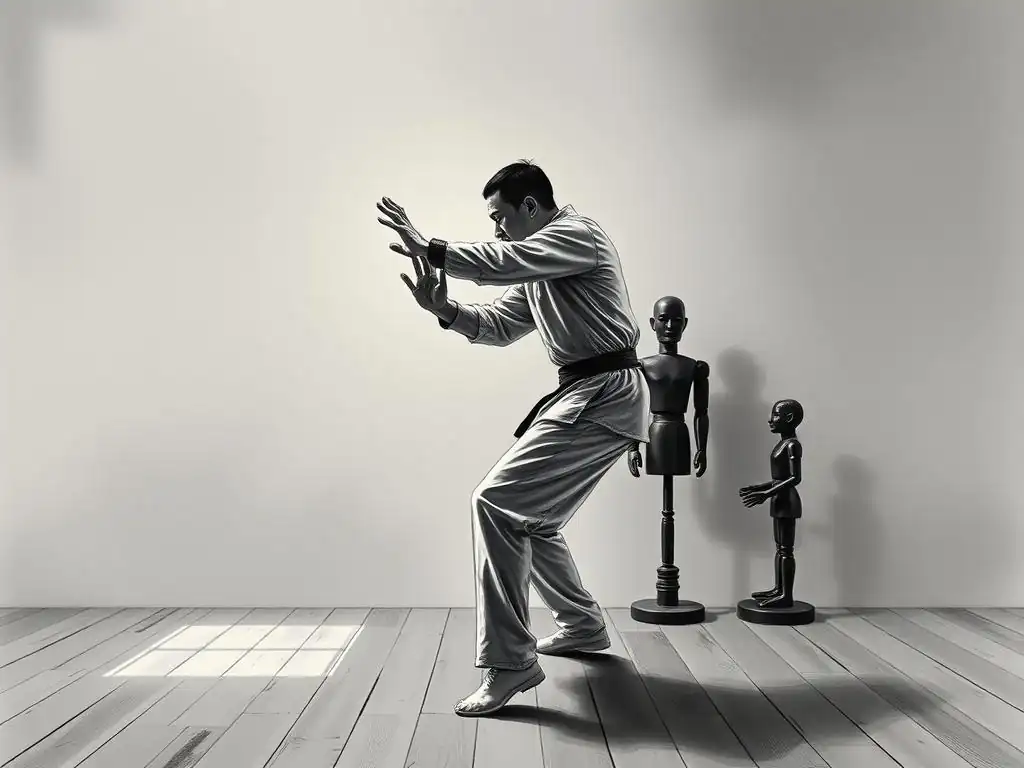
Wing Chun chi sao is as much a mental discipline as a physical one. It demands complete mindfulness and presence in the moment. With constant physical contact, distractions can lead to missing subtle cues and losing control of the exchange. Practitioners must learn to clear their minds, focusing solely on the tactile feedback from their partner's arms and their own body mechanics.
This intense focus in Wing Chun sticking hands cultivates a state of flow, where reactions become intuitive rather than analytical. It trains the mind to remain calm under pressure, observing and reacting without hesitation or emotional involvement. This mental discipline, honed through the immediate feedback loop of Wing Chun chi sao, translates directly into improved focus and calmness in stressful situations, both within martial arts and in daily life.
Overcoming Fear and Hesitation in Chi Sao Encounters
Facing a resisting partner, even in a controlled environment like Wing Chun chi sao, can trigger fear and hesitation, especially for beginners. The unpredictability of the exchange and the constant pressure can be intimidating. Chi sao provides a safe space to confront these feelings. Through repeated exposure and the guidance of an instructor, practitioners learn to manage their fear response and act decisively despite uncertainty.
The structured yet dynamic nature of Wing Chun sticking hands gradually desensitizes practitioners to physical contact and pressure. As sensitivity improves, they gain confidence in their ability to feel and react effectively. This process helps overcome the natural instinct to tense up or withdraw under pressure, fostering a proactive and confident mindset essential for applying Wing Chun effectively in self-defense.
Developing Confidence and Intuition Through Sticking Hands
Consistent and dedicated Wing Chun chi sao practice builds profound confidence and sharpens intuition. As practitioners become more sensitive and their reactions become more reflexive, they develop a deep trust in their body's ability to respond correctly under pressure. This confidence stems not from brute force, but from the refined skill of feeling and adapting.
The intuitive aspect of Wing Chun sticking hands comes from internalizing the principles to such a degree that conscious thought is bypassed. Reactions happen automatically based on the tactile information received. This developed intuition allows practitioners to make split-second decisions in dynamic situations, relying on their trained reflexes rather than needing time to process information logically. This level of confidence and intuition is a direct result of extensive Wing Chun chi sao training.
The Future of Wing Chun Chi Sao: Sifu Chan's Vision
Preserving Traditional Wing Chun Principles While Adapting to Modern Applications
Sifu David Chan believes that the future of Wing Chun chi sao lies in a careful balance between preserving its traditional principles and adapting its application to the modern world. The core concepts of sensitivity, centerline control, and simultaneous attack/defense developed through Wing Chun sticking hands are timeless and universally applicable. These fundamental principles must be taught faithfully, honoring the lineage and knowledge passed down through generations.
However, Sifu Chan also recognizes that the context of self-defense has evolved. While the principles remain constant, the situations practitioners might face are different. Therefore, training in Wing Chun chi sao should also explore how these principles apply against various fighting styles, different types of attacks (including grabs and weapons awareness), and in diverse environments. The sensitivity and adaptability honed in Wing Chun sticking hands make it uniquely suited for this kind of cross-training and practical application.
The Role of Chi Sao in the Evolution of Wing Chun Training
Sifu Chan sees Wing Chun chi sao as playing an increasingly central role in the evolution of Wing Chun training. In an era where many martial arts are focused solely on sport or performance, the unique attributes developed by Wing Chun sticking hands – particularly its emphasis on close-range sensitivity and simultaneous action – offer a distinct advantage for practical self-defense.
He envisions Wing Chun chi sao becoming more integrated with other training methods, such as scenario-based training and light-contact sparring, to ensure that the sensitivity developed translates directly into effective application. Chi sao provides the essential 'engine' of Wing Chun, and its continued emphasis and intelligent integration into modern training curricula are vital for the system's relevance and effectiveness moving forward.
Sifu Chan's Advice for Aspiring Wing Chun Practitioners
Sifu Chan's primary advice for anyone aspiring to master Wing Chun, especially its chi sao component, is simple yet profound: be patient and be consistent. Mastery doesn't happen overnight. Wing Chun chi sao requires dedicated, regular practice over years to truly internalize the principles and develop genuine sensitivity. He stresses the importance of finding a qualified instructor who understands the nuances of Wing Chun sticking hands and can provide personalized feedback.
Furthermore, Sifu Chan encourages students to train with a variety of partners. Each person moves differently and applies force uniquely, and training with diverse partners accelerates the development of adaptable sensitivity in Wing Chun chi sao. Finally, he advises practitioners to approach chi sao with an open mind, focusing on learning and feeling rather than trying to win, embracing the journey of continuous refinement that defines the art of Wing Chun.
Conclusion: Embracing the Art of Chi Sao for Martial Arts Mastery
Frequently Asked Questions
How does Chi Sao contribute to a practitioner's overall Wing Chun skill?
Chi Sao, or sticking hands, is crucial for developing sensitivity, reflexes, and energy control. It allows practitioners to adapt to an opponent's movements and apply Wing Chun principles effectively.
What are the key principles Sifu David Chan emphasizes when teaching Chi Sao?
Sifu Chan likely stresses relaxation, structure, and centerline control. Understanding and applying these principles allows practitioners to effectively generate and redirect force during Chi Sao.
Why is Chi Sao considered more than just a sparring drill in Wing Chun?
Chi Sao is a bridge to actual combat, developing the necessary reflexes and sensitivity to react instinctively. It also cultivates a deeper understanding of Wing Chun principles.
How does Chi Sao training differ from traditional sparring in other martial arts?
Unlike free sparring, Chi Sao focuses on close-range contact and sensitivity. It emphasizes feeling and reacting to an opponent's force, rather than relying solely on visual cues.
What are some common mistakes beginners make when learning Chi Sao, and how can they be avoided?
Beginners often tense up, relying on strength instead of sensitivity and structure. Focusing on relaxation and proper form is key to avoiding these pitfalls and progressing in Chi Sao.
Final Reflection: Embracing the Flow of Wing Chun
The principles of Wing Chun Chi Sao, as illuminated by Sifu David Chan, extend far beyond the training hall, offering a profound lesson in adaptability and sensitivity that resonates deeply in our fast-paced world. The ability to anticipate, react, and redirect force, central to Chi Sao, is a skill desperately needed in navigating the complexities of modern life, where constant change and unexpected challenges are the norm.
The practice of Chi Sao, and the philosophy behind it, has undeniably shaped the martial arts landscape and continues to inspire practitioners worldwide. My own exploration of these principles has revealed a deeper understanding of balance, both physical and mental, and the importance of yielding to overcome. Absorb what is useful, discard what is not, add what is uniquely your own.
- Bruce Lee, a sentiment that perfectly encapsulates the spirit of continuous learning and adaptation inherent in Wing Chun.
Now, consider how the lessons of Chi Sao – sensitivity, adaptability, and the efficient use of force – can be applied to your own life. Embrace the flow, be present in the moment, and trust your instincts. Just as Sifu Chan guides his students to find their center, may you find yours, and navigate the world with grace, power, and unwavering focus.
Unleash Your Inner Wing Chun Master!
Thank you for exploring the nuances of Chi Sao with Sifu David Chan! Now that you've gained insights into this crucial Wing Chun training method, it's time to put that knowledge into action and elevate your practice.
Here are a few steps to take your Wing Chun journey further:
- Commit to incorporating at least 15 minutes of dedicated Chi Sao practice into your weekly training routine. Focus on sensitivity and responsiveness, rather than brute force.
- Share this article with fellow Wing Chun practitioners and discuss the concepts presented with them. Collaborative learning will deepen your understanding.
- Explore other articles and resources on Martial Arts Mastery to discover new training methods and insights from other masters.
What specific Chi Sao drill are you most excited to implement in your next training session?