
Queen Amina of Zazzau: The Nigerian Warrior Queen's Martial Legacy


Welcome to Martial Arts Mastery, where we explore the diverse and fascinating world of combat traditions!
Delve into the extraordinary life of a figure whose name resonates with power and strategic brilliance. Today, we uncover the incredible story of Queen Amina of Zazzau, a Nigerian warrior queen whose martial prowess and leadership shaped an empire. Prepare to be captivated by her legacy, a testament to courage and a masterclass in historical martial arts strategy. Are you ready to witness the unfolding of an unparalleled warrior's journey?
- Introduction to Amina of Zazzau: An Icon of Nigerian Martial Prowess
- The Early Life and Rise of Amina: Forging a Warrior's Path
- Amina's Military Campaigns: Expanding Zazzau's Territory
- Amina's Defensive Fortifications: Building a Legacy in Zazzau
- Amina's Impact on Zazzau's Political and Economic Power
- Amina: A Ruler Beyond Warfare - Justice, Administration, and Legacy
- Debunking Myths and Legends Surrounding Queen Amina
- Amina of Zazzau's Enduring Legacy in Nigerian History and Culture
- The Relevance of Amina's Military Strategies Today
- Conclusion: Queen Amina - A Timeless Example of Martial Mastery and Leadership
-
Frequently Asked Questions
- How is Queen Amina of Zazzau remembered in martial arts history?
- What martial arts disciplines, if any, are believed to be connected to Queen Amina's warriors?
- How did Queen Amina use her military strength to expand Zazzau's territory?
- What can we learn from Queen Amina's leadership style in the context of self-defense strategies?
- Does MartialArtsMastery.org offer resources for learning more about historical African martial traditions?
- Final Reflection: Echoes of a Warrior Queen
- Unleash Your Inner Warrior: Honor Amina's Legacy!
Introduction to Amina of Zazzau: An Icon of Nigerian Martial Prowess
Brief Overview of Zazzau's Historical Context and Influence
Zazzau, one of the original seven Hausa city-states (Hausa Bakwai), flourished in what is now northern Nigeria for centuries. Situated along crucial trans-Saharan trade routes, its strategic location contributed significantly to its economic and political importance. Before Amina's reign, Zazzau was already a notable power, but it faced continuous challenges from neighboring states and internal strife. The region was characterized by a complex interplay of political alliances, rivalries, and military engagements, where control over trade routes and fertile lands was fiercely contested.
During the 16th century, when Amina rose to prominence, Zazzau was transitioning and consolidating its power base. The political landscape demanded astute leadership, not just in administration but crucially in military capabilities. The ability to defend territory, project power, and secure economic interests through force was paramount for survival and prosperity in this era, setting the stage for a ruler like Amina who possessed exceptional martial skills and strategic vision.
Amina of Zazzau: More Than Just a Queen, A Military Strategist
Queen Amina of Zazzau is not merely remembered as a monarch but is revered primarily as a formidable military leader and strategic genius. Her reign, often placed in the mid-to-late 16th century, marked a period of unprecedented expansion and fortification for Zazzau. Unlike many female rulers of her time who might have governed through male generals, Amina is depicted as actively leading her armies into battle, demonstrating personal bravery and tactical acumen.
Her reputation as a warrior queen is deeply embedded in Hausa oral traditions and historical accounts. She is credited with dramatically expanding Zazzau's territory southwards, conquering numerous towns and cities, and subjugating vast areas that paid tribute. This military prowess cemented her legacy as a powerful Amina of Zazzau warrior, a ruler whose authority was backed by a highly effective and well-led military force. Her strategic mind extended beyond conquest to encompass defense and economic control, defining her reign.
The Early Life and Rise of Amina: Forging a Warrior's Path
Amina's Training and Preparation for Leadership Roles
Born into the ruling dynasty of Zazzau, Amina had a privileged upbringing that nonetheless included rigorous preparation for leadership, which in Zazzau's context meant understanding warfare and governance. Historical accounts suggest she was trained alongside her male counterparts, learning military tactics, horsemanship, and the art of combat from a young age. Her grandfather, Sarkin Nohir, and her father, Sarkin Kara, were both rulers, and she would have observed their methods of administration and military command firsthand.
This early exposure to the realities of power and conflict within the Zazzau kingdom instilled in her the necessary skills and mindset for future leadership. She didn't just inherit a throne; she was groomed to rule, and critically, to defend and expand the realm. Her training environment would have emphasized practical skills essential for a ruler in a volatile region, including diplomacy, intelligence gathering, and the logistics of maintaining an army, laying the foundation for her later success as an Amina of Zazzau warrior.
Influences and Mentors in Amina's Early Development
Key figures in Amina's early life likely played significant roles in shaping her into the warrior queen she became. Her father, Sarkin Kara, was a respected ruler, and his reign provided a direct example of leadership. More influential, perhaps, was her younger brother, Karama, who succeeded their father before Amina took the throne. Serving under Karama, Amina gained invaluable experience in governance and military affairs.
During Karama's reign, Amina distinguished herself and was appointed as the 'Magajiya', a high-ranking position traditionally associated with the queen mother or a senior female royal, but which also involved significant responsibilities, potentially including military oversight or advising. This role allowed her to participate actively in the affairs of the state, observe military campaigns, and build her own network and reputation before ascending to power herself. These experiences and mentorships were crucial in honing her skills as a future Amina of Zazzau warrior ruler.
Amina's Military Campaigns: Expanding Zazzau's Territory
Key Battles and Military Strategies Employed by Amina
Queen Amina is renowned for her extensive military campaigns, which dramatically expanded Zazzau's influence. Chroniclers attribute the conquest of numerous territories to her, with some sources mentioning as many as 34 cities brought under Zazzau's control or made tributaries. Her campaigns stretched Zazzau's reach southwards, incorporating new peoples and resources into the kingdom.
Amina's strategies were characterized by swift, decisive action and effective use of her forces. She is said to have personally led her troops, inspiring loyalty and courage. Her military objectives often included securing control over trade routes, conquering fertile agricultural lands, and establishing tributary states to enhance Zazzau's wealth and power. This aggressive expansionism was a defining feature of her reign and solidified her image as a formidable Amina of Zazzau warrior.
Amina's Cavalry Tactics and Innovations in Warfare
A significant aspect of Amina's military success was her effective utilization of cavalry. Horses were crucial in West African warfare, providing speed and shock value. Zazzau, located in the savanna region, had access to horses, and Amina's armies reportedly employed cavalry with great skill.
Her campaigns often involved rapid movements across territories, overwhelming opponents before they could mount an effective defense. The cavalry would be used for scouting, rapid assaults, and pursuing retreating enemies. While specific tactical innovations are debated by historians, the sheer scale and success of her campaigns suggest a mastery of contemporary warfare, particularly the deployment and logistics of mounted troops over long distances. This focus on mobility and decisive action was a hallmark of the Amina of Zazzau warrior approach.
Amina's Defensive Fortifications: Building a Legacy in Zazzau
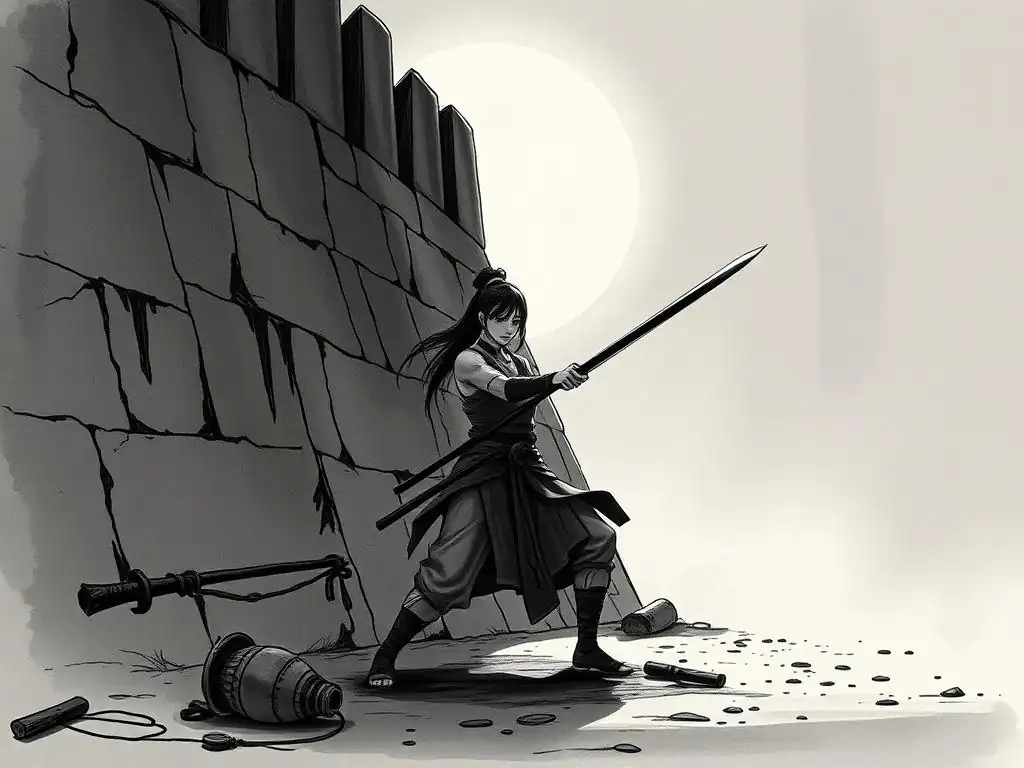
The Construction of Walled Cities Under Amina's Reign
Beyond conquest, a lasting physical legacy of Queen Amina's reign is the construction of extensive defensive walls around cities and towns within Zazzau and the territories she conquered. These fortifications, known collectively as Ganuwar Amina (Amina's walls), were built using local materials, typically sun-dried mud bricks and later, potentially fired bricks and stone in some areas.
These walls were not just simple barriers; they were often complex systems with multiple layers, ramparts, and gates designed to withstand sieges and protect urban populations and valuable resources. The effort required to construct such widespread fortifications indicates a strategic vision focused on long-term security and consolidation of conquered territories. The scale of this building program suggests a well-organized state capable of mobilizing considerable labor and resources under the direction of the Amina of Zazzau warrior queen.
The Strategic Importance of Amina's Walls (Ganuwar Amina)
The Ganuwar Amina served multiple crucial strategic purposes. Firstly, they provided physical protection against raids and invasions from rival states or nomadic groups, increasing the security of Zazzau's core territories and newly acquired areas. This security fostered economic stability, allowing agriculture and trade to flourish within the protected zones.
Secondly, these walls helped consolidate Zazzau's control over subjugated populations. By fortifying conquered towns, Amina ensured they could not easily revolt or be retaken by their former rulers. The walls symbolized Zazzau's authority and permanence. While the exact extent of walls built during her reign versus those attributed to her later is debated, the tradition links this era of significant fortification directly to the strategic foresight of the Amina of Zazzau warrior. Examples of these historical wall remnants can still be found in various locations across northern Nigeria.
Amina's Impact on Zazzau's Political and Economic Power
How Amina's Military Successes Strengthened Zazzau
Queen Amina's relentless military campaigns fundamentally reshaped Zazzau's political landscape. By conquering or subjugating numerous neighboring states and towns, she vastly expanded the territory under Zazzau's influence. This expansion not only increased the kingdom's size but also its population and resource base.
The tribute exacted from conquered areas, often paid in slaves, grain, or other valuable commodities, significantly enriched Zazzau's treasury. Furthermore, securing control over key sections of the trans-Saharan trade routes meant Zazzau could levy taxes on passing caravans, boosting its economic power. This military-driven economic growth solidified Zazzau's position as a major power in the region during the 16th century, a direct result of the strategic brilliance of the Amina of Zazzau warrior queen.
Amina's Role in Trade and Diplomacy
While primarily known as a warrior, Amina's reign also facilitated Zazzau's economic prosperity through trade and strategic diplomacy. Her military conquests were often aimed at securing control over vital trade routes, such as the routes connecting the forest regions to the south with the Sahara trade networks.
By extending Zazzau's control southwards, she opened up new sources of goods, particularly kola nuts and slaves, which were valuable commodities in the trans-Saharan trade. The security provided by her fortifications and the stability brought by her strong rule also encouraged merchants to travel through Zazzau territories.
While direct diplomatic initiatives are less emphasized in historical accounts compared to her military exploits, her interactions with conquered rulers and potentially neighboring states would have involved elements of diplomacy to manage the expanded realm and maintain tributary relationships. The Amina of Zazzau warrior queen understood that military power went hand-in-hand with economic strength.
Amina: A Ruler Beyond Warfare - Justice, Administration, and Legacy
Amina's Contributions to Zazzau's Legal System
Historical accounts, though often focused on her military achievements, also suggest that Queen Amina was involved in the administration and governance of her vast kingdom. While specific details about her legal reforms are scarce, it is understood that a ruler of her stature would have overseen the administration of justice within Zazzau and its conquered territories.
Maintaining order across such an expanded realm required a functional legal framework and enforcement mechanisms. Her success in integrating diverse populations under Zazzau's rule implies an ability to establish administrative control and possibly adapt or enforce existing legal traditions. The stability needed for trade and tribute collection also points to an administration capable of maintaining law and order, suggesting the Amina of Zazzau warrior queen also possessed skills in civil governance.
Amina's Administrative Policies and Their Impact
Governing an empire built through conquest presented significant administrative challenges. Amina's policies likely focused on consolidating control, collecting tribute, and managing the resources acquired through her campaigns. The construction of Ganuwar Amina was as much an administrative policy – mobilizing labor and resources on a grand scale – as it was a military one.
Her administration would have needed to manage the flow of tribute, oversee trade, and maintain the loyalty of subjugated rulers. While detailed records are limited, the enduring nature of Zazzau as a significant Hausa state suggests that her reign established administrative precedents that contributed to the kingdom's long-term stability, even after her death. Her ability to manage a vast and diverse territory underscores the fact that the Amina of Zazzau warrior was also a capable administrator.
Debunking Myths and Legends Surrounding Queen Amina

Separating Fact from Fiction in Amina's Story
Like many historical figures whose stories are primarily preserved through oral tradition and later written accounts influenced by legend, Queen Amina's life is surrounded by myths. Some popular tales attribute almost superhuman feats to her, such as conquering territories single-handedly or possessing magical powers. Other narratives include romanticized or sensationalized elements, like refusing to marry and taking temporary husbands before battle.
While these stories speak to her powerful image, historians work to distinguish between legendary embellishments and verifiable historical events. Accounts from early chroniclers like Muhammad Bello, a 19th-century Sultan of Sokoto, provide some of the earliest written records of Amina's conquests and the building of walls, lending credence to her existence and significant military achievements, even if the scale or specific details are exaggerated in popular lore. The core narrative of an effective military leader and builder is widely accepted by scholars studying the history of the Hausa states.
Analyzing the Historical Accuracy of Amina's Feats
Analyzing the historical accuracy of specific claims about Amina requires careful examination of available sources, primarily oral histories (like the Kano Chronicle) and later written accounts. While the Kano Chronicle mentions her reign and military activities, dating her reign precisely and verifying every conquest is challenging due to variations in different versions of the chronicle and the nature of oral transmission.
Most scholars agree on the existence of Queen Amina and her significance as a military leader who expanded Zazzau's territory and initiated significant fortification projects. The number of cities conquered (e.g., 34) is often cited but should perhaps be viewed as indicative of the scale of her campaigns rather than a precise count. Similarly, while she undoubtedly led her armies, the extent of her personal combat involvement might be amplified in legend. The key takeaway is that a historical Amina of Zazzau warrior ruler did exist and had a profound impact on the region.
Amina of Zazzau's Enduring Legacy in Nigerian History and Culture
Amina as a Symbol of Female Empowerment and Military Strength
In modern Nigeria and across Africa, Queen Amina stands as a powerful symbol of female leadership, strength, and military prowess. Her story challenges traditional narratives that often overlook or minimize the roles of women in positions of power, especially in military contexts. She is celebrated as a woman who not only broke gender barriers but excelled in a male-dominated field.
Her image as a fearless warrior queen who expanded her kingdom and secured its future resonates deeply. She represents the potential for women to achieve greatness in all spheres, including leadership and defense. This symbolism makes the Amina of Zazzau warrior a source of inspiration for women and girls striving for leadership and recognition in contemporary society.
Amina's Influence on Modern Nigerian Identity
Queen Amina's legacy is woven into the fabric of Nigerian national identity, particularly in the northern regions. She is a figure of national pride, representing a pre-colonial era of powerful, indigenous leadership and military achievement. Her name is associated with strength, resilience, and strategic thinking.
Her story is taught in schools, featured in literature, and commemorated in various ways, including naming institutions and public works after her. For example, a prominent female hostel at Ahmadu Bello University in Zaria (the modern name for Zazzau) is named Queen Amina Hall. This continued recognition underscores her enduring significance and her status as a foundational figure in the historical narrative of Nigeria, a true Amina of Zazzau warrior queen whose influence transcends centuries.
The Relevance of Amina's Military Strategies Today
Lessons in Leadership and Strategic Thinking from Amina
The story of Queen Amina offers valuable lessons in leadership and strategic thinking that remain relevant today. Her ability to identify strategic objectives (like controlling trade routes), mobilize resources (for armies and fortifications), and execute plans with decisiveness is a testament to effective leadership.
Her willingness to personally lead her troops demonstrates courage and inspires loyalty, qualities crucial for any leader facing challenges. Furthermore, her long-term vision, exemplified by the construction of defensive walls, shows an understanding of the need for sustainable security and not just immediate gains. Studying the campaigns of the Amina of Zazzau warrior provides insights into ambitious goal-setting, resource management, and the integration of military and economic objectives.
Application of Amina's Strategies in Contemporary Leadership
While the context of 16th-century warfare is vastly different from modern challenges, the underlying principles behind Amina's success can be applied to contemporary leadership, whether in business, politics, or other fields. Her strategic approach of identifying key resources (markets, talent), securing control (market share, competitive advantage), and building defensive structures (brand loyalty, robust infrastructure) is universally applicable.
Her emphasis on leading from the front and inspiring her team resonates with modern leadership philosophies that stress engagement and motivation. The foresight demonstrated in the Ganuwar Amina can be likened to investing in long-term infrastructure or sustainable practices today. The legacy of the Amina of Zazzau warrior is a case study in how strategic vision, decisive action, and long-term planning can lead to significant success and enduring impact.
Conclusion: Queen Amina - A Timeless Example of Martial Mastery and Leadership
Reflecting on Amina's Contribution to Military History
Queen Amina of Zazzau holds a significant place in the military history of West Africa. Her reign marked a period of dynamic expansion for Zazzau, transforming it into a powerful regional entity. Her campaigns demonstrate sophisticated military organization, effective use of cavalry, and a clear strategic purpose focused on securing territory and economic dominance.
Beyond her conquests, the lasting physical evidence of her reign in the form of fortifications underscores her understanding of defense and state-building. She wasn't just a raider; she was a ruler who sought to consolidate power and ensure the long-term security of her kingdom. Her achievements position the Amina of Zazzau warrior as one of the most important military figures in the history of the Hausa states and indeed, in the broader history of African warfare.
Amina of Zazzau: A Beacon of Inspiration for Future Generations
Centuries after her reign, Queen Amina remains a powerful and inspirational figure. Her story is a testament to the potential of female leadership and the ability of individuals to shape history through courage, strategic thinking, and unwavering determination. She serves as a reminder that strength and leadership are not defined by gender.
For those interested in martial arts, military history, or leadership, the story of the Amina of Zazzau warrior offers profound insights. She embodies the spirit of mastery – not just in combat, but in the complex art of ruling and defending a kingdom. Her legacy continues to inspire people across Nigeria and beyond, proving that the impact of a truly great leader can resonate through time, encouraging future generations to pursue excellence and overcome challenges.
Frequently Asked Questions
How is Queen Amina of Zazzau remembered in martial arts history?
Queen Amina is primarily remembered for her military prowess and strategic leadership, though direct evidence of her personal martial arts skills is limited. Her legacy primarily lies in building a strong army and expanding the Zazzau kingdom through conquest.
What martial arts disciplines, if any, are believed to be connected to Queen Amina's warriors?
While no specific martial art is directly linked, it's believed Amina's warriors would have utilized a blend of traditional African fighting techniques involving swordsmanship, spear fighting, and possibly wrestling-based grappling common to the region. Iron weapons also played a crucial role.
How did Queen Amina use her military strength to expand Zazzau's territory?
Amina led military campaigns that conquered neighboring territories, expanding Zazzau's influence and control over trade routes. This expansion significantly increased the kingdom's wealth and power, cementing her place in history as a warrior queen.
What can we learn from Queen Amina's leadership style in the context of self-defense strategies?
Amina's leadership highlights the importance of strategic planning, strong defense, and aggressive offense as key components of self-preservation and territorial control. Her focus on building a strong and disciplined army also emphasizes the value of training and preparedness.
Does MartialArtsMastery.org offer resources for learning more about historical African martial traditions?
MartialArtsMastery.org provides resources exploring the historical context and cultural significance of various martial arts traditions around the globe. While a dedicated section on Queen Amina might be new, the site offers a broad range of information on related disciplines.
Final Reflection: Echoes of a Warrior Queen
The story of Queen Amina of Zazzau, a figure of unwavering strength and strategic brilliance, resonates powerfully even today. Her legacy as a fearless warrior and astute ruler continues to inspire generations, particularly in a world that often seeks to diminish the contributions of women in leadership. Amina's impact transcends mere historical accounts; it serves as a potent reminder of the power of courage, determination, and the enduring strength of the human spirit.
The influence of Amina's story on the cultural landscape is undeniable, particularly in Nigeria, where she is celebrated as a national icon. Her example serves as a powerful counter-narrative to traditional gender roles, demonstrating that leadership knows no gender. I am a woman, and I will conquer as a woman,
a sentiment often attributed to her, encapsulates her unwavering resolve and challenges the limitations imposed upon women throughout history. Her spirit lives on, inspiring countless individuals to break barriers and strive for greatness.
As we reflect on the life and accomplishments of Queen Amina, let us consider how her unwavering spirit can inform our own lives. Embrace her courage, her strategic thinking, and her unwavering commitment to her people. Let her story be a beacon, guiding you to overcome obstacles, challenge expectations, and leave your own indelible mark on the world. What legacy will you forge, inspired by the warrior queen of Zazzau?
Unleash Your Inner Warrior: Honor Amina's Legacy!
Thank you for delving into the inspiring story of Queen Amina. Now that you've discovered her remarkable leadership and martial prowess, it's time to connect with her legacy and ignite your own inner strength.
Here are a few ways to honor Queen Amina's spirit:
- Embark on a journey of self-discovery: Research a historical warrior figure from your own heritage and share their story with someone.
- Consider taking a self-defense class. Amina's strength came from her skills and confidence. Embrace that same power in your own life.
- Share Amina's story with your friends and family. Help keep her powerful legacy alive!
What steps will you take today to embody the strength and leadership of Queen Amina in your own life?