
Long, Short, Flexible, Rigid: Understanding Weapon Categories in Chinese Martial Arts

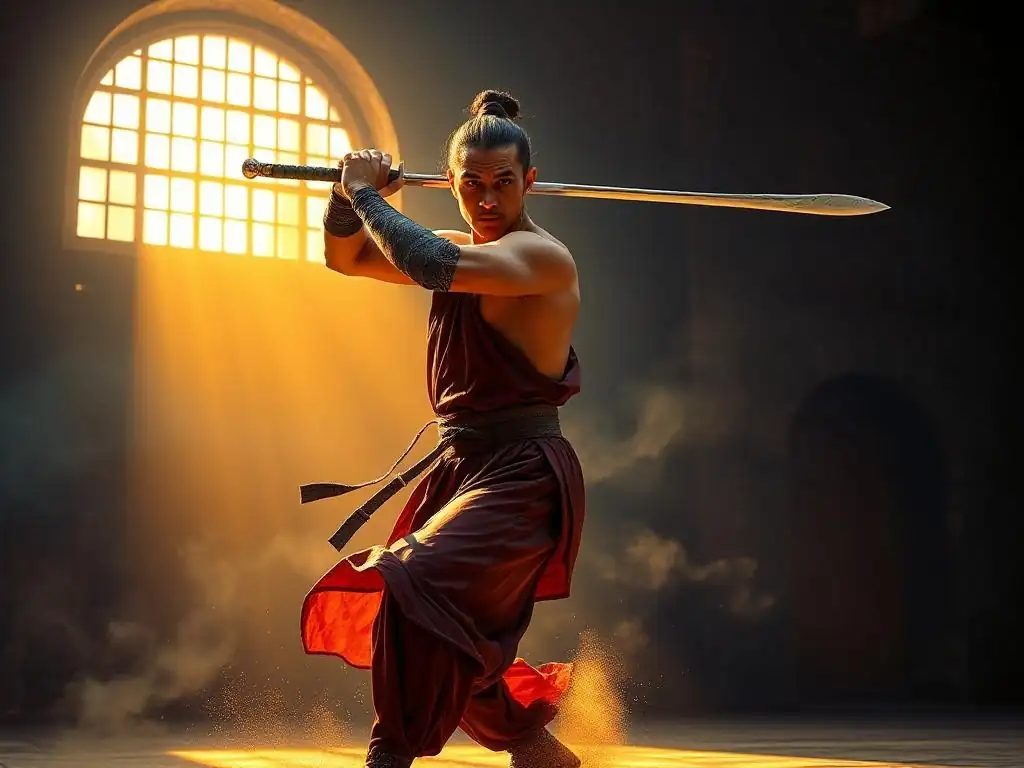
Welcome to Martial Arts Mastery, your gateway to the rich tapestry of martial traditions! Delve into the captivating world of combat and self-discovery. Ever wondered about the secrets behind Chinese weapon training techniques and how they're categorized? Prepare to uncover the distinctions between long, short, flexible, and rigid weapons in Chinese martial arts, and discover how these classifications impact training and combat effectiveness. Your journey into the art of weaponry starts now!
- Introduction to Chinese Weaponry and Training Techniques
- Long Weapons in Chinese Martial Arts: Power and Reach
- Short Weapons in Chinese Martial Arts: Agility and Close Combat
- Flexible Weapons in Chinese Martial Arts: Adaptability and Control
- Rigid Weapons in Chinese Martial Arts: Specialized Applications
- Comparing and Contrasting Weapon Categories: Choosing the Right Path
- Advanced Chinese Weapon Training Techniques: Combining Categories
- Conclusion: The Enduring Legacy of Chinese Weapon Categories
-
Frequently Asked Questions
- What are the main categories used to classify weapons in Chinese martial arts?
- Why is understanding weapon categories important for martial arts training?
- Can you give examples of common weapons that fall into each category?
- How does the length of a weapon affect the fighting style or strategy?
- Where can I learn more about specific Chinese weapon training techniques?
- Final Reflection: The Enduring Legacy of Chinese Weaponry
- Unleash Your Inner Warrior: Begin Your Martial Arts Journey Today!
Introduction to Chinese Weaponry and Training Techniques
The Rich History of Weapons in Chinese Martial Arts
The history of weapons in Chinese martial arts is deeply intertwined with the nation's military development, philosophical schools, and cultural evolution spanning millennia. From the earliest bronze age artifacts found in archaeological sites dating back over 3,000 years, such as Shang Dynasty daggers and axes, to the sophisticated military treatises of the Warring States period like Sun Tzu's The Art of War, which discussed weapon strategy and deployment, weapons were integral to both warfare and personal cultivation.
During the Han Dynasty (206 BCE – 220 CE), the straight sword (jian) became highly refined, symbolizing the scholar-official class and their pursuit of virtue, while the broadsword (dao) remained the standard military sidearm.
Over subsequent dynasties, the diversity of Chinese weaponry exploded, influenced by regional conflicts, technological advancements, and the evolution of martial arts systems themselves. The Song Dynasty (960 – 1279 CE) saw the increased prominence of polearms like the spear (qiang) and various forms of staff (gun), essential for mass combat formations.
Monasteries, particularly the Shaolin Temple starting around the 6th century CE, played a crucial role in preserving and developing unique weapon forms, often adapting everyday tools or agricultural implements into formidable martial instruments. This long history underscores why mastering Chinese weapon training techniques is considered a vital component of many traditional systems.
Defining Weapon Categories for Effective Training
To effectively learn and master the vast array of Chinese weapons, martial artists often categorize them based on their primary characteristics, such as length, flexibility, and method of use. This classification system provides a structured approach to understanding fundamental principles that apply across different weapons within the same group, making Chinese weapon training techniques more accessible. The most common categorization divides weapons into long, short, flexible, and rigid types.
Understanding these categories helps practitioners grasp the inherent advantages and disadvantages of each weapon type in various combat ranges and scenarios. For example, long weapons excel at maintaining distance and delivering powerful blows, while short weapons are ideal for close-quarters defense and rapid strikes. Flexible weapons offer unpredictable movements and entanglement possibilities, and rigid weapons often provide specialized defensive or offensive capabilities. By training within these categories, students build a foundational understanding of leverage, timing, and movement principles that can be transferred to numerous specific weapons.
Long Weapons in Chinese Martial Arts: Power and Reach
The Staff (Gun): Mastering Fundamental Chinese Weapon Training
The staff, known as the gun (棍) in Chinese, is often considered the "father of all weapons" due to its simplicity, versatility, and the foundational principles it teaches, making it essential for initial Chinese weapon training techniques. Historically, staves were common tools for travelers, monks, and peasants, easily adaptable for self-defense. Shaolin monks, in particular, are renowned for their sophisticated staff forms, which emphasize speed, power, and flowing movements. A typical staff used in training might be around 6 to 8 feet long, often made from white wax wood known for its flexibility and durability.
Training with the staff develops core strength, coordination, and a strong sense of timing and distance. Basic techniques involve thrusts, sweeps, strikes, and blocks, often executed with full body power generated from the legs and waist. Mastery of the staff provides a solid understanding of leverage and momentum, principles that are transferable to many other long weapons.
For instance, the principle of generating force through rotation and extension is critical for staff strikes and equally vital for powerful spear thrusts or Kwan Dao sweeps. Dedicated staff practice is seen as building the fundamental physical attributes and strategic thinking necessary for advanced Chinese weapon training techniques.
The Spear (Qiang): Precision and Penetration Techniques
The spear, or qiang (槍), is often called the "king of all weapons" in Chinese martial arts, prized for its speed, agility, and penetrating power. Historically, the spear was a primary weapon on the battlefield for millennia, effective against both unarmored and armored opponents. Spear techniques emphasize rapid, linear thrusts aimed at vital points, combined with circular movements to parry or deflect incoming attacks. A standard military spear might have a head of forged steel and a shaft of durable wood, with lengths varying but often exceeding 8 feet to maintain distance from an opponent.
Advanced spear training involves developing extremely fast and accurate thrusts, often described as "like a viper striking." Techniques include lan (parrying), na (grabbing/controlling), zha (stabbing), and beng (splitting). The flexible nature of the spear shaft, especially in traditional white wax wood spears, is utilized to add whip-like power to thrusts and absorb impact during parries. Mastering the spear requires exceptional footwork, balance, and precise body mechanics to deliver maximum power through a small point, making it a challenging but rewarding aspect of Chinese weapon training techniques.
The Kwan Dao (Guan Dao): Heavy Bladed Polearm
The Kwan Dao, or Guan Dao (關刀), is a formidable heavy bladed polearm famously associated with the legendary General Guan Yu from the Three Kingdoms period. While the historical weapon used by Guan Yu might have differed, the iconic form we know today developed later, becoming a popular military and martial arts weapon.
It features a large, heavy blade resembling a broadsword at the end of a long pole, often with a spike or hook on the back of the blade and a counterweight at the butt end. A typical Kwan Dao can weigh between 5 and 15 pounds, sometimes even more for demonstration pieces, and measure 6 to 8 feet in length.
Training with the Kwan Dao focuses on powerful sweeping, chopping, and thrusting movements that utilize the weapon's significant momentum. Due to its weight, mastering the Kwan Dao requires considerable strength, particularly in the core, arms, and shoulders. Techniques like the "Green Dragon Sweeping the Floor" (Qing Long Sao Di) or "Chopping the Mountain" (Pi Shan) are characteristic. The counterweight helps balance the heavy blade and can also be used for striking or blocking. Effective Kwan Dao practice builds immense power and stamina, representing a pinnacle of heavy long weapon Chinese weapon training techniques.
Short Weapons in Chinese Martial Arts: Agility and Close Combat
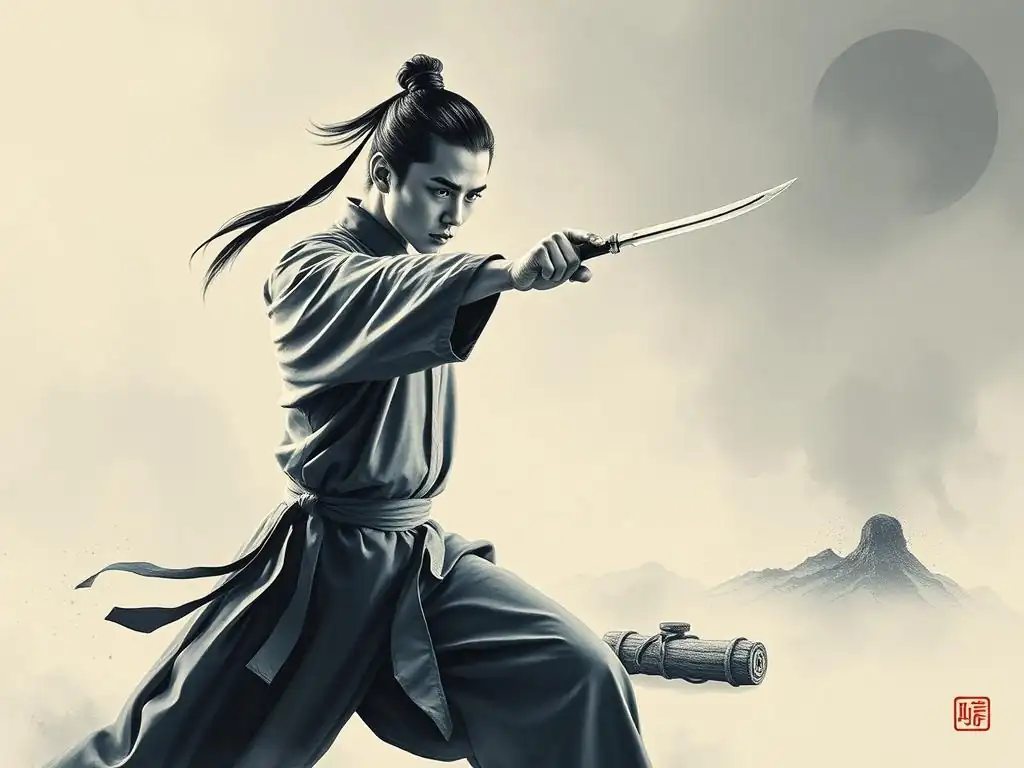
The Broadsword (Dao): Versatile Chinese Weapon Techniques for Offense and Defense
The broadsword, or dao (刀), is one of the most iconic and widely practiced short weapons in Chinese martial arts, often referred to as the "marshal of all weapons." It is a single-edged, curved sword designed primarily for chopping and slashing, though thrusts are also incorporated. Historically, the dao was the standard sidearm for infantry soldiers and cavalry, prized for its robustness and effectiveness in close-quarters combat. Blade lengths typically range from 2 to 3 feet.
Broadsword training emphasizes powerful, dynamic movements that utilize the curved blade's cutting edge. Techniques include kan (chopping), pi (splitting), liao (upward sweeping), guo (wrapping/parrying), and ci (thrusting). Footwork is crucial, involving agile steps to close distance or evade, often moving in circular patterns. Many dao forms feature explosive bursts of speed and power, reflecting the weapon's battlefield origins. Mastering the broadsword develops strong wrists, agile footwork, and aggressive offensive capabilities, making it a fundamental part of short weapon Chinese weapon training techniques.
The Straight Sword (Jian): Elegance and Precision in Swordplay
The straight sword, or jian (劍), is often called the "gentleman of all weapons," revered for its elegance, precision, and historical association with scholars and nobility. It is a double-edged, straight sword designed for thrusting, slicing, and deflecting. The jian requires a different skill set than the dao, emphasizing finesse, sensitivity, and intricate footwork rather than raw power. Blade lengths are typically similar to the dao, around 2 to 3 feet.
Jian training focuses on intricate, fluid movements and precise point control. Techniques include ci (thrusting), dian (pointing/thrusting to vital spots), jie (intercepting), xi (cleaving), and hua (deflecting/drawing). The flexibility of a well-made jian blade is often utilized to absorb impact or add a whip-like quality to certain techniques. Mastery of the jian demands excellent balance, refined body mechanics, and a deep understanding of timing and distance. It is considered one of the most sophisticated aspects of Chinese weapon training techniques, requiring years of dedicated practice.
The Hook Swords (Hu Tou Gou): Entangling and Striking
Hook swords, or hu tou gou (虎頭鉤), meaning "tiger head hooks," are unique and visually distinctive short weapons used in some northern Chinese martial arts styles. Typically wielded in pairs, each sword features a standard sword blade extending from the handle, a curved hook at the end of the blade, a sharp crescent guard near the handle, and often a sharp pommel. Their design allows for a wide range of techniques beyond simple cutting and thrusting.
Training with hook swords explores striking with the blade, hook, crescent guard, and pommel, but their most distinctive application involves linking the hooks together. This allows for extended reach, trapping or controlling an opponent's weapon, or even using the pair as a single, larger flexible weapon. Techniques include hooking, trapping, slashing, stabbing, and blocking. Mastering hook swords requires exceptional coordination between both hands and an understanding of complex linking and separating maneuvers. They represent a highly specialized and advanced form of short weapon Chinese weapon training techniques.
Flexible Weapons in Chinese Martial Arts: Adaptability and Control
The Chain Whip (Bian): Mastering the Art of Flexible Weaponry
The chain whip, or bian (鞭), is a dynamic and unpredictable flexible weapon consisting of several metal segments joined end-to-end by rings, with a handle at one end and a metal dart or weight at the other. The number of segments can vary, typically ranging from 7 to 13. This weapon's flexibility makes it difficult to block and allows for strikes from unexpected angles and ranges.
Mastering the chain whip involves learning to control its momentum and trajectory through precise wrist and body movements. Techniques include whipping, circling, striking with the weighted dart, hooking, and wrapping. The sound the whip makes as it cuts through the air is often used as an indicator of speed and power. Advanced practitioners can perform complex maneuvers like wrapping the whip around their body or neck for defense or transitioning between strikes. The chain whip exemplifies the unique challenges and rewards of flexible weapon Chinese weapon training techniques, requiring exceptional coordination and control.
Three-Section Staff (San Jie Gun): Combining Reach and Maneuverability
The three-section staff, or san jie gun (三節棍), is a flexible weapon composed of three equal-length wooden or metal sections connected by chains or ropes. It essentially combines the reach of a long staff with the maneuverability and unpredictability of a flexible weapon. Its design allows it to be used as a long staff, a short weapon (folding two sections), or a flail-like weapon utilizing its flexibility.
Training with the three-section staff involves mastering techniques for striking, blocking, trapping, and whipping across various ranges. It can be wielded with devastating speed and power, using the connecting chains to deliver strikes around defenses. Techniques often involve rapid transitions between using it as a long weapon and a flexible weapon. Due to the risk of hitting oneself, the san jie gun requires significant spatial awareness, timing, and control, making it an advanced and complex area of Chinese weapon training techniques.
Meteor Hammer (Liu Xing Chui): Ranged Impact Weapon
The meteor hammer, or liu xing chui (流星錘), is a flexible weapon consisting of a rope or chain with a heavy metal weight or hammer attached to one or both ends. The length of the rope can vary significantly, from a few feet to several yards. This weapon is designed for ranged strikes, utilizing centrifugal force to generate immense power.
Training with the meteor hammer focuses on developing circular swinging motions to build momentum and accurately directing the weighted ends towards a target. Techniques include various swings, throws, wraps, and traps. The weapon can be used to strike from a distance, entangle an opponent or their weapon, or even as a close-range striking tool by controlling the rope length. Mastering the meteor hammer requires exceptional coordination, timing, and control over centrifugal force, representing one of the most challenging flexible weapon Chinese weapon training techniques due to its unpredictable nature and high risk of self-injury if not handled correctly.
Rigid Weapons in Chinese Martial Arts: Specialized Applications
Emei Daggers (Emei Ci): Close-Range Thrusting and Joint Locking
Emei daggers, or Emei ci (峨嵋刺), are a pair of short, rigid weapons unique to some Chinese martial arts styles, particularly those associated with the Emei Mountain region. They typically consist of a metal rod with a ring in the center through which the middle finger is inserted, allowing the rod to spin freely along its axis. Both ends of the rod are usually pointed, and sometimes one end is bladed. They are always used in pairs.
Training with Emei daggers focuses on close-range thrusting attacks to vital points, utilizing the spinning motion to add unpredictability or power. The central ring allows the practitioner to manipulate the daggers rapidly, transitioning between different grips and angles. The rigid nature and small size make them easy to conceal and ideal for very close combat or self-defense scenarios.
Techniques often involve rapid, repetitive thrusts, parries using the rod, and sometimes joint manipulation or trapping using the full length of the dagger pressed against a limb. They are a specialized form of rigid weapon Chinese weapon training techniques emphasizing precision and speed in tight quarters.
Deer Horn Knives (Yue Ya Chan): Unique Blocking and Striking Techniques
Deer horn knives, or yue ya chan (月牙鏟), meaning "crescent moon shovels" but often translated as "deer horn knives" due to their shape, are a pair of rigid, crescent-shaped weapons with pointed ends and often a central grip. They are typically associated with Baguazhang (Eight Trigram Palm) and other internal martial arts styles. Their unique shape allows for a wide range of defensive and offensive applications.
Training with deer horn knives involves utilizing their curved edges for cutting and blocking, their points for thrusting, and the overall shape for trapping and controlling an opponent's limbs or weapons. Techniques often incorporate the circular, evasive footwork characteristic of Baguazhang, allowing the practitioner to move around an opponent while simultaneously blocking and attacking. The rigid, curved structure is excellent for deflecting incoming strikes and creating openings. Mastering these knives requires understanding how to use their complex geometry effectively in fluid, continuous motion, representing a highly specialized area of rigid weapon Chinese weapon training techniques.
Understanding the Limitations and Strengths of Rigid Weapons
Rigid weapons in Chinese martial arts, such as daggers, short swords, axes, or specialized forms like Emei daggers and deer horn knives, share certain characteristics and training considerations. Their primary strength lies in their directness, durability, and often, their concealability or ease of carry compared to larger weapons. They are excellent for close-quarters combat where space is limited, or for delivering precise, powerful strikes or thrusts over a very short distance. For example, a well-aimed thrust from a rigid dagger can be incredibly difficult to defend against at point-blank range.
However, rigid weapons also have significant limitations. Their short reach makes them vulnerable against opponents wielding longer weapons like staffs or spears, requiring the practitioner to quickly close the distance. They typically lack the momentum of heavier, longer weapons or the unpredictable nature of flexible weapons. Training focuses heavily on footwork, evasion, and timing to overcome the reach disadvantage. While versatile in close range, their application is generally more specialized compared to the broad utility of a staff or broadsword. Understanding these strengths and limitations is crucial for effective rigid weapon Chinese weapon training techniques.
Comparing and Contrasting Weapon Categories: Choosing the Right Path
Long vs. Short: Tactical Advantages and Disadvantages
The fundamental difference between long and short weapons in Chinese martial arts lies in their effective range and the tactical advantages they offer. Long weapons, such as the staff or spear, excel at controlling distance, keeping an opponent at bay, and delivering powerful strikes or thrusts from outside the range of a short weapon. Their momentum can generate significant force, making them effective against multiple opponents or for breaking through defenses. For example, a single sweep from a heavy Kwan Dao can cover a wide arc and potentially disable several attackers.
Conversely, short weapons like the broadsword or straight sword are superior in close-quarters combat. They are faster to maneuver in tight spaces, easier to conceal or carry, and allow for rapid, intricate techniques like trapping, disarming, and swift strikes to vital areas.
While a broadsword might struggle to fend off a spear thrust from a distance, it becomes incredibly effective once the wielder closes in, using its agility for rapid cuts and parries. Choosing between long and short weapon Chinese weapon training techniques often depends on preferred combat range and physical attributes – longer reach favors long weapons, while agility and speed are paramount for short weapons.
Flexible vs. Rigid: Mastering Different Combat Styles
Comparing flexible and rigid weapons highlights differences in their handling, application, and the combat styles they embody. Rigid weapons are direct, stable, and predictable in their movement path. They are primarily used for striking, thrusting, blocking, and sometimes trapping, relying on the wielder's strength and precision. A rigid weapon like a deer horn knife offers solid blocking capability and stable points for thrusting.
Flexible weapons, on the other hand, are characterized by their unpredictable movement and ability to strike around obstacles. They are harder to block effectively due to their non-linear trajectory and can be used for whipping, entangling, and striking at various ranges depending on the weapon. A chain whip can strike a target even if there's an arm or weapon between the wielder and the target by simply changing its angle.
Mastering flexible weapons requires superior timing, rhythm, and control over momentum, fostering a more fluid and evasive combat style compared to the more direct approach of rigid weapons. Both categories offer unique challenges and are integral to diverse Chinese weapon training techniques.
Finding Your Ideal Chinese Weapon Training Path
Selecting which weapon category or specific weapon to focus on for Chinese weapon training techniques is a personal journey influenced by various factors. Physical attributes play a role; someone with a larger build and strength might initially gravitate towards long, heavy weapons like the Kwan Dao, while someone smaller and faster might prefer the agility of the straight sword or broadsword. However, training can help overcome physical limitations, making passion and dedication more important.
Often, martial arts schools structure their curriculum starting with foundational weapons like the staff or broadsword before moving to more specialized or complex instruments. Personal interest in the history, philosophy, or aesthetics of a particular weapon is also a significant motivator. Trying out different weapons under qualified instruction is the best way to discover which weapon feels most natural and engaging. Ultimately, the "right" path is the one that aligns with the practitioner's goals, body type, and the guidance available within their chosen martial arts system, contributing to a well-rounded understanding of Chinese weapon training techniques.
Advanced Chinese Weapon Training Techniques: Combining Categories
Integrating Long and Short Weapon Strategies
Advanced Chinese weapon training techniques often involve understanding how to transition between or integrate strategies from different weapon categories, particularly long and short weapons. While a practitioner typically wields only one weapon at a time in traditional forms, sparring and real-world application require awareness of how different ranges interact. For example, a staff practitioner needs to know how to maintain distance against a broadsword wielder but also have techniques to defend if the opponent closes in.
Conversely, a broadsword fighter must understand how to safely approach someone with a longer weapon, perhaps using evasive footwork or specific parrying techniques designed to deflect the initial long-range attacks before entering their effective zone. Some styles even train practitioners in using a short weapon in one hand and a long weapon in the other (though less common).
The concept of chang quan duan da (長拳短打), meaning "long fist, short strike," from unarmed combat also applies to weapons, emphasizing the need to be effective at both long and short ranges. This integration of tactical understanding is key to advanced Chinese weapon training techniques.
Utilizing Flexible Weapons for Unpredictable Attacks
Incorporating flexible weapon principles into overall combat strategy adds a layer of unpredictability that can be highly effective in advanced Chinese weapon training techniques. While not typically used in combination with rigid weapons simultaneously, the understanding of flexible motion can influence how a practitioner uses even a rigid weapon. For instance, the whip-like power generated in some spear or straight sword forms draws inspiration from the principles of flexible motion.
Furthermore, a practitioner trained in a flexible weapon like the chain whip gains insight into attacking from unexpected angles and ranges that are difficult to predict or block with conventional rigid defenses. This knowledge can inform their strategy even when using a different weapon. Understanding how to defend against flexible weapons also becomes crucial, often involving specific footwork and timing to evade or control the unpredictable movements, highlighting the interconnectedness of mastering different Chinese weapon training techniques.
Adapting Rigid Weapons to Modern Self-Defense Scenarios
While many traditional Chinese weapons were designed for historical warfare, the principles behind rigid weapon Chinese weapon training techniques can be adapted for modern self-defense scenarios, particularly those involving improvised weapons or tools. The focus on close-range precision, leverage, and using a stable object for blocking or striking translates well to using items like a sturdy stick, an umbrella, or even everyday objects like a pen or keys in a defensive context.
Training with rigid weapons like Emei daggers or deer horn knives emphasizes targeting vulnerable points and utilizing structure for defense and control in confined spaces. These principles of directness, stability, and efficient use of a hard object can be applied to quickly and effectively defend oneself in a close-quarters encounter. While actual historical weapons may not be carried, the underlying skills developed through their practice provide valuable tools for analyzing and utilizing potential defensive objects in the environment, making traditional rigid weapon training surprisingly relevant for modern self-defense applications.
Conclusion: The Enduring Legacy of Chinese Weapon Categories
The Importance of Understanding Weapon Classifications
Understanding the traditional categories of Chinese weapons – long, short, flexible, and rigid – is fundamental for anyone serious about mastering Chinese weapon training techniques. This classification system provides a logical framework for approaching the vast arsenal of Chinese martial arts. It helps students grasp shared principles within each category, making the learning process more efficient and allowing for the transfer of skills between similar weapons. Recognizing whether a weapon is primarily for reach, close combat, unpredictable motion, or specialized application guides the practitioner in developing appropriate body mechanics, footwork, and strategy.
Beyond just technical proficiency, understanding these categories deepens appreciation for the tactical philosophy embedded in Chinese martial arts. It reveals how different weapons were developed to address specific combat needs and ranges, reflecting a sophisticated historical understanding of warfare and self-defense. This foundational knowledge is not merely academic; it directly informs practice, allowing practitioners to train more intelligently, spar more effectively, and appreciate the intricate relationship between the human body and the tools it wields.
Continuing the Tradition of Chinese Weapon Training
The practice of Chinese weapon training techniques is a living tradition, passed down through generations of martial artists. While the battlefield context has largely disappeared, the skills, discipline, and physical cultivation gained from weapon practice remain invaluable. Training with traditional weapons develops strength, coordination, focus, and a deep connection to the historical roots of Chinese martial arts. It offers a unique way to challenge oneself physically and mentally, pushing boundaries of skill and perseverance.
Furthermore, continuing this tradition preserves a rich cultural heritage. Each weapon form tells a story, embodying the knowledge, strategies, and spirit of past masters. By engaging in Chinese weapon training, practitioners become custodians of this legacy, ensuring that these sophisticated systems of combat and cultivation endure. Whether focusing on the elegant straight sword, the powerful staff, the unpredictable chain whip, or the specialized deer horn knives, the journey through Chinese weapon categories offers a lifetime of learning and mastery.
Frequently Asked Questions
What are the main categories used to classify weapons in Chinese martial arts?
The primary categories are long weapons, short weapons, flexible weapons, and rigid weapons. These classifications are based on the weapon's length and structural properties, influencing its usage.
Why is understanding weapon categories important for martial arts training?
Understanding the categories helps practitioners grasp the fundamental principles applicable to different weapon types. This allows for more efficient learning and a deeper appreciation of weapon-based techniques.
Can you give examples of common weapons that fall into each category?
- Long weapons: Staff (gun), spear (qiang).
- Short weapons: Broadsword (dao), straight sword (jian).
- Flexible weapons: Chain whip (jiujiebian), rope dart (sheng biao).
- Rigid weapons: Three-section staff (san jie gun), Dagger-axe (ge).
How does the length of a weapon affect the fighting style or strategy?
Longer weapons generally emphasize range and keeping opponents at a distance, focusing on offensive reach. Shorter weapons are often used in closer combat, requiring precise movements and defenses.
Where can I learn more about specific Chinese weapon training techniques?
MartialArtsMastery.org offers detailed breakdowns of various Chinese weapon training techniques, including historical context, practical applications, and training drills for different weapon types.
Final Reflection: The Enduring Legacy of Chinese Weaponry
The journey through the diverse landscape of Chinese weaponry, from the flowing grace of the Jian to the unyielding power of the Dao, reveals more than just fighting techniques; it unveils a profound cultural heritage. The principles of balance, precision, and adaptability, inherent in each weapon category, resonate deeply within modern martial arts training and beyond. Understanding these categories provides a crucial framework for appreciating the depth and complexity of Chinese weapon training techniques, a knowledge that remains vital for practitioners and enthusiasts alike.
The influence of these ancient weapons extends far beyond the training hall. They have shaped countless stories, philosophies, and artistic expressions, leaving an indelible mark on the cultural landscape. The dedication and discipline required to master these weapons serve as a powerful metaphor for navigating life's challenges, fostering resilience and inner strength. The weapon is not an extension of the body, but an extension of the mind.
This ancient wisdom highlights the profound connection between the practitioner and their chosen weapon, a relationship built on respect, understanding, and unwavering commitment.
As we conclude this exploration of Chinese weapon categories, I invite you to consider how these principles of balance, adaptability, and mindful action can be applied to your own life. Embrace the challenge of mastering a new skill, cultivate resilience in the face of adversity, and strive for harmony in all that you do. Let the enduring legacy of Chinese weaponry inspire you to forge your own path with courage, precision, and unwavering dedication.
Unleash Your Inner Warrior: Begin Your Martial Arts Journey Today!
Thanks for diving deep into the fascinating world of Chinese martial arts weaponry! We hope this guide has illuminated the diverse categories and sparked your curiosity. Now, let's put that knowledge into action:
- Explore a specific weapon category: Choose the weapon style that resonates most with you – long, short, flexible, or rigid – and research local schools or online resources that offer instruction.
- Share your insights: Tell us which weapon category intrigues you the most and why! Spark discussions in our comments below.
- Dive deeper: Find and watch videos of masters demonstrating the forms and techniques associated with each type of weapon.
Ready to embark on your own martial arts adventure? What weapon category feels most aligned with your personal martial arts aspirations, and what first step will you take to explore it further?