
More Than a Sheath: The Strategic Use of the Scabbard in Dao Arts

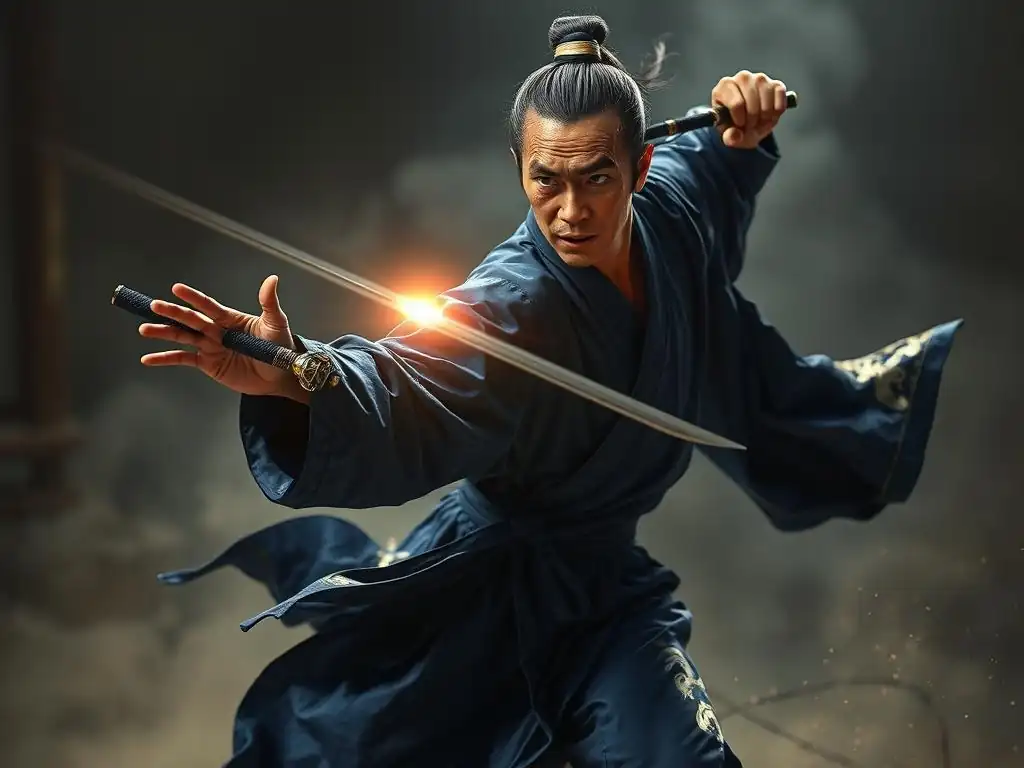
Welcome to Martial Arts Mastery, where we delve into the depths of combat traditions from around the world. Prepare to be enlightened as we explore the intricate details of martial arts, from historical context to practical application.
Intrigued by the subtle power of unassuming tools? This article unveils a fascinating aspect of weapon mastery: the strategic significance of the scabbard. Discover how the seemingly simple sheath transforms into an extension of the weapon and the warrior, a vital component of the Dao arts scabbard strategy. More than just protection, it's a tool for deception, leverage, and lightning-fast strikes. Read on to unlock the secrets.
- Introduction: Understanding the Dao and its Scabbard's Role
- The Scabbard as an Extension of the Dao in Combat
- Strategic Applications of the Scabbard in Dao Arts
- Advanced Scabbard Techniques in Dao Arts
- The Scabbard in Dao Forms (Kata) and Drills
- The Importance of Scabbard Maintenance and Care
- The Psychological Impact of the Scabbard on the Dao Artist
- Conclusion: Mastering the Dao Arts Scabbard Strategy
-
Frequently Asked Questions
- What is the significance of the scabbard in Dao Arts, according to MartialArtsMastery.org?
- How does the article "More Than a Sheath" explore the use of the scabbard?
- Does MartialArtsMastery.org provide information on specific Dao Arts techniques involving the scabbard?
- How can understanding the "Dao arts scabbard strategy" improve self-defense skills?
- Is the historical context of the scabbard's use discussed on MartialArtsMastery.org?
- Final Reflection: The Silent Partner in Victory
- Unleash the Potential: Master Your Scabbard Today!
Introduction: Understanding the Dao and its Scabbard's Role
The Dao (Broadsword) in Chinese Martial Arts: A Brief Overview
The Dao, often translated as broadsword or saber, holds a prominent place in the vast history of Chinese martial arts. Characterized by its single edge, curved blade, and substantial weight, the Dao is designed primarily for chopping, slashing, and sweeping techniques. It is a weapon of power and momentum, distinct from the straight, double-edged Jian (straight sword), which favors thrusting and nimble deflection.
The Dao has been a staple weapon for both military forces and civilian practitioners across various dynasties, evolving in design and application through periods like the Ming and Qing. Its robust nature made it ideal for battlefield use against armored opponents, while its dynamic movements lent themselves well to martial forms and duels.
Mastery of the Dao involves not just handling the blade itself but also understanding its inherent characteristics and how they dictate combat strategy. Styles like Baguazhang and Taijiquan incorporated the Dao into their systems, adapting its powerful cuts to their unique movement principles. Historically, the Dao was often paired with a shield or used in conjunction with grappling techniques, highlighting its versatility. The weapon's weight distribution, typically balanced towards the tip, generates significant force, requiring a strong wrist and forearm to control. Techniques often involve large, circular motions and powerful, decisive strikes aimed at incapacitating an opponent quickly.
Beyond Protection: Recognizing the Scabbard's Tactical Significance
While commonly perceived solely as a protective casing for the blade, the Dao scabbard possesses significant tactical utility in Chinese martial arts. Its role extends far beyond mere storage; a well-made scabbard is a rigid, durable tool that can be actively integrated into combat. Practitioners who overlook the scabbard's potential miss out on a crucial element of a complete Dao arts scabbard strategy. Historically, warriors and martial artists would keep their weapons sheathed until the moment of confrontation, making the draw itself a potential first strike or defensive maneuver.
The scabbard, usually constructed from wood, leather, or sometimes metal, provides a solid, albeit unsharpened, extension of the practitioner's arm. Its weight and length, often comparable to the blade itself, allow it to be used for blocking, striking, parrying, and controlling an opponent's weapon or body. Recognizing the scabbard's potential transforms it from passive gear into an active component of one's arsenal, adding layers of complexity and effectiveness to Dao arts techniques. Developing proficiency with the scabbard is thus integral to achieving true mastery in Dao arts.
The Scabbard as an Extension of the Dao in Combat
Scabbard Materials and Construction: Impact on Dao Arts Performance
The materials and construction of a Dao scabbard significantly influence its performance and utility in combat applications. Traditionally, scabbards were crafted from hardwood like pearwood or rosewood, sometimes reinforced with lacquer, rawhide, or metal fittings. The thickness of the wood and the quality of construction determined its durability – a crucial factor when using it for blocking or striking.
A flimsy scabbard might splinter or break under impact, rendering it useless or even hazardous. For example, historical military Dao scabbards were often quite robust, sometimes featuring metal bands or tips to enhance their resilience against impacts encountered during battle or rigorous training.
Modern scabbards for training or performance might use different materials, but the principle remains the same: rigidity and durability are key. A scabbard needs enough weight and structural integrity to effectively absorb or redirect force when used defensively, or to deliver a solid impact when used offensively.
The fit between the blade and the scabbard is also vital; a blade that rattles loosely is difficult to draw quickly and silently, while one that fits too tightly can impede a rapid deployment. The quality of the materials and the precision of the craftsmanship directly contribute to the scabbard's reliability as a tactical tool within a comprehensive Dao arts scabbard strategy.
Grip Techniques: Enhancing Control and Speed with the Scabbard
Effective utilization of the scabbard in Dao arts relies heavily on mastering specific grip techniques. Unlike simply holding the scabbard by its throat or carrying rings, combat grips are designed for maximum control, speed, and leverage. One common technique involves gripping the scabbard firmly near its opening (the throat), allowing the practitioner to quickly draw the blade while simultaneously using the scabbard as a short club or defensive shield. This grip facilitates rapid transitions between sheathed and unsheathed techniques.
Another important grip involves holding the scabbard further down its length, perhaps in the middle or closer to the tip, depending on the intended application. For example, using the scabbard for sweeping blocks or leverage requires a grip that provides maximum reach and structural support. Some grips involve holding both the sword hilt and the scabbard simultaneously in different hands, allowing for coordinated dual-wielding tactics immediately upon drawing or before sheathing.
Developing fluid transitions between these grips, often practiced extensively in Dao arts drills, is essential for executing a dynamic Dao arts scabbard strategy. Practitioners spend countless hours refining these grips to ensure the scabbard feels like a natural extension of their body, ready for immediate deployment in defense or attack.
Strategic Applications of the Scabbard in Dao Arts
Scabbard as a Blocking Tool: Deflecting Attacks and Creating Openings
One of the primary strategic uses of the scabbard in Dao arts is as a robust blocking tool. Its solid construction makes it ideal for deflecting incoming strikes from various weapons, including other blades, staffs, or spears. Unlike the blade itself, which might be damaged or dulled by repeated heavy impacts, the scabbard is designed to absorb significant force.
Practitioners can use the scabbard to block direct attacks to the body or weapon, protecting themselves while simultaneously controlling the opponent's line of attack. For instance, a practitioner facing a downward broadsword cut might raise their scabbard horizontally to meet the blow, redirecting the force harmlessly away.
Beyond simple defense, using the scabbard to block can actively create tactical openings. By meeting an opponent's attack with the scabbard, the practitioner can bind their weapon momentarily or force them into an awkward position. This creates a window of opportunity – perhaps just a fraction of a second – during which the practitioner can execute a rapid draw and counterattack with the blade, or use the scabbard itself for a follow-up strike. Effective scabbard blocking requires precise timing and positioning, turning a defensive action into an offensive setup, a key component of advanced Dao arts scabbard strategy.
Using the Scabbard for Striking: Delivering Powerful Counterattacks
The scabbard, despite lacking a sharp edge, is a formidable tool for delivering strikes in Dao arts. Its weight and rigidity allow it to function effectively as a club or baton. Strikes with the scabbard are typically aimed at vulnerable points on the opponent's body, such as the hands, wrists, elbows, knees, or head.
A sharp blow from a sturdy scabbard can easily break bones, dislocate joints, or cause significant blunt force trauma, incapacitating an attacker. For example, a swift strike to the opponent's lead hand holding their weapon can disarm them or severely impair their ability to continue fighting.
Scabbard strikes are often used in rapid succession with blade techniques. A common sequence might involve blocking an attack with the scabbard, immediately following up with a scabbard strike to the opponent's arm, and then drawing the Dao for a finishing cut. This blend of blunt and sharp force makes the scabbard a versatile offensive weapon. Practicing specific scabbard striking drills, focusing on targeting and power generation, is crucial for integrating this element into a fluid and effective Dao arts scabbard strategy.
Scabbard as a Guiding Tool: Controlling the Blade and Opponent's Movements
The scabbard also serves a strategic purpose as a guiding tool, both for the practitioner's own blade and for controlling the opponent's movements. When drawing or sheathing the Dao, the scabbard acts as a guide rail, ensuring a smooth, rapid, and controlled motion. This is particularly important in combat, where a fumbled draw or sheathing could be fatal. The scabbard's presence allows for blind sheathing, a technique where the practitioner can return the blade to the scabbard without looking, maintaining visual focus on the opponent.
Furthermore, the scabbard can be used to manipulate the opponent's weapon or body. Techniques might involve using the scabbard to push, pull, or lever against an opponent's limb or weapon, disrupting their balance or creating an opening. For instance, during a close-quarters exchange, a practitioner might use the scabbard to pin the opponent's sword arm against their body, leaving them vulnerable to a Dao strike from the other hand. This manipulative use of the scabbard adds a grappling dimension to Dao arts, showcasing the multifaceted nature of a complete Dao arts scabbard strategy.
Advanced Scabbard Techniques in Dao Arts
Drawing and Sheathing: Speed and Precision for Combat Readiness
The techniques of drawing (drawing the blade from the scabbard) and sheathing (returning the blade to the scabbard) are far more complex than they appear and are fundamental to advanced Dao arts scabbard strategy. A fast and precise draw is paramount, allowing the practitioner to transition from a sheathed posture to an offensive or defensive stance in a fraction of a second.
Techniques often involve gripping the scabbard firmly while the other hand draws the blade with a specific angle and trajectory, sometimes incorporating a simultaneous step or body evasion. A skilled practitioner can draw and deliver a cut almost as one fluid motion.
Sheathing techniques are equally important, particularly in scenarios where the practitioner needs to secure their weapon quickly or transition to unarmed combat. Sheathing in combat must be done safely and efficiently, often without looking. Advanced practitioners learn to guide the blade back into the scabbard using touch and muscle memory, maintaining awareness of their surroundings. Drills focusing solely on rapid, precise drawing and sheathing, often performed hundreds of times per training session, are essential for developing the speed and reliability required for effective combat readiness.
Scabbard-Assisted Footwork: Enhancing Mobility and Evasion
The scabbard can be actively integrated into footwork to enhance mobility, balance, and evasion. By holding the scabbard in one hand while manipulating the Dao with the other, the practitioner can use the scabbard's weight and position to aid in shifting stances, pivoting, or executing evasive maneuvers. For example, sweeping the scabbard low while stepping can provide balance during a wide stance change or help deflect low attacks. Using the scabbard as a counterweight can facilitate faster turns and spins.
In some advanced techniques, the scabbard is used to brace against the ground or an object for support during complex movements, though this is less common in open combat and more seen in form practice. More practically, the scabbard can be used in conjunction with steps to create feints or mask intentions.
A sudden movement of the scabbard combined with quick footwork can make the practitioner's true line of attack or evasion harder for the opponent to predict. Integrating the scabbard into dynamic footwork adds another layer to the practitioner's agility and tactical options, solidifying a comprehensive Dao arts scabbard strategy.
Combining Scabbard Techniques with Dao Strikes: Fluid and Effective Combos
True mastery of the Dao arts scabbard strategy lies in the seamless combination of scabbard techniques with blade strikes. This involves executing fluid sequences where the scabbard is used to block, parry, or strike, immediately followed by a draw and a blade cut, or using the scabbard after a blade strike for control or follow-up. For instance, a practitioner might use the scabbard to parry an incoming thrust, pivot, draw the Dao, and deliver a powerful diagonal cut in one continuous motion.
Complex combinations could involve using the scabbard to bind an opponent's weapon, stepping in, striking with the scabbard tip to the ribs, then drawing the blade for a close-range thrust or slash. These combinations are not merely sequences of discrete movements but are practiced until they become instinctive, flowing actions. Drills specifically designed to link scabbard actions with blade actions, transitioning smoothly between them, are critical for developing the practical application of advanced Dao arts scabbard strategy in dynamic combat scenarios.
The Scabbard in Dao Forms (Kata) and Drills
Integrating Scabbard Techniques into Traditional Dao Forms
Traditional Dao forms (often referred to as Tao Lu in Chinese martial arts) serve as living libraries of historical techniques and principles. While the dramatic drawing of the blade is often a highlight, many forms subtly or explicitly incorporate scabbard techniques throughout the sequence. These might include using the sheathed Dao for opening movements, defensive postures where the scabbard is held across the body for protection, or specific sequences detailing drawing, striking with the scabbard, and then cutting with the blade. Studying forms allows practitioners to see how scabbard usage is integrated into a larger combat framework.
For example, a section of a traditional form might involve a sweeping movement where the sheathed Dao is used to clear a low line, immediately followed by a step and draw, culminating in a high cut. These movements, often choreographed to represent engagements with multiple opponents, demonstrate the practical applications of the scabbard in various scenarios. Analyzing and practicing these integrated movements helps the practitioner understand the historical context and strategic intent behind using the scabbard alongside the blade, reinforcing the principles of a complete Dao arts scabbard strategy.
Solo and Partner Drills for Mastering Scabbard Usage
Mastering the strategic use of the scabbard requires dedicated practice through both solo and partner drills. Solo drills focus on developing the speed, precision, and fluidity of drawing, sheathing, and executing basic scabbard blocks and strikes. This might involve repetitive drawing exercises, striking a target dummy with the scabbard, or practicing form movements with a focus on the scabbard's role. Solo practice builds the muscle memory and control necessary before engaging with a partner.
Partner drills are essential for developing reactive skills and understanding the practical application of scabbard techniques against a moving opponent. These drills can involve controlled sparring where one partner attacks with a padded weapon while the other defends and counters using the scabbard, or specific exercises focusing on disarming techniques using the scabbard.
For instance, a drill might involve the attacker thrusting, and the defender using the scabbard to parry and then trap the attacking weapon while drawing their own blade. Such drills are invaluable for developing the timing, judgment, and adaptability required for effective Dao arts scabbard strategy in realistic situations.
Developing Reflexes and Muscle Memory for Seamless Scabbard Integration
Achieving seamless integration of scabbard techniques into one's overall Dao arts practice depends heavily on developing strong reflexes and muscle memory. This is achieved through consistent, repetitive drilling of fundamental techniques. The goal is for the practitioner to react instinctively with the scabbard when presented with a specific threat or opportunity, without conscious thought. For example, the reaction to an incoming strike should automatically trigger the appropriate scabbard block or parry without hesitation.
Developing this level of proficiency takes significant time and effort. Practitioners often spend years drilling core movements like drawing, sheathing, and basic blocks until they become second nature. This muscle memory allows the practitioner to focus their conscious attention on reading the opponent and the overall tactical situation, rather than thinking about the mechanics of handling the scabbard. This deep level of integration is what distinguishes a basic understanding of the scabbard's role from a mastery of Dao arts scabbard strategy.
The Importance of Scabbard Maintenance and Care
Proper Cleaning and Storage for Longevity and Performance
Proper maintenance and care of the Dao scabbard are crucial for ensuring its longevity and optimal performance as a tactical tool. A scabbard, especially one made of wood and leather, can degrade over time if not cared for correctly. Moisture is a significant enemy, potentially causing wood to warp or crack and leather to rot. After training, especially in humid conditions, the scabbard should be wiped clean and allowed to air dry thoroughly before storage. The inside of the scabbard should also be kept free of debris that could scratch or dull the blade.
Storage conditions are equally important. The Dao and its scabbard should be stored in a cool, dry environment, ideally away from direct sunlight and extreme temperature fluctuations. Storing the weapon vertically or slightly angled helps prevent moisture buildup inside the scabbard. Regular inspection for signs of wear and tear is also part of proper care. Just as a warrior maintains their blade, the scabbard requires diligent attention to remain a reliable component of their Dao arts scabbard strategy.
Identifying and Addressing Scabbard Weaknesses or Damage
Regular inspection of the scabbard is necessary to identify any weaknesses or damage that could compromise its structural integrity or tactical utility. Common issues include cracks in the wood, loosening of metal fittings (such as the throat or chape), wear on the suspension rings, or deterioration of leather components. Even a small crack could propagate under impact, causing the scabbard to fail during a crucial moment of defense or offense.
Addressing these issues promptly is vital. Minor cracks might be repaired with wood glue and clamping, while loose fittings may require re-pinning or tightening. Significant damage might necessitate professional repair or even replacement of the scabbard. Ignoring damage not only risks the scabbard's failure but can also potentially damage the blade itself if the interior is compromised. A practitioner relies on their scabbard as much as their blade, making proactive identification and repair of weaknesses a critical aspect of maintaining their readiness and overall Dao arts scabbard strategy.
Customizing Your Scabbard for Optimal Comfort and Functionality
While traditional designs exist, some practitioners may choose to customize their scabbard for optimal comfort and functionality based on their specific training focus or physical build. Customization might involve adjusting the length slightly, adding specific types of suspension points for different carrying methods (e.g., slung over the back or worn at the hip), or modifying the grip area near the throat for a more secure hold during drawing techniques.
The weight and balance of the scabbard can also be subtly adjusted, perhaps by adding or removing internal material, to better complement the balance of the blade and the practitioner's personal preference.
However, customization should always prioritize structural integrity and traditional function. Modifications should enhance, not detract from, the scabbard's ability to protect the blade and serve as a tactical tool. Working with skilled craftsmen who understand the requirements of martial arts weaponry is advisable for significant customizations. A well-maintained and potentially customized scabbard feels like a natural extension of the practitioner, allowing them to execute their Dao arts scabbard strategy with confidence and efficiency.
The Psychological Impact of the Scabbard on the Dao Artist
Confidence and Control: The Scabbard as a Symbol of Preparedness
For the dedicated Dao artist, the scabbard is more than just a container; it is a symbol of readiness, control, and preparedness. Carrying the Dao sheathed signifies that the weapon is secured and the practitioner is in a state of controlled calm, ready to act but not overtly aggressive. The solid feel of a well-made scabbard provides a sense of security and confidence, knowing that the blade is protected and the scabbard itself is a viable tool for defense or offense even before the draw. This feeling of preparedness allows the practitioner to maintain composure in tense situations.
Mastering the techniques of drawing and sheathing instills a deep sense of control over the weapon. The ability to rapidly and safely deploy or secure the Dao contributes significantly to the practitioner's confidence in their own skills and their understanding of the weapon system as a whole. This psychological aspect is an often-underestimated but vital component of a truly integrated Dao arts scabbard strategy – the mental fortitude that comes from knowing you are fully equipped and trained to utilize every part of your weapon system.
Intimidation and Deception: Utilizing the Scabbard's Presence
The mere presence of a sheathed Dao can have a psychological impact on an opponent, serving as a form of intimidation or even deception. A substantial Dao scabbard signals that the practitioner is armed with a powerful, potentially dangerous weapon. The deliberate act of holding or manipulating the scabbard can be used to draw attention or create a sense of anticipation, potentially making an opponent hesitant or misdirecting their focus. For example, a practitioner might make a subtle movement with the scabbard to feint an action, causing the opponent to react prematurely.
Furthermore, the scabbard can be used to mask the practitioner's true intentions. While the opponent is focused on the sheathed weapon, the practitioner might be positioning themselves for a rapid draw and attack, or setting up a scabbard-based technique. The scabbard can obscure the view of the lower body or footwork, making it harder for the opponent to read movements. This psychological manipulation, using the scabbard's presence to one's advantage, is a sophisticated element of an advanced Dao arts scabbard strategy.
Cultivating a Mindset of Strategic Awareness with the Scabbard
Integrating the scabbard fully into Dao arts practice cultivates a mindset of expanded strategic awareness. It forces the practitioner to think beyond the simple act of wielding the blade and consider the entire weapon system as a set of interconnected tools. This means constantly evaluating how the sheathed Dao can be used defensively or offensively in any given moment, even before the blade is drawn. It encourages a more fluid and opportunistic approach to combat, where transitions between sheathed and unsheathed states are seen as tactical opportunities rather than mere necessities.
This mindset extends to understanding the opponent's potential reactions to the scabbard – how they might perceive it, and how its presence influences their actions. A practitioner with strategic awareness sees the scabbard not just as a piece of equipment but as a dynamic element within the combat equation. This holistic view, where the scabbard is as much a tool for strategy as the blade itself, is the hallmark of mastery in Dao arts scabbard strategy.
Conclusion: Mastering the Dao Arts Scabbard Strategy
The Dao Scabbard: An Indispensable Tool for the Dedicated Practitioner
The scabbard of the Dao is undeniably an indispensable tool for any dedicated practitioner of Dao arts. Far from being a passive accessory, it is a dynamic component of the weapon system, offering a range of strategic possibilities in combat. Its utility spans defensive applications like blocking and parrying, offensive uses as a striking weapon, and manipulative functions for controlling the opponent and guiding the blade. Mastery of the Dao is incomplete without a thorough understanding and practical proficiency in utilizing its scabbard.
Embracing the scabbard as a tactical tool enriches one's practice, adding depth and versatility to techniques. It encourages a more comprehensive understanding of the weapon and its historical applications. From the materials influencing performance to the psychological impact its presence can have, every aspect of the scabbard contributes to the practitioner's overall effectiveness. Developing a robust Dao arts scabbard strategy is essential for unlocking the full potential of this iconic Chinese weapon.
Further Exploration: Resources for Deepening Your Understanding of Dao Scabbard Techniques
For those seeking to deepen their understanding of Dao scabbard techniques and refine their Dao arts scabbard strategy, further exploration is encouraged. While specific historical texts focusing solely on the scabbard are rare, insights can be gleaned from detailed studies of traditional Dao forms across various styles. Looking at the movements within these forms often reveals the integrated use of the sheathed weapon.
Additionally, seeking instruction from experienced teachers within traditional Chinese martial arts lineages that emphasize weapon training can provide invaluable practical knowledge. Many masters pass down specific drills and applications for the scabbard that are not widely documented. Examining historical illustrations or descriptions of Dao usage in military manuals can also offer clues about its practical application, including the role of the scabbard. Continued practice, dedicated study of forms, and guidance from knowledgeable instructors are the paths to truly mastering the strategic use of the Dao scabbard.
Frequently Asked Questions
What is the significance of the scabbard in Dao Arts, according to MartialArtsMastery.org?
The scabbard is not just a protective cover. It's an integral part of Dao Arts strategy, acting as a tool for deception, leverage, and even striking. It enhances the overall combat effectiveness.
How does the article "More Than a Sheath" explore the use of the scabbard?
The article delves into the scabbard's strategic importance, detailing techniques where it is used for blocking, parrying, and creating openings. It goes beyond its basic protective function.
Does MartialArtsMastery.org provide information on specific Dao Arts techniques involving the scabbard?
While specifics depend on the individual art, the site emphasizes how the scabbard can be used to control distance, manipulate the opponent's weapon, and even deliver unexpected strikes.
How can understanding the "Dao arts scabbard strategy" improve self-defense skills?
Learning to use the scabbard effectively adds a layer of defensive and offensive capability, providing options beyond the blade itself. This translates to a more versatile and adaptable self-defense approach.
Is the historical context of the scabbard's use discussed on MartialArtsMastery.org?
Yes, the website covers the historical evolution of scabbard techniques within various Dao Arts, highlighting how its role has evolved from simple protection to an active component of combat.
Final Reflection: The Silent Partner in Victory
The preceding exploration of the scabbard's strategic role in Dao arts reveals that true mastery extends beyond the blade itself. It's not merely about the flash of steel, but the calculated dance between weapon and sheath, a silent dialogue that dictates the rhythm of combat and the potential for victory. This understanding transcends the historical context, offering valuable insights into preparation, control, and the subtle power of restraint in any endeavor.
The scabbard, often overlooked, serves as a constant reminder of the power held in reserve, a symbol of potential energy waiting to be unleashed. This concept resonates deeply, reminding us that true strength lies not just in action, but in the disciplined control and strategic deployment of our resources. The greatest victory is that which requires no battle.
This ancient wisdom echoes the scabbard's essence, highlighting the importance of foresight and the ability to influence outcomes before the first strike is even made.
Now, consider the lessons learned. How can you apply the principles of the Dao arts scabbard strategy – preparation, control, and strategic restraint – to your own life? Reflect on the "scabbards" you carry – the skills, knowledge, and potential you possess. Are you wielding them with intention and precision, or are they gathering dust, their power untapped? Embrace the silent strength within, and may your actions be guided by the wisdom of the Dao, leading you to victories both seen and unseen.
Unleash the Potential: Master Your Scabbard Today!
Thank you for delving into the strategic depths of the scabbard's role in Dao Arts. We hope you've gained valuable insights into transforming this often-overlooked tool into a weapon of opportunity. Now, it's time to put that knowledge into action and elevate your practice.
Here's how you can begin:
- Prioritize Drawing Practice: Dedicate a specific time each day to meticulously practicing your drawing technique. Focus on speed, precision, and seamless integration with your stances. This is your primary action!
- Deconstruct and Rebuild: Experiment with disassembling and reassembling your scabbard. Understanding its construction can reveal hidden advantages in its use and maintenance.
- Share Your Discoveries: Engage with fellow martial artists online. Share insights, techniques, and experiences related to scabbard work to foster collective growth and understanding.
What innovative scabbard drills will you incorporate into your next training session?