
Mastering the Grip: Essential Staff Holding Techniques for Power and Control

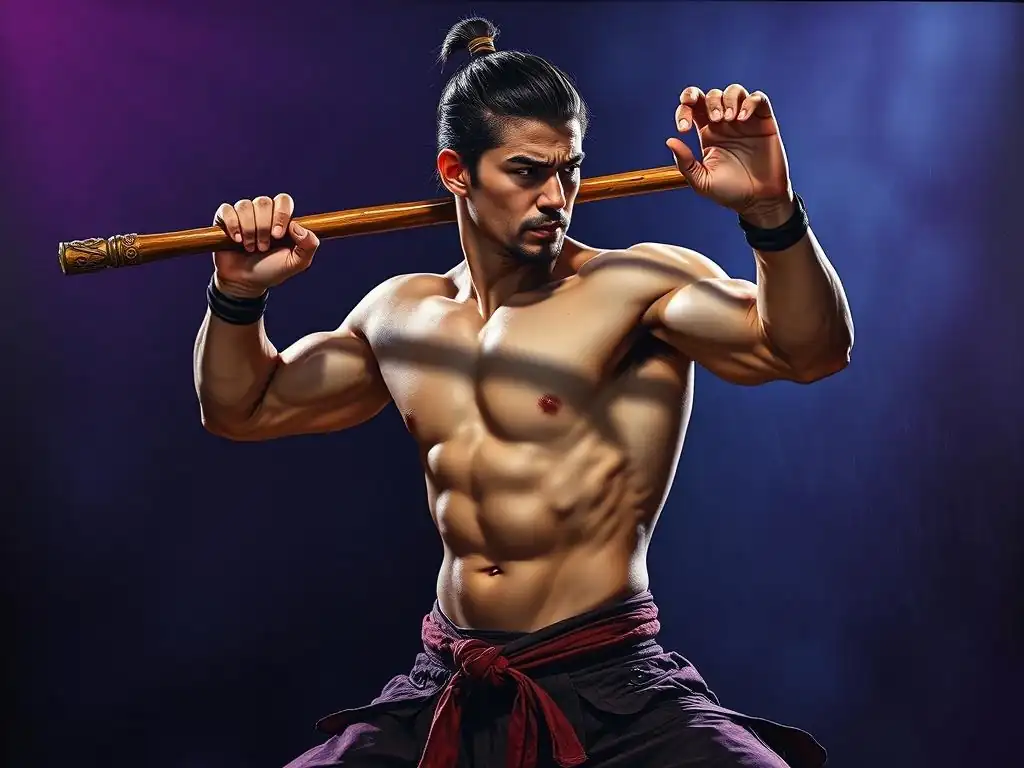
Welcome to Martial Arts Mastery, where we delve into the rich tapestry of combat disciplines. Ever wondered how a seemingly simple grip can unlock devastating power in martial arts? This week, we're exploring just that, focusing on essential staff grip techniques. Discover how to harness the power of your staff with precision and control, and unlock a new level of mastery. Intrigued? Keep reading to uncover the secrets behind powerful staff wielding and elevate your martial arts journey!
- Introduction to Staff Grips in Martial Arts
- Fundamental Staff Grip Techniques
- Advanced Staff Grip Variations for Enhanced Power
- Specific Staff Grip Applications in Japanese Bōjutsu
- Drills and Exercises to Improve Staff Grip Strength and Control
- Optimizing Your Staff Grip for Different Combat Scenarios
- Common Mistakes to Avoid When Holding a Staff
- Staff Grip Maintenance and Care for Optimal Performance
- Conclusion: The Key to Staff Mastery is a Solid Grip
-
Frequently Asked Questions
- What are the fundamental staff grip techniques discussed in the article?
- How do different staff grips impact the power generated during strikes?
- Can I improve my staff grip strength and technique through specific training exercises?
- Does the article provide guidance on selecting the appropriate staff grip for self-defense scenarios?
- What are some common mistakes to avoid when practicing staff grip techniques?
- Final Reflection: Embracing the Power of Connection
- Unlock Your Staff Potential: Take Action Now!
Introduction to Staff Grips in Martial Arts
The staff, or bō as it is known in Okinawan martial arts, is one of the oldest and most versatile weapons in the martial arts arsenal. Its effective use hinges significantly on how the practitioner grips and manipulates it. A skilled martial artist understands that the staff is an extension of their own body, and this connection is primarily established through the hands and fingers.
Without a solid understanding and application of proper staff holding techniques, the weapon becomes cumbersome, ineffective, and even dangerous to the user. Mastery of the staff grip techniques power is fundamental to unlocking the weapon's full potential for defense and offense.
Developing proficiency with the staff requires not only learning strikes, blocks, and movements but also cultivating the nuanced control that comes from a refined grip. The ability to instantly transition between different grips, apply variable pressure, and maintain stability while generating significant force is paramount. This introduction explores the foundational concepts behind effective staff gripping techniques and sets the stage for understanding how specific hand placements and actions directly impact the power and control achievable with the staff.
The Importance of Proper Staff Grip for Power and Control
A proper staff grip is the linchpin connecting intent to action. It dictates the leverage you can apply, the speed of your movements, and the stability of your strikes and blocks. Consider the sheer force generated in a powerful overhead strike; this energy transfer from the body through the arms and into the staff relies entirely on the hands' ability to securely hold and direct the weapon's mass.
An insecure or incorrect grip diminishes force, introduces wobble, and slows down execution, drastically reducing the effectiveness of any technique. Mastering staff grip techniques power is not just about holding on, but about channeling kinetic energy efficiently.
Furthermore, control is equally dependent on the quality of the grip. Subtle adjustments in hand pressure and position allow for intricate movements, rapid changes in direction, and precision in strikes or parries. Without fine control derived from a correct grip, complex maneuvers are impossible, and the staff becomes a blunt instrument rather than a dynamic tool. For example, executing a rapid parry followed by a thrust requires instantaneous grip adjustments to shift from absorbing impact to generating linear force. The ability to control the staff's trajectory and speed is a direct result of refined staff gripping techniques.
Overview of Staff Holding Techniques for Enhanced Performance
Staff holding techniques encompass a spectrum of hand placements and pressures, each optimized for different actions and strategic advantages. From the fundamental center grip used for balanced movements to specialized grips designed for maximum power generation or rapid transitions, understanding this range is crucial. These techniques are not static; skilled practitioners fluidly shift between them within a single sequence of movements, adapting to the ever-changing dynamics of combat or Kata. The goal is always to maintain optimal contact and control over the staff regardless of the technique being executed.
The diverse applications of staff grip techniques power are evident across various martial arts styles that utilize the staff. In some systems, grips might prioritize rotational power for sweeping strikes, while in others, the focus might be on linear force for thrusts. Regardless of the specific style, the underlying principles of leverage, stability, and efficient force transfer remain consistent. This section will provide a high-level look at some of the most common and essential staff holding techniques that form the basis for all advanced staff manipulation.
Fundamental Staff Grip Techniques
The journey to mastering the staff begins with understanding the basic ways to hold the weapon. These fundamental grips provide the stability and balance necessary for learning core movements and techniques. They are the building blocks upon which all more complex manipulations are based. Without a solid foundation in these basic staff grip techniques power and control will remain elusive.
Establishing a comfortable yet secure hold is paramount. This involves not gripping too tightly, which can lead to fatigue and reduced speed, nor too loosely, which results in a lack of control. The hands work together, often with one acting as a pivot or guide and the other providing force or stability.
The Center Grip: Foundation for Staff Handling
The center grip, often involving holding the staff roughly equidistant from both ends, is perhaps the most fundamental and versatile grip. It provides a natural balance point, allowing for relatively easy manipulation of both ends of the staff. This grip is ideal for learning basic blocks, strikes, and transitional movements because it minimizes the leverage working against the practitioner. The weight distribution is balanced, making it easier to control the staff's momentum.
Holding the staff near its center allows for quick shifts between offensive and defensive postures. For example, blocking an incoming strike with one end of the staff is immediately followed by a counter-strike using the other end, facilitated by the balanced nature of the center grip. This grip is less about maximizing raw power in a single strike and more about overall control, speed, and the ability to fluidly use both ends of the staff. It's the starting point for many Kata and fundamental drills, emphasizing stability and even leverage distribution for effective staff grip techniques power.
Hand Placement for Stability and Balance
Proper hand placement is critical for stability and balance, regardless of the specific grip variation. For most two-handed grips, the hands are typically spaced shoulder-width apart or slightly wider, though this can vary depending on the technique and the length of the staff. The palms might face each other, face the same direction, or be opposed, each orientation serving a specific purpose related to leverage and control. For instance, hands placed with palms facing each other often facilitate powerful rotational movements, while hands with palms facing the same direction are common for thrusts or linear strikes.
The exact position of the hands along the staff determines the leverage applied. Holding the hands closer together reduces leverage but increases speed and maneuverability, useful for rapid parries or intricate close-range work. Spacing the hands wider apart increases leverage, allowing for more powerful strikes, but can slightly reduce speed and control. Finding the optimal hand placement for a given technique is key to achieving both stability and generating effective force, directly impacting the overall staff grip techniques power.
Achieving a Secure and Comfortable Grip
Achieving a secure and comfortable grip is a balance between necessary firmness and relaxed flexibility. A death grip is counterproductive, leading to rapid fatigue, reduced speed, and a loss of the subtle control needed for advanced techniques. The grip should be firm enough to prevent the staff from slipping or twisting upon impact or during rapid movement, but relaxed enough to allow for quick adjustments and smooth transitions. This often means gripping primarily with the fingers and the pads of the hand, rather than clenching tightly with the entire palm.
Maintaining a comfortable grip over extended periods of training or combat requires conditioning. The skin on the hands needs to toughen, and the muscles of the forearms and hands must develop endurance. Using materials like chalk can improve grip security, especially in humid conditions or during intense training sessions. The goal is a grip that feels natural and allows the practitioner to focus on technique and strategy rather than the discomfort or insecurity of their hold, thus enhancing their ability to apply staff grip techniques power effectively.
Advanced Staff Grip Variations for Enhanced Power
Once the fundamental grips are mastered, practitioners explore advanced variations designed to maximize the force and impact of their techniques. These grips often involve specific hand placements and pressure points optimized for generating torque, linear force, or leveraging the full weight of the staff. While potentially less versatile for rapid transitions than the center grip, these variations are crucial for delivering decisive strikes and blocks. They represent a deeper understanding of how staff grip techniques power can be amplified through leverage and body mechanics.
These advanced grips are typically employed for specific strikes or defensive maneuvers where raw power is a priority. They require greater strength and control to manage the increased leverage but offer significant advantages in terms of impact force.
The Power Grip: Maximizing Force Generation
The power grip often involves placing the hands closer to one end of the staff, effectively turning the longer section into a lever arm. This significantly increases the potential force generated at the striking end. For example, in many overhead or sweeping strikes, one hand might be positioned near the center of the staff while the other is placed closer to the butt end. This configuration allows the practitioner to generate maximum rotational velocity and leverage, transferring significant kinetic energy into the point of impact. This is a prime example of utilizing staff grip techniques power through mechanical advantage.
Generating maximum force with a power grip requires coordinating body weight and rotation with the arm movement. The grip itself must be strong enough to withstand the forces generated upon impact without slipping or twisting. This type of grip is less suited for rapid, intricate movements and more for powerful, committed strikes. It demands significant grip strength and forearm power to maintain control throughout the arc of the strike and manage the recoil upon impact.
The Sliding Grip: Enabling Fluid Movement and Control
The sliding grip is not a static hold but a dynamic technique where one or both hands slide along the shaft of the staff. This allows for rapid changes in the effective length of the staff being used, enabling quick transitions between techniques or adjusting range instantly. For instance, a practitioner might hold the staff near the center and slide one hand towards an end to extend reach for a thrust, or slide hands closer together for faster spinning movements. This technique is crucial for maintaining fluidity and adaptability in combat.
The ability to slide the hands smoothly and quickly requires a specific type of control – not a tight, static hold but a firm yet yielding contact that allows movement under controlled pressure. It's essential that the slide can be stopped instantly to transition back to a stable grip for striking or blocking. This technique enhances control by allowing micro-adjustments to leverage and reach, making it a vital component of advanced staff grip techniques power and adaptability.
The Pivot Grip: Utilizing the Staff for Rotational Strikes
The pivot grip involves using one hand as a pivot point around which the staff rotates, while the other hand provides the driving force. This is commonly seen in techniques like the 'wheel' or 'circle' block/strike, where the staff spins rapidly around a central point. The pivot hand typically maintains a relatively fixed position on the staff, acting as an axis, while the other hand moves along a circular path, generating angular momentum.
This grip allows for rapid, continuous motion of the staff, making it difficult for an opponent to predict the attack or defense. The power generated comes from the rotational speed and the leverage created by the distance from the pivot point to the striking end. While the pivot hand requires stability and control, the driving hand needs strength and endurance to maintain the rotation. This grip is highly effective for wide, sweeping attacks and defenses and showcases how specific staff grip techniques power can be harnessed through rotation.
Specific Staff Grip Applications in Japanese Bōjutsu
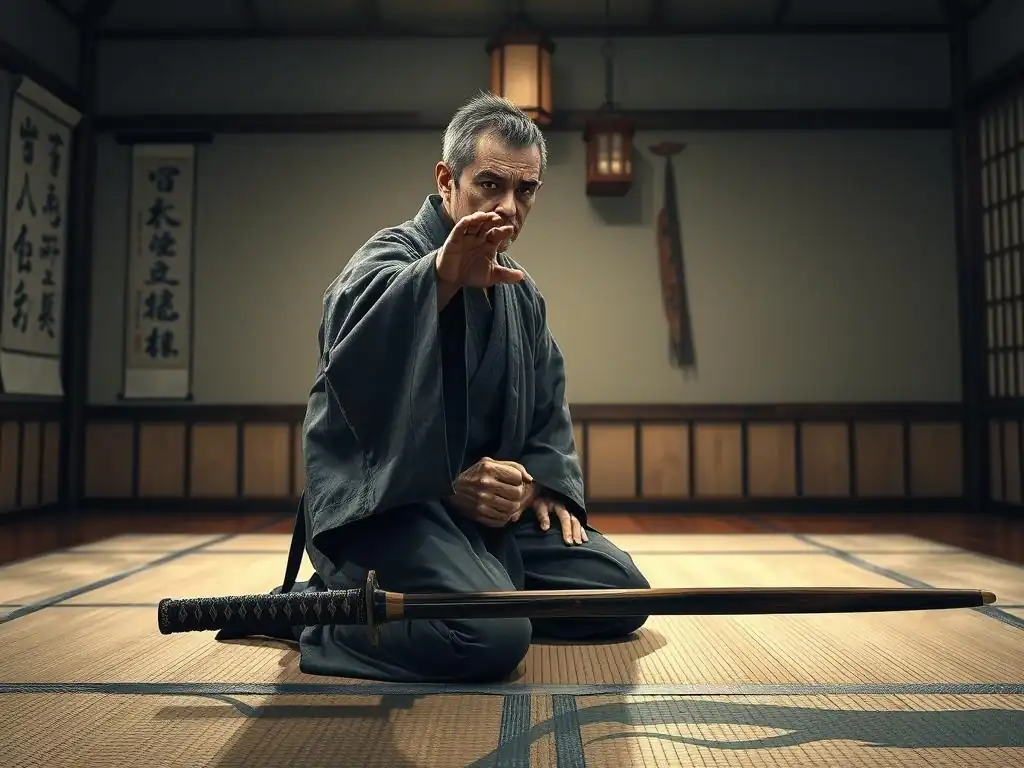
Japanese Bōjutsu, the art of the staff, provides excellent real-world examples of how different grip techniques are applied in practice. The Okinawan bō is typically around 6 feet long, and its use relies heavily on dynamic grip changes and precise hand placement. Studying Bōjutsu Kata and sparring techniques reveals the practical application and necessity of mastering various staff grip techniques power and efficiency.
Bōjutsu emphasizes fluidity, leverage, and the use of both ends of the staff for strikes, blocks, sweeps, and joint locks. The specific techniques employed often dictate the required grip, highlighting the symbiotic relationship between movement and hand position.
Center Grip in Bōjutsu Kata
Many fundamental Bōjutsu Kata, such as Shushi no Kon or Sakugawa no Kon, begin and feature prominently the use of the center grip. In Kata, the center grip facilitates the balanced execution of basic blocks (like age uke - rising block, or gedan barai - sweeping block) and strikes (like tsuki - thrust, or uchi - strike) using either end of the staff. The symmetrical nature of the center grip allows practitioners to demonstrate control and precision without favoring one end of the staff over the other.
The center grip in Kata also allows for smooth transitions between stances and techniques. The balanced weight distribution makes it easier to move the staff with the body, maintaining proper form and alignment. It's the foundation upon which more advanced Kata techniques, involving grip changes and dynamic movements, are built. Mastery of the center grip in Kata is essential for developing the foundational control needed for all other staff grip techniques power and speed.
Sliding Grip in Bōjutsu Sparring
In Bōjutsu sparring ( kumite), the sliding grip becomes invaluable for adapting to the dynamic nature of combat. Practitioners frequently use sliding grips to adjust their reach for thrusts or strikes, rapidly changing the effective length of the staff to surprise an opponent or defend against an unexpected angle. For instance, a quick slide might turn a mid-range block into a long-range thrust.
The ability to execute smooth, controlled slides allows for continuous offense and defense. It enables techniques like nagashi uke (flowing block) where the staff slides to redirect an opponent's force, or rapid-fire thrusts where the hand slides forward to extend reach. This dynamic use of the grip adds a layer of unpredictability and speed, making it a critical component of effective Bōjutsu combat and demonstrating the practical application of staff grip techniques power in a live scenario.
Pivot Grip for Powerful Thrusts in Bōjutsu
While the center grip is common for basic thrusts, Bōjutsu also utilizes variations of the pivot grip for generating exceptionally powerful linear force. Techniques like the 'spear hand' thrust often involve gripping the staff with one hand near the body acting as a pivot, while the other hand drives the staff forward, often sliding along the shaft. This leverages the full length of the staff and the momentum of the body behind the thrust.
Another application involves using a pivot point on the ground or against the body to brace for a powerful linear strike or thrust. This allows the practitioner to put their entire body weight and muscular force into the technique. The precision required to maintain the pivot while generating significant linear momentum highlights the sophistication of Bōjutsu grip techniques and their contribution to maximizing the staff grip techniques power for devastating strikes.
Drills and Exercises to Improve Staff Grip Strength and Control
Improving your staff grip isn't just about learning techniques; it's also about building the physical capacity to execute them effectively over time. Grip strength, forearm endurance, and hand dexterity are crucial for maintaining control, generating power, and preventing fatigue during prolonged staff use. Incorporating specific drills and exercises into your training regimen will significantly enhance your ability to utilize staff grip techniques power and precision.
Consistent training focused on these areas will not only improve your performance with the staff but also benefit your overall martial arts practice. Strong hands and forearms are valuable assets regardless of the weapon or empty-hand technique you employ.
Grip Strengthening Exercises Using a Rice Bucket
A simple yet highly effective tool for developing grip strength and endurance is a bucket filled with rice or sand. Submerging your hands and performing various exercises against the resistance of the grains can significantly improve the muscles in your hands, wrists, and forearms. Exercises include:
- Opening and closing the hands repeatedly.
- Making fists and spreading fingers apart.
- Twisting the hands as if turning a doorknob.
- Digging to the bottom and squeezing handfuls.
Performing sets of these exercises for several minutes at a time, multiple times a week, can lead to noticeable improvements in grip strength and the ability to maintain a secure staff grip technique power during demanding drills or sparring.
Staff Handling Drills to Develop Grip Dexterity
Developing dexterity involves the fine motor control and coordination needed for rapid grip changes and precise manipulation. Drills should focus on smooth transitions between different hand placements and grips. Examples include:
- Rapidly sliding hands along the staff from center to end and back.
- Practicing quick hand switches (e.g., releasing and re-gripping with the other hand).
- Performing figure-eight patterns or spins, focusing on maintaining consistent control through subtle finger and hand adjustments.
- Transitioning between a center grip, power grip, and pivot grip fluidly.
These drills, practiced slowly at first focusing on precision and gradually increasing speed, build the muscle memory and fine motor control essential for advanced staff manipulation and applying various staff grip techniques power seamlessly.
Endurance Drills for Prolonged Staff Use
Martial arts often require sustained effort. Holding, moving, and striking with a staff for extended periods demands forearm and grip endurance. Drills should focus on maintaining a secure grip and controlled movement even as fatigue sets in. Examples include:
- Holding the staff in various positions (e.g., horizontal, vertical) for increasingly longer durations.
- Performing basic striking or blocking sequences repeatedly without dropping the staff or letting the grip loosen.
- Engaging in light, prolonged sparring or Kata practice, focusing specifically on maintaining grip quality throughout.
These endurance drills build the stamina needed to execute staff grip techniques power effectively even when tired, ensuring performance doesn't degrade during long training sessions or demanding situations.
Optimizing Your Staff Grip for Different Combat Scenarios
Effective staff usage in combat is highly situational. The optimal grip is not static but must be adapted instantly based on the distance to the opponent, their actions, and your intended response. Understanding how to modify your staff grip techniques power and control based on the combat range is a crucial aspect of practical staff mastery.
Rapid, almost intuitive grip adjustments allow you to maximize leverage, speed, and defense effectiveness whether an opponent is right in front of you or several feet away. This adaptability makes the staff a formidable weapon across various distances.
Adapting Your Grip for Close-Range Combat
In close-range combat, where opponents are within arm's reach, long sweeping strikes or full-length thrusts are often impractical. Here, the staff is typically used for short, rapid strikes, jabs, blocks, and potentially joint locks or sweeps. The grip often becomes tighter and more concentrated, perhaps with hands closer together to maximize control over a shorter section of the staff.
Holding the staff closer to the ends, or using a more compact grip with hands near the center but braced against the body, allows for quick, powerful movements in a limited space. Techniques might involve using the butt end of the staff for strikes or utilizing the staff for leverage in grappling-range scenarios. The emphasis shifts from the large, arcing movements of long-range combat to tight, controlled, and powerful actions, requiring precise application of staff grip techniques power in confined spaces.
Adjusting Your Grip for Long-Range Engagement
At longer ranges, the full length of the staff becomes your advantage. Grips that allow for powerful thrusts and sweeping strikes are prioritized. This often involves wider hand spacing or utilizing power grips where one hand is closer to the body and the other further out on the staff to maximize leverage. Long-range combat emphasizes reach, timing, and the ability to deliver significant force from a distance.
The sliding grip is particularly useful here to quickly extend reach for a surprise thrust or to adjust blocking range. Maintaining a slightly more relaxed grip (while still secure) can facilitate faster movements and transitions across the larger arcs involved in long-range techniques. Effective long-range staff grip techniques power comes from efficiently transferring momentum through the weapon's length.
Utilizing Grip Changes for Deception and Tactical Advantage
Beyond simply adapting to distance, rapidly changing grips can be a powerful tool for deception and gaining a tactical advantage. A sudden shift from a wide power grip to a compact close-range grip can signal an unexpected change in attack angle or distance. Pretending to prepare a long-range strike with one grip, only to quickly shift to a different grip for a close-range technique, can catch an opponent off guard.
The sound and speed of a hand sliding along the staff can also be used strategically. A quick, audible slide might draw attention, masking another action. Mastering the subtle art of grip transitions allows a practitioner to control the rhythm and distance of the engagement, using their staff grip techniques power not just for force, but for strategic manipulation.
Common Mistakes to Avoid When Holding a Staff
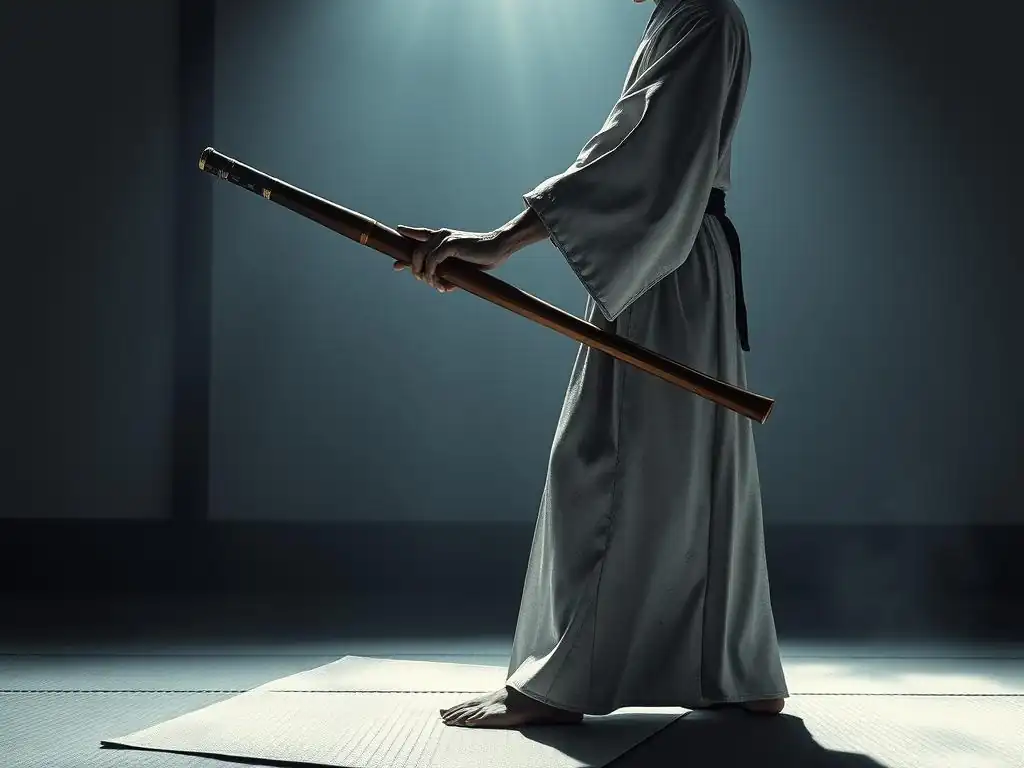
While learning proper techniques is essential, being aware of common pitfalls is equally important. Incorrect gripping habits can hinder progress, lead to injury, and severely limit your ability to effectively use the staff. Avoiding these mistakes is crucial for developing proficient staff grip techniques power and control.
Many of these errors stem from a lack of understanding of leverage, body mechanics, or simply neglecting the foundational principles of a secure yet flexible grip. Identifying and correcting these issues early in training is key.
Over-Gripping: Reducing Flexibility and Speed
One of the most common mistakes is gripping the staff too tightly, often referred to as a "death grip." While it might feel more secure initially, over-gripping leads to rapid muscle fatigue in the hands and forearms. This tension restricts movement, slows down transitions between techniques, and reduces the fluidity necessary for effective staff manipulation.
An overly tight grip also diminishes the sensitivity needed to feel the weapon's balance and momentum. It prevents the subtle adjustments that allow for precise control and can even cause the staff to bounce unpredictably off blocks or impacts. A relaxed, yet firm, grip that utilizes the fingers and hand pads is far more effective for maintaining speed, flexibility, and applying staff grip techniques power efficiently.
Incorrect Hand Placement: Compromising Balance and Power
Placing hands incorrectly along the staff or relative to each other is another significant error. Holding the staff too far off-center when a balanced grip is needed compromises stability. Incorrect spacing (hands too close or too far apart for the technique) reduces leverage and makes controlling the staff's ends difficult. Forgetting which hand should be the primary driver and which the guide in a specific technique leads to awkward movements and reduced force.
For example, attempting a powerful sweeping strike with hands too close together significantly reduces the leverage, diminishing the power output. Conversely, using too wide a grip for rapid close-range parries makes the staff unwieldy. Proper hand placement is dictated by the mechanics of the technique being performed, and incorrect placement directly undermines the potential for effective staff grip techniques power and control.
Neglecting Grip Conditioning: Leading to Fatigue
Failing to condition the hands and forearms specifically for staff work is a common oversight. Martial artists might focus on technique and full-body conditioning but neglect the localized strength and endurance required for continuous grip application. Without sufficient grip endurance, the hands will fatigue quickly during extended practice or sparring.
Fatigued hands lose strength, dexterity, and control. This leads to sloppy techniques, reduced power, and an increased risk of dropping the staff or losing control upon impact. Incorporating dedicated grip strengthening and endurance exercises, like those mentioned earlier, is vital for maintaining performance throughout a training session or combat scenario and ensuring your staff grip techniques power remains effective.
Staff Grip Maintenance and Care for Optimal Performance
Maintaining your staff is just as important as maintaining your physical conditioning and technical skill. A well-maintained staff provides a better grip, is safer to use, and performs optimally. Neglecting your weapon can lead to slippage, splintering, or even breakage, all of which compromise your ability to execute staff grip techniques power and control effectively.
Regular inspection and care ensure that the staff remains a reliable tool, responsive to your every command and grip adjustment.
Cleaning and Conditioning Your Staff for Better Grip
Dirt, sweat, and oils can accumulate on the surface of a staff, making it slippery and difficult to hold securely. Regularly cleaning your staff with a damp cloth (and mild soap if necessary, depending on the material) can remove this buildup. For wooden staffs, periodic conditioning with a light oil (like linseed oil or a wood-specific conditioner) can prevent the wood from drying out and cracking, maintaining its integrity and providing a better surface texture for gripping.
Ensure the staff is completely dry before use after cleaning or conditioning. A clean, properly maintained surface provides the best possible friction for your hands, enhancing your ability to maintain a firm and controlled staff grip technique power through all movements.
Checking for Wear and Tear on Your Staff
Before each training session, it's wise to quickly inspect your staff for signs of wear and tear. Look for splinters, cracks, dents, or excessive wear on the ends. Even small imperfections can affect balance, create weak points, or cause discomfort or injury to your hands during use.
Pay particular attention to the areas where your hands typically grip the staff. Smooth or worn spots might indicate where grip is being compromised. Addressing these issues promptly, whether by sanding down a splinter, repairing a crack, or considering replacing a severely damaged staff, is crucial for safety and maintaining optimal performance for all staff grip techniques power.
Preventing Slippage and Improving Grip Security
Beyond cleaning and conditioning, there are steps you can take to actively prevent slippage. Using materials like athletic tape on specific grip areas can provide extra texture and absorption. Some practitioners use chalk or specialized grip aids, similar to those used in weightlifting or gymnastics, especially in humid conditions or when sweating heavily.
For wooden staffs, lightly sanding the grip areas to create a slightly rougher texture can also improve friction. The goal is to ensure that your hands remain firmly connected to the staff, allowing you to apply full force and maintain control without worrying about the weapon slipping. This focus on grip security is paramount for unleashing the full potential of staff grip techniques power.
Conclusion: The Key to Staff Mastery is a Solid Grip
Mastering the staff is a lifelong journey that encompasses physical conditioning, technical proficiency, and a deep understanding of the weapon's dynamics. At the heart of effective staff manipulation lies the grip. It is the fundamental connection between practitioner and weapon, directly influencing power, control, speed, and safety. Developing a versatile and strong grip, capable of adapting to any situation, is non-negotiable for anyone serious about staff mastery.
From the foundational center grip that provides balance and control to the advanced power and pivot grips that maximize force, each technique serves a specific purpose. Understanding when and how to apply these different staff grip techniques power your movements and allows for fluid, effective transitions in combat or Kata.
Recap of Essential Staff Holding Techniques
We've explored the importance of a proper staff grip, highlighting how it directly impacts power generation and control. We delved into fundamental techniques like the versatile center grip and the critical aspects of hand placement and achieving a secure hold. We then examined advanced variations such as the power grip for maximum force, the sliding grip for fluid movement, and the pivot grip for rotational strikes. Specific examples from Japanese Bōjutsu illustrated the practical application of these grips in Kata and sparring.
Furthermore, we discussed the necessity of conditioning through exercises like rice bucket training and staff handling drills to build strength, dexterity, and endurance. We also covered adapting grips for different combat ranges and using grip changes strategically, concluding with the importance of staff maintenance for optimal grip security.
Continuing Your Journey to Staff Mastery
Your journey to staff mastery is ongoing. Continuously refining your staff grip techniques power and control should be a core focus of your training. Practice drills that challenge your grip endurance and dexterity. Experiment with different hand placements to understand their effects on leverage and speed. Seek instruction from experienced practitioners who can provide feedback on your grip mechanics.
Remember that a strong, adaptable grip is not just a physical attribute but a skill that must be honed through diligent practice. By dedicating time to mastering your staff grip, you unlock greater potential in every strike, block, and movement, bringing you closer to true mastery of this ancient and powerful weapon.
Frequently Asked Questions
What are the fundamental staff grip techniques discussed in the article?
The article covers several essential grips, including the power grip, control grip, and pivot grip, each designed for specific maneuvers and applications. These grips are key to maximizing power and control.
How do different staff grips impact the power generated during strikes?
Different grips allow for varying degrees of leverage and control. The power grip, for instance, maximizes force transmission, while other grips, like the control grip, prioritize accuracy and speed over raw power.
Can I improve my staff grip strength and technique through specific training exercises?
Yes, the article suggests exercises focused on wrist strength, forearm endurance, and grip stability. Practicing transitions between different grip styles is also crucial for developing overall proficiency.
Does the article provide guidance on selecting the appropriate staff grip for self-defense scenarios?
The article emphasizes situational awareness. It highlights that the best grip depends on the distance to the opponent, the desired level of control, and the need for power versus precision.
What are some common mistakes to avoid when practicing staff grip techniques?
Over-gripping, neglecting proper wrist alignment, and failing to maintain balance are common errors. The article stresses the importance of proper form and gradual progression to avoid injury and maximize power and control.
Final Reflection: Embracing the Power of Connection
The techniques explored within this article, detailing the nuances of staff grip, are not merely about physical mastery; they are about cultivating a deeper connection with the weapon and, by extension, with ourselves. In a world increasingly disconnected from physical skill and mindful movement, rediscovering the power and control inherent in mastering a simple tool like a staff offers a potent reminder of our innate capabilities.
The influence of martial arts, and the staff as a powerful symbol within them, extends far beyond the dojo. It teaches us discipline, focus, and the importance of understanding leverage – principles applicable to every facet of life. The ability to wield a staff effectively is a metaphor for navigating challenges with grace and strength. The weapon is not the extension of the arm, but of the mind.
This ancient wisdom underscores the profound connection between intention, technique, and the realization of true power.
Now, consider how these principles of grip, balance, and control can translate into your own life. Are you holding onto something too tightly, or perhaps not firmly enough? Take a moment to reflect on the areas where you seek greater power and control. Embrace the challenge of mastering your own "staff," whatever form it may take, and discover the strength and grace that lie within.
Unlock Your Staff Potential: Take Action Now!
Thank you for exploring the essential staff holding techniques with us! We hope you've gained valuable insights into enhancing your power and control. Now, it's time to put that knowledge into practice and truly master your staff.
- Commit to 15 minutes of daily practice, focusing specifically on the grip techniques highlighted in this article.
- Explore different staff materials to find the perfect balance and feel for your grip. Experiment with bamboo, rattan, or even a simple wooden dowel.
- Share a video of yourself practicing these grips on social media using #MartialArtsMasteryStaff and inspire others on their journey.
Which grip technique will you focus on perfecting this week, and how will you integrate it into your forms or sparring?