
Mastering the Fundamentals: Basic Speed Drills for Martial Artists


Welcome to Martial Arts Mastery, your portal to unlocking the secrets of combat traditions worldwide! Ever wonder how the legends achieve seemingly impossible reflexes and lightning-fast strikes? Our journey begins here, diving into the core principles of speed drills martial arts training, offering insights and techniques to elevate your own practice. Prepare to sharpen your reaction time and amplify your power – the path to mastery starts now.
- Introduction to Speed Training for Martial Arts
- Foundational Speed Drills for Martial Artists
- Advanced Speed Training Techniques for Martial Arts
- Integrating Speed Drills into Your Martial Arts Training Regimen
- Conclusion: Maximizing Your Martial Arts Potential Through Speed Training
-
Frequently Asked Questions
- What are speed drills and why are they important in martial arts training?
- What are some examples of basic speed drills suitable for beginners?
- How often should I incorporate speed drills into my martial arts training routine?
- What equipment, if any, is necessary for effective speed drill martial arts training?
- How can I measure my progress in speed drills martial arts training?
- Final Reflection: The Unfolding Potential of Speed
- Ignite Your Speed: Unlock Your Potential Now!
Introduction to Speed Training for Martial Arts
Why Speed Drills are Crucial for Martial Arts Performance
Speed is often the decisive factor in martial arts combat. The ability to execute techniques faster than your opponent can mean the difference between landing a strike and being struck, or successfully defending against an attack. Integrating regular speed drills into your martial arts training regimen enhances reaction time, improves muscle fiber recruitment for faster movements, and builds explosive power. Consider the rapid exchange often seen in competitive sparring; practitioners with superior speed and timing can dominate the engagement.
Beyond offensive capabilities, speed drills are vital for defensive maneuvers. Dodging, blocking, and parrying all require swift, precise movements. A fraction of a second saved in reaction time can prevent a knockout or a submission. Many high-level martial artists attribute a significant portion of their success to their dedication to developing blistering speed, enabling them to execute techniques before their opponent can fully react or even perceive the incoming attack.
The Importance of Agility in Martial Arts Combat
Agility, the ability to change direction and position quickly and efficiently, is intrinsically linked to speed in martial arts. While raw speed dictates how fast a limb can move, agility dictates how fast the entire body can maneuver within the fighting space. This includes rapid changes in stance, evasive footwork, and transitioning between offensive and defensive postures. Effective agility allows a martial artist to control distance, create angles of attack, and escape dangerous positions.
Training agility through specific speed drills enhances proprioception and balance, crucial for maintaining stability during dynamic movements. For instance, a judoka needs explosive agility to execute throws, while a karateka relies on agile footwork to close distance or evade strikes. Developing high levels of agility through targeted speed drills martial arts training translates directly into improved performance across all ranges of combat, from grappling to striking.
Setting Realistic Speed Training Goals for Martial Artists
Setting clear, measurable, achievable, relevant, and time-bound (SMART) goals is essential for effective speed training. Instead of a vague goal like "get faster," aim for something specific, such as "decrease the time it takes to execute a five-punch combination on the heavy bag by 0.5 seconds within the next month." This provides a clear target and allows you to track progress. Goals should be challenging but realistic based on your current fitness level and training experience.
It's important to integrate speed development gradually into your existing martial arts training schedule. Start with one or two dedicated speed drill sessions per week, focusing on proper form before increasing intensity or duration. Track your progress using a stopwatch or video recording to see tangible improvements. Celebrate small victories, like shaving milliseconds off a drill time, to stay motivated and ensure consistent effort in your speed drills martial arts training.
Foundational Speed Drills for Martial Artists
Stance and Footwork Drills for Speed Development
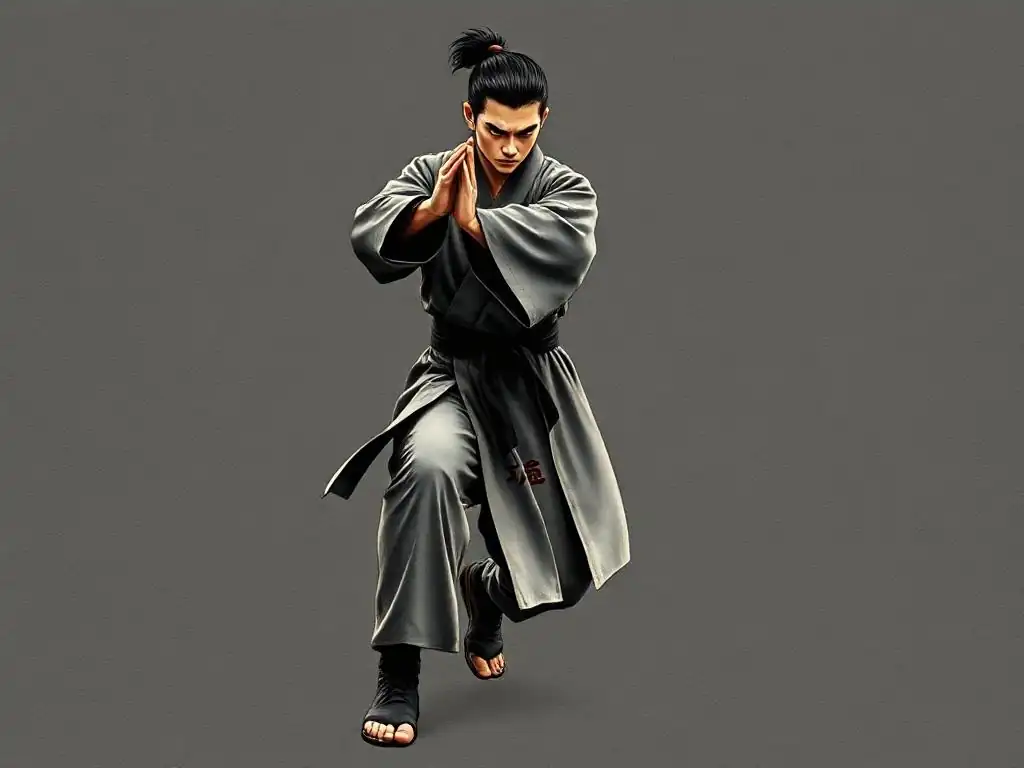
Efficient footwork is the foundation of speed and agility in martial arts. Quick, precise movements of the feet allow you to cover distance, change angles, and maintain balance rapidly. Basic drills like shuffle steps and lateral movements build the fundamental coordination and explosiveness needed for dynamic martial arts actions. Consistent practice of these drills improves reaction time and spatial awareness within the training area or ring.
Developing speed through footwork drills also strengthens the muscles in the legs and core, providing the power base for all techniques. Consider a boxer needing to rapidly pivot and step to create an opening or evade a punch; this relies heavily on well-trained, speedy footwork. Incorporating these foundational speed drills martial arts training into every session, perhaps as part of the warm-up, ensures that your base movement speed is constantly being refined.
Quick Footwork Exercises: Shuffle Steps
Shuffle steps, also known as sliding steps, involve moving sideways without crossing the feet, maintaining your stance width. This drill is crucial for maintaining balance and readiness while moving laterally. Start slowly, focusing on keeping your weight balanced and your feet parallel, then gradually increase speed while maintaining control. Perform shuffle steps forward, backward, left, and right to develop comprehensive lateral movement speed.
A standard drill involves marking two lines about 5-10 feet apart and shuffling between them for a set time (e.g., 30-60 seconds) or a set number of repetitions. Focus on pushing off with the trailing leg and landing softly on the leading leg. Aim for smooth, continuous movement rather than jerky steps. Incorporating variations like adding feints or level changes during the shuffle can further enhance the practical application of this speed drill.
Lateral Movement Drills for Increased Speed: Crossover Steps
Crossover steps involve one foot crossing over or behind the other during lateral movement. This allows for faster covering of distance laterally than simple shuffling and is often used to quickly change positions or angles. While faster, it temporarily compromises balance more than shuffling, so it requires practice to execute smoothly and recover quickly into a stable stance.
Practice crossover steps moving left and right across a designated area. Focus on the coordination between the upper and lower body, ensuring your core remains engaged. A common drill is to sprint laterally using crossover steps for a short distance (e.g., 10-15 feet), then quickly transition into a defensive stance or offensive technique. This drill enhances explosive lateral speed and the ability to rapidly shift body weight, a key aspect of effective speed drills martial arts training.
Forward and Backward Movement Drills: In-and-Out Footwork
In-and-out footwork involves rapidly stepping forward to attack range and backward to safety or out of range. This skill is fundamental for controlling distance, closing in for strikes or grappling, and retreating to avoid attacks. It requires explosive power for the forward movement and quick reaction speed for the backward step.
Practice stepping forward explosively with one foot, bringing the other up quickly, and then reversing the motion just as quickly to retreat. Focus on maintaining a balanced stance throughout the movement. A useful drill is to practice moving in and out relative to an imaginary opponent or a target (like a cone or piece of tape on the floor). Perform sets of 10-20 repetitions, focusing on minimizing the time spent in the transition between moving in and moving out. This drill directly improves the speed of engaging and disengaging, a critical skill in martial arts.
Punching and Striking Speed Drills
Developing fast hands is crucial for striking arts like boxing, karate, and Taekwondo. Speed allows you to land combinations before your opponent can react, create openings, and overwhelm defenses. Striking speed drills focus on improving the velocity of punches and other upper-body strikes while maintaining proper form and power generation.
These drills often involve high-repetition work performed at maximum speed. While power is important, the initial focus is on moving the limb as quickly as possible from the point of origin to the target and back. Integrating these speed drills martial arts training into your routine will build muscle memory for rapid execution and improve the efficiency of your striking mechanics.
Shadow Boxing for Speed and Technique Refinement
Shadow boxing is a versatile drill that allows you to practice techniques at full speed without impact. It helps refine movement patterns, improve balance, and develop rhythm and flow. Focus on executing combinations and individual strikes as quickly as possible while maintaining perfect form, snapping the punches out and retracting them rapidly.
Perform rounds of shadow boxing focused specifically on speed. Instead of focusing on power, emphasize the velocity of your hand and body movements. Visualize an opponent and practice rapid attack and defense sequences. For example, aim to throw a 4-punch combination (jab, cross, hook, uppercut) in under 1.5 seconds. Record yourself occasionally to identify areas where movement is slow or inefficient.
Heavy Bag Drills for Power and Speed Combination
While the heavy bag is often used for developing power, it's also excellent for combining speed with impact. Drills involve throwing rapid combinations or sequences of strikes, focusing on maintaining speed while generating sufficient force. The resistance of the bag helps build muscle endurance for sustained fast striking.
A common drill involves throwing a high volume of strikes within a short time frame, for example, 50 punches in 30 seconds, focusing on speed and impact. Another approach is to throw rapid-fire combinations, such as a 6-punch combo, aiming to complete it in under 2 seconds, then immediately reset. This type of speed drill on the heavy bag helps translate raw speed into functional fighting speed that carries force.
Focus Mitt Drills for Reaction Speed and Accuracy
Focus mitts provide a dynamic target that requires reaction speed and accuracy. Your partner calls out or presents targets, and you must react instantly with the appropriate strike or combination, executed at speed. This drill trains not just the speed of your limbs but also the speed of your decision-making and reaction time.
Work with a partner who can present targets randomly and at varying speeds. Focus on seeing the target and reacting immediately with a fast, accurate strike. Drills might include reacting to a single mitt presentation with a rapid jab, or to a sequence of mitts with a fast combination. For example, a partner might present two mitts in quick succession, requiring you to land two fast hooks within 0.8 seconds. This interactive speed drill is invaluable for developing fight-specific speed and timing.
Kicking Speed Drills
Kicks can be powerful weapons, but their effectiveness is greatly enhanced by speed. A fast kick can land before an opponent can block or evade, or create an opening for follow-up techniques. Kicking speed drills focus on improving the velocity of the leg extension and retraction, as well as the speed of the chambering and pivoting actions.
These drills emphasize fluidity and efficient movement patterns to minimize wasted motion. Developing fast kicks requires flexibility, balance, and explosive hip power. Incorporating these specific speed drills martial arts training into your leg workouts will significantly improve the speed at which you can deploy your lower body techniques.
Snap Kick Drills for Speed and Precision
Snap kicks, such as front kicks or side kicks delivered with a sharp, snapping motion, rely heavily on speed and precision. The power comes from the rapid extension and immediate retraction of the leg, rather than the full body weight transfer of a push kick. Speed drills for snap kicks focus on the quick chambering and whip-like extension.
Practice snap kicks against the air or a light target like a pool noodle. Focus on chambering the knee high and quickly, extending the lower leg with a snap, and immediately retracting it back to the chamber or ground. Perform high repetitions (e.g., 20-30 per leg) focusing solely on speed of extension and retraction. A drill might involve executing 10 snap kicks on one leg in under 15 seconds, emphasizing the speed of each individual kick.
Roundhouse Kick Drills for Power and Speed
The roundhouse kick is a powerful technique, and adding speed makes it incredibly difficult to defend against. Speed drills for the roundhouse focus on the rapid pivot of the supporting foot, the explosive hip rotation, and the fast extension and retraction of the kicking leg. The goal is to deliver the kick with speed while still generating significant power.
Practice roundhouse kicks against the air, a heavy bag, or focus mitts. Focus on generating speed through the hip rotation and the snap of the leg. A common drill is to throw multiple roundhouse kicks in quick succession (e.g., 3-5 kicks per leg), focusing on minimizing the time between kicks and maintaining speed throughout the set. Another drill involves throwing a single roundhouse kick as fast as possible, aiming to complete the entire motion from chamber to impact to retraction in under 1 second.
Front Kick Drills for Speed and Distance Control
The front kick is a versatile tool for offense, defense, and maintaining distance. Its speed is crucial for jamming an opponent's advance, striking quickly from a neutral position, or creating space. Front kick speed drills emphasize the quick lift of the knee and the rapid extension of the leg directly forward.
Practice front kicks against the air or a target. Focus on lifting the knee straight up quickly and extending the leg with a snap, hitting with the ball of the foot. Drills include rapid-fire front kicks (e.g., 15-20 kicks per leg as fast as possible) or practicing quickly stepping forward with a front kick to control distance. A specific drill might involve starting from a fighting stance and executing a front kick, returning to stance, and repeating, aiming for 10 repetitions in under 20 seconds, focusing on the speed of each kick and the transition back to stance.
Advanced Speed Training Techniques for Martial Arts
Plyometric Exercises for Explosive Speed
Plyometrics are exercises that involve rapid stretching and contracting of muscles (the stretch-shortening cycle) to produce explosive power. This type of training is highly effective for developing the fast-twitch muscle fibers responsible for speed and explosiveness, crucial components of speed drills martial arts training.
Incorporating plyometrics into your routine builds the reactive strength needed for quick bursts of speed, such as jumping, rapid changes of direction, or explosive strikes. Examples include various jumps, hops, and throws. Start with basic plyometrics and gradually progress to more complex movements as your body adapts.
Box Jumps for Leg Power and Speed
Box jumps are a fundamental plyometric exercise that develops explosive lower body power and speed. The goal is to jump onto a stable box or elevated surface, landing softly and in control. This exercise mimics the explosive leg action needed for jumping kicks, rapid advances, or generating power from the ground up.
Perform box jumps for sets of 3-5 repetitions, focusing on maximum height and explosive power on each jump. Choose a box height that is challenging but allows you to land safely and absorb the impact effectively. For speed development, sometimes lower box heights performed for slightly higher reps (e.g., 6-8) with minimal ground contact time can be beneficial. Aim for minimal time spent on the ground between jumps.
Depth Jumps for Reactive Strength
Depth jumps involve stepping off an elevated surface and immediately jumping upwards or forwards upon landing. This exercise utilizes the stretch-shortening cycle to develop reactive strength, training your muscles to absorb force and immediately produce an explosive contraction. This is highly relevant for rapid transitions from landing to movement or quickly changing direction after absorbing an impact.
Start with a low box (6-12 inches) and focus on minimizing the contact time with the ground upon landing before jumping. The key is the rapid transition from eccentric (landing) to concentric (jumping) muscle action. Perform sets of 3-5 repetitions, focusing on the speed of the reaction off the ground. This drill directly improves the speed of your response after impact or landing, vital for dynamic martial arts exchanges.
Plyometric Push-ups for Upper Body Speed
Plyometric push-ups, such as clapping push-ups, develop explosive power and speed in the chest, shoulders, and triceps. This translates to faster, more powerful punches and upper-body movements. The exercise involves pushing off the ground with enough force for your hands to leave the surface, allowing for a brief moment like clapping before landing and absorbing the impact.
Perform plyometric push-ups for sets of 3-6 repetitions, focusing on maximum explosive power on the push-off. Ensure you can perform standard push-ups with good form before attempting this more advanced exercise. Variations include elevating the hands or feet to adjust difficulty. This drill enhances the rate of force development in the upper body, directly improving striking speed.
Resistance Training for Speed and Power
While heavy weightlifting focuses on maximal strength, using lighter weights or resistance bands with explosive movements can significantly enhance speed and power relevant to martial arts. This type of training helps develop the ability to apply force rapidly, which is the definition of power (Force x Velocity).
Resistance training tailored for speed often involves performing exercises like squats, deadlifts, bench presses, or rows with moderate weight (e.g., 40-60% of your one-rep max) but focusing on executing the concentric phase (the lifting part) as explosively as possible. This recruits fast-twitch muscle fibers and improves the nervous system's ability to activate muscles quickly, contributing to overall speed drills martial arts training effectiveness.
Banded Speed Drills for Increased Resistance
Resistance bands add accommodating resistance, meaning the resistance increases as the band is stretched. Applying bands to martial arts movements like punches, kicks, or footwork drills forces the muscles to work harder through the entire range of motion, particularly at the end range where speed is often highest.
Attach resistance bands to a sturdy anchor point and perform punches, kicks, or stepping drills against the band's tension. Focus on executing the movement as quickly and explosively as possible despite the resistance. For example, perform sets of 10-15 banded jabs per arm, focusing on the speed of the extension and retraction against the band. This builds strength specifically in the movement patterns used in combat, enhancing speed.
Weighted Punches and Kicks for Power Development
Using very light weights (e.g., 1-3 lbs dumbbells for punches, ankle weights for kicks) during shadow boxing or technique practice can help build speed and endurance. The added resistance forces the muscles to work harder, and when the weights are removed, the limbs feel lighter and faster.
Perform sets of shadow boxing rounds or specific technique repetitions (e.g., 20 weighted straight punches per arm, 15 weighted roundhouse kicks per leg) using light weights. Focus on maintaining good form and speed despite the weight. Be cautious not to use weights that are too heavy, as this can compromise form and potentially lead to injury. The goal is to enhance speed and power, not build maximal strength with heavy loads.
Light Weightlifting for Speed and Agility
Exercises like Olympic lifts (cleans, snatches) or their variations (hang cleans, power snatches) performed with light to moderate weight are excellent for developing explosive power and speed. These lifts require rapid, coordinated movement of multiple joints and muscle groups, mimicking the full-body explosiveness needed in martial arts.
Incorporate exercises like hang cleans or power snatches into your strength training routine, focusing on lifting the weight quickly and explosively. Perform sets of 3-5 repetitions with a weight that allows for speed. For example, a martial artist might perform hang cleans at 50-60% of their max, focusing on the rapid pull and catch. This type of training improves the rate of force development throughout the body, contributing to faster and more powerful techniques.
Reaction Time Drills for Enhanced Reflexes
Speed isn't just about moving your limbs quickly; it's also about how quickly you can perceive a stimulus and initiate a response. Reaction time drills specifically train the nervous system to process information and trigger movement faster, which is paramount in the dynamic environment of martial arts combat.
These drills often involve reacting to visual, auditory, or tactile cues. Improving reaction time through dedicated speed drills martial arts training allows you to respond to an opponent's actions more quickly, whether it's defending against an attack or capitalizing on an opening.
Partner Reaction Drills: Mirror Drill
The mirror drill is a simple yet effective partner drill to improve reaction speed and agility. One partner acts as the leader, performing various movements (footwork, feints, simple strikes), while the other partner acts as the mirror, attempting to replicate the leader's movements as quickly and accurately as possible.
Perform the mirror drill for rounds of 1-2 minutes, with partners switching roles. The leader should vary the speed and complexity of their movements to challenge the follower. Focus on anticipating your partner's movements slightly while reacting instantly to what they do. This drill enhances visual processing speed and the speed of initiating movement in response to external stimuli.
Visual Cue Drills for Faster Response Time
Visual cue drills involve reacting to specific visual signals. This could be a partner holding up fingers, pointing in a direction, or presenting a target. Your task is to react with a predetermined action as quickly as possible upon seeing the cue.
A simple visual cue drill involves a partner holding up 1 or 2 fingers. If they hold up 1, you throw a jab; if they hold up 2, you throw a cross. The partner varies the timing and presentation of the fingers, forcing you to react instantly. Perform sets of 20-30 reactions, focusing on minimizing the time between seeing the cue and initiating the strike. This directly trains the speed of your visual processing and response.
Auditory Cue Drills for Enhanced Reaction
Auditory cue drills involve reacting to sounds. This could be a clap, a spoken command, or a specific sound effect. These drills help develop the ability to react quickly to sounds that might indicate an opponent's movement or a command from a coach.
A basic auditory drill involves a partner clapping their hands. Upon hearing the clap, you might perform a predetermined action, such as a sprawl, a rapid step back, or a quick combination. The partner varies the timing of the claps. Perform sets focusing on reacting instantly to the sound. This trains your auditory processing speed and your ability to translate sound cues into rapid physical actions, a valuable skill in the chaotic environment of sparring.
Integrating Speed Drills into Your Martial Arts Training Regimen
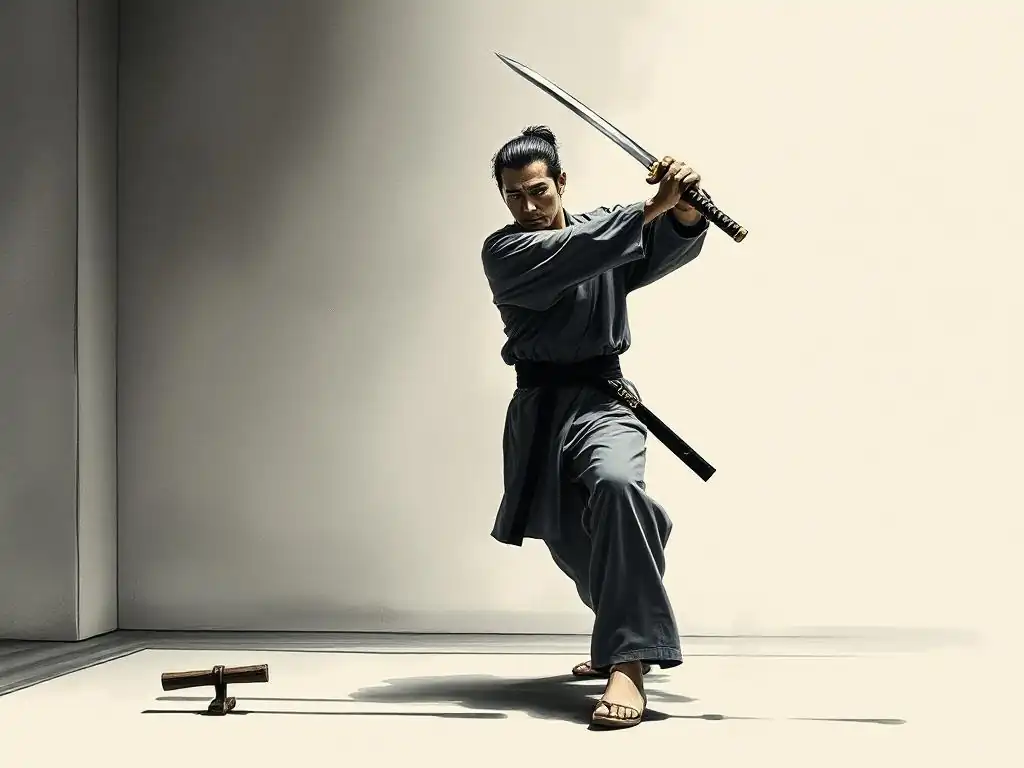
Consistency is key when integrating speed drills martial arts training into your schedule. Speed is a skill that requires regular practice to develop and maintain. Don't try to do everything at once; start by dedicating a portion of your existing training time to speed work.
A balanced training regimen should include technical practice, sparring, strength and conditioning, and dedicated speed and agility work. Aim to incorporate speed drills 2-3 times per week, either as standalone sessions or integrated into warm-ups or cool-downs. Listen to your body and prioritize recovery to prevent burnout and injury.
Sample Speed Training Workout Plan
Here is a sample plan incorporating various speed drills martial arts training elements. This could be done 2-3 times per week on non-consecutive days or integrated into existing sessions.
- Warm-up (10-15 minutes):
- Light cardio (jumping jacks, jogging in place)
- Dynamic stretching (leg swings, arm circles, torso twists)
- Quick footwork drills (shuffle steps, in-and-out) - 5 minutes
- Speed Drills (20-30 minutes):
- Shadow boxing (focus on speed) - 3 rounds of 2 minutes with 30s rest
- Focus mitts or heavy bag (speed combos) - 5 rounds of 1 minute work with 30s rest
- Plyometrics (Box jumps or Depth jumps) - 3 sets of 5 reps
- Banded Punches/Kicks - 3 sets of 15 reps per limb
- Reaction Time Drills (10 minutes):
- Partner Mirror Drill - 4 rounds of 1 minute (switch leader/follower)
- Visual or Auditory Cue Drill - 5 minutes of targeted reactions
- Cool-down (5-10 minutes):
- Static stretching (hold each stretch for 30 seconds)
- Light foam rolling
This sample plan provides a structure, but it should be adjusted based on your specific martial art, goals, and overall training volume.
The Importance of Rest and Recovery in Speed Training
Speed and power development place significant stress on the nervous system and muscles. Adequate rest and recovery are crucial for allowing your body to adapt, rebuild muscle tissue, and prevent overtraining. Without proper recovery, your speed gains will plateau, and you increase your risk of injury.
Ensure you are getting enough sleep (7-9 hours per night is generally recommended). Incorporate active recovery days with light activities like walking or stretching. Consider techniques like foam rolling, massage, or cold therapy to aid muscle recovery. Proper nutrition and hydration are also vital for refueling your body and supporting the repair process. Rest days are not days off from progress; they are essential components of the training cycle that allow for adaptation and improvement in your speed drills martial arts training.
Avoiding Overtraining and Injuries During Speed Drills
Overtraining occurs when the body doesn't get enough rest to recover from training stress, leading to decreased performance, fatigue, mood disturbances, and increased injury risk. Speed drills, particularly plyometrics and high-intensity intervals, are demanding on the body. Signs of overtraining include persistent muscle soreness, decreased speed or power, difficulty sleeping, and loss of motivation.
To avoid overtraining and injuries, gradually increase the intensity and volume of your speed drills. Pay attention to your body's signals; pain is a warning sign, not something to push through. Ensure proper warm-up and cool-down routines. Maintain correct technique during all drills – speed should not come at the expense of form. If you feel persistent pain, consult a coach or medical professional. Prioritizing technique and listening to your body are paramount for long-term progress in speed drills martial arts training.
Conclusion: Maximizing Your Martial Arts Potential Through Speed Training
Mastering speed through dedicated speed drills martial arts training is a continuous journey that can significantly elevate your performance. It's not merely about moving fast, but about moving fast efficiently, reactively, and with control. By focusing on foundational footwork, refining striking mechanics, incorporating advanced techniques like plyometrics, and consistently working on reaction time, you build a comprehensive speed profile.
The benefits extend beyond just physical execution; improved speed and agility also boost confidence and strategic thinking, as you know you have the physical capability to execute your game plan.
Consistent Speed Drill Practice for Long-Term Improvement
Like any martial arts skill, speed requires consistent, deliberate practice. Sporadic bursts of speed training will yield limited results. Aim to make speed drills a regular, integrated part of your weekly training schedule. Even short, focused sessions performed regularly are more effective than infrequent, lengthy ones.
Track your progress over time to see how your speed is improving. This could involve timing drills, counting repetitions within a set time, or simply observing your own performance during sparring or technique work. Consistent effort, even when gains seem small, accumulates into significant improvements over months and years of dedicated speed drills martial arts training.
Refining Technique for Optimal Speed and Efficiency
Speed is not just about muscle power; it's also heavily dependent on efficient technique. Wasted motion, poor body mechanics, or unnecessary tension will significantly slow down your movements. Focus on performing all speed drills with the best possible form.
Work with your instructor or coach to identify technical flaws that might be hindering your speed. Often, a small adjustment in hip rotation, weight distribution, or hand position can dramatically increase the velocity of a technique. Refining technique ensures that your speed training efforts translate into functional speed that is both fast and powerful. Efficient movement is inherently faster movement.
The Future of Speed Training in Martial Arts
The field of sports science continues to evolve, and new methods and tools for speed and agility training are constantly emerging. Technology such as motion capture, high-speed cameras, and force plates are being used to analyze movement and identify areas for improvement with incredible precision. Wearable technology can track metrics like movement velocity and power output during training.
While advanced technology might not be accessible to everyone, the principles derived from sports science research are applicable at all levels. Staying informed about best practices in speed and conditioning, incorporating proven methods like plyometrics and targeted resistance training, and consistently applying dedicated speed drills martial arts training will remain the core components of developing blistering speed for any martial artist aiming to maximize their potential.
Frequently Asked Questions
What are speed drills and why are they important in martial arts training?
Speed drills are repetitive exercises designed to improve reaction time, agility, and movement speed. They are important because they enhance fighting efficiency and allow for quicker responses in combat situations.
What are some examples of basic speed drills suitable for beginners?
Examples include shadow boxing with a focus on punching speed, footwork drills like agility ladder exercises, and reaction drills using focus mitts to improve reflexes and timing.
How often should I incorporate speed drills into my martial arts training routine?
Ideally, incorporate speed drills 2-3 times per week to see consistent improvement. Remember to prioritize proper form over sheer speed to avoid injury.
What equipment, if any, is necessary for effective speed drill martial arts training?
While some drills require no equipment, useful tools include focus mitts, agility ladders, and speed bags. These tools help develop precision and coordination.
How can I measure my progress in speed drills martial arts training?
You can measure progress by tracking your reaction time with drills, observing improvement in punching speed and accuracy, and noting increased agility and footwork efficiency.
Final Reflection: The Unfolding Potential of Speed
The essence of martial arts lies not just in power, but in the seamless integration of speed and precision, a truth that remains profoundly relevant in today's dynamic combat sports and self-defense scenarios. Mastering fundamental speed drills is not merely about physical conditioning; it's about cultivating a deeper understanding of timing, reaction, and the efficient transfer of energy. This foundational work unlocks a martial artist's true potential, allowing them to react decisively and execute techniques with unparalleled swiftness.
The impact of dedicated speed training extends far beyond the dojo. It instills a heightened awareness of one's own body and its capabilities, fostering a sense of confidence and control that permeates all aspects of life. This journey of self-improvement is a continuous process, demanding discipline and unwavering commitment. The journey of a thousand miles begins with a single step.
This ancient proverb resonates deeply with the pursuit of speed in martial arts; each drill, each repetition, brings us closer to unlocking our full potential.
Now, take a moment to consider how you can apply these principles of focused training and incremental improvement to your own life. Whether you're a seasoned martial artist or simply seeking to enhance your physical and mental agility, embrace the power of fundamental drills. Dedicate yourself to mastering the basics, and witness the transformative impact on your speed, your skill, and your overall well-being. The potential for growth is limitless; begin your journey today.
Ignite Your Speed: Unlock Your Potential Now!
Thank you for diving into the world of speed drills with us! We hope you've gained valuable insights into boosting your agility and reaction time. Now, it's time to put that knowledge into action and experience the difference firsthand.
- Commit to 15 minutes a day of focused speed drill practice. See how much faster you can react in just one week.
- Share your favorite drill or a speed improvement tip in the comments below. Let's learn from each other's journeys.
- Challenge a training partner to a friendly speed competition to push each other's limits and make training even more engaging.
What's one small adjustment you can make to your current training routine to prioritize speed development?