
Speed Reading Your Opponent: Agility Drills for Anticipation


Welcome to Martial Arts Mastery, where we delve into the heart of combat arts. Are you ready to unlock the secrets to predicting your opponent's moves? In this article, we explore how agility drills can elevate your game by helping you anticipate opponent speed, transforming reaction into proactive defense. Discover the training techniques that separate the masters from the novices, and begin your journey towards enhanced reflexes and strategic prowess. Let's begin!
- Introduction: Mastering Anticipation in Martial Arts
- Understanding Your Opponent's Speed: A Foundation for Anticipation
- Agility Drills to Sharpen Anticipation Skills
- Advanced Agility Drills for Predicting Opponent Tactics
- Integrating Agility Drills into Your Martial Arts Training
- The Mental Game: Enhancing Anticipation Through Visualization
- Conclusion: Achieving Martial Arts Mastery Through Anticipation and Agility
-
Frequently Asked Questions
- How do agility drills on MartialArtsMastery.org help me anticipate an opponent's speed?
- What specific types of agility drills are most effective for speed anticipation in martial arts?
- How does MartialArtsMastery.org's content cover the connection between agility and opponent speed anticipation?
- Can agility drills alone guarantee successful anticipation of an opponent's speed, or are there other factors involved?
- Are there any historical overviews on MartialArtsMastery.org that illustrate how legendary practitioners used agility to anticipate an opponent's speed?
- Final Reflection: Mastering the Art of Anticipation
- Ignite Your Reflexes: Begin Your Training Journey Now!
Introduction: Mastering Anticipation in Martial Arts
The Importance of Anticipation in Combat
In the dynamic world of martial arts, success often hinges not just on raw power or technical precision, but on the ability to predict what your opponent will do next. Anticipation is the crucial skill that allows a practitioner to react before an attack fully develops, turning potential threats into opportunities for defense or counter-attack. It's the difference between blocking a punch after it's thrown and subtly shifting position to make the punch miss entirely, or initiating a counter-strike as your opponent commits to their movement.
This predictive capability saves precious milliseconds – a vital advantage in combat sports like boxing, taekwondo, or judo, where exchanges can happen in under a second. For example, a well-trained boxer can react to a jab in approximately 200-250 milliseconds, but an opponent who can anticipate that jab based on subtle cues might initiate their counter-movement even earlier, gaining a significant edge.
True anticipation goes beyond simple reaction; it involves processing a multitude of subtle cues from your opponent's body language, stance, and movement patterns to forecast their intentions. This predictive ability is not an innate talent exclusive to a few; it's a skill that can be honed and significantly improved through dedicated training. By developing a deeper understanding of human kinetics and common martial arts strategies, coupled with focused practice, practitioners can systematically enhance their capacity to read an opponent.
This leads to more effective defense, more timely offense, and ultimately, greater control over the flow of a match or self-defense scenario. Mastering anticipation transforms a reactive fighter into a proactive strategist, allowing them to dictate the pace and direction of engagement.
Why Agility Drills Enhance Predictive Skills
Agility, often defined as the ability to change direction quickly and efficiently while maintaining balance and control, is fundamentally linked to anticipation in martial arts. While seemingly focused on physical movement, agility drills anticipate opponent speed by training the brain and body to process information and react rapidly.
When you practice changing direction based on external cues – like a coach's signal or a flashing light – you are not just improving your physical nimbleness; you are simultaneously sharpening your cognitive processing speed and decision-making under pressure. This enhanced speed of thought and movement allows you to recognize an opponent's tell and initiate your defensive or offensive response almost instantaneously.
Furthermore, agility training builds the necessary physical foundation to act on anticipation. You might correctly predict an opponent's low kick, but without the agility to quickly shift your weight, evade, or check, that prediction is useless.
Agility drills improve footwork, balance, coordination, and explosive power – all critical components for executing rapid, precise movements required to capitalize on anticipated actions. By repeatedly practicing quick changes in direction and speed, you build muscle memory and neural pathways that enable your body to respond fluidly and effectively to the subtle cues you pick up from your opponent, making your anticipation actionable and effective in real-time combat situations.
Understanding Your Opponent's Speed: A Foundation for Anticipation
Recognizing Telegraphs: Identifying Pre-Movement Cues
Telegraphing refers to the subtle, often involuntary, movements or changes in posture that an opponent makes before executing a technique. These are involuntary "tells" that signal their intention. Recognizing these telegraphs is a fundamental step in learning to anticipate opponent speed. Common examples include a slight dip of the shoulder before a punch, a shift of weight onto the back leg before a roundhouse kick, or tensing muscles noticeably just before initiating a grapple.
In high-level competition, these telegraphs are minimized, but they are rarely completely absent. Training your eye to spot these minute shifts is crucial. For instance, a boxer might slightly flare their elbow before throwing a hook; noticing this fraction of a second early gives their opponent a critical head start to block or slip.
Learning to identify telegraphs requires focused observation and practice. One effective method is watching sparring footage or professional fights specifically looking for these pre-movement cues. Analyzing slow-motion replays can help highlight tells that are too fast to catch at full speed.
Practitioners can also work with a partner, having them perform techniques slowly, exaggerating any preparatory movements, before gradually increasing speed. The goal is to train the eye to recognize the initiation phase of a technique, not just the execution. This keen observation skill, combined with physical agility drills anticipate opponent speed by allowing you to react effectively once a tell is recognized.
Analyzing Stance and Posture for Movement Prediction
An opponent's stance and overall posture provide a wealth of information about their potential movements and intentions. The way they distribute their weight, the angle of their feet, the height of their guard, and the tension in their limbs all offer clues. For example, a fighter with a heavily weighted lead leg might be setting up a powerful lead hook or a low kick, while someone with their weight centered could be more prepared for rapid forward or backward movement.
A bladed stance in styles like fencing or certain karate variants suggests a focus on linear attacks, while a square stance might indicate readiness for lateral movement or grappling. Analyzing these fundamental elements helps predict not just what technique might come, but also where their weight and balance are, which impacts the speed and power of their actions.
Observing changes in stance or posture over time is also key. Does your opponent's guard drop slightly when they are tired? Do they shift their weight forward significantly before launching an attack? These dynamic changes are often more telling than their initial stance.
Furthermore, understanding the typical stances associated with different martial arts styles can provide a baseline for prediction. For example, a taekwondo fighter's wide, balanced stance often precedes fast, multi-directional kicks, while a Muay Thai fighter's solid, grounded posture might indicate readiness for powerful low kicks or clinching. By combining this knowledge with the ability of agility drills anticipate opponent speed and direction, you can develop a powerful predictive capability.
Decoding Eye Movement and Focus
The eyes are often called the windows to the soul, and in combat, they can be windows to intent. Where an opponent is looking can provide significant clues about their next move, though skilled practitioners learn to use feints with their eyes. Generally, however, a fighter will momentarily glance towards their intended target just before attacking it.
A quick look at the legs might signal a low kick or takedown attempt, while focus on the head suggests a punch or head kick. Even if they try to disguise their focus, the subtle shift in eye direction or the intensity of their gaze can be revealing, especially under pressure.
Beyond the direct target, the intensity and focus in an opponent's eyes can also indicate their state of mind – are they confident, hesitant, tired, or angry? While not a direct predictor of a specific technique, this emotional read can inform your overall strategy. For instance, a hesitant opponent might be more susceptible to feints, while an angry one might be predictable in their aggression.
Developing the ability to quickly scan and interpret these subtle visual cues, without getting fixated on their eyes to the detriment of observing their body, is a critical skill. This predictive insight, combined with the physical readiness developed through agility drills anticipate opponent speed and allows for a much more effective and proactive response.
Agility Drills to Sharpen Anticipation Skills
Reaction Time Drills for Faster Responses
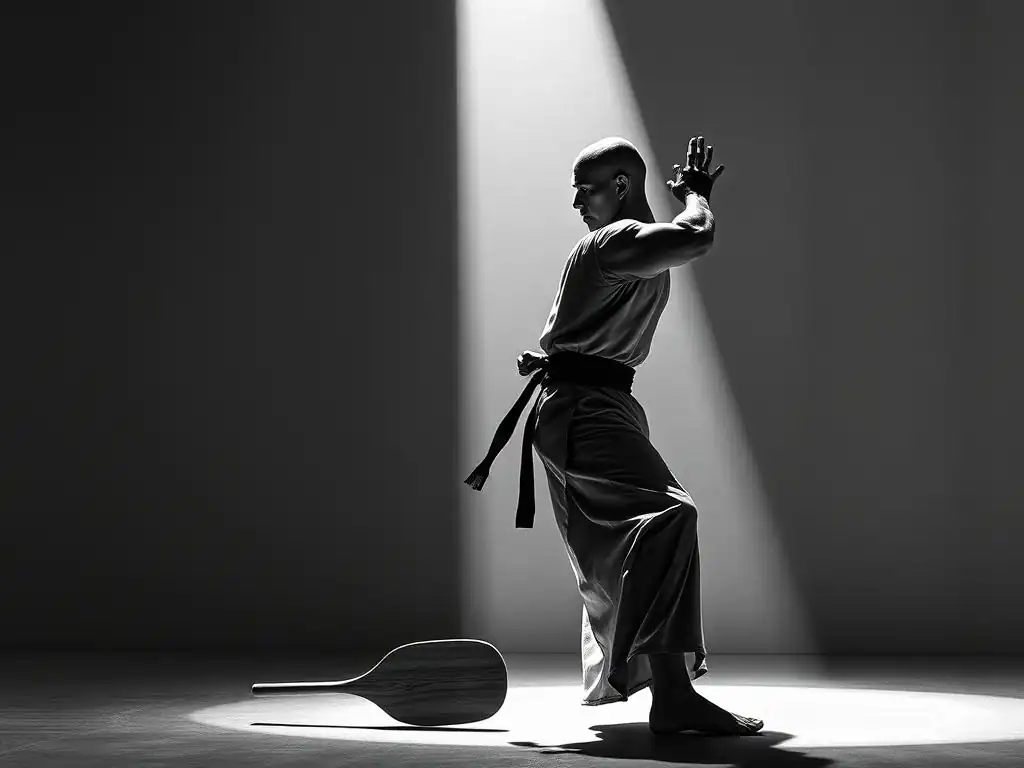
Improving reaction time is fundamental to translating anticipation into effective action. While anticipation is about predicting what will happen, reaction time is about how quickly you can respond once the prediction is made or an action is initiated. These drills specifically target the speed of your physical response to a stimulus. Consistent practice can shave off valuable milliseconds from your reaction time, making your blocks, evasions, and counter-attacks faster and more fluid. These drills are often simple but require focused intensity to be effective.
Integrating reaction time drills into your routine is a direct way to make your agility drills anticipate opponent speed more effectively. If you can react faster, the window of opportunity provided by anticipating a movement becomes larger and more exploitable. This can be the difference between narrowly avoiding a strike and having ample time to set up a devastating counter.
The Tennis Ball Drop Drill for Reaction Speed
The tennis ball drop drill is a classic, simple, yet highly effective method for improving visual reaction time and hand-eye coordination. It requires minimal equipment: just a tennis ball and a partner or a wall. The basic version involves a partner holding a tennis ball at arm's length above you and dropping it without warning.
Your task is to catch the ball before it bounces twice (or even once, for advanced levels). The partner can vary the timing and height of the drop, forcing you to stay alert and react instantly to the visual cue of the ball leaving their hand.
A variation involves standing facing a wall, holding a tennis ball in one hand, and dropping it while simultaneously touching the wall with the other hand before catching the ball with the dropping hand after it bounces. This adds a requirement for quick body movement alongside hand reaction.
The unpredictable nature of the drop forces your brain and body to process visual information and initiate a motor response rapidly. Consistent practice, aiming to catch the ball sooner or with fewer bounces, directly translates to faster visual processing and reaction speed needed to anticipate opponent speed and react accordingly in sparring.
Light Reflex Training for Enhanced Visual Response
Modern training tools often incorporate light reflex training systems, which use illuminated targets to test and improve reaction time and agility. These systems typically involve multiple sensors or lights placed on a wall or floor, which light up randomly. The user must touch or move to the illuminated target as quickly as possible to turn it off, at which point another light illuminates elsewhere. This type of training is excellent for developing peripheral vision awareness and the ability to react quickly to unpredictable visual stimuli in different locations.
Light reflex training can be highly customized to simulate martial arts movements. For instance, lights can be placed at head height, body height, and leg height to mimic targets or incoming attacks, requiring specific defensive movements like blocks, slips, or evasions. Some systems allow programming sequences or random patterns, increasing the complexity and challenge.
By forcing rapid decision-making ("Which light is on?") and immediate physical response ("How do I get there fastest? "), these drills significantly improve the speed at which you can process visual cues and initiate movement, directly supporting your ability with agility drills anticipate opponent speed and direction.
Footwork Drills for Improved Mobility and Evasion
Superior footwork is the bedrock of agility in martial arts. It allows you to maintain balance, generate power, close or create distance, and, crucially, evade incoming attacks or position yourself to capitalize on an opponent's anticipated movement. Footwork drills aren't just about moving fast; they are about moving efficiently, with control, and in response to changing circumstances – precisely what is needed to anticipate opponent speed and react. Drills focusing on quick direction changes, lateral movement, and explosive steps build the physical capacity to act on predictions.
Effective footwork makes you a harder target to hit and provides the mobility needed to implement defensive and offensive strategies based on your anticipation. If you anticipate a powerful cross, rapid lateral footwork might be your best defense. If you anticipate an opening after your opponent overcommits, explosive forward movement is necessary to capitalize.
Cone Drills for Agility and Directional Changes
Cone drills are a staple in many sports for developing agility, and they are highly applicable to martial arts. Setting up cones in various patterns – such as a simple shuttle run between two cones, a square pattern, or a more complex 'L' or 'T' shape – forces practitioners to repeatedly accelerate, decelerate, and change direction sharply. These drills emphasize quick steps, low centers of gravity during turns, and maintaining balance throughout rapid changes in movement vector.
Performing these drills at high intensity, focusing on minimizing transition time between movements, directly improves the explosive power and coordination needed for rapid evasions or angle changes in combat. For example, a simple square drill requires moving forward, laterally, backward, and laterally again – mimicking the multidirectional movement needed to track or evade an opponent who is constantly shifting. Regularly practicing cone drills, perhaps timing yourself to track improvement, enhances the physical agility that allows you to quickly reposition based on anticipating opponent speed or direction.
Ladder Drills for Foot Speed and Coordination
Agility ladders, laid flat on the ground, provide a structured way to improve foot speed, coordination, and rhythm. Drills involve various patterns of stepping through the squares – such as single steps, double steps, in-and-out steps, or lateral shuffling – requiring quick, precise foot placements. While not directly simulating combat movement, ladder drills develop the fine motor skills and rapid leg turnover that contribute significantly to overall foot speed and the ability to execute complex footwork patterns fluidly.
The coordination developed through ladder drills is essential for moving quickly and precisely without stumbling or losing balance, especially when changing direction. This improved coordination allows for faster, more controlled footwork when responding to an anticipated attack or movement. For instance, if you anticipate a low kick, quick lateral steps developed through ladder drills enable a faster, more stable check or evasion. Incorporating ladder drills into your routine helps build the foundational foot speed and dexterity that make your agility drills anticipate opponent speed and react with greater efficiency.
Shadow Boxing with Anticipation Focus
Shadow boxing is a fundamental martial arts practice, but it can be elevated into a powerful tool for developing anticipation skills by adding a specific focus. Instead of just practicing techniques in the air, you actively visualize an opponent and, more importantly, visualize their movements and reactions, anticipating what they might do in response to your actions or what they might initiate themselves. This mental layer transforms shadow boxing from a purely physical exercise into a cognitive one.
By consciously simulating sparring scenarios and predicting your imaginary opponent's actions, you train your brain to look for cues and prepare responses. This mental rehearsal, combined with the physical execution of techniques and footwork, creates a more realistic and effective training environment for anticipation.
Visualizing Opponent Movements During Shadow Boxing
During shadow boxing, dedicate segments of your round to visualizing a specific type of opponent or scenario. Imagine a fast puncher who likes to counter your jab, a kicker who favors the low leg, or a grappler looking for an entry. As you throw your techniques, visualize how this specific opponent would react. If you throw a jab, visualize them slipping it and throwing a cross. Then, practice your defensive response – slipping the cross and countering. This active visualization trains your mind to anticipate common reactions and initiate your defense or follow-up offense instantly.
This method forces you to think strategically about attack and defense sequences. It's not just about throwing a punch; it's about throwing a punch to elicit a specific reaction and being ready for it. By repeatedly running through these visualized scenarios, you build a mental library of potential exchanges and train your reaction pathways. This makes your shadow boxing not just about technique, but about developing the strategic foresight and quick responses needed to anticipate opponent speed and actions in live sparring.
Incorporating Reactive Footwork into Shadow Boxing Routines
Beyond visualizing attacks and defenses, actively incorporate reactive footwork into your shadow boxing based on your anticipated opponent's movements. If you visualize your opponent stepping in to close distance, practice your backward or lateral evasion footwork. If you visualize them circling, practice cutting them off or maintaining optimal distance with your own circular movement. This means your footwork during shadow boxing isn't just random movement; it's purposeful, dictated by the imagined actions of your opponent.
For example, as you throw a combination, visualize your opponent blocking and stepping forward aggressively. Your response in shadow boxing should be immediate backward or diagonal footwork to create space, rather than just staying put. If you visualize them throwing a low kick, practice a quick check or lateral step as you deliver a counter punch. This integration of mental anticipation with physical footwork makes your shadow boxing a powerful drill for developing the agility and mobility needed to react effectively when you agility drills anticipate opponent speed and intent in a real exchange.
Advanced Agility Drills for Predicting Opponent Tactics
Partner Drills: Simulating Real Combat Scenarios
While solo drills are valuable, training with a partner introduces the crucial element of unpredictability and real-time feedback, essential for developing advanced anticipation skills. Partner drills allow you to practice reading actual human movement, body language, and reactions, which are far more complex than reacting to cones or lights. These drills can be structured to focus specifically on observation and rapid response, bridging the gap between isolated agility training and live sparring.
Working with a partner allows for progressive resistance and complexity. You can start with pre-planned movements and gradually introduce randomness, feints, and variable speed. This helps refine your ability to read subtle cues under increasing pressure and speed, making your agility drills anticipate opponent speed and tactical decisions in a more realistic environment.
Sparring Drills Focused on Reading Opponent Intentions
Specific sparring drills can be designed purely to enhance your ability to read your opponent's intentions. One such drill is "reactive sparring," where partners agree to move around and feint, but only one person is allowed to initiate an attack at a time, based on reading an opening or a tell from the other. The defender's goal is solely to evade or block based on anticipating the attack, without counter-attacking. This removes the pressure of offense and allows complete focus on observation and defensive movement.
Another drill involves limiting the techniques used, forcing both partners to become highly attuned to the subtle variations in the allowed attacks. For instance, sparring using only jabs and crosses encourages intense focus on shoulder, hip, and weight shifts that precede these specific punches. By isolating techniques or focusing solely on defense/evasion, these sparring drills provide a controlled environment to practice reading opponent cues and reacting with appropriate footwork and body movement, directly improving how your agility drills anticipate opponent speed and tactical choices.
Reactionary Blocking and Evading Drills
These drills focus on developing instant, automatic defensive reactions based on reading an opponent's attack as early as possible. One partner throws a variety of strikes (punches, kicks) at moderate speed and power, while the other's sole focus is on blocking, parrying, or evading using minimal, efficient movements. The attacker should vary the targets and techniques unpredictably, forcing the defender to constantly read and react. The emphasis is on reacting to the initiation of the movement, not waiting for the technique to be fully committed.
A variation involves the attacker using feints frequently. The defender must learn to differentiate between a genuine attack and a feint based on subtle cues, reacting only to the real threats. This sharpens their ability to read intent and avoid being fooled. By practicing reacting instantly with appropriate defensive agility – like slipping, bobbing, weaving, or taking a quick angle – you train your body to respond efficiently to anticipated strikes. This makes your physical defense automatic, allowing your mind to simultaneously anticipate follow-up attacks or opportunities, proving how crucial agility drills anticipate opponent speed and enable effective defense.
Reading Body Language: Advanced Anticipation Techniques
Moving beyond obvious telegraphs, advanced anticipation involves reading more complex aspects of an opponent's body language. This includes subtle shifts in weight, muscle tension, breathing patterns, and even micro-expressions on their face. These cues often reveal not just the imminent technique, but also their state of mind, fatigue level, or overall strategy. Learning to interpret this deeper layer of communication provides a significant predictive advantage.
This level of reading requires extensive experience and focused observation, often developed over years of sparring and competition. However, specific training can accelerate this learning process. By paying attention to these less obvious signals, you gain a more holistic understanding of your opponent's readiness, confidence, and potential next moves, enhancing your ability to anticipate opponent speed and tactical decisions.
Identifying Micro-Expressions for Predictive Advantage
Micro-expressions are fleeting facial expressions that occur within a fraction of a second, often unconsciously, and reveal a person's genuine emotional state regardless of their attempts to conceal it. In a combat context, micro-expressions can reveal fear, anger, surprise, or even contempt – emotions that can influence an opponent's decision-making and predictability. While not directly indicating a specific technique, recognizing these can provide insight into their confidence or stress levels, which might precede desperate attacks or defensive lapses.
Training to spot micro-expressions is challenging but possible through dedicated practice, sometimes involving studying resources on facial coding. While you won't become a mind reader, being able to pick up on subtle signs of hesitation or frustration, for instance, can inform your strategy – perhaps indicating a good time to press the attack or maintain defensive posture. This subtle reading skill, combined with physical readiness from agility drills anticipate opponent speed and movements, adds another layer to your predictive capability.
Analyzing Breathing Patterns for Stress and Intent Detection
An opponent's breathing pattern can be a surprisingly revealing indicator of their physical and mental state, and sometimes, their intentions. Heavy, rapid breathing often signals fatigue or stress, which can lead to slower reactions or more predictable, power-focused attacks. Holding their breath might indicate they are about to exert maximum effort or are bracing for impact. Changes in breathing rhythm can also sometimes precede explosive movements.
Learning to observe an opponent's breathing, even peripherally, can provide clues. For example, if an opponent's breathing becomes noticeably heavier after an exchange, it might indicate they are tiring, suggesting an opportunity to increase pressure. Conversely, a sudden, sharp intake of breath might precede a powerful, explosive technique. This subtle physiological cue, combined with reading body posture and movement, contributes to a more complete picture of your opponent's state and intentions, helping you anticipate opponent speed and actions more effectively.
Integrating Agility Drills into Your Martial Arts Training
Structuring Your Training Schedule for Optimal Anticipation Development
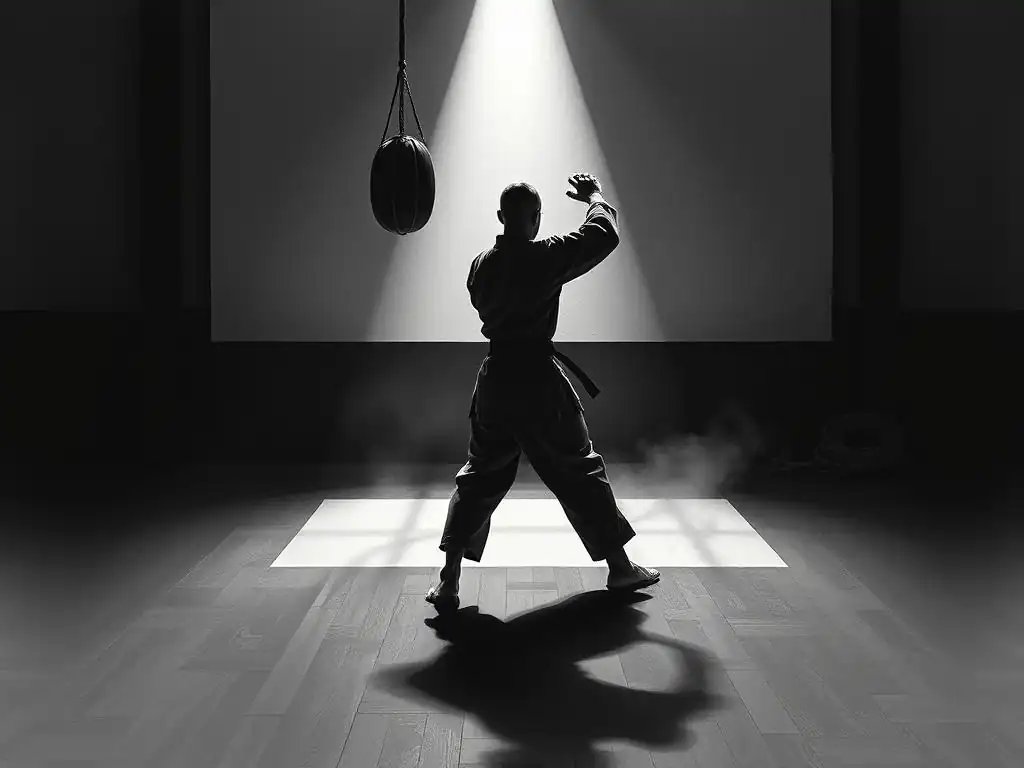
To effectively improve anticipation through agility training, these drills must be intentionally integrated into your regular martial arts schedule, not treated as an afterthought. A balanced approach involves dedicating specific time slots each week to anticipation-focused drills, alongside your technical, strength, and conditioning work. A typical weekly structure might include:
- 2-3 sessions focused on technical drills (forms, basic techniques, partner drills)
- 2 sessions dedicated to agility and reaction time drills (cone drills, ladder drills, light training, tennis ball drills)
- 1-2 sessions of sparring with a specific focus on reading opponents and reacting (reactive sparring, limited technique sparring)
- Daily short sessions of shadow boxing incorporating visualization and reactive footwork.
Consistency is key. Short, frequent training sessions focusing on anticipation and agility drills anticipate opponent speed skills are often more effective than infrequent, long sessions. Aim for progression – gradually increasing the speed, complexity, and unpredictability of drills as your skills improve.
Measuring Progress: Tracking Improvements in Reaction Time and Prediction Accuracy
Tracking your progress is essential for staying motivated and identifying areas for improvement. For reaction time, use timed drills like the tennis ball drop (counting successful catches within limits) or light reflex training systems (which often provide objective reaction time data in milliseconds). You can measure improvements in agility using timed cone or ladder drills. Record your times or scores periodically (e.g., every 4-6 weeks) to see quantitative improvements.
Measuring prediction accuracy in sparring is more subjective but can be done through self-assessment or with coach feedback. After a sparring session, review which attacks you successfully anticipated and reacted to effectively, and which ones caught you by surprise. Did you correctly read your opponent's feints?
Were you able to react quickly to their preferred techniques? You can even use video recording of sparring sessions for later analysis, allowing you to objectively review instances where you successfully or unsuccessfully anticipated opponent speed and actions. Setting specific, measurable goals, like decreasing your average reaction time by 50ms over three months or successfully anticipating your partner's jab 80% of the time in a specific drill, can help focus your training.
Adjusting Drills Based on Sparring Performance and Weaknesses
Your performance in sparring is the ultimate test of your anticipation and agility. Pay close attention to moments where you are caught off guard, where your reactions are too slow, or where you misread your opponent. These moments highlight specific weaknesses in your anticipation skills or the agility needed to respond. Use this feedback to adjust your training.
For example, if you consistently struggle to anticipate and evade fast, straight punches, increase the frequency and intensity of your reaction time drills focusing on forward incoming stimuli, and practice slipping or pulling back during shadow boxing and partner drills. If you are having trouble anticipating low kicks from a southpaw stance, spend more time doing footwork drills that involve lateral movement specific to that angle, and practice reading southpaw tells during sparring. Tailoring your agility drills anticipate opponent speed and specific opponent tendencies encountered in sparring ensures your training is relevant and effective.
The Mental Game: Enhancing Anticipation Through Visualization
Anticipation is as much a mental skill as it is physical. While agility drills build the physical capacity to react, visualization trains the mind to recognize patterns, process information quickly, and prepare responses before they happen. Integrating mental rehearsal into your training routine significantly enhances your predictive abilities.
Visualization leverages the brain's ability to simulate experiences, strengthening neural pathways associated with recognizing cues and executing responses. By mentally practicing anticipation and reaction, you become faster and more confident when facing similar situations in reality.
Visualization Techniques for Anticipating Opponent Attacks
Dedicated visualization sessions can dramatically improve your ability to anticipate opponent speed and actions. Find a quiet place where you can focus without distraction. Close your eyes and vividly imagine yourself in a sparring or competition scenario. Picture your opponent – their stance, their energy, their typical movements. Then, visualize them initiating an attack. See the subtle tell – the weight shift, the shoulder dip, the eye movement. Mentally rehearse recognizing that tell instantaneously.
Next, visualize your predicted response. See yourself executing the perfect evasion, block, or counter-attack with speed and precision, driven by your anticipation. Engage all your senses in the visualization: feel the mat beneath your feet, hear the sounds of movement and breathing, feel the hypothetical impact blocked or evaded. Run through multiple scenarios and different types of attacks. This mental practice of recognizing cues and initiating responses strengthens the connection between observation and action, making your physical agility drills anticipate opponent speed and react much more effectively in real situations.
Mental Rehearsal of Defensive Strategies
Beyond visualizing specific attack/response sequences, dedicate time to mentally rehearsing broader defensive strategies based on anticipation. Imagine your opponent is known for relentless forward pressure; mentally practice how you would use footwork and anticipation to manage distance, create angles, and counter their aggression. If they are a counter-puncher, visualize using feints to draw out specific reactions you can then capitalize on, and mentally rehearse being ready for their anticipated counters.
This type of mental rehearsal helps you internalize strategic responses based on anticipated opponent tactics. It's about building a mental playbook of 'if-then' scenarios. "If my opponent shows this tell and initiates this attack, then I will respond with this specific defensive movement and follow-up." By mentally practicing these strategies, you reduce the cognitive load during live sparring, allowing your reactions based on anticipation to become more automatic and fluid. This mental preparation complements the physical conditioning from agility drills anticipate opponent speed and allows for a more integrated and effective performance.
Conclusion: Achieving Martial Arts Mastery Through Anticipation and Agility
Mastering anticipation is a cornerstone of high-level martial arts performance. It elevates a practitioner from simply reacting to attacks to proactively controlling the engagement by predicting and responding to an opponent's movements before they fully materialize. This predictive capability, combined with the physical readiness provided by agility, creates a formidable combination.
Integrating agility drills anticipate opponent speed and intentions into your training is a systematic way to build this crucial skill. By focusing on reaction time drills, refining footwork, incorporating anticipation into shadow boxing, and engaging in partner drills designed for reading opponents, you develop both the mental acuity to predict and the physical capacity to respond.
Coupled with advanced techniques like reading body language and leveraging mental visualization, you build a comprehensive approach to anticipating your opponent. Consistent, focused training on these elements will undoubtedly sharpen your reflexes, improve your tactical decision-making, and significantly enhance your performance, moving you closer to true martial arts mastery.
Frequently Asked Questions
How do agility drills on MartialArtsMastery.org help me anticipate an opponent's speed?
Agility drills sharpen your reaction time and spatial awareness, enabling you to better predict and respond to an opponent's movements in real-time. This allows you to anticipate their next move based on visual cues and patterns.
What specific types of agility drills are most effective for speed anticipation in martial arts?
Drills focusing on footwork, lateral movement, and change of direction are crucial. Examples include cone drills, ladder drills, and partner drills involving reactive movements to simulate unpredictable opponent actions.
How does MartialArtsMastery.org's content cover the connection between agility and opponent speed anticipation?
The site provides training tips that explain how specific drills translate to improved anticipation skills. It also offers practical self-defense strategies that emphasize the importance of agility in responding to fast attacks.
Can agility drills alone guarantee successful anticipation of an opponent's speed, or are there other factors involved?
While critical, agility is just one piece of the puzzle. Experience, strategy, and knowledge of your opponent's style also significantly contribute to your ability to anticipate their actions effectively.
Are there any historical overviews on MartialArtsMastery.org that illustrate how legendary practitioners used agility to anticipate an opponent's speed?
Yes, the site contains profiles of legendary practitioners where their agility and strategic use of movement are highlighted. Often, these profiles detail how they used footwork and positioning to gain an advantage over faster opponents.
Final Reflection: Mastering the Art of Anticipation
The ability to anticipate an opponent's movements, honed through targeted agility drills, isn't just a skill for the athletic field; it's a metaphor for navigating the complexities of life. The principles of observation, reaction, and adaptation, central to these drills, translate directly into enhanced decision-making and strategic thinking in all aspects of our lives. Understanding and applying these principles allows us to not only react to challenges but to proactively shape our responses and outcomes.
This journey into agility and anticipation has underscored the profound impact of mindful practice on our ability to perceive and react to the world around us. The realization that we can actively train our minds and bodies to better understand and predict the actions of others is incredibly empowering. It reminds us that we are not passive observers but active participants in shaping our own destinies. The best way to predict the future is to create it.
- Peter Drucker. This quote perfectly encapsulates the power that anticipation, cultivated through deliberate practice, gives us.
Now, consider how you can apply these principles of observation, reaction, and adaptation in your own life. Whether it's in your career, your relationships, or your personal pursuits, challenge yourself to become more attuned to the subtle cues and patterns around you. Embrace the agility of mind and body, and discover the transformative power of anticipation. The world is a dynamic field of play; are you ready to anticipate your next move and shape your own victory?
Ignite Your Reflexes: Begin Your Training Journey Now!
Thanks for diving into the world of agility and anticipation with us! We hope you've gained valuable insights into sharpening your reflexes and predicting your opponent's moves. Now, let's put that knowledge into action and elevate your martial arts prowess.
- Commit to 15 minutes of agility drills daily to witness a real transformation in your reaction time.
- Share this article with your training partners and spark a friendly competition to see who can master the drills the fastest.
- Record yourself performing one of these drills and analyze your movements. What unexpected adjustments can you make to improve your form?
What specific agility drill will you incorporate into your routine today to instantly boost your anticipation skills?