
Reactive Agility Mastery: Drills for Unpredictable Combat Scenarios


Welcome to Martial Arts Mastery, your ultimate resource for unlocking the secrets of combat excellence. Delve into a world where skill, strategy, and discipline converge. Are you ready to elevate your reflexes and outmaneuver any opponent? Explore our in-depth guide to reactive agility training techniques and discover how to transform your movements into lightning-fast responses in unpredictable combat scenarios. Your journey to mastery begins now!
- Introduction to Reactive Agility in Martial Arts
- Understanding the Principles of Reactive Agility Training
- Reactive Agility Training Techniques: Drills for Enhanced Combat Performance
- Optimizing Your Reactive Agility Training Program
- Advanced Reactive Agility Concepts for Elite Martial Artists
- Measuring and Tracking Your Reactive Agility Progress
- Conclusion: Mastering Reactive Agility for Superior Combat Prowess
-
Frequently Asked Questions
- What is reactive agility and why is it important in martial arts?
- What are some examples of reactive agility training techniques that can be found on MartialArtsMastery.org?
- How do reactive agility drills differ from traditional agility drills?
- Can reactive agility training improve my overall martial arts performance, even in forms or kata?
- How often should I incorporate reactive agility training techniques into my martial arts regimen?
- Final Reflection: Embracing the Unforeseen
- Ignite Your Reflexes: Evolve Your Combat Game Now!
Introduction to Reactive Agility in Martial Arts
The Importance of Reactive Agility for Combat Effectiveness
In the dynamic and often chaotic environment of martial arts combat, relying solely on pre-planned movements or brute force is insufficient. True mastery lies in the ability to adapt instantly to unforeseen circumstances. This is where reactive agility becomes paramount. It's the capacity to quickly and effectively change direction or speed in response to a stimulus, such as an opponent's sudden attack, a change in their stance, or an unexpected movement. Without highly developed reactive agility, even the fastest fighter can be caught off guard, unable to process and respond to the unpredictable flow of a real confrontation.
Consider a sparring match where an opponent suddenly switches from a standard jab to a deceptive feint followed by a low kick. A fighter with poor reactive agility might be fooled by the feint, committing to block the jab and leaving themselves open to the kick. Conversely, a fighter with superior reactive agility can process the visual cue of the feint almost instantly, recognize the true threat of the kick, and adjust their footwork and guard to defend effectively within milliseconds.
This ability to react appropriately under pressure is a critical differentiator between competent practitioners and those who can truly dominate complex combat scenarios. Developing robust reactive agility training techniques is fundamental to achieving this level of responsiveness.
Defining Reactive Agility: Beyond Speed and Quickness
Reactive agility is distinct from simple speed or planned agility. While speed is the ability to move quickly in a straight line, and planned agility involves executing pre-determined changes in direction (like running a cone drill), reactive agility is about reacting to an external stimulus that cannot be anticipated with perfect accuracy. It involves a complex interplay between sensory input (seeing or hearing something), cognitive processing (interpreting the stimulus and deciding on a response), and motor execution (physically performing the required movement).
Think of the difference between running a slalom course you've practiced many times versus navigating a crowded street where people move unpredictably. The former is planned agility; the latter requires reactive agility. In martial arts, this translates to reacting to a bobbing and weaving opponent, responding to a sudden clinch attempt from an unexpected angle, or adjusting footwork based on a shifting guard. Effective reactive agility training techniques specifically target this stimulus-response loop, aiming to reduce reaction time and improve the quality of the physical response.
Why Reactive Agility Training Techniques are Crucial for Martial Artists
The inherent unpredictability of combat demands more than just physical prowess; it requires a highly tuned nervous system capable of rapid processing and execution. Reactive agility training techniques directly address this need by forcing the practitioner to respond dynamically to external cues. Unlike drills that focus on pre-set patterns, these techniques simulate the uncertainty of a real fight, improving the athlete's ability to read opponents, make split-second decisions, and execute appropriate movements under pressure.
Integrating reactive agility training techniques into a regular regimen can lead to measurable improvements in performance. For instance, studies in sports science suggest that consistent reactive agility training can reduce reaction times by a significant margin, potentially shaving off tens or even hundreds of milliseconds – a critical difference in fast-paced exchanges. Furthermore, improved reactive capabilities enhance defensive skills like evasion and blocking, as well as offensive timing, allowing fighters to capitalize on fleeting openings. These techniques are not just about moving faster, but about moving smarter in response to a dynamic environment.
Understanding the Principles of Reactive Agility Training
Cognitive Processing and Reaction Time in Combat
At the heart of reactive agility lies the cognitive process: the brain's ability to receive sensory information, interpret it, and formulate a response. In combat, this process must occur in fractions of a second. When an opponent initiates an action, the fighter's eyes (or ears) detect the stimulus.
This signal travels to the brain, which must then identify the action, assess its threat level, recall potential responses, select the optimal one, and finally send commands to the muscles to execute the chosen movement. This chain of events constitutes reaction time, and while physiological limits exist, training can significantly optimize the cognitive links.
Reactive agility training techniques are designed to shorten this cognitive loop. By repeatedly exposing the brain to unpredictable stimuli and requiring rapid, appropriate responses, these drills help myelinate neural pathways, making the processing faster and more efficient. For example, consistently reacting to varied visual cues helps the visual cortex and associated brain regions become more adept at pattern recognition and threat assessment. This improved processing speed means the fighter can initiate their physical response sooner, gaining a crucial advantage in exchanges where milliseconds can determine the outcome.
The Role of Perception and Decision-Making
Effective reactive agility is heavily reliant on acute perception and rapid, sound decision-making. Perception involves not just seeing or hearing an opponent's movement but understanding its meaning and intent. Is that movement a genuine attack, a feint, or a setup for something else? Skilled martial artists develop the ability to read subtle cues – weight shifts, eye direction, muscle tension – that provide early warnings of an opponent's intentions. This heightened perceptual ability reduces the "what-is-happening?" phase of the cognitive process.
Once the stimulus is perceived and partially understood, the decision-making process kicks in. Given the perceived threat, what is the best response? Should I block, evade, counter-attack, or clinch? This decision must be made under extreme time pressure and often with incomplete information. Reactive agility training techniques, particularly those involving complex or ambiguous cues, force practitioners to make rapid decisions based on limited data, improving their ability to choose the most effective action quickly. Over time, with sufficient practice using specific reactive agility training techniques, these decisions become semi-instinctive, almost bypassing conscious thought.
Linking Agility to Anticipation and Evasion
While reactive agility is defined by reacting to unpredictable stimuli, training it can also enhance a fighter's ability to anticipate and evade. Improved perception, honed through reactive drills, allows a fighter to better read an opponent's preparatory movements, providing a fraction of a second's warning before an attack is fully launched. This isn't true anticipation (predicting the future), but rather reading the opponent's current state and probable next action based on experience and observation.
Furthermore, the physical agility developed through reactive agility training techniques directly supports effective evasion. The ability to quickly change direction, stop, start, or change levels is fundamental to dodging attacks, slipping punches, or moving out of the line of fire. By practicing reacting to sudden movements, the body becomes more adept at executing the sharp, explosive movements required for successful evasion. Combining this physical capability with improved perceptual skills results in a fighter who is not only fast to react but also better at avoiding having to react to full-power attacks in the first place.
Reactive Agility Training Techniques: Drills for Enhanced Combat Performance

Drill 1: The Mirror Drill for Reaction and Footwork
The mirror drill is a fundamental reactive agility training technique that requires one partner to act as the "leader" and the other as the "mirror." The leader moves freely within a designated area, and the mirror's objective is to mimic their movements as closely and quickly as possible, staying a consistent distance away. This drill primarily develops reactive footwork and the ability to instantly respond to changes in direction and speed.
To set up the mirror drill, define a clear space, perhaps a 5x5 meter square. Partners face each other, maintaining a distance of maybe 1-2 meters. One partner is designated the leader, the other the mirror. The leader begins moving forwards, backwards, sideways, or diagonally, changing speed and direction unpredictably. The mirror must react immediately, mirroring the leader's movement while trying to maintain the set distance. Sessions can last 1-3 minutes, with partners switching roles. This simple yet effective reactive agility training technique requires constant visual tracking and immediate motor response.
Setting up the Mirror Drill
Choose a clear training area free of obstacles. A matted surface is ideal for martial arts training. Partners stand facing each other, establishing a comfortable starting distance, typically arms' length to two steps apart. Agree on the boundaries of the training zone. The leader understands they must move realistically, simulating footwork changes seen in combat – shuffles, steps, pivots, level changes (like lowering into a deeper stance), but avoiding large, unrealistic leaps or sprints that break the mirroring connection. This foundational reactive agility training technique focuses on small, rapid adjustments.
Before starting, partners can agree on the intensity and types of movement. Initially, keep movements relatively slow and predictable. As skill develops, the leader should increase speed, make changes more abrupt, and incorporate feints or changes in upper body posture. The mirror's goal is not just to follow, but to react instantly, minimizing any delay between the leader's movement and their own. This immediate response is a core component of effective reactive agility training techniques.
Executing the Mirror Drill Effectively
Execution is key to maximizing the benefits of this reactive agility training technique. The mirror must maintain focus on the leader's hips and feet, as these often provide the earliest cues of impending movement. Their eyes should be scanning, not fixed on one point. The mirror's own stance should remain athletic and balanced, ready to move in any direction. Movement should be low to the ground, using small, quick steps rather than large, slow ones, allowing for rapid changes in direction.
The leader should vary their movements realistically, mimicking footwork used in sparring: lateral shuffles, forward/backward pushes, stepping in and out, changing angles. They can also incorporate upper body fakes or head movement to add complexity. The mirror's ability to react quickly and maintain position is the measure of success. This repetition helps condition the reactive neuromuscular pathways, making the response faster and more automatic. It's a fundamental reactive agility training technique for developing responsive footwork.
Progressing the Mirror Drill: Adding Complexity
To progress this reactive agility training technique, several variations can be introduced. Increase the size of the training area, requiring larger and faster movements. Decrease the distance between partners, forcing quicker, smaller adjustments. Introduce specific constraints, such as requiring the mirror to stay within a specific quadrant of the area relative to the leader, or only allowing certain types of footwork (e.g., shuffling only).
Adding offensive or defensive cues can further enhance this reactive agility training technique. The leader might occasionally flash a hand signal (like holding up two fingers) which the mirror must react to with a specific movement (like touching their own head). Or, the leader could simulate throwing a slow punch, and the mirror must react by slipping or blocking while continuing to mirror. These additions integrate cognitive decision-making into the reactive movement, making the drill a more comprehensive test and development of reactive agility.
Drill 2: The Reaction Ball Drill for Hand-Eye Coordination and Reflexes
Reaction balls are multi-sided rubber balls that bounce unpredictably, making them an excellent tool for developing hand-eye coordination, reflexes, and reactive agility in the upper body and hands. The erratic bounce forces the user to react instantly to an unforeseen trajectory, much like reacting to a feint or a sudden change in attack angle in combat. This is a core reactive agility training technique for improving upper body response speed.
Using a reaction ball is straightforward but challenging. Typically, the ball is thrown against a hard surface (wall or floor) and the user attempts to catch it after one bounce. Because of its shape, the bounce angle and speed are highly variable, demanding immediate visual tracking and hand adjustment. Regular practice with a reaction ball can significantly sharpen reflexes and improve the speed and accuracy of hand movements, vital for blocking, parrying, and rapid hand fighting in martial arts. This is a simple yet effective reactive agility training technique accessible to most practitioners.
Choosing the Right Reaction Ball
Reaction balls come in various sizes and materials, affecting the speed and height of the bounce. For martial arts purposes, a standard-sized ball (roughly the size of a tennis ball or slightly larger) made of firm rubber is usually appropriate. Smaller balls require more precise hand-eye coordination, while larger ones might be easier to track initially. The bounciness of the ball also matters; a very lively ball will require faster reactions.
Beginners might start with a slightly less bouncy ball or use a softer surface (though a hard, flat surface is best for true unpredictability). As proficiency improves, move to a standard firm rubber ball and use a hard wall or floor. The key is that the bounce is genuinely unpredictable, forcing a reactive rather than anticipatory response. Selecting the right ball is the first step in implementing this specific reactive agility training technique effectively.
Basic Reaction Ball Drills for Martial Arts
The most basic drill involves simply throwing the ball against a wall and catching it after one bounce. Stand a few feet away from a solid wall. Throw the ball underhand or overhand, varying the throw's speed and angle slightly to increase unpredictability. Focus on tracking the ball visually from the moment it leaves the wall until it is caught. Use two hands initially, then progress to catching with one hand. This repetitive action trains the eyes and hands to react quickly to erratic movement, a fundamental reactive agility training technique for upper body reflexes.
Another basic drill is bouncing the ball off the floor. Stand over the ball and drop or gently throw it downwards. Catch it after one bounce. Vary the throw angle and height. This helps with reacting to stimuli originating from a lower angle, useful for defending against low kicks or grappling attempts. These simple drills build the foundation for more complex reactive agility training techniques involving the reaction ball.
Advanced Reaction Ball Drills: Sparring Applications
To make reaction ball drills more relevant to sparring, incorporate movement and simulate combat scenarios. Instead of standing still, shuffle your feet or move laterally while throwing and catching the ball. Throw the ball against the wall and then quickly move to the side to catch it, simulating evading a strike. Throw the ball and then immediately assume a defensive guard before catching it.
A partner can also be incorporated. Have a partner stand behind you and throw the reaction ball against the wall or floor, calling out "Now!" as they throw. This adds an auditory cue and removes the ability to anticipate based on your own throw. For even more advanced training, use two reaction balls simultaneously, or have a partner throw the ball towards you while you are in a defensive stance, requiring you to block or parry it with hands or forearms before catching it. These advanced applications turn a simple tool into a sophisticated reactive agility training technique.
Drill 3: The Partner Cue Drill for Anticipation and Response
The partner cue drill is a versatile reactive agility training technique that uses specific visual or auditory cues from a training partner to trigger a predetermined or spontaneous reaction from the practitioner. Unlike the mirror drill, which focuses on mirroring movement, the cue drill focuses on processing discrete signals and executing specific actions based on those signals. This directly trains the cognitive link in the reactive chain.
Setup involves two partners. One partner acts as the "cue giver," the other as the "reactor." Agree on a set of cues and corresponding reactions beforehand. For example, the cue giver raising their left hand might mean the reactor must perform a defensive slip to their right. The cue giver then presents these cues randomly, and the reactor must respond as quickly and accurately as possible. This method provides structured reactive agility training techniques focused on specific responses.
Implementing Visual Cues for Reactive Agility
Visual cues are common in martial arts and are easily simulated in this reactive agility training technique. Cues can be hand signals (e.g., holding up fingers indicating a specific combination, pointing left or right), body postures (e.g., shifting weight forward simulating an attack), or even colored cards held up. The reactor stands in their fighting stance, focused on the cue giver.
When the cue is shown, the reactor must identify it and perform the associated movement. For instance, if the cue is a partner extending their lead hand slightly, the reactor might practice reacting with a parry and step. If the cue is a partner dropping their level, the reactor might practice a sprawl or defensive clinch entry. The speed and accuracy of recognizing the cue and initiating the correct physical response are the primary focus of this reactive agility training technique.
Incorporating Auditory Cues for Realistic Scenarios
Auditory cues add another layer of realism to this reactive agility training technique, simulating verbal commands, shouts, or even the sound of movement. Cues can be simple words like "Left," "Right," "Forward," "Back," or more complex instructions like "Jab," "Low Kick," "Clinch." A partner stands out of the reactor's direct line of sight or with the reactor's back turned initially, giving verbal cues.
The reactor must listen for the cue and react appropriately. For example, hearing "Jab" might trigger a block or slip. Hearing "Clinch" might trigger a defensive tie-up or evasion. This type of reactive agility training technique forces the practitioner to rely on auditory processing, which is crucial in situations where visual information is obscured or attention is divided.
Developing Tactical Responses to Partner Cues
Beyond simple one-to-one cue-response mapping, this reactive agility training technique can be advanced to develop tactical decision-making. Instead of a single, specific reaction, the cue might indicate a situation requiring a choice of responses. For example, a visual cue of a partner stepping forward might require the reactor to decide whether to step back, sidestep, or meet the advance with a counter, based on the specific angle and speed of the step.
Progressing this drill involves making the cues more ambiguous or combining visual and auditory cues simultaneously. The cue giver might use a hand signal while also giving a verbal command that is slightly different, forcing the reactor to prioritize or integrate information. This level of complexity in reactive agility training techniques simulates the information overload and need for rapid interpretation present in high-level combat.
Drill 4: Sparring with Constraints for Adaptive Agility
Sparring is the ultimate test of reactive agility, but adding specific constraints can isolate and enhance particular reactive skills. Sparring with constraints involves setting rules that limit certain techniques or areas, forcing participants to adapt their usual strategies and react to situations they might not otherwise encounter. This is a highly effective, combat-specific reactive agility training technique.
Constraints can be varied. For instance, sparring where participants can only use techniques above the waist, or only kicks below the knee, or only hand techniques from a specific range. Another constraint could be limiting movement to only lateral steps, or prohibiting backward movement. These limitations force fighters to find novel solutions and react differently to their opponent's actions within the restricted framework, thereby developing adaptive reactive agility.
Setting Sparring Constraints to Force Adaptability
Constraints should be chosen based on the specific reactive skills you aim to develop. To improve reaction to close-range exchanges, spar with a rule that fighters must stay within grappling distance. To enhance reactive footwork for evasion, spar where one fighter is only allowed to score points through evasion (e.g., successfully dodging three attacks in a row).
Examples of constraints for reactive agility training techniques:
- Technique Limitation: Only allowing jabs and straight punches, forcing reactions to linear attacks.
- Target Limitation: Only allowing attacks to the legs, demanding reactive defense and movement below the waist.
- Movement Limitation: Requiring one fighter to keep one foot stationary, forcing upper body reactions and pivots.
- Role Play: One fighter is designated as purely defensive, reacting only with blocks, parries, and evasions for a round.
These constraints disrupt habitual patterns and compel the nervous system to find and execute new reactive solutions.
Analyzing Sparring Performance and Identifying Areas for Improvement
Sparring with constraints provides valuable feedback on reactive capabilities. After a round, analyze how well you adapted. Were you caught flat-footed by a technique you usually handle easily? Did the constraint force you into awkward positions? Consider reviewing video recordings if possible. Look for moments where you were slow to react, chose an ineffective response, or failed to perceive a cue.
Identifying these moments is crucial for targeted improvement. If you struggled to react to low attacks in a leg-kick-only round, it highlights a weakness in your reactive defense at that level. If you were unable to create openings when lateral movement was restricted, it points to a need to develop reactive angles or pivots. This analysis helps refine your reactive agility training techniques to address specific deficiencies.
Increasing Sparring Intensity and Complexity
As reactive skills improve within a constrained environment, gradually increase the intensity and complexity. This might mean increasing the speed or power of techniques, introducing more complex combinations, or reducing the time allowed for reaction. For example, if you were practicing reacting to single strikes with a constraint, progress to reacting to two or three-strike combinations.
Another way to increase complexity is to combine constraints or introduce dynamic constraints that change during the round (e.g., after 30 seconds, kicks are allowed). You can also add a scoring system that rewards effective reactive responses (e.g., points for successful evasions or immediate counter-attacks following a block). Continuously challenging the reactive system with increasing demands is key to achieving advanced reactive agility.
Optimizing Your Reactive Agility Training Program
Integrating Reactive Agility Drills into Your Regular Training Schedule
Effective development of reactive agility requires consistent and structured training. These drills should not be an afterthought but a planned component of your overall martial arts conditioning. A typical training week might allocate specific sessions or portions of sessions to reactive agility training techniques.
Consider incorporating reactive drills into your warm-up to prime the nervous system, or dedicate a specific day to agility and footwork, including reactive components. For example, spend 15-20 minutes at the beginning of a session rotating through 2-3 reactive agility training techniques like the mirror drill, reaction ball, or partner cues. Ensure these drills are performed when you are mentally fresh, as they require significant focus and cognitive effort. Consistency, perhaps 2-3 times per week, is more effective than infrequent, long sessions.
Periodization for Reactive Agility Development
Just like physical conditioning, reactive agility training techniques can benefit from periodization – structuring training into phases over time to optimize progress and prevent plateaus or overtraining. Initially, focus on developing fundamental reactive skills with simpler drills and lower intensity. This phase builds the basic neural pathways and physical coordination.
As you progress, move into phases that increase complexity and intensity. Introduce more unpredictable cues, faster movements, and drill variations that require more complex decision-making. Incorporate sparring with constraints during peak training phases. Include phases of lower intensity or active recovery where reactive drills are used for maintenance rather than peak development. This structured approach ensures continuous improvement in reactive agility training techniques over the long term.
The Importance of Recovery and Injury Prevention in Agility Training
Reactive agility training techniques are demanding on both the nervous system and the musculoskeletal system. The rapid, explosive movements involved, combined with the cognitive load, necessitate adequate recovery. Overtraining can lead to diminished reaction times, poor decision-making, and increased risk of injury.
Ensure sufficient rest between intense reactive training sessions. Incorporate stretching, foam rolling, and other recovery modalities to maintain tissue health and mobility. Proper warm-ups are absolutely critical before performing reactive drills to prepare muscles, tendons, and joints for sudden movements. Listen to your body and avoid pushing through sharp pain. Prioritizing recovery and injury prevention allows for consistent, safe progress in your reactive agility training techniques.
Advanced Reactive Agility Concepts for Elite Martial Artists
Scenario-Based Training for Real-World Combat Simulations
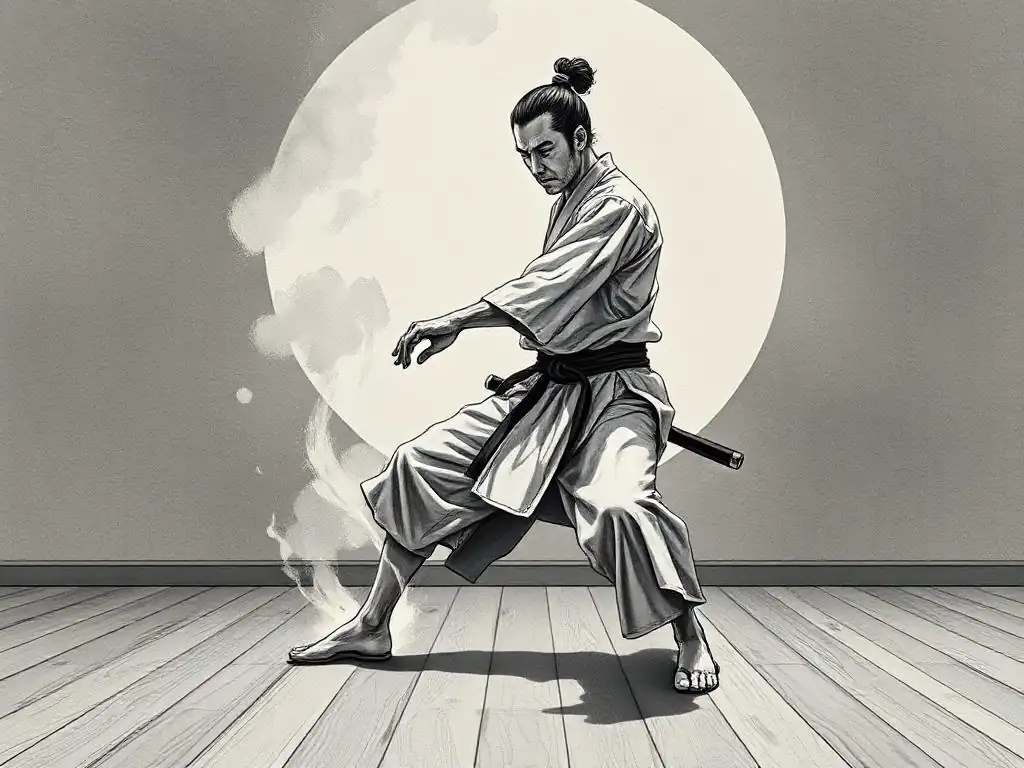
For elite martial artists, reactive agility training techniques must closely mimic the demands of actual combat or competition. Scenario-based training takes reactive drills a step further by creating realistic, complex situations that require integrating multiple skills under pressure. This moves beyond isolated drills to simulating the flow of a fight.
An example might be starting a drill from a specific, disadvantageous position (e.g., defending against a simulated takedown attempt) and requiring the practitioner to react and transition through various phases (escaping the takedown, creating space, reacting to a follow-up strike) based on the partner's unpredictable actions. These scenarios demand not just speed but the ability to read complex situations, make rapid tactical decisions, and execute chains of reactive movements. Such advanced reactive agility training techniques are crucial for high-level adaptability.
Developing Intuition and Instinct Through Repetition
At the highest levels, reactive responses appear almost instantaneous – like instinct. This isn't magic; it's the result of countless repetitions of reactive agility training techniques and sparring, leading to the development of highly efficient, almost automatic neural responses. The brain has processed similar stimuli and executed successful responses so many times that the decision-making phase is dramatically shortened, becoming sub-conscious.
Elite practitioners can often "feel" an opponent's intention or movement before it's fully manifest. This intuition is built upon a massive database of perceptual information and corresponding successful reactive movements stored in the brain. While deliberate reactive agility training techniques build the initial pathways, consistent, high-intensity practice allows these responses to become truly instinctive, enabling reactions that seem impossibly fast to the untrained eye.
Using Technology to Enhance Reactive Agility Training
Modern technology offers new avenues for enhancing reactive agility training techniques. Systems using sensors, lights, or interactive targets can provide highly variable and precisely measurable stimuli. For example, light boards with random patterns require users to react by touching out the lights as quickly as possible, providing objective data on reaction speed and accuracy.
Wearable technology can track movement speed, acceleration, and even potentially provide biofeedback on cognitive load or fatigue. While technology should supplement, not replace, traditional partner-based reactive agility training techniques, it can offer valuable data for analysis, create novel and highly variable stimuli, and provide engaging ways to train the reactive system. This allows for more precise assessment and tailoring of training programs for peak performance.
Measuring and Tracking Your Reactive Agility Progress
Performance Metrics for Reactive Agility
Measuring reactive agility can be more complex than measuring linear speed, but key metrics exist. Reaction time is a primary measure – the time elapsed between the stimulus (e.g., a light turning on, a partner's cue) and the initiation of the correct physical response. Accuracy of response is also critical; reacting quickly but incorrectly is counterproductive in combat.
Other metrics can include successful completion rate of a drill under time pressure, distance covered in response to a cue, or the quality/efficiency of the movement performed. In sparring with constraints, metrics might include the percentage of successful evasions, blocks, or counter-attacks against specific stimuli. Defining clear metrics for your chosen reactive agility training techniques allows you to track improvement objectively.
Tools and Techniques for Assessing Agility Improvement
Simple tools like stopwatches can measure gross reaction time in basic drills. More sophisticated timing gates or pressure mats can provide more accurate reaction time data. Apps are available that use phone screens or external sensors to create reactive visual cues and measure response times.
Partner-based assessment is also valuable. A training partner can observe and provide feedback on the speed, efficiency, and appropriateness of your reactions during drills and sparring. Filming your reactive agility training techniques and sparring sessions allows for later review and analysis, helping identify subtle errors or areas for improvement that are hard to spot in real-time.
Adapting Your Training Based on Performance Data
The purpose of measuring progress is to inform and adapt your reactive agility training techniques. If your reaction times are improving but accuracy is low, focus on drills that emphasize correct decision-making over pure speed. If you are accurate but slow, work on drills that increase the intensity and speed of response.
If data shows you struggle with specific types of stimuli (e.g., auditory cues, cues from a certain angle), tailor your drills to target those weaknesses. Use performance data to adjust the difficulty of drills – if you are succeeding easily, increase the speed, complexity, or unpredictability. If you are struggling consistently, simplify the drills or reduce intensity. This data-driven approach ensures your reactive agility training techniques remain challenging and effective.
Conclusion: Mastering Reactive Agility for Superior Combat Prowess
The Ongoing Journey of Reactive Agility Development
Mastering reactive agility is not a destination but a continuous process. The human nervous system is remarkably adaptable, but maintaining peak reactive capabilities requires consistent effort. As you improve, opponents will also adapt, and the demands of higher-level combat will increase. Therefore, your reactive agility training techniques must also evolve, becoming more complex, faster, and more integrated into realistic scenarios.
Embrace the challenge of unpredictability. Regularly revisit fundamental reactive agility training techniques while also exploring advanced concepts and incorporating feedback from sparring and performance analysis. The journey involves continuously refining your perceptual skills, shortening your cognitive processing time, and increasing the speed and efficiency of your physical responses.
Combining Reactive Agility with Other Martial Arts Skills
Reactive agility is a crucial component, but it doesn't exist in isolation. Its true power is unleashed when combined with other fundamental martial arts skills: strong physical conditioning, solid technique, strategic understanding, and mental fortitude. Reactive agility allows you to apply your techniques effectively in dynamic situations, evade incoming attacks, and capitalize on fleeting opportunities.
Ensure that your reactive agility training techniques are integrated with your technical training. Practice reacting to cues with proper strikes, blocks, evasions, or grappling entries. Develop the physical strength and endurance needed to execute rapid, explosive reactive movements repeatedly. Cultivate the mental focus required to maintain awareness and make decisions under pressure. Reactive agility is the bridge that connects your physical and technical skills to the unpredictable reality of combat.
Embracing Unpredictability for Combat Success
Ultimately, reactive agility is about thriving in unpredictable environments. Combat is inherently uncertain; you cannot know exactly what your opponent will do or when. By developing superior reactive agility through dedicated training techniques, you learn not to fear this unpredictability but to embrace it. You become comfortable reacting to the unknown, confident in your ability to perceive, process, and respond effectively no matter what arises.
High-level reactive agility transforms a practitioner from someone who executes learned patterns into a true fighter who can adapt and overcome in real-time. It is the difference between being prepared for a fight and being prepared for any fight. By consistently practicing and refining your reactive agility training techniques, you build the foundation for superior combat prowess, enabling you to navigate the chaos of confrontation with speed, precision, and confidence.
Frequently Asked Questions
What is reactive agility and why is it important in martial arts?
Reactive agility is the ability to rapidly change direction and speed in response to an unpredictable stimulus. It's crucial in martial arts for effective defense and offense.
What are some examples of reactive agility training techniques that can be found on MartialArtsMastery.org?
MartialArtsMastery.org covers techniques like mirror drills, reaction ball exercises, and scenario-based sparring to enhance reactive agility. These drills train your reflexes and decision-making under pressure.
How do reactive agility drills differ from traditional agility drills?
Traditional agility drills often involve pre-planned movements, while reactive agility drills require responding to unexpected cues. This makes the latter more applicable to real-world combat situations.
Can reactive agility training improve my overall martial arts performance, even in forms or kata?
Yes, improved reactive agility can enhance your spatial awareness, balance, and muscle memory, all of which contribute to better form and execution.
How often should I incorporate reactive agility training techniques into my martial arts regimen?
Integrating reactive agility training 2-3 times per week can yield significant improvements. It's important to balance it with other aspects of your training, like strength and technique.
Final Reflection: Embracing the Unforeseen
The principles of reactive agility, as explored throughout this article, are not merely theoretical exercises; they are essential tools for navigating the increasingly unpredictable landscape of modern combat. The ability to adapt, react, and overcome in the face of the unexpected is no longer a luxury, but a necessity for survival and success in high-pressure situations.
The impact of reactive agility training extends far beyond the battlefield. It's a mindset, a way of approaching challenges with flexibility and resilience, applicable to any domain where quick thinking and adaptability are valued. The measure of intelligence is the ability to change.
- Albert Einstein. This quote perfectly encapsulates the essence of reactive agility – the capacity to evolve and adapt is the ultimate indicator of our cognitive and physical prowess.
As you consider the reactive agility training techniques presented here, I invite you to reflect on how you can cultivate this mindset in your own life. How can you prepare yourself, not just for the known challenges, but for the unforeseen obstacles that lie ahead? Embrace the unpredictable, hone your reflexes, and become a master of adaptation. The future belongs to those who can react with agility and grace.
Ignite Your Reflexes: Evolve Your Combat Game Now!
Thank you for diving into the world of reactive agility! We hope you found these drills insightful and are ready to take your combat skills to the next level. Now it's time to translate knowledge into action and truly embody reactive agility.
Here's how you can start:
- Commit to incorporating at least one of these drills into your weekly training routine. Consistency is key to unlocking true agility.
- Share your insights and modifications to these drills with a training partner. Collaborate to enhance effectiveness and push your limits together!
- Unexpected Action:Try visualizing yourself performing these drills flawlessly during your commute or downtime. Mental rehearsal can drastically improve performance!
What are some of the challenges you foresee when implementing these reactive drills into your current training regimen, and how do you plan to overcome them?