
Periodization for Flexibility: Strategic Planning for Peak Mobility in Martial Arts

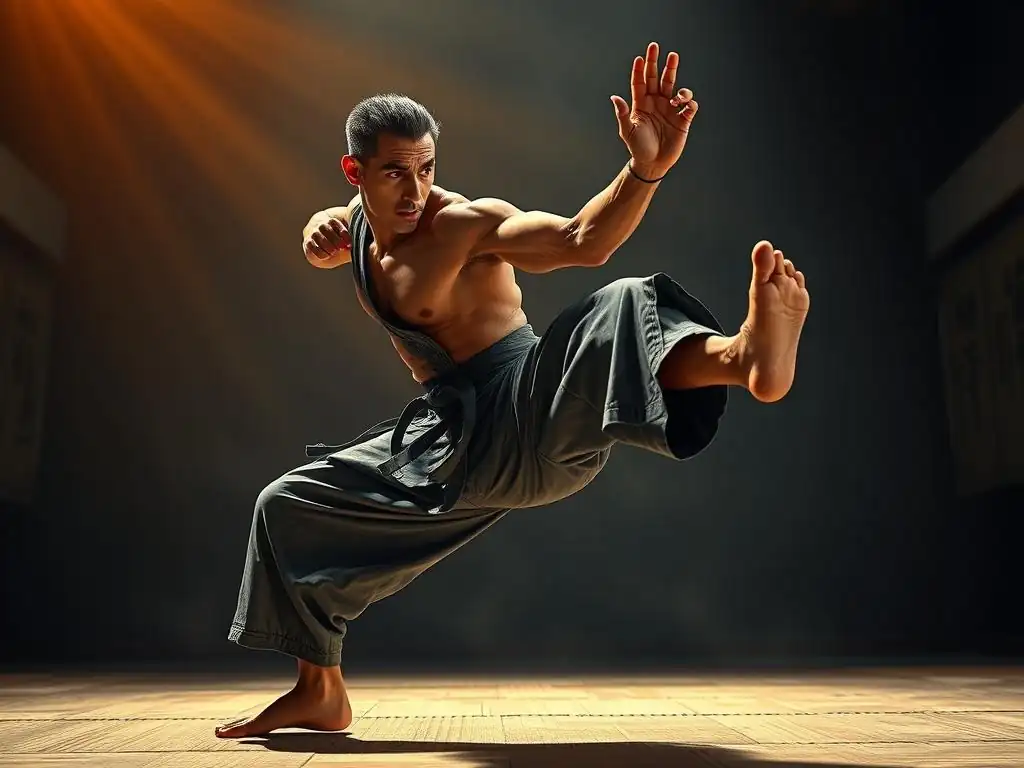
Welcome to Martial Arts Mastery, your ultimate resource for unlocking the secrets of combat excellence!
Delve into the fascinating world of martial arts, where history, philosophy, and technique intertwine. Are you striving for that extra edge in your training? This week, we're unraveling the power of martial arts flexibility periodization training. Learn how strategic planning can unlock peak mobility and elevate your performance. Curious how to optimize your flexibility for maximum impact? Read on and discover the key to a more agile and powerful you!
- Introduction: Achieving Optimal Flexibility for Martial Arts Performance
- Understanding the Principles of Periodization for Martial Arts Flexibility
- Benefits of Implementing a Periodized Flexibility Program for Martial Artists
-
Designing a Martial Arts Flexibility Periodization Program: A Step-by-Step Guide
- Step 1: Assessing Current Flexibility Levels and Identifying Goals
- Step 2: Defining Training Phases: Macrocycle, Mesocycle, and Microcycle
- Step 3: Selecting Appropriate Flexibility Training Methods
- Step 4: Implementing Progressive Overload in Flexibility Training
- Step 5: Incorporating Rest and Recovery into the Training Schedule
- Sample Flexibility Periodization Training Schedule for Martial Arts
- Monitoring Progress and Adjusting the Flexibility Periodization Plan
- Common Mistakes to Avoid in Martial Arts Flexibility Periodization Training
- Advanced Strategies for Maximizing Flexibility Gains in Martial Arts
- Conclusion: Mastering Martial Arts with Strategic Flexibility Periodization
-
Frequently Asked Questions
- What is flexibility periodization in the context of martial arts?
- Why is periodization important for martial arts flexibility?
- How does periodization differ from simply stretching every day?
- What are some common phases in a flexibility periodization program?
- How can I incorporate flexibility periodization into my martial arts training?
- Final Reflection: Embracing the Rhythm of Flexibility
- Unleash Your Peak Flexibility Now!
Introduction: Achieving Optimal Flexibility for Martial Arts Performance
Why Martial Arts Flexibility Periodization Training Matters
Flexibility is not merely about being able to do a split; it's a critical component of peak physical performance in martial arts, influencing everything from the height of a kick to the effectiveness of grappling techniques. Simply stretching randomly or inconsistently often yields limited, short-term results. This is where martial arts flexibility periodization training becomes essential.
It introduces a structured, long-term approach, moving beyond static stretching to incorporate dynamic movements, PNF, and recovery within a planned cycle. Without this strategic planning, practitioners risk plateauing, inefficient use of training time, and potentially even injury by pushing too hard without adequate preparation or recovery.
Implementing martial arts flexibility periodization training allows practitioners to systematically target specific ranges of motion required for their discipline while avoiding overtraining. For instance, a high-level Taekwondo competitor needs exceptional hip flexibility for head kicks, while a BJJ practitioner requires deep hip mobility and spinal flexibility for guard retention and transitions. A periodized plan accounts for these specific demands, integrating flexibility work into the broader training schedule alongside strength, conditioning, and technical practice. This integrated approach ensures that flexibility gains are not isolated but contribute directly to improved technique, power, and endurance on the mat or in the ring.
The Importance of Strategic Flexibility Training in Martial Arts
Strategic flexibility training in martial arts goes beyond simply touching your toes. It's about developing usable range of motion under tension and control, essential for executing techniques effectively and safely. Consider a roundhouse kick: it requires not just hamstring flexibility, but also strong hip flexors and core stability to control the movement through its full arc. Strategic training tailors the flexibility work to these specific movements and joint angles. This prevents imbalances that can lead to injury and ensures that increased flexibility translates directly into practical martial arts application.
A strategic approach integrates flexibility within the context of the practitioner's overall training load and goals. For example, during a phase focused on power development, flexibility training might emphasize dynamic mobility to prepare muscles for explosive action. In contrast, during a recovery or foundation phase, static stretching or PNF might be prioritized to increase passive range of motion. This intelligent allocation of different flexibility methods throughout the training year, characteristic of martial arts flexibility periodization training, maximizes gains while minimizing interference with other training objectives, leading to more robust and adaptable athletes.
Understanding the Principles of Periodization for Martial Arts Flexibility
What is Periodization and How Does It Apply to Flexibility?
Periodization is a systematic planning of athletic or physical training. It involves progressive cycling of various aspects of a training program during a specific period, aiming to achieve peak performance at a particular time. Traditionally applied to strength and conditioning for sports competitions, periodization can and should be adapted for flexibility training in martial arts. It means breaking down the year (or a competitive season) into distinct phases, each with specific goals, training methods, volume, and intensity for flexibility work. This prevents monotony, reduces overtraining risk, and ensures consistent progress towards long-term mobility targets.
Applying periodization to flexibility means acknowledging that flexibility isn't a static state but a dynamic capacity that can be trained and improved over time, just like strength or endurance. A periodized plan might start with a high-volume, lower-intensity phase focused on building a base level of range of motion, followed by phases that increase intensity or incorporate more sport-specific dynamic movements. This strategic variation in martial arts flexibility periodization training ensures that the body continues to adapt and improve, avoiding plateaus and preparing the martial artist for the specific demands of different training or competition periods.
Key Concepts: Volume, Intensity, and Rest in Flexibility Training
Just like in strength training, volume, intensity, and rest are crucial variables in flexibility training, and periodization helps manipulate them effectively. Volume in flexibility can refer to the total duration of stretching sessions per week, the number of sets and repetitions of specific stretches, or the cumulative time spent holding stretches. Intensity relates to how deeply a stretch is performed or the amount of force applied (e.g., in PNF or partner stretching). Rest involves allowing muscles and connective tissues time to recover and adapt between sessions.
In a periodized plan for martial arts flexibility, these variables are manipulated across different phases. For instance, a foundational phase might involve high volume (more total stretching time) but low to moderate intensity. A peak performance phase might see reduced volume but increased intensity or focus on dynamic, high-velocity movements relevant to competition. Crucially, adequate rest is planned throughout, preventing tissue damage and allowing for the physiological adaptations that lead to lasting flexibility improvements. Effective martial arts flexibility periodization training carefully balances these elements.
The Science Behind Periodization and Improved Range of Motion
The science behind periodization for improved range of motion lies in the body's physiological response to stress and adaptation. Flexibility gains occur through various mechanisms, including changes in muscle and connective tissue length (viscoelastic properties), increased stretch tolerance (neurological adaptation), and improved joint capsule mobility. Consistent, varied stimuli are necessary to drive these adaptations without causing injury. Periodization provides this varied stimulus by systematically altering the type, volume, and intensity of flexibility work.
For example, research indicates that while static stretching can increase passive range of motion by increasing stretch tolerance and potentially altering tissue structure over time, dynamic flexibility is better for improving functional mobility and preparing for movement. PNF techniques leverage neuromuscular reflexes to temporarily increase range of motion, useful for targeting specific limitations.
Martial arts flexibility periodization training integrates these different methods at appropriate times, ensuring that the practitioner develops both passive flexibility and functional mobility, optimized for the specific demands of their discipline and training cycle. This systematic approach is more effective than a monotonous routine for achieving significant and sustainable improvements in range of motion.
Benefits of Implementing a Periodized Flexibility Program for Martial Artists
Enhanced Martial Arts Performance Through Increased Flexibility
Increased flexibility, when developed strategically through martial arts flexibility periodization training, directly translates to enhanced performance in countless martial arts techniques. Consider high kicks in Taekwondo or Karate; achieving head-height or even higher requires significant hip flexor and hamstring flexibility. A periodized approach systematically increases this range of motion over time. In grappling arts like Judo or BJJ, improved hip mobility is crucial for executing throws, sweeps, and ground transitions effectively. Spinal rotation flexibility is vital for generating power in striking arts and escaping pins in grappling.
Beyond isolated techniques, greater flexibility improves overall movement efficiency and speed. A less flexible muscle requires more energy to move through its range of motion, potentially leading to faster fatigue. By expanding usable ranges of motion, martial artists can execute techniques with greater amplitude, power, and fluidity. For example, a more flexible shoulder girdle allows for a fuller range of motion in punches, potentially increasing power output. This systematic development, inherent in martial arts flexibility periodization training, ensures that flexibility gains are functional and contribute directly to on-mat performance.
Reduced Risk of Injury with Periodized Flexibility Training
One of the most significant benefits of a well-structured martial arts flexibility periodization training program is the reduced risk of injury. Muscles and connective tissues that are consistently trained through their full, functional range of motion are less susceptible to sudden tears or strains when subjected to the rapid, forceful movements common in martial arts. Tight, inflexible muscles are more likely to be pulled or injured when stretched suddenly beyond their limited range, such as during an unexpected breakfall or a powerful kick.
Periodization helps mitigate injury risk in several ways. Firstly, it prevents overtraining by scheduling adequate rest and recovery periods, allowing tissues to repair and strengthen. Secondly, by varying training methods and intensity, it avoids repetitive stress injuries that can occur from doing the same intense stretches daily.
Thirdly, by building flexibility progressively, it allows the body to adapt safely. For example, a study might show that athletes with a consistent flexibility program experience 20-30% fewer muscle strains compared to those with inconsistent or no flexibility training. While specific martial arts data varies, the principle holds: planned, progressive flexibility is a powerful injury prevention tool.
Improved Recovery and Muscle Function
Strategic flexibility training, particularly when integrated into a periodized plan, plays a vital role in enhancing muscle recovery and overall function. Post-training flexibility work, especially static stretching or methods like foam rolling (myofascial release), can help reduce muscle soreness (DOMS - Delayed Onset Muscle Soreness) and improve blood flow to fatigued tissues. While the exact mechanisms are debated, many athletes report feeling less stiff and recovering faster after incorporating targeted flexibility and mobility work into their routine.
Furthermore, maintaining adequate flexibility ensures that muscles can return to their optimal resting length after strenuous activity. Muscles that remain chronically tight can impede blood flow and nutrient delivery, slowing down the recovery process. By actively working on flexibility through martial arts flexibility periodization training, practitioners help their muscles and connective tissues maintain optimal health and function. This leads to quicker recovery between training sessions, allowing for more consistent and higher-quality practice, which is essential for long-term progress in martial arts.
Designing a Martial Arts Flexibility Periodization Program: A Step-by-Step Guide
Step 1: Assessing Current Flexibility Levels and Identifying Goals
The first critical step in designing a martial arts flexibility periodization training program is to honestly assess your current flexibility and mobility. This isn't about comparing yourself to others but establishing a baseline for your own joints and muscle groups relevant to your martial art. Useful assessments include measuring the angle of your straight-leg kick, the depth of your squat, your ability to perform specific joint rotations (like shoulder or hip circles), or testing specific stretches like the seated forward fold or butterfly stretch. Document these measurements or observations.
Simultaneously, identify your specific flexibility goals based on your martial arts discipline and personal aspirations. Are you aiming for higher kicks, deeper stances, more effective guard retention, or simply reducing everyday stiffness? Your goals should be specific, measurable, achievable, relevant, and time-bound (SMART). For instance, a goal might be "Increase straight-leg side kick height by 10 degrees within the next 6 months" or "Improve hip external rotation by 5 degrees for better guard positioning in BJJ." These assessments and goals form the foundation of your periodized plan.
Flexibility Assessments for High Kicks, Groundwork, and Joint Mobility
Assessing flexibility for specific martial arts demands requires tailored tests. For high kicks (common in Taekwondo, Karate, Kickboxing), assess passive and active straight-leg raise angles (forward, side, back), hip flexor length (Thomas test approximation), and hamstring flexibility (sit-and-reach or supine leg raise). Use a goniometer app or even a protractor/camera to get approximate angles. A typical starting point for a decent side kick might be around 90 degrees, with advanced practitioners exceeding 140-160 degrees.
For groundwork (Judo, BJJ, Wrestling), focus on hip mobility (internal/external rotation, flexion/extension), spinal flexibility (rotation, flexion, extension), and shoulder mobility. Tests could include the '90/90 hip test', passive internal/external hip rotation range, bridge height, and shoulder dislocation/pass-through range. A healthy hip might have 40-50 degrees of internal/external rotation. Joint mobility assessments involve controlled articular rotations (CARs) for major joints, noting any clicking, pain, or restricted range of motion. These specific tests provide concrete data points for your martial arts flexibility periodization training plan.
Step 2: Defining Training Phases: Macrocycle, Mesocycle, and Microcycle
Periodization structures training into distinct phases: a macrocycle, mesocycles, and microcycles. The macrocycle is the longest phase, typically covering a full year or a competition season. It outlines the overarching plan, including major goals and key competition dates or testing periods. Within the macrocycle, the focus of martial arts flexibility periodization training will shift – perhaps emphasizing general range of motion in the off-season and sport-specific mobility closer to competition.
Mesocycles are shorter blocks within the macrocycle, usually lasting 4-12 weeks. Each mesocycle has a specific training emphasis. Examples might include a 'Foundational Flexibility' mesocycle (high volume, lower intensity), a 'Strength and Mobility' mesocycle (integrating flexibility with strength exercises), or a 'Peak Performance' mesocycle (lower volume, higher intensity, dynamic focus). Defining these mesocycles helps structure the progression and variation needed for effective martial arts flexibility periodization training.
Microcycles are the shortest phases, typically lasting one week. They detail the day-to-day or session-to-session training schedule. A microcycle specifies when flexibility training occurs (e.g., daily, 3 times a week), what methods are used (static, dynamic, PNF), and at what volume and intensity for that specific week, aligning with the goals of the current mesocycle. Planning microcycles ensures that the overall periodized plan is implemented consistently and effectively.
Macrocycle: The Overall Training Plan for the Year
The macrocycle provides the big picture for your martial arts flexibility periodization training. For a martial artist, this might align with a competition season, a grading cycle, or simply a year of dedicated training. It sets the major flexibility goals for the year – perhaps a significant increase in specific joint range of motion (e.g., improving split depth from 120 to 160 degrees) or developing functional mobility for a new technique.
A typical macrocycle might look like this:
- Off-Season (3-4 months): Focus on building a general flexibility base, addressing weaknesses, and increasing passive range of motion. Higher volume, moderate intensity.
- Pre-Competition/Development (4-5 months): Transition to more sport-specific flexibility, integrating mobility with strength and power. Moderate volume, increasing intensity and dynamic work.
- Competition/Peak (2-3 months): Maintain mobility with lower volume, high intensity, and dynamic warm-ups. Prioritize recovery.
- Transition (1-2 months): Active recovery, light maintenance flexibility, address any new limitations.
This structure allows for systematic progression and adaptation throughout the year, a cornerstone of effective martial arts flexibility periodization training.
Mesocycle: Specific Training Blocks (e.g., Foundation, Development, Peak)
Mesocycles are the building blocks of the macrocycle, each focusing on a specific aspect of martial arts flexibility. A 'Foundation' mesocycle (e.g., 6 weeks) might involve daily static stretching routines targeting major muscle groups, with holds of 30-60 seconds, 2-3 sets per stretch. The goal is to increase passive range of motion. Volume is high, intensity is low to moderate.
A 'Development' mesocycle (e.g., 8 weeks) might reduce static stretching slightly, adding PNF techniques (e.g., 3x per week, 3-5 contractions per stretch) and increasing the frequency and complexity of dynamic mobility drills before technical training. The goal shifts to improving active range of motion and control. Volume is moderate, intensity increases.
A 'Peak' mesocycle (e.g., 4 weeks) might focus heavily on dynamic flexibility as part of warm-ups, with minimal static stretching (perhaps only post-training for recovery). Volume is low, intensity (in terms of movement speed/control) is high. This cycling through different mesocycles is key to successful martial arts flexibility periodization training.
Microcycle: Weekly Training Schedules Focused on Flexibility
The microcycle provides the weekly detail for your martial arts flexibility periodization training. It outlines exactly which flexibility methods are used on which days, at what intensity and volume, fitting within the overall mesocycle plan and the rest of your martial arts training schedule.
Here's a sample microcycle during a 'Development' mesocycle focused on integrating flexibility:
- Monday: Dynamic warm-up (15 min) before class. Post-class: Static stretching (30 min), focusing on hips and hamstrings (30s holds, 2 sets).
- Tuesday: Dynamic warm-up (15 min) before class.
- Wednesday: Rest day. Active recovery: Light yoga or mobility flow (30-45 min).
- Thursday: Dynamic warm-up (15 min) before class. Post-class: PNF stretching (20 min) for specific target areas (e.g., hip flexors, chest).
- Friday: Dynamic warm-up (15 min) before class.
- Saturday: Longer flexibility session (45-60 min) combining static stretching and targeted mobility drills.
- Sunday: Rest or light active recovery.
This microcycle ensures consistent, varied flexibility work throughout the week, aligned with the mesocycle's goals and the overall martial arts training load.
Step 3: Selecting Appropriate Flexibility Training Methods
Choosing the right flexibility training methods is crucial for effective martial arts flexibility periodization training. Different methods target different physiological adaptations and are best suited for different goals and phases of training. Relying solely on one method, like static stretching, will limit potential gains and functional application. A comprehensive plan incorporates a variety of techniques throughout the macrocycle.
The primary methods include static stretching (passive and active), dynamic stretching, PNF stretching, and self-myofascial release techniques like foam rolling. Each method has unique benefits and considerations. Static stretching is generally effective for increasing passive range of motion, while dynamic stretching improves functional mobility and prepares the body for activity. PNF can yield rapid, albeit sometimes temporary, increases in range of motion by leveraging neuromuscular inhibition. Foam rolling helps address muscle tightness and trigger points that can restrict movement. A well-designed martial arts flexibility periodization training plan strategically deploys these methods.
Static Stretching for Increased Range of Motion
Static stretching involves holding a stretched position for a period, typically 20-60 seconds, often repeated for several sets. It's effective for increasing passive range of motion by improving stretch tolerance and potentially altering the viscoelastic properties of muscles and connective tissues over time. It's generally best performed when muscles are warm, such as after a training session, or as a dedicated session separate from intense activity.
In martial arts flexibility periodization training, static stretching is often emphasized during foundational or off-season mesocycles when the goal is to build a base level of flexibility. For example, a mesocycle might include 3-4 static stretching sessions per week, each targeting major muscle groups like hamstrings, hip flexors, quads, chest, and shoulders. Holding stretches for 30 seconds, for 3 sets, is a common prescription. While effective for passive range, static stretching immediately before powerful martial arts activity can potentially reduce muscle force production, so timing is key.
Dynamic Stretching for Martial Arts-Specific Movements
Dynamic stretching involves actively moving a joint through its full range of motion in a controlled manner. Examples include leg swings (forward, sideways), arm circles, torso twists, and controlled lunges. Unlike static stretching, dynamic stretching prepares the muscles and nervous system for activity by increasing blood flow, raising muscle temperature, and improving neuromuscular coordination. It enhances functional mobility – the ability to move effectively through space.
Dynamic stretching is a cornerstone of warm-ups in martial arts training and is heavily emphasized in the development and peak mesocycles of a martial arts flexibility periodization training plan. A typical dynamic warm-up might last 10-20 minutes and include movements that mimic techniques used in the specific martial art, such as controlled high kicks (without maximal force), hip circles relevant to grappling, or shoulder rotations for striking. This type of flexibility training directly improves the range of motion needed during performance.
Proprioceptive Neuromuscular Facilitation (PNF) Stretching Techniques
Proprioceptive Neuromuscular Facilitation (PNF) stretching techniques typically involve a combination of passive stretching and isometric contractions. A common method is "hold-relax," where the muscle is passively stretched, then the practitioner isometrically contracts the muscle against resistance (often a partner or immovable object) for 5-10 seconds, relaxes, and then stretches further into the new range. PNF leverages the Golgi tendon organ reflex to achieve greater, though often temporary, increases in range of motion.
PNF is a powerful tool in martial arts flexibility periodization training, particularly useful for targeting specific, stubborn limitations or for rapid gains in range of motion during shorter mesocycles. It's often used 1-3 times per week for specific problem areas rather than as a full-body routine. Due to the intensity of the contraction, PNF requires adequate warm-up and should be performed carefully, ideally with guidance, to avoid injury. While effective, its intensity means it requires more recovery than static or dynamic stretching.
Foam Rolling and Myofascial Release for Muscle Recovery
Foam rolling and other self-myofascial release (SMR) techniques involve applying pressure to specific points on muscles to release tightness or trigger points. While not strictly a flexibility method in the sense of lengthening tissues, SMR can significantly improve range of motion by reducing muscle tension and improving blood flow. Think of it as addressing restrictions within the muscle tissue itself that might be limiting flexibility.
Incorporating foam rolling into a martial arts flexibility periodization training plan is beneficial for recovery and maintaining tissue health. It can be done before dynamic stretching to prepare muscles, or more commonly, after training sessions or on rest days to aid recovery and reduce soreness. Spending 30-60 seconds on each muscle group, focusing on tender spots, can help restore muscles to a more relaxed state, indirectly supporting flexibility gains and overall muscle function.
Step 4: Implementing Progressive Overload in Flexibility Training
Just as with strength training, flexibility training requires progressive overload to continue seeing improvements. The body adapts to a given stimulus, and without increasing the challenge, progress will eventually halt. Progressive overload in flexibility doesn't necessarily mean pushing into excruciating pain; it means gradually increasing the demands placed on the tissues and the nervous system to encourage further adaptation.
In martial arts flexibility periodization training, progressive overload is applied systematically across mesocycles. This could involve holding static stretches for longer durations (e.g., increasing from 30 to 45 seconds), increasing the number of sets, attempting deeper stretches, adding resistance (as in PNF or active flexibility drills), or increasing the complexity and range of motion in dynamic movements. The key is gradual, consistent increases that allow the body to adapt safely over time.
Gradually Increasing Stretch Duration and Intensity
A simple way to implement progressive overload in static stretching is by gradually increasing the time you hold each stretch. Starting with 20-30 seconds and progressing to 45-60 seconds over several weeks or a mesocycle provides a clear increase in volume (time under tension) for the targeted tissues. Similarly, for PNF, increasing the duration of the isometric contraction (e.g., from 5 to 10 seconds) or the number of repetitions can increase intensity.
Intensity can also be increased by attempting to stretch slightly deeper into a range of motion, provided it's done without sharp pain and with control. In dynamic stretching, increasing the speed or amplitude of the movement (while maintaining control) represents a form of progressive overload. These gradual increases are built into the microcycle planning within each mesocycle of your martial arts flexibility periodization training, ensuring continuous, safe progress.
Adding Resistance to Flexibility Exercises
Adding resistance is another method of progressive overload, particularly relevant for developing active flexibility – the ability to move into a range of motion using muscle power, not just external force. This is crucial for martial arts techniques like high kicks or controlled joint locks. Examples include using resistance bands to pull limbs into a stretch while actively resisting, or using bodyweight exercises like controlled eccentric movements into a deep range.
For instance, a martial artist working on hip flexor flexibility might perform lunges with added weight or use a band to resist the hip extension at the end of the lunge. A drill for side kick flexibility could involve using a light resistance band looped around the ankle, actively lifting the leg sideways against the band's tension. These methods, integrated strategically into later mesocycles of martial arts flexibility periodization training, build strength within the increased range of motion, making it functional for techniques.
Step 5: Incorporating Rest and Recovery into the Training Schedule
Rest and recovery are non-negotiable components of any effective training program, including martial arts flexibility periodization training. Flexibility gains don't happen during the stretching; they occur during the recovery period when tissues adapt and repair. Without adequate rest, overtraining can occur, leading to plateaus, increased injury risk, and even a decrease in flexibility due to chronic muscle tension and inflammation.
A periodized plan explicitly schedules rest days and incorporates active recovery methods. The intensity and volume of flexibility work are also reduced during peak or competition phases to allow the body to be fresh. Ignoring recovery undermines all the hard work put into stretching and mobility drills. Proper rest, combined with good nutrition and sufficient sleep, allows the body to consolidate gains and prepare for the next training stimulus in the martial arts flexibility periodization training cycle.
Active Recovery Techniques for Flexibility
Active recovery involves engaging in low-intensity activities that promote blood flow and aid recovery without causing significant stress. For flexibility, this can include light walking, swimming, cycling at a relaxed pace, or performing gentle mobility drills. Gentle yoga or Tai Chi sessions can also serve as excellent active recovery, promoting relaxation and easy movement through various ranges.
Scheduling active recovery days (e.g., once or twice a week) within the microcycle allows for continued movement and blood flow to muscles without the intensity of a dedicated stretching or martial arts session. This helps reduce stiffness and soreness, preparing the body for subsequent training days. Incorporating 30-60 minutes of light active recovery on rest days is a common practice in martial arts flexibility periodization training plans.
The Importance of Sleep and Nutrition for Flexibility Gains
Sleep and nutrition are foundational pillars of recovery and adaptation, directly impacting flexibility gains. During sleep, the body repairs tissues, synthesizes proteins, and consolidates adaptations from training. Chronic sleep deprivation impairs recovery, increases inflammation, and can hinder flexibility improvements. Aiming for 7-9 hours of quality sleep per night is crucial.
Nutrition provides the building blocks for tissue repair (protein) and the energy needed for training and recovery (carbohydrates and fats). Adequate hydration is also essential, as dehydrated tissues are less pliable and more prone to injury. Ensuring a balanced diet rich in macronutrients and micronutrients supports the body's ability to adapt to the demands of martial arts flexibility periodization training and build lasting flexibility. Neglecting these fundamental aspects will limit the effectiveness of even the best-designed plan.
Sample Flexibility Periodization Training Schedule for Martial Arts
Example Macrocycle for Taekwondo
Here is a sample macrocycle illustrating martial arts flexibility periodization training for a Taekwondo practitioner aiming for peak performance in a major competition mid-year:
- Phase 1: Off-Season / Foundation (Jan-Mar - 12 weeks):
- Goal: Increase general passive flexibility, address major limitations (e.g., hamstring tightness, limited hip external rotation).
- Flexibility Focus: High volume static stretching (4-5x/week, 30-60s holds, 2-3 sets), introduce basic PNF for target areas (2x/week), daily dynamic mobility for warm-up.
- Assessment: Baseline flexibility tests (kicking angles, splits, sit-and-reach) at start and end of phase.
- Phase 2: Pre-Competition / Development (Apr-Jul - 16 weeks):
- Goal: Improve sport-specific functional mobility, integrate flexibility with power and technique, maintain passive range.
- Flexibility Focus: Moderate volume static stretching (2-3x/week post-training), increased PNF for competition-specific movements (e.g., hip flexors for high kicks - 3x/week), daily dynamic warm-ups (15-20 min) with increasing amplitude and speed, introduce active flexibility drills with light resistance bands (2x/week).
- Assessment: Re-test kicking angles and relevant mobility (e.g., hip rotation for turning kicks) mid-phase and end-phase.
- Phase 3: Competition / Peak (Aug-Sep - 8 weeks):
- Goal: Maintain peak flexibility, optimize dynamic mobility for performance, prioritize recovery.
- Flexibility Focus: Low volume static stretching (1-2x/week post-training/recovery), reduced PNF (1x/week or as needed), daily extensive dynamic warm-ups (20-30 min) before sparring/competition-specific training, focus on foam rolling/recovery.
- Assessment: Monitor subjective feeling of mobility and any restrictions. Final pre-competition check.
- Phase 4: Transition (Oct-Dec - 8 weeks):
- Goal: Active recovery, light maintenance, address any new issues, mental break.
- Flexibility Focus: Light, unstructured flexibility work (yoga, gentle stretching 2-3x/week), focus on full-body mobility and relaxation.
- Assessment: None formal, focus on recovery.
This macrocycle provides a clear roadmap for martial arts flexibility periodization training throughout the year.
Sample Mesocycle: Flexibility Focus
Let's detail a sample 6-week 'Foundational Flexibility' mesocycle within the Off-Season phase for general martial arts flexibility periodization training:
- Goal: Increase passive range of motion in major joints and muscle groups.
- Volume: High.
- Intensity: Low to Moderate.
- Methods: Primarily Static Stretching, some PNF introduction, consistent dynamic warm-ups.
Weekly Structure:
- Monday:
- Dynamic Warm-up (15 min)
- Static Stretching Session (45 min) - Full Body: Hamstrings, Quads, Hip Flexors, Glutes, Chest, Shoulders, Back (30-45s holds, 3 sets per stretch).
- Tuesday:
- Dynamic Warm-up (10 min)
- Martial Arts Class/Training
- Post-Training Static Stretching (20 min) - Focus on muscles used heavily in class.
- Wednesday:
- Rest Day / Active Recovery (e.g., light walk or gentle mobility flow, 30 min)
- Thursday:
- Dynamic Warm-up (15 min)
- Static Stretching Session (45 min) - Same as Monday.
- Friday:
- Dynamic Warm-up (10 min)
- Martial Arts Class/Training
- Post-Training PNF Session (20 min) - Target 2-3 specific areas (e.g., Hamstrings, Hip Flexors). 3-5 contractions/holds per stretch.
- Saturday:
- Dedicated Flexibility/Mobility Session (60 min) - Combine Static Stretching, PNF, and longer holds (60s) on target areas. Incorporate foam rolling (15 min).
- Sunday:
- Rest Day
This mesocycle provides a clear structure with high volume to build a solid flexibility base as part of martial arts flexibility periodization training.
Weekly Microcycle Example: Flexibility and Mobility
Here's a sample microcycle during a 'Development' mesocycle (similar to the example in Step 2, but formatted more clearly):
- Mesocycle Goal: Improve functional mobility, integrate flexibility with technique.
- Microcycle Focus: Balance static/PNF with increased dynamic/active flexibility.
| Day | Flexibility/Mobility Activity | Duration | Notes |
|---|---|---|---|
| Monday | Dynamic Warm-up (Pre-Martial Arts Training) | 15 min | Focus on full range of motion movements |
| Post-Training Static Stretching | 20 min | Target major muscle groups, 30s holds, 2 sets | |
| Tuesday | Dynamic Warm-up (Pre-Martial Arts Training) | 15 min | Focus on movements relevant to the day's techniques |
| Wednesday | Rest / Active Recovery (Gentle Mobility Flow or Light Yoga) | 40 min | Low intensity, focus on relaxation and easy movement |
| Thursday | Dynamic Warm-up (Pre-Martial Arts Training) | 15 min | Include active flexibility drills (e.g., banded leg lifts) |
| Post-Training PNF Stretching | 25 min | Target 2-3 specific limitations, 3-5 contractions/holds | |
| Friday | Dynamic Warm-up (Pre-Martial Arts Training) | 15 min | Focus on explosive movements if sparring is scheduled |
| Saturday | Dedicated Flexibility/Mobility Session | 60 min | Combine static (longer holds on target areas), PNF, SMR |
| Sunday | Rest Day / Optional Light Active Recovery (Walk, Swim, etc.) | Varied | Prioritize sleep and nutrition for recovery |
This microcycle illustrates how different flexibility methods are scheduled within a single week, supporting the goals of the current mesocycle in a martial arts flexibility periodization training plan.
Monitoring Progress and Adjusting the Flexibility Periodization Plan
Tracking Flexibility Improvements Over Time
Consistent monitoring is vital for evaluating the effectiveness of your martial arts flexibility periodization training plan and making necessary adjustments. Relying solely on subjective feeling isn't enough. Regular, objective assessments provide concrete data on your progress. Schedule re-tests of your baseline flexibility assessments (like kicking angles, split depth, sit-and-reach scores) at the end of each mesocycle or every 4-8 weeks.
Keep a training journal to record your flexibility sessions, noting the methods used, duration, intensity (how deep you felt the stretch, resistance level), and any observations about tightness or pain. Track your progress on specific stretches or drills. For example, note if you can hold a stretch longer, reach further, or perform a dynamic movement with a greater range of motion. This data allows you to see tangible improvements (e.g., increasing your straight-leg side kick height by 5 degrees over a mesocycle) and validates the effectiveness of your martial arts flexibility periodization training approach.
Identifying Plateaus and Making Necessary Adjustments
Despite a well-designed martial arts flexibility periodization training plan, plateaus can occur. This is when your progress stalls, and you stop seeing significant improvements in flexibility despite consistent training. A plateau signals that your body has adapted to the current stimulus and requires a change. This is where monitoring data becomes crucial; noticing that your kicking angle hasn't improved in several weeks, despite consistent effort, indicates a plateau.
When a plateau is identified, it's time to adjust the plan. This might involve increasing the intensity (e.g., adding PNF or resistance), increasing the volume (e.g., longer holds or more sets, though be cautious with overtraining), introducing new flexibility methods, changing the timing of flexibility sessions relative to other training, or focusing on a different limiting factor (e.g., strength in the end range of motion). Periodization inherently builds in variation, but individual responses differ, and adjustments based on progress (or lack thereof) are key to long-term success in martial arts flexibility periodization training.
Adapting the Plan to Individual Needs and Martial Arts Discipline
A periodized plan provides a framework, but it must be adaptable to individual needs, strengths, weaknesses, and the specific demands of your martial arts discipline. A BJJ practitioner will have different flexibility priorities than a Karateka. An older practitioner might require more recovery time than a younger one. Someone with a history of hamstring injuries needs a more cautious approach to hamstring stretching.
Regularly review your progress, listen to your body, and be willing to modify the plan. If a particular method causes discomfort or doesn't seem effective, try a different approach. If your martial arts training volume increases significantly due to upcoming competition, reduce the intensity or volume of flexibility training to prevent overtraining. Martial arts flexibility periodization training is not a rigid, one-size-fits-all program; it's a dynamic process that requires ongoing assessment and adaptation to remain effective and safe for your specific journey.
Common Mistakes to Avoid in Martial Arts Flexibility Periodization Training
Overtraining and Ignoring Pain Signals
One of the most common and detrimental mistakes in any training, including martial arts flexibility periodization training, is overtraining and pushing through sharp, persistent pain. While some discomfort is normal when stretching, sharp or joint pain is a warning sign of potential injury. Overtraining flexibility can lead to muscle strains, tendonitis, joint issues, and decreased overall performance.
A periodized approach helps prevent overtraining by building in rest and recovery, but it's still possible if volume or intensity are increased too quickly or if recovery is insufficient. Learn to distinguish between the sensation of a muscle stretching and pain signals from tendons, ligaments, or joints. Always prioritize listening to your body. If a stretch causes pain, back off or stop. Ignoring these signals undermines the entire purpose of martial arts flexibility periodization training, which is to enhance performance safely.
Neglecting Proper Warm-up and Cool-down Routines
Skipping warm-ups before stretching or mobility work, especially dynamic flexibility, is a recipe for injury. Cold muscles and connective tissues are less pliable and more susceptible to tears. A proper warm-up increases core body temperature, improves blood flow to muscles, and prepares the nervous system for activity. It should precede any significant stretching or mobility work.
Similarly, neglecting a cool-down after intense training or static stretching can hinder recovery. A cool-down allows the body to gradually return to a resting state. While static stretching is often incorporated into a cool-down, simply stopping abruptly after intense martial arts training isn't ideal. Consistent warm-up and cool-down routines are integral parts of effective martial arts flexibility periodization training, ensuring that flexibility work is performed safely and contributes to overall recovery.
Inconsistent Training and Lack of Commitment
Flexibility, like strength or skill, requires consistent effort to improve and maintain. Sporadic stretching sessions or following a periodized plan inconsistently will yield minimal results. Muscle and connective tissues require regular stimulus to adapt and lengthen. Missing multiple sessions or abandoning the plan halfway through a mesocycle breaks the progressive cycle that periodization relies upon.
Martial arts flexibility periodization training demands commitment. It means sticking to the scheduled sessions, even when you don't feel like it, and trusting the process of varying intensity and volume throughout the phases. Lack of consistency is a major reason why many martial artists struggle to improve their flexibility. Building flexibility is a long-term investment, and consistent, disciplined adherence to the periodized plan is essential for achieving lasting gains.
Advanced Strategies for Maximizing Flexibility Gains in Martial Arts
Integrating Flexibility Training with Strength and Conditioning
True functional flexibility in martial arts requires strength and control within the full range of motion. Advanced martial arts flexibility periodization training plans integrate flexibility work with strength and conditioning. This could involve exercises like loaded stretching (e.g., weighted lunges, goblet squats with a pause at the bottom), eccentric strengthening through a full range (e.g., slow, controlled leg lowering after a kick), or exercises that combine mobility and strength (e.g., Turkish get-ups, overhead squats).
This integration is often emphasized in development mesocycles. For example, after increasing passive hamstring flexibility through static stretching in a foundational phase, a development phase might include Romanian deadlifts with a focus on controlled movement through the deepest possible range without rounding the back, building strength in the lengthened position. This ensures that the increased range of motion is usable and strong during dynamic martial arts movements, a key aspect of advanced martial arts flexibility periodization training.
Utilizing Visualization and Mental Imagery Techniques
The mind-body connection is powerful, and visualization can play a role in enhancing flexibility. Mental imagery techniques involve mentally rehearsing movements or stretches, picturing the muscles lengthening and the joints moving smoothly through an increased range of motion. This can help improve neuromuscular coordination and potentially reduce the body's protective tension response to stretching.
While not a substitute for physical training, incorporating visualization before or during flexibility sessions can enhance focus and potentially improve results. For example, before attempting a challenging split, visualize your body achieving the position easily and smoothly. This mental preparation, combined with the structured physical approach of martial arts flexibility periodization training, can help overcome psychological barriers and improve the quality of your stretching practice.
Seeking Guidance from Experienced Flexibility Coaches
For advanced practitioners aiming for extreme levels of flexibility required in some martial arts or struggling with persistent limitations, seeking guidance from experienced coaches or physical therapists is invaluable. A qualified professional can provide personalized assessments, identify specific limitations (which might be joint restrictions, nerve entrapment, or muscular imbalances rather than just tightness), and tailor a martial arts flexibility periodization training plan to address these unique needs.
They can also teach advanced techniques like partner-assisted stretching or sophisticated PNF variations safely and effectively. While this article provides a general framework, professional guidance ensures that your training is safe, effective, and specifically targeted to unlock your full flexibility potential for your martial arts discipline. Investing in expert advice is a key advanced strategy for maximizing gains and avoiding injury.
Conclusion: Mastering Martial Arts with Strategic Flexibility Periodization
The Long-Term Benefits of Periodized Flexibility Training
Embracing martial arts flexibility periodization training offers profound long-term benefits for practitioners of all levels. Beyond simply being able to perform impressive stretches, a systematic, planned approach to flexibility leads to more robust, adaptable, and injury-resilient bodies. Over months and years, consistent periodized training builds functional range of motion that directly enhances technical execution – higher kicks, deeper stances, more effective locks and throws, and improved overall movement efficiency.
Furthermore, a periodized plan instills discipline and a deeper understanding of the training process. It teaches the importance of balancing different types of flexibility work, integrating it with strength and recovery, and listening to the body. This holistic approach, central to effective martial arts flexibility periodization training, not only improves physical capacity but also contributes to the mental resilience and strategic thinking required for mastering martial arts.
Continuous Improvement and Adaptation in Martial Arts Flexibility
Martial arts flexibility, like the martial arts journey itself, is about continuous improvement and adaptation. A periodized training plan is not a static document but a living guide that evolves with the practitioner. As you achieve goals, identify new limitations, or change your training focus (e.g., preparing for a different competition style), your martial arts flexibility periodization training plan must be adjusted accordingly.
Regular assessment, diligent tracking, and a willingness to modify methods and goals ensure that your flexibility training remains relevant and effective over the long haul. By consistently applying the principles of periodization – systematic planning, variation, progressive overload, and recovery – martial artists can unlock their full mobility potential, allowing them to execute techniques with greater power, precision, and safety, ultimately contributing to a deeper mastery of their chosen art.
Frequently Asked Questions
What is flexibility periodization in the context of martial arts?
Flexibility periodization is a structured approach to flexibility training that involves cycling through different phases of training to optimize mobility gains and reduce the risk of injury over time. It's a strategic way to enhance your flexibility in martial arts.
Why is periodization important for martial arts flexibility?
Using periodization helps prevent plateaus and overtraining, ensuring consistent improvement in your flexibility and reducing the likelihood of injuries. It allows for optimized recovery and long-term progress.
How does periodization differ from simply stretching every day?
Simply stretching every day may not be as effective. Periodization strategically varies the intensity, volume, and type of flexibility exercises, unlike a monotonous daily routine, leading to better results.
What are some common phases in a flexibility periodization program?
Common phases include preparation (general flexibility), strength and stability (active flexibility), power (dynamic flexibility), and maintenance (recovery). These phases are designed to build upon each other for comprehensive flexibility.
How can I incorporate flexibility periodization into my martial arts training?
Start by assessing your current flexibility level, then plan a program that alternates between high-intensity mobility drills and periods of active recovery. Adjust the program based on your progress and needs.
Final Reflection: Embracing the Rhythm of Flexibility
The journey to peak mobility in martial arts, as explored through periodization, isn't just about achieving physical feats; it's about understanding the ebb and flow of progress and applying strategic planning to unlock our body's full potential. This understanding is more crucial now than ever, as martial artists increasingly seek sustainable and effective training methods that prioritize longevity and well-being alongside performance.
The concept of periodization, applied to flexibility, transcends the gym or dojo. It teaches us the importance of patience, consistency, and mindful adaptation in all aspects of life. This resonates deeply with the martial arts philosophy of continuous improvement and self-discovery, reminding us that true mastery is a lifelong pursuit. The journey of a thousand miles begins with a single step.
This ancient proverb perfectly encapsulates the essence of periodization: small, consistent efforts, strategically planned and executed, ultimately lead to remarkable achievements.
Now, consider how you can apply the principles of periodization to other areas of your life. Are there skills you wish to develop, habits you want to cultivate, or goals you aspire to reach? Embrace the rhythm of strategic planning, mindful adaptation, and consistent effort. Let the lessons learned in the pursuit of martial arts flexibility guide you toward unlocking your full potential, not just on the mat, but in every facet of your being.
Unleash Your Peak Flexibility Now!
Thanks for diving into the world of periodization for flexibility! We hope you've gained valuable insights into strategically enhancing your mobility for martial arts mastery. Now, let's put that knowledge into action and see real results.
Here's how you can take the next step:
- Craft your own personalized flexibility periodization plan. Start by assessing your current range of motion and setting realistic, phased goals.
- Share your flexibility journey and insights with fellow martial artists on social media using #MartialArtsMasteryFlexibility. Let's build a community of agile warriors!
- Try a completely different flexibility method this week - maybe static stretching if you're all about dynamic, or vice versa. Surprising your body can yield unexpected gains!
What specific flexibility goal will you tackle in the next 30 days to elevate your martial arts performance?