
Pilates for Core Strength and Mobility: A Martial Artist's Ally

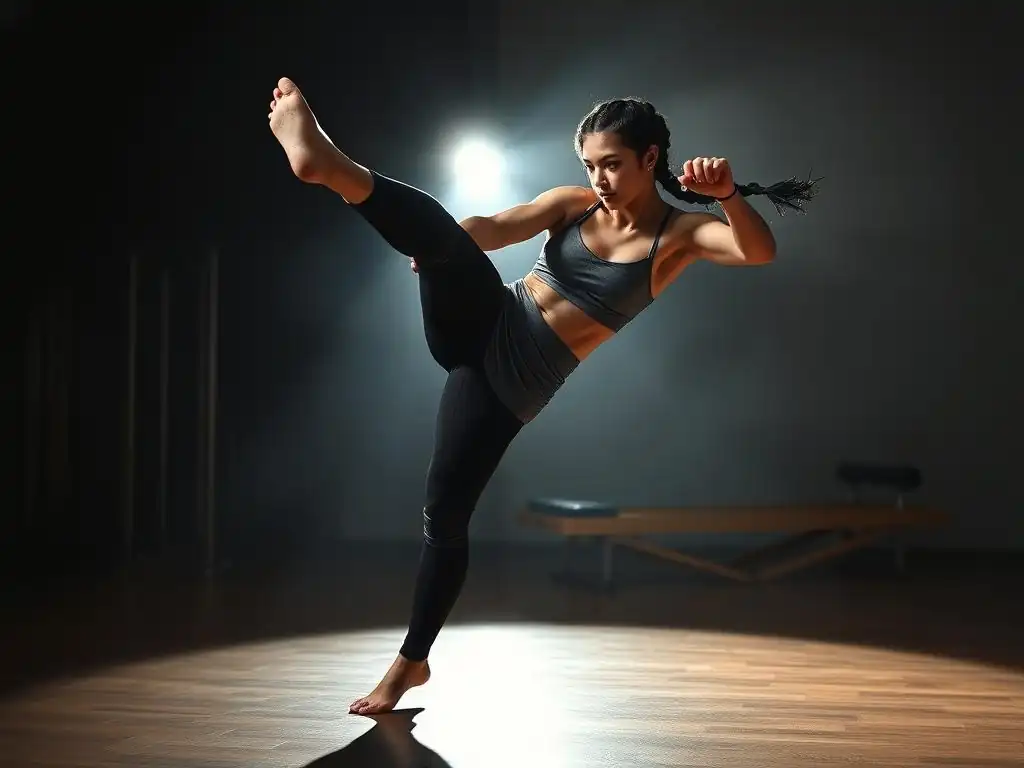
Welcome to Martial Arts Mastery, your ultimate resource for exploring the diverse world of martial arts. Ever wondered how to unlock unparalleled core strength and mobility to elevate your martial arts performance? This article delves into the surprising synergy between Pilates for martial arts strength, revealing how this powerful practice can become your secret weapon. Discover how targeted exercises can enhance your power, precision, and resilience on the mat. Intrigued? Read on to unlock the secrets to a stronger, more agile you!
- Introduction: The Benefits of Pilates for Martial Artists
- Principles of Pilates: A Foundation for Martial Arts Excellence
- Pilates Exercises for Martial Arts Core Strength
- Pilates for Martial Arts Mobility and Flexibility
- Integrating Pilates into Martial Arts Training
- Mental and Physical Benefits: Focus, Awareness, and Injury Prevention
- Conclusion: Pilates as a Catalyst for Martial Arts Mastery.
-
Frequently Asked Questions
- What exactly is Pilates and how can it benefit a martial artist?
- How does Pilates specifically improve core strength for martial arts?
- Can Pilates help with the flexibility needed for martial arts techniques?
- Besides core strength and flexibility, what other benefits can a martial artist gain from Pilates?
- How often should a martial artist incorporate Pilates into their training regime to see noticeable results?
- Final Reflection: Embracing Pilates for Martial Arts Mastery
- Ignite Your Core: Embrace Pilates for Unstoppable Power!
Introduction: The Benefits of Pilates for Martial Artists
Pilates, a method of exercise developed by Joseph Pilates, focuses on controlled movements, core strength, flexibility, and posture. While often associated with rehabilitation and general fitness, its principles and exercises offer significant benefits for martial artists. Integrating Pilates into a martial arts training regimen can enhance physical performance, improve technique, and contribute significantly to injury prevention by addressing fundamental aspects of body mechanics often overlooked in traditional training.
For practitioners seeking to elevate their game, incorporating Pilates for martial arts strength and conditioning is a strategic move. It provides a unique approach to building functional strength that supports dynamic, multi-planar movements inherent in disciplines from Karate and Taekwondo to Judo and Brazilian Jiu-Jitsu. The focus on core engagement and precise control translates directly into improved balance, power generation, and efficiency of movement on the mat or in the ring.
Core Strength Requirements for Martial Arts: Power and Stability
The core is the central link in the kinetic chain for virtually every movement in martial arts. It is the source of power for strikes, the stabilizer for stances and transitions, and the crucial element for absorbing and redirecting force. A strong core allows a Karate practitioner to deliver a snapping punch with force originating from the hips and transmitted through the torso, or enables a Judo player to maintain balance while executing a complex throw.
Effective Pilates for martial arts strength specifically targets the deep abdominal muscles, obliques, lower back, and hips. These muscles work synergistically to create a stable platform. For instance, during a high kick in Taekwondo, core stability is paramount to prevent the supporting leg from collapsing and to control the kicking leg's trajectory. Similarly, in grappling arts like BJJ, maintaining a tight, engaged core is essential for controlling position, executing sweeps, and defending against submissions. Weak core muscles can lead to energy leaks, reducing power output and increasing the risk of strain or injury during dynamic movements.
Limitations of Traditional Strength Training for Martial Arts Movement
While traditional strength training methods like weightlifting build significant muscular strength and mass, they often focus on linear movements (like squats and deadlifts) or isolated muscle groups. This can sometimes lead to stiffness, reduced flexibility, or strength imbalances that are not conducive to the fluid, multi-directional demands of martial arts. Martial arts require strength that is functional, adaptable, and integrated across the entire body.
Traditional approaches may not adequately address the intrinsic core muscles that provide deep stability or focus on the precise control and body awareness needed for intricate techniques. For example, heavy bench presses build pectoral and triceps strength, but without corresponding rotational core power and shoulder mobility, the force generated may not translate effectively into a powerful, controlled punch. Pilates, conversely, emphasizes integrated movement patterns, targeting muscles through their full range of motion and teaching the body to move as a coordinated unit, which is a critical component of effective martial arts practice.
Principles of Pilates: A Foundation for Martial Arts Excellence
The Pilates method is built upon several core principles that, when applied consistently, lay a robust physical and mental foundation. These principles are not just arbitrary rules but fundamental concepts that guide every movement and exercise. For a martial artist, understanding and embodying these principles can profoundly impact performance, transforming raw strength and speed into controlled power and fluid motion.
Integrating Pilates for martial arts strength goes beyond just performing exercises; it involves adopting a mindful approach to movement. The emphasis on quality over quantity, precision, and the connection between mind and body aligns remarkably well with the philosophies often found within martial arts disciplines. Mastering these principles in Pilates directly enhances one's ability to apply them within the context of martial arts techniques and strategies.
Centering: Core Engagement for Balance and Power
Centering is arguably the most fundamental principle of Pilates. It refers to the concept that all movement originates from the "powerhouse," the area encompassing the abdominals, lower back, hips, and glutes. By engaging this central region, stability is created, allowing the limbs to move with greater freedom, control, and power. This is directly applicable to martial arts, where a strong, stable core is the epicenter of balance and force generation.
In martial arts, maintaining a strong center is vital for everything from holding a low stance in Karate to executing a powerful throw in Judo or absorbing an opponent's force in sparring. When the core is engaged, the body's center of gravity is stabilized, providing a solid base for dynamic actions. For instance, a fighter pivoting to deliver a roundhouse kick relies heavily on core engagement to maintain balance and transfer rotational energy effectively from the ground up through the hips and torso to the leg, demonstrating the critical role of centering in generating martial arts strength.
Control: Precision and Coordination in Movement
The principle of Control in Pilates emphasizes performing each movement with deliberate precision and strict attention to form. Rather than relying on momentum or brute force, exercises are executed with muscular control throughout the entire range of motion. This cultivates a deep awareness of how the body moves and strengthens the neuromuscular pathways responsible for coordinated action.
For the martial artist, this translates into executing techniques with greater accuracy, efficiency, and grace. A controlled movement is often a more powerful and less predictable movement. Consider the intricate footwork and hand techniques of Boxing or the precise joint locks and throws of Aikido; success depends on exact timing and controlled force application. Pilates training enhances proprioception and body control, allowing a practitioner to fine-tune their movements, eliminate wasted energy, and react with greater precision during sparring or competition.
Breathing: Efficient Respiration for Endurance
Breathing is an integral part of the Pilates method, used to facilitate movement, deepen core engagement, and promote relaxation. Pilates breathing typically involves inhaling to prepare for a movement and exhaling during the effort, often with a focus on deep, lateral expansion of the rib cage. Efficient breathing ensures adequate oxygen supply to the muscles and helps manage physical exertion.
In martial arts, controlled breathing is essential for managing energy levels, maintaining focus, and executing techniques effectively, especially during sustained physical activity like grappling exchanges or multi-round sparring. Learning to breathe deeply and efficiently, even under stress, can improve endurance, calm the nervous system, and enhance the ability to push through fatigue. Furthermore, many martial arts incorporate specific breathing techniques as part of their practice, and the breath control developed in Pilates can complement these traditional methods.
Concentration: Focus and Mind-Body Connection
Pilates demands complete mental focus on the body and the execution of each exercise. This principle encourages a strong mind-body connection, where the practitioner is acutely aware of their posture, alignment, and muscle engagement. This focused attention is crucial for performing the exercises correctly and reaping their full benefits.
This intense concentration directly benefits martial artists by enhancing their ability to focus during training, forms, or combat. Maintaining mental clarity and awareness is paramount in martial arts for anticipating an opponent's moves, executing complex sequences, and reacting instinctively. The heightened body awareness cultivated through Pilates concentration helps practitioners understand their physical capabilities and limitations, refine their technique, and move with greater intention and presence.
Flow: Seamless Transitions for Fluidity
Flow in Pilates refers to the smooth, continuous transitions between exercises. Movements are not static poses held for duration but are performed with a sense of fluidity and grace, linking one exercise to the next. This principle emphasizes the importance of moving efficiently and seamlessly.
Fluidity is a hallmark of advanced martial arts practitioners. Whether transitioning between stances in Karate, chaining together strikes in Muay Thai, moving from a standing position to the ground in BJJ, or performing a complex Kata with power and elegance, seamless transitions conserve energy and make movements harder to predict. Pilates training encourages this quality of movement, teaching the body to flow from one action to another with control and efficiency, directly improving a martial artist's agility and grace.
Precision: Accuracy in Technique
Precision is about executing each movement with optimal alignment and form, paying close attention to the details of the exercise. It's the difference between simply moving a limb and moving it with deliberate intention and control, engaging the correct muscles. This principle ensures that the exercises are effective and safe.
In martial arts, precision is often the key to effectiveness. The exact angle of a block, the precise timing of a counter-attack, the specific grip in grappling – these details determine success or failure. Training with precision in Pilates cultivates the ability to execute movements with accuracy, improving technical proficiency. It teaches the body to find the most efficient path of motion, minimizing wasted energy and maximizing impact, a vital aspect of developing martial arts strength and skill.
Pilates Exercises for Martial Arts Core Strength
A significant benefit of Pilates for martial arts strength is its direct impact on the core musculature. The exercises are designed to challenge the core in various ways, building not just superficial abdominal strength but also the deep stabilizing muscles essential for dynamic movement and injury prevention. Mat Pilates, in particular, uses bodyweight resistance to build functional strength applicable to martial arts demands.
These exercises target the core from multiple angles, improving stability, power, and control. By focusing on precise execution and breath control, practitioners learn to engage their core effectively in different positions and movements. This foundational strength is critical for transferring power from the lower body to the upper body, maintaining balance during complex techniques, and protecting the spine under load or impact, all vital components of martial arts strength.
Pilates Mat Exercises for Core Stability and Power
Mat Pilates exercises are performed on a mat, using body weight and gravity as resistance. They are accessible and highly effective for building core stability and power, making them ideal for supplementing martial arts training. The following exercises are particularly beneficial for developing the kind of functional core strength needed by martial artists.
Each exercise, when performed with the Pilates principles in mind, contributes to a stronger, more stable, and more controllable core. Integrating these into a routine can significantly enhance a martial artist's ability to generate force, maintain balance, and execute techniques with power and precision, showcasing the effectiveness of Pilates for martial arts strength development.
The Hundred: Building Core Endurance
The Hundred is a foundational Pilates exercise that challenges core endurance. Lying on the back with legs lifted and hovering, the practitioner pumps their arms up and down while maintaining a stable torso and controlled breathing. This sustained isometric contraction of the deep abdominal muscles builds stamina.
For martial artists, core endurance is crucial for maintaining posture and control throughout long sparring sessions or demanding training drills. The ability to keep the core engaged under fatigue prevents sloppy technique and reduces the risk of lower back strain, directly contributing to sustained martial arts strength and performance.
Roll-Up: Strengthening Abdominals for Power Generation
The Roll-Up is a controlled spinal articulation exercise that strengthens the rectus abdominis and challenges core control. Starting flat on the back, the practitioner slowly rolls up to a seated position, articulating the spine segment by segment, then reverses the motion. It requires significant abdominal strength to control the movement without momentum.
This exercise builds the type of abdominal strength needed for movements involving spinal flexion and controlled power generation, such as executing certain strikes or recovering quickly from a compromised position. It teaches the core to work in coordination with the spine, a key aspect of functional martial arts strength.
Leg Circles: Enhancing Hip Mobility and Core Control
Leg Circles involve lying on the back and circling one leg while keeping the pelvis stable. This exercise improves range of motion in the hip joint while demanding significant core stability to prevent the body from rocking. The focus is on controlling the movement from the core, not just swinging the leg.
Hip mobility is paramount for martial arts, enabling higher kicks and more agile footwork. By performing Leg Circles with core control, martial artists improve both hip flexibility and the ability to stabilize the pelvis during dynamic leg movements, essential for powerful and controlled kicking techniques and efficient movement.
Rolling Like a Ball: Improving Spinal Mobility and Core Engagement
Rolling Like a Ball is a playful yet effective exercise that massages the spine and requires core engagement to initiate and control the rolling motion. Starting in a tucked position, the practitioner rolls back to the shoulder blades and then uses core strength to roll back up to the starting position.
This exercise enhances spinal flexibility and coordination, crucial for movements requiring spinal articulation and balance, such as evasive maneuvers or groundwork transitions. It reinforces the mind-body connection by requiring controlled core engagement to manage the body's momentum, contributing to overall body control in martial arts.
Single Leg Stretch: Developing Core Stability and Coordination
The Single Leg Stretch is part of the "Ab Series" and involves lying on the back, drawing one knee to the chest while extending the other leg, alternating sides. It challenges core stability while coordinating opposing limb movements and maintaining a stable torso.
This exercise develops the core strength and coordination needed for dynamic movements where limbs are moving independently while the core stabilizes the center, such as striking combinations or grappling transitions. It builds endurance in the deep core stabilizers, supporting sustained effort in complex sequences.
Double Leg Stretch: Strengthening Deep Core Muscles
Also part of the "Ab Series," the Double Leg Stretch involves drawing both knees to the chest, then extending both legs and arms away from the center simultaneously, before circling the arms back and drawing the knees in. This exercise significantly challenges the deep core musculature to stabilize the torso against the load of both limbs extending.
This exercise builds intense core strength and control, essential for resisting forces and maintaining a strong, stable center under demanding conditions. It reinforces the concept of the core as the powerhouse from which all limb movements originate, directly enhancing the ability to generate and absorb power in martial arts.
Spine Stretch Forward: Increasing Spinal Flexibility
Spine Stretch Forward is a seated exercise where the practitioner rounds the spine forward, articulating through each vertebra while reaching towards the feet. It focuses on stretching the muscles along the spine and improving spinal flexibility and control.
Spinal mobility is vital for rotational power in strikes and evasive maneuvers, as well as for maintaining good posture. This stretch improves the flexibility needed for dynamic torso movements and contributes to overall spinal health, supporting the complex movements required in martial arts.
Open Leg Rocker: Enhancing Balance and Core Control
Open Leg Rocker is similar to Rolling Like a Ball but performed with legs extended in a V-shape. It requires significant core strength and balance to control the rocking motion while maintaining the leg position.
This exercise builds core strength, balance, and control in a challenging position, directly applicable to dynamic balance requirements in martial arts stances and transitions. It enhances the ability to stabilize the body while the limbs are extended, crucial for powerful kicks and controlled movements.
Corkscrew: Improving Oblique Strength and Rotational Power
The Corkscrew involves circling the legs while keeping the torso stable, challenging the oblique muscles and core stability. The advanced version involves lifting the hips slightly off the mat as the legs circle, increasing the demand on the core for controlled rotation.
Rotational power generated by the obliques is critical for powerful punches, hooks, and roundhouse kicks. This exercise directly strengthens these muscles and improves the ability to control rotational forces, enhancing striking power and evasive capabilities – key components of martial arts strength.
Saw: Developing Spinal Mobility and Core Stability
Saw is a seated exercise involving a twist from the waist and reaching the opposite hand towards the outside of the opposite foot, while maintaining core stability. It focuses on spinal rotation and hamstring flexibility.
This exercise improves spinal mobility and strengthens the core's ability to stabilize during rotational movements. This is essential for generating power in twisting strikes and techniques, maintaining balance during pivots, and supporting low stances that require hamstring flexibility.
Swan Dive: Strengthening Back Extensors
Swan Dive involves lying face down and extending the upper body off the mat, engaging the back extensor muscles (erector spinae). The full version involves a rocking motion, requiring significant back and core control.
Strong back muscles are crucial for maintaining good posture, supporting the spine, and generating power in movements that involve spinal extension. This exercise strengthens the posterior chain, which is vital for absorbing impact, maintaining an upright guard, and delivering powerful techniques originating from the back.
Single Leg Kick: Improving Hip Extension and Core Stability
Single Leg Kick is performed lying face down, kicking one heel towards the glutes twice, then switching legs. It strengthens the hamstrings and glutes while requiring the core to stabilize the pelvis and prevent rocking.
This exercise builds strength in the hamstrings and glutes, which are key muscles for generating power in kicks and explosive movements. It also reinforces core stability in a prone position, supporting movements that require a strong posterior chain and pelvic control.
Double Leg Kick: Strengthening Back Extensors
Double Leg Kick involves lying face down, tucking both heels towards the glutes, and then extending the legs fully while simultaneously lifting the upper body off the mat. It powerfully engages the back extensors and hamstrings.
This exercise provides a significant challenge to the posterior chain, building strength in the back, glutes, and hamstrings. This integrated strength is essential for maintaining posture, generating power from the back and hips, and supporting spinal health under load or impact in martial arts.
Neck Pull: Enhancing Core Strength and Spinal Articulation
Despite the name, Neck Pull is primarily a core exercise that also promotes spinal articulation. It's similar to the Roll-Up but performed with hands behind the head. It requires strong abdominal engagement to control the movement up and down, articulating the spine segment by segment.
This advanced exercise builds significant core strength and control, particularly in the rectus abdominis and deep stabilizers. It enhances the ability to articulate the spine with control, useful for movements requiring precise body positioning and reinforces the mind-body connection for controlled, powerful action.
Scissors: Improving Hamstring Flexibility and Core Control
Scissors, part of the "Leg Pull Series," involves lying on the back, lifting both legs towards the ceiling, and then lowering one leg while keeping the other extended, alternating legs in a scissor-like motion. It stretches the hamstrings while demanding strong core engagement to keep the torso stable.
This exercise improves hamstring flexibility, which is critical for higher kicks and movements requiring leg extension. By requiring intense core control, it ensures that flexibility is built upon a stable base, preventing strain and improving the efficiency of high-leg techniques.
Bicycle: Strengthening Obliques and Improving Rotational Power
Bicycle is another exercise from the "Ab Series" that simulates cycling motions while lying on the back, twisting the torso to bring the opposite elbow towards the knee. It is excellent for strengthening the oblique muscles and improving rotational core power.
This exercise directly targets the muscles responsible for generating rotational force in the torso, which is fundamental for powerful punches, hooks, and twisting kicks. Regular practice enhances the ability to twist the body with speed and control, significantly boosting striking power and evasive capabilities.
Shoulder Bridge: Strengthening Glutes and Hamstrings
Shoulder Bridge involves lying on the back with knees bent and lifting the hips off the mat, creating a bridge shape. It strengthens the glutes and hamstrings while requiring core engagement to maintain stability.
The glutes and hamstrings are crucial for generating power from the lower body in kicks, throws, and explosive movements. This exercise strengthens these muscles and supports the core, building a strong posterior chain that is essential for both power generation and injury prevention in martial arts.
Spine Twist: Enhancing Spinal Mobility and Rotational Power
Spine Twist is a seated exercise where the practitioner rotates the torso from the waist, keeping the hips stable. It improves spinal mobility and engages the oblique muscles for controlled rotation.
This exercise is excellent for improving the range of motion and control in the spine's transverse plane, vital for generating rotational power in strikes and evasive maneuvers. It teaches the core to stabilize the lower body while the upper body twists, a key mechanism in delivering powerful techniques.
Jack Knife: Developing Core Strength and Control
Jack Knife is an advanced Pilates exercise involving lifting the legs and torso simultaneously towards the ceiling, balancing on the shoulder blades. It demands immense core strength, control, and spinal articulation.
This exercise builds significant total-body strength, particularly in the core and supporting muscles. Mastering it demonstrates a high level of core control and coordination, applicable to complex movements and maintaining a strong, stable structure under challenging conditions in martial arts.
Side Kick Series: Improving Hip Abductor Strength and Core Stability
The Side Kick Series is performed lying on the side and involves various leg lifts and movements forward and back, up and down. It specifically targets the hip abductors and gluteus medius, crucial for lateral stability and side kicks, while requiring core engagement to stabilize the torso.
Strong hip abductors are essential for powerful side kicks, maintaining balance during lateral movements, and preventing knee injuries. This series directly strengthens these muscles and improves core stability in a lateral plane, enhancing a martial artist's ability to move and strike effectively from the side.
Teaser: Building Core Strength and Balance
Teaser is a signature Pilates exercise that requires lifting the torso and legs simultaneously to form a V-shape, balancing on the sit bones. It demands significant core strength, balance, and control.
This exercise is a powerful developer of core strength and balance, directly applicable to maintaining stable stances and executing techniques that require balancing on one leg or transitioning between levels. It builds the ability to hold a strong, controlled position against gravity, enhancing overall stability and martial arts strength.
Hip Circles: Enhancing Hip Mobility and Core Control
Similar to Leg Circles, Hip Circles can also be performed in positions like on all fours or standing, focusing on isolating movement within the hip joint while maintaining core and spinal stability.
These variations further enhance the range of motion in the hip joint and improve the ability to control hip movement from a stable core. This is crucial for fluid kicks, agile footwork, and efficient movement patterns in martial arts, contributing to both power and injury prevention.
Swimming: Strengthening Back Extensors
Swimming involves lying face down and lifting opposite arm and leg simultaneously, alternating sides in a swimming motion. It strengthens the back extensors, glutes, and hamstrings while requiring core stability to prevent rocking.
This exercise builds strength in the posterior chain, which is vital for maintaining good posture, supporting spinal health, and generating power from the back and hips. It improves coordination of opposite limbs and strengthens the supportive muscles necessary for dynamic martial arts movements.
Leg Pull Front: Strengthening Back Extensors
Leg Pull Front is performed in a plank-like position, lifting one leg off the floor while maintaining a stable body line. It strengthens the back extensors, shoulders, and core, particularly the muscles responsible for maintaining a rigid torso.
This exercise builds the isometric strength and stability needed to maintain a strong posture under pressure, such as defending against a takedown or maintaining a solid guard. It reinforces the connection between the core and the limbs for overall body control and martial arts strength.
Leg Pull Back: Strengthening Back Extensors
Leg Pull Back is performed in a reverse plank position (facing upwards), lifting one leg while maintaining a stable body line. It strengthens the posterior chain – glutes, hamstrings, and back extensors – and challenges core stability.
This exercise enhances strength in the muscles crucial for generating power from the back and hips, as well as supporting spinal health. It builds the ability to maintain a strong, stable position against gravity, beneficial for explosive movements and defensive postures in martial arts.
Kneeling Side Kicks: Improving Hip Abductor Strength and Core Stability
Kneeling Side Kicks are performed on one knee, extending the other leg to the side and performing various kicks (up/down, forward/back). This position isolates the hip abductors and challenges core stability, particularly the obliques, to maintain balance.
This exercise specifically targets the strength and control of the hip abductors from a kneeling base, mimicking the demands of certain low stances or ground-based movements. It improves lateral stability and the power needed for side kicks and evasive lateral steps.
Side Bend: Strengthening Obliques and Improving Lateral Stability
Side Bend involves supporting the body on one hand and the side of one foot, lifting the hips to create a straight line, and then lifting the top arm overhead or bending the torso laterally. It powerfully strengthens the oblique muscles and improves lateral core stability.
Lateral core strength is essential for absorbing side impacts, maintaining balance during lateral movements, and generating power in side strikes or evasive maneuvers. This exercise directly targets these muscles, enhancing stability and control during multi-directional movements.
Boomerang: Developing Core Strength and Balance
Boomerang is a complex, flowing exercise that combines elements of Roll-Up, Teaser, and controlled leg sweeps. It requires significant core strength, coordination, flexibility, and balance to execute smoothly.
This advanced exercise integrates multiple principles and movements, building a high level of core strength, control, and coordination. Mastering it demonstrates advanced body control applicable to executing highly complex and dynamic techniques in martial arts with power and fluidity.
Seal: Enhancing Spinal Mobility and Core Engagement
Seal is similar to Rolling Like a Ball but involves holding the feet with the hands and clapping them together during the roll. It further emphasizes spinal articulation and requires rhythmic core engagement to control the movement.
This exercise continues to improve spinal flexibility and coordination, encouraging a fluid, controlled movement pattern. The rhythmic nature and core engagement contribute to overall body control and the ability to move with grace and power.
Crab: Enhancing Spinal Mobility and Core Engagement
Crab is another variation of rolling, performed in a seated position facing backward, holding the feet and rolling back and forth. It challenges spinal mobility and requires core strength to control the roll and return.
Similar to Seal and Rolling Like a Ball, Crab enhances spinal flexibility and reinforces the connection between core engagement and controlled movement. It adds variety to spinal articulation exercises and further develops body control applicable to dynamic movements in martial arts.
Pilates for Martial Arts Mobility and Flexibility
Beyond core strength, Pilates significantly contributes to improved mobility and flexibility, which are equally crucial for martial arts performance. Increased range of motion, particularly in key joints like the hips, spine, and shoulders, directly impacts a practitioner's ability to execute techniques effectively, avoid injury, and move efficiently. Pilates achieves this by working muscles through their full length and emphasizing controlled stretching within the exercises.
The focus on lengthening muscles while strengthening them, a hallmark of Pilates, prevents the stiffness sometimes associated with traditional strength training. This balanced approach ensures that increased strength doesn't come at the expense of flexibility. For martial artists, this means higher, more powerful kicks, more fluid rotational movements, and a greater range of motion for grappling or striking techniques.
Hip Flexibility: Enhancing Kicking Range and Agility
Optimal hip flexibility is non-negotiable for many martial arts disciplines, particularly those with a strong emphasis on kicking (like Taekwondo, Karate, or Muay Thai). Restricted hip mobility limits the height, speed, and power of kicks and hinders agile footwork, pivots, and transitions. Pilates exercises specifically target the muscles surrounding the hip joint – flexors, extensors, abductors, and adductors – promoting both flexibility and strength through their full range.
Exercises such as Leg Circles, Side Kick Series, and even the controlled movements in the Hundred or Roll-Up contribute to hip mobility by requiring the hips to move against resistance while the core stabilizes. This combination of mobility and stability is crucial; a martial artist needs not just the flexibility to lift the leg high but also the strength and control to execute the kick with power and balance. Improved hip flexibility gained through Pilates directly translates to higher, faster, and more effective kicks, increasing a practitioner's offensive capabilities.
Spinal Mobility: Improving Rotation for Striking and Defense
The ability to rotate the spine with control and power is fundamental to generating force in many martial arts techniques, from a Boxer's hook to a Karate practitioner's reverse punch or a Judo player's throw. Spinal mobility is also vital for evasive movements, maintaining posture, and absorbing impact. Pilates exercises place a strong emphasis on spinal articulation and rotation, improving flexibility and control through the entire vertebral column.
Exercises like Spine Twist, Saw, Rolling Like a Ball, and Neck Pull specifically target spinal mobility. They teach the practitioner to move the spine segment by segment, increasing its range of motion and strengthening the muscles that support and control rotation. This improved mobility allows for greater torque generation in strikes, more fluid transitions between techniques, and enhanced ability to twist and evade attacks, contributing significantly to both offensive power and defensive resilience in martial arts.
Shoulder Mobility: Increasing Range of Motion for Strikes and Grappling
Shoulder mobility is essential for martial artists, impacting the range and power of strikes (punches, elbows, chops) and the effectiveness of grappling techniques (holds, throws, submissions). Restricted shoulder movement can limit reach, reduce power, and increase the risk of injury during dynamic upper body actions. Pilates exercises, while often core-focused, also incorporate movements that improve shoulder girdle stability and mobility.
Exercises such as Swan Dive, Swimming, and even the arm movements in The Hundred or Roll-Up, when performed with proper scapular stabilization and control, contribute to healthier, more mobile shoulders. They strengthen the muscles surrounding the shoulder joint and improve the coordination between the shoulder blades and the arms. This enhanced mobility allows martial artists to execute strikes with a greater range of motion and power, perform grappling techniques more effectively, and reduce strain on the shoulder joint during repetitive or high-impact movements.
Integrating Pilates into Martial Arts Training
Adding Pilates to an already demanding martial arts schedule might seem challenging, but the benefits make it a worthwhile investment of time. Pilates is not a replacement for martial arts practice or traditional strength and conditioning, but rather a powerful complement that enhances the body's foundation for performance and resilience. Strategic integration can optimize results without leading to overtraining.
The key to successful integration is consistency and finding the right balance. Even one or two dedicated Pilates sessions per week can yield significant improvements in core strength, flexibility, and body awareness, directly supporting martial arts goals. Tailoring the Pilates practice to the specific demands of a martial arts discipline can further maximize its benefits.
Sample Pilates Workout for Martial Arts Performance
A sample 20-30 minute Pilates workout focused on martial arts performance might prioritize core stability, hip mobility, and spinal rotation. It could include exercises like The Hundred (to build core endurance), Roll-Up (for abdominal strength), Single Leg Stretch and Double Leg Stretch (for core stability under load), Leg Circles (for hip mobility), Spine Twist and Saw (for spinal rotation), and the Side Kick Series (for hip abductor strength and lateral stability).
A possible sequence could be: Start with The Hundred (1 set), followed by Roll-Up (5-8 reps), then the Ab Series (Single Leg Stretch, Double Leg Stretch, Scissors, Lower Lift) (8-10 reps each). Move to Leg Circles (5-8 circles each direction, each leg), then Spine Twist (8-10 reps each side), Saw (5-8 reps each side), and finish with the Side Kick Series (8-10 reps each movement, each side). This type of routine directly addresses the core strength, flexibility, and control necessary for effective martial arts technique, providing a solid base of Pilates for martial arts strength.
Optimal Pilates Training Frequency for Martial Artists
For most martial artists, incorporating Pilates 1-3 times per week offers optimal benefits without interfering with martial arts training or recovery. Two sessions per week is often a good starting point, allowing enough frequency to build strength and flexibility consistently. These sessions can be scheduled on rest days from intense martial arts training or on days with lighter technical practice.
Consistency is more important than intensity when starting. Regular, focused practice, even for shorter durations (like the 20-30 minute sample workout), is more effective than infrequent, long sessions. As the practitioner becomes more familiar with the method, they can adjust frequency and intensity based on their overall training load and specific goals, ensuring Pilates effectively supports their journey in martial arts.
Modifications for Different Martial Arts Disciplines
Pilates can be modified and tailored to emphasize the specific physical demands of different martial arts disciplines. While core strength and mobility are universally beneficial, the focus can shift. For grapplers (Judo, BJJ, Wrestling), exercises that build deep core stability for maintaining position, hip mobility for ground transitions, and posterior chain strength for throws might be prioritized.
For strikers (Karate, Taekwondo, Boxing, Muay Thai), emphasis might be placed on exercises that enhance rotational core power for strikes (e.g., Corkscrew, Bicycle), hip flexibility for higher kicks (e.g., Leg Circles, Scissors), and shoulder mobility for punches and blocks. Practitioners of softer styles like Tai Chi or Aikido might focus more heavily on principles like Centering, Flow, and Concentration, using exercises that promote balance, spinal articulation, and fluid transitions. The versatility of Pilates allows it to be a powerful tool for enhancing martial arts strength and skill across various disciplines.
Mental and Physical Benefits: Focus, Awareness, and Injury Prevention
The benefits of Pilates for martial arts extend beyond just physical strength and flexibility. The method's emphasis on the mind-body connection cultivates mental discipline, enhances body awareness, and contributes significantly to injury prevention. These less tangible benefits are often just as crucial, if not more so, for achieving mastery in martial arts.
Pilates teaches practitioners to be present in their bodies, understand their movement patterns, and develop a deeper sense of control both physically and mentally. This holistic approach not only improves performance but also builds resilience, reduces the likelihood of training-related injuries, and fosters a more mindful approach to martial arts practice itself.
Increased Focus and Concentration for Training and Competition
The principle of Concentration in Pilates requires practitioners to be fully present and attentive to their movements, breath, and body alignment. This practice of focused attention translates directly to the demands of martial arts training and competition. Maintaining concentration is vital for learning complex techniques, executing forms accurately, reacting quickly in sparring, and staying composed under pressure.
By consistently practicing focus during Pilates sessions, martial artists train their minds to filter out distractions and remain centered on the task at hand. This heightened mental discipline improves the quality of training, allows for faster learning, and enhances the ability to perform effectively in high-stress situations like tournaments or gradings. The ability to concentrate deeply cultivated through Pilates is a powerful asset in the pursuit of martial arts mastery.
Enhanced Body Awareness for Improved Technique and Injury Prevention
Pilates significantly enhances proprioception – the body's sense of its position and movement in space. By focusing on precise movements and alignment, practitioners become acutely aware of how their bodies are moving, where tension is held, and how different parts of the body relate to each other. This heightened body awareness is invaluable for refining martial arts technique and preventing injuries.
With increased body awareness, a martial artist can identify and correct subtle flaws in their stance, posture, or movement patterns that might be hindering performance or leading to strain. They can learn to move more efficiently, reducing unnecessary tension and stress on joints and muscles. This proactive understanding of the body helps in recognizing the early signs of fatigue or potential injury, allowing for adjustments or rest before serious issues arise, making Pilates a key component of injury prevention alongside building martial arts strength.
Mental Resilience: Building Confidence and Composure
Mastering the controlled and often challenging exercises in Pilates builds not only physical strength but also mental resilience. Successfully executing movements that require focus, control, and perseverance instills a sense of accomplishment and self-efficacy. This mental toughness developed through Pilates translates positively into the martial arts journey.
Facing and overcoming physical challenges in Pilates can build confidence that carries over into facing opponents or tackling difficult techniques in martial arts. The composure required to maintain control during demanding Pilates exercises helps practitioners remain calm and focused during stressful situations like sparring or competition. This combination of physical capability and mental fortitude, honed through dedicated Pilates practice, contributes significantly to a martial artist's overall confidence and ability to perform under pressure.
Conclusion: Pilates as a Catalyst for Martial Arts Mastery.
Integrating Pilates into martial arts training offers a comprehensive approach to enhancing performance, building resilience, and fostering a deeper connection with one's body. By focusing on core strength, flexibility, balance, control, and body awareness, Pilates provides a powerful foundation that complements the specific techniques and demands of any martial art discipline. It addresses the underlying physical principles that govern efficient and powerful movement, areas often less emphasized in traditional martial arts classes.
From developing the core strength necessary for generating explosive power in strikes and throws to improving the hip flexibility required for high kicks and agile footwork, Pilates directly contributes to tangible improvements in martial arts capability. Furthermore, its benefits in spinal and shoulder mobility enhance the range of motion needed for complex techniques and reduce the risk of common injuries.
Beyond the physical, the mental discipline cultivated through Pilates' principles of concentration and control fosters focus, body awareness, and mental resilience, all critical attributes for success. For any martial artist serious about maximizing their potential, reducing injury risk, and deepening their understanding of movement, Pilates serves as an invaluable ally and a true catalyst on the path towards martial arts mastery, solidifying its role in enhancing martial arts strength and overall physical intelligence.
Frequently Asked Questions
What exactly is Pilates and how can it benefit a martial artist?
Pilates is a low-impact exercise system that focuses on core strength, flexibility, and body awareness. For martial artists, this translates to improved power generation, balance, and injury prevention.
How does Pilates specifically improve core strength for martial arts?
Pilates exercises target the deep core muscles, which are essential for generating power in punches, kicks, and grappling techniques. A strong core also improves stability and control during complex movements.
Can Pilates help with the flexibility needed for martial arts techniques?
Yes, Pilates includes exercises that increase flexibility and range of motion. This allows martial artists to perform techniques with greater ease and efficiency, and reduces the risk of strains.
Besides core strength and flexibility, what other benefits can a martial artist gain from Pilates?
Pilates enhances body awareness and control, leading to improved movement coordination and precision. It also promotes better posture and can help alleviate back pain common among martial artists.
How often should a martial artist incorporate Pilates into their training regime to see noticeable results?
Generally, incorporating Pilates 2-3 times per week alongside regular martial arts training is recommended. Consistent practice will lead to noticeable improvements in strength, flexibility, and overall performance over time.
Final Reflection: Embracing Pilates for Martial Arts Mastery
The exploration of Pilates as a complementary practice for martial artists reveals a powerful synergy, and its relevance today is undeniable. The integration of Pilates principles into martial arts training offers a pathway to enhanced core strength, improved mobility, and ultimately, a more resilient and effective martial artist. This is not merely a trend, but a recognition of the holistic benefits that Pilates provides, addressing the often-overlooked foundational elements crucial for peak performance.
The impact of Pilates on the martial arts landscape is subtle yet profound. It's about cultivating a deeper understanding of one's body, fostering a connection between mind and movement that transcends the physical realm. This connection is what allows a martial artist to move with grace, power, and precision. The mind, when housed within a healthful body, possesses a glorious sense of power.
- Joseph Pilates. This quote encapsulates the essence of why Pilates resonates so deeply with martial artists seeking to unlock their full potential.
Now, consider how you can incorporate these insights into your own journey. Whether you are a seasoned martial artist or simply seeking to improve your overall fitness, embrace the principles of Pilates. Explore its potential to unlock greater core strength, enhance your mobility, and cultivate a deeper connection with your body. The path to mastery begins with a strong foundation, and Pilates offers the tools to build it.
Ignite Your Core: Embrace Pilates for Unstoppable Power!
Thank you for diving into the world of Pilates and its benefits for martial artists! Now that you understand how Pilates can enhance your core strength, flexibility, and overall performance, it's time to put that knowledge into action.
Here's how you can start:
- Begin a Pilates-based core strengthening routine. Even 15 minutes a day can make a huge difference. Focus on exercises like planks, leg circles, and roll-ups, paying close attention to proper form.
- Explore the connection between Pilates and your martial arts form. Experiment with how improved core stability impacts your punches, kicks, and overall balance. Can you see how your forms look on camera?
- Share this article with your fellow martial artists and start a group Pilates challenge! Encourage each other and celebrate your progress together.
What specific Pilates exercise are you most excited to incorporate into your training regimen?