
Visualization Techniques for Deeper Stretches and Enhanced Martial Arts Mobility

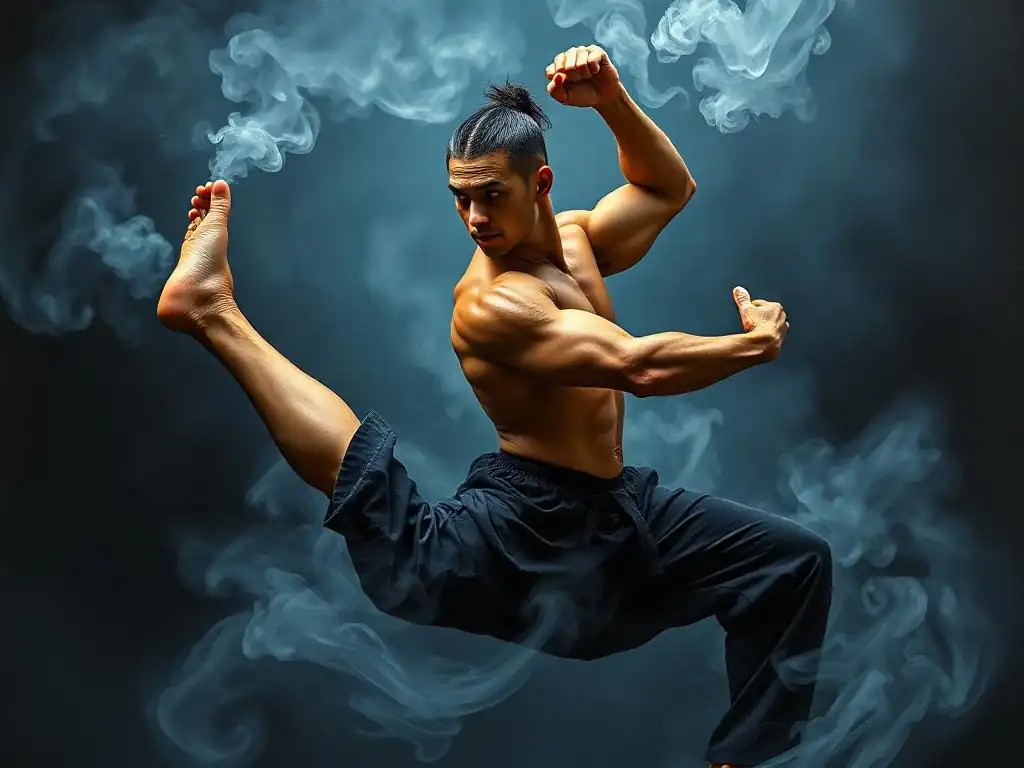
Welcome to Martial Arts Mastery, where we delve into the heart of combat disciplines!
Ever wondered how legendary martial artists achieve seemingly impossible flexibility and range of motion? In this article, we unlock a powerful secret weapon used by masters for decades: martial arts stretching visualization. Discover how harnessing the power of your mind can revolutionize your stretching routine, deepen your poses, and unlock a new level of mobility that will transform your martial arts practice. Intrigued? Let's begin!
- Introduction: Unleashing Your Martial Arts Potential Through Visualization
- Understanding the Science Behind Stretching Visualization
- Visualization Techniques for Enhanced Stretching Performance
- Practical Application: Integrating Visualization into Your Martial Arts Stretching Routine
- Optimizing Your Visualization Practice for Martial Arts Mobility
- Advanced Visualization Techniques for Martial Artists
- Conclusion: Mastering Martial Arts Mobility Through the Power of Your Mind
-
Frequently Asked Questions
- How does visualization specifically help with achieving deeper stretches in martial arts?
- What are some practical visualization techniques I can use before stretching for martial arts?
- Can visualization techniques prevent injuries during martial arts stretching?
- How often should I incorporate visualization into my martial arts stretching routine?
- Are there specific visualizations that are more effective for certain martial arts styles?
- Final Reflection: Unleashing Potential Through Mindful Movement
- Unleash Your Inner Flexibility: Start Stretching Smarter!
Introduction: Unleashing Your Martial Arts Potential Through Visualization
The Power of Mental Imagery in Martial Arts Training
Mental imagery, often referred to as visualization, is a cognitive technique where an individual creates or recreates an experience in the mind. For martial artists, this isn't just about picturing winning a sparring match; it's a powerful tool for refining physical technique, improving muscle memory, and enhancing psychological readiness. Elite athletes across various disciplines, including martial arts, have long incorporated visualization into their training regimens.
For instance, studies on gymnasts and basketball players have shown that mental practice can activate similar neural pathways as physical practice, leading to measurable improvements in performance and skill acquisition. Applying this to flexibility, martial artists can mentally rehearse stretches, focusing on the sensations and desired outcomes.
This mental rehearsal goes beyond simple daydreaming; it involves engaging multiple senses – seeing the body in the desired position, feeling the stretch, even imagining the sound of breath. By vividly picturing the body moving through a full range of motion or achieving a deeper stretch, the brain begins to lay down neural blueprints that support the physical act.
Research suggests that consistent mental practice can improve motor control and coordination, vital components for executing complex martial arts movements. Integrating visualization techniques for deeper martial arts stretching leverages this mental power to break through physical plateaus and unlock greater flexibility.
Bridging the Gap: Flexibility, Mobility, and Visualization
Flexibility, the ability of a muscle to lengthen, and mobility, the ability of a joint to move through its full range of motion, are cornerstones of effective martial arts practice. Without adequate flexibility and mobility, techniques like high kicks, deep stances, and evasive maneuvers become limited or even impossible. While physical stretching is the primary method to improve these areas, visualization provides a potent mental adjunct. It acts as a bridge, connecting the physical effort of stretching with the mental intention of achieving greater range and ease of movement.
Incorporating visualization into a flexibility routine helps martial artists go beyond passively holding a stretch. It encourages active mental engagement, focusing the mind on releasing tension and expanding physical boundaries. For example, a martial artist working on a front split might visualize their hips sinking lower, their muscles lengthening smoothly, and their breath facilitating the release of tightness. This focused mental intent can help override the body's natural resistance and fear responses that sometimes limit flexibility gains. Effective martial arts stretching visualization thus becomes a holistic approach, addressing both the physical and psychological aspects of improving range of motion.
Understanding the Science Behind Stretching Visualization
The Neuromuscular Connection: How Visualization Impacts Flexibility
The impact of visualization on flexibility is rooted in the fascinating neuromuscular connection, the intricate communication network between the brain and muscles. When you visualize a movement, even without physically performing it, your brain exhibits activity in areas responsible for motor control, planning, and execution, including the motor cortex and cerebellum. This mental simulation sends subtle signals along the neural pathways towards the muscles involved in the imagined action. While these signals aren't strong enough to cause full muscle contraction, they are sufficient to prime the nervous system and improve the efficiency of neural pathways.
Specifically concerning flexibility, visualizing a stretch involves mentally activating the muscles being stretched and their opposing muscle groups (antagonists). This mental activation can help improve the coordination between these muscle groups, a factor crucial for achieving deeper stretches. Furthermore, visualization can influence the stretch reflex – the body's involuntary response to sudden muscle lengthening, which causes the muscle to contract to prevent injury.
By mentally rehearsing the stretch and focusing on gradual, controlled lengthening, martial artists can potentially train their nervous system to become less reactive to the stretch reflex, allowing for greater range of motion over time. Research into motor imagery has shown tangible effects on muscle activation patterns and even strength gains, suggesting a real physiological basis for the benefits of martial arts stretching visualization.
Mental Rehearsal and Muscle Activation: The Visualization Process
Mental rehearsal, when applied to stretching, is an active process of creating a detailed, multi-sensory mental simulation of the desired outcome. It's not just seeing the pose; it's feeling the sensation of the stretch, the lengthening of the muscle fibers, the release of tension, and the flow of breath. This detailed internal experience activates the same neural circuits that would be engaged during the physical stretch. For instance, visualizing a deep hamstring stretch activates areas in the brain that control hamstring movement and sensation.
This focused mental activation can lead to subtle, involuntary muscle firings, known as efferent activity, even when the body is still. While not visible contractions, these micro-movements and the accompanying neural signals help reinforce the mind-body connection related to the stretch.
Over time, consistent mental rehearsal improves proprioception – the body's awareness of its position and movement in space – which is vital for controlled stretching and preventing injury. Effective martial arts stretching visualization primes the muscles and nervous system, making the physical stretch more efficient and potentially allowing access to deeper ranges of motion than might be possible with physical effort alone.
Benefits of Incorporating Visualization into Your Stretching Routine
Integrating visualization techniques for deeper martial arts stretching offers a multitude of benefits that complement and amplify physical training. One significant advantage is improved body awareness. By mentally scanning the body and focusing on the sensations within muscles and joints, practitioners become more attuned to areas of tension or restriction, allowing for more targeted and effective stretching. This heightened awareness can also help in identifying imbalances or potential problem areas before they lead to injury.
Beyond increased awareness, visualization can directly contribute to improved flexibility and range of motion. While exact percentages vary depending on the individual and the specific technique, studies and anecdotal evidence suggest that combining physical stretching with consistent visualization can lead to faster and more significant gains than physical stretching alone. For example, some reports indicate improvements in hip mobility or hamstring flexibility by 10-20% over several weeks when visualization is a regular part of the routine.
Furthermore, visualization can enhance the psychological aspects of stretching, increasing focus, patience, and the ability to relax into a stretch, making the process more productive and less uncomfortable. This mental edge is crucial for sustained progress in martial arts flexibility training.
Visualization Techniques for Enhanced Stretching Performance
Technique 1: The Body Scan for Increased Awareness
The body scan is a foundational visualization technique that involves systematically bringing your attention to different parts of your body, observing physical sensations without judgment. When applied to stretching, you begin by finding a comfortable position, perhaps sitting or lying down. Close your eyes and take a few deep breaths to center yourself.
Then, start at the top of your head or the tips of your toes and slowly move your awareness through your body, section by section. As you focus on each area, notice any sensations – warmth, coolness, tingling, or tension. This process helps you become acutely aware of your body's current state and identify areas that feel particularly tight or resistant to stretching.
As you progress through the body scan, pay special attention to the muscles and joints involved in the stretch you are about to perform or are currently holding. For instance, if preparing for a hamstring stretch, focus on the back of your thighs, your knees, and your hips. Notice where the tension resides.
This detailed awareness is the first step in effectively using martial arts stretching visualization, as it provides a clear mental map of your physical starting point. It's estimated that many individuals carry significant unconscious tension, and a focused body scan can reveal these hidden restrictions, allowing you to address them intentionally during your stretching practice.
Focusing on Tension Areas: Identifying and Releasing Blockages
Once you've identified areas of tension during the body scan, shift your focus specifically to these blockages. Mentally picture the tension residing in the muscle fibers – perhaps visualizing it as knots, tightness, or stagnant energy. Acknowledge its presence without resistance. Then, with each exhale, visualize the tension softening, loosening, and dissolving.
Imagine the muscle fibers lengthening and becoming supple, like warm wax or elastic bands. You can also visualize warm light or energy flowing into the area, promoting relaxation and release. This targeted mental effort can help override the nervous system's tendency to hold onto tightness, especially in chronically tense areas.
This focused release is particularly effective when combined with breathwork. As you inhale, visualize sending oxygen and relaxation to the tense area. As you exhale, visualize the tension leaving the body. This conscious pairing of breath and visualization amplifies the relaxation response.
For example, when focusing on tight hip flexors in a lunge stretch, visualize the muscle fibers elongating with each breath out, feeling the hip joint opening. Practitioners often report a noticeable difference in the depth of a stretch when they actively visualize the release of tension compared to simply holding the position passively. This makes martial arts stretching visualization a dynamic mental engagement rather than a static exercise.
Using Breathwork to Enhance the Body Scan
Integrating breathwork is fundamental to maximizing the effectiveness of the body scan and subsequent stretching visualization. Conscious, deep breathing activates the parasympathetic nervous system, which is responsible for rest and relaxation. This physiological response counteracts the "fight or flight" response that can keep muscles tense, especially during challenging stretches. Begin by finding a steady, rhythmic breath – perhaps inhaling deeply through the nose, holding for a moment, and exhaling slowly through the mouth. As you perform the body scan, link your breath to your awareness.
With each inhale, bring your attention to the area you are scanning, noticing the sensations. With each exhale, consciously soften that area and release any held tension. For example, when scanning your shoulders, inhale and feel the slight rise and fall, then exhale and consciously allow your shoulders to drop away from your ears.
This simple yet powerful technique deepens your connection to your body and prepares your muscles and nervous system for stretching. Using breath in this way during martial arts stretching visualization helps create a state of calm focus, making it easier to access deeper levels of relaxation and flexibility.
Technique 2: The "Ideal Stretch" Visualization
The "Ideal Stretch" visualization involves creating a vivid mental blueprint of what the stretch would look and feel like if you had perfect flexibility in that movement. This technique goes beyond your current physical limitations and allows you to mentally experience the peak expression of the stretch. Choose a specific stretch you want to improve, such as a side split or a deep backbend.
Close your eyes and begin to construct the image in your mind. See yourself performing the stretch with ease, grace, and full range of motion. Pay attention to the details: the alignment of your body, the angle of your limbs, the feeling of muscles lengthening smoothly, and the absence of pain or restriction.
Mentally step into this image and feel the stretch from the inside out. Experience the sensation of your muscles releasing, your joints opening, and your body moving effortlessly into the desired position. Imagine the feeling of spaciousness and freedom in the stretched areas.
This mental rehearsal of the ideal outcome helps program your nervous system for that potential reality. It builds a positive expectation and provides a clear target for your physical efforts. Consistently practicing this martial arts stretching visualization creates a powerful mental template that guides your physical body towards greater flexibility, even if the initial gap between your current state and the ideal is significant.
Mentally Performing the Perfect Stretch: Creating a Blueprint
Creating a detailed mental blueprint involves more than just a static picture; it's a dynamic simulation. As you visualize the perfect stretch, run through the entire movement or position in your mind, just as you would physically.
For a standing front stretch kick preparation, visualize the leg lifting smoothly, the hamstring lengthening without strain, the hip opening fully, and the foot reaching its maximum height with perfect control. Engage all your senses: see the height of the kick, feel the stretch along the back of the leg, hear your controlled breathing, and even imagine the feeling of balance and stability.
This detailed mental performance helps refine the motor pathways associated with the movement. By repeatedly visualizing the ideal execution, you strengthen the neural connections required for that level of flexibility and control. This mental blueprint serves as a guide during your physical practice, allowing you to move with greater intention and precision. It's like having a perfect coach inside your head, showing you exactly how the stretch should feel and look. Integrating this level of detail into your martial arts stretching visualization significantly enhances its effectiveness in promoting physical change.
Progressive Relaxation Techniques for Deeper Visualization
Progressive relaxation techniques are an excellent way to prepare your body and mind for deeper visualization and stretching. This method involves systematically tensing and then releasing different muscle groups in your body. Start with your feet, tense them tightly for a few seconds, then completely release the tension, noticing the difference. Move up through your body – calves, thighs, glutes, abdomen, back, arms, shoulders, neck, and face – tensing and releasing each group. This process helps you become more aware of what tension feels like and, more importantly, what complete relaxation feels like.
Once your body is physically relaxed through this process, your mind is also often calmer and more receptive to visualization. From this relaxed state, transitioning into the "Ideal Stretch" visualization becomes easier and more vivid. The physical relaxation allows for a deeper mental immersion in the imagined stretch, making the experience feel more real and impactful. Combining progressive relaxation with martial arts stretching visualization helps dismantle physical and mental barriers to flexibility, creating an optimal state for achieving deeper ranges of motion.
Technique 3: Visualization for Pain Management During Stretching
Stretching, particularly when pushing limits, can sometimes involve discomfort or even pain. Visualization can be a powerful tool for managing this sensation, not by ignoring it, but by altering your perception and response to it. One technique involves reframing the sensation. Instead of labeling the feeling as "pain," which has negative connotations and triggers a protective tension response, try to describe it neutrally as "intensity," "strong sensation," or "deep stretch feeling." This subtle linguistic shift can change how your brain processes the signals from the stretched muscle.
Once you've reframed the sensation, you can use visualization to work with it. Imagine the sensation as a wave – it rises, peaks, and eventually subsides. Focus on breathing through the peak of the wave, knowing that it will pass.
You can also visualize sending breath or relaxing energy specifically to the area of intensity, imagining it softening the sensation. This active engagement with the discomfort, rather than resisting or fearing it, can help reduce the body's stress response and allow you to remain more relaxed within the stretch. Effective martial arts stretching visualization for pain management is about developing mental resilience and control over your physical experience.
Reframing Pain: Transforming Perception Through Visualization
Reframing pain is a cognitive technique that uses visualization to alter how you perceive and react to uncomfortable sensations during stretching. Instead of viewing the strong feeling in a muscle as a sign to stop or as something negative, visualize it as a positive signal of change and growth. Picture the intensity as the muscle fibers actively lengthening and adapting, like clay being molded or a spring extending. You can imagine the sensation as a warm, expanding energy in the area, rather than a sharp, restrictive force.
Another reframing visualization involves picturing the sensation as simply information the body is sending. See the nerve signals traveling, but visualize your brain receiving them calmly and interpreting them as manageable input, not a threat. This mental shift reduces the fear and anxiety often associated with stretching discomfort, which in turn helps muscles relax rather than tense up. By consistently practicing this martial arts stretching visualization, you train your mind to interpret strong stretching sensations as productive effort, allowing you to work closer to your physical edge safely and effectively.
Creating a Mental "Safe Space" During Intense Stretches
During particularly intense stretches, creating a mental "safe space" through visualization can provide a psychological refuge. This involves mentally transporting yourself to a place where you feel completely calm, safe, and relaxed – perhaps a serene beach, a peaceful forest, or a cozy room. Build this mental environment vividly in your mind, engaging all your senses: see the colors, hear the sounds, feel the temperature, smell the air.
When a stretch becomes challenging, shift your conscious attention to this mental safe space. Focus on the details of your imagined environment and the feelings of peace and security it evokes. While a part of your mind remains aware of the physical stretch, the primary focus is on the calming visualization.
This technique helps to distance yourself emotionally from the discomfort, reducing the psychological stress response that can exacerbate physical tension. By practicing this form of martial arts stretching visualization, you build mental fortitude, allowing you to navigate intense physical sensations with greater ease and continue working towards deeper flexibility goals.
Technique 4: Visualizing Successful Martial Arts Movements
The ultimate goal of martial arts stretching visualization is not just increased flexibility in isolation, but the ability to seamlessly integrate that flexibility into dynamic martial arts techniques. This technique involves visualizing yourself performing specific martial arts movements with perfect form, power, and fluidity, utilizing your enhanced range of motion. For example, if you've been working on hip flexibility for high kicks, visualize yourself executing a roundhouse kick: see your hip opening effortlessly, your leg extending fully, your foot making contact with precision and power, and your body maintaining perfect balance throughout the movement.
Mentally rehearse entire sequences or forms, focusing on how your increased flexibility allows for deeper stances, higher guards, more expansive blocks, and more powerful strikes. Feel the freedom of movement in your joints and the length in your muscles as you transition between techniques. This visualization reinforces the practical application of your flexibility training and strengthens the neural pathways for executing techniques with your improved range of motion. It bridges the gap between static stretching and dynamic application, making your martial arts stretching visualization directly relevant to your performance.
Integrating Flexibility Gains into Martial Arts Techniques
Integrating flexibility gains into martial arts techniques through visualization is a crucial step in making your stretching efforts translate into practical skill. After achieving a deeper range of motion in a specific stretch, spend time visualizing yourself using that improved range in your forms, sparring, or self-defense applications. For instance, if your hamstring flexibility has improved, visualize executing a snap kick with greater height and speed, feeling the smooth extension of your leg. If your hip mobility has increased, visualize transitioning into a deep horse stance or a low block with stability and power.
This targeted visualization helps your brain connect the dots between your increased physical capacity and its functional application in martial arts. It allows you to mentally troubleshoot movements, identifying where the new flexibility can be best utilized and how it affects other aspects of the technique, such as balance or weight distribution. By mentally rehearsing techniques with your improved flexibility, you prepare your body and mind to execute them effectively during physical practice. This makes martial arts stretching visualization a direct contributor to enhanced technical performance.
Simulation Training: Visualizing Complex Movements
Simulation training through visualization involves mentally practicing complex martial arts movements or sequences that require significant flexibility and mobility. This could be a challenging acrobatic move, a complex joint lock that demands specific ranges of motion, or a fast-paced combination involving deep stances and high extensions. Break down the movement into its key components and visualize performing each part flawlessly, feeling the required flexibility and control at each stage.
For example, visualizing a complex takedown might involve seeing yourself achieving a low, stable base (requiring hip and ankle mobility), transitioning smoothly (requiring core flexibility), and controlling your opponent's body through a range of motion (requiring joint flexibility). Run through the entire sequence multiple times in your mind, focusing on the feeling of smooth transitions and the effective use of your flexibility.
This mental simulation helps refine the coordination and timing needed for complex techniques, allowing you to practice and improve even when you don't have the physical space or a partner. This advanced martial arts stretching visualization technique is a powerful tool for skill development and technical refinement.
Practical Application: Integrating Visualization into Your Martial Arts Stretching Routine
Creating a Dedicated Visualization Practice
To effectively integrate visualization into your martial arts stretching routine, it's beneficial to create a dedicated practice time. This doesn't necessarily require a lot of extra time; it can be incorporated directly into your existing warm-up, cool-down, or stretching sessions. Set aside 5-10 minutes specifically for visualization before or during your stretching. Find a quiet space where you won't be interrupted. You can sit comfortably, lie down, or even perform visualization while holding static stretches. The key is consistency.
Start with shorter sessions and gradually increase the duration as you become more comfortable and adept at focusing your mind. You might begin with a body scan to tune into your physical state, then move into visualizing a specific stretch or martial arts movement you want to improve. Using guided visualization scripts (either written or recorded) can be helpful when you are starting out. Make this dedicated visualization time a non-negotiable part of your training week, perhaps aiming for 3-5 sessions.
Combining Visualization with Dynamic and Static Stretching
Visualization can be effectively combined with both dynamic and static stretching methods used in martial arts training. During dynamic stretching, which involves controlled movements through a range of motion (like leg swings or arm circles), visualize the muscles lengthening smoothly and the joints moving freely with each repetition. Focus on the feeling of fluidity and the increasing range of motion as you warm up. This helps to mentally prepare your body for the more demanding static stretches or techniques to follow.
When performing static stretches, where you hold a position for a period (typically 30 seconds to several minutes), visualization becomes a powerful tool for deepening the stretch and managing discomfort. While holding a stretch, engage in techniques like the body scan to identify tension, visualize the "Ideal Stretch" to guide your body deeper, or use visualization for pain management if needed.
For example, while holding a butterfly stretch, visualize your knees moving closer to the floor with each exhale, feeling the release in your inner thighs. Combining the physical hold with focused martial arts stretching visualization enhances both the physical and mental benefits of the stretch.
Sample Visualization Scripts for Common Martial Arts Stretches
Here are some simplified examples of how you might structure visualization for common martial arts stretches. These scripts are meant as starting points and can be adapted based on individual needs and goals.
Visualization for Butterfly Stretch
- Starting Position: Sit on the floor, bringing the soles of your feet together. Let your knees fall out to the sides. You can gently hold your feet with your hands.
- Visualization: Close your eyes and take a deep breath. Feel your sit bones grounding down. As you exhale, visualize your inner thigh muscles softening and lengthening. Picture your hip joints gently opening, like hinges smoothly moving. Imagine your knees becoming heavier, being drawn closer to the floor by gravity. With each breath, visualize more space being created in your groin and hips. Feel the stretch, but picture it as a release, a melting away of tightness. See your knees getting closer to the floor, effortlessly.
Visualization for Pigeon Pose
- Starting Position: From a downward dog or plank, bring one knee forward towards the wrist, extending the other leg straight back. Adjust your front shin to a comfortable angle, ideally parallel to the front of the mat if possible.
- Visualization: Close your eyes. Feel the stretch in the glute and hip of your front leg, and potentially the hip flexor of your back leg. Visualize the head of your femur (thigh bone) settling deeply into its socket. Picture the muscles around your hip relaxing and creating space. Imagine any tightness as stiff cords, and with each exhale, see these cords softening and lengthening. Visualize your hips sinking lower towards the floor, becoming level and grounded. Feel the stretch as a process of unlocking, opening up the hip joint for greater mobility needed in kicks and stances.
Visualization for Standing Side Bend
- Starting Position: Stand with feet hip-width apart. Inhale and reach one arm overhead, palm facing the opposite side.
- Visualization: As you exhale, gently bend to the side, reaching with the overhead arm. Visualize the entire side of your body lengthening – from your ankle, up through your hip, waist, ribs, and fingertips. Picture the space between your ribs expanding on the side you are bending away from. Imagine your spine creating a gentle, expansive arc. Feel the stretch along your intercostal muscles and obliques. Visualize your breath flowing freely along your lengthened side. Picture your body becoming more pliable and elastic, able to bend and move fluidly, essential for evasive movements and powerful strikes in martial arts.
Optimizing Your Visualization Practice for Martial Arts Mobility
Setting Realistic Goals and Tracking Progress
To optimize your martial arts stretching visualization practice, it is essential to set clear, realistic goals. Instead of a vague goal like "get more flexible," aim for specific, measurable improvements. For example, "I want to be able to lower my hips 2 inches deeper in a horse stance within 8 weeks using visualization and stretching," or "I want to feel less tension in my hamstrings during front kicks by consistently visualizing release." Write down your goals to make them tangible.
Tracking your progress is equally important. This can be done through various methods: journaling about your visualization sessions and how you felt during stretches, taking occasional photos or videos of your stretches to visually compare your range of motion over time, or using a simple chart to note objective measurements if applicable (e.g., distance from the floor in a split). Regularly reviewing your goals and tracking your progress helps you stay motivated, identify what is working, and make necessary adjustments to your martial arts stretching visualization approach. Seeing even small improvements reinforces the effectiveness of your mental training.
Maintaining Consistency and Patience
Like any aspect of martial arts training, consistency is paramount for achieving results with visualization techniques for deeper martial arts stretching. Sporadic practice is unlikely to yield significant benefits. Aim to incorporate visualization into your routine regularly, ideally several times per week. Even short, focused sessions are more effective than infrequent long ones. Schedule your visualization practice just like you would schedule physical training sessions.
Patience is another critical virtue. Neuromuscular changes and significant flexibility gains take time. Do not get discouraged if you don't see dramatic results immediately. Visualization works cumulatively, gradually strengthening the mind-body connection and reshaping neural pathways. Some days your visualization might feel more vivid and effective than others; this is normal. Continue practicing consistently, trust the process, and celebrate small victories along the way. Sustained effort in martial arts stretching visualization will lead to gradual but lasting improvements in your mobility.
Addressing Challenges and Plateaus in Visualization
Practitioners using martial arts stretching visualization may encounter challenges, such as difficulty focusing, lack of vivid imagery, or hitting plateaus in perceived effectiveness. When focus is a challenge, simply acknowledge the distracting thoughts without judgment and gently redirect your attention back to your visualization. It's a skill that improves with practice. If vivid imagery is difficult, focus more on the feeling of the stretch or movement rather than just the visual aspect. Engage other senses like sound (breath) or even imagined smells if helpful.
If you hit a plateau where visualization doesn't seem to be deepening your stretches further, try varying your techniques. Introduce new types of visualization, like visualizing successful martial arts movements if you've only focused on static stretches. Revisit your goals and ensure they are still relevant. Sometimes, a plateau indicates a need to increase the intensity or duration of physical stretching, with visualization supporting the increased physical demand. Analyzing your physical and mental training together is key to overcoming plateaus in martial arts stretching visualization.
Advanced Visualization Techniques for Martial Artists
Visualization for Injury Prevention and Recovery
Advanced martial artists can leverage visualization for both preventing injuries and accelerating recovery. For prevention, visualize your joints moving smoothly through their full, healthy range of motion during complex techniques. Picture your muscles and tendons being resilient and strong, capable of handling dynamic loads without strain. Mentally rehearse proper alignment and body mechanics, visualizing yourself executing movements safely and efficiently. This mental priming can reinforce good habits and reduce the likelihood of improper loading or sudden, injurious movements.
In the realm of recovery, visualization can play a significant role. If dealing with an injury, visualize the injured tissues healing – seeing inflammation reducing, muscle fibers repairing, or bones mending. Picture blood flow bringing nutrients to the area and waste products being carried away.
Mentally rehearse gentle, pain-free movements within a safe range, gradually expanding the visualized range as healing progresses. This mental practice can help maintain neural pathways to the injured area, reduce fear of movement, and potentially speed up the physical rehabilitation process. While not a substitute for professional medical care, this form of martial arts stretching visualization supports the body's natural healing mechanisms.
Visualization for Enhancing Proprioception and Body Awareness
Visualization is a powerful tool for enhancing proprioception, the body's sense of its position and movement in space, which is crucial for balance, coordination, and executing precise martial arts techniques. By regularly performing detailed body scans and visualizing specific body parts in relation to each other and the environment, you strengthen the neural maps that govern proprioception. For example, visualize holding a deep stance and feel the weight distribution in your feet, the bend in your knees, and the alignment of your spine, all without looking.
Furthermore, visualize complex transitions between stances or techniques, focusing on the subtle shifts in weight and balance required. This mental practice sharpens your internal sense of where your body is at any given moment. Enhanced proprioception leads to better control during dynamic stretches and movements, reducing the risk of overstretching or losing balance. Incorporating this focus into your martial arts stretching visualization practice directly contributes to improved body control and spatial awareness, vital attributes for any martial artist.
Visualization for Improving Reaction Time and Reflexes
While not directly related to stretching, advanced visualization techniques can extend to improving reaction time and reflexes, which are critical in sparring and self-defense. This involves visualizing potential scenarios and mentally rehearsing your immediate, instinctive response. For example, visualize an opponent throwing a specific strike and instantly see yourself reacting with a block, parry, or evasion, followed by a counter-attack, all with speed and precision.
This form of rapid-fire visualization trains your brain to recognize patterns and trigger appropriate responses more quickly. By repeatedly simulating fast-paced exchanges in your mind, you reduce the processing time needed to react in real-time. While flexibility is foundational for executing techniques, improved reaction time ensures you can apply those techniques effectively when needed. This advanced application of martial arts stretching visualization principles demonstrates the broad utility of mental training beyond just physical conditioning.
Conclusion: Mastering Martial Arts Mobility Through the Power of Your Mind
The Future of Visualization in Martial Arts Training
The role of visualization in martial arts training is poised to grow as research continues to uncover the profound connections between the mind and body. As athletes and coaches become more sophisticated in integrating psychological techniques with physical conditioning, visualization will move from being a supplementary tool to a fundamental component of comprehensive training programs. Future developments might include personalized guided visualization experiences tailored to specific martial arts disciplines or individual flexibility goals, potentially utilizing biofeedback or virtual reality technologies to enhance the immersive experience.
Furthermore, as understanding of the neuromuscular system deepens, visualization protocols may become more precise, targeting specific neural pathways for accelerated flexibility gains and injury resilience. The emphasis will likely be on creating seamless integration between mental rehearsal and physical practice, recognizing that the mind and body are not separate entities but interconnected systems. The future of martial arts stretching visualization lies in its full acceptance as an indispensable element for unlocking peak physical potential and mental fortitude.
Embracing the Mind-Body Connection for Peak Performance
Ultimately, mastering martial arts mobility, and achieving peak performance in general, requires embracing the powerful connection between the mind and body. Physical training builds strength, endurance, and technique, but the mind governs focus, resilience, coordination, and the ability to access your full physical potential. Visualization techniques for deeper martial arts stretching are a prime example of how mental training can directly influence physical outcomes, enabling practitioners to go beyond perceived limitations.
By consistently applying visualization techniques, martial artists not only improve their flexibility and mobility but also cultivate enhanced body awareness, mental discipline, and the ability to manage discomfort. This holistic approach recognizes that true mastery in martial arts is achieved when the physical body and the focused mind work in perfect harmony. Embracing martial arts stretching visualization is an investment in developing not just a more flexible body, but a more capable and resilient mind, leading to deeper skills and a more profound practice.
Frequently Asked Questions
How does visualization specifically help with achieving deeper stretches in martial arts?
Visualization allows you to mentally rehearse the stretch, relaxing muscles and reducing resistance. This mental preparation can lead to improved flexibility and range of motion.
What are some practical visualization techniques I can use before stretching for martial arts?
Try visualizing your muscles lengthening and relaxing with each breath. Imagine yourself easily achieving the target stretch position and holding it comfortably. Focus on feeling the stretch without pain.
Can visualization techniques prevent injuries during martial arts stretching?
Yes, by mentally preparing your body for the stretch, you're less likely to overextend or force a movement. Visualization promotes body awareness and controlled movements.
How often should I incorporate visualization into my martial arts stretching routine?
Ideally, use visualization before each stretching session and even during the stretch itself. Consistency is key for maximizing its benefits on flexibility.
Are there specific visualizations that are more effective for certain martial arts styles?
While the core principles are the same, you can tailor your visualization to the specific movements of your martial art. Focus on visualizing the muscles used and the desired range of motion for those techniques.
Final Reflection: Unleashing Potential Through Mindful Movement
The exploration of visualization techniques within martial arts stretching underscores a powerful truth: the mind is an indispensable tool for unlocking physical potential. What began as a focused examination of specific exercises reveals a broader understanding of how mental imagery can significantly enhance flexibility, mobility, and ultimately, performance in martial arts and beyond. This connection between mind and body, often overlooked, is now more relevant than ever as athletes and practitioners seek innovative methods to push their boundaries.
The integration of visualization into stretching routines isn't merely a trend; it's a recognition of the profound impact our thoughts have on our physical capabilities. This understanding has personally reshaped my approach to training, emphasizing the importance of mental preparation alongside physical exertion. The mind is everything. What you think you become.
- Buddha. This quote resonates deeply, highlighting the transformative power of focused intention and positive self-image in achieving our goals, both on and off the mat.
Now, I invite you to consider how you can incorporate these visualization techniques into your own practice. Embrace the power of your imagination to deepen your stretches, enhance your mobility, and unlock your full potential. Visualize success, feel the movement, and believe in your ability to achieve new levels of flexibility and strength. The journey towards enhanced mobility begins not just with physical effort, but with a clear and focused mind.
Unleash Your Inner Flexibility: Start Stretching Smarter!
Thank you for diving into the world of visualization and its impact on your martial arts flexibility. Now that you've explored these powerful techniques, it's time to put them into action and experience the difference firsthand!
Here's how you can take your stretching to the next level:
- Commit to a 15-minute visualization-enhanced stretching session three times this week. Focus on one challenging stretch per session and vividly imagine yourself achieving greater range of motion.
- Share your most effective visualization technique with a fellow martial artist and learn theirs. Collaborative stretching can unlock new levels of mobility!
- Record a short video of your flexibility journey using visualization techniques and share it on social media using #MartialArtsMastery. Inspire others with your progress!
What's one visualization technique you're most excited to try in your next training session, and how do you plan to track its impact on your flexibility?