
Is Aikido's "Art of Peace" an Idealistic Dream or a Practical Reality?

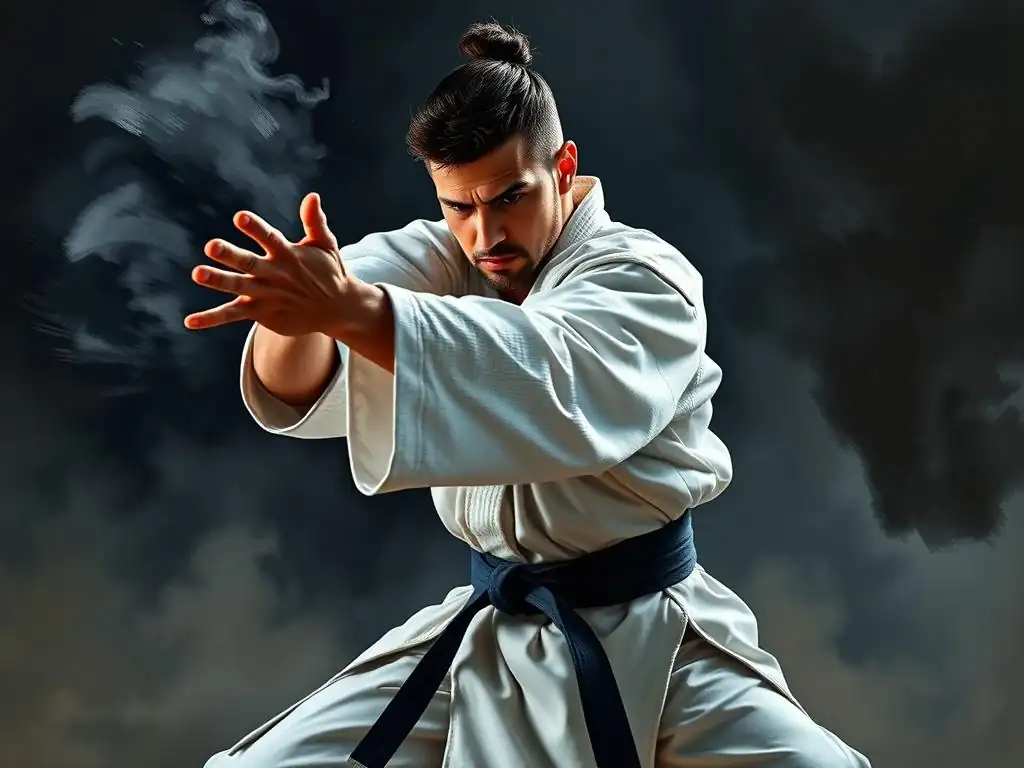
Welcome to Martial Arts Mastery, your gateway to understanding the profound world of combat disciplines!
Delve into the heart of martial arts, where history, technique, and philosophy intertwine. Are you ready to explore the elegant yet potentially devastating art of Aikido? This article grapples with a crucial question: Is Aikido's "Art of Peace" truly effective in real-world self-defense scenarios, or is it merely an idealistic dream? Discover the reality behind Aikido selfdefense techniques and decide for yourself. Continue reading to uncover the secrets and practical applications of this unique martial art.
- Aikido's Philosophy of Peace: A Deep Dive
- Aikido Self-Defense Techniques: Bridging the Gap Between Ideal and Reality
- The Limitations of Aikido as a Sole Self-Defense System
- Case Studies and Practical Examples of Aikido in Self-Defense
- Aikido Training for Practical Self-Defense: A Balanced Approach
- The Importance of Context: When Aikido's "Art of Peace" Can Prevail
- Aikido's "Art of Peace": A Realistic Goal or an Unattainable Ideal?
- Mastering Aikido: Blending Philosophy with Effective Self-Defense Techniques
-
Frequently Asked Questions
- What is the core philosophy behind Aikido, as presented by MartialArtsMastery.org?
- How does MartialArtsMastery.org view Aikido's effectiveness in real-world self-defense scenarios?
- What specific Aikido selfdefense techniques reality are highlighted on MartialArtsMastery.org?
- Does MartialArtsMastery.org delve into the historical context of Aikido and its influence?
- According to MartialArtsMastery.org, what kind of training is needed to make Aikido effective for self-defense?
- Final Reflection: Embracing Peace in a World of Conflict
- Embrace Harmony: Your Journey Beyond the Mat Starts Now!
Aikido's Philosophy of Peace: A Deep Dive
Exploring the Core Principles of Aikido's "Art of Peace"
Aikido, often translated as the "Way of Harmonious Energy," stands apart from many martial arts through its explicit emphasis on non-violence and conflict resolution. At its heart lies the philosophy of Aiki, which refers to the principle of blending or harmonizing with an opponent's energy rather than directly opposing it. This core concept, championed by its founder Morihei Ueshiba (O-Sensei), suggests that the ultimate goal is not to defeat an attacker but to neutralize the aggression and, ideally, resolve the conflict without causing serious harm.
This involves redirecting force, maintaining balance, and utilizing throws and joint locks to control rather than injure. The phrase "Art of Peace" encapsulates this ideal, positioning Aikido not just as a fighting system, but as a path towards personal development and the cultivation of a peaceful spirit.
The philosophical underpinnings extend beyond physical techniques. Key principles include Masakatsu Agatsu (True victory is victory over oneself) and Takemusu Aiki (spontaneous, infinitely generative Aiki). These highlight the internal focus of the art, emphasizing self-mastery, ethical conduct, and the ability to respond creatively and appropriately to any situation.
Training in Aikido is seen as a microcosm of life's challenges, where learning to stay calm, centered, and connected under pressure allows practitioners to apply these lessons off the mat. This perspective suggests that true self-defense begins with inner peace and the ability to avoid conflict altogether, making the physical techniques a last resort, employed only when absolutely necessary to protect oneself or others.
The Role of Harmony and Non-Violence in Aikido Training
Training in Aikido is deeply rooted in the concepts of harmony ( wa) and non-violence. Unlike arts focused on striking or competitive sparring, traditional Aikido practice often revolves around pre-arranged forms ( kata) and partner drills where one person acts as the attacker ( uke) and the other as the defender ( nage). The uke's role is crucial; they must attack with sincerity and commitment to allow the nage to practice blending and redirecting the force.
This cooperative approach, while sometimes criticized for lacking realism, is designed to teach students how to receive and harmonize with aggressive energy without meeting it head-on. The focus is on mutual learning and developing sensitivity, control, and balance, rather than building resistance to impact or practicing offensive maneuvers.
The principle of non-violence is woven into the very fabric of Aikido techniques. Throws and joint locks are typically applied in a way that allows the uke to roll or fall safely ( ukemi), minimizing injury. The goal is to control the attacker or render them unable to continue, rather than inflicting pain or damage as a primary objective.
For example, techniques like kokyu-nage (breath power throw) or ikkyo (first principle) aim to break the attacker's balance and control their center, leading to a fall or immobilization. This emphasis on control and minimal harm reflects the art's philosophical commitment to the "Art of Peace," aiming to resolve conflict while preserving the integrity of both individuals involved, a unique aspect when considering Aikido selfdefense techniques reality.
Aikido Self-Defense Techniques: Bridging the Gap Between Ideal and Reality
Understanding Aikido Techniques for Practical Self-Defense Scenarios
Aikido's technical repertoire includes a wide array of throws ( nage-waza), joint locks ( katame-waza), and pins ( osae-waza), derived from older Japanese martial arts like Daito-ryu Aiki-jujutsu. Techniques are typically initiated in response to specific attacks, such as grabs (wrist grabs, lapel grabs), strikes (punches, kicks), or even weapons threats (knife, staff). The core principle applied is irimi (entering) or tenkan (turning), which involve moving with or around the attacker's force vector, rather than blocking it.
For instance, if an attacker pushes, an Aikidoka might step offline and guide the push into a throw; if they pull, they might enter forward into the pull to disrupt balance. The goal is always to gain a superior position, control the attacker's center and limbs, and apply a technique that neutralizes their ability to continue the assault.
Specific techniques are often applied in sequences, adapting to the attacker's reactions. For example, a wrist grab might be addressed with kokyuho (breath power method) to break balance, followed by kote-gaeshi (wrist turn throw) or ikkyo (first principle pin).
Against a punch, an Aikidoka might apply irimi movement to get offline and inside the attack, leading to a throw like shiho-nage (four-direction throw) or kokyu-nage. While the techniques themselves are structurally sound and leverage biomechanical principles, their effectiveness in practical self-defense hinges on the practitioner's ability to apply them spontaneously and powerfully against a resisting, unpredictable opponent, which brings into question the Aikido selfdefense techniques reality outside the controlled environment of the dojo.
Aikido's Effectiveness in Real-World Confrontations: A Critical Analysis
Evaluating the effectiveness of Aikido selfdefense techniques reality in real-world, non-consensual confrontations is complex and often debated. Proponents argue that Aikido's focus on blending, balance disruption, and control makes it highly effective, particularly against larger or stronger opponents, as it relies on leverage and timing rather than brute strength.
They point to the ability to neutralize threats quickly and decisively without necessarily resorting to injury, aligning with the "Art of Peace" philosophy. Some practitioners report successfully using Aikido principles to de-escalate situations or control attackers in real-life scenarios, such as dealing with aggressive individuals or managing altercations without resorting to strikes.
However, critics often raise concerns about the practicality of traditional Aikido training for self-defense. The lack of live, full-resistance sparring in many dojos means practitioners may not develop the timing, adrenaline management, and resilience needed to apply techniques against an uncooperative, unpredictable attacker who is not concerned with falling safely. Techniques that work smoothly with a compliant partner may fail against someone wildly swinging or resisting forcefully.
Furthermore, the reliance on grabs as initial attacks in many drills may not reflect common street assaults, which often begin with surprise strikes. This disparity leads some to question how well traditional Aikido prepares individuals for the harsh reality of street self-defense, highlighting a potential gap between the theoretical effectiveness of Aikido selfdefense techniques and reality.
The Limitations of Aikido as a Sole Self-Defense System
Addressing Common Criticisms of Aikido's Practicality
One of the most frequent criticisms leveled against Aikido as a standalone self-defense system is its perceived lack of practicality in unstructured, high-stress situations. Critics argue that the cooperative nature of traditional training, where uke assists nage by taking ukemi, does not adequately prepare practitioners for the chaos and unpredictability of a real fight. An attacker on the street is unlikely to fall safely or follow the expected attack vector.
This can make the precise timing and positioning required for many Aikido techniques difficult to achieve under duress. For example, executing a complex joint lock on a flailing, adrenaline-fueled assailant who is resisting with all their might is significantly harder than applying it to a cooperative partner.
Another significant point of contention is the relative absence of striking techniques and ground fighting in the core Aikido curriculum compared to arts like Boxing, Muay Thai, or Brazilian Jiu-Jitsu. While some Aikido styles incorporate strikes, they are not the primary focus. Similarly, while Aikido has pinning techniques, training for fighting effectively from the ground is not as extensive as in grappling-focused arts.
Given that many real-world altercations end up on the ground, and surprise attacks often involve strikes, relying solely on Aikido might leave a practitioner unprepared for crucial phases of a confrontation. This gap in training coverage is a major factor when assessing the Aikido selfdefense techniques reality against diverse threats.
Comparing Aikido's Self-Defense Applications to Other Martial Arts
When comparing the practical self-defense applications of Aikido to other martial arts, distinct differences emerge. Striking arts like Boxing or Karate excel at delivering powerful blows and developing evasive footwork, providing tools for creating distance or incapacitating an attacker quickly. Grappling arts such as Judo or Brazilian Jiu-Jitsu focus on throws, takedowns, and ground control, equipping practitioners with the skills to manage a fight once it goes to the ground, which is a very common outcome. Mixed Martial Arts (MMA) training combines elements of striking and grappling, aiming for comprehensive readiness across different ranges and positions.
Aikido, in contrast, primarily focuses on neutralizing an attack by blending, disrupting balance, and applying controlling techniques like throws and joint locks, often aiming for resolution without serious injury. While this approach aligns with the "Art of Peace," its effectiveness relies heavily on the practitioner's ability to apply these techniques precisely under pressure, often requiring the attacker to commit to a certain type of energy or movement.
In a chaotic, multi-attacker scenario or against an opponent who simply resorts to brute force and wild movements, the structured responses taught in traditional Aikido may be less immediately applicable than the more direct, forceful methods found in other disciplines. This comparative analysis underscores the specific niche and potential limitations of Aikido selfdefense techniques reality when viewed in isolation.
Case Studies and Practical Examples of Aikido in Self-Defense
Examining Real-Life Scenarios Where Aikido Proved Effective
While specific, documented case studies of Aikido being used successfully in street self-defense are not as widely publicized as those for arts like Krav Maga or BJJ, anecdotal evidence from practitioners suggests its principles can be effective, particularly in specific types of encounters. One common scenario where Aikido principles shine is in de-escalation and managing situations involving less violent aggression, such as someone grabbing or pushing.
For example, an Aikidoka trained in blending and maintaining their center might use subtle movements to break a persistent grab without resorting to striking, or redirect a shove to put the aggressor off-balance, creating an opportunity to escape or control the situation without a full-blown fight.
Another area where Aikido techniques can be practical is in controlling a subject who is resisting but not actively trying to injure, such as in security or law enforcement contexts (though dedicated control tactics are often preferred). Techniques like ikkyo or sankyo (third principle pin) can be adapted to control limbs and guide a person without excessive force, provided the practitioner has trained extensively against resistance.
Furthermore, the focus on awareness and positioning in Aikido training can help practitioners recognize and avoid potentially dangerous situations altogether, embodying the principle that the best fight is the one avoided. These examples highlight instances where the unique approach of Aikido selfdefense techniques aligns well with specific realities.
Analyzing Situations Where Aikido's Techniques Might Fall Short
Conversely, there are many common self-defense scenarios where traditional Aikido training might prove insufficient on its own. Consider a surprise attack involving a barrage of punches or kicks. Aikido's reliance on blending with an attack assumes a certain level of commitment and structure from the aggressor that might not be present in a wild, unpredictable assault. Without extensive cross-training, an Aikidoka might lack the defensive tools (like blocking or evasive footwork commonly found in striking arts) needed to weather such an initial storm and create the space or timing for an Aikido technique.
Similarly, if a confrontation goes to the ground, which happens in a significant percentage of real fights (some estimates suggest over 50%), an Aikidoka trained solely in traditional methods might struggle against someone proficient in ground fighting. While Aikido has pinning techniques, transitioning to and controlling a resisting opponent on the ground requires specific skills that are the primary focus of arts like Brazilian Jiu-Jitsu.
Against a determined, aggressive opponent who is not concerned with ukemi and is willing to bite, scratch, or fight dirty, the precise, control-oriented techniques of Aikido might be difficult to implement or maintain, underscoring the challenge of applying Aikido selfdefense techniques to the harsh reality of street combat.
Aikido Training for Practical Self-Defense: A Balanced Approach
Incorporating Realistic Sparring and Pressure Testing in Aikido Training
To bridge the gap between the ideal of the "Art of Peace" and the practical reality of self-defense, many modern Aikido dojos are incorporating more realistic training methods. This includes introducing elements of pressure testing and controlled sparring that go beyond traditional cooperative drills. Pressure testing might involve practicing techniques against a partner offering realistic resistance, simulating the force and unpredictability of an actual attacker. This helps practitioners develop better timing, power, and the ability to adapt techniques when the initial application isn't perfect.
Some schools are also experimenting with forms of limited or controlled sparring, sometimes called Randori (though traditional Randori is different) or "applied Aikido" drills. These sessions might involve resisting attacks with moderate force, practicing entries against non-compliant partners, or even light, agreed-upon striking scenarios to practice blending and entering under pressure. While full-contact sparring remains rare and controversial in many Aikido circles due to the nature of joint locks and throws, even limited pressure testing significantly enhances a student's ability to apply Aikido selfdefense techniques effectively under realistic conditions, making the training more aligned with selfdefense reality.
Developing a Well-Rounded Self-Defense Skillset Alongside Aikido
Given the potential limitations of Aikido as a sole self-defense system, many practitioners advocate for developing a more well-rounded skillset by cross-training in other martial arts or self-defense disciplines. Combining Aikido's principles of blending, balance, and control with skills from other arts can create a highly effective personal defense strategy.
For instance, training in a striking art like Boxing or Kickboxing provides defensive tools against punches and kicks and adds the ability to strike if necessary. Studying a grappling art like Judo or BJJ offers proficiency in throws, takedowns, and ground fighting, covering crucial aspects of self-defense not deeply emphasized in traditional Aikido.
A balanced approach acknowledges that different situations require different tools. Aikido excels in dealing with grabs, holds, and redirecting force, often allowing for control without excessive violence, aligning with the "Art of Peace." However, having the ability to defend against strikes or manage a ground fight, learned from other systems, fills critical gaps. This integrated training approach doesn't diminish Aikido's value but rather enhances its applicability. By understanding the strengths and weaknesses of Aikido selfdefense techniques and supplementing them with skills from other disciplines, practitioners can become far more prepared for the diverse challenges of real-world self-defense.
The Importance of Context: When Aikido's "Art of Peace" Can Prevail
Utilizing Aikido's Principles of De-escalation and Conflict Resolution
One of Aikido's most practical applications lies not in physical combat, but in its emphasis on de-escalation and conflict resolution, which is a significant aspect of real-world self-defense. The core principles of staying calm, centered, and blending with aggressive energy translate directly to managing verbal or non-physical confrontations. An Aikidoka is trained to remain composed under pressure, observe the situation without panic, and respond appropriately rather than react impulsively. This mental conditioning is invaluable in preventing a verbal argument from escalating into physical violence.
Techniques like maintaining a non-threatening posture, using calm language, and subtly controlling distance and angles (akin to tai sabaki or body movement) can diffuse tension. The ability to perceive and harmonize with another person's emotional or physical energy, cultivated through physical training, can help in understanding and redirecting their aggression before it becomes a physical attack.
This aspect of Aikido aligns perfectly with the "Art of Peace" ideal, demonstrating that the most effective self-defense often involves preventing the fight from ever happening. Focusing on these skills is a crucial part of understanding the broader scope of Aikido selfdefense techniques reality beyond just physical confrontations.
The Psychological Aspects of Self-Defense and Aikido's Contribution
Self-defense is as much a psychological challenge as a physical one. Panic, fear, and adrenaline can severely impair judgment and physical performance. Aikido training, with its emphasis on maintaining a calm mind ( fudoshin - immovable mind) and centeredness ( hara), contributes significantly to the psychological readiness required for self-defense. Practitioners learn to manage stress and discomfort through rigorous physical training and the constant need to stay present and adaptable during techniques. This mental fortitude is crucial for assessing threats clearly and responding effectively under pressure.
Furthermore, the philosophy of Masakatsu Agatsu (true victory is victory over oneself) instills a focus on self-control and overcoming one's own fear and aggression. This internal victory is paramount in self-defense, enabling a person to act decisively and appropriately without being overwhelmed by panic or resorting to excessive force out of fear. By training the mind to remain calm and focused amidst physical challenges, Aikido provides a strong psychological foundation that complements any physical self-defense skills, highlighting a less obvious but vital contribution of Aikido selfdefense techniques to reality preparedness.
Aikido's "Art of Peace": A Realistic Goal or an Unattainable Ideal?
Reconciling Aikido's Philosophical Ideals with the Realities of Self-Defense
Reconciling Aikido's profound philosophical ideals, particularly the "Art of Peace," with the often brutal reality of self-defense is a central challenge for practitioners and observers. On one hand, the ideal of resolving conflict without injury and cultivating inner peace is noble and provides a powerful ethical framework. It shifts the focus from merely fighting to understanding and harmonizing, offering a path for personal growth that transcends physical technique. This philosophical depth is a major draw for many students and distinguishes Aikido from arts focused solely on combat effectiveness.
On the other hand, the stark reality of a violent attack demands practical, immediately effective responses. A purely idealistic adherence to non-violence might be impractical or even dangerous when faced with an assailant determined to cause harm. The challenge lies in integrating the philosophy into the practical application of techniques.
This means training to be physically capable of defending oneself decisively when necessary, while simultaneously embodying the principles of control, minimal harm, and the pursuit of resolution. It requires recognizing that the "Art of Peace" isn't passive pacifism, but an active effort to neutralize aggression while upholding ethical principles – a difficult balance that defines the core tension in discussing Aikido selfdefense techniques reality.
Expert Opinions on Aikido's Practicality in Self-Defense
Expert opinions on the practicality of Aikido for self-defense vary widely, often depending on their background and the specific style of Aikido being discussed. Many seasoned martial artists from striking or grappling backgrounds express skepticism regarding traditional Aikido's effectiveness against a fully resisting, untrained attacker, citing the lack of live sparring and striking defense. They argue that while the principles are sound, the training methodology in many dojos does not adequately prepare students for the physical and psychological shock of a real confrontation.
Conversely, experienced Aikido practitioners, particularly those who have trained extensively and potentially cross-trained, often assert that Aikido is practical, provided it is trained correctly and understood within its context. They emphasize that its strength lies in dealing with specific types of attacks (grabs, holds, managing momentum) and its profound psychological benefits and de-escalation focus.
Some instructors incorporate pressure testing and resistance drills precisely to address the criticisms of practicality. Ultimately, the consensus among many knowledgeable individuals seems to be that while traditional Aikido may not be the most direct or comprehensive combat system compared to arts designed purely for fighting (like MMA), its principles and techniques can be highly effective in certain scenarios and contribute significantly to a person's overall self-defense capabilities, especially when combined with realistic training methods and a broader understanding of conflict dynamics.
The debate over Aikido selfdefense techniques reality often boils down to how the art is trained and applied.
Mastering Aikido: Blending Philosophy with Effective Self-Defense Techniques
The Path to Integrating Aikido's Principles into Practical Application
Mastering Aikido involves a continuous process of integrating its philosophical principles with the practical application of its techniques. This path requires dedication, consistent training, and a willingness to move beyond purely theoretical understanding. It's not enough to know how a technique works mechanically; one must develop the body mechanics, timing, sensitivity, and power to apply it effectively against dynamic resistance. This involves countless repetitions of basic movements ( kihon dosa) and techniques ( waza), focusing on proper posture, balance, and connection to one's center ( hara).
Beyond technical proficiency, integrating principles into practice means cultivating awareness, calmness under pressure, and the ability to perceive and blend with an attacker's energy. This is developed through dedicated partner practice, including drills that gradually increase resistance and unpredictability.
Many advanced practitioners also engage in Randori (free practice, though intensity varies by school) or applied drills that simulate aspects of real-world scenarios. This rigorous training, coupled with a deep understanding of the underlying philosophy, allows the Aikidoka to move spontaneously and effectively, applying techniques not just as learned responses, but as natural extensions of their centered and harmonious state, which is key to unlocking the potential of Aikido selfdefense techniques reality.
Advanced Aikido Techniques for Self-Defense and Conflict Resolution
As practitioners advance, they refine their ability to apply basic techniques with greater subtlety, power, and adaptability. Advanced training explores variations of core techniques tailored to different attacks, body types, and reactions. It also delves deeper into kokyu-ryoku (breath power) – the coordinated use of the entire body's structure and breath to generate effortless power and connection. Advanced students learn to control multiple attackers, deal with weapons threats (using aiki principles with jo staff and bokken sword training), and apply techniques in more complex or compromised positions.
Furthermore, advanced Aikido emphasizes the principle of kuzushi (breaking balance) at a more profound level, learning to disrupt an opponent's stability with minimal physical effort, often through subtle movements and timing. This refined understanding allows for more efficient and less force-dependent application of throws and joint locks.
Crucially, advanced training reinforces the philosophical aspects, emphasizing the ability to read situations, de-escalate conflict, and use techniques as a last resort for control and resolution, rather than aggression. This mastery represents the peak of integrating the "Art of Peace" with practical capability, showcasing the potential depth of Aikido selfdefense techniques when fully realized.
Frequently Asked Questions
What is the core philosophy behind Aikido, as presented by MartialArtsMastery.org?
Aikido, according to MartialArtsMastery.org, emphasizes the Art of Peace, aiming to neutralize aggression without necessarily harming the attacker. It focuses on redirecting an opponent's energy and finding harmonious resolutions to conflict.
How does MartialArtsMastery.org view Aikido's effectiveness in real-world self-defense scenarios?
MartialArtsMastery.org explores the debate surrounding Aikido's practicality, questioning whether its techniques translate effectively into real-world self-defense. The effectiveness in high-stress situations is a key point of discussion.
What specific Aikido selfdefense techniques reality are highlighted on MartialArtsMastery.org?
The site likely showcases Aikido techniques like Irimi nage (entering throw), Shiho nage (four-direction throw), and Kote gaeshi (wrist turn), analyzing their application in realistic self-defense situations. The website assesses how practical these are when applied to real-world scenarios.
Does MartialArtsMastery.org delve into the historical context of Aikido and its influence?
Yes, the website examines the history of Aikido, tracing its development and evolution, and exploring the philosophical underpinnings that influenced its creation. This includes the influences of its founder.
According to MartialArtsMastery.org, what kind of training is needed to make Aikido effective for self-defense?
MartialArtsMastery.org likely emphasizes the importance of rigorous training and practical application to bridge the gap between theory and real-world effectiveness. Sparring and pressure testing are important for success.
Final Reflection: Embracing Peace in a World of Conflict
The exploration of Aikido's "Art of Peace" reveals a complex interplay between idealistic principles and practical application, particularly when considering Aikido's effectiveness as a self-defense technique in the harsh reality of conflict. While the art's philosophy emphasizes harmony and non-violence, its techniques, when properly understood and applied, offer a pathway to de-escalation and, if necessary, effective self-protection. The question then becomes not whether Aikido is either an ideal or a reality, but how we can bridge the gap between the two.
The enduring appeal of Aikido, despite its perceived limitations in a purely combative context, lies in its holistic approach to personal development. It's a journey of self-discovery, cultivating not only physical prowess but also mental fortitude and a deeper understanding of conflict resolution. This resonates profoundly in a world grappling with violence and division. True victory is victory over oneself,
as Morihei Ueshiba, the founder of Aikido, famously stated. This sentiment underscores the importance of inner peace as a foundation for external harmony, a principle that extends far beyond the dojo.
Ultimately, the "Art of Peace" is not a passive ideal but an active practice. It demands constant self-reflection, disciplined training, and a willingness to engage with the world with both strength and compassion. Let us, therefore, strive to embody the principles of Aikido in our daily lives, seeking to de-escalate conflict, protect ourselves and others, and cultivate a more peaceful and harmonious world, one interaction at a time.
Embrace Harmony: Your Journey Beyond the Mat Starts Now!
Thank you for exploring the depths of Aikido's philosophy with us. We hope this article has sparked a renewed sense of purpose and peace within you. Now, let's translate these insights into action.
- Practice mindful movements today: Focus on finding the perfect balance in each physical technique and let that impact your day-to-day experience.
- Share this article with a friend who might be inspired by Aikido's principles.
- Research local Aikido dojos and discover their unique teaching styles, looking for ways to incorporate its philosophy into your life.
What small step will you take today to embody the "Art of Peace" in your interactions?