
DoJime: The Controversial Trunk Strangle Rules and Risks

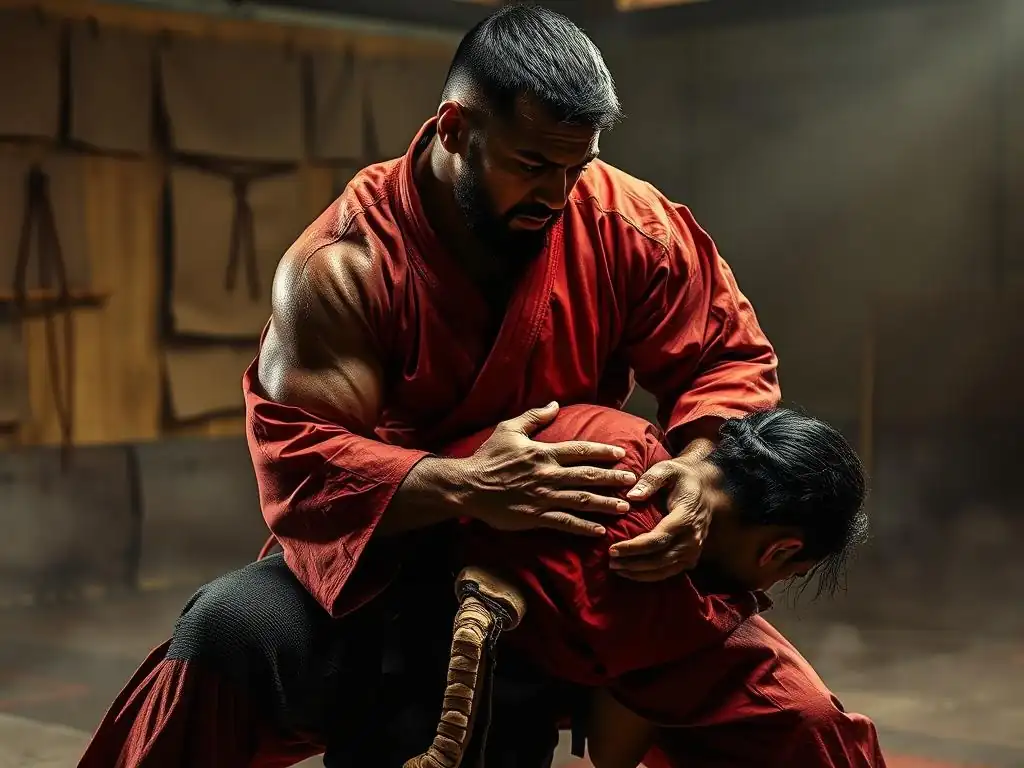
Welcome to Martial Arts Mastery, where we delve deep into the world's fighting traditions. Ever wondered about the darker side of grappling techniques? Today, we're exploring the controversial DoJime trunk strangle, examining its rules, its potential dangers, and the ongoing debate surrounding its use. Prepare to uncover the risks associated with this powerful technique and understand why it remains a point of contention in the martial arts community. Read on to learn more...
- Sode Guruma Jime: Mastering the Sleeve Wheel Choke in Judo
- Understanding Sode Guruma Jime in Judo: A Comprehensive Overview
- The Legality of Sode Guruma Jime: Rules and Regulations in Judo Competition
- Sode Guruma Jime Risks: Potential Dangers and Injuries
- Safe Training Practices for Sode Guruma Jime: Minimizing the Risks
- Sode Guruma Jime vs. Other Choking Techniques: A Comparative Analysis
- The Effectiveness of Sode Guruma Jime: Tactical Considerations
- Case Studies: Analyzing Sode Guruma Jime Applications in Competition
- Alternatives to Sode Guruma Jime: Other Effective Choking Techniques
- Mastering Judo Safely: Responsible Training and Awareness of Choke Risks
-
Frequently Asked Questions
- What exactly is a DoJime in martial arts?
- Why is the DoJime considered controversial?
- What are the primary risks associated with performing or receiving a DoJime?
- How do different martial arts disciplines view the DoJime technique?
- Where can I find more information about safe and responsible martial arts training practices?
- Final Reflection: Embracing Responsibility in Combat Sports
- Embrace the Subtle Art: Explore, Master, and Share!
Sode Guruma Jime: Mastering the Sleeve Wheel Choke in Judo
Understanding Sode Guruma Jime in Judo: A Comprehensive Overview
What is Sode Guruma Jime? Defining the Sleeve Wheel Choke
Sode Guruma Jime, often translated as "Sleeve Wheel Choke," is a highly effective strangulation technique within the grappling repertoire of Judo, specifically categorized under Katame-waza (grappling techniques) and more precisely Shime-waza (choking/strangling techniques). This technique typically involves using the opponent's gi sleeve (sode) and collar (eri) in a specific configuration to apply pressure to the neck, aiming to restrict either blood flow to the brain (carotid arteries) or airflow (trachea), or both, leading to submission.
The "wheel" aspect of the name often refers to the circular or turning motion sometimes involved in setting up or applying the choke, or the way the gi material is wrapped around the neck.
The core mechanism of Sode Guruma Jime relies on leveraging the opponent's own clothing against them. One arm is threaded through or around the opponent's arm and behind their head, often gripping their own sleeve or lapel, while the other hand secures a grip on the opponent's gi, typically the collar on the opposite side.
By combining the tension from these grips and applying pressure through body mechanics, the practitioner compresses the neck. The effectiveness of this particular choke lies in its versatility, as it can be applied from various positions, including from the back, side control, or even guard.
Sode Guruma Jime Terminology: Grip Variations and Translations
The term Sode Guruma Jime itself breaks down into Sode (sleeve), Guruma (wheel), and Jime (choke/strangle). While the basic translation is "Sleeve Wheel Choke," the exact mechanics and grip configurations can vary, leading to slightly different applications and nuances. For instance, variations might involve gripping the opponent's near-side or far-side collar, using one or both of the opponent's sleeves, or incorporating leg control to enhance the pressure. These variations might not always have distinct names in standard Judo terminology but are recognized as different approaches to the core Sode Guruma Jime principle.
Understanding the terminology is crucial for both learning and teaching the technique effectively. The grips are paramount: one hand often secures a deep grip on the opponent's lapel, while the other hand threads through an armpit or over a shoulder to grasp the opponent's own sleeve or lapel on the opposite side.
The pressure is then applied by drawing the elbows in, rotating the wrists, and using body weight. While the name "Sleeve Wheel Choke" is standard, practitioners often describe the specific grip setup, such as "cross-collar Sode Guruma Jime" or "sleeve-and-collar Sode Guruma Jime," to clarify the exact method being used.
The Legality of Sode Guruma Jime: Rules and Regulations in Judo Competition
Sode Guruma Jime Permitted Techniques: When is the Sleeve Wheel Choke Allowed?
In competitive Judo governed by the International Judo Federation (IJF) rules, Sode Guruma Jime is generally considered a legal and valid Shime-waza technique. Like other blood chokes (techniques primarily targeting the carotid arteries), it is permitted for senior competitors.
It can be applied from various positions on the ground ( Ne-waza), provided the technique is executed safely and does not involve prohibited actions. A competitor successfully applying Sode Guruma Jime can win the match by Ippon if their opponent submits (taps out), loses consciousness, or if the choke is held for a sufficient duration resulting in the referee's decision of Ippon.
The legality hinges on the method of application, not the technique itself. As long as the Sode Guruma Jime does not involve grabbing the opponent's fingers, twisting joints, or applying pressure to the spine or neck in a way that is deemed dangerous or outside the scope of a standard choke, it is permitted. Competitors frequently attempt this choke from rear-mount or side-control positions, as these offer good control and leverage for applying the necessary pressure. Its effectiveness often depends on the practitioner's ability to control their opponent's posture and prevent their escape before fully locking in the choke.
Illegal Sode Guruma Jime: Penalties and Prohibitions in Judo Matches
While Sode Guruma Jime is a legal technique, it can become illegal if applied in conjunction with prohibited actions, leading to penalties. The IJF rules strictly forbid techniques that are considered dangerous or cause unnecessary pain or injury. For example, applying the choke while simultaneously twisting the opponent's neck or spine is strictly prohibited and would likely result in a Hansoku Make (disqualification). Likewise, using fingers inside the opponent's collar to apply pressure is illegal; grips must be made with the palm and fingers wrapped around the outside of the material.
Other actions that could render a Sode Guruma Jime attempt illegal include applying pressure to the face or mouth, or using extremities (like feet or knees) to directly force the choke deeper in a dangerous manner. The referee's judgment is crucial here; they monitor the safety of the competitors closely.
If a referee perceives a technique, including Sode Guruma Jime, being applied in a way that risks serious injury beyond the inherent nature of a choke, they will stop the match and issue a penalty, ranging from a Shido (minor penalty) to Hansoku Make depending on the severity and intent.
Official Judo Rules on Sleeve Wheel Chokes: A Detailed Examination
Official Judo rules, as outlined by the IJF, categorize Shime-waza (choking/strangling techniques) as permissible for senior competitors, with specific exclusions for junior categories (typically under 15 or 18, depending on national federations). Sode Guruma Jime falls under this general category of allowed techniques. The rules specify that techniques targeting the neck are permissible provided they do not involve direct pressure on the spine or airway using hard parts of the body (like knuckles or elbows) or twisting motions.
The IJF rulebook dedicates sections to prohibited acts ( Kinshi-waza), which cover actions that are dangerous or against the spirit of Judo. While Sode Guruma Jime isn't listed as a prohibited technique itself, the method of application must adhere to these safety guidelines. For instance, Article 21 of the IJF rules lists actions like "applying Shime-waza by using the belt or the skirt of the jacket, or only with the fingers" as prohibited.
It also forbids "applying any technique which is liable to injure the opponent's neck or spine." Thus, a Sode Guruma Jime using only fingers inside the collar, or applied with excessive, dangerous twisting, would be illegal under these general safety rules.
Sode Guruma Jime Risks: Potential Dangers and Injuries
Physiological Effects of Sode Guruma Jime: Understanding the Body's Response
Sode Guruma Jime, like other effective Shime-waza, primarily targets the carotid arteries located on either side of the neck. Compression of these arteries restricts blood flow to the brain, leading to a rapid drop in cerebral perfusion. This can cause lightheadedness, visual disturbances (like tunnel vision), and eventually loss of consciousness. If applied correctly and with sufficient pressure, unconsciousness can occur within approximately 10-15 seconds, though this varies based on individual physiology and the precision of the technique.
Secondary effects can include vagal nerve stimulation, which can lead to a drop in heart rate and blood pressure. While primarily a blood choke, poorly applied Sode Guruma Jime or variations might also compress the trachea, restricting airflow and causing respiratory distress. Understanding these physiological responses is critical for both the practitioner applying the choke and the person receiving it, as it underscores the importance of immediate submission upon recognizing the danger.
Sode Guruma Jime and Neck Injuries: Assessing the Potential for Harm
While the primary goal of Sode Guruma Jime is submission via restricted blood flow, there are inherent Sode Guruma Jime risks, particularly concerning neck injuries. The most common injuries associated with chokes, including Sode Guruma Jime, are typically muscular strains or sprains in the neck and upper back area, resulting from resistance or sudden movements while the choke is being applied or escaped. These are usually minor and resolve with rest.
More serious neck injuries are rare but possible with improper application or forceful resistance. These could include damage to the laryngeal cartilage (voice box) if the trachea is significantly compressed or struck, or, in extremely rare cases involving twisting and excessive force, potential ligamentous injury or even vascular damage (though the latter is highly uncommon in controlled Judo training).
A study published in the British Journal of Sports Medicine (though specific data on Sode Guruma Jime is scarce) noted that while grappling sports have injury risks, severe neck injuries from chokes are statistically low compared to impact sports, provided proper training protocols are followed.
Respiratory Complications from Chokes: Risks to the Lungs
While Sode Guruma Jime is primarily a blood choke, techniques that involve compression of the trachea can lead to respiratory complications. If airflow is significantly restricted, the person will experience difficulty breathing, panic, and potentially laryngospasm (a sudden spasm of the vocal cords that makes breathing difficult). Prolonged or severe respiratory restriction without timely release can lead to oxygen deprivation to the brain and other organs, though submission or intervention usually occurs long before this becomes critical in a controlled environment.
The risk of serious respiratory damage from a standard Sode Guruma Jime is relatively low compared to techniques that specifically target the trachea with significant force. However, resisting a choke by tensing the neck muscles can inadvertently increase pressure on the airway. The immediate sign of a respiratory choke is the inability to inhale or exhale, often accompanied by gagging or coughing, distinct from the quiet onset of lightheadedness in a pure blood choke.
Circulatory System Impact: How Chokes Affect Blood Flow
The primary impact of Sode Guruma Jime on the circulatory system is the compression of the carotid arteries, reducing blood flow to the brain. This is the intended mechanism for achieving submission via unconsciousness. Pressure on the carotid sinus, a baroreceptor located in the carotid artery, can also trigger a reflex that slows the heart rate and lowers blood pressure, contributing to the lightheadedness and potential for fainting.
While the immediate effect is restricted blood flow to the brain, prolonged or poorly released chokes could theoretically have other circulatory impacts, though these are extremely rare in Judo. Rapid recovery of blood flow upon release is typical. The main concern related to the circulatory system is the risk of unconsciousness itself, which can lead to secondary injuries if the person falls awkwardly. This highlights the critical importance of recognizing the signs of a choke and submitting quickly to prevent loss of consciousness.
Safe Training Practices for Sode Guruma Jime: Minimizing the Risks
Proper Technique and Control: The Key to Safe Sode Guruma Jime Application
Safe training of Sode Guruma Jime, and indeed all Shime-waza, hinges on meticulous attention to proper technique and control. The focus should be on applying pressure to the sides of the neck to compress the carotid arteries, rather than crushing the trachea. This requires precise grip placement and leveraging the body effectively. Beginners should learn the technique slowly, with minimal force, under the strict supervision of a qualified instructor.
Controlling the application means using just enough pressure to elicit a submission, not applying maximum force immediately. The goal in training is understanding the mechanics and feel of the choke, not forcing an opponent into unconsciousness. Practitioners should learn to recognize when the choke is starting to become effective and be prepared to release the pressure instantly upon the tap. This controlled, gradual application minimizes Sode Guruma Jime risks and allows partners to train safely.
Importance of Communication and Tap-Out Signals
Clear communication and the universal tap-out signal are paramount in preventing injuries during Sode Guruma Jime practice. Before starting any grappling or drilling involving chokes, partners should agree on how they will signal submission. The standard signal is a series of taps (typically two or three) on the opponent or the mat, clearly audible or visible. Verbal signals like "tap" or "stop" are also acceptable, especially if hands are trapped.
The person applying the Sode Guruma Jime has the absolute responsibility to release the technique immediately upon feeling or hearing the tap-out signal. There should be no delay. Similarly, the person receiving the choke must be attentive to their body's signals and tap out before experiencing dizziness or loss of consciousness. Waiting too long significantly increases Sode Guruma Jime risks. Consistent emphasis on this principle by instructors is vital for a safe training environment.
Drills and Exercises for Safe Sode Guruma Jime Training
Safe training of Sode Guruma Jime involves progressive drills designed to build proficiency without undue risk. Initial drills might focus solely on achieving the correct grip setup from various positions without applying pressure. This helps practitioners learn the mechanics and transitions.
- Grip Acquisition Drill: Practice obtaining the correct sleeve and collar grips from different starting positions (e.g., side control, back mount).
- Positional Pressure Drill: Once grips are secured, apply only minimal, controlled pressure to feel the angle and leverage points, focusing on maintaining position.
- Submission Drill (Controlled): With a trusted partner, apply the choke slowly, increasing pressure gradually until the partner signals submission. Immediately release. Repeat, with the partner tapping at the very first sign of discomfort or pressure.
- Escape and Defense Drill: Practice escaping from a partially applied Sode Guruma Jime to understand the defensive side and recognize warning signs.
These drills, performed with awareness and control, allow practitioners to become highly skilled in applying Sode Guruma Jime effectively while minimizing the Sode Guruma Jime risks for both partners.
Sode Guruma Jime vs. Other Choking Techniques: A Comparative Analysis
Sode Guruma Jime Compared to Hadaka Jime (Rear Naked Choke)
Sode Guruma Jime and Hadaka Jime (Rear Naked Choke) are both highly effective blood chokes, but they differ significantly in their application and control methods. Hadaka Jime is typically applied from the opponent's back, using the arms directly around the neck, often with a figure-four grip on the choking arm. It requires no gi material, making it versatile across various grappling arts like BJJ, wrestling, and MMA, as well as Judo.
Sode Guruma Jime, conversely, is heavily reliant on the opponent's gi, specifically the sleeve and collar. It can be applied from the back, side, or even front positions, offering more positional versatility than the standard Hadaka Jime from the back. While Hadaka Jime directly uses arm pressure, Sode Guruma Jime leverages the gi material and often requires more intricate grip fighting and body mechanics to achieve pressure. Both target the carotid arteries effectively when applied correctly, but the setups and defensive challenges differ.
Sode Guruma Jime vs. Kata Jime (Shoulder Choke)
Kata Jime (Shoulder Choke) involves using the practitioner's shoulder and arm to compress the neck, often against the opponent's own shoulder or chest. Examples include techniques like Kuzure Kami Shiho Gake (Modified Upper Four Quarter Hold Down) transitions. Unlike Sode Guruma Jime, Kata Jime can sometimes involve more pressure on the trachea depending on the specific variation and application angle, although many forms primarily target blood flow.
Sode Guruma Jime typically uses gi material and arm/hand pressure directly on the neck, whereas Kata Jime uses the large surface area of the shoulder and arm, often trapping the opponent's head and shoulder. Sode Guruma Jime tends to be a more direct choke targeting specific points on the neck, potentially leading to faster submissions if applied correctly. Kata Jime often relies more on positional control and sustained pressure, sometimes taking longer to become effective but potentially being harder to escape once locked in due to the body mechanics involved.
Advantages and Disadvantages of Sode Guruma Jime in Grappling
Sode Guruma Jime offers several advantages in Judo and gi-based grappling. Its primary advantage is its effectiveness as a blood choke, capable of leading to rapid submission when applied correctly. It can be initiated from multiple positions, including less dominant ones like certain guard variations or scrambles. The reliance on the gi means that strong grips can be established which are sometimes harder to break than pure arm-on-neck grips like Hadaka Jime. Its relative complexity can also make it harder for less experienced opponents to defend effectively.
However, Sode Guruma Jime also has disadvantages. Its dependence on the gi means it is not applicable in no-gi grappling sports. Setting up the correct grips can be challenging against a resisting opponent, requiring significant grip fighting skill. Incorrect application might result in insufficient pressure or the choke slipping, wasting energy and potentially exposing the practitioner to counters. Furthermore, the Sode Guruma Jime risks are slightly higher if the technique is applied with poor control, potentially causing discomfort or minor injury if not released promptly upon submission.
The Effectiveness of Sode Guruma Jime: Tactical Considerations
Setups and Entries for Sode Guruma Jime
Effective application of Sode Guruma Jime relies heavily on successful setups and entries. Practitioners often transition to this choke from dominant positions like back control or side control, where they can secure the necessary grips and control the opponent's posture. From back control, one common entry involves slipping an arm under the opponent's armpit and across the neck to grip their far-side lapel, while the other hand secures the near-side sleeve or lapel.
Another frequent setup occurs during transitions on the ground. For example, from side control, if an opponent turns away, it might expose their back and neck, creating an opportunity to thread an arm through for the lapel grip and establish the sleeve grip. From the guard, practitioners might use a sweep attempt to create an angle or secure grips before their opponent fully stabilizes. The key is often disrupting the opponent's balance and posture to create openings for grip acquisition without allowing them space to defend effectively.
Counters and Defenses to Sode Guruma Jime
Defending against Sode Guruma Jime requires recognizing the grips and applying appropriate countermeasures quickly. The most crucial defense is preventing the practitioner from securing the necessary deep grips on the lapel and sleeve. If grips are being established, immediate action is needed to break them before pressure is applied.
Common defenses include:
- Grip Breaking: Using both hands to peel away the opponent's fingers from the lapel or sleeve.
- Posture Control: Maintaining good posture (if on top) or pulling the opponent close and preventing them from getting leverage (if on the bottom).
- Tucking the Chin: While not a complete defense against a blood choke, tucking the chin can slightly impede the choke and buy crucial seconds.
- Turning Towards the Choke: Sometimes turning into the pressure can relieve it or create space to escape, though this can be risky.
- Bridging and Rolling: If the choke is applied from a dominant position like side control or back mount, explosive bridging and rolling can disrupt the opponent's base and potentially break the grip or position.
Understanding both the application and defense is essential for minimizing Sode Guruma Jime risks in training and competition.
Case Studies: Analyzing Sode Guruma Jime Applications in Competition
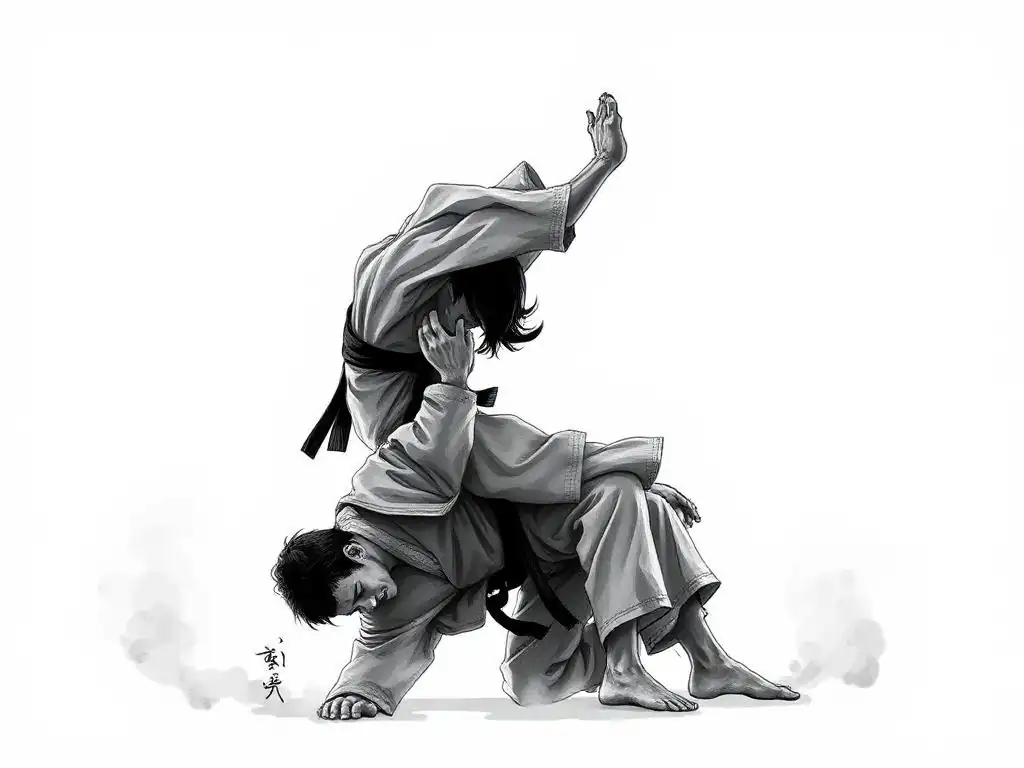
Examples of Successful Sode Guruma Jime Applications at High-Level Judo Competitions
While specific statistical data solely on Sode Guruma Jime submissions across all high-level competitions is difficult to compile without access to specific IJF databases, the technique is a known entity and has been successfully applied in various significant tournaments. Judo practitioners competing at Grand Slams, World Championships, and even the Olympic Games regularly attempt and sometimes finish matches with different Shime-waza, including variations of Sode Guruma Jime.
For instance, analysis of match data from major IJF events often shows a percentage of wins coming via Shime-waza. While specific techniques aren't always broken down publicly, coaches and analysts recognize Sode Guruma Jime as a viable option, particularly effective from transitional positions or against opponents who are skilled at defending more common chokes like Hadaka Jime. Its success rate depends heavily on the element of surprise, the practitioner's setup skill, and the opponent's defensive awareness.
Analyzing Failed Sode Guruma Jime Attempts and Common Mistakes
Failed Sode Guruma Jime attempts in competition often occur due to predictable patterns or defensive errors by the attacker. One common mistake is failing to secure sufficiently deep or tight grips before attempting to apply pressure. Without proper leverage on the lapel and sleeve, the opponent can easily posture up or pull their head free.
Another frequent issue is lack of positional control. Attempting the choke without first stabilizing the position (e.g., back control, side control) allows the opponent too much freedom to move, escape, or counter. Rushing the technique instead of patiently setting it up is also a cause of failure. Defenders often escape by creating space between their neck and the gi material, or by physically peeling away the attacker's hands. Analyzing these failed attempts highlights the critical importance of grip fighting, positional control, and timing in the successful execution of Sode Guruma Jime.
Alternatives to Sode Guruma Jime: Other Effective Choking Techniques
Exploring Other Sleeve Control Chokes
Beyond Sode Guruma Jime, Judo and BJJ offer several other effective choking techniques that utilize sleeve control. One example is the Loop Choke, which often involves threading a hand deep into the opponent's collar and using the gi material to create a loop around the neck, sometimes assisted by gripping a sleeve. Another related category includes various cross-collar chokes that can be initiated while controlling a sleeve to prevent posture or facilitate the grip.
These techniques share the principle of using the gi for leverage but differ in the specific grip configuration and angle of attack. Exploring these alternatives provides practitioners with a broader arsenal of Shime-waza, allowing them to adapt to different opponent reactions and defensive strategies. Mastery of sleeve control is often a transferable skill across these different choke variations.
Transitioning to Arm Locks from Sleeve Control
Control of an opponent's sleeve is not only useful for chokes but also provides excellent opportunities for transitioning to Kansetsu-waza (joint locking techniques), particularly arm locks. If an opponent is defending against a Sode Guruma Jime attempt by focusing their energy on breaking the sleeve and collar grips, it often leaves their arms vulnerable.
For example, maintaining control of one sleeve can prevent the opponent from posturing up or defending effectively while the practitioner attacks an arm. Techniques like Juji Gatame (Armbar), Ude Garami (Arm Entanglement/Kimura), or Ude Hishigi Juji Gatame (Cross Armlock) can be set up from positions where sleeve control is established, such as side control, guard, or even during transitions. This ability to switch between attacking the neck and attacking the arm makes sleeve control a powerful tool in grappling.
Mastering Judo Safely: Responsible Training and Awareness of Choke Risks
Mastering Judo, especially its powerful Katame-waza like Sode Guruma Jime, requires dedication, technical precision, and a strong commitment to safety. Techniques involving strangulation carry inherent Sode Guruma Jime risks that must be respected. Responsible training involves learning under qualified instructors who emphasize control, communication, and immediate release upon submission.
Practitioners must develop body awareness to recognize the signs of a choke on themselves and their partners. Understanding the physiological effects and potential Sode Guruma Jime risks is not about fear, but about informed practice. By prioritizing safe application, recognizing tap-out signals promptly, and training with partners who share the same commitment to safety, practitioners can explore the depth and effectiveness of techniques like Sode Guruma Jime while minimizing the potential for injury. Judo's emphasis on mutual welfare and benefit ( Jita Kyoei) extends directly to how these powerful techniques are practiced.
Frequently Asked Questions
What exactly is a DoJime in martial arts?
A DoJime is a trunk strangle technique. It involves using the legs to compress the opponent's torso, aiming to restrict breathing and blood flow, potentially leading to submission or unconsciousness.
Why is the DoJime considered controversial?
The DoJime is controversial due to the high risk of injury, including internal organ damage, rib fractures, and potentially even death if applied incorrectly or excessively. Its use is often restricted or banned in many competitions.
What are the primary risks associated with performing or receiving a DoJime?
The most significant risks include rib fractures, internal injuries (such as to the liver or spleen), and potential blood flow restriction that can lead to serious health complications. Improper application significantly elevates these dangers.
How do different martial arts disciplines view the DoJime technique?
Different disciplines have varying views. Some, like certain styles of Judo, might allow it under strict rules. Others, focusing on safety, may prohibit DoJime entirely due to the high potential for harm.
Where can I find more information about safe and responsible martial arts training practices?
MartialArtsMastery.org offers in-depth resources on historical overviews, training techniques, and practical self-defense strategies, all emphasizing safe and responsible training methods.
Final Reflection: Embracing Responsibility in Combat Sports
The exploration of DoJime, the controversial trunk strangle, highlights a crucial intersection between technical skill and ethical responsibility in combat sports. The inherent risks associated with this technique demand a heightened awareness and a commitment to safety that transcends the pursuit of victory. Ignoring these risks not only jeopardizes the well-being of athletes but also threatens the integrity and future of the sport itself.
The ongoing debate surrounding DoJime underscores the complex relationship between innovation and regulation in martial arts. This technique, while potentially effective, forces us to confront the limitations of our rules and the ethical boundaries of competition. The ultimate goal of any martial art should be self-improvement, not the infliction of unnecessary harm.
This quote serves as a constant reminder that the pursuit of mastery should never come at the expense of respect for one's opponent and the principles of fair play.
As you reflect on the risks and responsibilities associated with techniques like DoJime, consider how you can contribute to a safer and more ethical combat sports environment. Advocate for clear and consistent rules, prioritize safety in training, and always remember that the true measure of a martial artist lies not only in their skill but also in their character. Let us strive to elevate the sport by embracing responsibility and prioritizing the well-being of all participants.
Thank you for diving deep into the nuances of DoJime! Now that you're armed with a comprehensive understanding of its rules and risks, let's channel that knowledge into action. Your journey in martial arts mastery is just beginning.
- Prioritize safety first: Always train DoJime under the careful supervision of an experienced instructor and with a willing, knowledgeable partner.
- Deepen your understanding: Explore related techniques like the Triangle Choke and Anaconda Choke to understand the principles of pressure and control.
- Share your insights: Discuss the ethics and application of DoJime with your training partners, fostering a culture of responsible martial arts practice.
What precautions will you implement in your training to ensure the responsible practice of DoJime?