
Lethwei Shadow Boxing: Perfecting Form and Flow


Welcome to Martial Arts Mastery, your gateway to unlocking the secrets of combat traditions worldwide. Delve into the heart of Burmese bare-knuckle boxing with our in-depth exploration of Lethwei shadow boxing technique. But what makes this ancient art so effective, and how can you harness its power to elevate your own training? Continue reading to discover the nuances of form, flow, and strategic application that will transform your understanding of Lethwei and its potential impact on your martial arts journey.
- Introduction to Lethwei Shadow Boxing
- Mastering Lethwei Shadow Boxing Technique
- Refining Footwork and Agility in Lethwei Shadow Boxing
- Building Power and Speed in Lethwei Shadow Boxing
- Lethwei Shadow Boxing Drills: A Step-by-Step Guide
- Avoiding Common Mistakes in Lethwei Shadow Boxing
- Advanced Lethwei Shadow Boxing Techniques
- The Mental Game of Lethwei Shadow Boxing
- Integrating Lethwei Shadow Boxing into Your Overall Training Regimen
- Conclusion: Elevating Your Lethwei Game with Shadow Boxing
-
Frequently Asked Questions
- What is Lethwei shadow boxing and why is it important?
- How does Lethwei shadow boxing differ from shadow boxing in other martial arts?
- What are some key techniques to focus on while shadow boxing for Lethwei?
- How can I incorporate shadow boxing into my Lethwei training routine?
- What are some common mistakes to avoid when practicing Lethwei shadow boxing?
- Final Reflection: The Dance of Lethwei Within
- Unleash Your Inner Lethwei Warrior!
Introduction to Lethwei Shadow Boxing
Understanding the Role of Shadow Boxing in Lethwei Training
Shadow boxing is not merely punching air; it is a fundamental, indispensable practice in the regimen of any serious Lethwei practitioner. It serves as a dynamic form of active meditation and physical rehearsal, allowing fighters to hone their movements, combinations, and defensive responses without the physical impact of a partner or equipment.
In Lethwei, where bare-knuckle strikes, headbutts, and powerful clinch work are paramount, perfecting individual technique and fluid transitions through shadow boxing is critical for both offensive power and defensive resilience. It allows for isolated refinement of the unique elements of Lethwei, such as the distinctive low stance, explosive hip rotation for kicks and elbows, and the specific mechanics of delivering and defending against headbutts.
Unlike sparring or bag work, which provide resistance and feedback but can be physically demanding, shadow boxing offers a low-impact environment to focus purely on form, balance, and the seamless flow between techniques. This deliberate practice helps build muscle memory, ensuring that complex sequences become second nature.
For instance, a beginner might spend 10-15 minutes per session focusing solely on mastering the basic Lethwei stance and footwork patterns, while an experienced fighter might dedicate similar time to visualizing complex exchanges and practicing counter-strikes. This consistent, focused repetition is the bedrock upon which advanced Lethwei shadow boxing technique is built, enabling fighters to execute powerful and precise movements under pressure.
Benefits of Lethwei Shadow Boxing for Fighters
Engaging in regular Lethwei shadow boxing offers a multitude of benefits that directly translate to improved performance in sparring and actual fights. Physically, it significantly enhances cardiovascular endurance, allowing fighters to maintain a high intensity for longer periods during rounds, which are typically three to five minutes in professional Lethwei bouts.
It also improves muscular endurance, particularly in the core, legs, and shoulders, which are constantly engaged in maintaining stance and generating power. Furthermore, consistent practice refines proprioception – the body's awareness of its position in space – leading to better balance and coordination, essential for executing dynamic strikes and evading attacks.
Beyond the physical, the mental benefits of mastering Lethwei shadow boxing technique are profound. It sharpens focus and concentration, teaching the fighter to stay present and visualize scenarios. This mental rehearsal is crucial for developing strategic thinking, allowing practitioners to anticipate opponent movements and plan combinations or defensive tactics.
Many fighters report that daily shadow boxing sessions, even as short as 20-30 minutes, lead to a significant reduction in reaction time, potentially by milliseconds, which can make the difference in landing a strike or avoiding a knockout. It also serves as an excellent warm-up, preparing the body and mind for more intense training, and as a cool-down, allowing for mental review of techniques practiced.
Mastering Lethwei Shadow Boxing Technique
Key Elements of Lethwei Stance and Movement
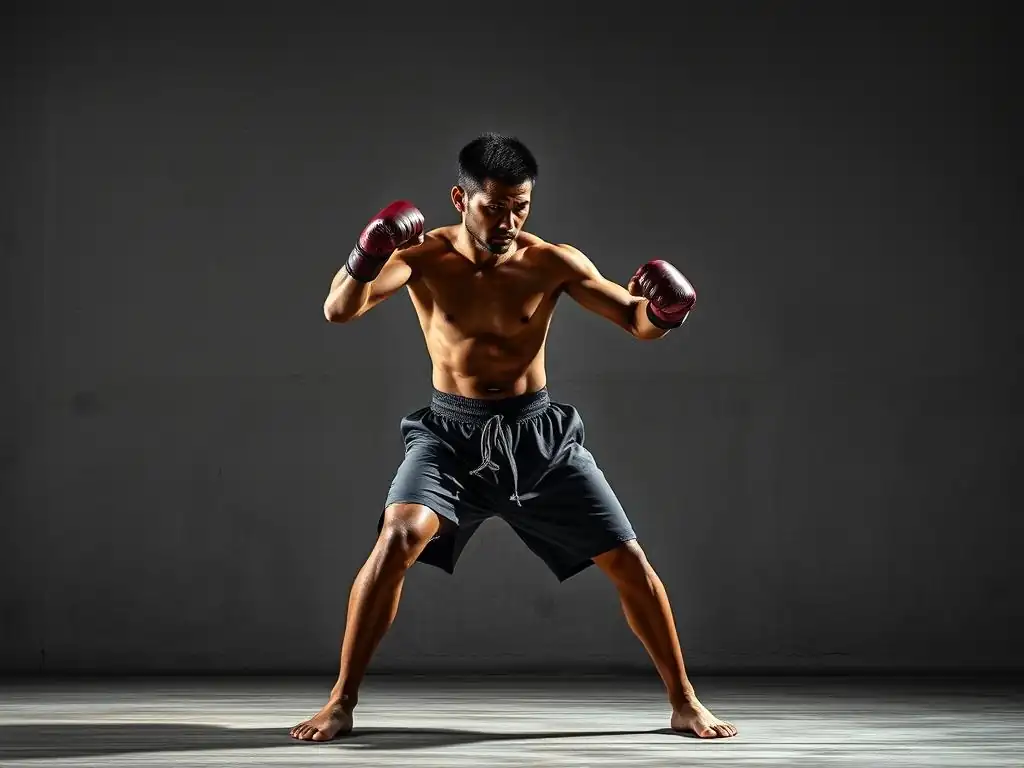
The foundation of effective Lethwei shadow boxing technique lies in mastering the characteristic Lethwei stance and movement patterns. The typical stance is lower and wider than in many other striking arts, providing a stable base for powerful kicks and resisting takedowns or pushes in the clinch. The lead foot is usually pointed slightly inward, and the weight is balanced evenly or slightly forward, allowing for quick shifts and explosive hip rotation.
Hands are typically held high to protect the head, with elbows tucked in to guard the ribs. Practicing this specific stance during shadow boxing, focusing on maintaining a relaxed yet ready posture, is crucial. It's not just about holding the position, but learning to move fluidly from this position.
Movement in Lethwei often involves subtle shifts, pivots, and explosive bursts. Unlike the linear movement common in Western boxing, Lethwei fighters utilize diagonal steps, circular movements, and quick retreats to control distance and angles. Shadow boxing provides the perfect environment to drill these movements repeatedly.
Practicing stepping forward and back while maintaining the stance, pivoting to create angles for strikes, and shuffling laterally are all essential. Focus on keeping your base stable, avoiding crossing your feet, and ensuring that your hands remain in a defensive position even while moving. A common drill is to move around a small imaginary square, practicing stepping patterns for 3-minute rounds, simulating the movement required in a fight.
Incorporating Lethwei Strikes into Your Shadow Boxing Routine
Once the basic stance and movement are comfortable, the next step in refining your Lethwei shadow boxing technique is integrating the full arsenal of Lethwei strikes. This involves practicing punches, elbows, knees, kicks, and headbutts with proper form, power generation, and follow-through. The goal is not just to throw techniques, but to throw them correctly, ensuring that power originates from the hips and core, and that balance is maintained throughout the movement. Start slowly, focusing purely on technique, and gradually increase speed and power as your form improves.
A structured approach to incorporating strikes involves dedicating specific rounds or portions of a session to different types of techniques or combinations. For example, one round might focus entirely on perfecting the mechanics of the powerful diagonal elbow strike or the straight headbutt, emphasizing hip rotation and body mechanics.
Another round might be dedicated to practicing leg kicks, ensuring the hip turns over and the shin makes contact with an imaginary target. The key is deliberate practice – understanding the technical nuances of each Lethwei strike and working to execute it perfectly in isolation before combining it with other movements.
Practicing Punches: Jabs, Crosses, and Hooks
While Lethwei is known for its unique strikes, fundamental boxing punches like jabs, crosses, and hooks are still essential tools. In Lethwei shadow boxing, practicing these punches involves focusing on speed, accuracy, and snap, rather than just brute force. The jab should be quick and straight, extending fully from the shoulder, often used to gauge distance or set up other strikes. The cross, thrown with hip and shoulder rotation, should have significant power, driving off the back foot. Hooks, delivered with a tight arc, target the head or body.
When practicing punches during Lethwei shadow boxing, pay close attention to your guard. Ensure the non-punching hand remains high to protect your face. Focus on the full kinetic chain: driving power from the feet, rotating the hips and torso, and extending the punch with a snap. A good drill is to visualize an opponent and throw rapid-fire jabs for a set time (e.g., 30 seconds), then transition to powerful crosses for another 30 seconds, followed by hooks, repeating the cycle for a full round. This builds both endurance and muscle memory for these core techniques within the Lethwei context.
Developing Elbow Strikes in Shadow Boxing
Elbow strikes are a signature weapon in Lethwei, known for their devastating power at close range. Developing these strikes in shadow boxing requires meticulous attention to detail regarding body mechanics and angles. Common Lethwei elbow strikes include the horizontal elbow, diagonal elbow (upward and downward), spinning elbow, and the straight elbow. Each requires specific hip rotation and body positioning to generate maximum force and ensure safety.
Practicing elbow strikes in Lethwei shadow boxing involves visualizing the target area (e.g., the opponent's temple, jaw, or collarbone) and executing the movement with precision. For a diagonal downward elbow, focus on stepping slightly and rotating the hip and shoulder as you bring the elbow down in a slicing motion. For a spinning elbow, practice the footwork and pivot required for a powerful rotation.
Dedicate time to practicing these strikes from various stances and distances, imagining closing the gap or using them as a counter. A drill might involve throwing a combination ending with an elbow, such as jab-cross-diagonal elbow, repeating the sequence for a minute to build fluidity.
Implementing Knee Strikes and Leg Kicks
Knee strikes and leg kicks are vital for controlling distance and inflicting damage in Lethwei. Shadow boxing allows practitioners to perfect the mechanics of these powerful techniques without the impact on joints or shins. Knee strikes, often delivered to the body or head from the clinch or as an explosive close-range attack, require significant hip drive and balance. Leg kicks, targeting the opponent's thighs (inside and outside) or calves, require hip rotation and proper shin conditioning (though conditioning is done separately, the motion is practiced here).
When practicing knee strikes in Lethwei shadow boxing technique, focus on lifting the knee high, driving the hip forward, and extending the strike towards an imaginary target. Ensure you maintain balance on your standing leg and keep your hands in a defensive or clinching position. For leg kicks, practice turning your hip over fully, imagining contact being made with the lower shin or instep against a leg target.
A useful drill is to alternate between throwing a powerful leg kick and a quick knee strike, focusing on the transition and balance. Repeating 10-15 repetitions on each leg per set helps build endurance and technique.
Integrating Headbutts Safely in Shadow Boxing
The headbutt is one of Lethwei's most distinctive and dangerous techniques. Practicing it safely in shadow boxing is about mastering the movement, body mechanics, and defensive posture, not about making actual contact. Lethwei headbutts are typically delivered forward (straight) or diagonally, often from the clinch or as a short-range explosive attack. The technique involves driving the body weight forward, often with a slight crouch, utilizing the forehead or skull's hardest part.
Integrating headbutts into Lethwei shadow boxing technique involves visualizing the opponent's head or body and practicing the explosive forward drive and the angle of the head. Crucially, practice the defensive retraction and immediate return to guard after the simulated strike. Focus on using your core and legs to generate the power, not just craning your neck. Practice combining a headbutt with other strikes, such as a knee followed by a headbutt in a simulated clinch scenario. A specific drill might involve practicing the straight headbutt motion 20-30 times per round, emphasizing the explosive drive and immediate defensive posture afterward.
Refining Footwork and Agility in Lethwei Shadow Boxing
Footwork Drills for Improved Mobility
Superior footwork is the silent partner to powerful strikes in Lethwei, enabling fighters to control distance, create angles, and evade attacks. Lethwei shadow boxing is an ideal environment to dedicate significant time to refining footwork patterns. Basic drills include shuffling forward, backward, and laterally while maintaining the low, stable stance. Focus on keeping your feet from crossing and ensuring your weight remains balanced, ready to move in any direction or throw a strike.
More advanced footwork drills in Lethwei shadow boxing technique involve practicing pivots and circular movements. Pivoting on the lead foot allows you to change angles quickly, essential for setting up strikes or getting out of danger. Practicing moving in a circle, both clockwise and counter-clockwise, helps develop the ability to cut off an opponent's movement or create space. A common drill involves setting up markers (imaginary or actual) and practicing moving between them using specific footwork patterns for 2-3 minute rounds, mimicking movement around the ring.
Mastering the Art of Evasion and Defense
Shadow boxing isn't just about offense; it's equally important for mastering defensive techniques and evasive movements. In Lethwei shadow boxing, this involves practicing slips, rolls, parries, blocks, and retreats. Visualize an opponent throwing strikes and react defensively. For example, practice slipping punches by slightly rotating your torso and moving your head off the centerline, or rolling under hooks by bending your knees and shifting your weight.
Integrating defensive movements into your Lethwei shadow boxing technique requires active visualization. Imagine a jab coming towards your face and practice a quick slip, immediately followed by a counter cross. Visualize a leg kick and practice checking it by lifting your leg and turning your shin outwards, or practice a quick retreat to avoid it entirely. Dedicate specific rounds to purely defensive shadow boxing, focusing solely on reacting to imagined attacks and maintaining a tight guard. This builds reactive speed and defensive muscle memory.
Combining Offensive and Defensive Footwork
The true art of Lethwei movement lies in the seamless combination of offensive and defensive footwork. A fighter must be able to transition instantly from advancing to retreating, from creating an angle for attack to pivoting away from danger. Lethwei shadow boxing provides the platform to drill these transitions until they are fluid and automatic. Practice stepping in with a combination, then immediately stepping back or pivoting out.
A key aspect of combining offensive and defensive footwork in Lethwei shadow boxing technique is maintaining balance throughout the movement. Avoid overextending when attacking, which can leave you vulnerable. Practice throwing powerful strikes while simultaneously preparing to defend or move. A drill could involve practicing a sequence like "advance with jab-cross, pivot left, retreat," repeating it multiple times, focusing on the smooth transition between the different movement patterns. This complex coordination is vital for effective ring generalship.
Building Power and Speed in Lethwei Shadow Boxing
Focusing on Technique for Maximum Power
Generating power in Lethwei strikes is less about brute strength and more about efficient body mechanics. Shadow boxing is the perfect environment to focus purely on the technique of power generation without the distractions of hitting a target. Power originates from the ground up: driving off the feet, rotating the hips and core, and extending the strike with full body weight transfer. For example, a powerful Lethwei leg kick relies heavily on turning the hip over completely, driving force from the standing leg.
When practicing for power in Lethwei shadow boxing technique, slow down the movement initially to feel the engagement of each muscle group. Focus on the snap at the end of a punch, the hip rotation in a kick or elbow, and the forward drive in a headbutt. Visualize driving through an imaginary target, not just to it.
While you won't feel the impact, focusing on the explosive contraction and extension of muscles helps build the necessary motor patterns. A drill could involve performing 10-15 repetitions of a single powerful strike (like a cross or a diagonal elbow) per set, focusing purely on maximizing hip rotation and weight transfer.
Speed Development Drills for Lethwei
Speed is crucial in Lethwei for landing strikes before the opponent can react and for effective evasion. Shadow boxing allows for high-repetition speed drills without the wear and tear of hitting pads or bags. Developing speed involves training the fast-twitch muscle fibers and refining the efficiency of movement. This means eliminating unnecessary tension and optimizing the kinetic chain.
Speed development in Lethwei shadow boxing technique often involves high-intensity bursts of movement. Practice throwing rapid-fire jabs or quick combinations for short periods (e.g., 15-20 seconds), focusing on maximal speed while maintaining relatively good form. Another drill is to practice quick lateral shuffles or explosive forward steps, focusing on minimizing ground contact time. Incorporating plyometric-like movements, such as explosive knee drives or quick bursts of footwork, can also enhance speed. A round might involve alternating between 30 seconds of fast, light movement and combinations, and 30 seconds of slightly slower, more powerful strikes, mixing speed and power training.
Combining Power and Speed in Shadow Boxing Combinations
The ultimate goal is to combine both power and speed into fluid combinations. A powerful strike delivered slowly is easily defended, and a fast strike without power is ineffective. Lethwei shadow boxing technique allows you to practice transitioning seamlessly between fast, setup strikes and powerful finishing blows. This requires mastering the timing and coordination between different techniques and the body mechanics that support them.
When practicing combinations in Lethwei shadow boxing, start slowly, focusing on the correct sequence and body movement, ensuring each strike is thrown with intent. Gradually increase the speed, aiming for a smooth, explosive flow. For example, practice a combination like "jab (speed) - cross (power) - diagonal elbow (power)." Drill this sequence repeatedly, first focusing on form, then speed, and finally combining both. Visualize delivering the strikes against an opponent, ensuring that each strike sets up the next effectively. Repeating such combinations for 2-3 minute rounds helps build the endurance needed to throw powerful, fast sequences in a fight.
Lethwei Shadow Boxing Drills: A Step-by-Step Guide
Drill 1: Basic Stance and Movement Practice
This drill focuses on establishing and maintaining the core Lethwei stance while practicing fundamental footwork.
- Step 1: Assume the standard Lethwei stance, feet shoulder-width apart or slightly wider, knees bent, weight balanced, hands high.
- Step 2: For 1 minute, practice shuffling forward and backward, keeping your base stable and hands up. Focus on smooth, controlled movement.
- Step 3: For 1 minute, practice shuffling laterally (side-to-side), maintaining distance between feet and avoiding crossing them.
- Step 4: For 1 minute, practice pivoting on your lead foot to change angles, simulating circling an opponent.
- Step 5: Combine movements, practicing moving in a square or circle for 2 minutes, integrating forward, backward, lateral, and pivot steps.
- Duration: 5 minutes per round. Repeat 2-3 rounds. Focus on posture, balance, and fluidity throughout.
Drill 2: Punching Combinations for Speed and Accuracy
This drill integrates basic boxing punches into your Lethwei shadow boxing technique, focusing on speed and precision.
- Step 1: Assume your stance. For 1 minute, throw rapid-fire jabs, focusing on extension and snap.
- Step 2: For 1 minute, throw powerful crosses, emphasizing hip rotation and weight transfer.
- Step 3: For 1 minute, throw hooks (to head and body), focusing on tight arc and core rotation.
- Step 4: For 2 minutes, practice simple combinations:
- Jab-Cross (repeat)
- Jab-Jab-Cross (repeat)
- Jab-Cross-Hook (repeat)
- Vary the speed, sometimes focusing on fast delivery, other times on power.
- Duration: 5 minutes per round. Repeat 2-3 rounds. Visualize hitting specific targets and maintaining guard.
Drill 3: Elbow and Knee Strike Integration
This drill focuses on incorporating Lethwei's close-range weapons into your shadow boxing flow.
- Step 1: Assume your stance. For 1 minute, practice diagonal downward elbows, focusing on stepping/pivoting and hip drive. Alternate arms.
- Step 2: For 1 minute, practice horizontal elbows, emphasizing rotation and bringing the elbow across the centerline. Alternate arms.
- Step 3: For 1 minute, practice knee strikes (straight or angled), focusing on driving the hip and lifting the knee high. Alternate legs.
- Step 4: For 2 minutes, practice combinations incorporating these strikes:
- Jab-Diagonal Elbow (repeat)
- Cross-Horizontal Elbow (repeat)
- Jab-Cross-Knee (repeat)
- Focus on smooth transitions between punches and close-range strikes.
- Duration: 5 minutes per round. Repeat 2-3 rounds. Visualize closing distance and striking in close quarters.
Drill 4: Headbutt Practice and Defense
This drill focuses on the unique Lethwei headbutt, emphasizing safe practice of the movement and defensive posture.
- Step 1: Assume your stance. For 2 minutes, practice the straight headbutt motion: short step forward, slight crouch, explosive forward drive of the head/body, immediate defensive retraction and return to guard. Focus on using legs/core, not just neck. Repeat the motion, visualizing striking a target.
- Step 2: For 1 minute, practice diagonal headbutts, simulating striking angles.
- Step 3: For 2 minutes, practice defending against imagined headbutts or transitioning into one from a defensive posture. Visualize an opponent coming in and practice blocking/parrying before initiating your own headbutt motion or clinching.
- Duration: 5 minutes per round. Repeat 2-3 rounds. This drill is purely about movement mechanics and safety, not impact.
Drill 5: Full-Body Shadow Boxing Flow
This drill combines all elements into a continuous flow, simulating a real round.
- Step 1: For the full duration of the round (e.g., 3-5 minutes), move around your space as if fighting an opponent.
- Step 2: Continuously mix footwork, punches, elbows, knees, kicks, and headbutt motions.
- Step 3: Incorporate defensive movements like slips, rolls, and blocks in response to imagined attacks.
- Step 4: Focus on maintaining a consistent pace, good form, and fluid transitions between techniques. Visualize different scenarios: attacking, defending, countering, clinching.
- Duration: 3-5 minutes per round. Repeat 3-5 rounds. This drill integrates all learned Lethwei shadow boxing technique into a dynamic practice.
Avoiding Common Mistakes in Lethwei Shadow Boxing
Overextension and Loss of Balance
A frequent error in Lethwei shadow boxing is overextending during strikes, particularly with punches or kicks. This throws off balance, leaving the fighter vulnerable to counters and making it difficult to transition to the next technique or defensive movement. Overextension often occurs when trying to generate power purely from the upper body or by reaching too far without proper footwork and weight transfer. For instance, a punch that pushes forward rather than snapping and retracting, or a kick where the standing leg's base is unstable, exemplifies this mistake.
To correct this, consciously focus on rotating the hips and core to generate power, allowing the strike to finish naturally with full body weight transfer, but without losing your stable base. During shadow boxing, practice pulling your hand or leg back quickly after the strike, returning immediately to your guard or ready stance. Film yourself if possible to identify instances of overextension.
Aim to maintain a connected, balanced posture throughout your movements; think of your strikes as originating from your center of gravity, not just your limbs. Consistent focus on core stability during your Lethwei shadow boxing technique drills will significantly reduce this issue.
Neglecting Footwork and Movement
Many practitioners fall into the habit of standing in one spot while shadow boxing, focusing only on throwing strikes. This neglects the crucial element of footwork and movement, which is essential for controlling distance, creating angles, and evading attacks in a real Lethwei fight. Standing still during shadow boxing fails to simulate the dynamic environment of the ring and prevents the development of the coordination required to strike effectively while moving.
To avoid this, make movement a non-negotiable part of every Lethwei shadow boxing session. Dedicate specific rounds to footwork drills, as outlined previously. Even during rounds focused on combinations, ensure you are constantly moving – stepping, shuffling, pivoting. Visualize an opponent moving around you and react accordingly. Practice throwing strikes while advancing, retreating, and moving laterally. Incorporating movement into every aspect of your Lethwei shadow boxing technique ensures that you are not just practicing techniques in isolation, but practicing how to apply them dynamically within a fight scenario.
Improper Headbutt Technique
Given the unique nature of the headbutt in Lethwei, improper technique during practice can lead to bad habits that are dangerous in a real fight. Common mistakes include relying solely on neck strength, leading with the top of the head instead of the forehead, failing to drive with the body, or neglecting to return to a defensive posture immediately after the simulated strike. Practicing these errors in shadow boxing can instill incorrect muscle memory.
Proper Lethwei shadow boxing technique for headbutts requires careful attention. Focus on driving from the legs and core, using your entire body weight behind the movement. Visualize making contact with the hard part of your forehead, not the crown of your head. Crucially, practice the immediate retraction and return to a defensive guard after the simulated strike – this is vital for safety and setting up follow-up techniques or defense. Approach headbutt practice with the same technical rigor as any other strike, understanding that even without impact, practicing the correct movement pattern is paramount.
Lack of Focus and Intensity
Shadow boxing can sometimes become a passive, low-intensity activity, especially when tired. However, a lack of focus and intensity during Lethwei shadow boxing technique practice diminishes its effectiveness. Going through the motions without visualizing an opponent, potential scenarios, or the specific goals of the session (e.g., focusing on speed, power, or a specific combination) reduces the mental and physical benefits.
To maximize the value of your Lethwei shadow boxing, approach each session with intent. Set specific goals for each round or drill (e.g., "this round is for practicing defensive slips and counters," or "this round is for perfecting the jab-cross-elbow combination"). Visualize an opponent realistically – their size, style, and potential reactions. Maintain a consistent intensity level that simulates being in a fight round. This active, focused approach ensures that your Lethwei shadow boxing technique practice translates effectively into real-world performance improvements.
Advanced Lethwei Shadow Boxing Techniques

Incorporating Clinch Work into Shadow Boxing
While shadow boxing is typically a striking exercise, advanced practitioners can incorporate elements of Lethwei clinch work to enhance their overall technique and flow. This isn't about simulating grappling pressure, but rather practicing the movements, entries, and short-range strikes used within the clinch. Lethwei clinch often involves head control, neck wrestling, and delivering short elbows, knees, and headbutts.
Incorporating clinch work into Lethwei shadow boxing technique involves visualizing an opponent and practicing the movements of securing head control, pulling them into range for knees or headbutts, and practicing the specific mechanics of throwing short, powerful strikes from this close distance. You can practice stepping in to initiate a simulated clinch, practicing the grip motions (without a partner), and drilling explosive knee or headbutt motions from this position. This helps build the muscle memory for transitioning into and out of clinch range and executing techniques effectively when in tight quarters.
Developing Counter-Striking Strategies
Shadow boxing is an excellent tool for developing counter-striking ability. This requires not just practicing offensive techniques, but actively visualizing an opponent's attack and practicing the immediate defensive response followed by a counter. This elevates Lethwei shadow boxing technique from merely throwing strikes to engaging in simulated strategic exchanges.
To develop counter-striking, dedicate rounds to specific scenarios. For example, visualize an opponent throwing a jab and practice slipping it, immediately followed by a cross or an elbow counter. Imagine them throwing a leg kick and practice checking it, then stepping in with a punch or knee. This requires sharp visualization and quick transitions between defense and offense. Practice reacting to different types of imagined attacks (punches, kicks, elbows) and executing various counter-strikes. This trains your reaction time and decision-making process, vital for effective counter-fighting in Lethwei.
Visualizing Opponents and Simulating Real Fights
Perhaps the most advanced aspect of Lethwei shadow boxing technique is the ability to realistically visualize opponents and simulate entire fight scenarios. This goes beyond simply throwing combinations; it involves imagining a specific opponent's style, anticipating their movements, and reacting as you would in a real bout. This mental rehearsal is incredibly powerful for strategic development and performance under pressure.
When simulating real fights in Lethwei shadow boxing, visualize the specific opponent you might face or a typical opponent of a certain style. Imagine their stance, their preferred techniques, their tendencies. Practice countering their strengths and exploiting their weaknesses. Simulate moving around the ring, managing distance, engaging in exchanges, defending against their attacks, and launching your own offensive. This deep level of visualization, combined with physical execution of Lethwei shadow boxing technique, prepares the fighter mentally and physically for the complexities and demands of actual competition.
The Mental Game of Lethwei Shadow Boxing
Visualization and Focus Techniques
Visualization is a cornerstone of effective Lethwei shadow boxing technique and a powerful tool for mental conditioning. It involves creating vivid mental images of yourself executing techniques perfectly, moving fluidly, and successfully navigating fight scenarios. This mental rehearsal strengthens neural pathways and builds confidence even before stepping into the ring.
To enhance visualization during shadow boxing, find a quiet space where you can focus without distraction. Before starting a round, take a moment to clearly picture the environment (the ring, the lights, the crowd if applicable), your opponent, and your goals for the round. As you move, actively see yourself executing each strike with perfect form and power, slipping punches, checking kicks, and maintaining composure. Focus intently on the feeling of the movement, the breathing, and the rhythm. Consistent visualization during your Lethwei shadow boxing technique practice reinforces positive self-talk and mental discipline.
Building Confidence Through Shadow Boxing
Mastering Lethwei shadow boxing technique directly contributes to building confidence. As you become more proficient at executing complex movements and combinations flawlessly in the absence of resistance, you build a strong sense of capability. This internal validation, derived from consistent, deliberate practice, is a powerful antidote to pre-fight jitters or self-doubt.
Every successful execution of a technique or combination during shadow boxing is a small victory that reinforces your skill level. The fluidity and control you develop translate into a feeling of readiness. By repeatedly practicing challenging movements or combinations during your Lethwei shadow boxing, you build comfort and familiarity with them, making them accessible under the stress of a fight. This process of internal mastery, achieved through focused shadow boxing, is a fundamental way to cultivate the mental fortitude required in Lethwei.
Preparing for Competition Mentally
Lethwei shadow boxing is an invaluable tool for mental preparation specifically for competition. It allows fighters to mentally walk through potential fight scenarios, practice their game plan, and manage anxiety in a low-pressure environment. This mental rehearsal helps reduce the unknown variables of fight night.
Leading up to a competition, tailor your Lethwei shadow boxing technique to simulate the upcoming bout. Visualize your specific opponent if known, practicing counters to their known tendencies. Simulate the pace and duration of the rounds you will fight. Practice managing fatigue and maintaining focus even when mentally tired. Use shadow boxing to mentally affirm your strengths and practice overcoming potential challenges. This focused mental preparation through shadow boxing helps ensure that on fight night, your mind is as prepared as your body.
Integrating Lethwei Shadow Boxing into Your Overall Training Regimen
Warm-up and Cool-down Routines
Lethwei shadow boxing is an excellent component of both warm-up and cool-down routines. As a warm-up, a few rounds of light, fluid shadow boxing gets the blood flowing, warms up the muscles and joints, and activates the nervous system. It allows you to mentally transition into training mode and review basic movements before engaging in more intense activities like pad work or sparring. A typical warm-up might include 5-10 minutes of dynamic stretching followed by 2-3 rounds of light, flowing Lethwei shadow boxing, focusing on movement and basic technique.
As a cool-down, shadow boxing can be used to gently bring the heart rate down and allow for mental review of the training session. After intense sparring or bag work, 1-2 rounds of very light, relaxed shadow boxing can help loosen up the muscles and provide an opportunity to reflect on what went well and what needs improvement. This reflective practice during the cool-down phase of Lethwei shadow boxing technique reinforces learning and aids recovery.
Combining Shadow Boxing with Pad Work and Sparring
Shadow boxing should not exist in isolation but be integrated synergistically with other forms of training like pad work and sparring. Shadow boxing refines individual technique and movement patterns in a low-impact environment. Pad work adds resistance and feedback, developing power and accuracy against a target. Sparring applies techniques under live pressure against a resisting opponent.
Think of the relationship this way: You perfect the fundamental mechanics of a Lethwei shadow boxing technique (like a diagonal elbow) in shadow boxing. You then apply that perfected technique with power and accuracy on the pads, feeling the impact and receiving feedback from your trainer. Finally, you test and adapt that technique against a moving, reacting opponent in sparring. Regular rotation between these training methods, dedicating specific time to focused Lethwei shadow boxing technique practice, ensures well-rounded development.
Optimizing Your Training Schedule for Lethwei Shadow Boxing
The frequency and duration of Lethwei shadow boxing in your training schedule should depend on your overall training volume, goals, and experience level. For most practitioners, incorporating shadow boxing daily is beneficial. Even 15-20 minutes of focused Lethwei shadow boxing technique practice can yield significant improvements over time.
Beginners might focus on longer, more frequent shadow boxing sessions (e.g., 4-5 times per week, 20-30 minutes each) to build fundamental muscle memory and coordination. More experienced fighters might use shorter, more intense sessions (e.g., daily, 15-20 minutes) as part of their warm-up or cool-down, focusing on specific aspects like speed, complex combinations, or mental visualization.
During fight camp, shadow boxing becomes even more crucial for visualization, game planning, and maintaining technique without excessive physical wear and tear. Consistency is key – making Lethwei shadow boxing a regular, focused part of your routine is more important than occasional long sessions.
Conclusion: Elevating Your Lethwei Game with Shadow Boxing
Lethwei shadow boxing is far more than just "fighting air"; it is a sophisticated, essential training method for anyone serious about mastering the art of Burmese boxing. By diligently practicing Lethwei shadow boxing technique, fighters build a robust foundation of fundamental movements, refine their offensive and defensive skills, and develop the physical conditioning necessary for the demanding nature of Lethwei. It provides a low-impact environment to focus on form, balance, speed, and power generation, allowing for the isolated practice required to perfect the unique strikes and movements of this formidable style.
Furthermore, the mental benefits derived from consistent Lethwei shadow boxing are invaluable. The practice of visualization, strategic simulation, and focused repetition sharpens the mind, builds confidence, and prepares the fighter for the intense mental and physical pressures of competition. Integrating dedicated Lethwei shadow boxing technique into your daily or near-daily routine, alongside other training methods like pad work and sparring, creates a synergistic effect that elevates overall performance. By committing to the deliberate practice that shadow boxing offers, Lethwei practitioners can unlock new levels of skill, fluidity, and readiness, truly perfecting their form and flow.
Frequently Asked Questions
What is Lethwei shadow boxing and why is it important?
Lethwei shadow boxing is a solo training method focusing on perfecting form and developing flow in Lethwei techniques. It’s important for visualizing fights and reinforcing proper movement patterns.
How does Lethwei shadow boxing differ from shadow boxing in other martial arts?
While similar to other forms of shadow boxing, Lethwei shadow boxing specifically emphasizes the unique striking techniques and headbutts characteristic of Lethwei. It also often incorporates elements of the Burmese martial art's distinct footwork.
What are some key techniques to focus on while shadow boxing for Lethwei?
Focus on executing proper punches, kicks, knees, elbows, and headbutts, ensuring correct form and power generation. Pay attention to balance and footwork while transitioning between techniques.
How can I incorporate shadow boxing into my Lethwei training routine?
Start with short rounds of 3-5 minutes, focusing on specific techniques or combinations. Gradually increase the duration and intensity as your stamina and technique improve.
What are some common mistakes to avoid when practicing Lethwei shadow boxing?
Avoid rushing through techniques, neglecting proper form, and failing to visualize an opponent. Focus on accuracy, power generation, and smooth transitions between movements to improve Lethwei proficiency.
Final Reflection: The Dance of Lethwei Within
The journey through the intricacies of Lethwei shadow boxing technique reveals more than just physical drills; it unveils a path to inner mastery and refined movement. In a world increasingly focused on immediate results, the patient dedication required to perfect form and flow in Lethwei shadow boxing serves as a powerful reminder of the value of deliberate practice and the profound connection between mind and body.
This art, honed in the shadows, continues to resonate far beyond the ring. The discipline and self-awareness cultivated through Lethwei shadow boxing extend into all aspects of life, fostering resilience and a deeper understanding of oneself. The body achieves what the mind believes.
This ancient wisdom, often attributed to various sources, perfectly encapsulates the essence of Lethwei shadow boxing – a testament to the power of focused intention and unwavering belief in one's potential.
Now, as you step away from this exploration of Lethwei shadow boxing technique, consider how you can apply its principles of mindful movement and unwavering focus to your own pursuits. Embrace the challenge of refining your own "shadow boxing," whether it be in your career, relationships, or personal growth. Let the dance of Lethwei within guide you towards a more balanced, powerful, and authentic version of yourself.
Unleash Your Inner Lethwei Warrior!
Thank you for diving deep into the art of Lethwei shadow boxing! We hope you've gained valuable insights into perfecting your form and flow. Now, it's time to take that knowledge and transform it into action.
Here's how you can continue your Lethwei journey:
- Commit to 15 minutes of focused shadow boxing daily, emphasizing the techniques and combinations explored in this article. Record yourself to identify areas for improvement!
- Explore our related articles on martialartsmastery.org focusing on Lethwei drills and conditioning exercises to build a well-rounded training regimen.
- Share your favorite shadow boxing drill with the Lethwei community in the comments below and inspire others to elevate their practice!
Which Lethwei combination are you most excited to incorporate into your shadow boxing routine, and why?