
Krav Maga Weapon Defenses: Realistic Training for LifeThreatening Encounters

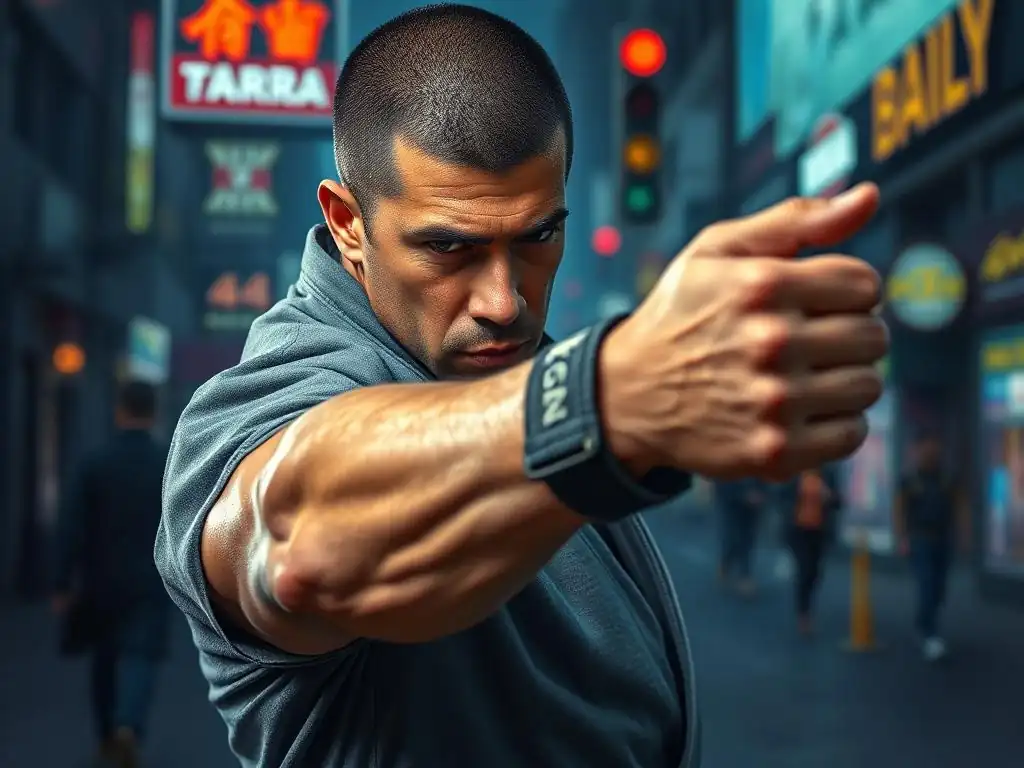
Welcome to Martial Arts Mastery, your gateway to understanding the world's diverse fighting traditions. Delve into the history, philosophy, and practical application of combat techniques. Ever wondered how to effectively defend against a weapon in a real-world scenario? This article explores the brutal efficiency of Krav Maga weapon defenses, offering insights into the techniques and training methodologies that make it a uniquely effective system. Discover how this no-nonsense approach prepares you for the unthinkable, and begin your journey toward enhanced awareness and self-preservation.
- Introduction to Krav Maga Weapon Defense Training
- Core Principles of Krav Maga Weapon Defenses
- Specific Krav Maga Defenses Against Common Weapons
- Realistic Krav Maga Weapon Defense Training Drills
- Legal and Ethical Considerations in Weapon Defense
- Advanced Krav Maga Weapon Defense Techniques
- The Psychological Aspects of Weapon Defense
- Conclusion: Mastering Krav Maga Weapon Defenses for Self-Preservation
-
Frequently Asked Questions
- What makes Krav Maga weapon defenses different from other martial arts' defenses?
- What types of weapons are typically covered in Krav Maga weapon defense training?
- How does Krav Maga prepare practitioners for the psychological aspects of a weapon attack?
- Does Krav Maga weapon defense training require prior martial arts experience?
- What is the primary goal of Krav Maga weapon defense training?
- Final Reflection: Embracing Preparedness in a World of Uncertainty
- Unlock Your Inner Defender: Master Krav Maga Weapon Defenses Now!
Introduction to Krav Maga Weapon Defense Training
Krav Maga, renowned for its practical, reality-based approach to self-defense, places significant emphasis on dealing with weapon threats. Unlike traditional martial arts that might focus on disarming techniques within a sporting context, Krav Maga weapon defenses are designed for survival in violent, unpredictable encounters. The training acknowledges the extreme danger posed by weapons and aims to equip practitioners with the skills and mindset necessary to survive.
This focus stems from the understanding that in real-world violence, weapons are prevalent and can inflict catastrophic injury or death rapidly. Effective Krav Maga weapon defenses prioritize immediate action, threat neutralization, and escape, rather than prolonged engagement or complex disarms. The goal is to minimize exposure to danger and create an opportunity to survive.
The Importance of Weapon Defense in Krav Maga's Philosophy
Krav Maga's core philosophy is about surviving a violent encounter and returning home safely. Given the reality that weapons are frequently used in criminal assaults – statistics vary by region, but reports often indicate that a significant percentage of violent crimes, potentially exceeding 20% in some areas, involve weapons like knives or firearms – training for these scenarios is not optional, but fundamental. Krav Maga weapon defenses are integrated from early stages of training, reflecting their critical importance.
This integration is based on the principle that a practitioner must be prepared for the worst-case scenario. Krav Maga weapon defenses are taught not as isolated techniques, but as part of a continuum of responses that includes awareness, de-escalation (when possible), physical defense, and escape. The emphasis is on simplicity, efficiency, and effectiveness under extreme stress, acknowledging that fine motor skills degrade significantly in high-fear situations. Training drills often simulate the chaos and pressure of real attacks.
Understanding Threat Assessment in Krav Maga
A crucial component of Krav Maga weapon defenses is developing the ability to quickly and accurately assess a threat. This involves recognizing potential danger signs before an attack occurs (pre-conflict indicators), identifying the type of weapon, understanding the attacker's intent, and evaluating the immediate environment. Training incorporates scenario-based exercises to hone this observational and analytical skill under pressure. For instance, a study simulating armed robberies found that individuals who received training in threat assessment and situational awareness were statistically more likely to identify potential threats earlier and react more effectively than untrained individuals.
Effective threat assessment allows a practitioner to make split-second decisions, such as whether evasion is possible, if compliance is the safest initial option, or if immediate physical defense is necessary. Krav Maga weapon defenses stress that the best defense is often avoiding the situation entirely. If avoidance isn't possible, a rapid and accurate assessment guides the choice of defensive action, whether it involves a preemptive strike, a block and counter, or a disarm attempt combined with immediate escape. This cognitive aspect is as vital as the physical techniques.
Core Principles of Krav Maga Weapon Defenses
Krav Maga's approach to weapon defense is guided by several fundamental principles designed for maximum effectiveness and survivability in life-threatening situations. These principles differentiate it from many traditional martial arts and sports combat systems. They are constantly reinforced through repetitive, high-intensity training.
The core principles emphasize simplicity, directness, and aggression when necessary. They are built upon the understanding that hesitation can be fatal when facing an armed attacker. The focus is not on winning a fight, but on surviving an ambush or unexpected violent assault involving a weapon.
Prioritizing Immediate Danger and Threat Neutralization
The paramount principle in Krav Maga weapon defenses is to address the immediate danger. When confronted with a weapon, the first priority is to protect the most vulnerable targets – the head, neck, and torso – by moving off the line of attack. Simultaneously, the goal is to neutralize the threat as quickly as possible. This often involves simultaneous defense and attack; for example, while blocking or redirecting the weapon, the practitioner immediately counters with strikes to vulnerable areas like the eyes, throat, or groin.
Threat neutralization means stopping the attacker's ability or will to continue the assault. This could involve causing enough pain or disorientation to create an escape opportunity, or physically controlling the weapon and attacker. Krav Maga training emphasizes that disarming is a secondary objective to survival. The primary goal is to stop the immediate attack and create distance or control, enabling escape. This principle is drilled relentlessly, ensuring practitioners react instinctively to the most dangerous element of the threat first.
Using Evasive Maneuvers and Preemptive Strikes in Weapon Scenarios
Evasion is a critical first line of defense in Krav Maga weapon defenses. Moving rapidly away from the line of attack, such as stepping offline or retreating, is often the safest initial reaction, especially if the attacker is at a distance or the weapon is being presented rather than actively used. This creates time and space to assess the situation further or facilitate escape. Krav Maga teaches specific evasive footwork and body movements tailored to different weapon types and attack angles.
When evasion is not sufficient or possible, preemptive or immediate counter-attacks are employed. Krav Maga teaches that in a life-threatening situation with a weapon, waiting for the attacker to commit fully can be too late. A sudden, aggressive burst of strikes targeting vulnerable points can disrupt the attacker's intent and action, buying precious seconds to implement a defense or create an escape path. This aggressive response, combined with simultaneous defense and movement, is a hallmark of Krav Maga weapon defenses.
Maintaining Awareness and Environmental Positioning
Situational awareness is fundamental to all Krav Maga training, and critically so for Krav Maga weapon defenses. This involves being aware of one's surroundings, potential threats, and escape routes before a confrontation occurs. During an attack, awareness shifts to tracking the weapon, the attacker's body language, potential accomplices, and environmental factors that could be used for defense (cover, obstacles, potential improvised weapons) or escape.
Environmental positioning involves strategically using the surroundings to one's advantage. This could mean moving towards an exit, using obstacles for cover, positioning the attacker between oneself and a wall to limit their movement, or drawing the attacker into a less advantageous position. Training drills often incorporate environmental elements, such as fighting in confined spaces or around furniture, to simulate realistic scenarios and reinforce the importance of spatial awareness and positioning in executing Krav Maga weapon defenses effectively.
Specific Krav Maga Defenses Against Common Weapons
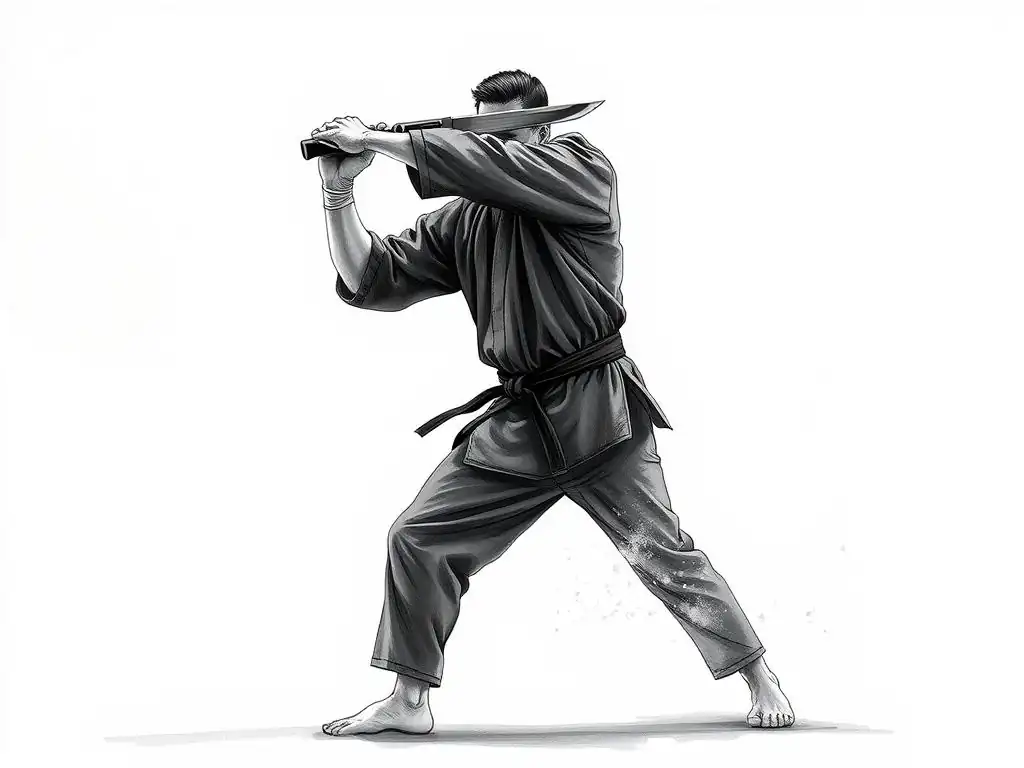
Krav Maga provides practical, principle-based defenses against common weapons encountered in urban environments. While specific techniques exist, they are variations on core principles adapted to the unique dynamics of knife, gun, and blunt weapon threats. The training focuses on gross motor movements and instinctive reactions that are reliable under stress.
The methodology involves demonstrating the most common attack vectors for each weapon type and then drilling simple, high-percentage defenses. Repetition is key to building muscle memory and confidence.
Defending Against Knife Attacks in Krav Maga
Knife attacks are particularly dangerous due to their speed, the severity of injuries they inflict, and the attacker's ability to use multiple rapid strikes or slashes. Krav Maga weapon defenses against knives prioritize getting off the line of attack, controlling the limb holding the weapon, and simultaneously striking to create an opening for a disarm and escape. The training acknowledges that even with a successful defense, injuries are highly likely.
Defenses are taught against various common knife attacks, such as straight thrusts to the abdomen, upward thrusts, and slashing motions. The principle is always to move the target (your body) away from the blade while simultaneously bringing your defense (block/redirect) into the line of attack. The counter-attack is immediate and aggressive, aimed at disrupting the attacker's balance and control.
Krav Maga Techniques for Knife Disarms
Krav Maga knife disarms are typically part of a larger defensive sequence, not isolated techniques performed from a static position. After blocking or redirecting the attack and counter-striking, the disarm is attempted while maintaining control of the attacker's weapon-bearing limb.
Techniques often involve leverage, twisting the wrist, or striking the hand holding the knife. For instance, a common defense against a straight thrust might involve a simultaneous outside block/redirect with one hand, controlling the wrist with the other, and delivering strikes (groin, knee, face) while stepping offline, then applying pressure to the wrist and fingers to force the release of the knife.
The training emphasizes that successful disarming requires maintaining control of the attacker and the weapon throughout the process. Simply knocking the knife away is often insufficient, as the attacker might retain control or immediately attempt another attack. The focus is on securing the weapon or creating enough distance/disruption to escape. Drills involve resisting partners who actively try to retain the knife or switch hands.
Controlling the Attacker After a Knife Disarm
Disarming the attacker is rarely the end of the encounter. In Krav Maga weapon defenses, controlling the attacker after the disarm is a critical follow-up step. This might involve maintaining a physical hold on the attacker, using strikes to incapacitate them further, or transitioning into grappling or control techniques. The specific follow-up depends on the context – whether escape is immediately possible, if there are other threats, or if the attacker is still actively resisting.
Often, the disarm is immediately followed by aggressive strikes and creating distance to run to safety. If escape is blocked or impossible, techniques might involve taking the attacker to the ground, applying control holds, or utilizing the disarmed weapon (or an improvised weapon) for defense if necessary. Training emphasizes transitioning smoothly from the disarm to control or escape, reinforcing that the primary goal is survival, not subduing the attacker in a prolonged fight.
Krav Maga Strategies for Gun Defense
Defending against a gun is arguably the most dangerous scenario addressed in Krav Maga weapon defenses. The training operates under the assumption that the gun is loaded and the attacker is willing to use it. Consequently, defenses against a gun at close range are extremely high-risk and rely on explosive, decisive action. Krav Maga does not teach defenses against a distant shooter or in a shootout scenario; it focuses on situations where the gun is presented at close proximity, typically within arm's reach.
The core principle is to simultaneously deflect the muzzle away from your body and move off the line of fire, while aggressively attacking the person holding the gun. There is no attempt to negotiate or wait; the reaction must be immediate and overwhelming. Training includes defenses against frontal presentations, guns to the side of the head or body, and guns held from behind.
Reacting to a Gun Threat: Initial Steps
When a gun is presented at close range, the initial reaction in Krav Maga weapon defenses is a sudden, explosive movement combined with a defense. This involves simultaneously redirecting the weapon's muzzle away from your body and moving your head and torso offline. For example, if a gun is pointed at your chest, the defense involves a simultaneous step to the side/rear and a hand deflection to push the barrel off-target, while the other hand might immediately strike the attacker.
This initial reaction is designed to achieve two critical objectives simultaneously: avoid being shot in the immediate moment and disrupt the attacker's control and balance. The speed and surprise of this initial movement are paramount. Any hesitation significantly increases the risk. Training drills for this phase are highly dynamic, often starting from passive or surprised positions to simulate real-world ambush scenarios.
Krav Maga Gun Disarming Techniques
Following the initial deflection and movement off the line of fire, Krav Maga gun disarming techniques aim to gain control of the weapon and separate it from the attacker. These techniques typically involve maintaining control of the weapon-bearing hand/wrist while applying leverage or striking the hand to force the release of the firearm. For example, after deflecting a frontal gun threat and moving offline, the practitioner might apply a wrist lock or twist while simultaneously delivering strikes to the attacker's face or groin.
The disarm is performed while keeping the muzzle pointed away from oneself and others. Training emphasizes securing the weapon after it is disarmed – not just letting it fall. This might involve pulling it firmly away, checking the chamber, and controlling it. Disarm drills are practiced from various angles and positions, often incorporating elements of surprise and resistance from training partners.
Maintaining Control After a Gun Disarm
As with knife defenses, disarming a gun is a step, not the conclusion. After gaining control of the firearm in Krav Maga weapon defenses, the priority remains survival. This means either immediately escaping the situation or, if escape is not possible or the attacker is still a threat, using the disarmed weapon or continuing physical control techniques to neutralize the attacker. Using the disarmed weapon is a last resort and depends heavily on the specific circumstances and legal context.
Training emphasizes transitioning smoothly from the disarm to creating distance and escaping. If the attacker is still fighting, follow-up strikes or control techniques are applied. The decision to use the disarmed weapon is complex and involves legal and ethical considerations, which are also discussed in Krav Maga training. The primary objective is always to get to safety.
Defending Against Blunt Weapons in Krav Maga
Blunt weapons, such as sticks, bats, pipes, or bottles, can cause severe trauma, broken bones, and head injuries. Krav Maga weapon defenses against blunt objects focus on defending against swings, strikes, and thrusts. The danger lies in the force and reach of the weapon. Defenses involve blocking, redirecting, and closing the distance rapidly to prevent the attacker from generating power with the weapon.
Training addresses different types of blunt weapon attacks, such as overhead swings, horizontal strikes, and forward thrusts. The principles involve using robust blocks (often reinforced with two hands) to absorb or redirect the impact, followed immediately by closing the distance to the attacker's body, where the weapon is less effective.
Blocking and Redirecting Blunt Weapon Attacks
Against a blunt weapon attack, robust blocks are used to protect vital areas. Krav Maga teaches strong, often two-handed blocks to absorb or deflect the impact. For instance, against an overhead swing, a practitioner might use a reinforced high block, stepping slightly offline. Against a horizontal strike, a strong forearm block might be used, again moving off the direct line of attack.
Simultaneously with the block, the practitioner moves to close the distance. Redirecting the weapon's path can also be effective, using the attacker's force against them to create an opening. The goal is not merely to stop the weapon once, but to disrupt the attacker's ability to use it effectively and create an opportunity to enter and control. Drills focus on timing the block with the attacker's swing and immediately transitioning to the next phase.
Closing the Distance and Controlling the Attacker
Once a blunt weapon attack has been blocked or redirected, the critical next step in Krav Maga weapon defenses is to rapidly close the distance. A blunt weapon is most dangerous when the attacker has space to generate momentum and power. By getting "inside" the weapon's effective range – i.e., grappling distance – the attacker's ability to strike effectively is severely limited.
Upon closing the distance, the practitioner uses strikes to vulnerable areas (knees, groin, head) and attempts to control the attacker's body and the weapon-bearing limb. This might involve clinching, trapping the weapon against the attacker's body, or taking the attacker to the ground. The focus shifts from defending against the weapon to controlling the person holding it, allowing for potential disarming or transition to escape. Training emphasizes the explosive entry and immediate transition to control or striking at close range.
Realistic Krav Maga Weapon Defense Training Drills
Effective Krav Maga weapon defenses require training that goes beyond static technique repetition. Realistic drills simulate the conditions, stress, and unpredictability of actual violent encounters involving weapons. This includes incorporating elements like surprise, varying attack angles, and environmental factors.
Training progression typically moves from basic technique drills to more complex scenarios. Safety is paramount, using protective gear, training weapons (rubber, plastic, or padded), and careful supervision.
Partner Drills for Knife and Gun Defenses
Partner drills are fundamental to practicing Krav Maga weapon defenses. Initially, these might be cooperative drills where a partner performs a specific attack slowly, allowing the defender to practice the technique. Progression involves increasing speed, adding resistance, and introducing variations in the attack. For knife defense, drills include multiple attacks, different grips, and attacks from various angles (front, side, rear, ground).
For gun defense, partner drills start with static presentations at close range, practicing the deflection and disarm. They evolve to include sudden presentations, movement, and resistance from the "attacker." Training weapons that make a sound or light upon trigger pull can add realism, reinforcing the need for simultaneous defense and movement. These drills build the instinctive reaction required under stress.
Scenario-Based Training for Realistic Weapon Encounters
Scenario-based training is crucial for applying Krav Maga weapon defenses in a realistic context. These drills simulate real-life situations where weapon attacks might occur, such as an attempted robbery in a park, an assault in a stairwell, or a threat during a home invasion. Training spaces are often set up to resemble these environments, using props and varying lighting conditions.
Participants don't know exactly how or when the attack will occur, forcing them to rely on awareness, threat assessment, and adapting their techniques. Instructors act as attackers or role-players, providing realistic resistance and reactions. These scenarios help practitioners integrate physical techniques with tactical thinking, stress management, and the decision-making process (fight, flight, or comply).
Incorporating Stress and Environmental Factors in Training
To simulate the physiological and psychological effects of a real attack, Krav Maga weapon defenses training often incorporates stress inoculation. This involves elevating the defender's heart rate and stress levels before or during a drill. Methods include intense physical exercise immediately preceding a scenario, loud noises, flashing lights, or verbal aggression from the attacker role-player.
Training in various environments – confined spaces, low light, uneven surfaces, crowded areas – helps practitioners adapt their Krav Maga weapon defenses to different conditions. For example, a knife defense technique might need modification if performed in a narrow hallway versus an open field. Training under stress and in varied environments builds resilience, adaptability, and the ability to perform techniques effectively when fine motor skills are degraded.
Legal and Ethical Considerations in Weapon Defense
While Krav Maga weapon defenses focus on physical survival, responsible training includes understanding the legal and ethical implications of using force, especially deadly force, which is often involved in weapon encounters. Krav Maga practitioners are taught that self-defense is a legal justification for using force, but the level of force must generally be proportionate to the threat.
Training emphasizes that the goal is to survive and escape, not to injure or kill unnecessarily. Legal and ethical discussions are part of the curriculum, preparing practitioners not just physically but also mentally and morally for the potential consequences of using force.
Understanding Self-Defense Laws and Justification
Self-defense laws vary significantly by jurisdiction, but generally permit the use of force, including deadly force, when a person reasonably believes they are in imminent danger of serious bodily injury or death. In the context of Krav Maga weapon defenses, facing an attacker with a knife or gun typically meets the threshold for using lethal force in self-defense. However, the details matter – the attacker's intent, their proximity, and whether there was an opportunity to retreat (though many jurisdictions have "stand your ground" laws removing the duty to retreat when facing a deadly threat).
Krav Maga training includes education on these general principles, stressing the importance of knowing local laws. Practitioners are taught that their actions must be legally justifiable and that they may have to articulate their reasons for using force to law enforcement afterwards. The emphasis is on defending oneself against a reasonable fear of serious harm, not escalating a non-lethal confrontation.
The Importance of De-escalation and Avoiding Confrontation
Despite focusing on physical techniques, Krav Maga weapon defenses training emphasizes that physical confrontation, especially involving weapons, should be a last resort. Awareness and de-escalation skills are taught as primary strategies. Avoiding dangerous areas or situations, recognizing pre-conflict indicators, and using verbal skills to calm a situation or create an opportunity to escape are always preferred when possible and safe.
De-escalation is not always possible or advisable, particularly in a sudden ambush involving a weapon. However, if there is an opportunity to talk down an attacker, comply with demands (e.g., during a robbery, if surrendering property increases safety), or disengage verbally, these are considered valid and often safer alternatives to physical defense. Krav Maga teaches practitioners to be humble and smart, prioritizing survival over ego.
Post-Incident Procedures
Responsible Krav Maga weapon defenses training includes guidance on what to do immediately after a self-defense incident involving a weapon. This typically involves ensuring personal safety first (escaping the area if possible), then contacting law enforcement, and cooperating fully. Practitioners are advised to clearly state that they were attacked and acted in self-defense, point out any weapons involved, and identify witnesses.
However, they are also often advised not to give detailed statements without legal counsel, as the stress of the situation can lead to inaccurate recollections that could be misinterpreted. The focus is on reporting the facts of the attack and their need to defend themselves. Training might include role-playing these post-incident interactions to prepare students mentally for the aftermath.
Advanced Krav Maga Weapon Defense Techniques
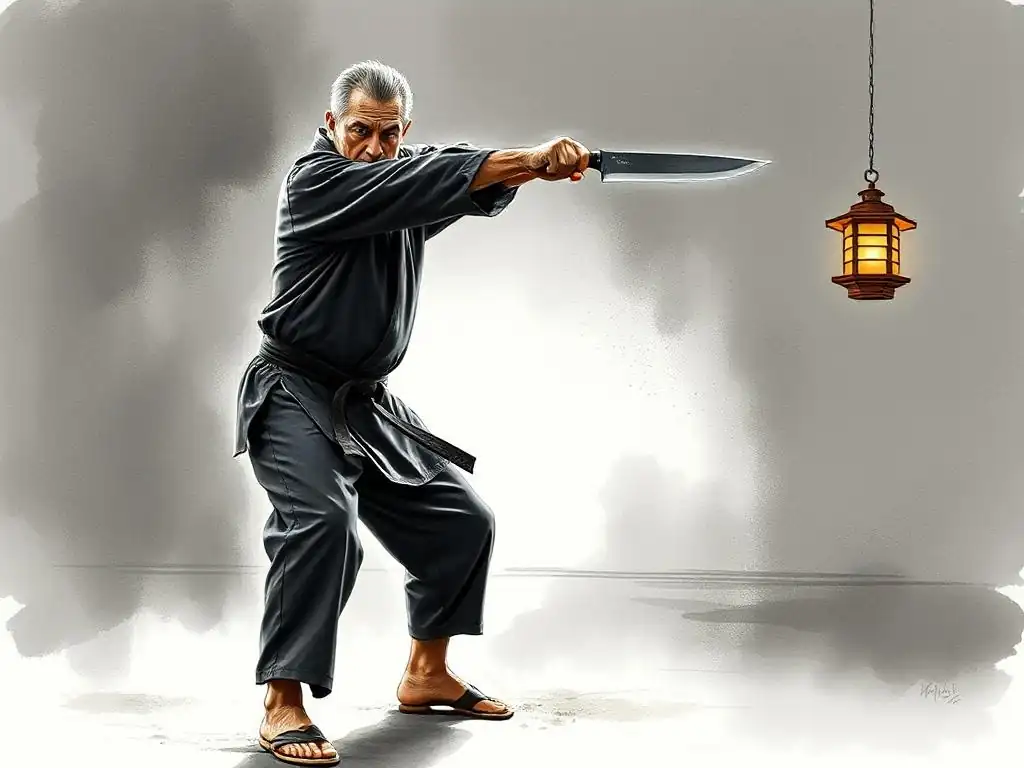
As practitioners advance in Krav Maga, their weapon defense skills are refined and expanded. Advanced training delves into more complex scenarios, improvised defenses, and strategies for dealing with multiple armed threats. These techniques build upon the core principles but require a higher level of proficiency, timing, and tactical understanding.
Advanced Krav Maga weapon defenses push practitioners to adapt their skills to less common weapons and more dynamic, chaotic situations. The training becomes less about learning new "moves" and more about applying principles under increasingly difficult circumstances.
Using Improvised Weapons for Defense
In a real-world attack, a defender may not have access to conventional self-defense tools. Advanced Krav Maga weapon defenses teach practitioners to identify and effectively use improvised weapons found in their environment. Common items like pens, keys, belts, chairs, fire extinguishers, or even hot coffee can be used to strike, block, create distance, or distract an attacker, including those armed with conventional weapons.
Training involves practicing how to quickly identify potential improvised weapons in different environments and integrate their use into defensive tactics against various threats, including edged or impact weapons. For example, using a chair to fend off a knife attacker or a heavy object to strike a gun-wielding assailant's hand. This adds another layer of adaptability to a practitioner's self-preservation toolkit.
Defending Against Multiple Attackers with Weapons
Defending against multiple attackers is exponentially more difficult than facing a single threat; adding weapons to the mix makes it one of the most challenging scenarios. Advanced Krav Maga weapon defenses address this by emphasizing movement, positioning, and prioritizing threats. The strategy is typically to avoid being surrounded, use the attackers' positions against each other (e.g., keeping one attacker between you and another), and neutralize the most immediate threat rapidly to reduce the number of active assailants.
Techniques involve explosive linear movement, rapid strikes, and using the environment for cover or to channel attackers. The goal is not to fight all attackers simultaneously but to deal with them sequentially or create an opportunity to escape the group. Training drills for multiple armed attackers are highly dynamic and require significant physical conditioning and tactical awareness.
Adapting Krav Maga Principles to Edged, Impact, and Projectile Weapons
While core Krav Maga weapon defenses cover common knives, guns, and blunt objects, advanced training explores adapting these principles to a wider array of weapons. This could include less common edged weapons (axes, swords), different types of firearms (rifles, shotguns – although defenses are still limited to close-range surprise encounters), or other impact weapons.
The focus is on understanding the nature of the threat posed by different weapon types (cutting vs. stabbing, crushing vs. piercing, ballistic) and applying the core principles of defense (get off the line, simultaneous defense and attack, control, disarm/escape) with appropriate modifications. For instance, defending against an axe swing requires a different type of block and timing than a knife thrust, but the principle of moving offline and closing distance remains relevant. This adaptability is key to Krav Maga's reality-based approach.
The Psychological Aspects of Weapon Defense
Physical techniques are only one part of effective Krav Maga weapon defenses. The psychological component – managing fear, maintaining composure, and developing the will to survive – is equally, if not more, critical. A person might know all the techniques but freeze under the stress of facing a real weapon.
Krav Maga training incorporates methods to build mental toughness and prepare practitioners for the intense psychological pressure of a life-threatening encounter. This includes stress inoculation, realistic scenario training, and fostering a resilient mindset.
Managing Fear and Maintaining Composure Under Pressure
Fear is a natural and powerful response to danger, especially when facing a weapon. While fear cannot be eliminated, it can be managed. Krav Maga weapon defenses training helps practitioners understand the physiological effects of fear (increased heart rate, tunnel vision, impaired fine motor skills) and learn to function despite them. Stress inoculation drills, where techniques are practiced under simulated high-stress conditions, help familiarize the body and mind with these responses, reducing the likelihood of freezing.
Maintaining composure is about focusing on the immediate task – survival – rather than succumbing to panic. This is achieved through repetitive training that makes the defensive reactions more automatic, allowing the conscious mind to focus on threat assessment and tactics. Breathing exercises and visualization are also sometimes used to help manage the adrenaline response.
Developing a Warrior Mindset for Survival
A critical element of Krav Maga weapon defenses is cultivating a strong will to survive. This "warrior mindset" is not about aggression for its own sake, but about activating an assertive, determined response when faced with a life-threatening attack. It's the mental switch that allows a person to fight back fiercely and decisively when necessary.
This mindset is built through challenging training that pushes physical and mental limits. Success in overcoming difficult drills and scenarios builds confidence in one's ability to perform under pressure. Understanding the severity of weapon threats also fuels the determination to act decisively to protect oneself and loved ones.
Building Confidence Through Repetitive Training
Confidence is essential for effective self-defense, particularly in high-stress weapon scenarios. Confidence in Krav Maga weapon defenses is built through consistent, repetitive, and progressive training. Starting with basic techniques and gradually increasing the complexity, speed, resistance, and stress levels allows practitioners to build a strong foundation and incrementally test their skills.
Successfully executing techniques, even in training drills, reinforces their effectiveness and builds self-belief. This confidence isn't arrogance; it's a quiet assurance based on realistic preparation. It helps reduce hesitation when facing a threat, enabling the practitioner to react assertively and effectively.
Conclusion: Mastering Krav Maga Weapon Defenses for Self-Preservation
Mastering Krav Maga weapon defenses is a challenging but vital endeavor for personal safety in a world where violent crime and weapon threats are realities. It is not about becoming invincible, but about developing the physical skills, mental fortitude, and tactical awareness needed to maximize the chances of surviving a life-threatening encounter with a weapon.
The training is realistic, demanding, and constantly evolving to address contemporary threats. It instills the principles of immediate action, simultaneous defense and attack, threat neutralization, and prioritizing escape.
Continuous Training and Adaptation in Krav Maga
Proficiency in Krav Maga weapon defenses is not a destination but a continuous journey. Maintaining skills requires regular practice, as techniques can degrade over time without repetition. Krav Maga practitioners are encouraged to train consistently to keep their reflexes sharp and their techniques effective.
Furthermore, the nature of threats can change. Krav Maga as a system is dynamic and adapts its curriculum based on real-world incidents and analysis. Continuous training exposes practitioners to updated techniques, new threat scenarios, and evolving legal considerations, ensuring their Krav Maga weapon defenses remain relevant and effective for self-preservation.
Frequently Asked Questions
What makes Krav Maga weapon defenses different from other martial arts' defenses?
Krav Maga focuses on realistic scenarios and immediate threat neutralization. Unlike some traditional martial arts, it prioritizes practical effectiveness over stylized movements, emphasizing gross motor skills under stress.
What types of weapons are typically covered in Krav Maga weapon defense training?
Krav Maga training covers defenses against common street weapons such as knives, sticks/blunt objects, and firearms. The training addresses both edged weapons and blunt force weapons, as well as improvised weapons.
How does Krav Maga prepare practitioners for the psychological aspects of a weapon attack?
Training incorporates stress inoculation techniques and scenario-based drills. This helps practitioners manage fear, maintain situational awareness, and react decisively under pressure, building mental resilience.
Does Krav Maga weapon defense training require prior martial arts experience?
While prior experience can be helpful, it is not a requirement. Krav Maga is designed to be accessible to beginners, focusing on simple and effective techniques that can be learned relatively quickly.
What is the primary goal of Krav Maga weapon defense training?
The primary goal is surviving a violent encounter. This involves creating space, disarming the attacker (if possible), and escaping to safety, prioritizing self-preservation above all else.
Final Reflection: Embracing Preparedness in a World of Uncertainty
The exploration of Krav Maga weapon defenses, as presented in this article, underscores a crucial truth: preparedness is not paranoia, but rather a responsible embrace of reality. In a world where threats, though hopefully rare, exist, equipping oneself with the knowledge and skills to defend against them is an act of self-preservation and a commitment to the safety of those around us. This isn't about fostering fear, but about cultivating confidence and resilience in the face of adversity.
The impact of Krav Maga, and particularly its focus on weapon defenses, extends beyond the individual practitioner. It fosters a culture of awareness and empowers individuals to become active participants in their own safety and the safety of their communities. This resonates deeply with the fundamental human desire for security and control in an often unpredictable world. By failing to prepare, you are preparing to fail.
- Benjamin Franklin. This quote encapsulates the essence of Krav Maga's philosophy: proactive preparation is the key to navigating potentially dangerous situations.
Ultimately, the lessons learned from Krav Maga weapon defenses are not just about physical techniques; they are about cultivating a mindset of vigilance, adaptability, and courage. We invite you to reflect on your own preparedness. How can you proactively equip yourself, both physically and mentally, to navigate the challenges that life may present? The journey towards self-reliance and the ability to protect yourself and others begins with a single step – a commitment to learning, training, and embracing the responsibility of personal safety.
Unlock Your Inner Defender: Master Krav Maga Weapon Defenses Now!
Thank you for delving into the world of Krav Maga weapon defenses with us. You've gained valuable insights into realistic training for life-threatening encounters. Now, it's time to put that knowledge into action and elevate your preparedness.
Here's how to continue your journey:
- Enroll in a certified Krav Maga class focused on weapon defense. This hands-on experience is crucial for developing muscle memory and practical skills.
- Share this article with your friends and family to empower them with vital self-defense knowledge. You never know when this information could save a life.
- Research local self-defense workshops and seminars to discover less common, but highly effective techniques. Broaden your knowledge beyond Krav Maga!
What specific scenario from this article motivated you to seek further training, and what are your immediate next steps?