
Mastering Taekwondo Stances: The Unshakeable Foundation of Poomsae Excellence

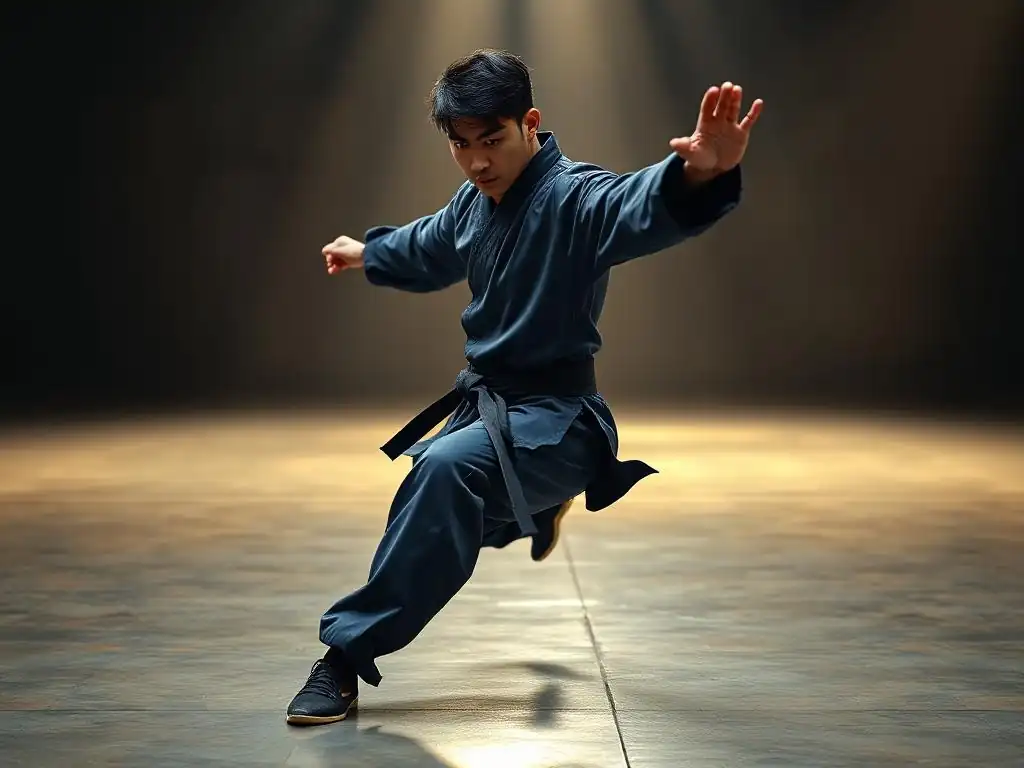
Welcome to Martial Arts Mastery, your gateway to unlocking the secrets of combat traditions worldwide. Are you ready to delve into the heart of Taekwondo and discover the power hidden within its foundational movements? This article unveils the crucial role of Taekwondo stance training techniques, exploring how mastering these seemingly simple positions is the key to achieving unparalleled excellence in Poomsae and beyond. Prepare to transform your foundation and elevate your practice – the journey to unshakeable stability begins now!
- Introduction to Taekwondo Stances and Poomsae Performance
-
Understanding the Core Taekwondo Stances: A Detailed Overview
- Ap Seogi (Walking Stance): The Fundamental Taekwondo Stance
- Ap Kubi Seogi (Long Stance): Power and Stability in Taekwondo Forms
- Dwit Kubi Seogi (Back Stance): Defensive Agility and Precision
- Beom Seogi (Tiger Stance): Generating Power from a Compact Position
- Juchum Seogi (Horse Riding Stance): Building Core Strength and Stability
- Kkoa Seogi (Twisted Stance): Mastering the Art of Balance and Control
- Taekwondo Stance Training Techniques for Poomsae Improvement
- Applying Taekwondo Stance Techniques to Specific Poomsae Forms
- Advanced Taekwondo Stance Training for Poomsae Competition
- Conclusion: The Path to Taekwondo Poomsae Excellence Through Stance Mastery
-
Frequently Asked Questions
- What is the importance of stance training in Taekwondo?
- How do Taekwondo stances relate to Poomsae performance?
- What are some common mistakes beginners make with Taekwondo stances?
- How often should I practice Taekwondo stances to improve?
- Besides Poomsae, how do stances benefit self-defense applications?
- Final Reflection: The Root of Unwavering Strength
- Elevate Your Poomsae: Embrace the Unshakeable Foundation!
Introduction to Taekwondo Stances and Poomsae Performance
Why Proper Stance Work is Crucial for Taekwondo Poomsae
Mastering Taekwondo stances is not merely about adopting a static position; it is the dynamic foundation upon which all effective Taekwondo techniques are built, especially within the intricate movements of Poomsae. Proper stance work ensures stability, balance, and the efficient transfer of power from the ground through the body to strikes and blocks. Without a solid stance, even the most technically perfect hand or foot technique will lack force and control.
Think of it as the root system of a tree – a shallow or unstable root system cannot support a tall, strong tree against the wind. Similarly, weak or incorrect stances undermine the practitioner's ability to execute techniques with precision and power, leading to poor performance and a higher risk of losing balance during complex sequences. Effective Taekwondo stance training techniques are therefore paramount for anyone aspiring to proficiency in Poomsae.
Beyond raw power, correct stances provide the necessary balance to transition smoothly between techniques and directions, a critical aspect of Poomsae. Each stance has a specific purpose, dictating weight distribution and body alignment to prepare for the next movement or absorb impact. Incorrect stances can lead to wasted energy, slower transitions, and telegraphing movements, all of which detract significantly from a Poomsae performance graded on accuracy, power, and flow.
Dedicated Taekwondo stance training techniques help practitioners internalize the correct posture and weight distribution for each fundamental stance, making them automatic and allowing focus to shift to the execution of techniques and the overall rhythm of the form. This foundational strength is what allows a practitioner to move with both grace and explosive power.
The Connection Between Solid Stances and Powerful Techniques in Taekwondo
The power generated in a Taekwondo technique originates from the ground, travels up through the legs and core, and is channeled into a strike or block. Solid stances act as the conduit for this energy transfer. For instance, in an Ap Kubi Seogi (Long Stance), the forward weight distribution and bent front knee allow for powerful forward-driving techniques like a straight punch or a front kick from the rear leg.
If the stance is too short or the weight distribution is incorrect, the power generated by the legs pushing off the ground cannot be fully utilized, resulting in a weaker technique. Effective Taekwondo stance training techniques focus on teaching practitioners how to properly anchor themselves and utilize ground reaction force.
Consider the execution of a powerful down block (Arae Makgi) in Taegeuk Il Jang. This technique is typically performed from an Ap Seogi (Walking Stance) or Ap Kubi Seogi. The stability provided by the stance allows the practitioner to apply maximum force downwards to block an incoming attack, while maintaining balance to counter.
Conversely, attempting this block from an unstable or improperly aligned stance would reduce its effectiveness and potentially leave the practitioner vulnerable. Many experienced instructors emphasize that improving power in techniques often starts not with training the striking limbs, but with refining the Taekwondo stance training techniques, focusing on lower body strength, flexibility, and precise foot placement. This highlights the direct, undeniable link between having a solid stance and the ability to deliver powerful, controlled techniques.
Understanding the Core Taekwondo Stances: A Detailed Overview
Ap Seogi (Walking Stance): The Fundamental Taekwondo Stance
Ap Seogi, or Walking Stance, is arguably the most fundamental stance in Taekwondo, serving as a basic transitional and preparatory position. It is characterized by one foot placed a natural step forward from the other, with the feet roughly shoulder-width apart laterally. The weight distribution is typically balanced, often cited as approximately 50/50 between the front and back legs, although some variations or interpretations might suggest a slight forward bias (e.g., 60/40).
The knees are slightly bent, providing shock absorption and mobility. This stance is used extensively in the Taegeuk Poomsae forms, appearing early and frequently in sequences requiring forward movement or simple defensive actions. Its simplicity makes it accessible for beginners, but its correct execution is vital for developing proper body alignment and balance before moving to more complex positions.
The versatility of Ap Seogi lies in its balanced nature, allowing for relatively quick transitions into other stances or the initiation of various techniques. It is a stance of readiness, neither overly committed to offense nor defense. Proper Ap Seogi involves maintaining an upright posture, with the shoulders relaxed and aligned over the hips.
The front knee should be bent sufficiently to hide the toes when looking down, and the back leg should be relatively straight but not locked. Mastering this basic Taekwondo stance requires attention to detail regarding foot placement, weight distribution, and maintaining a relaxed but stable core. Consistent practice of basic Taekwondo stance training techniques focusing on Ap Seogi is crucial for building a strong foundation.
Mastering Ap Seogi: Alignment, Weight Distribution, and Common Errors
Mastering Ap Seogi requires meticulous attention to alignment and weight distribution. The feet should be spaced approximately one shoulder-width laterally and about one and a half shoulder-widths front-to-back, depending on the practitioner's height and flexibility. The front foot points straight forward, while the back foot is angled outwards at about 25-30 degrees. This alignment ensures stability and allows for efficient forward movement.
The weight distribution is key: a balanced 50/50 split provides maximum mobility, while a slight forward bias (e.g., 60/40) can prepare for forward techniques. A common error is having the feet on a single line, like walking a tightrope, which severely compromises lateral balance. Another is locking the back knee, which restricts movement and puts undue stress on the joint.
Incorrect posture is another frequent issue in Ap Seogi. Students often lean too far forward or backward, or their shoulders are not aligned over their hips. This throws off the intended weight distribution and weakens the stance. For instance, leaning back shifts weight to the rear, hindering forward power.
Similarly, not bending the front knee enough prevents proper shock absorption and limits the ability to generate power from the front leg. Effective Taekwondo stance training techniques for Ap Seogi involve drills focusing on stepping precisely to the correct width and length, checking foot angles, and practicing maintaining the 50/50 or 60/40 weight distribution while relaxed. Instructors often use visual cues or partner drills to help students feel the correct alignment and balance, correcting common errors like narrow stance or improper weight distribution.
Ap Kubi Seogi (Long Stance): Power and Stability in Taekwondo Forms
Ap Kubi Seogi, known as the Long Stance or Forward Stance, is a cornerstone of Taekwondo Poomsae, specifically designed for generating powerful forward momentum and stability. This stance is significantly longer than Ap Seogi, typically two to two and a half shoulder-widths front-to-back, with the feet still roughly one shoulder-width apart laterally. The defining characteristic is the deep bend in the front knee, which should be bent so that the thigh is nearly parallel to the floor and the knee is directly over the ankle.
The back leg is kept straight and strong, with the foot angled outwards at about 25-30 degrees, similar to Ap Seogi. The weight distribution is heavily biased towards the front leg, often cited as 70/30 or even 80/20. This stance is crucial for delivering powerful punches, blocks, and front kicks, and is featured prominently throughout the Taegeuk and higher-level Poomsae forms.
The deep, forward-leaning structure of Ap Kubi Seogi allows practitioners to harness the power of their entire body weight behind forward-driving techniques. The bent front leg acts as a stable base and a spring, while the straight back leg provides resistance and helps push the body forward. This stance is inherently less mobile than Ap Seogi but offers superior stability when executing strong forward actions.
It is vital for techniques like the straight punch (Momtong Jireugi) often seen in Taegeuk Il Jang or the powerful down block (Arae Makgi) in subsequent forms. Proper execution of Ap Kubi Seogi through focused Taekwondo stance training techniques is essential for developing the explosive power and unwavering stability required in Poomsae.
Optimizing Ap Kubi Seogi for Maximum Power and Balance
Optimizing Ap Kubi Seogi involves perfecting the depth of the front knee bend, the straightness of the back leg, and the precise weight distribution. The front knee must be bent deeply enough that the thigh is close to horizontal, ensuring the stance is truly "long" and low. A common mistake is not bending the front knee enough, which reduces the stance's power-generating potential and stability.
The back leg should be straight but not hyperextended, providing a strong anchor. The weight distribution, heavily forward (70-80% on the front leg), must be maintained throughout the technique executed from this stance. Losing this forward weight shifts power away from the target.
Balance in Ap Kubi Seogi, despite its inherent stability for forward movement, can be challenging, especially during transitions or when executing powerful techniques. Maintaining an upright torso, with the shoulders aligned over the hips (not leaning too far forward), is critical. Leaning too far forward puts excessive strain on the front knee and compromises overall balance.
Another aspect of optimizing this stance through Taekwondo stance training techniques is ensuring the feet are sufficiently wide laterally (shoulder-width apart). Having feet on a narrow line significantly reduces lateral stability, making the practitioner vulnerable to being pushed off balance. Drills focusing on stepping into a deep Ap Kubi Seogi and holding it while resisting gentle pushes from various angles can help improve balance and teach the body to maintain the correct structure under pressure.
Dwit Kubi Seogi (Back Stance): Defensive Agility and Precision
Dwit Kubi Seogi, or Back Stance, is a defensive stance characterized by shifting the majority of the body's weight onto the back leg. The feet form an 'L' shape, with the front foot pointing forward and the back foot angled outwards at approximately 90 degrees. The distance between the feet is typically about two shoulder-widths front-to-back, though this can vary slightly.
The back knee is significantly bent, supporting the bulk of the weight (often cited as 60/40 to 70/30 on the back leg), while the front leg is lightly bent, serving primarily for balance and quick reaction. This stance is fundamental for executing defensive techniques like knife hand blocks (Sonnal Makgi) and side kicks (Yeop Chagi), and is prominent in Poomsae forms from Taegeuk Ee Jang onwards.
The primary advantage of Dwit Kubi Seogi is the mobility and readiness of the front leg for quick defensive actions or counter-attacks. With most weight on the back leg, the front leg can be lifted quickly for kicks or shifted easily for evasive movements. The 'L' shape of the feet provides good lateral stability, making it effective for blocking incoming attacks from the side.
However, it offers less power for direct forward attacks compared to Ap Kubi Seogi. Proper Taekwondo stance training techniques for Dwit Kubi focus on developing strength in the back leg to support the weight and maintaining the correct 'L' shape alignment of the feet and legs, ensuring the hips and shoulders are turned sideways relative to the front foot's direction.
Dwit Kubi Seogi: Foot Placement, Posture, and Effective Applications
Precise foot placement is paramount in Dwit Kubi Seogi. The front foot points straight forward, while the back foot turns exactly 90 degrees outwards. The heel of the front foot should ideally align with the heel of the back foot along an imaginary line perpendicular to the direction the front foot is pointing. The distance between the heels is typically about two shoulder-widths.
The back knee must be bent deeply enough to support the weight, with the shin relatively vertical. The front leg is lightly bent, almost straight, with the front foot resting lightly on the ball of the foot or flat, ready to move. Maintaining the correct 'L' shape is crucial for stability; errors in foot angle or distance compromise the stance's effectiveness.
Posture in Dwit Kubi Seogi requires the torso to be upright and facing sideways (towards the direction the back foot is pointing). The shoulders and hips should be aligned laterally, minimizing the target area presented to an opponent. A common error is allowing the hips and shoulders to twist forward, which reduces defensive posture and shifts weight incorrectly.
Effective applications of Dwit Kubi Seogi in Poomsae include the ubiquitous knife hand middle block (Sonnal Momtong Makgi) seen in forms like Taegeuk Ee Jang and Sam Jang, or preparing for a side kick. Taekwondo stance training techniques for Dwit Kubi involve practicing stepping into the stance accurately, checking foot angles and distance, and holding the posture to build leg strength and endurance. Drills focusing on smooth transitions from Dwit Kubi to offensive stances or techniques are also vital.
Beom Seogi (Tiger Stance): Generating Power from a Compact Position
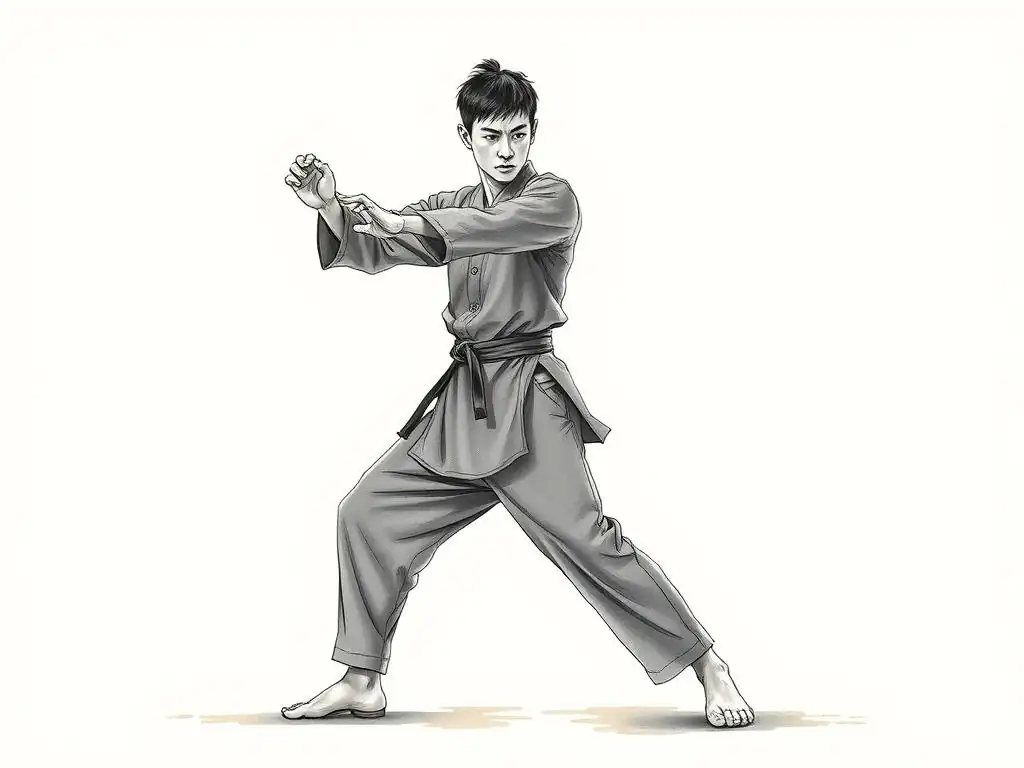
Beom Seogi, or Tiger Stance, is a compact, agile stance where the majority of the weight rests on the back leg, similar to Dwit Kubi, but with a different foot configuration and higher center of gravity. In Beom Seogi, the front foot rests lightly on the ball of the foot, with the heel lifted off the ground. The back foot is angled outwards, typically around 30 degrees, and supports 80-90% of the body's weight. The distance between the feet is relatively short, perhaps one to one and a half shoulder-widths front-to-back.
Both knees are bent, bringing the hips down and forward slightly. This stance is designed for quick, explosive movements, allowing for rapid shifts forward or backward, and is often used before or after kicking techniques. It appears in higher-level Poomsae forms like Koryo and Keumgang.
The power generation from Beom Seogi comes from its spring-like readiness. With the weight primarily on the bent back leg and the front foot ready to push off, the practitioner can launch forward quickly for an attack or retreat rapidly for defense. The compact nature also makes it useful in close-quarters situations. While less stable than Ap Kubi or Dwit Kubi for static blocking, its strength lies in its dynamic potential. Taekwondo stance training techniques for Beom Seogi focus on building balance on the back leg and developing the explosive power needed for quick transitions.
Beom Seogi: Maintaining Balance and Generating Power
Maintaining balance in Beom Seogi is challenging due to the majority of weight being on a single leg and the front heel being lifted. The key is to keep the core engaged and the body weight centered over the back foot. The front foot, though lightly placed, acts as a stabilizer; pressing the ball of the foot into the ground helps maintain balance.
A common error is allowing the front heel to drop or putting too much weight on the front foot, which negates the purpose of the stance. The back knee must be bent sufficiently to lower the center of gravity and provide a strong base.
Generating power from Beom Seogi relies on the rapid extension of the back leg and the push-off from the front foot (or the ground if the front foot lifts completely for a kick). This requires strong leg muscles and good coordination. The transition from Beom Seogi into a technique is where the power is unleashed.
For example, stepping forward into an Ap Kubi or launching a front kick directly from Beom Seogi utilizes the stored energy in the bent back leg. Effective Taekwondo stance training techniques for Beom Seogi include holding the stance for extended periods to build endurance, practicing slow, controlled transitions into and out of the stance, and executing techniques (like punches or kicks) immediately after stepping into or from Beom Seogi to train the explosive power release.
Juchum Seogi (Horse Riding Stance): Building Core Strength and Stability
Juchum Seogi, or Horse Riding Stance, is a wide, symmetrical stance characterized by the feet being spread significantly wider than shoulder-width, typically two to two and a half shoulder-widths apart. Both feet point straight forward or slightly angled inwards (no more than 15 degrees). The knees are deeply bent outwards, so the thighs are as close to parallel to the floor as possible, mimicking the posture of riding a horse.
The weight is evenly distributed (50/50) between both legs, and the torso is held upright, facing directly forward. This stance is a fundamental position for practicing core strength, developing powerful side punches (Yep Jireugi), and building endurance in the lower body. It is introduced early in Taekwondo training and appears in forms like Taegeuk Sa Jang and Pal Jang.
Juchum Seogi is less about mobility and more about rooted stability and isometric strength. Holding this deep stance builds tremendous strength in the quadriceps, hamstrings, and glutes, as well as the core muscles needed to maintain an upright posture. It is an excellent base for delivering powerful techniques laterally, such as side punches or ridge hand strikes (Sonnal Deung Chigi).
While not used for extensive travel within a form, its brief appearances often require significant power generation from a static, low base. Consistent practice of Juchum Seogi is a key component of effective Taekwondo stance training techniques for developing a strong, stable lower body foundation that benefits all other stances and techniques.
Juchum Seogi: Proper Form and Strengthening Exercises
Proper form in Juchum Seogi is critical to avoid injury and maximize training benefits. The feet should be wide enough that the shins are relatively vertical when the knees are deeply bent. The knees must track directly over the feet, not collapsing inwards.
The back should be kept straight, and the shoulders relaxed and down. A common error is not bending the knees deeply enough, which reduces the stance's effectiveness for strength building and power generation. Another is leaning forward, which puts undue strain on the lower back and compromises the upright posture required for many techniques executed from this stance.
Strengthening exercises specifically for Juchum Seogi primarily involve holding the stance for increasing durations. Beginners might start with holding for 30 seconds, gradually increasing to several minutes. Adding dynamic elements, such as executing multiple side punches (Yep Jireugi) or middle blocks (Momtong Makgi) while holding the deep stance, further builds strength and endurance. Some Taekwondo stance training techniques incorporate walking in Juchum Seogi (Juchum Seogi Robo Geogi), moving sideways while maintaining the low posture, which improves leg strength and lateral mobility. These exercises are foundational for developing the powerful, stable base that Juchum Seogi provides.
Kkoa Seogi (Twisted Stance): Mastering the Art of Balance and Control
Kkoa Seogi, or Twisted Stance, is a dynamic stance used primarily for transitioning, setting up specific techniques, or momentarily shifting weight. It involves crossing one foot behind or in front of the other, with the weight predominantly on the supporting leg. There are variations, such as Dwit Kkoa Seogi (rear twisted stance) where one foot crosses behind the other, and Ap Kkoa Seogi (front twisted stance) where one foot crosses in front.
The feet are relatively close together, and the body is often coiled, preparing for an explosive movement. This stance requires significant balance and control and is seen in higher-level Poomsae forms like Koryo and Keumgang.
The purpose of Kkoa Seogi is often to load weight onto one leg while freeing the other for a technique, or to create torque in the body for a powerful rotational movement. For example, it might be used before a spinning kick or a jump. It is a stance of transition and preparation rather than a static fighting stance. Mastering Kkoa Seogi is a testament to a practitioner's balance and body control, crucial elements developed through advanced Taekwondo stance training techniques.
Kkoa Seogi: Applications and Drills
Kkoa Seogi has specific applications in Poomsae. In Koryo Poomsae, for instance, Dwit Kkoa Seogi is used before executing a jump front kick (Twimyeo Ap Chagi). The stance allows the practitioner to coil their body and load weight onto the supporting leg before launching into the air. Ap Kkoa Seogi might be used to set up a powerful turning punch or block. The stance requires the practitioner to maintain balance on a relatively small base while the body is twisted.
Drills for Kkoa Seogi focus heavily on balance and coordination. Practicing stepping into and holding the stance for short periods helps build stability on one leg. Incorporating slow, controlled twists of the torso while in Kkoa Seogi can improve core control and prepare the body for rotational power.
A key Taekwondo stance training technique for Kkoa Seogi involves practicing the specific transition into the stance and the subsequent technique repeatedly, focusing on maintaining balance and control throughout the movement. For example, practicing the sequence of steps leading into Dwit Kkoa Seogi and the subsequent jump front kick from Koryo Poomsae, initially slowly and then gradually increasing speed, is essential for mastering its application.
Taekwondo Stance Training Techniques for Poomsae Improvement
Developing Balance and Stability: Essential Drills for Taekwondo Stances
Developing exceptional balance and stability is non-negotiable for mastering Taekwondo stances and excelling in Poomsae. Unshakeable balance allows for seamless transitions between stances, enables the generation of maximum power from a stable base, and prevents wobbling or falling during complex movements. Poor balance not only looks unpolished but also significantly reduces the effectiveness and safety of techniques. A wobbly stance compromises the kinetic chain, preventing the efficient transfer of power from the ground up. Therefore, integrating specific balance training exercises into regular Taekwondo stance training techniques is vital for practitioners at all levels.
Effective balance drills can be simple yet profoundly impactful. Practicing standing on one leg for extended periods, both with eyes open and closed, challenges proprioception and strengthens stabilizing muscles in the ankles, knees, and hips. Incorporating slight movements, like slow leg raises or arm circles, while standing on one leg further enhances balance control.
Another useful drill involves stepping into various Taekwondo stances (Ap Seogi, Ap Kubi, Dwit Kubi, Beom Seogi) and holding them perfectly still for increasing durations, focusing on maintaining correct weight distribution and alignment without swaying. Adding gentle pushes from a partner while holding these stances simulates real-world instability and trains the body to maintain its structure under external force, making these Taekwondo stance training techniques indispensable.
Balance Training Exercises: Enhancing Stability in All Taekwondo Stances
Beyond static holds, dynamic balance training is crucial. Walking heel-to-toe in a straight line, forward and backward, improves balance and coordination. Incorporating balance beams or unstable surfaces (like balance pads or Bosu balls) into training can significantly challenge and improve balance, forcing smaller stabilizing muscles to engage. For Taekwondo-specific application, practicing transitions between stances slowly and deliberately, focusing on maintaining perfect balance at each point, is highly effective. For example, smoothly transitioning from Ap Seogi to Ap Kubi, or from Dwit Kubi to Ap Seogi, while ensuring the weight shift is controlled and the body remains centered.
Another effective method involves performing basic techniques, such as punches or blocks, while holding a challenging stance like Dwit Kubi or Beom Seogi, without losing posture or balance. This simulates the demands of Poomsae, where techniques must be executed from specific, stable stances. Practicing single-leg stances combined with simple arm movements or gentle turns also enhances balance control relevant to Poomsae sequences. By consistently incorporating these balance training exercises into their regimen, practitioners can build the unshakeable foundation necessary for executing all Taekwondo stance training techniques with precision and stability, leading to significantly improved Poomsae performance.
Strengthening Lower Body Muscles for Powerful Taekwondo Stances
The lower body – the legs and hips – is the engine of Taekwondo stances. Strong quadriceps, hamstrings, glutes, and calf muscles are essential for holding deep stances like Ap Kubi or Juchum Seogi for extended periods, generating explosive power for techniques launched from these stances, and maintaining stability during rapid transitions. Weak lower body muscles lead to stances that are too high, collapse under pressure, or fatigue quickly, severely limiting a practitioner's ability to perform Poomsae effectively. Therefore, targeted strength training is a vital component of comprehensive Taekwondo stance training techniques.
Basic bodyweight exercises form an excellent starting point for lower body strengthening relevant to Taekwondo stances. Squats and lunges mimic the bending action required in Ap Kubi and Ap Seogi, building strength in the quads and glutes. Calf raises strengthen the muscles used for balance and power generation, especially in stances like Beom Seogi where the heel is lifted.
Wall sits are particularly effective for building isometric strength endurance in the thighs, directly benefiting the ability to hold deep Juchum Seogi or Ap Kubi stances. Incorporating these exercises into a regular training schedule, perhaps 2-3 times per week, provides the muscular foundation necessary for executing powerful and stable Taekwondo stance training techniques.
Targeted Strength Training for Increased Stance Stability and Power
To specifically enhance the strength required for Taekwondo stances and maximize power output in Poomsae, more targeted exercises can be included. Step-ups onto a box or bench strengthen the legs and hips, mimicking the action of stepping into deep stances. Single-leg squats or pistol squats (progressing from assisted versions) build significant unilateral leg strength and balance, crucial for stances like Dwit Kubi and Beom Seogi where most weight is on one leg. Romanian deadlifts or good mornings strengthen the hamstrings and glutes, which are vital for the powerful hip extension used in many techniques launched from a solid stance.
Weight training, under proper guidance, can further enhance lower body power. Exercises like barbell squats, deadlifts, and leg presses build maximal strength, which translates to greater potential power generation from stances.
Plyometric exercises, such as jump squats, box jumps, and lunges with hops, train explosive power, improving the speed and force with which practitioners can move into and out of stances and execute techniques. Combining these targeted strength and power exercises with specific Taekwondo stance training techniques ensures that practitioners develop not only the correct form but also the physical capability to maintain it and generate maximum power from every stance.
Improving Flexibility and Range of Motion for Optimal Taekwondo Stance Execution
Flexibility and range of motion in the hips, knees, and ankles are critical for achieving the correct depth, length, and alignment in Taekwondo stances. Tight hips can prevent achieving the required outward angle in Dwit Kubi or the depth in Ap Kubi. Limited ankle flexibility can make it difficult to keep the shin vertical in a deep Ap Kubi or Juchum Seogi. Insufficient flexibility compromises the structure of the stance, leading to incorrect weight distribution, reduced stability, and increased risk of injury. Therefore, incorporating flexibility exercises is an indispensable part of effective Taekwondo stance training techniques.
Regular stretching helps increase the range of motion necessary for proper stance execution. Hip flexor stretches, hamstring stretches, and quadriceps stretches improve the flexibility of the major leg muscles, allowing for deeper bends and longer stances. Ankle mobility exercises, such as ankle rotations and calf stretches, ensure the ankle joint can accommodate the angles required in various stances. Consistent flexibility training, perhaps daily or before and after Taekwondo practice, helps the body comfortably achieve and maintain the optimal structure for each stance, enhancing both performance and safety.
Flexibility Exercises: Enhancing Range of Motion in Key Taekwondo Stances
Specific flexibility exercises can target the ranges of motion needed for particular Taekwondo stances. For improving Ap Kubi Seogi depth and length, lunges with a deep stretch in the hip flexor of the back leg are beneficial. Holding a deep squat position (similar to Juchum Seogi but potentially deeper if comfortable) helps improve hip and ankle flexibility needed for low stances. Butterfly stretches improve hip external rotation, which can help with the outward angle of the back foot in Ap Seogi, Ap Kubi, and Dwit Kubi, and the outward knee bend in Juchum Seogi.
Dynamic stretching, performed before training, can also improve range of motion and prepare the muscles for the demands of Taekwondo stance training techniques. Leg swings (forward/backward and side-to-side) improve hip mobility. Performing slow, controlled movements mimicking the transitions between stances, gradually increasing the depth and range of motion, is another effective dynamic flexibility approach. By actively working on flexibility, practitioners can unlock their full potential in executing Taekwondo stances correctly and efficiently, leading to more powerful techniques and fluid Poomsae performance.
Correcting Common Stance Errors: A Step-by-Step Guide
Identifying and correcting common errors is a crucial step in mastering Taekwondo stances. Even experienced practitioners can develop subtle bad habits over time. Common errors include stances that are too narrow or too wide, incorrect weight distribution, poor body alignment (leaning too far forward or backward), and improper foot angles. These errors compromise the stability, power, and defensive capabilities of the stance. A systematic approach to identifying and fixing these issues is essential for effective Taekwondo stance training techniques.
The first step in correcting errors is self-awareness. Practicing in front of a mirror allows practitioners to visually check their stance structure against the ideal form. Recording oneself performing Poomsae or specific stance transitions can also reveal errors that are not apparent in the moment. Partner feedback is invaluable; having a training partner or instructor observe and provide specific corrections is often the most effective way to identify subtle flaws in posture, alignment, or weight distribution. Once an error is identified, dedicated, repetitive practice is required to replace the incorrect habit with the correct technique.
Identifying and Fixing Posture Problems in Taekwondo Stances
Posture problems are particularly detrimental to stance effectiveness. Leaning forward or backward shifts the center of gravity incorrectly, reducing stability and hindering power generation. Rounded shoulders or a slumped back affect the alignment of the entire kinetic chain. In Dwit Kubi, failing to turn the hips and shoulders sideways compromises the defensive profile. Identifying these posture problems requires checking body alignment relative to the feet and the intended direction. For example, in Ap Kubi, ensuring the shoulders are stacked directly over the hips, not forward of the front knee or behind the back heel.
Fixing posture problems involves conscious effort and targeted drills. Practicing stances while focusing specifically on keeping the back straight and shoulders relaxed can help. Using visual cues, such as imagining a string pulling the crown of the head upwards, can promote an upright posture.
For Dwit Kubi, intentionally over-rotating the hips and shoulders sideways initially can help practitioners feel the correct alignment, gradually refining it. Core strengthening exercises also contribute significantly to maintaining correct posture in all stances. By diligently applying these corrective Taekwondo stance training techniques, practitioners can refine their stances, making them stronger, more stable, and better aligned for Poomsae performance.
Applying Taekwondo Stance Techniques to Specific Poomsae Forms
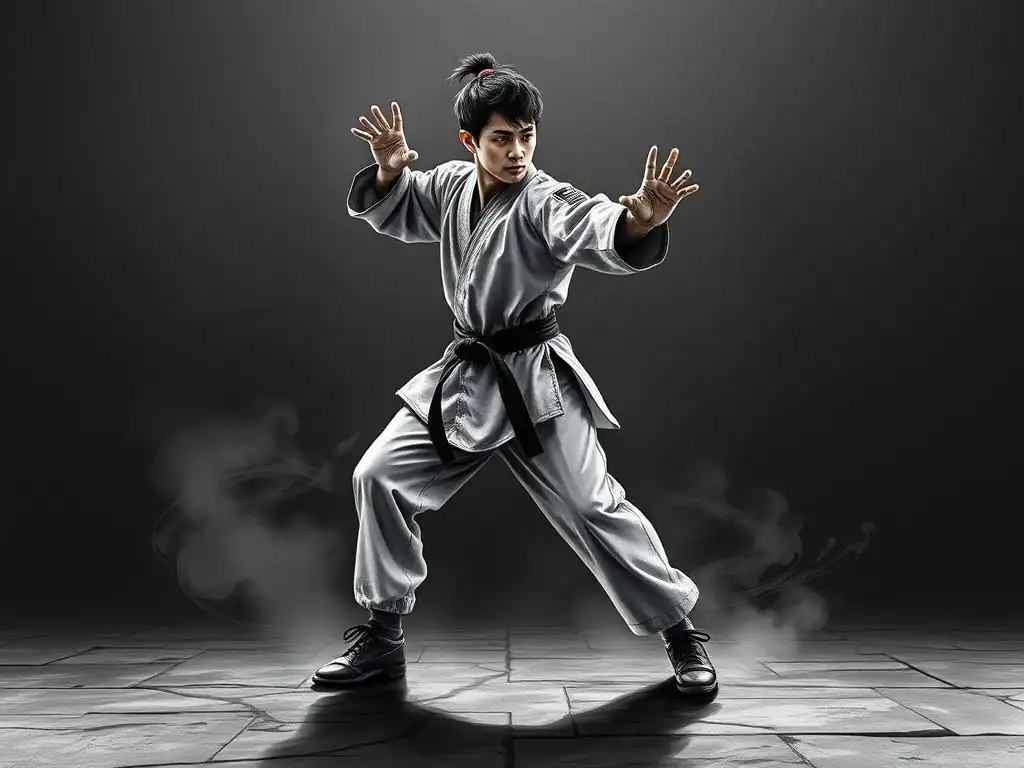
Integrating Correct Stances into Taegeuk Poomsae (1-8)
The Taegeuk series of Poomsae (Taegeuk Il Jang through Taegeuk Pal Jang) introduces and reinforces the fundamental Taekwondo stances. These forms are specifically designed to build a practitioner's understanding and execution of core techniques and stances in a flowing sequence. Correctly integrating stances into these forms is paramount, as the techniques are often simple representations of fundamental movements, and their effectiveness relies heavily on the underlying stance. For example, the numerous Ap Kubi Seogi and Ap Seogi movements in Taegeuk Il Jang and Ee Jang serve to solidify these basic positions before more complex stances are introduced.
Practicing Taegeuk Poomsae with a conscious focus on stance precision is a primary method for integrating correct Taekwondo stance training techniques. It's not enough to just move through the motions; each stance must be deliberate, with correct foot placement, depth, alignment, and weight distribution held momentarily before the next movement. Initially, practicing slowly, pausing in each stance to check form, is beneficial. As proficiency increases, the focus shifts to maintaining perfect stance integrity even during faster transitions, ensuring that the power generated by the stances is effectively channeled into the techniques performed within the Poomsae.
Analyzing Stance Requirements in Taegeuk Il Jang to Taegeuk Pal Jang
Each Taegeuk Poomsae builds upon the previous one, introducing new techniques and stances or applying familiar ones in more complex sequences.
- Taegeuk Il Jang: Heavily relies on Ap Seogi and Ap Kubi Seogi. Key movements like the opening Ap Kubi Seogi with Arae Makgi (down block) and subsequent Momtong Jireugi (middle punch) demand a solid long stance. Ap Seogi is used for simple movements and transitions.
- Taegeuk Ee Jang: Introduces Dwit Kubi Seogi, notably with Sonnal Momtong Makgi (knife hand middle block). Mastering the 'L' shape and weight distribution in Dwit Kubi is essential here. Ap Kubi is also used for techniques like the high punch (Eolgul Jireugi).
- Taegeuk Sam Jang: Continues to utilize Ap Seogi, Ap Kubi, and Dwit Kubi. Features sequences requiring quick transitions between these stances, emphasizing the need for fluid Taekwondo stance training techniques. Juchum Seogi is introduced with Yep Jireugi (side punch).
- Taegeuk Sa Jang: Introduces the focus of balance in stances like Dwit Kubi during sequences involving side kicks (Yeop Chagi). Ap Kubi and Ap Seogi are used in more dynamic combinations.
- Taegeuk O Jang: Incorporates more complex sequences and transitions. Introduces Dwit Gowa Seogi (rear crossing stance) before a jump, highlighting the importance of balance in transitional stances.
- Taegeuk Yuk Jang: Features movements requiring strong balance in Ap Kubi and Dwit Kubi during techniques like circular blocks (Dollyeo Makgi).
- Taegeuk Chil Jang: Introduces Beom Seogi (Tiger Stance) and emphasizes balance and control in this compact position before techniques like Pyojeok Chigi (target strike). Also includes more complex applications of Ap Kubi and Dwit Kubi.
- Taegeuk Pal Jang: The culmination of the Taegeuk series, featuring combinations of all previously learned stances and techniques. Requires strong execution of Ap Kubi, Dwit Kubi, Ap Seogi, Juchum Seogi, and Beom Seogi in dynamic sequences.
Analyzing these forms reveals a clear progression in the application of Taekwondo stance training techniques, moving from basic static positions to complex dynamic transitions, underscoring the necessity of mastering each stance individually and in combination.
Advanced Stance Application in Black Belt Poomsae (Koryo, Keumgang, Taebaek, Pyongwon, Sipjin, Jitae, Cheonkwon, Hansu, Ilyeo)
The Black Belt Poomsae introduce a higher level of complexity, requiring not just correct execution of fundamental stances but also nuanced application, faster transitions, and the integration of more advanced or less common stances. Forms like Koryo, Keumgang, and Taebaek demand a deeper understanding of how stances facilitate explosive power, intricate balance, and rapid changes in direction.
Stances like Beom Seogi and Kkoa Seogi, introduced in the later Taegeuks, become more prevalent and are used in dynamic sequences that test the practitioner's control and stability under pressure. Mastery of these forms relies heavily on advanced Taekwondo stance training techniques that go beyond basic form to focus on the feeling and intent behind each stance.
In these advanced Poomsae, stances are often held for shorter durations or are part of complex transitional sequences, requiring immediate precision upon entry. For example, the rapid shifts between Ap Kubi and Dwit Kubi in forms like Keumgang demand highly refined balance and weight transfer.
The introduction of stances like Tong Milgi (Mountain Pushing Stance) in Koryo or Keumgang (Diamond Stance) in Keumgang, while often brief, requires specific body alignment and power generation. These forms challenge the practitioner to integrate all aspects of Taekwondo stance training techniques – strength, flexibility, balance, and precise alignment – into a seamless, powerful performance.
Stance Variations and Their Importance in Higher-Level Poomsae Forms
Higher-level Poomsae often feature variations of basic stances or introduce entirely new ones, each serving a specific purpose.
- Koryo: Introduces Tong Milgi Seogi (Mountain Pushing Stance), a unique stance used for a specific defensive technique. It also heavily utilizes Ap Kubi, Dwit Kubi, Ap Seogi, and features dynamic Beom Seogi and Kkoa Seogi sequences leading into jumps or powerful techniques.
- Keumgang: Features Keumgang Seogi (Diamond Stance), a powerful, stable stance used for the iconic mountain block (Santul Makgi). It also demands mastery of Ap Kubi and Dwit Kubi in powerful, sweeping movements.
- Taebaek: Requires strong Ap Kubi and Dwit Kubi, often in rapid-fire sequences. Features stances like Hakdari Seogi (Crane Stance) requiring significant single-leg balance.
- Pyongwon: Introduces stances like Palja Seogi (Open Ready Stance) and requires very precise execution of fundamental stances in powerful, rooted sequences.
- Sipjin: Known for its complexity and multiple changes of direction, demanding highly adaptable and stable Ap Kubi and Dwit Kubi stances.
- Jitae: Features dynamic movements and requires strong, low Ap Kubi and Dwit Kubi stances throughout.
- Cheonkwon: Includes movements with high stances and low stances, requiring versatility. Features stances like Moa Seogi (Closed Stance) and requires perfect balance.
- Hansu: Known for its emphasis on fluid transitions and sophisticated footwork, demanding seamless movement through Ap Kubi, Dwit Kubi, and other stances.
- Il Yeo: The final form, emphasizing spiritual control and precision, requiring perfect execution of all fundamental and advanced stances with deep focus.
Understanding the specific requirements and subtle variations of stances within each Black Belt Poomsae is crucial for effective training. Advanced Taekwondo stance training techniques for these forms involve breaking down complex sequences, practicing the transitions between specific stances repeatedly, and focusing on the precise timing of weight shifts and body alignment that each form demands. This detailed approach ensures that the practitioner's stances not only look correct but also functionally support the sophisticated techniques of the higher-level Poomsae.
Advanced Taekwondo Stance Training for Poomsae Competition
The Role of Stance in Generating Power and Speed in Poomsae
In the context of Poomsae competition, the role of the stance extends beyond basic stability to actively contributing to the power and speed of techniques. Judges evaluate Poomsae based on criteria including power, speed, rhythm, and technical accuracy. A weak or unstable stance compromises all of these.
The stance is the launching pad; a solid, correctly aligned stance allows the practitioner to generate maximum force from the ground through the body, resulting in powerful strikes and blocks. Similarly, efficient transitions between stances, facilitated by precise footwork and controlled weight shifts, are key to executing techniques quickly and maintaining the required rhythm of the form. Advanced Taekwondo stance training techniques for competition focus on optimizing these aspects.
Consider a powerful front kick (Ap Chagi) executed within a Poomsae. While the kick itself is a leg technique, its power is significantly amplified if launched from a stable Ap Kubi or Beom Seogi, allowing the practitioner to drive their weight behind the kick. Conversely, attempting the kick from a wobbly or improperly aligned stance reduces power and can disrupt the flow of the form.
Speed in Poomsae is not just about moving limbs quickly, but about minimizing wasted motion and transitioning efficiently between movements. Stances that are precise and effortless to enter and exit enable faster overall execution of the Poomsae sequence. Therefore, dedicated Taekwondo stance training techniques aimed at maximizing power generation and minimizing transition time are critical for competitive success.
Stance Variations for Different Poomsae Techniques
Within the strict structure of Poomsae, there are often subtle variations in stance execution depending on the specific technique being performed from it. While the fundamental structure of a stance remains constant (e.g., Ap Kubi is always a long, forward-weighted stance), the exact depth, length, or angle might be slightly adjusted to optimize the subsequent technique. For example, when executing a powerful rising block (Chookyeo Makgi) from Ap Kubi, the weight distribution might be slightly more forward to facilitate the upward movement of the arm, compared to executing a straight punch from the same stance.
These subtle variations are not arbitrary but are refined through extensive practice and understanding of body mechanics. Advanced Taekwondo stance training techniques for competition include practicing specific stance-technique combinations repeatedly, focusing on how the stance structure facilitates the optimal execution of the technique. This might involve slightly adjusting the stance length to maximize hip rotation for a punch or modifying the weight distribution to allow for a faster kick. Recognizing and implementing these nuanced variations is part of what distinguishes a good Poomsae performance from an exceptional one, contributing to both power and technical accuracy scores.
Fine-Tuning Stance Execution for Poomsae Scoring
Poomsae competition judging is meticulous, and stance execution is heavily scrutinized. Judges look for:
- Correct Structure: Is the stance the correct length and width? Are the feet angled correctly? Are the knees bent properly?
- Weight Distribution: Is the weight distributed according to the requirements of the specific stance?
- Balance and Stability: Is the practitioner stable in the stance? Is there any wobbling or swaying?
- Alignment: Is the body (hips, shoulders, torso) correctly aligned for the stance and subsequent technique?
- Depth and Power: Is the stance deep enough to generate power? Does the stance look and feel powerful?
- Transitions: Are the transitions into and out of stances smooth, controlled, and timely?
[ ] Check Ap Kubi depth and length
[ ] Verify Dwit Kubi 'L' shape and weight distribution
[ ] Practice Juchum Seogi hold time
[ ] Refine Beom Seogi balance on back leg
[ ] Ensure smooth transitions between Ap Kubi and Dwit Kubi
[ ] Check foot angles in all stances
[ ] Practice maintaining upright posture in all stances
Fine-tuning Taekwondo stance training techniques for competition involves focusing on these specific scoring criteria. Using video analysis to review one's Poomsae and identify minor flaws in stance execution is highly effective. Practicing specific sections of Poomsae that involve challenging stances or transitions repeatedly, with a focus on achieving perfect form, is essential. Receiving detailed feedback from experienced instructors or judges can highlight areas needing improvement. Ultimately, achieving high scores in Poomsae competition requires that every stance is not just correctly performed but executed with precision, power, and unwavering stability, demonstrating complete mastery of the fundamental Taekwondo stance training techniques.
Conclusion: The Path to Taekwondo Poomsae Excellence Through Stance Mastery
Continuous Practice and Refinement: The Key to Unshakeable Taekwondo Stances
Mastering Taekwondo stances is not a destination but a continuous journey of practice and refinement. Even after years of training, practitioners can always improve the depth, stability, alignment, and power generation of their stances. The body changes, and the demands of more advanced techniques and forms require constant attention to the foundational elements. Achieving truly unshakeable Taekwondo stances comes from dedicated, consistent practice, focusing not just on performing techniques but on the quality of the stance from which those techniques originate and to which the body returns. This ongoing refinement is what separates good practitioners from great ones.
Establishing a routine that includes specific Taekwondo stance training techniques is crucial. This might involve dedicating a portion of each training session to:
- Holding fundamental stances for extended periods.
- Practicing stepping into and out of stances precisely.
- Performing balance and strengthening drills.
- Analyzing and correcting stance errors using mirrors or video.
By treating stance training as a core discipline, rather than just a byproduct of practicing forms, practitioners can systematically build a stronger, more stable foundation. This dedicated effort ensures that stances remain sharp, powerful, and reliable, even under the pressure of performance or competition.
Embracing the Journey of Stance Improvement in Taekwondo Training
Embracing the journey of stance improvement means recognizing that perfecting Taekwondo stance training techniques is an ongoing process that enhances every aspect of one's Taekwondo practice. It requires patience, persistence, and attention to detail. The benefits extend beyond Poomsae performance to sparring, self-defense, and overall physical fitness and body control. A strong, balanced stance improves agility, power, and resilience.
Instead of viewing stance training as tedious fundamental work, practitioners should see it as an opportunity for continuous growth and a direct investment in their overall Taekwondo proficiency. Celebrating small improvements – holding a Dwit Kubi slightly longer, achieving better depth in Ap Kubi, transitioning more smoothly between stances – helps maintain motivation. Seeking guidance from instructors and training partners, and actively applying corrections, accelerates progress. By embracing the commitment to continuous practice and refinement of Taekwondo stance training techniques, practitioners lay an unshakeable foundation for achieving excellence in Poomsae and throughout their entire Taekwondo journey.
Frequently Asked Questions
What is the importance of stance training in Taekwondo?
Stance training is fundamental to Taekwondo because it provides the foundation for all other techniques. A strong stance allows for power generation, balance, and effective movement.
How do Taekwondo stances relate to Poomsae performance?
Poomsae (forms) heavily relies on correct stance execution. Mastering stances ensures proper alignment, power transfer, and allows for a fluid and accurate performance.
What are some common mistakes beginners make with Taekwondo stances?
Beginners often struggle with weight distribution, leading to instability. Common errors include incorrect foot placement and failing to maintain a low center of gravity.
How often should I practice Taekwondo stances to improve?
Consistent practice is key. Aim for at least 15-30 minutes of dedicated stance training several times a week to build strength and muscle memory.
Besides Poomsae, how do stances benefit self-defense applications?
Solid stances provide a stable base for blocking, striking, and evading attacks. They allow for quick transitions and efficient power delivery in self-defense scenarios.
Final Reflection: The Root of Unwavering Strength
The journey through Taekwondo stance training techniques reveals more than just physical positioning; it unveils the very essence of balance, power, and unwavering focus. In a world often characterized by fleeting trends and superficial achievements, the dedication to mastering these foundational elements offers a profound lesson in perseverance and the pursuit of true excellence. The principles learned on the dojang mat extend far beyond its boundaries, influencing our approach to challenges and shaping our inner resilience.
The impact of disciplined Taekwondo stance training resonates deeply, not only within the martial arts community but also in the broader cultural landscape. It serves as a powerful reminder that true mastery stems from a relentless commitment to the fundamentals, a principle applicable to any field of endeavor. The journey of a thousand miles begins with a single step.
This ancient proverb encapsulates the spirit of Taekwondo stance training, where each perfectly executed stance represents a step towards greater strength, both physical and mental.
Now, as you step away from this exploration of Taekwondo stance training techniques, consider how you can apply these principles to your own life. Embrace the challenge of mastering the fundamentals, cultivate unwavering focus, and build an unshakeable foundation for your own personal journey. Let the lessons learned in the dojang inspire you to stand tall, face adversity with courage, and strive for excellence in all that you do.
Elevate Your Poomsae: Embrace the Unshakeable Foundation!
Thank you for diving into the world of Taekwondo stances! We hope you've gained valuable insights into how mastering these fundamentals can dramatically improve your poomsae performance. Now, it's time to put that knowledge into action.
Here's how you can continue your journey:
- Prioritize consistent practice: Dedicate even just 15 minutes each day to perfecting your stances. Focus on proper alignment and balance, and feel the difference it makes in your power and precision.
- Record a video of yourself performing your favorite poomsae and analyze your stances. Identify areas for improvement and commit to refining your technique.
- Share your progress! Post a short clip on social media using #MartialArtsMastery and tag us – we’d love to see your dedication and offer feedback.
Ready to transform your foundation and take your Poomsae to the next level?