
Ageless Bunkai: Efficient Kata Applications for Senior Karateka

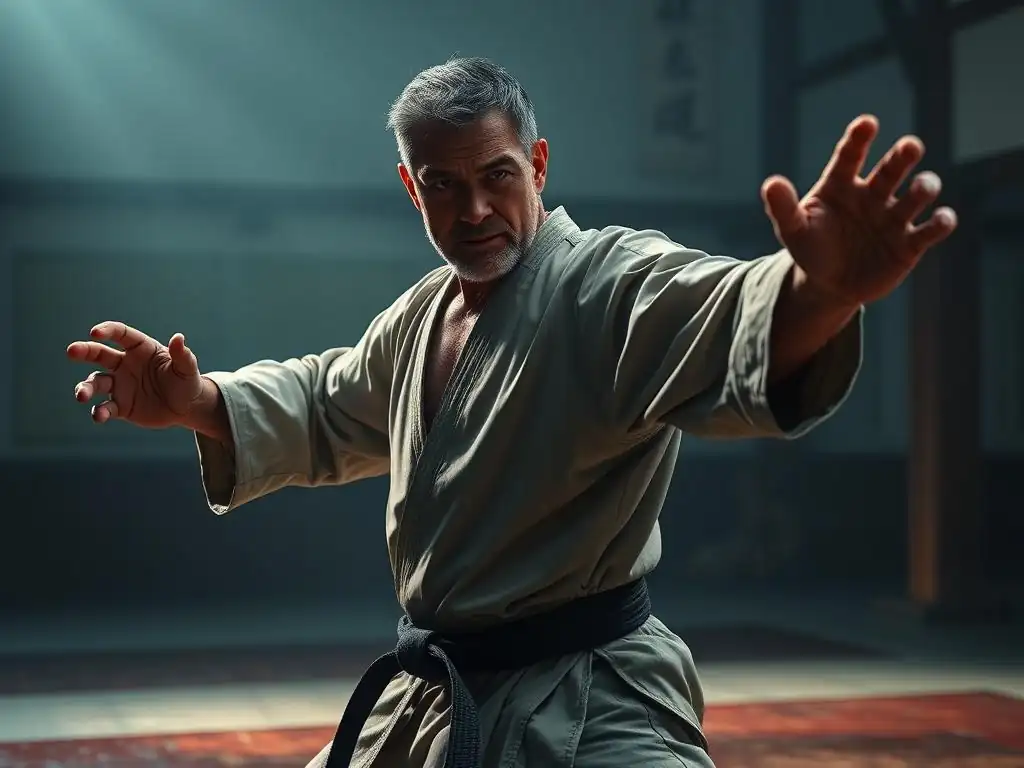
Welcome to Martial Arts Mastery, your definitive resource for exploring the depths of combat traditions! Ever wondered how the elegant movements of kata translate into real-world self-defense, especially as we age? Then prepare to delve into our latest exploration: a Senior Karate kata bunkai breakdown. Uncover the practical, efficient applications hidden within age-old forms and unlock a new level of understanding. Your journey to martial arts mastery starts here – read on to discover the secrets!
- Introduction: Adapting Karate Kata Bunkai for Senior Practitioners
- Senior Karate Kata Bunkai Breakdown: Prioritizing Safety and Effectiveness
- Key Principles of Ageless Bunkai: Practical Applications
- Kata Selection for Senior Karateka: Choosing Wisely
- Common Challenges in Senior Karate Kata Bunkai and How to Overcome Them
- Bunkai Drills and Training Methods for Senior Karateka
- The Mental Aspect of Ageless Bunkai: Strategy and Awareness
- Case Studies: Senior Karateka Successfully Applying Ageless Bunkai
- Conclusion: Embracing Ageless Bunkai for Lifelong Karate Mastery
-
Frequently Asked Questions
- What is "bunkai" and why is it important for senior Karate practitioners?
- How does this "Ageless Bunkai" approach differ from traditional bunkai interpretations?
- What specific benefits can senior Karateka expect from focusing on kata bunkai?
- Does the "Ageless Bunkai" method require extensive prior Karate experience?
- Where can I find more resources and training materials on "Ageless Bunkai" and Karate in general?
- Final Reflection: Embracing Ageless Wisdom Through Bunkai
- Uncover Hidden Power: Reimagine Your Kata!
Introduction: Adapting Karate Kata Bunkai for Senior Practitioners
Karate, a path of lifelong learning and self-improvement, offers profound benefits extending far beyond physical prowess. For senior practitioners, the journey continues, albeit with natural physiological changes that necessitate intelligent adaptation. Understanding and applying kata, the prearranged forms central to karate training, becomes a nuanced process. This article explores the concept of "Ageless Bunkai," focusing on efficient and practical applications of kata movements specifically tailored for senior karateka, emphasizing safety, effectiveness, and sustainability.
Understanding the Unique Needs of Senior Karateka
As practitioners age, the body undergoes natural changes affecting strength, flexibility, balance, and reaction time. Muscle mass can decrease by approximately 3-8% per decade after age 30, accelerating after 60. Joint mobility may lessen, and recovery times lengthen. These factors directly impact the execution of traditional karate techniques, particularly the dynamic, high-impact movements sometimes emphasized in basic training or competitive sport karate. Recognizing these physiological realities is the first step in developing a truly effective approach to Senior Karate kata bunkai breakdown.
Beyond physical changes, senior karateka often bring decades of experience, discipline, and tactical understanding. Their training goals may shift from competitive performance to health, self-defense, and the deeper philosophical aspects of the art. Therefore, bunkai adapted for this demographic should leverage their wisdom and experience while mitigating physical limitations. The focus moves from raw power and speed to precision, timing, leverage, and strategic thinking, making the Senior Karate kata bunkai breakdown a study in intelligent movement.
The Importance of Efficient Bunkai for Aging Martial Artists
Efficient bunkai is not merely about simplifying techniques; it's about maximizing effect with minimal effort, a principle valuable at any age but crucial for senior practitioners. Traditional kata often contain movements applicable to various self-defense scenarios, from strikes and blocks to joint locks, throws, and restraints. For aging martial artists, selecting and applying these techniques efficiently ensures they remain capable of effective self-defense without risking injury.
Moreover, practicing kata and its applications (bunkai) provides significant physical and cognitive benefits essential for healthy aging. Regular practice improves balance, coordination, proprioception, and muscular endurance. The mental challenge of analyzing and applying bunkai enhances memory, concentration, and problem-solving skills. An intelligent Senior Karate kata bunkai breakdown keeps the mind sharp and the body engaged, fostering a sense of continued growth and achievement in the art.
Senior Karate Kata Bunkai Breakdown: Prioritizing Safety and Effectiveness
Adapting kata applications for senior practitioners requires a deliberate focus on safety and effectiveness. This means analyzing each movement within a kata not just for its potential power, but for its practical applicability considering reduced physical capacity and increased vulnerability to injury. A responsible Senior Karate kata bunkai breakdown prioritizes techniques that minimize stress on joints and connective tissues while still achieving a decisive outcome.
Effectiveness for senior karateka often lies in disrupting an attacker's balance, controlling their structure, or creating opportunities for escape, rather than relying solely on overwhelming force. This approach aligns well with the principles inherent in many traditional bunkai applications, which often involve joint manipulation, throws, or vital point strikes – techniques less reliant on brute strength and more on anatomical understanding and timing.
Modifying Techniques for Reduced Impact
Many traditional kata movements, such as high blocks (Jodan Age Uke) followed by powerful counter-punches, or deep stances requiring significant knee flexion, can be stressful on aging joints. Modifying these techniques involves adjusting range of motion, angle, and force application. For example, a high block might be executed with less upward travel, focusing instead on deflecting force or controlling the attacker's arm at a lower level. Strikes might prioritize vital points (like eyes, throat, groin, or nerve points) rather than relying on full-force body blows.
Consider the application of a gedan barai (downward block). Instead of a sweeping, high-impact block, a modified version might focus on deflecting or trapping an incoming leg attack with minimal joint stress, perhaps transitioning immediately into a balance disruption or control technique. The Senior Karate kata bunkai breakdown emphasizes using the body's structure and leverage, finding the path of least resistance to neutralize a threat, reducing the need for high-impact collisions.
Focusing on Joint Mobility and Stability
Maintaining healthy joints is paramount for senior karateka. Bunkai practice can be tailored to improve and maintain joint mobility and stability without exacerbating existing conditions. Techniques involving controlled movements, gentle joint manipulation (applied defensively or evasively), and stances that promote balance and stability are prioritized.
For instance, applications derived from movements like Shuto Uke (knife-hand block) often involve wrist or elbow control. Practicing these as part of a Senior Karate kata bunkai breakdown can improve wrist and elbow mobility and strength through controlled resistance exercises with a partner. Stances are often narrowed or raised slightly from their traditional deep forms to reduce strain on knees and hips while still providing a stable base for executing techniques, focusing on core engagement for stability rather than solely leg strength.
Key Principles of Ageless Bunkai: Practical Applications
Ageless Bunkai is built upon core principles that shift the emphasis from youthful athleticism to intelligent, sustainable application. These principles allow senior karateka to perform effective bunkai by leveraging experience and anatomical knowledge. Understanding these concepts is crucial for a meaningful Senior Karate kata bunkai breakdown.
Leverage over Strength: Maximizing Efficiency in Kata Applications
One of the most vital principles for senior karateka is prioritizing leverage over brute strength. An attacker's mass and power can be neutralized or even used against them by understanding biomechanics and applying leverage points. Many traditional bunkai applications inherently rely on leverage, such as joint locks, throws, and balance disruptions.
For example, the opening movement of many kata involves a block followed by a step and punch. In a Senior Karate kata bunkai breakdown, the block might transition into controlling the attacker's arm, using their forward momentum to apply an elbow lock or wrist twist. This requires minimal muscular force but significant understanding of joint mechanics. A small shift in body weight or angle can render an attacker's strength irrelevant, allowing a smaller, less powerful senior practitioner to control or escape a larger, stronger assailant.
Understanding Body Mechanics for Senior Karate Kata Bunkai
Effective bunkai at any age relies on sound body mechanics, but for seniors, it's non-negotiable. Proper alignment, weight distribution, and sequential body movement (connecting the ground through the legs, hips, core, and upper body) are essential for generating power and maintaining balance without undue strain.
Analyzing a kata movement like a front kick (Mae Geri) in a Senior Karate kata bunkai breakdown for self-defense involves more than just leg strength. It focuses on using hip drive, maintaining a stable base on the supporting leg, and retracting the leg quickly to avoid being grabbed. For senior practitioners, this might mean targeting lower points (knee, shin, groin) where less height is required, emphasizing chambering and retraction for speed and safety, and utilizing the kick to create distance or disrupt balance rather than solely as a knockout blow.
Adaptive Stance Work: Maintaining Balance and Control
Traditional karate stances can be deep and demanding. While maintaining some degree of rootedness is important, senior karateka often benefit from adapting stances for better balance and reduced joint stress. This doesn't mean abandoning strong stances entirely, but rather understanding how to achieve stability and mobility with less depth or width, or transitioning more fluidly between stances.
A common adaptation in Senior Karate kata bunkai breakdown is slightly raising the center of gravity in stances like Zenkutsu Dachi (front stance) or Kokutsu Dachi (back stance). The focus shifts to active engagement of leg muscles and core for stability, rather than relying solely on the deep structure. Practicing transitions between these adapted stances becomes critical for maintaining balance during dynamic applications like evading an attack or repositioning for a technique. Balance exercises, often integrated into warm-ups or cool-downs, are vital supportive training.
Kata Selection for Senior Karateka: Choosing Wisely
Not all kata are created equal in terms of physical demands and the nature of their applications. For senior karateka, selecting kata that align with their physical capabilities and training goals is an important part of the Ageless Bunkai approach. This doesn't mean avoiding challenging kata entirely, but perhaps prioritizing certain kata or focusing on specific aspects of others.
Considerations for Selecting Kata Based on Physical Abilities
When choosing kata, senior practitioners should consider factors like the prevalence of high stances, jumping techniques, rapid changes in direction, and techniques requiring extreme flexibility or dynamic joint movement. Kata with fewer high-impact elements and a greater emphasis on grounded movements, close-range techniques, and strategic positioning may be more suitable.
The complexity of the kata is another factor. While learning new kata is beneficial for cognitive health, focusing on a few core kata and deeply exploring their Senior Karate kata bunkai breakdown can be more rewarding and less physically taxing than constantly learning new forms. The goal is depth of understanding and practical applicability, not just breadth of repertoire.
Examples of Suitable Kata for Senior Practitioners: Heian Shodan, Bassai-Dai, Empi
Certain kata lend themselves well to adaptation for senior practitioners due to their structure and the nature of their core applications.
- Heian Shodan: Often the first kata taught, its movements are relatively simple and grounded. The Senior Karate kata bunkai breakdown for Heian Shodan can focus on fundamental blocks transitioning into controls or close-range strikes, and basic stances adapted for stability. Its simplicity allows for deep exploration of core defensive principles without complex footwork.
- Bassai-Dai: While longer and more complex than Heian Shodan, Bassai-Dai (To Penetrate a Fortress) contains many practical applications for breaking grips, evading, and striking from close range. Its bunkai often involves using hip rotation and body mechanics to generate power and overcome an opponent's strength. The kata's emphasis on overcoming obstacles makes its Senior Karate kata bunkai breakdown particularly relevant for self-defense scenarios where the senior practitioner might be at a physical disadvantage. Adaptations might involve reducing the height of jumps or focusing on the transitional movements for balance.
- Empi: Named after the swallow, Empi (Flying Swallow) involves upward movements and dynamic changes in level. While the more acrobatic elements might be modified (e.g., the jump is replaced with a step-up or level change), the kata contains excellent applications for striking upwards, breaking holds, and using body mechanics for evasive movement. The Senior Karate kata bunkai breakdown for Empi can emphasize using angles and timing to deal with different attack vectors, which is highly valuable for senior self-defense.
Common Challenges in Senior Karate Kata Bunkai and How to Overcome Them
Adapting kata bunkai for senior practitioners involves addressing common physical challenges head-on. While these challenges are real, they do not preclude effective bunkai practice; they simply require intelligent strategies and modifications.
Addressing Reduced Range of Motion
Reduced flexibility and range of motion in joints like hips, shoulders, and spine can limit the execution of large, sweeping movements or deep stances found in kata. This directly impacts the potential applications in a Senior Karate kata bunkai breakdown.
To overcome this, focus on the effective range of motion available. If a high block is difficult, explore its application as a middle block or an arm control at shoulder level. If deep stances are challenging, practice slightly higher stances that maintain structural integrity. Incorporate gentle, consistent stretching and mobility exercises into every training session, specifically targeting areas commonly affected by age. Partner drills can also help improve range of motion safely through controlled resistance.
Dealing with Joint Pain and Stiffness
Joint pain and stiffness are common issues that can make traditional kata practice uncomfortable or even harmful. High-impact techniques, sudden stops, and deep flexion/extension can exacerbate these conditions.
When performing Senior Karate kata bunkai breakdown, prioritize smooth, continuous movements over sharp, impactful ones. Use body weight and alignment to generate force rather than relying on sudden muscular contractions that jar the joints. If a particular kata movement or bunkai application causes pain, explore alternative interpretations or modifications that achieve the same defensive goal with less joint stress. Warm-ups should be thorough, including dynamic stretching and light cardio to prepare the joints. Listening to the body and knowing when to rest or modify is crucial.
Maintaining Power and Speed with Age
Natural muscle loss (sarcopenia) and slower nerve conduction can lead to decreased power and speed. While explosive power may diminish, effective bunkai for seniors relies on optimizing the power that is available and enhancing reactive speed through anticipation and timing.
In Senior Karate kata bunkai breakdown, power is generated through efficient use of the entire body – hip rotation, core engagement, and ground connection – rather than just isolated limb strength. Practice drills that focus on generating power through unified body movement. Speed can be maintained or even improved through reaction drills and focusing on the timing of the application relative to the attacker's movement. Anticipating common attacks and having pre-planned bunkai responses can make a senior practitioner appear faster than their physical speed might suggest. Consistent, focused practice helps maintain neurological pathways and muscle memory.
Bunkai Drills and Training Methods for Senior Karateka
Effective Senior Karate kata bunkai breakdown requires dedicated practice methods tailored to the needs of older practitioners. These drills should prioritize safety, controlled execution, and a clear understanding of the application's purpose.
Partner Drills for Safe and Effective Practice
Partner drills are invaluable for practicing bunkai in a dynamic context. For senior karateka, these drills should emphasize controlled movements and clear communication with the partner.
- Practice applications at reduced speed initially, focusing on correct body mechanics and leverage points.
- Partners should provide appropriate resistance, not excessive force.
- Drills can isolate specific kata sequences and their applications, such as practicing the bunkai for the first few movements of Heian Shodan repeatedly.
[ ] Practice Shuto Uke to wrist control application with partner, focusing on leverage.
[ ] Drill Gedan Barai to leg trap application, emphasizing balance disruption.
[ ] Rehearse Oi Tsuki counter-attack application, focusing on timing and hip snap.
These drills allow senior karateka to feel the application against resistance in a safe environment, refining their understanding of distance, timing, and control.
Solo Training Exercises to Improve Technique and Power
Even without a partner, senior karateka can refine their bunkai skills. Solo training focuses on developing the core mechanics and power generation needed for effective application.
- Practice kata slowly, visualizing the opponent and the bunkai application for each movement. This enhances mental engagement and technical precision.
- Perform shadow boxing based on bunkai scenarios, focusing on smooth transitions and efficient movement.
- Use light resistance bands to practice strikes and blocks, helping to maintain muscle tone and speed without heavy impact.
# Example visualization prompt for solo practice
# Imagine an opponent attempting a front grab.
# Recall the appropriate kata movement (e.g., from Heian Shodan or Bassai-Dai).
# Mentally execute the bunkai application: evade, control, counter.
# Focus on body mechanics, balance, and breath control.
Solo practice reinforces the Senior Karate kata bunkai breakdown by embedding the movements and their purpose into muscle memory and strategic thinking.
Integrating Bunkai into a Senior Karateka's Training Regimen
Bunkai should not be a separate, occasional activity but an integral part of every training session. For senior practitioners, this integration can be achieved through various means.
- Dedicate a specific portion of each class or personal training time to bunkai practice.
- During kata practice, pause at key movements to discuss and briefly walk through potential applications.
- Encourage senior students to analyze kata movements themselves and propose potential bunkai scenarios, fostering a deeper understanding of the Senior Karate kata bunkai breakdown.
By consistently incorporating bunkai, senior karateka transition from merely performing movements to truly understanding their meaning and practical utility, making their training more relevant and engaging.
The Mental Aspect of Ageless Bunkai: Strategy and Awareness
While physical adaptation is key, the mental dimension is equally, if not more, important in Ageless Bunkai. Experience brings wisdom, and this can be leveraged to compensate for physical changes. A deep understanding of Senior Karate kata bunkai breakdown fosters a strategic mindset and heightened awareness.
Developing a Tactical Mindset
Senior practitioners can cultivate a tactical mindset by analyzing potential self-defense scenarios and pre-planning responses based on their adapted bunkai. This involves understanding common attack vectors, identifying vulnerable points on an attacker, and knowing which of their adapted techniques are most effective in specific situations.
This strategic approach reduces the need for instantaneous, reactive speed. Instead, it relies on anticipating actions and having a ready, efficient counter. Training involves scenario-based discussions and visualization, mentally walking through potential confrontations and applying the principles learned from their Senior Karate kata bunkai breakdown. This mental rehearsal builds confidence and preparedness.
Using Kata Bunkai for Self-Defense Awareness
Kata bunkai is inherently practical self-defense training. By studying the applications of kata movements, senior karateka develop a heightened awareness of their surroundings and potential threats. They learn to recognize pre-attack cues and assess situations, allowing them to avoid danger entirely or respond effectively if necessary.
The process of breaking down kata movements into practical applications naturally leads to thinking about worst-case scenarios and how to handle them. This type of thinking, when practiced regularly through Senior Karate kata bunkai breakdown, translates into increased vigilance and a proactive approach to personal safety in daily life.
Enhancing Focus and Concentration Through Kata Practice
Kata practice itself is a form of moving meditation that requires significant focus and concentration. For senior practitioners, maintaining cognitive function is as important as physical health. The detailed analysis required for effective bunkai further sharpens the mind.
Learning and refining the movements of a kata, and then delving into the various interpretations and applications in a Senior Karate kata bunkai breakdown, provides a challenging mental workout. This sustained concentration improves cognitive flexibility, memory recall, and the ability to filter distractions – skills valuable both in the dojo and in everyday life.
Case Studies: Senior Karateka Successfully Applying Ageless Bunkai
Observing or hearing about real-world examples of senior karateka effectively using adapted bunkai principles provides powerful validation. While specific individual data is confidential, we can illustrate the principles with generalized examples based on common scenarios.
Case Study 1: Utilizing Leverage in Shuto Uke Bunkai for Joint Lock
Consider a hypothetical 68-year-old male karateka, Sensei Tanaka, who has practiced for 40 years. While his physical strength has diminished, his understanding of body mechanics is profound. In a kata like Kanku Dai, there are numerous Shuto Uke (knife hand block) movements. The traditional bunkai might involve a powerful block and strike. Sensei Tanaka's Senior Karate kata bunkai breakdown of Shuto Uke focuses on using it not just as a block, but as a means to control the attacker's arm.
In a simulated self-defense scenario, faced with a younger, stronger attacker attempting a grab, Sensei Tanaka uses a modified Shuto Uke to redirect the incoming force slightly below the elbow joint. Instead of trying to stop the arm with force, he uses the attacker's forward momentum, coupled with a small shift in his own body weight and angle, to apply a non-damaging but effective elbow control, causing the attacker to lose balance and relieving the pressure of the grab.
This application required minimal physical strength but maximum understanding of leverage, a direct outcome of his focused Senior Karate kata bunkai breakdown.
Case Study 2: Applying Modified Stance in Bassai-Dai Bunkai for Stability
Imagine a 72-year-old female karateka, Sensei Rodriguez, who has some knee stiffness but excellent balance. Practicing Bassai-Dai, she performs the initial movements which involve stepping and turning. A deep Kokutsu Dachi (back stance) is traditional here. Her Senior Karate kata bunkai breakdown for these movements acknowledges her knee limitations.
Instead of a deep Kokutsu Dachi, Sensei Rodriguez uses a slightly higher, narrower back stance, actively engaging her core and supporting leg muscles for stability. When practicing the bunkai application – evading a push or grab and countering – this modified stance allows her to maintain balance under pressure, pivot quickly, and execute a counter-technique (like a short-range strike or balance disruption) effectively.
The stability gained through her adaptive stance, rather than relying on the deep structure of the traditional stance, was critical to the success of the bunkai application, demonstrating the value of intelligent modification in Senior Karate kata bunkai breakdown.
Conclusion: Embracing Ageless Bunkai for Lifelong Karate Mastery
The journey of karate is a lifelong endeavor. For senior practitioners, adapting the art through Ageless Bunkai ensures that this journey remains safe, effective, and deeply rewarding. By focusing on efficient applications, leveraging experience, and intelligently modifying techniques, senior karateka can continue to develop their skills and understanding.
The Benefits of Adapting Kata Bunkai for Senior Practitioners
The benefits of adopting an Ageless Bunkai approach are numerous. Physically, it allows for continued training with reduced risk of injury, maintaining mobility, balance, and functional strength. Mentally, it sharpens cognitive skills, enhances strategic thinking, and builds confidence in one's ability to handle challenging situations. Socially, continued participation in the dojo environment provides community and support. Ultimately, a focused Senior Karate kata bunkai breakdown allows aging martial artists to continue engaging with the practical heart of karate, ensuring the art remains relevant and empowering throughout their lives.
Continuing the Journey of Karate Through Ageless Bunkai
Embracing Ageless Bunkai is about practicing karate smarter, not necessarily harder. It's a testament to the adaptability and depth of traditional karate. By focusing on the principles of leverage, body mechanics, and strategic awareness, senior karateka can unlock the profound practical wisdom embedded within kata. The Senior Karate kata bunkai breakdown becomes a continuous process of discovery and refinement, allowing practitioners to not only maintain their skills but potentially deepen their understanding of the art more than ever before. The path of karate mastery truly has no age limit.
Frequently Asked Questions
What is "bunkai" and why is it important for senior Karate practitioners?
Bunkai refers to the practical application of kata movements in real-world self-defense scenarios. It's important for seniors as it focuses on efficient techniques suitable for their physical capabilities.
How does this "Ageless Bunkai" approach differ from traditional bunkai interpretations?
"Ageless Bunkai" emphasizes simplicity and efficiency, adapting traditional techniques to suit the physical limitations and strengths of older practitioners, prioritizing realistic self-defense.
What specific benefits can senior Karateka expect from focusing on kata bunkai?
Seniors can expect improved self-defense skills, enhanced cognitive function through problem-solving, and maintained physical fitness through adapted movements.
Does the "Ageless Bunkai" method require extensive prior Karate experience?
While prior experience is helpful, the focus on simplified and practical applications means that even those with limited experience can benefit from learning "Ageless Bunkai".
Where can I find more resources and training materials on "Ageless Bunkai" and Karate in general?
MartialArtsMastery.org provides historical overviews, training techniques, and practical self-defense strategies related to Karate and other martial arts, including potentially resources on bunkai.
Final Reflection: Embracing Ageless Wisdom Through Bunkai
The journey through kata and its bunkai is not merely a physical exercise, but a profound exploration of self and tradition. The enduring relevance of kata, particularly for senior karateka, lies in its ability to adapt and evolve with the practitioner. Understanding the efficient and practical applications of bunkai allows senior practitioners to continue to refine their art, ensuring its longevity and personal significance.
This exploration has deeply resonated with the understanding that karate is a lifelong pursuit. The ability to adapt bunkai to our changing physical capabilities is not a sign of weakness, but a testament to the wisdom gained through years of dedication. It reminds us that the true essence of karate lies not in brute strength, but in the intelligent application of technique. The ultimate aim of Karate lies not in victory nor defeat, but in the perfection of the character of its participants.
- Gichin Funakoshi. This quote encapsulates the spirit of continuous improvement and self-discovery that bunkai unlocks, especially for those who have dedicated decades to the art.
Now, I invite you to reflect on your own journey within karate. How can you adapt the principles of efficient bunkai to enhance your practice? How can you share this ageless wisdom with others, ensuring that the art of karate continues to thrive for generations to come? Embrace the challenge, explore the depths of kata, and discover the enduring power within yourself.
Thanks for exploring the world of kata with us! We hope you've discovered new insights into adapting these ancient forms for senior karateka. Now, let's put that knowledge into action and reignite your training:
- Commit to dedicating 15 minutes each week to exploring a new bunkai application for a kata you already know.
- Share your favorite kata adaptation or training tip with a fellow karateka and spark a collaborative discussion.
- Challenge yourself to identify one movement in your strongest kata that you can modify for improved efficiency and power, regardless of physical limitations.
What's one surprising kata application you're excited to try this week?