
Small Stature, Big Impact: Bunkai Strategies for Smaller Karate Practitioners

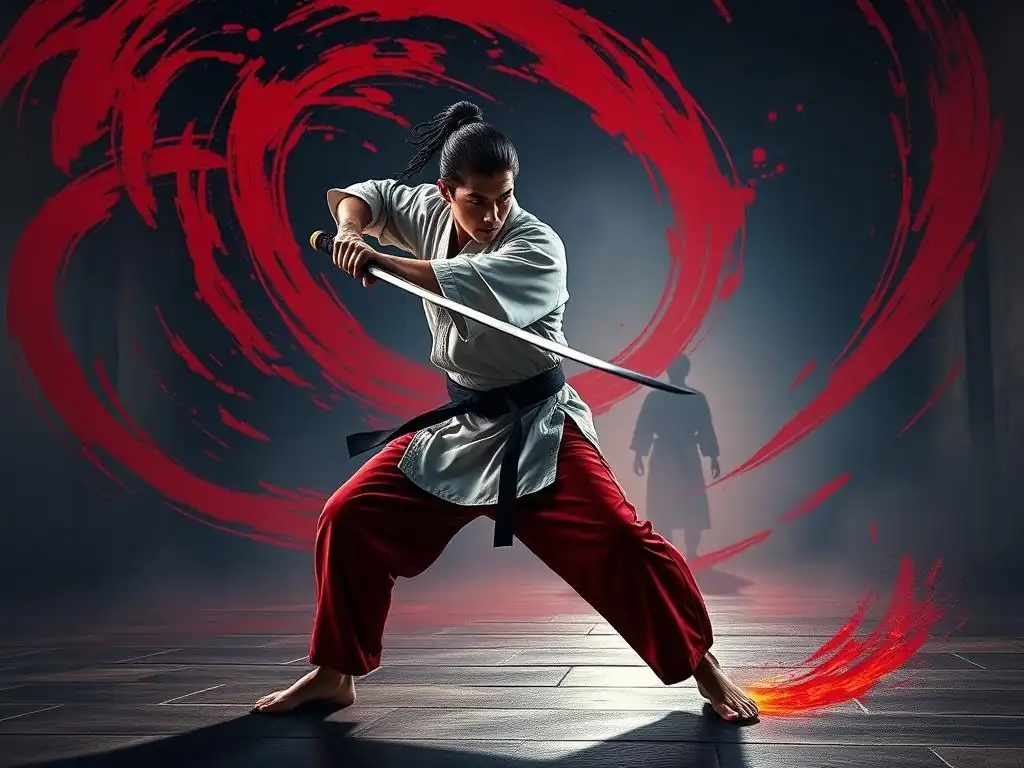
Welcome to Martial Arts Mastery, your gateway to unlocking the secrets of combat traditions worldwide. Ever wondered how a smaller karateka can overcome a larger opponent? This article delves into Bunkai strategies for smaller karate practitioners, revealing practical applications and adaptations within kata that maximize leverage and technique. Prepare to discover how to transform perceived disadvantages into decisive advantages – your journey to mastery starts now!
Adapting Age-Uke for a Smaller Practitioner: A Step-by-Step Guide
The traditional interpretation of Age-Uke (rising block) often involves meeting an incoming attack, such as a downward strike (like gedan barai or a club swing), with a strong upward block, aiming to deflect or stop the force. For a smaller karateka facing a larger, stronger opponent, attempting to simply block power-on-power is often inefficient and can lead to being overwhelmed or injured. The sheer mass and force generated by a larger individual can easily bypass or crush a static block.
Therefore, effective Bunkai strategies for smaller karate practitioners must adapt this movement from a pure block into a dynamic entry and control technique, focusing on redirecting force and gaining an advantageous position rather than just stopping the strike head-on. This adaptation is crucial for making Age-Uke practical in real-world self-defense scenarios where size differences are common.
An effective adaptation of Age-Uke for a smaller frame transforms the block into a movement designed to guide or deflect the attacker's arm off the intended line of attack, while simultaneously moving the defender's body inside or to the side of the attacker's structure. Instead of a rigid, upward block, think of it as a rising deflection combined with evasive footwork and immediate counter-application.
Here is a step-by-step breakdown of this adapted Bunkai application:
- Initial Movement: As the opponent initiates their downward strike, take a small, controlled step forward or slightly to the side (often using taisabaki or body evasion) while simultaneously bringing the uke arm (the blocking arm) up.
- Angle and Contact: The contact point on the attacker's arm should be closer to the elbow or forearm, not the wrist. The angle of your rising arm should be less about stopping the attack and more about guiding it upwards and past your head/body. Imagine pushing the attacker's arm up and away rather than just blocking it.
- Body Structure and Leverage: Maintain strong body structure, but use your whole body weight moving with the deflection, not just arm strength. Your hips and core should drive the movement. This allows you to leverage your entire body against the attacker's limb, using their own momentum against them.
- Immediate Transition: This is the critical step for Bunkai strategies smaller karate practitioners. The moment the attacker's arm is deflected, you immediately transition to a follow-up. This could be:
- Seizing the deflected arm for a joint lock ( kansetsu waza) or throw ( nage waza).
- Striking with the opposite hand ( tsuki or uchi) to a vulnerable point (face, ribs, groin).
- Moving further inside to control the attacker's balance or structure.
- Maintaining Control: The initial Age-Uke action is merely the entry point. The effectiveness lies in the speed and efficiency of the follow-up technique, designed to capitalize on the brief moment the attacker is off-balance or their limb is controlled.
This approach turns Age-Uke from a potentially losing power-on-power exchange into a strategic entry for smaller karateka, emphasizing timing, angle, and rapid transition into a control or finishing technique, which is key for effective Bunkai strategies smaller karate practitioners can rely on.
- What exactly is bunkai in the context of karate, and why is it important for smaller practitioners?
- How can a smaller karate practitioner adapt bunkai strategies to overcome size disadvantages?
- What are some specific examples of bunkai strategies that are particularly effective for smaller karateka?
- Where can I find resources to learn more about bunkai strategies specifically tailored for smaller karate practitioners?
- How does understanding the history of karate and its philosophical underpinnings enhance a smaller practitioner's ability to effectively utilize bunkai?
Frequently Asked Questions
What exactly is bunkai in the context of karate, and why is it important for smaller practitioners?
Bunkai refers to the practical application and detailed analysis of karate kata movements. It's crucial for smaller practitioners because it allows them to leverage technique over brute strength and understand the underlying principles of each movement.
How can a smaller karate practitioner adapt bunkai strategies to overcome size disadvantages?
Smaller practitioners can adapt bunkai by focusing on leveraging techniques, utilizing angles and body positioning, and targeting an opponent's vulnerable points. This enables them to generate significant force despite their smaller stature.
What are some specific examples of bunkai strategies that are particularly effective for smaller karateka?
Examples include using wrist locks and joint manipulations, focusing on off-balancing techniques, and employing close-quarters combat to neutralize an opponent's reach advantage. These tactics emphasize skill over size.
Where can I find resources to learn more about bunkai strategies specifically tailored for smaller karate practitioners?
MartialArtsMastery.org offers resources on bunkai, including training tips and historical overviews. Look for articles and videos that focus on leveraging techniques and practical self-defense strategies applicable to smaller individuals.
How does understanding the history of karate and its philosophical underpinnings enhance a smaller practitioner's ability to effectively utilize bunkai?
Understanding the history and philosophy provides insight into the original intent of the techniques, allowing for more creative and effective adaptations. It also fosters a deeper understanding of the art, leading to improved skill and confidence.
Final Reflection: Unleashing Potential Through Bunkai
The exploration of Bunkai strategies for smaller karate practitioners reveals a profound truth: physical limitations need not define the boundaries of our potential. This journey through adapted techniques and strategic thinking underscores the power of ingenuity and adaptability in overcoming perceived disadvantages, a lesson deeply relevant in all aspects of life, not just within the dojo.
The impact of understanding and applying Bunkai extends far beyond self-defense. It fosters a deeper understanding of movement, leverage, and timing, principles that resonate across various disciplines. My own journey in martial arts has shown me that true strength lies not solely in physical prowess, but in the ability to analyze, adapt, and execute with precision. The art of war teaches us to rely not on the likelihood of the enemy's not attacking, but rather on our own readiness to receive him; not on the chance of his not attacking, but rather on the fact that we have made our position unassailable.
- Sun Tzu. This quote encapsulates the essence of Bunkai: preparing for any situation, regardless of size or perceived disadvantage.
Now, consider how you can apply these principles of adaptation and strategic thinking in your own life. Whether facing professional challenges, personal obstacles, or simply seeking to improve your understanding of the world around you, embrace the spirit of Bunkai. Analyze the situation, identify your strengths, and develop strategies to overcome any perceived limitations. The potential for growth and achievement is limitless when we approach challenges with ingenuity and a unwavering belief in our own capabilities.
Unlock Your Bunkai Potential Now!
Thank you for diving deep into the world of bunkai for smaller karate practitioners. We hope you've discovered valuable insights and newfound confidence in your abilities. Ready to put these strategies into action?
Here's how you can continue your bunkai journey:
- Master the Fundamentals: Select one kata from your curriculum and dedicate this week to perfecting its basic techniques, focusing on power generation and body mechanics.
- Explore Adaptation: Share your experiences! Document yourself trying a particular adaptation to a technique (say, a wrist lock defense to an elbow strike), put it up on YouTube or some other social media platform, and send us the link to put it on martialartsmastery.org.
- Connect and Collaborate: Join our forum on martialartsmastery.org and engage with other karate practitioners. Share your interpretations, ask questions, and learn from each other's unique perspectives.
What small, seemingly insignificant detail, will you focus on improving today to amplify your technique?