
Deciphering the Numerada: The Hidden Codes of Eskrima Masters


Welcome to Martial Arts Mastery, where the ancient traditions and modern applications of combat arts converge. Prepare to delve into the world of Eskrima numerada techniques training, a system whispered about in hushed tones among masters. But what secrets do these numerical codes hold? Uncover the hidden logic behind this powerful Filipino martial art and begin your journey towards understanding its profound impact on combat strategy and technique. The path to mastery begins here...
- Introduction to Eskrima Numerada: Unveiling the Numbered Art
- Understanding the Numerada System: A Breakdown of Key Concepts
- Eskrima Numerada Techniques Training: Mastering the Numbered Strikes
- Advanced Numerada Applications: Beyond the Basics
- The Legacy of Numerada Masters: Influential Figures in Eskrima
- Practical Self-Defense Applications of Eskrima Numerada
- Conclusion: The Enduring Power of Eskrima Numerada
- Frequently Asked Questions
- Final Reflection: Unlocking the Legacy of Eskrima
- Unveil Your Inner Eskrimador: Ignite the Power Within!
Introduction to Eskrima Numerada: Unveiling the Numbered Art
Eskrima, also known as Arnis or Kali, is the indigenous martial art of the Philippines. It is renowned for its dynamic weapon-based fighting systems, primarily focusing on sticks, knives, and empty-hand techniques. Within the vast landscape of Eskrima, one of the most fundamental and widely recognized frameworks is the Numerada system.
Often referred to as the "numbered art," Numerada provides practitioners with a systematic and logical approach to understanding striking points, defensive movements, and transitional flow, acting as a foundational language for communication and training within various Eskrima styles. Mastering Eskrima numerada techniques training is often the first step for serious students.
What is Eskrima Numerada? Defining the Core Principles
Eskrima Numerada is essentially a system of numbering the most common and effective striking angles or targets on an opponent's body. While variations exist among different Eskrima lineages, a core set of angles, typically twelve, forms the basis of the system. These numbers represent specific trajectories of attack, whether delivered with a stick, blade, or empty hand.
Understanding these angles allows practitioners to quickly identify threats, apply appropriate defenses, and launch precise counter-attacks, creating a structured framework for dynamic combat exchanges. The core principles revolve around efficiency, directness, and the ability to chain movements together seamlessly based on numerical cues.
The principles of Numerada extend beyond just striking. Each numbered angle often has corresponding defensive parries, blocks, or evasions associated with it. Furthermore, the system can be applied to footwork, transitions between techniques, and even disarming sequences. This comprehensive approach makes Numerada a powerful tool for both beginners learning the fundamentals and advanced practitioners refining complex strategies. Effective Eskrima numerada techniques training emphasizes not just the mechanics of each number but also the fluid transitions between them, building reflexive responses crucial for real-world application.
The Historical Roots of Numerada in Filipino Martial Arts (FMA)
The precise origins of the Numerada system are somewhat debated, lost to the oral traditions and diverse development paths of Filipino Martial Arts (FMA). However, it is widely believed that the concept of systematizing striking angles emerged from the practical necessities of combat and the need for a standardized teaching method. As FMA styles developed across the archipelago, practitioners likely recognized common attack patterns and devised ways to categorize and teach responses efficiently. The numbering system provided a universal language that could be easily transmitted, even across different dialects and islands, facilitating training and knowledge preservation.
Historically, FMA was often practiced in secret, passed down within families or small communities due to colonial prohibitions. The Numerada system served as a kind of "code" or shorthand, allowing instructors to teach complex sequences and strategies without explicitly detailing every movement, which could be crucial for security.
While the exact numbering might vary (some systems use 5, 8, 12, or even more angles), the underlying principle of categorizing and training based on defined lines of attack and defense has been a consistent element in many traditional Eskrima styles for generations, forming the bedrock of much of today's Eskrima numerada techniques training.
Understanding the Numerada System: A Breakdown of Key Concepts
The Numerada system, while seemingly simple with its numbered angles, is a deep and intricate part of Eskrima. Understanding its key concepts is crucial for effective application. This involves not just knowing the numbers but grasping how they integrate with movement, defense, and weapon control. The structure provided by Numerada allows practitioners to break down complex combat scenarios into manageable components, making learning and application more efficient.
The 12 Striking Angles: Mapping the Eskrima Numerada
The most common iteration of Numerada revolves around 12 primary striking angles. These angles represent potential lines of attack aimed at vital areas of the body. Angle 1, for instance, is typically a diagonal strike descending towards the left temple or shoulder. Angle 2 is the mirrored diagonal strike to the right side.
Angles 3 and 4 target the sides of the body (ribs, waist). Angles 5 and 6 are horizontal strikes across the knees. Angle 7 is a thrust to the solar plexus, while Angle 8 is a thrust to the chest. Angles 9 and 10 are ascending strikes (often targeting groin or chin), and Angles 11 and 12 are strikes to the crown of the head or direct downward blows.
Each of these angles is a fundamental building block for Eskrima numerada techniques training. Practitioners spend countless hours drilling these individual strikes, first in isolation, then in various combinations. For example, a common drill involves striking Angle 1, then immediately following with Angle 2, creating a basic "X" pattern. More complex drills might chain together four or five different numbered strikes, simulating a rapid-fire exchange. Mastering the correct body mechanics, power generation, and trajectory for each angle is paramount before progressing to more advanced applications.
Footwork and Stance in Numerada: Essential Mobility Drills
Effective Numerada application is inseparable from proper footwork and stance. Knowing the angles is only half the battle; being able to move into position to deliver or defend against them is equally vital. Common stances in Eskrima include the neutral stance, forward stance, and oblique stance, each offering different advantages for mobility and defense. Footwork drills specifically tailored to Numerada involve moving with the angles. For example, stepping offline while delivering an Angle 1 strike or retreating diagonally to evade an Angle 2.
Mobility drills in Eskrima numerada techniques training often involve stepping patterns that correspond directly to defensive movements against numbered attacks. A common drill might involve an instructor calling out numbers while the student practices defensive footwork: retreating from a thrust (Angle 7), side-stepping a horizontal strike (Angle 5 or 6), or pivoting to evade a diagonal cut (Angle 1 or 2). These drills build the muscle memory necessary to react instinctively to incoming attacks by moving the body out of the line of fire while simultaneously preparing for a counter-attack along a different numbered angle.
Numerada and Disarming Techniques: Controlling the Weapon
Numerada provides a logical framework for understanding and executing disarming techniques. Disarms in Eskrima often rely on controlling the opponent's weapon arm along a specific line of force, frequently corresponding to one of the numbered angles. For instance, after parrying an Angle 1 strike, a disarm might involve trapping the opponent's stick hand and applying pressure along a path that forces them to release their grip, often leveraging the momentum of the initial strike.
Training in Eskrima numerada techniques training for disarms involves recognizing which disarming technique is appropriate for each numbered attack. If an opponent delivers an Angle 3 strike to the side, a block and counter might transition into a disarm that controls the weapon arm's trajectory along that specific line, potentially involving a twist or lever.
Practitioners learn to identify the vulnerability presented by each angle of attack and apply a corresponding disarm, turning the opponent's offensive motion against them. This systematic approach makes disarming less about brute force and more about timing, leverage, and understanding the geometry of the attack, which is inherently defined by the Numerada system.
Eskrima Numerada Techniques Training: Mastering the Numbered Strikes
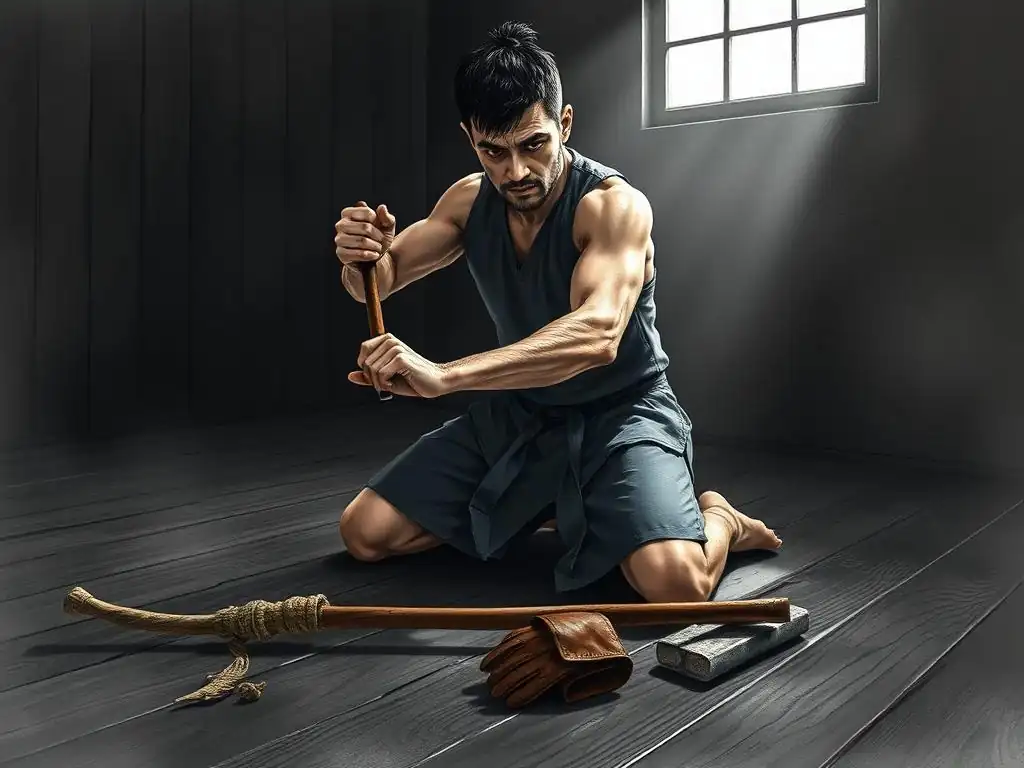
Intensive training is the cornerstone of mastering Eskrima Numerada. The system's effectiveness lies in the practitioner's ability to execute the numbered strikes and defenses reflexively, under pressure. Training regimens typically progress from individual movements to complex sequences, emphasizing precision, speed, and power. Effective Eskrima numerada techniques training involves a variety of methods, from solo practice to partner drills and integration into sparring.
Solo Training Drills for Eskrima Numerada Proficiency
Solo drills are fundamental for building the foundational mechanics of Eskrima Numerada. Practitioners spend significant time practicing the 12 angles (or their system's equivalent) in isolation, focusing on proper grip, body mechanics, weight transfer, and extension. A common drill involves striking a target or even just the air, repeating each angle dozens or hundreds of times per session. This repetition builds muscle memory and refines the trajectory and power generation for each strike.
Beyond individual angles, solo Eskrima numerada techniques training includes chaining numbers together in predetermined sequences. For example, practicing the sequence 1-2-3-4, then 5-6-7-8, and so on. Flow drills, where the practitioner moves continuously through various angles without stopping, are also crucial for developing fluidity and endurance. Some advanced solo drills involve visualizing an opponent and practicing defenses and counter-attacks based on hypothetical incoming numbered strikes, further solidifying the reflexive application of the system.
Partner Drills for Developing Numerada Timing and Precision
Partner drills are essential for applying solo mechanics in a dynamic environment and developing crucial attributes like timing, distance management, and precision. Basic partner drills involve one person feeding a specific numbered strike (e.g., Angle 1), and the other person practicing the corresponding defense and counter-strike. This can be done at slow speeds initially, gradually increasing intensity.
More complex partner Eskrima numerada techniques training involves call-out drills, where one person calls out numbers randomly, and the other responds with the appropriate strike or defense. Alive hand drills, where the non-weapon hand is used for checking, trapping, or striking, are integrated alongside the numbered stick or knife movements. Drills like "sumbrada" or "contrada," which involve continuous, flowing exchanges based on attack and defense sequences, often utilize the Numerada as the underlying structure, allowing practitioners to practice chaining reactions based on the numbered incoming attacks.
Integrating Numerada into Sparring and Live Combat Scenarios
The ultimate goal of Eskrima numerada techniques training is to apply the structured system effectively in unpredictable situations like sparring or self-defense. Initially, sparring can be limited to specific angles or sequences to build confidence. For example, sparring might focus only on Angles 1 and 2, then gradually introduce more numbers. This controlled environment helps practitioners translate the learned patterns into reactive responses.
In more advanced sparring, the Numerada serves as an analytical tool during the exchange. Even if the fight doesn't unfold as a strict numerical sequence, the practitioner can quickly identify an incoming attack as analogous to Angle 3 or Angle 7 and deploy the practiced defense and counter-attack associated with that number. This ability to categorize and respond based on the Numerada framework allows for faster decision-making and more efficient technique selection under pressure. Effective Eskrima numerada techniques training bridges the gap from rigid drills to fluid, adaptive application in live scenarios.
Advanced Numerada Applications: Beyond the Basics
Once the fundamental 12 angles and their associated defenses are internalized, practitioners can explore more advanced applications of the Numerada system. This involves moving beyond simple one-for-one exchanges to dynamic combinations, adapting the system to various weapons, and integrating it with empty-hand techniques. These advanced concepts highlight the versatility and depth of Numerada within the broader context of Eskrima.
Numerada Combinations and Flow Drills: Creating Dynamic Sequences
Advanced Eskrima numerada techniques training emphasizes the ability to seamlessly chain multiple numbered strikes and defenses together into fluid, unpredictable sequences. Instead of just blocking Angle 1 and countering with Angle 2, a practitioner might block Angle 1, counter with Angle 7 (a thrust), transition immediately to a follow-up strike at Angle 4, and then disengage or continue the attack. These combinations are often practiced in flow drills, where partners maintain a continuous, non-stop exchange of attacks and defenses based on the Numerada framework.
Flow drills are not about winning or losing but about developing rhythm, timing, and the ability to transition smoothly between techniques. Practitioners learn to read their partner's movements and respond instantly with the appropriate numbered counter or combination. For example, a common flow drill might start with Angle 1 attack, Angle 1 defense, Angle 2 counter, Angle 2 defense, and continue cycling through numbers or specific sequences. This continuous movement builds endurance and reflexes, allowing practitioners to react intuitively based on the numerical cues presented by the opponent's actions.
Adapting Numerada to Different Weapon Types: Knife and Impact Weapons
While often taught initially with a single stick, the Numerada system is designed to be adaptable to various weapon types common in Eskrima. The principles of striking angles remain largely the same whether wielding a stick, a training knife, or even improvised weapons. The primary difference lies in the specific mechanics and targeting. With a knife, strikes become cuts or thrusts, often targeting vital points like arteries or soft tissue, but the angle of attack (e.g., diagonal down, horizontal) is still mapped by the Numerada.
Training with different weapons involves understanding how the characteristics of the weapon influence the application of the numbered angles. A heavy stick might favor powerful, percussive strikes, while a light stick allows for faster, whipping motions. Knife work emphasizes precision and economy of motion along the numbered lines. Eskrima numerada techniques training with various weapons helps practitioners develop a deeper understanding of weapon mechanics and how the universal language of Numerada translates across different tools, making them more versatile in combat situations.
Numerada and Empty-Hand Techniques: Bridging the Gap
Eskrima is not solely a weapon art; it also encompasses sophisticated empty-hand techniques. The Numerada system serves as a valuable bridge between weapon and empty-hand applications. The same numbered angles used for stick strikes correspond to potential lines of attack and defense with hands, elbows, knees, or feet. For instance, Angle 1 with a stick mirrors a diagonal overhand punch or a descending knife hand strike.
Training involves practicing empty-hand defenses against incoming numbered attacks (both with and without weapons). If an opponent throws an Angle 1 strike, the empty-hand defense might be a parry, block, or evasion followed by a counter-strike using the hand or elbow along a different numbered angle. Furthermore, empty-hand strikes themselves can be categorized and practiced using the Numerada framework.
A hook punch might be seen as an Angle 3 or 4 attack, a straight punch as an Angle 7 thrust. This integration allows practitioners to seamlessly transition between weapon and empty-hand fighting, using the familiar numerical language to guide their actions in any range.
The Legacy of Numerada Masters: Influential Figures in Eskrima
The enduring power of the Numerada system is largely due to the dedication and expertise of the masters who have preserved, refined, and propagated it through generations. These individuals have not only maintained the traditional knowledge but have also often adapted and expanded the system, ensuring its relevance in modern contexts. Studying the lives and teachings of these masters provides valuable insights into the depth and philosophy of Eskrima Numerada.
Profiles of Renowned Eskrima Numerada Practitioners: Grandmaster Leo Gaje
One of the most prominent figures associated with a widely recognized Numerada system is Grandmaster Leo Gaje Jr., the inheritor of Pekiti-Tirsia Kali. Pekiti-Tirsia utilizes a structured system of attacks and defenses, heavily reliant on angles and geometry, which aligns closely with the principles of Numerada, though their specific numbering or terminology might differ slightly from other lineages. Grandmaster Gaje has been instrumental in bringing Filipino Martial Arts, and specifically the systematic approach exemplified by Pekiti-Tirsia's framework, to international prominence.
Grandmaster Gaje's teachings emphasize close-quarters combat, practical self-defense, and the use of angles to dominate an opponent. His system's structured approach to footwork, body positioning, and weapon manipulation, often taught through specific drills and patterns related to lines of attack, is a testament to the effectiveness of a Numerada-like framework. Through seminars, books, and the training of numerous instructors worldwide, Grandmaster Gaje has ensured that the systematic and effective Eskrima numerada techniques training principles of his lineage continue to influence practitioners globally.
Insights from Eskrima Masters on the Philosophy of Numerada
Beyond the physical techniques, Eskrima masters often impart a deeper philosophy behind the Numerada system. They view it not merely as a list of strikes but as a framework for understanding combat dynamics. The numbered angles represent universal lines of force and vulnerability, present in any combative situation, regardless of the weapon or style. Masters teach that by mastering the Numerada, students develop an intuitive understanding of timing, distance, and angle manipulation, skills that transcend the specific system.
Many masters emphasize that the rigid structure of Numerada drills is a means to an end. The goal is to internalize the patterns so deeply that they become instinctive. As Grandmaster Gaje might say, the techniques should flow "like water." The philosophy is about efficiency – finding the most direct and effective path to hit a target or defend an attack, guided by the geometry of the numbered angles. This philosophical depth elevates Eskrima numerada techniques training from rote memorization to a profound study of combative principles.
Preserving and Promoting Eskrima Numerada for Future Generations
Preserving traditional Eskrima knowledge, including the various Numerada systems, is a significant challenge. Masters and dedicated practitioners are crucial in documenting, teaching, and promoting these arts to new generations. This involves establishing formal schools, writing instructional materials, and utilizing modern platforms like websites and social media to share knowledge, while respecting lineage traditions.
Efforts to promote Eskrima Numerada include organizing tournaments, cultural demonstrations, and international seminars. By showcasing the effectiveness and richness of the system, practitioners hope to attract new students and ensure that the art does not fade away. Many instructors dedicate their lives to traveling and teaching, spreading the knowledge passed down to them. This commitment to preservation and promotion is vital for the future of Eskrima numerada techniques training and the continuation of this unique Filipino heritage.
Practical Self-Defense Applications of Eskrima Numerada
While Eskrima has deep roots in battlefield combat, its principles, particularly those embodied in the Numerada system, are highly applicable to modern self-defense scenarios. The focus on directness, efficiency, and weapon defense makes it a potent system for dealing with real-world threats. Understanding how to adapt Eskrima numerada techniques training for practical situations is key for personal safety.
Numerada for Real-World Self-Defense Scenarios
In a self-defense situation, an attacker's movements, whether armed or unarmed, can often be categorized within the framework of the Numerada angles. A wild swing might resemble an Angle 1 or 2, a stab could be an Angle 7 thrust, and a low kick could be an Angle 5 or 6. By recognizing these familiar patterns, a practitioner trained in Eskrima Numerada can quickly access their repertoire of practiced defenses and counter-attacks associated with those angles.
The structured nature of Numerada provides a mental map under stress. Instead of panicking, the practitioner can instinctively identify the incoming angle and react with a pre-programmed response – a block, parry, evasion, and counter-strike along a different angle. Eskrima numerada techniques training for self-defense often involves scenario-based drills, where practitioners practice reacting to unexpected attacks delivered from various directions and speeds, forcing them to apply the Numerada framework under simulated real-world pressure.
Adapting Numerada Techniques to Improvised Weapons: Pen and Rolled Magazine
One of the strengths of Eskrima is its adaptability, and this extends to using improvised weapons. The Numerada system remains relevant even when a traditional stick or knife is unavailable. Common improvised weapons like a pen, a rolled-up magazine, a sturdy umbrella, or even keys can be used to strike along the same numbered angles. A pen can deliver a thrusting strike (Angle 7) to a soft target, while a rolled magazine can be used for whipping strikes (Angles 1, 2, 3, 4) to vulnerable areas.
Eskrima numerada techniques training includes practicing the numbered strikes and defenses using these everyday objects. The mechanics might be slightly different – a pen requires a different grip and generates less power than a stick – but the underlying principles of angle, targeting, and timing remain the same. This adaptability, guided by the universal language of Numerada, makes Eskrima highly practical for self-defense, enabling a practitioner to turn common items into effective defensive tools.
The Psychological Aspects of Using Numerada in Self-Defense
Beyond the physical techniques, Eskrima numerada techniques training also addresses the psychological aspects of conflict. The systematic and structured nature of Numerada provides a sense of control and preparedness. Knowing that you have a framework for analyzing and responding to an attack can significantly reduce panic and increase confidence during a stressful encounter.
Training repeatedly through the numbered angles and scenarios builds mental resilience. The practitioner develops the ability to remain calm under pressure and access their trained responses. Furthermore, the principle of recognizing and exploiting angles applies not just physically but also psychologically – understanding an attacker's likely lines of aggression allows for anticipation and strategic positioning. The mental discipline fostered by rigorous Eskrima numerada techniques training is just as crucial as the physical skills in a self-defense situation.
Conclusion: The Enduring Power of Eskrima Numerada
The Numerada system stands as a testament to the ingenuity and practicality of Filipino Martial Arts. It provides a powerful, systematic framework for understanding the geometry of combat, enabling practitioners to learn, teach, and apply complex techniques with clarity and efficiency. From its historical roots as a hidden code to its modern application in self-defense, Numerada remains a vital component of Eskrima.
Summarizing the Key Benefits of Numerada Training
Training in Eskrima Numerada offers numerous benefits. It provides a clear, structured foundation for learning Eskrima, breaking down complex movements into manageable components. It develops essential attributes like timing, distance, precision, and fluidity through rigorous drilling. Numerada enhances adaptability, allowing practitioners to apply principles across different weapons and even empty-hand situations. Most importantly, it equips individuals with practical, effective techniques and the psychological preparedness needed for real-world self-defense, by providing a framework to analyze and respond to threats. Effective Eskrima numerada techniques training is truly a key to unlocking the art.
Resources for Further Exploration of Eskrima Numerada: Books, Websites, Instructors
For those interested in delving deeper into Eskrima Numerada, several resources are available. Numerous books and instructional materials detail the Numerada systems of various lineages, such as those related to Pekiti-Tirsia Kali or Doce Pares. Many reputable websites dedicated to Filipino Martial Arts offer articles, forums, and sometimes online training resources explaining Numerada concepts. However, the most valuable resource remains qualified instructors. Seeking out and training under experienced Eskrima masters and teachers is the best way to gain hands-on experience and truly understand the nuances of Eskrima numerada techniques training within a specific lineage.
The Future of Numerada in the World of Martial Arts
The future of Numerada in the world of martial arts appears secure, thanks to dedicated practitioners and the system's inherent effectiveness. Its structured approach makes it appealing to both traditionalists and those seeking practical self-defense skills. As FMA continues to gain international recognition, the foundational role of systems like Numerada will likely become even more prominent. Through continued teaching, documentation, and adaptation, the hidden codes of Eskrima masters, embodied in the Numerada, will continue to empower practitioners for generations to come, solidifying the importance of Eskrima numerada techniques training worldwide.
Frequently Asked Questions
What exactly are Numerada techniques in Eskrima?
Numerada techniques are a system of numbered striking patterns used in Eskrima. They provide a structured framework for learning and practicing combative sequences.
How do Numerada techniques contribute to Eskrima training?
Numerada techniques enhance training by providing a systematic way to learn striking combinations. This method helps develop muscle memory, timing, and coordination.
Is Numerada training solely focused on memorizing sequences?
No, while memorization is important, Numerada training also emphasizes understanding the principles behind each sequence. This allows for adaptation and improvisation in combat.
Where does the term " Numerada" originate from in Eskrima?
The term "Numerada" simply refers to the numbered nature of the techniques. The system itself has deep roots in the historical development of Eskrima combat methods.
Can Numerada techniques be used for practical self-defense?
Yes, Numerada techniques provide a foundation for practical self-defense. By mastering these sequences, practitioners can develop effective striking skills and defensive maneuvers.
Final Reflection: Unlocking the Legacy of Eskrima
The journey through the Numerada, as explored in this article, reveals more than just a system of counting; it unveils a profound understanding of movement, strategy, and the very essence of Eskrima. The enduring relevance of these hidden codes lies in their ability to transform a student from a practitioner of techniques into a master of principles. Even in today's world, where martial arts evolve and adapt, the Numerada remains a powerful tool for unlocking the deeper secrets of Eskrima.
The influence of the Numerada extends beyond the training hall, shaping the way practitioners perceive combat and approach problem-solving. This system, passed down through generations, is a testament to the ingenuity and dedication of Eskrima masters, and its continued study allows us to connect with that rich heritage. The Numerada is not just about numbers; it's about understanding the flow of energy and the rhythm of combat.
This quote, often attributed to Grandmaster Leo Giron, encapsulates the true spirit of the system, reminding us that true mastery lies in understanding the underlying principles.
As you delve deeper into your Eskrima journey, remember the lessons of the Numerada. Embrace the challenge of deciphering these hidden codes, not just as a means to improve your technique, but as a path to unlocking your own potential. Let the wisdom of the masters guide you, and may your training be filled with insight, growth, and a profound appreciation for the art of Eskrima.
Unveil Your Inner Eskrimador: Ignite the Power Within!
Thank you for exploring the hidden codes of Eskrima Masters with us. We hope this deep dive into the Numerada has sparked your curiosity and provided valuable insights into this incredible martial art. Now, it's time to put that knowledge into action!
Here's how you can further unlock the secrets of Eskrima:
- Commit to dedicating 15 minutes each day to practicing the Numerada drills, focusing on precision and fluidity.
- Share this article with fellow martial arts enthusiasts to spark discussions and collective learning within our community.
- Research the history of your local Eskrima school or club and discover the unique Numerada system they employ to see if it enhances your understanding.
What's one small adjustment you can make in your next Eskrima session to incorporate the power of the Numerada?