
The Philosophy of Maai: Finding Harmony in Space and Time

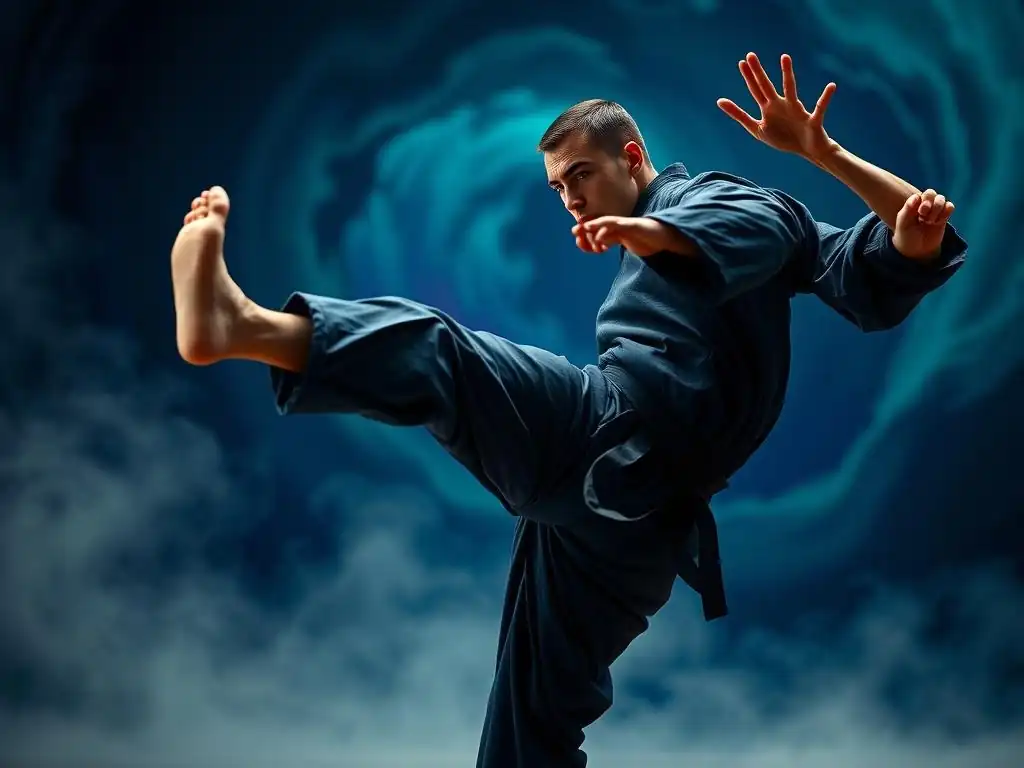
Welcome to Martial Arts Mastery, your gateway to the world's most captivating fighting traditions!
Dive into the profound depths of martial arts philosophy, starting with our exploration of Maai. Discover how this intricate concept of space and timing, crucial to numerous disciplines, transcends mere technique and unlocks a deeper understanding of combat and self. Curious to learn how mastering Maai philosophy martial arts can elevate your practice? Let's begin.
- Understanding Maai: The Core Concept in Martial Arts
- The Philosophical Underpinnings of Maai
- Mastering Maai: Practical Applications in Martial Arts Training
- Maai in Different Martial Arts Disciplines
- Advanced Maai Concepts: Beyond Physical Distance
- Maai and Self-Defense: Practical Considerations
- The Ongoing Journey of Maai: Constant Refinement
- Maai: A Path to Martial Arts Mastery
-
Frequently Asked Questions
- What is Maai and why is it important in martial arts?
- How does the Maai philosophy martial arts relate to space and time?
- What are some practical training methods to improve my maai?
- How does understanding maai contribute to self-defense strategies?
- Is the Maai philosophy martial arts applicable across different martial arts disciplines?
- Final Reflection: Embracing the Dance of Maai
- Master the Art of Flow: Begin Your Maai Journey Now!
Understanding Maai: The Core Concept in Martial Arts
Defining Maai: Distance, Timing, and Relationship
Maai, often translated as "interval," is a foundational concept in martial arts, encompassing not just physical distance but also the crucial elements of timing, rhythm, and the psychological space between practitioners. It represents the dynamic and ever-changing relationship between individuals engaged in practice or confrontation. Proper Maai is not static; it shifts based on the situation, the martial art being practiced, the intentions of the participants, and their respective skill levels.
It's the optimal distance and moment to execute a technique effectively, avoiding your opponent's attacks while positioning yourself for your own. Mastering the Maai philosophy in martial arts involves understanding this complex interplay of spatial, temporal, and relational factors.
This intricate concept goes beyond simple measurement. For instance, in striking arts like Karate, Maai dictates the range for kicks and punches, typically categorized into long, medium, and close distances. In contrast, grappling arts like Judo consider Maai in terms of proximity needed for throws or groundwork, often involving much closer ranges.
The 'relationship' aspect of Maai refers to the sensitivity to your partner's or opponent's movement, breathing, and intent. It's about feeling the space between you, predicting their actions, and adjusting your position and timing accordingly. This nuanced understanding is central to the Maai philosophy martial arts practitioners strive to embody, enabling fluid transitions between defense and offense.
The Importance of Maai in Aikido Practice
In Aikido, Maai holds a particularly profound significance, deeply integrated with the art's principles of blending, non-resistance, and harmonious movement. Unlike arts focused solely on striking or grappling distance, Aikido's Maai is intrinsically linked to entering ( irimi) and turning ( tenkan), aiming to neutralize an attack by moving into or around the attacker's space and timing.
It's about creating an advantageous position relative to the attacker's center, often disrupting their balance ( kuzushi) before executing a technique. The correct Maai in Aikido allows the practitioner ( nage) to receive the attacker's ( uke) energy without direct collision, guiding it safely while maintaining control.
The practice of Maai in Aikido is a continuous lesson in sensitivity and adaptability. During randori (freestyle practice), practitioners constantly adjust their distance and timing based on multiple attackers' movements, learning to manage the space effectively.
This isn't just about avoiding strikes; it's about finding the precise moment and angle to enter the attacker's sphere of influence safely and redirect their force. The Maai philosophy martial arts as taught in Aikido emphasizes resolving conflict through movement and positioning, making the understanding and application of Maai paramount for executing techniques like kokyu-nage (breath throws) or ikkyo (first technique) effectively and safely for both parties.
The Philosophical Underpinnings of Maai
Maai as a Reflection of Harmony and Balance
The Maai philosophy in martial arts extends far beyond physical distance; it is a reflection of internal and external harmony and balance. Achieving correct Maai requires a balanced state of mind – neither overly aggressive nor passively fearful. It embodies the principle of finding a harmonious relationship with the environment and the individuals within it, even in a confrontational context.
Just as a musician finds the right timing and space between notes to create harmony, a martial artist seeks the optimal Maai to resolve conflict with efficiency and minimal disruption. This internal balance allows for calm assessment and fluid adaptation, which are crucial for maintaining effective Maai.
Moreover, Maai represents the balance between offense and defense. It's the point from which one can launch an effective attack while simultaneously being in a position to defend or evade. Being too close or too far disrupts this balance, leaving the practitioner vulnerable.
This duality mirrors the broader philosophical pursuit of balancing opposing forces – yin and yang – found in many Eastern philosophies that influenced martial arts. The Maai philosophy martial arts teaches that true mastery lies not just in executing techniques, but in cultivating a state of balanced readiness, allowing one to respond appropriately to any situation by instinctively finding the right distance and timing.
Maai and the Concept of Ki in Martial Arts
The concept of Maai is intrinsically linked with Ki (氣), the vital energy or life force often discussed in martial arts and traditional Asian philosophy. In practice, sensing and manipulating Ki involves understanding the flow of energy within oneself and between individuals. Maai provides the physical and temporal framework within which this energetic interaction occurs.
Maintaining proper Maai allows a practitioner to feel their opponent's intention and energy flow, often described as sensing their Ki, enabling a preemptive response or a more effective blending with their movement. Without the correct Maai, the subtle signals of Ki are harder to perceive and respond to.
Conversely, projecting or extending one's own Ki can influence the opponent's Maai. A strong, centered presence, often associated with cultivated Ki, can subtly affect an opponent's comfort zone and decision-making regarding distance and timing. This psychological aspect of Maai, influenced by Ki, is a key element in advanced martial arts.
For example, in arts like Aikido, extending Ki is fundamental to techniques; it's not just about physical movement but about projecting intention and energy outwards, which in turn influences the uke's positioning and balance, thereby affecting the Maai between them. The Maai philosophy martial arts integrates these physical and energetic dimensions into a holistic approach to engagement.
The Influence of Zen Buddhism on Maai Philosophy
Zen Buddhism has profoundly influenced the philosophical underpinnings of many Japanese martial arts, including the concept of Maai. Zen emphasizes mindfulness, presence, and the interconnectedness of mind, body, and spirit. Applying Zen principles to Maai means cultivating a state of alert, non-judgmental awareness of the present moment – the here and now of the space and time between oneself and the opponent. This state, sometimes referred to as mushin (無心, "no mind"), allows for spontaneous, intuitive action free from hesitation, fear, or overthinking, which are detrimental to effective Maai.
Zen practice encourages detachment from outcomes and focus on the process. In the context of Maai, this translates to not being fixated on a specific distance or technique, but being fully present and responsive to the dynamic changes in the interaction.
The ability to adapt instantly, without conscious deliberation, is a hallmark of high-level Maai, reflecting the Zen ideal of acting from a place of intuitive understanding rather than intellectual analysis. This deep connection between mindful presence and responsive positioning highlights how the Maai philosophy martial arts is not just a tactical consideration but a path towards greater self-awareness and control, mirroring the goals of Zen practice itself.
Mastering Maai: Practical Applications in Martial Arts Training
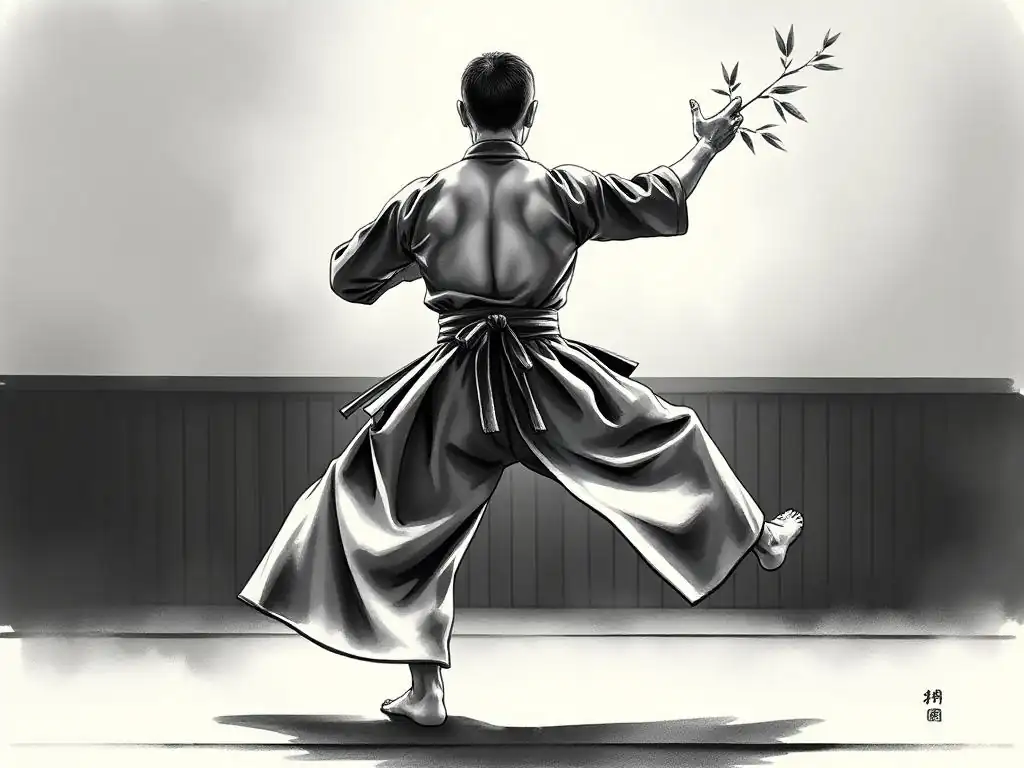
Developing Spatial Awareness for Effective Maai
Developing acute spatial awareness is fundamental to mastering Maai. This involves not only understanding the distance between yourself and your partner but also being aware of your own body in space, the environment around you (e.g., the dojo boundaries, obstacles), and the relative positions of multiple individuals if applicable. Training exercises designed to enhance proprioception and spatial judgment are crucial. Simple drills like walking blindfolded, navigating around objects, or practicing techniques from varied starting distances can help refine this sense.
Advanced spatial awareness includes perceiving the "effective range" of both your own techniques and your partner's. This isn't static; a jab's effective range differs from a roundhouse kick's, just as a standing throw's range differs from a ground pin's. Practitioners must internalize these ranges for various techniques across different stances and movements.
Consistent partner drills, where the focus is specifically on maintaining or adjusting Maai rather than just executing techniques, are vital. For instance, practicing entering drills in Aikido or sparring with strict distance limitations in Karate helps build this intuitive spatial understanding, which is core to the Maai philosophy martial arts.
Timing Drills to Enhance Maai Proficiency
Excellent Maai is as much about timing as it is about distance. Developing impeccable timing means being able to initiate action at the precise moment – not too early (leading to being countered) and not too late (leading to being hit). Timing drills often involve responding to a partner's movement or cue. Examples include striking pads only when they enter a specific range, entering for a throw the instant a partner shifts their weight, or evading an attack by moving with or just before it arrives.
These drills train the practitioner to read subtle cues and respond instantaneously. The focus is on developing intuitive timing, moving beyond conscious thought. Practicing techniques at different speeds and rhythms is also essential; sometimes the correct timing involves rushing in, other times it requires patience and waiting for an opening. The ability to vary one's own tempo and disrupt an opponent's timing is an advanced application of Maai. This diligent practice of timing is a cornerstone of developing the Maai philosophy martial arts, allowing techniques to land with maximum effectiveness.
Reading Your Opponent: Understanding Intent and Adjusting Maai
A critical aspect of sophisticated Maai is the ability to read your opponent's intent. This involves observing their posture, gaze, breathing, subtle shifts in weight, and muscle tension. These non-verbal cues often betray an impending action before it is fully committed. Learning to recognize these signals allows a practitioner to anticipate the opponent's move and adjust their Maai proactively, either closing the distance for an attack or increasing it for evasion or counter-attack.
This skill is honed through countless hours of partner practice and sparring. It's about developing sensitivity and intuition, moving beyond simply reacting to overt movements. For example, a slight tensing in the shoulders might indicate an incoming punch, or a shift of weight to the back foot might signal preparation for a kick or retreat. By correctly interpreting these signs, a practitioner can adjust their Maai milliseconds before the opponent acts, gaining a significant advantage. This insightful reading and dynamic adjustment are central to the practical application of the Maai philosophy martial arts in live situations.
Maai in Different Martial Arts Disciplines
The Role of Maai in Karate
In Karate, particularly in styles like Shotokan or Kyokushin, Maai is primarily understood in terms of striking distance. Training often focuses on controlling the engagement range to deliver powerful punches and kicks while avoiding incoming attacks. There are commonly recognized distances such as jodan (long range, suitable for lunging punches and kicks), chudan (middle range, for combination techniques and closer strikes), and gedan (close range, for infighting, elbows, and knees, depending on the style).
Sparring ( kumite) in Karate is a continuous exercise in managing Maai. Practitioners constantly move in and out, seeking to enter their effective range to score points or deliver decisive blows, then retreating to safety. The ability to quickly close distance ( tsugi ashi or yori ashi) or create distance ( hiki ashi) is paramount. A skilled Karateka uses feints and footwork not just to set up techniques, but to manipulate their opponent's Maai and create openings, demonstrating the practical application of the Maai philosophy martial arts within a striking context.
Maai and Distance Control in Kendo
Kendo, the art of Japanese swordsmanship, places an extremely high emphasis on Maai, often referred to as Kyori (距離, distance). The standard engagement distance is issoku itto no maai (一足一刀の間合), meaning "one step, one sword's interval." This is the distance from which a single step forward allows one to strike the opponent's target, and a single step back takes one out of the opponent's striking range. This precise, critical distance is the foundation of Kendo strategy.
However, Kendo Maai is more complex than just issoku itto. Practitioners also train in tooma (遠間, far distance) and chika-ma (近間, close distance). Moving between these distances, creating deceptive openings, and striking at the precise moment the opponent's Maai is compromised is the essence of Kendo strategy. Matches are often decided by who can better control and exploit the Maai, highlighting its centrality to this sword art's Maai philosophy martial arts.
Judo: Applying Maai in Grappling Techniques
While often perceived as a close-quarters art, Maai is also crucial in Judo, though it manifests differently than in striking or weapon arts. In Judo, Maai relates to the distance and angle required to gain a grip ( kumi-kata) and initiate a throw ( nage-waza) or transition to groundwork ( katame-waza). The initial approach and obtaining a dominant grip involve navigating the space while avoiding the opponent doing the same.
Once grips are established, Maai becomes about controlling the distance and relative position to break the opponent's balance ( kuzushi) and execute a technique. Being too far or too close makes throws difficult or impossible. Judo players constantly adjust their posture, weight distribution, and grip to create the optimal Maai for their intended technique, while simultaneously disrupting their opponent's. This dynamic control of proximity and leverage exemplifies the application of the Maai philosophy martial arts within a grappling framework.
Advanced Maai Concepts: Beyond Physical Distance
Irimi and Tenkan: Integrating Movement with Maai
In Aikido, the concepts of irimi (entering) and tenkan (turning) are deeply intertwined with Maai. Irimi involves moving directly into the line of attack, but crucially, doing so with precise timing and angle to pass safely behind or to the side of the attacker's power. This requires entering the attacker's Maai at the exact moment they are committed to their forward motion. It's not about meeting force with force, but about blending by occupying the same space and time in a non-conflicting way.
Tenkan, on the other hand, involves pivoting or turning to redirect the attacker's energy and momentum. This movement changes the relative Maai between nage and uke, often moving the attacker past the defender or bringing them into a position where their balance is compromised. Effective tenkan requires judging the attacker's speed and line of force to turn at the optimal moment and distance. Both irimi and tenkan are sophisticated methods of controlling and manipulating Maai through dynamic movement, embodying core principles of the Maai philosophy martial arts in Aikido.
Kuzushi: Breaking Balance and Maai Disruption
Kuzushi (崩し), the principle of breaking an opponent's balance, is intimately connected with Maai. An opponent who is off-balance is vulnerable regardless of the physical distance between you. By disrupting their posture and stability, you effectively destroy their ability to maintain effective Maai for either offense or defense. This can be achieved through physical force, leverage, or by exploiting their movement and momentum.
Techniques designed to achieve kuzushi often involve subtle manipulations of distance and timing. For example, a slight pull or push at an unexpected moment, or forcing an opponent to step in a particular direction, can compromise their base. Once kuzushi is achieved, the optimal Maai for executing a throw or joint lock becomes significantly easier to find and exploit. Understanding how to create and capitalize on kuzushi is a key advanced skill in the Maai philosophy martial arts, particularly in arts like Judo and Aikido, as it renders the opponent's physical Maai ineffective.
The Psychological Aspect of Maai: Controlling the Mental Space
Beyond physical distance and timing, Maai also encompasses a crucial psychological dimension – the control of mental space. This involves influencing an opponent's confidence, focus, and decision-making through presence, intent, and subtle actions. A practitioner with strong psychological Maai can make an opponent feel uncomfortable, pressured, or uncertain about the appropriate distance or timing for their actions.
This psychological control can be exerted through maintaining a calm yet powerful demeanor, using focused gaze ( metzuke), subtle feints that cause hesitation, or simply by projecting an aura of readiness and confidence. Masters of martial arts often possess this intangible control over the psychological Maai, influencing the flow of an encounter before any physical contact is made. This mastery over the mental interval highlights the depth of the Maai philosophy martial arts, demonstrating that the space and time between individuals are as much mental and energetic as they are physical.
Maai and Self-Defense: Practical Considerations
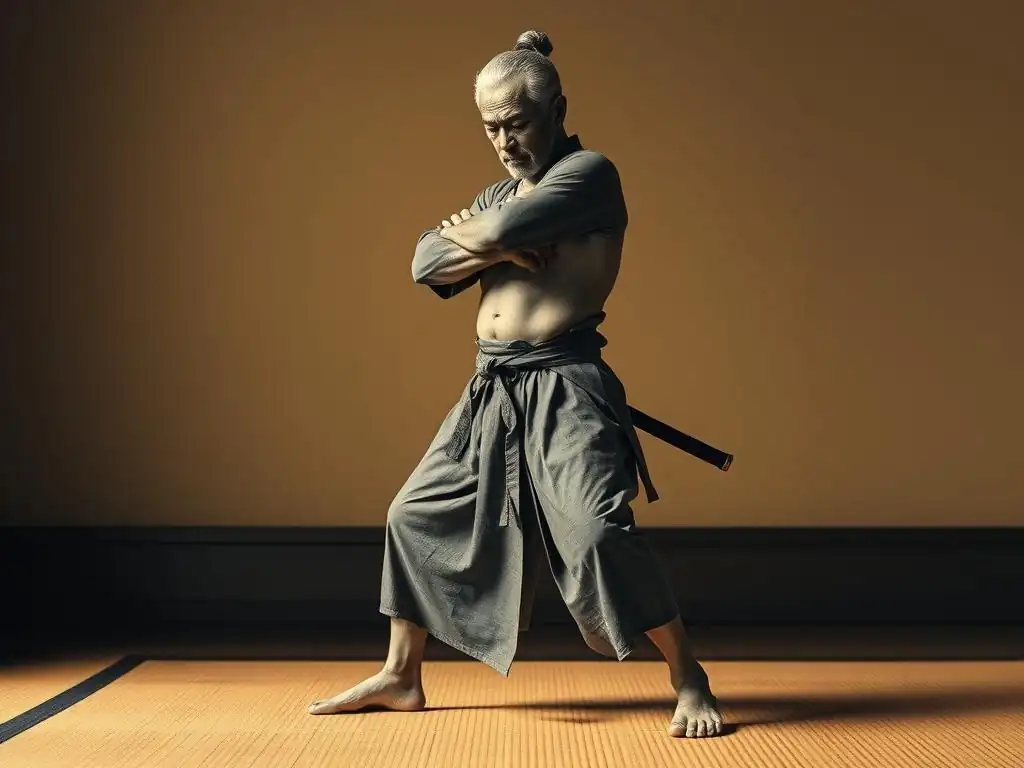
Using Maai to Control the Engagement
In a self-defense situation, the primary goal is often to avoid physical confrontation altogether. Maai is a crucial tool in this initial phase. Maintaining a safe, non-threatening distance allows you space and time to assess the situation, communicate, or retreat if possible. This 'awareness Maai' is about recognizing potential threats and keeping them outside your personal safety zone.
If physical engagement becomes unavoidable, controlling the Maai is paramount for survival. Depending on your skills and the situation, you might want to maintain a distance suitable for striking, or perhaps close the distance rapidly to prevent the attacker from using weapons or powerful strikes. The ability to instinctively choose and maintain the most advantageous Maai for your self-defense strategy is a critical skill. This practical application of the Maai philosophy martial arts can mean the difference between escaping harm and being injured.
Maintaining Maai Under Pressure
Self-defense scenarios are inherently stressful and unpredictable. Maintaining effective Maai under pressure – when adrenaline is high, and the threat is immediate – is significantly more challenging than in a controlled training environment. Fear can cause tunnel vision, disrupt timing, and lead to poor distance judgment. Training under simulated stress conditions is essential for developing the ability to manage Maai when it matters most.
This involves drilling techniques from disadvantageous positions, practicing against unpredictable attacks, and incorporating elements of surprise into training. The goal is to internalize the feeling of correct Maai so deeply that the appropriate distance and timing can be accessed instinctively, even amidst chaos. This resilience in applying the Maai philosophy martial arts under duress is a true test of a practitioner's skill and preparedness.
Maai as a Tool for De-escalation
Surprisingly, Maai can also be a tool for de-escalation. By consciously controlling the physical space between yourself and a potentially aggressive individual, you can influence the dynamic of the interaction. Maintaining a calm, non-challenging distance can signal that you are not looking for a fight. Moving too close can be perceived as aggressive, while moving too far might make the other person feel they need to pursue you.
Using Maai in de-escalation involves spatial intelligence – understanding how distance affects psychological states and intentions. It's about creating a space that feels safe enough for dialogue, or that provides an escape route. This non-combative application of Maai demonstrates its broader relevance beyond physical technique, highlighting the comprehensive nature of the Maai philosophy martial arts in managing conflict in all its forms.
The Ongoing Journey of Maai: Constant Refinement
Reflecting on Your Maai: Self-Assessment and Improvement
Mastering Maai is not a destination but a continuous process of self-assessment and refinement. After training or sparring, taking time to reflect on your performance is crucial. Ask yourself:
- Was my distance appropriate for the techniques I attempted?
- Did I react too early or too late?
- Did I get hit because my Maai was off?
- Could I read my partner's intentions effectively?
- How did my emotional state affect my Maai?
Analyzing these questions helps identify weaknesses in your understanding and application of Maai. Keeping a training journal can be beneficial for tracking progress and recurring issues. This deliberate reflection is key to internalizing the complex principles of the Maai philosophy martial arts and guiding future training.
The Master's Maai: Reaching a State of Intuitive Understanding
At the highest levels of martial arts, Maai is no longer a concept that is consciously calculated. It becomes an intuitive understanding, a natural extension of the practitioner's awareness and presence. Masters react instantly and appropriately to changes in distance and timing without thinking. Their movements appear effortless because they are always in the right place at the right time.
This state of intuitive Maai is the result of decades of dedicated practice, physical conditioning, mental discipline, and philosophical contemplation. It represents a complete integration of the physical, mental, and energetic aspects of martial arts. The master's Maai is not just about fighting distance; it's about a profound connection to the environment and the opponent, acting from a place of unified awareness. This is the ultimate goal of embodying the Maai philosophy martial arts.
Examples of Miyamoto Musashi and Morihei Ueshiba's Maai
Historical figures offer insight into the practical and philosophical mastery of Maai. Miyamoto Musashi, the legendary swordsman, discussed Maai extensively in his Go Rin No Sho (The Book of Five Rings). He wrote about different distances and rhythms, emphasizing the importance of adapting one's Maai to the opponent and the situation. Musashi's famous duels, often won with strategic timing and unconventional tactics, exemplify a profound understanding of disrupting an opponent's Maai and controlling the flow of combat.
Morihei Ueshiba, the founder of Aikido, embodied a different, yet equally profound, understanding of Maai, deeply rooted in the Maai philosophy martial arts. His techniques often involved entering so closely to the attacker that their ability to execute their original technique was nullified, while simultaneously putting himself in a dominant position. His emphasis on blending and redirecting energy required an almost spiritual connection to the attacker's movement and intention, allowing him to find the perfect, often counter-intuitive, Maai to harmonize with and neutralize the attack. Both masters, though different in approach, demonstrated the pinnacle of Maai mastery.
Maai: A Path to Martial Arts Mastery
Frequently Asked Questions
What is Maai and why is it important in martial arts?
Maai is a Japanese martial arts term referring to the optimal distance between opponents. Mastering maai is crucial for effective striking and defense, controlling the engagement.
How does the Maai philosophy martial arts relate to space and time?
The Maai philosophy martial arts emphasizes precise control of space to dictate timing. By understanding maai, a martial artist can manipulate their position and timing to gain a tactical advantage.
What are some practical training methods to improve my maai?
Practical training includes footwork drills, sparring with distance control, and analyzing opponent movement. Focus on maintaining the ideal distance for your techniques.
How does understanding maai contribute to self-defense strategies?
Understanding maai allows you to control the range in a self-defense situation, preventing attacks or creating opportunities for counter-attacks. It's about managing distance for safety.
Is the Maai philosophy martial arts applicable across different martial arts disciplines?
Yes, the Maai philosophy martial arts is a fundamental concept applicable across various disciplines. While the execution may differ, the core principle of distance control remains consistent.
Final Reflection: Embracing the Dance of Maai
The principles of Maai philosophy extend far beyond the dojo, resonating deeply within the complexities of modern life. Understanding the delicate balance of space and time, as embodied by Maai, offers a powerful framework for navigating our interactions, decisions, and even our personal growth. This isn't just about martial arts; it's about cultivating awareness in every facet of our existence.
The subtle art of Maai, with its emphasis on timing, distance, and intention, has profoundly influenced not only martial arts but also strategic thinking and interpersonal communication. Personally, I find the concept of Maai a constant reminder to be present and mindful in my interactions, to anticipate the movements of others, and to choose my actions with deliberate precision. The supreme art of war is to subdue the enemy without fighting.
- Sun Tzu. This quote encapsulates the essence of Maai, highlighting the power of strategic positioning and timing to achieve victory without direct confrontation.
Now, I invite you to consider how the philosophy of Maai can enrich your own life. Reflect on the spaces you occupy, the timing of your actions, and the intentions behind your movements. Can you find greater harmony and effectiveness by embracing the dance of Maai? Let us all strive to cultivate a deeper understanding of this profound principle, transforming our interactions and ultimately, our lives, into a more balanced and purposeful expression of ourselves.
Master the Art of Flow: Begin Your Maai Journey Now!
Thank you for exploring the profound concept of Maai and its impact on martial arts mastery. We hope you've gained a new appreciation for the subtle dance of space and time. Now, let's translate that knowledge into action!
- Begin integrating Maai into your training regimen this week. Experiment with different distances and timings during your drills to find your optimal "combative harmony."
- Research historical applications of Maai in various martial arts traditions to deepen your understanding and broaden your perspective.
- Share this article with fellow martial artists and spark a discussion on how they perceive and utilize Maai in their own practices.
What small adjustment to your timing or spacing will you implement in your next training session to enhance your Maai awareness?