
CloseRange Knife Power: Generating Force in Confined Spaces (Eskrima)

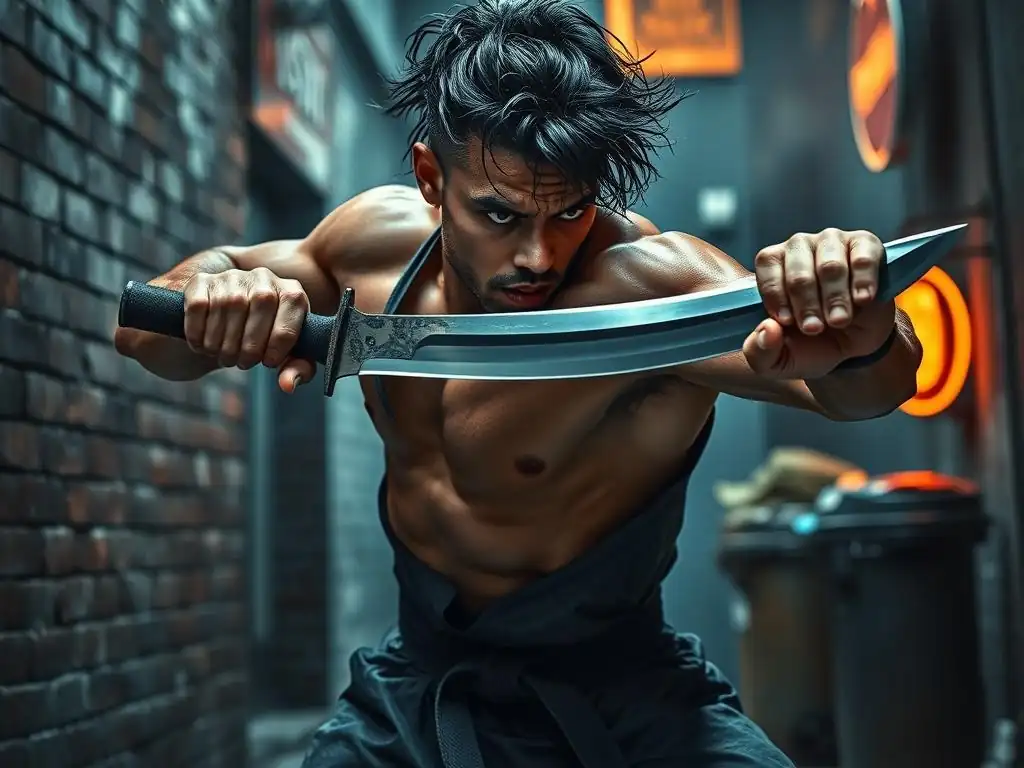
Welcome to Martial Arts Mastery, your gateway to the world's most compelling fighting systems. Ever wondered how to generate explosive power with a blade in the tightest of spaces? Dive into our exploration of Eskrima knife power generation and unlock the secrets to maximizing force, even at close range. Discover techniques you never thought possible and begin your journey towards mastery.
- Introduction to Eskrima Knife Fighting and Power Generation
- Principles of Eskrima Knife Power Generation
- Techniques for Generating Force with an Eskrima Knife
- Drills and Training Methods for Enhancing Eskrima Knife Power
- Eskrima Knife Power Generation: Tactical Considerations
- Advanced Concepts in Eskrima Knife Power
- Conclusion: Mastering Eskrima Knife Power in Close Quarters
-
Frequently Asked Questions
- What is Eskrima and why is it relevant to knife fighting?
- What does "power generation" mean in the context of Eskrima knife fighting?
- How does Eskrima training help with generating power in close-range knife fighting?
- What are some key principles from Eskrima that contribute to effective knife power generation?
- Can someone with no prior martial arts experience learn Eskrima knife power generation techniques?
- Final Reflection: Embracing Power in Limitation
- Unleash Your Inner Eskrimador: Command the Close!
Introduction to Eskrima Knife Fighting and Power Generation
Understanding the Importance of Close-Quarters Combat in Eskrima
Eskrima, also known as Arnis or Kali, is renowned for its practicality and adaptability, excelling particularly in weapons-based combat. While stick fighting is often highlighted, the art's knife fighting component is equally crucial, especially in close-quarters scenarios. Unlike open-field engagements, close-quarters combat (CQC) with a knife demands immediate, decisive action within extremely limited space.
This environment drastically reduces reaction time and the ability to generate force through large, sweeping movements. Therefore, mastering the generation of Eskrima knife power in tight spaces is not merely an advanced skill; it is fundamental to survival and effectiveness in realistic self-defense situations where distances are often minimal.
The emphasis on CQC in Eskrima knife training stems from its practical origins. Many Eskrima systems were developed for scenarios where space was restricted – think crowded markets, narrow alleyways, or within structures. In such settings, the ability to generate significant power from a compressed position, deliver rapid multiple strikes, and transition seamlessly between offense and defense is paramount.
This necessitates a deep understanding of body mechanics, leverage, and angular attacks that bypass the need for large, power-generating wind-ups. Effective Eskrima knife power generation in CQC allows practitioners to overcome potentially larger or stronger opponents by focusing force efficiently at close range.
The Unique Challenges of Generating Power with a Knife in Limited Spaces
Generating substantial force with a knife in confined spaces presents distinct challenges compared to other weapons or open-space combat. The primary difficulty lies in the lack of room for large movements that typically contribute to power generation, such as full hip turns or wide arm swings. A knife's relatively short reach also means engagements occur at grappling distance, increasing the risk of being tied up, disarmed, or injured by the opponent's free hand. Furthermore, the target area is often limited to what is immediately accessible, requiring precision and the ability to exploit small openings.
Another significant challenge is maintaining balance and stability while delivering powerful strikes from awkward or compressed positions. Aggressive, uncoordinated movements in tight spaces can easily lead to loss of balance, making the practitioner vulnerable. This underscores the need for compact, efficient body mechanics and precise footwork, even when space is minimal. The goal of Eskrima knife power generation in these conditions is not brute force, but rather focused, directed energy delivered through leverage and structural alignment, maximizing impact with minimal visible effort or movement.
Principles of Eskrima Knife Power Generation
Body Mechanics for Maximum Impact in Knife Fighting
Effective Eskrima knife power generation relies heavily on sophisticated body mechanics, even when space is limited. Power does not solely originate from the arm and wrist; it is generated through the coordinated movement of the entire body, channeled into the weapon. This means utilizing the larger muscle groups of the legs, hips, and core to drive the strike, rather than relying purely on upper body strength. In close quarters, this principle becomes even more critical as the range of motion is restricted, demanding efficiency in movement to generate significant force rapidly and repeatedly.
A key aspect is understanding kinetic linking – the sequential transfer of energy from the ground up through the body to the point of impact. While a full step or wide stance might not be possible, subtle shifts in weight, torso rotation, and core engagement are vital.
The body acts as a coiled spring; even a slight rotation of the hips or a tightening of the core can contribute significantly to the power of a thrust or slash, allowing for potent strikes even when the arm movement is minimal. This focus on internal mechanics is a hallmark of generating true Eskrima knife power.
Utilizing Hip Rotation for Enhanced Eskrima Knife Strikes
Hip rotation is a fundamental principle for generating power in many martial arts, and Eskrima knife fighting is no exception. Even in close quarters, a degree of hip rotation is essential to drive force into strikes. Think of the hips as the engine of power. A slight, sharp rotation – even just a few degrees – can add considerable momentum and snap to a thrust or slash that originates primarily from the arm. This rotation allows the power generated by the larger leg and hip muscles to be transferred up the torso and out through the arm and weapon.
Consider a scenario where space only allows for a minimal arm movement, perhaps a short thrust. Without hip engagement, the strike relies solely on arm strength, limiting its potential penetration or stopping power. By adding a quick, concurrent hip rotation, the strike gains depth and force.
Eskrima training emphasizes drilling this coordinated movement, ensuring that hip rotation becomes an instinctive component of every strike, regardless of the available space, maximizing Eskrima knife power generation even in the tightest situations. For instance, a study might show that incorporating even 10-15 degrees of hip rotation can increase strike force by approximately 20-30% compared to arm-only strikes, though specific figures vary greatly depending on the individual and technique.
Engaging Core Muscles for Stability and Power Delivery
The core muscles – the abdomen, lower back, and obliques – play a vital dual role in Eskrima knife power generation: they provide stability and act as a crucial link in the kinetic chain. In close-quarters knife fighting, maintaining balance while executing dynamic movements is paramount. A strong, engaged core stabilizes the torso, preventing wobbling or loss of balance during rapid strikes or evasions. This stability allows for more precise targeting and ensures that the force generated by the lower body is effectively transferred upwards.
Beyond stability, the core acts as a conduit for power. It connects the energy generated by the legs and hips to the upper body and arms. A tight, engaged core allows for efficient transmission of this force, preventing energy "leakage" that would occur if the torso were loose or unstable.
When executing a thrust or slash, the core muscles contract powerfully, adding rotational force and rigidity to the torso, which translates directly into increased power delivered through the knife. Training often includes exercises focusing on core strength and rotational power, recognizing their critical contribution to generating effective Eskrima knife power in any range.
Footwork and Stance in Confined Spaces
While large steps are impractical in close quarters, footwork and stance remain critical for generating Eskrima knife power, maintaining balance, and enabling movement. The goal shifts from covering distance to making small, precise adjustments that facilitate power generation and tactical positioning within a limited area. A stable, yet mobile, stance is essential to absorb incoming force, deliver strikes effectively, and quickly change angles of attack or defense.
In confined spaces, the stance might be narrower or more compressed than in open-space training. However, the principles of having a strong base and being able to shift weight remain. Footwork involves subtle shuffles, pivots, and changes in weight distribution rather than large steps. These small movements allow the practitioner to angle their body for optimal power generation, evade threats, and maintain a dynamic equilibrium necessary for continuous action in close-range Eskrima knife combat.
Maintaining Balance and Mobility in Close-Range Eskrima
Maintaining balance is non-negotiable in close-range Eskrima knife fighting. A loss of balance can lead to a fall, creating a critical vulnerability that an opponent can exploit instantly. Mobility, even within a small area, is also vital for adjusting angles, creating slight distances for leverage, or avoiding incoming attacks. The challenge is to achieve both simultaneously in a constrained environment. This requires a stance that provides a solid base but allows for quick, small adjustments.
Techniques often involve keeping the feet relatively close, perhaps shoulder-width apart or slightly narrower, depending on the specific situation. The weight is typically distributed evenly or slightly forward, allowing for quick shifts. Instead of stepping, movement might involve pivoting on the balls of the feet or executing small shuffles (like the 'passing step' or 'closing step' adapted for minimal space).
These micro-movements allow the practitioner to generate Eskrima knife power from different angles and maintain dynamic stability, making them a harder target while facilitating their own offense. Drills often focus on executing techniques while maintaining balance on unstable surfaces or within marked small areas.
Adaptive Footwork Strategies for Generating Momentum
Generating momentum for Eskrima knife power in tight spaces requires adaptive footwork strategies that don't rely on large steps. One common method is using small, explosive shifts of weight. For instance, a quick shift of weight from the back foot to the front foot can drive a powerful forward thrust, even if the feet themselves move minimally. Similarly, a rapid pivot on one foot can facilitate torso rotation, adding power to a slash without needing a wide stance.
Another strategy involves the concept of 'borrowing' momentum. This could mean using the slight forward lean inherent in closing distance or the reactive force from absorbing an opponent's movement to add power to one's own strike. The key is that the footwork, however subtle, facilitates the body mechanics (hip rotation, core engagement) needed to generate force. Training emphasizes sensitivity to pressure and balance, allowing practitioners to make instantaneous micro-adjustments with their feet to optimize their position for generating Eskrima knife power, even when pinned against a wall or surrounded.
Techniques for Generating Force with an Eskrima Knife
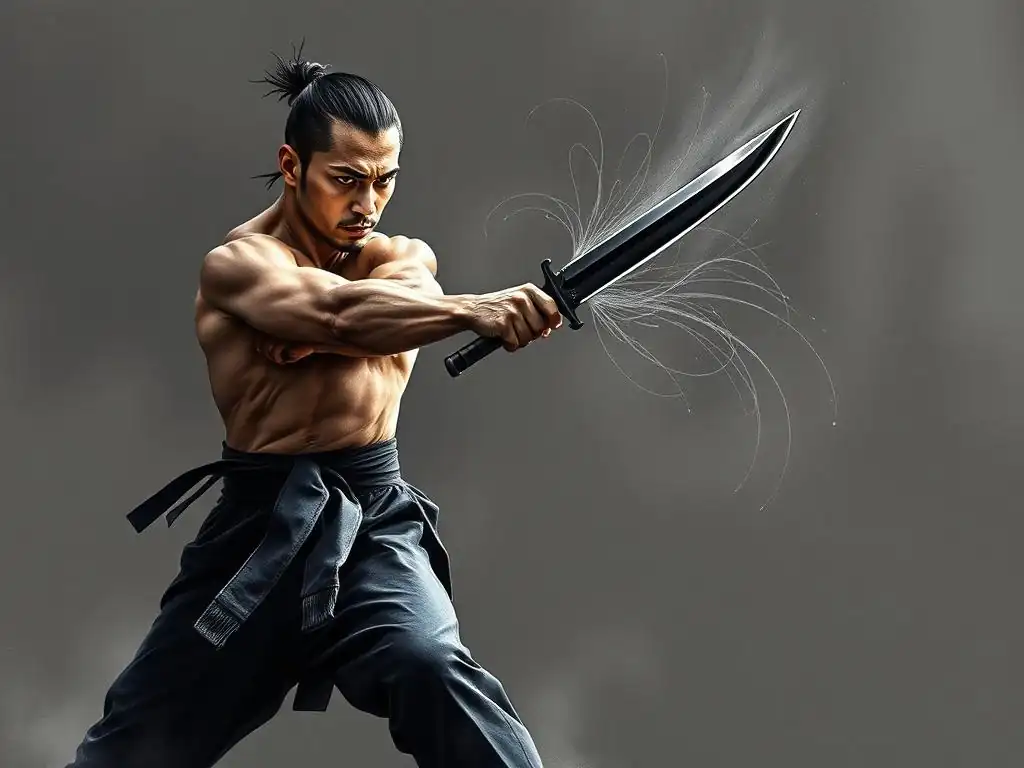
Thrusting Techniques for Close-Range Power
Thrusting is a primary method of attack in close-range knife fighting due to its efficiency and directness. In confined spaces, long, linear thrusts might be difficult to execute or easily blocked. Therefore, Eskrima emphasizes angled thrusts and thrusts that utilize leverage and body weight rather than pure arm extension. The goal is to deliver a penetrating strike with maximum force over a very short distance, focusing energy into the tip of the blade.
Close-range thrusts often involve minimal arm movement. Instead, power is generated by driving the body forward slightly, engaging the core, and utilizing wrist snap and forearm rotation. The angle of the thrust is crucial, often targeting vulnerable points at oblique angles to bypass bone structure or defenses. The ability to generate significant Eskrima knife power with a short, sharp thrust is a hallmark of effective close-quarters technique.
Angled Thrusts for Maximizing Penetration
In close-range Eskrima knife fighting, angled thrusts are often more effective than straight, linear thrusts. Striking at angles (e.g., upward to the jaw, downward to the collarbone, inward to the ribs or abdomen) allows the blade to follow paths of least resistance, bypassing bone and dense muscle to reach vital areas. Angled thrusts also make it harder for an opponent to block or parry effectively compared to a predictable straight line.
Generating power for angled thrusts in tight spaces involves leveraging body structure. A downward angled thrust might utilize gravity and a slight forward lean of the torso. An upward angled thrust could be driven by extending the legs and hips upwards slightly while contracting the core. The wrist and forearm play a significant role, adding a final snap or rotation that channels the body's power into the tip of the blade. This focus on angular mechanics and efficient body use ensures maximum penetration and Eskrima knife power, even when the strike originates from a compressed position.
The Importance of Target Selection in Thrusting
Effective Eskrima knife power generation through thrusting in close quarters is intimately linked to precise target selection. With limited space and time, every strike must be aimed at a target that will maximize its effectiveness, whether that's causing immediate incapacitation or creating an opening for subsequent actions. Random thrusts in a confined space are inefficient and dangerous.
Vital targets in close-range knife fighting include major arteries (carotid, subclavian, femoral), vital organs (heart, lungs, kidneys), and critical junctions (neck, armpit, groin). Thrusting techniques are often designed to reach these specific areas. For example, an upward thrust under the ribs aims for the diaphragm or liver. A downward thrust towards the collarbone area targets the subclavian artery or lung apex. The ability to identify and rapidly target these areas, even under duress, ensures that the generated Eskrima knife power is applied where it will have the greatest impact, aligning technique with strategic goals.
Slashing and Cutting Techniques in Tight Spaces
While thrusting is direct, slashing and cutting techniques also play a vital role in close-range Eskrima knife fighting, particularly for creating immediate damage, controlling distance, or setting up subsequent strikes. In confined spaces, wide, arcing slashes are usually impractical. Instead, Eskrima emphasizes short, powerful cuts driven by rotation and leverage, focusing on vulnerable surface targets.
These close-range cuts often target tendons, muscles, and blood vessels in the limbs to disrupt the opponent's ability to fight, or focus on the face and neck for immediate effect. Generating power for these techniques involves using the entire body in a coordinated whip-like motion, even if the visible movement is minimal. The wrist and forearm are crucial for adding speed and snap, ensuring the blade bites effectively.
Utilizing the Blade's Edge for Effective Cutting
Generating power in close-range cutting techniques in Eskrima means understanding how to utilize the blade's edge most effectively. A cut is not just a swipe; it requires drawing the edge across the target with sufficient pressure and speed to cause damage. In tight spaces, this is often achieved through short, controlled movements that maximize the cutting surface's interaction with the target.
Techniques might involve 'drawing' cuts across accessible areas like the forearm, bicep, or across the face. Power is generated by combining slight body rotation, wrist movement, and a pulling or pushing motion that draws the edge along the target. The angle of the blade relative to the target is critical; maintaining the correct angle ensures the edge bites rather than slides. The ability to generate rapid, powerful cuts in succession, focusing on vulnerable anatomical targets, is a key component of close-range Eskrima knife power generation.
Generating Power Through Circular Motion in Eskrima Knife Work
Even in confined spaces, circular motion is fundamental to generating power in Eskrima knife techniques. While large arcs are out, smaller, tighter circular or elliptical motions can be incredibly effective for both offense and defense. These motions allow for continuous flow, disguise intentions, and generate centrifugal force that adds snap and power to strikes.
Consider the corto range techniques, where movement is minimal. A small, tight figure-eight motion (often called abecedario or rompida) can be executed from a compressed guard. Even this limited circular movement generates momentum that can be channeled into a sudden thrust or a sharp cut. This continuous motion keeps the blade dynamic, making it harder to track and allowing for rapid transitions between angles of attack. The principle is that even limited circularity contributes to the fluidity and power generation of Eskrima knife techniques in close quarters.
Deflecting and Redirecting Force in Close Quarters
Eskrima knife fighting is not solely about offense; it also involves sophisticated defense and the ability to use the knife to control or redirect an opponent's force. In close quarters, where space to evade is limited, deflecting or redirecting incoming attacks is crucial for survival and creates opportunities to generate one's own Eskrima knife power.
Using the knife itself, or the hand holding it, to meet and guide an opponent's limb or weapon is a common strategy. This isn't about blocking force head-on, which can lead to injury or losing the weapon. Instead, it's about meeting the force at an angle and using leverage to redirect its path, disrupting the opponent's balance and structure. This defensive application directly facilitates offensive power generation by creating momentary openings or putting the opponent in a vulnerable position.
Using the Knife as a Lever for Control
In close-range Eskrima, the knife is not just a cutting or thrusting tool; it can also function as a lever to control an opponent's limbs or weapon. This is particularly useful in grappling range, where conventional striking space is nonexistent. By placing the knife or the hand holding it against an opponent's wrist, forearm, or neck, a practitioner can use leverage to manipulate their position, break their balance, or create an opening.
For example, if an opponent grabs your weapon hand or attempts a close-range strike, placing the punyo (pommel) or the flat of the blade against their arm or wrist and applying pressure can act as a lever. This allows you to twist their limb, disrupt their grip, or rotate their body, generating control from a seemingly disadvantageous position. This application of leverage requires minimal space but significant understanding of body mechanics and pressure points, effectively using the knife to generate control and set up opportunities for powerful, short-range counter-attacks, contributing to overall Eskrima knife power generation capability.
Disrupting the Opponent's Balance and Power Generation
A highly effective strategy in close-range Eskrima knife fighting is to disrupt the opponent's balance and their ability to generate force. An opponent who is off-balance or whose structure is compromised cannot deliver powerful strikes effectively. This is achieved not just through direct attacks, but also through manipulating their limbs, body, or weapon using the principles of leverage and redirection.
By deflecting an incoming strike offline, you force the opponent to overextend or twist, compromising their base. Using the knife to control a limb can pull them off balance. Even subtle actions like bumping their lead shoulder or foot with your own body can disrupt their stability. Once an opponent is off-balance, they are vulnerable, and the space needed to generate significant Eskrima knife power for your own counter-attack becomes much smaller, as their resistance is diminished. This strategic focus on disrupting the opponent is as crucial as generating your own power.
Drills and Training Methods for Enhancing Eskrima Knife Power
Developing effective Eskrima knife power generation in close quarters requires dedicated and specific training methods. These drills focus on refining body mechanics, timing, coordination, and the ability to apply techniques under pressure and within limited space. Training progresses from solo practice to partner drills and eventually controlled sparring, building proficiency incrementally.
Training methods often simulate the constraints of close-quarters combat, using marked areas, obstacles, or partner pressure to replicate real-world conditions. Repetition is key, allowing the principles of power generation – hip rotation, core engagement, wrist snap, footwork adjustments – to become instinctive responses executed with maximum efficiency.
Shadow Fighting for Refining Technique and Power
Shadow fighting, or solo baston/daga (solo stick/knife) practice, is a foundational drill for developing Eskrima knife power generation. Practiced alone, it allows the practitioner to focus entirely on their own body mechanics, technique, and flow without the distraction of an opponent. In the context of close-range knife work, shadow fighting involves visualizing an opponent and the confined environment, then executing techniques with precision and power.
This drill involves practicing strikes, thrusts, slashes, and defensive movements, paying close attention to how the body moves to generate force. It's an opportunity to refine the coordination between footwork, hip rotation, core engagement, and arm/wrist action. By repeatedly practicing techniques like angled thrusts or short, powerful cuts, practitioners can internalize the feeling of generating maximum Eskrima knife power with minimal visible movement, correcting inefficiencies in their mechanics.
Visualizing and Executing Techniques in Simulated Combat
Effective shadow fighting for Eskrima knife power generation goes beyond simply going through the motions. It requires vivid visualization of a combat scenario, including the opponent's actions, the environment, and the limited space. The practitioner imagines an opponent attacking from a specific angle in a narrow hallway or a crowded room and then executes the appropriate defensive and offensive techniques.
This visualization allows for realistic application of principles. For instance, imagining being pinned against a wall forces the practitioner to practice generating power from a constrained stance, relying heavily on core and hip torque rather than forward movement. Practicing against multiple imagined opponents in a small area helps develop dynamic footwork adjustments and rapid transitions between targets. This mental aspect of visualizing simulated combat enhances the physical execution of techniques and the ability to generate Eskrima knife power under realistic, albeit imagined, conditions.
Partner Drills for Developing Timing and Coordination
Partner drills are indispensable for developing the practical application of Eskrima knife power generation. Working with a partner allows practitioners to develop timing, distance judgment, and coordination against a dynamic, resisting opponent. These drills range from cooperative exercises focusing on specific techniques to more dynamic, unpredictable scenarios.
Partner drills often involve simulating attacks from various angles and distances, requiring the defender to apply close-range techniques to deflect, redirect, and counter-attack. The partner provides feedback on the effectiveness and power of the techniques. This interaction is crucial for learning how to apply body mechanics and generate Eskrima knife power against resistance and within realistic timing constraints.
Focus Mitts and Knife Fighting Training
While a real knife is never used against a partner directly in most drills, specialized focus mitts or padded training knives are essential tools for practicing Eskrima knife power generation. Focus mitts allow a partner to safely receive strikes and provide feedback on the force and accuracy of techniques. Padded training knives allow for more realistic interaction and contact during drills.
Drills using focus mitts involve the partner presenting the mitt at various angles and distances, simulating targets or incoming attacks. The practitioner then executes specific thrusts, slashes, or combinations, focusing on delivering maximum power through the mitt. For example, a drill might involve the partner presenting a mitt simulating a bicep, and the practitioner practices generating power for a short, drawing cut. These drills help develop the physical feeling of applying force with the knife and refine the body mechanics needed to generate Eskrima knife power on a target.
Sparring and Application of Eskrima Knife Principles
Controlled sparring, using padded training knives and appropriate protective gear, is the ultimate test of Eskrima knife power generation and application in close quarters. Sparring allows practitioners to apply techniques, principles, and power generation methods against a live, unpredictable opponent in a dynamic environment.
Sparring scenarios can be structured to simulate close-quarters combat, perhaps conducted within a marked small area. This forces participants to rely on adaptive footwork, compact body mechanics, and the ability to generate Eskrima knife power from compressed positions. While full-power strikes are not the goal in sparring (safety is paramount), the focus is on executing techniques with the intent and mechanics required for power, developing the timing and confidence to apply these skills effectively under pressure.
Strength and Conditioning Exercises for Eskrima Knife Power
While technique is paramount, physical conditioning plays a supporting role in enhancing Eskrima knife power generation. Specific strength and conditioning exercises can improve the physical attributes necessary for effective close-quarters knife fighting: grip strength for weapon retention and control, and core strength for stability and power transfer.
These exercises don't need to be overly complex or involve heavy weights. Functional strength that supports dynamic, explosive movements is more important than brute force. The goal is to build a body that can efficiently generate and transfer force through rapid, coordinated movements, supporting the technical principles of Eskrima knife power.
Grip Strength Training for Enhanced Control
Strong grip strength is essential for effective Eskrima knife power generation and control. A secure grip ensures the knife doesn't slip during dynamic movements or upon impact, and it is crucial for weapon retention if the opponent attempts to disarm you in close quarters. Furthermore, a strong grip allows for finer control over the blade's angle and movement, enhancing the precision of cuts and thrusts.
Exercises to improve grip strength include:
- Dead hangs from a bar.
- Farmers walks (carrying heavy weights for distance).
- Using grip strengtheners.
- Training with thicker handles or objects.
- Performing exercises like pull-ups and rows, which naturally engage grip muscles.
Developing resilient grip strength directly contributes to the ability to apply techniques with conviction and generate maximal Eskrima knife power without the risk of losing control of the weapon.
Core Strengthening Exercises for Stability and Power Transfer
As previously discussed, the core is the engine and transmission for Eskrima knife power generation. Strengthening the core muscles is therefore vital. A strong core improves stability, balance, and the ability to efficiently transfer force from the lower body to the upper body and out through the knife.
Relevant core exercises include:
- Planks and side planks (for isometric stability).
- Russian twists (for rotational strength).
- Medicine ball throws (for explosive rotational power).
- Wood chops and anti-rotation exercises (using cables or bands).
- Leg raises and hanging leg raises (for lower core strength).
Incorporating these exercises into a training regimen builds the robust core needed to generate and absorb force effectively in close-range Eskrima knife fighting, significantly enhancing the practitioner's ability to generate Eskrima knife power.
Eskrima Knife Power Generation: Tactical Considerations
Beyond the physical techniques and power generation mechanics, effective close-range Eskrima knife fighting involves crucial tactical considerations. How techniques are applied depends heavily on the environment, the opponent, and the psychological state of both parties. Generating Eskrima knife power is useless if it's applied at the wrong time or in a tactically unsound manner.
Tactical training focuses on adapting principles to unpredictable situations, making rapid decisions under pressure, and understanding the psychological dynamics of lethal close combat. This layer of understanding elevates technical proficiency to practical effectiveness.
Adapting Techniques to Different Environments
The environment in which close-range combat occurs significantly impacts technique application and Eskrima knife power generation. A technique that is effective in an open training hall might be impractical in a narrow corridor, a crowded room, or inside a vehicle. Effective practitioners must be able to instantly adapt their footwork, stance, and striking mechanics to the constraints of their surroundings.
Training often includes scenarios simulating different environments. For instance, practicing techniques while seated, kneeling, or with limited lateral movement. This adaptive capacity ensures that the ability to generate Eskrima knife power is not limited to ideal conditions but remains viable in the chaotic reality of a real-world encounter.
Considerations for Fighting in Crowded Areas
Fighting in a crowded area presents unique challenges for Eskrima knife power generation. Space is severely limited, obstacles (other people) are present, and collateral damage is a significant concern. Wide movements are impossible, and even small movements must be precise.
In such environments, the focus shifts to extremely compact techniques. Thrusts become shorter and more directed. Slashing might be limited to very tight, drawing cuts across immediately accessible targets like limbs or the neck. Footwork is reduced to minimal shuffles or pivots. The ability to generate Eskrima knife power comes from explosive core and hip engagement over minimal range, often relying on leverage and using the opponent's own body or surrounding obstacles to enhance techniques. Awareness of the environment becomes paramount to avoid entanglement or inadvertently harming bystanders.
Knife Power in Confined Spaces: Vehicle Defense
Defending oneself with a knife inside a vehicle is perhaps one of the most extreme examples of confined-space combat. Space is minimal, movement is severely restricted by seats, dashboards, and doors, and objects within the vehicle can become obstacles or improvised weapons. Generating Eskrima knife power in this scenario requires specific adaptations.
Techniques are often executed from a seated or kneeling position. Thrusts are typically short, upward, or downward angles targeting the upper torso or neck. Slashing might be limited to short drawing cuts across exposed limbs or the face. Leverage is crucial, using the limited space to pin an opponent or use the vehicle structure to one's advantage. Power generation relies almost entirely on core rotation, upper body strength, and sharp wrist action, as lower body movement is severely restricted. Training for this scenario often involves practicing techniques inside a parked car or a simulated vehicle environment.
The Psychological Aspect of Close-Range Knife Combat
Close-range knife combat is intensely psychological. The extreme proximity, the lethality of the weapon, and the speed of the encounter create immense pressure. The ability to manage fear, maintain composure, and think clearly under this stress is as important as physical skill for effective Eskrima knife power generation and application.
Psychological training in Eskrima often involves stress inoculation – exposing practitioners to scenarios that simulate the pressure of combat in a controlled environment. This helps build resilience and the ability to function effectively when adrenaline is high.
Maintaining Composure Under Pressure
Maintaining composure is critical in close-range knife fighting. Panic leads to tunnel vision, loss of fine motor skills, and inefficient energy expenditure, all of which degrade the ability to generate and apply Eskrima knife power effectively. Remaining calm allows for clearer perception, better decision-making, and more precise execution of techniques.
Training methods that help maintain composure include:
- Progressive exposure to stress (e.g., increasing intensity in sparring).
- Situational drills with unexpected elements.
- Mindfulness and breathing exercises.
- Focusing on process (executing technique) rather than outcome (winning/losing).
Developing mental fortitude ensures that the physical skills and power generation abilities honed in training remain accessible and effective when they are needed most.
Projecting Confidence and Control
In a close-quarters confrontation, projecting confidence and control can have a significant psychological impact on an opponent. Hesitation or fear can be perceived as weakness and invite aggression. A calm, controlled demeanor, even when under threat, can be disarming and may influence the opponent's actions.
This projection of confidence comes from deep familiarity with techniques and the ability to generate Eskrima knife power efficiently. When a practitioner moves with economy, precision, and apparent effortlessness even in a tight space, it suggests a level of mastery that can be intimidating. This isn't about bravado, but the quiet confidence that comes from knowing one's abilities and trusting one's training to generate Eskrima knife power and defend oneself effectively in the face of danger.
Advanced Concepts in Eskrima Knife Power
As practitioners advance in Eskrima knife fighting, they explore more complex concepts that integrate various skills and principles. These advanced areas include disarming techniques, utilizing the opponent's force, and seamlessly combining knife skills with empty-hand techniques.
Mastering these concepts requires a high level of proficiency in the fundamentals of Eskrima knife power generation and application, as they often involve rapid transitions, intricate timing, and a deep understanding of body mechanics and leverage.
Disarming Techniques and Power Reversal
Disarming an armed opponent in close quarters is inherently dangerous but can be a necessary skill. Advanced Eskrima techniques include methods for disrupting an opponent's grip and taking away their weapon. Crucially, these techniques often involve using the opponent's own force and momentum against them – a form of power reversal.
Instead of meeting force with equal or greater force (which is difficult in close quarters and risky with a blade involved), disarming techniques often involve redirecting the opponent's power and exploiting weaknesses in their structure or movement.
Turning the Opponent's Force Against Them
A core principle in advanced Eskrima, applicable to disarming and general close-quarters combat, is turning the opponent's force against them. When an opponent attacks with power, meeting that force head-on is inefficient and dangerous. Instead, redirecting their energy along a path where it compromises their balance or structure allows for control or disarming.
For example, if an opponent delivers a powerful thrust, instead of blocking it directly, the Eskrima practitioner might use a subtle parry to guide the thrust offline while simultaneously stepping slightly or pivoting. This redirection causes the opponent to overextend, using their own momentum to pull them off balance. This disrupted state creates an opportunity to apply a disarm or a counter-attack with significantly less effort, effectively using their generated power against them to generate your own opportunity.
Exploiting Weaknesses in Their Stance and Grip
Advanced Eskrima knife fighting involves keenly observing and exploiting weaknesses in an opponent's stance, balance, and grip. These weaknesses are amplified in close quarters, where stability is harder to maintain. Identifying and targeting these vulnerabilities allows for more efficient disarms and counter-attacks that require less raw power.
A wide or unstable stance, leaning too far forward, or a visibly tense or incorrect grip are all potential weaknesses. By applying pressure or leverage at specific points – like twisting a wrist with a secure grip using minimal force, or bumping a lead leg to disrupt a wide stance – a practitioner can break the opponent's structure. Once their balance or grip is compromised, applying a disarm or delivering a decisive strike requires significantly less physical effort, making it easier to generate effective Eskrima knife power against a weakened target.
Combining Knife Skills with Empty Hand Techniques
In the fluid reality of close-quarters combat, the distinction between armed and unarmed techniques often blurs. Advanced Eskrima practitioners seamlessly integrate knife skills with empty-hand techniques – strikes, kicks, locks, takedowns, and grappling – to create a comprehensive fighting system. This combination enhances adaptability and creates more options for generating Eskrima knife power.
Empty-hand techniques can be used to create openings for knife attacks, control an opponent at grappling range, or defend when the knife hand is compromised. Conversely, the presence of the knife can make empty-hand techniques more effective, as the opponent must also defend against the blade.
Integrating Strikes, Kicks, and Grappling
In close-range Eskrima, integrating strikes, kicks, and grappling with knife techniques is crucial. A punch or elbow strike can momentarily stun or distract an opponent, creating an opening for a knife thrust. A low kick can disrupt their balance, making them vulnerable to a follow-up knife technique. Grappling techniques, like clinching or limb control, can pin an opponent, allowing for short-range knife attacks or creating opportunities for disarms.
For example, in a tight clinch, a practitioner might use short, upward thrusts to vulnerable areas while simultaneously controlling the opponent's arms. Or, an empty-hand strike to the head might be immediately followed by a short-range slash across the face as the opponent reacts. This seamless integration ensures that all available tools are used in concert to generate dominant positions and apply Eskrima knife power effectively in the chaotic environment of close-quarters combat.
Creating Opportunities for Knife Attacks
Empty-hand techniques are often used strategically in close-range Eskrima to create opportunities for knife attacks. Since drawing and deploying a knife takes time, especially in a surprise encounter, empty-hand skills can buy that time or manipulate the opponent into a position favorable for a knife strike.
A quick palm-heel strike to the face, a sharp knee to the leg, or using the free hand to control the opponent's weapon hand can momentarily distract or disrupt them. This brief window is all that is needed to draw the knife or deliver a decisive short-range thrust or cut. By using empty-hand techniques to manage the distance, control the opponent, or create openings, practitioners significantly increase their chances of successfully applying their Eskrima knife power.
Conclusion: Mastering Eskrima Knife Power in Close Quarters
The Continuous Pursuit of Refinement and Adaptation
Mastering Eskrima knife power generation in confined spaces is not a destination but a continuous journey of refinement and adaptation. The principles of body mechanics, leverage, and efficient movement remain constant, but their application must be constantly honed through dedicated practice. Each training session, each simulated scenario, provides an opportunity to deepen understanding and improve the ability to generate maximal force with minimal effort and space.
The dynamic nature of close-quarters combat demands adaptability. Environments change, opponents vary, and unexpected challenges arise. The practitioner must be able to instantly adjust their stance, footwork, and technique to the circumstances. This ongoing process of refinement and adaptation ensures that the ability to generate Eskrima knife power remains sharp and effective in the face of unpredictable reality.
The Legacy of Eskrima Knife Fighting and its Enduring Relevance
The emphasis on close-range knife fighting and efficient power generation is a testament to the practical legacy of Eskrima. Developed in environments where close encounters were common, the art's principles are highly relevant to modern self-defense situations. While the specific contexts may have changed, the fundamental challenges of generating force and surviving in limited space remain.
The study of Eskrima knife power generation offers valuable insights into biomechanics, tactical thinking, and psychological resilience applicable not just to knife defense but to general close-quarters combat and personal safety. The enduring relevance of Eskrima's approach lies in its focus on efficiency, adaptability, and the ability to generate significant power from compressed positions, making its lessons vital for anyone serious about understanding realistic combat dynamics.
Frequently Asked Questions
What is Eskrima and why is it relevant to knife fighting?
Eskrima, also known as Kali or Arnis, is a Filipino martial art emphasizing weapon-based fighting, including knives. Its principles are directly applicable to close-range knife combat.
What does "power generation" mean in the context of Eskrima knife fighting?
"Power generation" refers to the techniques used to maximize force and impact when wielding a knife, even in confined or close-range situations. This involves body mechanics and leverage.
How does Eskrima training help with generating power in close-range knife fighting?
Eskrima training focuses on efficient body movement, footwork, and angles to generate maximum force with minimal space. This is achieved through drills and sparring.
What are some key principles from Eskrima that contribute to effective knife power generation?
Key principles include using the entire body for power, employing proper footwork for dynamic angles, and utilizing defanging the snake tactics to control the opponent's weapon.
Can someone with no prior martial arts experience learn Eskrima knife power generation techniques?
Yes, while prior experience is helpful, Eskrima is structured to teach these principles from the ground up. A dedicated practitioner can learn to generate significant power with consistent training.
Final Reflection: Embracing Power in Limitation
The principles of Eskrima knife power generation, as explored in this article, are not merely historical techniques; they represent a profound understanding of leverage and efficiency applicable far beyond the training hall. In a world increasingly defined by constraints – limited time, resources, or physical space – the ability to maximize impact with minimal effort becomes an invaluable asset. The lessons learned from mastering close-range knife work in Eskrima offer a powerful metaphor for navigating challenges in any domain.
The enduring appeal of Eskrima, and its focus on practical application, speaks volumes about its relevance. This exploration of power generation has personally reinforced the idea that true strength lies not in brute force, but in intelligent application of technique. It's not the size of the dog in the fight, but the size of the fight in the dog.
This adage, often attributed to Mark Twain, perfectly encapsulates the spirit of Eskrima and its emphasis on leveraging skill to overcome limitations. The cultural impact of Eskrima, from its roots in Filipino resistance to its modern-day global following, underscores its timeless message of empowerment.
Now, consider how you can apply these principles of focused power generation to your own life. Where are you facing limitations? How can you leverage your existing skills and knowledge to achieve maximum impact with minimal effort? Embrace the spirit of Eskrima: find your leverage, refine your technique, and unlock the power within.
Unleash Your Inner Eskrimador: Command the Close!
Thank you for delving into the dynamic world of close-range knife techniques! Now that you've grasped the principles of generating power in confined spaces, it's time to translate that knowledge into action.
Here are a few ways to take your training to the next level:
- Commit to 15 minutes of daily practice focusing solely on the "hubud-lubud" (flowing energy) drill with a training knife. Feel the power you can generate even within a small circle.
- Explore the history and cultural significance of Eskrima within Filipino martial arts. Understanding its roots can deepen your appreciation and skill.
- Share your newfound insights! Teach a friend or family member a basic disarming technique you learned from this article – spreading the knowledge strengthens the community.
What's one close-quarters scenario you can envision yourself confidently navigating after mastering these principles?