
The Real Mulan: Uncovering the Historical Woman Warrior Behind the Legend

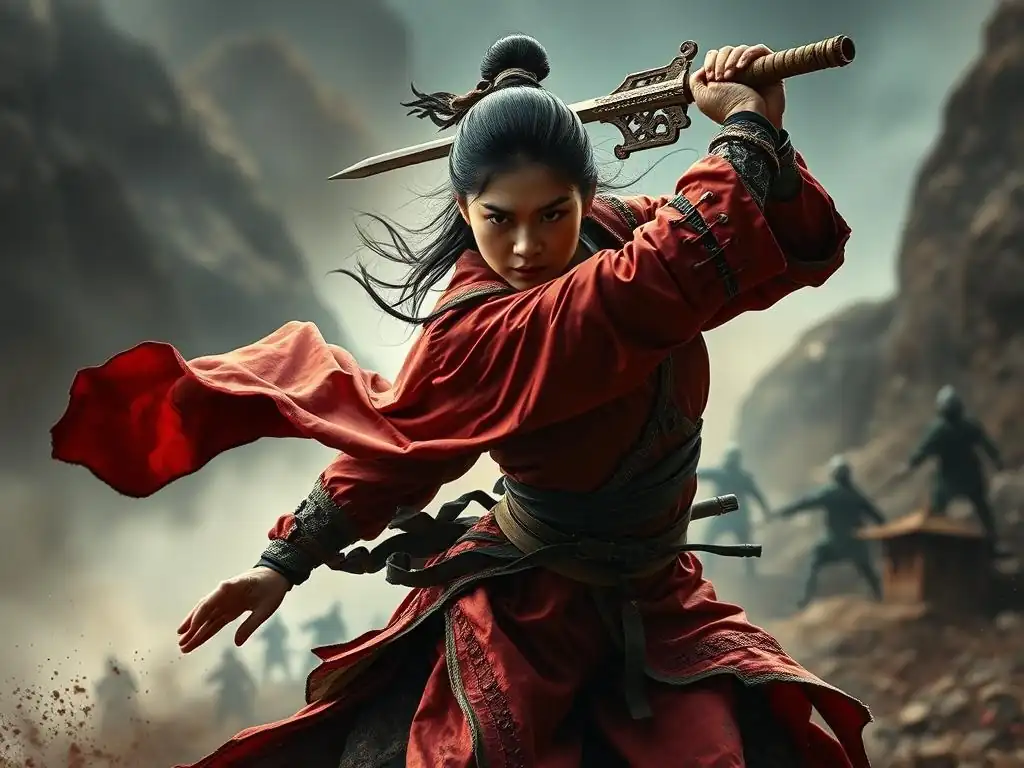
Welcome to Martial Arts Mastery, your gateway to the world's fighting arts. But how much of what we know about legendary figures is fact, and how much is fiction? Dive into our profile of the Mulan historical warrior legend and uncover the fascinating truth behind the iconic Disney character. Prepare to be surprised as we explore the historical roots of this enduring tale and separate myth from reality. Are you ready to discover the warrior woman who inspired generations?
- Hua Mulan: Uncovering the Historical Influences Behind the Legend
- Introduction: Separating the Mulan Legend from Potential Historical Influences
- Delving into the Ballad of Mulan: The Primary Source
- Potential Historical Context: Examining the Social and Military Landscape
- Military Practices and Gender Roles: Contextualizing Mulan's Actions
- Mulan in Folklore and Popular Culture: Evolution and Adaptations
- Mulan's Legacy: A Symbol of Courage, Filial Piety, and National Identity
- Other Female Figures and Warrior Archetypes in Chinese History and Literature
- Conclusion: Understanding the Enduring Appeal of the Mulan Legend
-
Frequently Asked Questions
- What is the primary focus of MartialArtsMastery.org?
- How does the "Real Mulan" article relate to the overall theme of MartialArtsMastery.org?
- Is Mulan a purely fictional character, or is there a historical basis for her legend?
- What aspects of martial arts might be explored in relation to Mulan's story?
- What are some of the self-defense strategies that the article may cover in relation to the Mulan historical warrior legend?
- Final Reflection: Echoes of Courage, Whispers of Truth
- Unveil Your Inner Warrior: Continue Mulan's Legacy!
Hua Mulan: Uncovering the Historical Influences Behind the Legend
Introduction: Separating the Mulan Legend from Potential Historical Influences
Exploring the enduring appeal of the Hua Mulan legend
The story of Hua Mulan, the young woman who disguises herself as a man to take her elderly father's place in the army, has captivated audiences for centuries. Its enduring appeal lies in its powerful themes of filial piety, courage, and the subversion of traditional gender roles.
Across various cultures and historical periods, the tale of Mulan resonates as a narrative of self-sacrifice and heroism, particularly appealing to those interested in strong female characters and the concept of a female warrior legend. The legend's ability to adapt and evolve through different retellings has cemented its place as a timeless classic, inspiring countless adaptations in literature, opera, and film.
This narrative taps into universal human values, presenting a protagonist who embodies duty and bravery in the face of immense personal risk. The idea of a young woman successfully navigating the brutal world of military life for twelve years, earning respect and distinction, speaks to a desire for stories that challenge conventional limitations. The mysterious origins and lack of definitive historical proof for the Mulan historical warrior legend only add to its mystique, allowing each generation to reinterpret her story and find new meaning in her extraordinary journey.
The challenge of identifying potential historical influences within the Mulan story
Despite the legend's widespread fame, identifying specific, verifiable historical influences for the Hua Mulan story presents a significant challenge. The earliest known source, the "Ballad of Mulan," is a folk song from the Northern Dynasties period (roughly 4th to 6th centuries CE), a time marked by political upheaval and conflict in China. While the ballad mentions historical figures and places, it lacks the precise details typically found in official historical records. This makes it difficult to pinpoint a specific individual or event that directly inspired the entire narrative.
Historians and scholars have long debated whether Mulan was a real person, a composite figure based on various women warriors, or purely a literary creation. The fluidity of folklore and oral tradition means that elements from different stories or historical accounts could have been woven together over time, making it nearly impossible to untangle fact from fiction. The absence of Mulan in major historical texts like the Twenty-Four Histories, which meticulously documented significant individuals and events of various dynasties, further complicates the search for a factual basis for the Mulan historical warrior legend.
Why Mulan resonates with audiences interested in history and female empowerment
Mulan's story strikes a chord with modern audiences, particularly those interested in history and female empowerment, because it portrays a woman taking control of her destiny and excelling in a traditionally male domain. In an era where discussions about gender equality and breaking barriers are prominent, Mulan serves as a powerful, albeit legendary, example of a woman defying societal expectations to achieve greatness. Her skills in martial arts and warfare, though possibly exaggerated in the legend, highlight the potential and capability of women often overlooked in historical narratives.
The historical context, even if loosely applied, adds a layer of intrigue, prompting audiences to consider the real challenges and opportunities for women in ancient Chinese society. The blend of historical setting with a heroic female protagonist provides a compelling narrative that encourages exploration of both the past and contemporary issues of gender roles and identity. This combination makes the Mulan historical warrior legend a relevant and inspiring tale for those seeking stories of resilience, duty, and the power of women to shape their own narratives.
Delving into the Ballad of Mulan: The Primary Source
Analyzing the "Ballad of Mulan" text: origin, variations, and literary significance
The "Ballad of Mulan" (木蘭辭, Mùlán Cí) is widely considered the foundational text for the Mulan legend. Its exact date of composition is unknown, but it is believed to originate from the Northern Dynasties period (386–589 CE), a time when northern China was ruled by non-Han dynasties, often engaged in warfare. The ballad was later included in the Collection of Music Bureau Records (Yuefu Shiji), compiled in the 12th century, which helped preserve it. The original ballad is relatively short, comprising around 300 Chinese characters, and tells a concise, poignant story of Mulan's service and return.
Over centuries, variations and expansions of the story appeared in plays, novels, and other literary forms. One notable expansion is the Ming Dynasty novel Romance of Sui and Tang by Chu Renhuo, which incorporates Mulan's story into a larger historical epic, adding details and subplots not present in the original ballad. These later versions often elaborate on Mulan's experiences in the army and her interactions with fellow soldiers and commanders.
The ballad's literary significance lies in its status as a classic example of Northern Dynasties folk poetry, characterized by its simple, direct language, vivid imagery, and focus on human emotion and action. It represents a unique blend of historical context, cultural values, and individual heroism, contributing significantly to the body of Chinese literature and solidifying the Mulan historical warrior legend.
Key themes and plot points in the ballad: filial piety, gender roles, and war
The central theme of the "Ballad of Mulan" is filial piety (孝, xiào), the Confucian virtue of respect for one's parents and ancestors. Mulan joins the army not out of ambition or a desire for glory, but solely to protect her aging father from the hardship of conscription. This act of selfless duty is the driving force behind her decision and is highly praised within the narrative. The ballad opens with Mulan sighing by her loom because her father's name is on the conscription list, immediately establishing the context of familial obligation.
Another key theme is the subversion and negotiation of traditional gender roles. Mulan lives as a man for twelve years in the army, demonstrating that courage, skill, and leadership are not exclusive to one gender. The ballad highlights her ability to perform all the duties of a soldier, earning recognition and promotion.
However, upon her return, she sheds her disguise and returns to her female identity, suggesting a complex interplay between societal expectations and individual capability. The brutal reality of war is also a prominent element, depicted through mentions of battles, mountains, and plains, providing a stark backdrop against which Mulan's heroism unfolds. The ballad's portrayal of the rigors of military life underscores the magnitude of Mulan's sacrifice and resilience.
The ballad's portrayal of Mulan's courage, skill, and sacrifice
The ballad vividly portrays Mulan's exceptional courage and skill. It describes her riding into battle alongside her comrades, traversing mountains and plains, and participating in numerous engagements. Phrases like "she rode a thousand miles to the war" and "her spirit flew like a bird, her courage was like steel" emphasize her bravery and determination. Although the ballad doesn't provide specific details about her martial arts training or techniques, it implies a high level of competence in warfare, including horsemanship, archery, and potentially sword fighting, skills essential for any soldier of that era.
Mulan's sacrifice is the emotional core of the story. She gives up her life at home, disguises her identity for over a decade, and endures the hardships and dangers of military service, all for her family. The ballad culminates with her refusal of high official posts upon her return, asking only for a camel to ride home, further emphasizing her humility and focus on familial duty rather than personal gain. This selfless act, combined with her demonstrated capability as a warrior, elevates her to the status of a legendary hero, embodying the ideals of loyalty, bravery, and filial piety.
The scarcity of direct verifiable historical records of Hua Mulan
The primary challenge in identifying a historical basis for the Mulan historical warrior legend is the striking absence of any mention of Hua Mulan in official Chinese historical records from the periods she is most commonly associated with, such as the Northern Wei Dynasty (386–535 CE). These dynastic histories, like the Wei Shu (Book of Wei), were meticulous in documenting significant military campaigns, officials, and notable individuals, including acts of bravery or unusual circumstances.
The lack of any entry for a female soldier serving for twelve years and achieving distinction is a significant point against her being a literal historical figure as depicted in the ballad.
While the ballad mentions the Khan and specific battle locations that could potentially align with conflicts during the Northern Dynasties, no historical records corroborate the story of a woman named Mulan performing these feats. This has led most historians to conclude that while the ballad is set against a backdrop of real historical conflict and military practices, the character of Hua Mulan herself is almost certainly legendary or a composite figure, rather than a single, identifiable historical person. The legend likely drew inspiration from the general realities of the time but was not a direct biographical account.
Assessing the plausibility of the ballad's narrative within the context of Northern Wei Dynasty or other relevant periods
Despite the lack of a specific historical Mulan warrior, the ballad's narrative elements are not entirely implausible within the broader historical context of periods like the Northern Wei. This era saw frequent conflicts along the northern borders, requiring large-scale conscription. Military service was mandatory for able-bodied men, and families were often required to provide a soldier. The concept of a family sending a substitute was also known, though typically it would be a male relative.
Furthermore, while official military service was predominantly male, there are scattered historical accounts and archaeological evidence from various periods in Chinese history suggesting that women did participate in warfare in different capacities, sometimes even leading troops or defending fortifications. These instances were rare and often occurred out of necessity, such as during rebellions or invasions, but they demonstrate that the idea of a female warrior, while outside the norm, was not entirely alien to the historical consciousness.
The ballad's narrative of Mulan maintaining her disguise for twelve years is perhaps the most challenging element to reconcile with historical reality, given the close quarters and physical demands of military life, but the core concept of a woman fighting in disguise is not without extremely rare historical parallels or literary precedents.
Theories and speculations about potential historical inspirations for the Mulan story
Numerous theories and speculations exist regarding potential historical inspirations for the Mulan story, though none have definitive proof. One theory suggests that the story might be loosely based on accounts of women from nomadic or semi-nomadic groups in the north, who often had more fluid gender roles and where women sometimes participated in hunting and even warfare alongside men. The Northern Wei Dynasty was founded by the Tuoba people, a Xianbei group, and their cultural practices differed in some ways from those of traditional Han Chinese society.
Another speculation points to possible connections with specific historical female figures known for their bravery or military actions, though none match Mulan's story precisely. For example, figures like Fu Hao, a consort of a Shang Dynasty king who also served as a military general (c. 1200 BCE), or later figures known for defending their homes or participating in peasant uprisings, demonstrate a historical awareness of capable women in conflict.
However, these figures typically fought openly as women, not in disguise for extended periods in the regular army. Ultimately, the most widely accepted view is that the Mulan historical warrior legend is a synthesis of cultural ideals, historical realities of warfare and conscription, and the timeless appeal of a heroic individual overcoming adversity, rather than a biography of a single historical person.
Military Practices and Gender Roles: Contextualizing Mulan's Actions
Exploring military conscription practices during potential historical periods
Military conscription was a common practice throughout much of Chinese history, particularly during periods of conflict like the Northern Dynasties. Systems varied, but typically, the state would require households or villages to provide a certain number of able-bodied men for military service. This duty was often burdensome, as it removed essential labor from farming families and exposed individuals to significant danger. The "Ballad of Mulan" opens with Mulan's father being called up, reflecting this reality.
During the Northern Wei, military organization included both standing armies and systems of levying troops from the civilian population, often based on household registration. The fubing system, which emerged later and was refined during the Sui and Tang dynasties, involved peasant-soldiers who farmed in peacetime and trained and fought when needed.
While the ballad predates the full implementation of the fubing system, it reflects the underlying principle of civilian obligation for military service. The hardship of this conscription, particularly for older men or families without other sons, provides the crucial motivation for Mulan's decision to volunteer in her father's place.
Considering the possibilities and limitations for women participating in military service
Historically, formal military service in China, particularly in the regular army, was overwhelmingly restricted to men. Societal norms, physical demands, and the structure of military life made it extremely difficult for women to participate openly.
However, the possibility of women engaging in warfare was not entirely absent, albeit rare and often in specific circumstances. Women might participate in defending their homes or villages during attacks, join rebel forces (where traditional rules were often suspended), or, in very exceptional cases, lead troops if they belonged to ruling or aristocratic families, as seen with figures like Fu Hao or later, Liang Hongyu (Southern Song Dynasty).
The Mulan legend posits a woman participating in disguise within the regular army for an extended period. This scenario faces significant practical limitations. Life in military camps was communal, physically demanding, and offered little privacy, making it incredibly challenging to maintain a male disguise for twelve years. While the ballad asks "Who could tell she was a girl?
", implying successful deception, historical reality suggests this would be exceedingly difficult. However, the narrative speaks to the extraordinary lengths one might go to fulfill familial duty and the potential for exceptional individuals to defy perceived limitations, even if the detailed execution stretches historical plausibility. The Mulan historical warrior legend thus presents an ideal rather than a common historical occurrence.
Examining societal views on gender roles and expectations in ancient China
Ancient Chinese society, heavily influenced by Confucianism, assigned clear and distinct roles based on gender. Men were associated with the public sphere ( wai, outside) – government, scholarship, and military service. Women were primarily confined to the domestic sphere ( nei, inside) – managing the household, raising children, and engaging in domestic crafts like weaving (as depicted with Mulan at the beginning of the ballad). Filial piety was paramount for both sons and daughters, but the expectation to continue the family line and perform military service typically fell upon sons.
The Mulan legend directly challenges these rigid gender roles. Mulan steps out of the nei sphere and successfully operates in the wai sphere, demonstrating capabilities traditionally reserved for men. Yet, the ballad concludes with her returning to her female identity and domestic life, suggesting that while extraordinary circumstances might necessitate stepping outside one's prescribed role, the ideal was still seen as a return to traditional norms.
Her refusal of official honors and desire to return home reinforces the theme of filial piety over personal ambition or a permanent rejection of her gendered role. This aspect of the Mulan historical warrior legend reflects both a challenge to and an ultimate reaffirmation of certain societal expectations.
Mulan in Folklore and Popular Culture: Evolution and Adaptations
Tracing the evolution of Mulan's story through different dynasties and art forms
The story of Hua Mulan did not remain static after the composition of the original ballad. It evolved significantly over centuries, adapted and reinterpreted through various dynasties and art forms. During the Tang Dynasty (618–907 CE), the story was included in collections of marvelous tales, and Mulan was even posthumously granted titles by emperors, solidifying her status as a national heroine. The Song Dynasty (960–1279 CE) saw her story appear in historical compilations and educational texts.
The most significant expansions occurred during the Ming (1368–1644 CE) and Qing (1644–1912 CE) dynasties. As mentioned earlier, the Ming novel Romance of Sui and Tang incorporated her story. During the Qing Dynasty, Mulan became a popular subject for Chinese opera, which added elaborate plots, characters, and musical numbers, further detailing her adventures and emotional journey. These adaptations often emphasized different aspects of her character and story, sometimes adding martial arts scenes or romantic subplots not present in the original ballad, contributing to the rich tapestry of the Mulan historical warrior legend.
The impact of various adaptations on Mulan's portrayal and interpretation
Each adaptation of the Mulan story has shaped her portrayal and how audiences interpret her character. The original ballad is stark and focused on duty and return. Later literary and operatic versions often elaborate on her experiences in the army, her relationships with fellow soldiers (unaware of her identity), and the challenges of maintaining her disguise. These versions sometimes add elements of martial arts training or specific combat scenarios, enhancing her image as a skilled warrior.
Modern adaptations, particularly in film, have further influenced her interpretation. Disney's animated Mulan (1998) emphasized themes of individuality, self-discovery, and breaking societal molds, resonating strongly with Western audiences and introducing the story to a global audience. The live-action remake (2020) attempted a more grounded approach, focusing on qi (life force) and martial prowess, while still incorporating themes of duty and identity. These adaptations highlight the flexibility of the Mulan historical warrior legend, allowing it to be molded to fit the cultural values and narrative preferences of different times and places, while consistently portraying her as a courageous female warrior.
Mulan's portrayal in Chinese opera, literature, film, and modern media
Mulan's journey through various media reflects her enduring cultural significance. In Chinese opera, she is often depicted with specific costumes and makeup that symbolize her dual nature – the demure daughter and the fierce warrior. Operatic performances allow for dramatic interpretations of her internal struggles and battlefield heroics. Literature, from novels to plays, has provided depth and detail, exploring the nuances of her disguise and her interactions within the military hierarchy.
Film, both Chinese and international, has brought the Mulan historical warrior legend to a global stage with varying interpretations. Early Chinese films focused on her patriotism and filial piety. Disney's versions introduced singing, talking animal companions, and a more overtly feminist narrative (especially the animated version). Modern media, including television series, video games, and even commercials, continue to reference and reinterpret Mulan, solidifying her status as an internationally recognized symbol of bravery and female capability. Each medium contributes to the ongoing life and evolution of the Mulan legend.
Mulan's Legacy: A Symbol of Courage, Filial Piety, and National Identity
Mulan as a symbol of courage, filial piety, and selfless service
At its core, the Mulan legend serves as a powerful symbol of courage, filial piety, and selfless service within Chinese culture. Her act of taking her father's place in the army embodies the highest form of filial devotion, demonstrating a willingness to sacrifice one's own safety and identity for the well-being of one's family. This resonates deeply within a culture that historically places immense value on familial duty and respect for elders.
Beyond filial piety, Mulan represents remarkable courage. She faces the daunting prospect of war, the physical rigors of military life, and the constant risk of her true identity being discovered. Her ability to not only survive but excel in this environment speaks volumes about her inner strength and resilience. Her selfless service extends beyond her family to the state; by fulfilling her military obligation, she contributes to the defense of the realm, embodying a sense of patriotic duty, even if her primary motivation is familial. The Mulan historical warrior legend thus encapsulates several key virtues celebrated in Chinese society.
The enduring relevance of Mulan's story in contemporary society
Despite its ancient origins, the Mulan story remains remarkably relevant in contemporary society across the globe. Her narrative of a woman succeeding in a male-dominated field continues to inspire discussions about gender equality and challenging stereotypes. In a world still grappling with gender disparities in various professional and social spheres, Mulan serves as a historical, albeit legendary, precedent for female capability and leadership.
Furthermore, the themes of duty, sacrifice, and identity exploration resonate with modern audiences facing their own complex choices about career, family, and personal identity. The story encourages reflection on what it means to be true to oneself while fulfilling obligations to others. The Mulan historical warrior legend provides a framework for discussing not only historical gender roles but also contemporary aspirations for empowerment and self-determination, making it a potent and enduring narrative.
Mulan's influence on perceptions of women and national identity in Chinese culture
Within Chinese culture, Mulan has had a significant influence on perceptions of women and national identity. She is held up as an exemplary figure, demonstrating that women are capable of extraordinary bravery and contributing to the welfare of the family and the nation, even in ways traditionally reserved for men. While her story ultimately sees her return to a traditional role, her twelve years of service challenge the notion that women belong only in the domestic sphere.
Mulan is also intertwined with Chinese national identity, particularly as a symbol of resistance against foreign invaders (the "Khan" in the ballad is often interpreted as referring to nomadic groups from the north). Her defense of the homeland, regardless of personal cost, positions her as a patriotic hero. The Mulan historical warrior legend is taught to children and celebrated as part of the national heritage, representing ideals of loyalty, strength, and resilience that are seen as intrinsic to the Chinese spirit.
Other Female Figures and Warrior Archetypes in Chinese History and Literature
Comparing Mulan's story with other accounts of courageous historical or legendary female figures
While Mulan is perhaps the most famous, she is not the only courageous female figure in Chinese history and literature. Comparing her story with others reveals both commonalities and unique aspects. For instance, Fu Hao (c. 1200 BCE) was a documented Shang Dynasty military leader and consort.
Unlike Mulan, she fought openly as a woman and commanded troops. Liang Hongyu (12th century CE) was a general's wife who fought alongside her husband against Jurchen invaders, renowned for her martial skill and strategic acumen; she also fought openly. These figures were real or believed to be real historical individuals who participated in warfare.
In contrast, legendary figures like Mu Guiying, a prominent character in the Generals of the Yang Family sagas (Song Dynasty folklore), are closer to Mulan in being primarily literary creations. Mu Guiying is depicted as an exceptional martial artist and military strategist who leads the Yang family army after the men are killed.
Like Mulan, she embodies courage and skill, but her story involves marriage into a military family rather than disguising herself to replace a parent. The Mulan historical warrior legend's unique element is the specific act of filial substitution and the extended period of disguised service in the regular army.
Exploring common themes and differences in their narratives and motivations
Common themes among these female warrior figures include exceptional courage, martial skill, and a willingness to defy conventional gender expectations in extraordinary circumstances. Their motivations often stem from loyalty – to family, husband, or the state – or a response to crisis. Fu Hao's actions were tied to her position within the royal family and likely religious authority. Liang Hongyu fought alongside her husband. Mu Guiying took up the mantle to defend her new family and the dynasty.
Mulan's primary stated motivation in the ballad is unique in its singular focus on filial piety – protecting her father. While patriotism is a secondary outcome of her service, it is not her initial driving force. The core difference lies in Mulan's method: prolonged disguise in the regular army, which is not a characteristic of the historical female leaders or the openly fighting legendary figures like Mu Guiying. This makes the Mulan historical warrior legend distinct in its narrative structure and the specific challenge it presents to traditional gender roles through deception rather than open defiance (at least initially).
The significance of female figures in Chinese history, mythology, and cultural narratives
Female figures, including warriors, empresses, poets, and rebels, hold significant, though sometimes overlooked, places in Chinese history, mythology, and cultural narratives. Figures like Mulan, Fu Hao, and others serve as powerful archetypes that challenge the simplistic view of women being entirely powerless or confined solely to the domestic realm. They demonstrate that women could possess strength, intellect, and the capacity for leadership and action, even within restrictive societal structures.
These narratives provide important counterpoints to the dominant patriarchal histories and offer inspiration for later generations. They highlight the complexity of gender roles throughout Chinese history and the ways in which individuals sometimes transcended or negotiated these roles. The continued popularity and adaptation of stories like the Mulan historical warrior legend underscore the cultural importance of recognizing female agency and heroism, contributing to a richer and more nuanced understanding of China's past and its cultural values.
Conclusion: Understanding the Enduring Appeal of the Mulan Legend
Reflecting on the blend of cultural values, historical influences, and artistic license in Mulan's story
The enduring appeal of the Mulan legend stems from a masterful blend of deeply held Chinese cultural values, plausible (though not specific) historical influences, and significant artistic license. The core value of filial piety provides an emotionally resonant and universally understandable motivation for Mulan's extraordinary actions. The backdrop of historical conflict and military conscription grounds the story in a recognizable reality, making her sacrifice feel tangible.
However, it is the element of artistic license – the prolonged disguise, the successful deception, and the heroic achievements within the army – that elevates the story from a simple tale of duty to a captivating legend. This blend allows the Mulan historical warrior legend to serve multiple purposes: reinforcing traditional values while simultaneously exploring themes of identity, capability, and the subversion of societal expectations. It is this complex interplay that has allowed the story to survive and thrive for centuries.
Why Mulan continues to inspire and captivate audiences across generations
Mulan continues to inspire and captivate audiences across generations because her story touches upon universal themes of courage, duty, sacrifice, and identity that remain relevant regardless of time or culture. The idea of an underdog, particularly a young woman, overcoming immense challenges and succeeding in a difficult environment is inherently inspiring. Her journey speaks to the potential within individuals to rise to meet extraordinary circumstances and defy expectations.
Furthermore, the ambiguity surrounding her historical reality allows for continuous reinterpretation, enabling each generation and different cultures to find their own meaning in her story. Whether viewed primarily as a paragon of filial piety, an early feminist icon, or a symbol of national resilience, the Mulan historical warrior legend offers a powerful narrative framework that adapts to contemporary concerns and aspirations, ensuring its continued resonance with audiences worldwide.
The importance of understanding the cultural and historical context of the Mulan legend
Understanding the cultural and historical context of the Mulan legend is crucial for appreciating its depth and significance. Recognizing the centrality of filial piety in ancient Chinese society helps explain Mulan's initial motivation. Understanding the realities of military conscription and warfare during the Northern Dynasties provides the necessary backdrop for her sacrifice. Acknowledging the traditional gender roles of the time highlights the radical nature of her actions, even within a legendary framework.
Without this context, the story might be misinterpreted or its deeper meanings overlooked. While modern adaptations may emphasize different aspects, the foundation of the Mulan historical warrior legend lies in specific cultural values and historical circumstances. Studying these elements enriches our understanding of the legend itself and provides insights into the society that created and cherished it, allowing us to appreciate Mulan not just as a fictional character, but as a product and reflection of a complex cultural heritage.
Frequently Asked Questions
What is the primary focus of MartialArtsMastery.org?
The website is dedicated to the art and science of martial arts, covering historical overviews, training techniques, and philosophical underpinnings. It also profiles legendary practitioners and breaks down content into distinct disciplines. It is an online resource dedicated to martial arts.
How does the "Real Mulan" article relate to the overall theme of MartialArtsMastery.org?
The article explores the historical basis of a legendary figure, connecting to the site's focus on historical overviews and the intersection of martial arts and history. It aligns with the profile of a legendary practitioner.
Is Mulan a purely fictional character, or is there a historical basis for her legend?
The article aims to uncover the historical woman warrior behind the legend, suggesting there is a real person that inspired the stories. This is in contrast to a completely fictional creation.
What aspects of martial arts might be explored in relation to Mulan's story?
The article might examine the types of martial arts training that a woman warrior like Mulan would have undertaken. This could include weaponry, hand-to-hand combat, and strategies for self-defense.
What are some of the self-defense strategies that the article may cover in relation to the Mulan historical warrior legend?
The article may cover self-defense strategies that Mulan would have used in combat, such as her knowledge of weapons and her ability to use her environment to her advantage. It may also explore the practical applications for women warriors.
Final Reflection: Echoes of Courage, Whispers of Truth
The enduring power of the Mulan legend lies not just in its fantastical elements, but in its grounding in the potential for extraordinary bravery within the ordinary. While separating fact from fiction in the story of Hua Mulan remains a challenge, the very act of searching for the historical woman warrior speaks volumes about our enduring need for heroes who defy expectations and challenge societal norms.
The story of Mulan, whether entirely factual or embellished over centuries, has profoundly shaped our understanding of female empowerment and the courage to break free from prescribed roles. This resonates deeply because it reminds us that heroism isn't confined by gender or circumstance, but rather by the choices we make in the face of adversity. A hero is someone who has given his or her life to something bigger than oneself.
- Joseph Campbell. This quote encapsulates the spirit of Mulan, a spirit that continues to inspire generations.
Let us, therefore, carry the spirit of Mulan forward, not just as a captivating tale, but as a reminder that courage resides within each of us. Consider the challenges you face, the expectations that bind you, and ask yourself: where can you find your own inner warrior? Embrace the spirit of Mulan, and dare to rewrite your own legend.
Unveil Your Inner Warrior: Continue Mulan's Legacy!
Thank you for exploring the captivating history of the real Mulan. Now that you've discovered the woman behind the legend, let's channel that inspiration into action!
- Embrace Mulan's spirit by dedicating this week to learning a new self-defense technique. Find a local class or explore online tutorials and empower yourself physically and mentally.
- Share this incredible story with your friends and family and spark conversations about female empowerment and historical role models.
- Imagine Mulan writing a blog! What would she say about today's struggles and triumphs? Take 15 minutes to write a journal entry from Mulan's perspective, reflecting on a challenge you're currently facing.
What specific lesson from Mulan's story resonates most with you, and how will you apply it to your own life?