
Silat Harimau: Legendary Masters of the Tiger Style and Their Ferocious Art

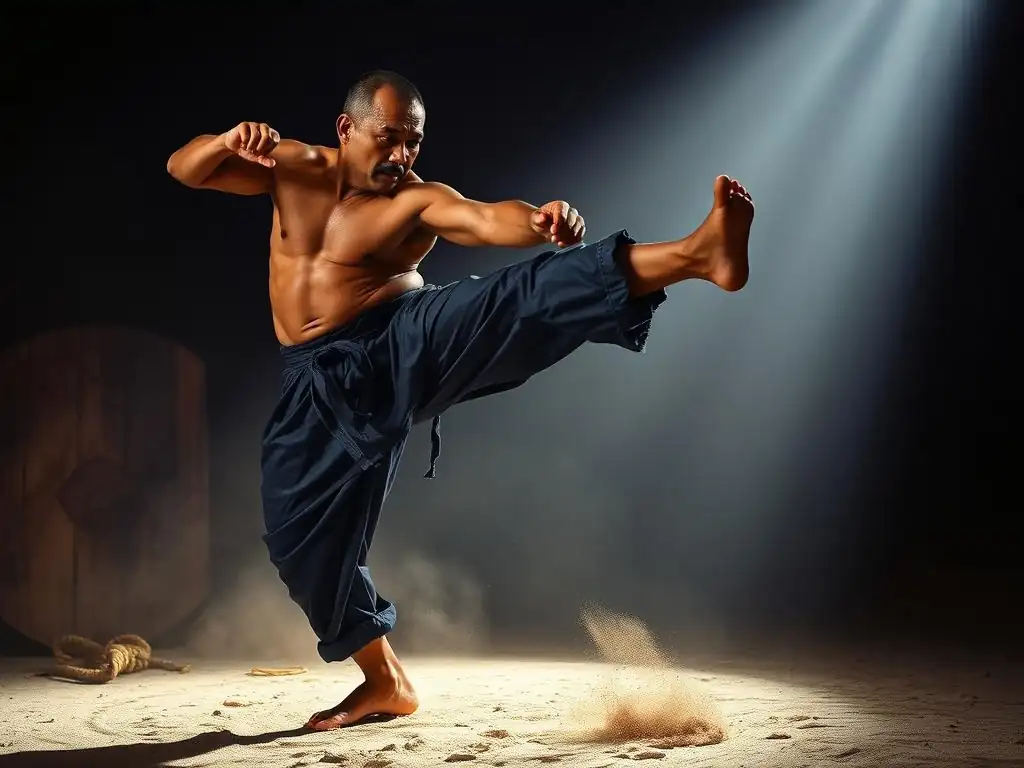
Welcome to Martial Arts Mastery, where the path to enlightenment begins with understanding. Delve into the captivating world of Silat Harimau, a ferocious and revered martial art. Uncover the secrets behind the legendary masters and their devastating Silat Harimau techniques training as we explore their profound impact on this unique fighting style. Are you ready to unleash your inner tiger and discover the hidden depths of this ancient art?
- Introduction to Silat Harimau: The Tiger Style of Indonesian Martial Arts
- Historical Origins and Evolution of Silat Harimau
-
Core Principles and Techniques of Silat Harimau Training
- The Fundamentals: Essential Stances and Footwork in Harimau Silat
- Devastating Strikes and Grappling: Mastering Harimau Combat Techniques
- Close-Quarters Combat: The Art of Clinching and Takedowns in Harimau
- Joint Locks and Limb Destructions: Advanced Harimau Techniques
- Weaponry in Silat Harimau: The Use of Keris, Kujang, and Sarong
- Legendary Masters and Practitioners of Silat Harimau
- Silat Harimau Techniques Training: A Practical Guide
- The Ferocious Art: Understanding the Tiger's Ferocity in Silat Harimau
- Silat Harimau Today: Preservation and Modern Adaptations
- Conclusion: The Enduring Legacy of Silat Harimau
-
Frequently Asked Questions
- What is Silat Harimau and what makes it unique?
- Where can I learn more about the history of Silat Harimau?
- What are some key Silat Harimau techniques that I should focus on when training?
- How does Silat Harimau training differ from other Silat styles?
- Is Silat Harimau effective for self-defense in real-world situations?
- Final Reflection: Embracing the Tiger Within
- Unleash Your Inner Tiger!
Introduction to Silat Harimau: The Tiger Style of Indonesian Martial Arts
Unveiling the Secrets of Harimau Silat: A Deep Dive
Silat Harimau, often translated as "Tiger Silat," is a formidable and unique style of Indonesian martial arts originating primarily from West Sumatra, specifically the Minangkabau region. Unlike many upright martial arts, Harimau Silat is characterized by its low stances, ground-fighting techniques, and mimicry of the tiger's movements and predatory tactics. This approach emphasizes rootedness, explosive power from a low center of gravity, and the ability to quickly transition between standing, kneeling, and ground positions. The art is not merely physical; it is deeply intertwined with philosophy, strategy, and an understanding of the natural world, particularly the tiger's predatory behavior.
The training in Harimau Silat goes beyond learning individual movements; it cultivates a specific mindset and physical conditioning designed for close-quarters combat and survival scenarios. Practitioners learn to move stealthily, strike with sudden ferocity, and control opponents through joint locks, takedowns, and ground grappling. The focus is on efficiency and effectiveness, often targeting vulnerable points with swift, powerful actions. Understanding the nuances of Silat Harimau techniques training requires dedication to mastering both the physical form and the strategic principles that underpin the tiger's approach to combat.
The Essence of the Tiger: Understanding the Harimau Mentality in Silat
The "Harimau" or tiger mentality is central to this style of Silat. It embodies characteristics such as patience, stealth, explosive power, determination, and a predatory focus. Practitioners are taught to wait for the opportune moment, observe their surroundings, and then strike with overwhelming force and intent. This doesn't necessarily mean uncontrolled aggression; rather, it signifies a focused, decisive, and powerful execution of techniques when the situation demands it. The low stances and ground movements are not just physical positions but reflect the tiger's natural hunting posture – low to the ground, ready to spring.
Cultivating the Harimau mentality involves rigorous physical conditioning to build strength and agility, particularly in the legs and core, as well as mental discipline. Students learn to remain calm under pressure, assess threats quickly, and channel their energy into effective action. This mental fortitude is crucial for executing Silat Harimau techniques training effectively, allowing practitioners to access their full potential and embody the spirit of the tiger in combat, whether for self-defense or traditional practice.
Historical Origins and Evolution of Silat Harimau
Tracing the Roots: The Ancestry of Harimau Styles
The origins of Silat Harimau are deeply embedded in the history and culture of the Minangkabau people of West Sumatra, Indonesia. While precise historical records are scarce, oral traditions and legends suggest that the style emerged centuries ago, possibly influenced by observations of tigers and other local wildlife, combined with indigenous fighting methods. The mountainous and jungle terrain of Sumatra likely contributed to the development of techniques suited for uneven ground and close environments, favoring low stances and ground maneuvers over high kicks or wide-ranging movements.
Early forms of Silat, including those that would evolve into Harimau, were often taught secretly within families or small communities, passed down from master to student. These styles were essential for self-defense, tribal warfare, and community protection in a region known for its complex social structures and occasional conflicts. The focus on practicality and survival shaped the core principles and Silat Harimau techniques training methods that are still practiced today, emphasizing effectiveness over flashiness.
Influences and Development: How Silat Harimau Evolved Over Time
Silat Harimau did not develop in isolation. Over centuries, it likely absorbed influences from other martial traditions present in the Malay Archipelago, potentially including elements from Indian, Chinese, and later, European combat systems, though the core Harimau identity remained distinct. The art adapted to changing societal needs, transitioning from a purely battlefield or self-defense art to one that also encompassed spiritual development, cultural performance, and physical discipline.
The evolution also involved the refinement of specific techniques and training methodologies. Masters experimented with different applications of leverage, joint manipulation, and striking angles. The integration of traditional weapons like the keris and sarong further diversified the art. The formalization of Silat Harimau techniques training into structured systems, though still often taught within specific lineages, allowed for its continued transmission and preservation through generations, ensuring its survival into the modern era.
Minangkabau Heritage: The Cradle of Harimau Silat
The Minangkabau highlands of West Sumatra are universally recognized as the birthplace and heartland of Silat Harimau. This region's unique matriarchal society and rich cultural traditions provided the backdrop for the art's development. Silat, including the Harimau style, became an integral part of Minangkabau identity, often performed during ceremonies and cultural events (known as randai, a blend of martial arts, music, dance, and drama).
Within the Minangkabau context, Silat Harimau was not just a fighting system but a path to character development and spiritual understanding ( batin). The emphasis on patience, humility, and respect for elders and the art itself is a direct reflection of Minangkabau values. The rigorous Silat Harimau techniques training was seen as a way to discipline the body and mind, preparing practitioners not just for physical confrontation but for navigating life's challenges with resilience and integrity. This deep cultural integration is what makes Harimau Silat more than just a collection of fighting moves.
Core Principles and Techniques of Silat Harimau Training
The Fundamentals: Essential Stances and Footwork in Harimau Silat
The foundation of Silat Harimau lies in its low, grounded stances and intricate footwork, collectively known as langkah (steps). Unlike many upright martial arts, Harimau emphasizes staying close to the ground, mimicking the tiger's low center of gravity. Common stances include various squatting, kneeling, and sitting positions, allowing for explosive power generation and rapid transitions. These low postures provide stability, make the practitioner a smaller target, and facilitate powerful movements upwards or sideways.
The footwork ( langkah) is equally critical. It involves complex patterns of shifting, circling, and stepping, often designed to evade attacks, gain advantageous angles, or set up traps. The movements are often subtle yet dynamic, enabling practitioners to flow seamlessly around an opponent. Mastering these fundamental stances and footwork patterns through dedicated Silat Harimau techniques training is essential before progressing to more complex combat applications.
Devastating Strikes and Grappling: Mastering Harimau Combat Techniques
Silat Harimau employs a diverse arsenal of strikes and grappling techniques delivered from its characteristic low positions. Strikes often utilize open hands ( tapak harimau or tiger paw), elbows, knees, and low kicks to vulnerable targets. The power is generated from the strong leg and core muscles developed through low stance training, allowing for surprisingly explosive impacts from seemingly static positions.
Grappling is a significant component, focusing on controlling an opponent at close range. This includes holds, locks, and manipulations applied from both standing and ground positions. The transition between striking and grappling is fluid, reflecting the tiger's ability to claw and bite while simultaneously wrestling prey. Effective Silat Harimau techniques training integrates these striking and grappling elements into a cohesive, devastating system.
Close-Quarters Combat: The Art of Clinching and Takedowns in Harimau
Close-quarters combat ( pertempuran jarak dekat) is where Silat Harimau truly excels. The art specializes in fighting within arm's reach, utilizing clinches and takedowns to neutralize threats rapidly. Clinching in Harimau is used to control the opponent's posture, limit their movement, and set up strikes or joint manipulations. It's a dynamic exchange of pressure and balance disruption.
Takedowns in Silat Harimau often involve disrupting the opponent's base from a low position, utilizing sweeps, trips, and powerful pulls or pushes. The goal is not just to bring the opponent down but often to do so in a way that exposes them to further attacks or allows for immediate application of ground techniques. Practicing these clinching and takedown sequences is a core part of Silat Harimau techniques training, preparing practitioners for realistic close-range confrontations.
Joint Locks and Limb Destructions: Advanced Harimau Techniques
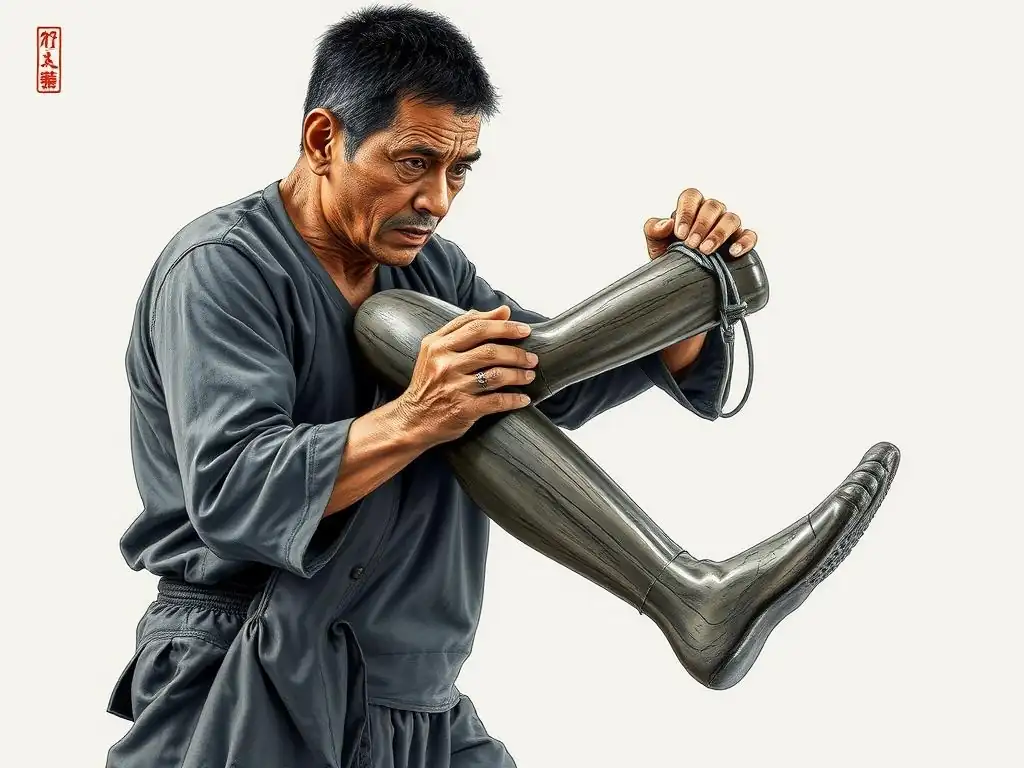
Advanced Silat Harimau techniques include a sophisticated system of joint locks ( kuncian) and limb destructions ( patahan). These techniques target the opponent's joints (wrists, elbows, shoulders, knees, ankles) to cause pain, incapacitation, or breakage. Applied rapidly and with precise leverage, these can quickly end a confrontation. The low stances often provide ideal angles for attacking the opponent's lower body joints.
Limb destructions involve strikes or manipulations specifically aimed at damaging muscles, tendons, or nerves, rendering a limb ineffective. These techniques require a deep understanding of human anatomy and are typically taught only to dedicated students with a strong foundation in the basics. Mastery of these advanced methods is a hallmark of high-level Silat Harimau techniques training.
Weaponry in Silat Harimau: The Use of Keris, Kujang, and Sarong
While often known for its empty-hand techniques, Silat Harimau also incorporates traditional Indonesian weaponry. The keris, a distinctive asymmetrical dagger, is a prominent weapon. Its serpentine blade is designed for thrusting and slashing in close quarters. Practitioners learn specific footwork and body mechanics to use the keris effectively from low stances.
Other traditional weapons sometimes integrated include the kujang (a curved blade unique to West Java, though sometimes associated with Minangkabau styles) and the sarong (a length of cloth). The sarong can be used for trapping, striking, choking, or concealment. Weapon training in Silat Harimau emphasizes adapting the core empty-hand principles – low stances, close-quarters engagement, explosive movement – to armed combat scenarios, adding another layer to Silat Harimau techniques training.
Legendary Masters and Practitioners of Silat Harimau
Profiles of Renowned Harimau Pendekars (Warriors)
The history of Silat Harimau is rich with stories of legendary masters, known as pendekar (warriors or champions), who dedicated their lives to mastering and preserving the art. These figures were often respected community leaders, known not only for their formidable fighting skills but also for their wisdom and integrity. Their legacies are primarily passed down through oral tradition and the living practice of their students and lineages. While specific historical details can be elusive, their impact on the art's development and transmission is undeniable.
These pendekars were the custodians of Silat Harimau techniques training, refining methods, developing new applications, and ensuring the art's continued relevance. They often traveled to share knowledge (within their own traditions), and their prowess in both empty-hand combat and weapon use became the stuff of local legend. Understanding the history of these masters provides crucial context for appreciating the depth and complexity of the art today.
Guru Etek: The Embodiment of Harimau Strength and Wisdom
One of the most widely recognized and revered figures in recent Silat Harimau history is the late Guru Etek (whose full name was Inyiak Angguik, "Etek" being a term of respect). Hailing from the Minangkabau region, Guru Etek was considered a living embodiment of the Harimau style. His teaching was renowned for its intensity, focus on fundamental principles, and deep connection to the traditional Minangkabau culture and philosophy underpinning the art.
Guru Etek's influence extended beyond his immediate students; he played a significant role in bringing Silat Harimau to wider attention, both within Indonesia and internationally, while striving to maintain its authenticity. His dedication to preserving the traditional Silat Harimau techniques training methods ensured that the core essence of the tiger style was passed down faithfully. His passing marked the end of an era but solidified his status as a legendary figure whose teachings continue to inspire practitioners worldwide.
Their Teaching Philosophies and Legacies
The teaching philosophies of legendary Harimau masters like Guru Etek often emphasized rigorous physical training coupled with profound moral and spiritual development. They stressed patience, discipline, humility, and the importance of using the art responsibly. The gerak (movement) was seen as inseparable from the rasa (feeling or intuition), highlighting the need to develop sensitivity and awareness alongside physical skill.
The legacies of these masters live on through their students and the lineages they established. While variations exist between different Harimau schools, the core principles and many fundamental Silat Harimau techniques training methods remain consistent, a testament to the strength of the traditions they upheld. Their influence ensures that the art continues to be practiced not just as a fighting system but as a holistic path of self-mastery.
Silat Harimau Techniques Training: A Practical Guide
Drills and Exercises for Developing Harimau Power and Agility
Effective Silat Harimau techniques training involves a variety of drills designed to build the specific physical attributes required by the style: explosive power, low-stance stability, agility, and endurance. Fundamental exercises include prolonged low stances ( duduk) to build leg strength and resilience. Transition drills practice moving rapidly and smoothly between different low positions and levels, mimicking the tiger's ability to change posture instantly.
Partner drills are crucial for developing timing, distance management, and responsiveness. These might involve practicing entries from low stances, executing sweeps and takedowns, or defending against common attacks. Repetitive practice of core movements, focusing on fluidity and power generation from the hips and legs, is a constant throughout Silat Harimau techniques training. Shadow boxing ( jurus) also helps refine movements and build muscle memory.
Partner Training: Practicing Harimau Combat Scenarios
Partner training is indispensable for learning to apply Silat Harimau techniques effectively in dynamic situations. This progresses from cooperative drills, where partners practice specific sequences of attacks and defenses, to more reactive and eventually semi-free sparring. The goal is to develop the ability to read an opponent's movements, react instinctively, and apply techniques under pressure.
Scenario-based training helps practitioners understand how to utilize their low stances and ground techniques in realistic situations, such as dealing with grabs, pushes, or attacks from different angles. This type of training is vital for bridging the gap between practicing individual techniques and applying the full system of Silat Harimau techniques training in a practical context. Safety is paramount, with focus on control and communication.
Self-Defense Applications: Using Silat Harimau in Real-World Situations
Silat Harimau is inherently practical for self-defense due to its focus on close-quarters combat, surprise attacks from low levels, and effective takedowns and joint locks. Its techniques are designed to quickly neutralize a threat by disrupting balance, controlling limbs, or incapacitating an attacker. The low stances, while perhaps unusual to untrained observers, make practitioners difficult targets to strike cleanly and provide powerful leverage for grappling and takedowns.
Applying Silat Harimau in real-world situations emphasizes using the most efficient technique for the specific threat, often prioritizing de-escalation or escape if possible, but being prepared to act decisively if physical defense is necessary. The training instills a mindset of readiness and adaptability, drawing upon the extensive repertoire of Silat Harimau techniques training to handle various types of aggression.
The "Tapak Harimau" (Tiger Paw) Technique: Application and Defense
The "Tapak Harimau" or "Tiger Paw" is one of the signature hand strikes in Silat Harimau. It involves striking with the heel of the palm or the base of the fingers, often targeting vulnerable areas like the face, throat, or solar plexus. The hand shape can also be used for raking, tearing, or grabbing. The power is generated through explosive body movement from a low stance, driving the strike upwards or forwards.
Mastering the application of the Tapak Harimau involves understanding the correct body mechanics, target acquisition, and follow-through. Silat Harimau techniques training includes drills specifically for developing power and accuracy with this strike. Defense against such a strike typically involves evasive footwork from low stances, parries, or trapping the incoming limb, often followed by a counter-attack or takedown, demonstrating the integrated nature of the art's offense and defense.
The Ferocious Art: Understanding the Tiger's Ferocity in Silat Harimau
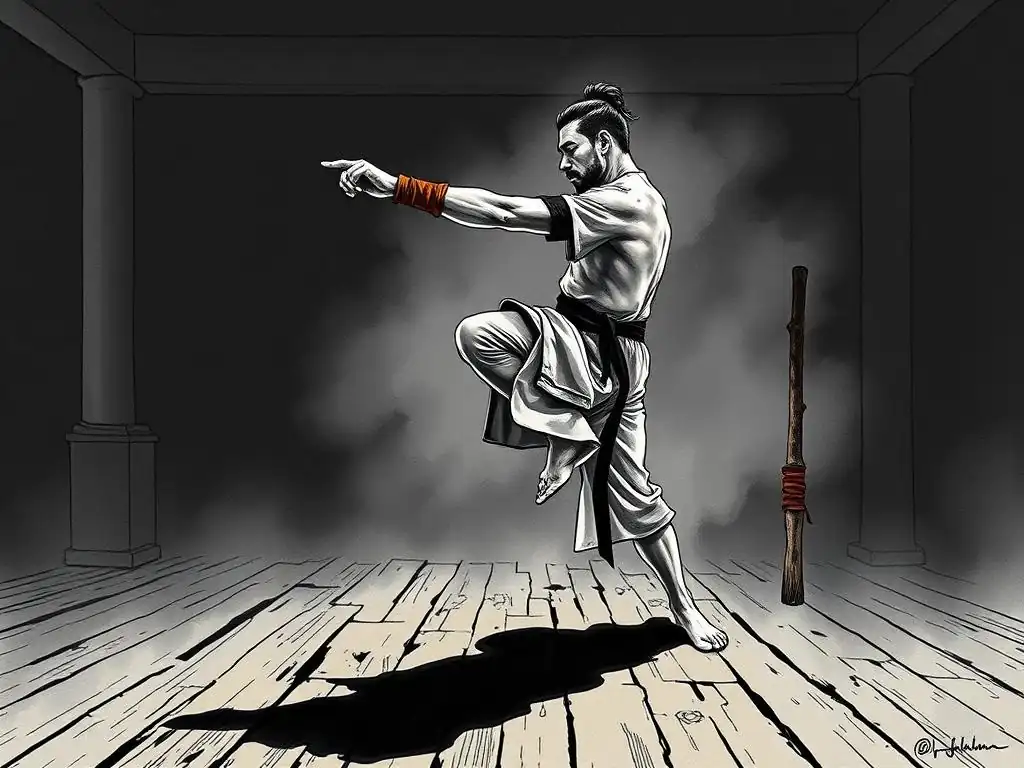
Cultivating the Aggressive Mindset: Mental Conditioning for Harimau Practitioners
While emphasizing control and wisdom, Silat Harimau also cultivates a necessary level of focused aggression, mirroring the tiger's predatory nature. This isn't about uncontrolled rage, but rather the ability to switch into a mode of decisive, powerful action when threatened. Mental conditioning involves visualization, pressure testing in training, and philosophical discussions about the appropriate use of force.
Practitioners are taught to overcome hesitation and act with conviction. This aggressive mindset, when properly channeled, allows the practitioner to fully commit to their movements and apply Silat Harimau techniques training with maximum effectiveness. It's about developing the inner strength and determination to face danger head-on, rather than succumbing to fear.
Overcoming Fear and Hesitation: Developing the Tiger's Courage
Fear and hesitation are significant obstacles in any confrontation. Silat Harimau training explicitly addresses these through challenging drills and realistic scenarios. By repeatedly putting students in uncomfortable or stressful situations within the controlled environment of the training space, they learn to manage their adrenaline, think clearly under pressure, and act despite fear.
Developing the "Tiger's Courage" is about building resilience and self-belief. It comes from the confidence gained through mastering the physical techniques and understanding the strategic principles. This mental toughness is as important as physical strength in the practice of Silat Harimau techniques training, enabling practitioners to remain effective even when facing larger or multiple opponents.
The Ethics of Aggression: Responsibility and Control in Harimau
Crucially, the cultivation of the tiger's ferocity in Silat Harimau is balanced by a strong ethical framework. Masters emphasize that the power developed through training comes with great responsibility. Aggression is a tool to be used judiciously and only when necessary for self-preservation or the protection of others. Uncontrolled violence or malicious intent is strictly contrary to the art's principles.
Practitioners are taught discipline and self-control, understanding that true mastery lies not just in the ability to inflict harm but in the ability to restrain oneself. The philosophical underpinnings of Silat Harimau stress humility and the pursuit of inner peace. The "ferocity" is a controlled, focused intensity applied when needed, always guided by a strong moral compass, a vital component often discussed during Silat Harimau techniques training sessions.
Silat Harimau Today: Preservation and Modern Adaptations
The Current State of Harimau Silat Schools and Practitioners
Today, Silat Harimau is practiced in various schools and lineages, predominantly in West Sumatra but also with growing pockets of practitioners in other parts of Indonesia and internationally. The traditional schools in Sumatra often maintain close ties to the art's cultural roots, teaching not only the physical techniques but also the associated rituals, music, and philosophy.
While the number of practitioners compared to more widespread martial arts might be smaller, there is a dedicated community committed to its preservation. The challenge for many traditional schools is balancing the demands of modern life with the rigorous, time-intensive nature of traditional Silat Harimau techniques training. However, the unique effectiveness and cultural richness of the style continue to attract serious students seeking depth and authenticity.
Adapting Traditional Harimau Techniques for Modern Self-Defense
While rooted in tradition, Silat Harimau techniques are highly adaptable for modern self-defense scenarios. The focus on close range, dealing with grabs and clinches, striking vulnerable targets, and effective takedowns and ground control are directly relevant to common street altercations. Practitioners learn to apply the core principles – low center, explosive movement, leverage, and targeting – in contexts involving modern clothing, harder surfaces, and unfamiliar environments.
Modern Silat Harimau techniques training often includes drills that simulate real-world threats, such as dealing with attacks in confined spaces or against multiple assailants. The emphasis remains on efficiency and rapid incapacitation, using the unique attributes of the Harimau style to overcome threats quickly and effectively, making it a potent system for contemporary self-defense.
Maintaining Authenticity: Balancing Tradition and Modernity
A significant challenge for the Silat Harimau community is maintaining the authenticity of the art while making it accessible and relevant in the modern world. This involves preserving the traditional forms, philosophy, and cultural context alongside adapting training methods and applications for contemporary self-defense and physical conditioning. Masters and practitioners grapple with how to share the art without diluting its essence.
Many traditional schools prioritize teaching the complete system, including the cultural and spiritual aspects, viewing the physical techniques as inseparable from these elements. Others focus more heavily on the combat applications for self-defense or sport (though Harimau is rarely a sport). The ongoing dialogue within the community is about finding a balance that honors the legacy of the legendary masters while ensuring that Silat Harimau techniques training continues to thrive and benefit future generations.
Conclusion: The Enduring Legacy of Silat Harimau
The Future of the Tiger Style in Indonesian Martial Arts
The future of Silat Harimau appears promising, albeit requiring dedicated effort for preservation and growth. Its unique characteristics – the low stances, ground fighting emphasis, and predatory mindset – offer a distinct and effective approach to combat that sets it apart. Increased interest from abroad, driven by curiosity about effective and culturally rich martial arts, provides opportunities for its spread and recognition.
However, challenges remain, including the need for structured transmission of knowledge, financial support for traditional schools, and attracting new generations of practitioners in its homeland. The continued practice and development of Silat Harimau techniques training, passed down through committed teachers, will be crucial to its survival and evolution as a living art form.
Honoring the Masters and Preserving the Art for Future Generations
The enduring legacy of Silat Harimau rests on the shoulders of its practitioners and the respect they hold for the legendary masters who shaped the art. Honoring these figures involves not only remembering their names and contributions but actively practicing and living the principles they embodied. Preservation requires meticulous attention to the traditional Silat Harimau techniques training methods, ensuring that the depth and nuance of the art are not lost.
By dedicating themselves to rigorous training, upholding the ethical standards, and sharing their knowledge responsibly, current and future generations of Silat Harimau practitioners ensure that the ferocious and wise spirit of the tiger continues to thrive within Indonesian martial arts, securing the art's place as a powerful and respected tradition for years to come.
Frequently Asked Questions
What is Silat Harimau and what makes it unique?
Silat Harimau is a style of martial arts that emphasizes tiger-like movements and predatory instincts. It's unique because of its focus on close-quarters combat and aggressive takedowns.
Where can I learn more about the history of Silat Harimau?
MartialArtsMastery.org provides historical overviews and profiles of legendary practitioners. You can find more in-depth information about its origins and evolution on the website.
What are some key Silat Harimau techniques that I should focus on when training?
Focus on developing powerful strikes, grappling skills, and the ability to quickly transition between offense and defense. Mastering takedowns is crucial for effective Silat Harimau.
How does Silat Harimau training differ from other Silat styles?
Silat Harimau is known for its aggressive and direct approach. It emphasizes ferocious attacks and close-range engagement, unlike some other Silat styles that might prioritize evasiveness or longer-range techniques.
Is Silat Harimau effective for self-defense in real-world situations?
Yes, Silat Harimau can be very effective for self-defense due to its focus on practical application and close-quarters combat. The techniques are designed to quickly neutralize threats.
Final Reflection: Embracing the Tiger Within
The exploration of Silat Harimau, with its intricate techniques and legendary masters, reveals more than just a fighting style; it unveils a philosophy of resilience and adaptability. The enduring appeal of Silat Harimau lies in its raw power and its deep connection to the natural world, a connection that resonates even more profoundly in our increasingly disconnected modern lives. Its principles of leverage, agility, and ferocious efficiency offer valuable lessons applicable far beyond the training mat.
The influence of Silat Harimau extends beyond self-defense; it shapes character, instills discipline, and fosters a profound respect for oneself and one's opponent. Witnessing the dedication and mastery of Silat Harimau practitioners has been deeply inspiring, reminding us that true strength comes not just from physical prowess, but from mental fortitude and unwavering focus. The tiger does not roar all the time, but when it does, the jungle listens.
This ancient wisdom encapsulates the essence of Silat Harimau: controlled power, unleashed with precision and purpose.
Now, as you reflect on the techniques and traditions of Silat Harimau, consider how its principles of adaptability and inner strength can be applied to your own life. Embrace the tiger within – cultivate your focus, hone your skills, and face challenges with unwavering determination. Let the spirit of Silat Harimau guide you towards a path of resilience, self-discovery, and ultimately, mastery over your own destiny.
Unleash Your Inner Tiger!
Thank you for exploring the captivating world of Silat Harimau with us. We hope you've gained a new appreciation for the power and artistry of this ancient martial art. Now, it's time to translate that knowledge into action.
Here are a few steps you can take to further explore Silat Harimau:
- Seek out a reputable Silat instructor in your area and experience the tiger's movements firsthand – feel the power and agility for yourself.
- Delve deeper into the history of Silat Harimau by researching its origins and the legendary masters who shaped its evolution.
- Share this article with fellow martial arts enthusiasts and start a discussion about the unique aspects of Silat Harimau.
Which aspect of Silat Harimau resonated with you the most, and how will you incorporate it into your own martial arts journey?