
Ba Duan Jin (Eight Brocades): Shaolin's Ancient Qigong for Health and Vitality

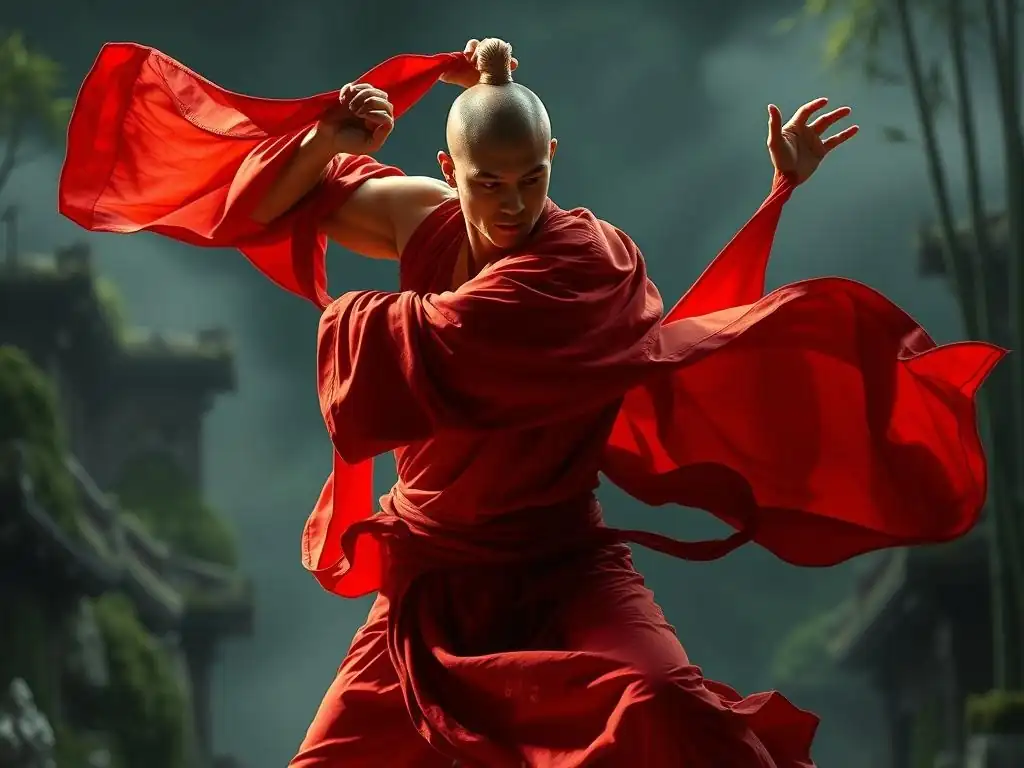
Welcome to Martial Arts Mastery, where the wisdom of ages meets the precision of practice! Prepare to delve into the heart of ancient traditions and unlock the secrets of self-cultivation. This month, we journey to the Shaolin Temple to explore the profound benefits of Ba Duan Jin, or Shaolin Eight Brocades Qigong. Discover how this centuries-old practice can unlock new levels of health, vitality, and inner peace. Ready to unravel the mysteries of Ba Duan Jin and begin your journey towards mastery?
- Unveiling Shaolin's Eight Brocades Qigong: An Introduction
-
The Eight Brocades: A Detailed Breakdown of Each Exercise
- First Brocade: Two Hands Hold up the Heavens to Regulate the Internal Organs
- Second Brocade: Drawing the Bow to Shoot the Hawk
- Third Brocade: Separating Heaven and Earth
- Fourth Brocade: Wise Owl Gazes Backwards
- Fifth Brocade: Swaying the Head and Waving the Tail to Remove Heart-Fire
- Sixth Brocade: Two Hands Hold the Feet to Strengthen the Kidneys and Waist
- Seventh Brocade: Punching with Angry Eyes to Augment Strength
- Eighth Brocade: Bouncing on the Toes to Cure All Diseases
- Ba Duan Jin: Health Benefits and Scientific Research
- Integrating Shaolin Eight Brocades Qigong into Your Training
- Common Mistakes and How to Avoid Them
- Ba Duan Jin vs. Other Qigong Forms: A Comparison
- Conclusion: The Enduring Legacy of Shaolin Eight Brocades
- Frequently Asked Questions
- Final Reflection: The Enduring Legacy of Shaolin's Eight Brocades
- Unleash Your Inner Vitality: Embrace the Eight Brocades!
Unveiling Shaolin's Eight Brocades Qigong: An Introduction
The History and Origins of Ba Duan Jin
Ba Duan Jin, meaning "Eight Brocades" or "Eight Section Brocade," is one of the oldest and most widely practiced forms of Qigong in China. Its origins are steeped in legend and history, with various accounts attributing its creation to different periods and figures. One popular theory suggests it was compiled or standardized during the Song Dynasty (960–1279 AD), possibly by Marshal Yue Fei, a famous general and martial artist, though definitive historical evidence for this specific attribution is scarce.
Regardless of its precise inventor, the practice evolved over centuries, incorporating principles from Traditional Chinese Medicine (TCM), Daoist philosophy, and martial arts. Early versions were likely transmitted orally and through handwritten manuscripts, adapting slightly in different regions and lineages.
The core principles of Ba Duan Jin focus on gentle movements, coordinated breathing, and focused intention to cultivate and circulate Qi (vital energy) throughout the body. The "Eight Brocades" title refers to the idea that the exercises are as precious and valuable as fine silk brocade. Over time, different variations of the set emerged, notably the standing (Wudang) and sitting (Buddhist/Shaolin) versions.
The standing version is more common today and is often associated with martial arts traditions due to its dynamic nature and connection to physical conditioning and energy cultivation crucial for practices like Shaolin Kung Fu. These ancient origins highlight its deep roots in traditional Chinese health and wellness practices.
Ba Duan Jin's Place within Shaolin Kung Fu Traditions
Within the rigorous training regimen of Shaolin monks, practices like Ba Duan Jin hold a significant and integral position. While Shaolin Kung Fu is renowned for its dynamic external forms and combat applications, the internal cultivation of Qi is equally vital for developing power, endurance, and overall health necessary for demanding physical training. Ba Duan Jin serves as a foundational Qigong set practiced by Shaolin monks for centuries. It is not merely a warm-up but a sophisticated system designed to strengthen tendons and bones, improve circulation, calm the mind, and harmonize the body's internal functions.
The inclusion of Shaolin Eight Brocades Qigong within the monastic schedule underscores its perceived effectiveness in maintaining the monks' physical and mental resilience. It prepares the body for strenuous martial arts practice by promoting flexibility and preventing injuries, particularly benefiting the joints, spine, and internal organs.
Furthermore, the focus on coordinated movement and breath control cultivated through Ba Duan Jin enhances the internal power (Nei Gong) that complements the external techniques of Shaolin Kung Fu. This synergy between external (Wai Gong) and internal (Nei Gong) training is a hallmark of traditional Chinese martial arts, and Ba Duan Jin is a key component in achieving this balance at Shaolin.
The Eight Brocades: A Detailed Breakdown of Each Exercise
First Brocade: Two Hands Hold up the Heavens to Regulate the Internal Organs
This exercise involves standing with feet shoulder-width apart, raising both hands slowly overhead with palms facing upwards, interlocking fingers or pressing palms together, stretching the body upwards, and then slowly lowering the hands. The movement is synchronized with deep, slow breaths, typically inhaling on the rise and exhaling on the descent. The upward stretch is gentle but aims to elongate the spine and torso. The eyes gaze forward or slightly upwards, maintaining a calm focus. This movement is repeated several times, often six to eight repetitions.
Benefits of the First Brocade: Organ Health and Energy Flow
The primary benefit of "Two Hands Hold up the Heavens" is its purported ability to regulate the function of the internal organs, particularly the Triple Burner (San Jiao) in TCM, which is considered the pathway for Qi and fluid circulation. The gentle stretching and compression of the torso during the movement are believed to massage the internal organs, promoting better blood and Qi flow.
Practitioners often report a feeling of opening and expansion in the chest and abdomen. This improved circulation and energy flow is thought to aid digestion, metabolism, and overall organ function, contributing to a sense of internal balance and vitality.
Second Brocade: Drawing the Bow to Shoot the Hawk
This movement involves stepping out to the side into a horse stance (Mabu), shifting weight, and extending one arm outwards like drawing a bow while the other hand pulls back towards the chest. The fingers of the extended hand often form a "tiger mouth" shape, while the eyes gaze intently along the "arrow" towards an imaginary target. This is performed on both sides, alternating stances and arm positions. The posture requires strength in the legs and core, as well as coordination between the upper and lower body.
Enhancing Strength and Focus with the Archery Pose
"Drawing the Bow" is specifically designed to strengthen the waist and legs, build power in the arms and shoulders, and improve balance and stability inherent in a solid horse stance. The isometric tension held while extending the arms and maintaining the stance builds muscular endurance. Beyond physical strength, this exercise cultivates mental focus and intent. The act of gazing intently at the target and visualizing the arrow's flight trains concentration and single-mindedness, qualities essential in both martial arts and daily life. The coordinated breath work during the movement further enhances the cultivation and projection of Qi.
Third Brocade: Separating Heaven and Earth
Standing with feet shoulder-width apart, one hand is raised palm up towards the sky while the other hand is pressed down palm down towards the earth. The torso may twist slightly. The movement is performed slowly, stretching in opposite directions, and then the hands are reversed. This alternating stretch between upward and downward forces is central to the exercise. Breathing is typically coordinated with the movement, often inhaling during the stretch and exhaling when returning to the center or switching sides.
Improving Spinal Health and Flexibility
"Separating Heaven and Earth" is highly effective for stretching and strengthening the spine and the muscles along the sides of the torso. The opposing stretches help to decompress the vertebrae and improve flexibility in the back and waist. This movement is believed to harmonize the Qi of the Upper and Lower Burners (parts of the San Jiao) and is particularly beneficial for addressing stiffness and tension in the back and shoulders. Improved spinal flexibility is crucial for overall posture and mobility, impacting everything from daily activities to complex martial arts movements.
Fourth Brocade: Wise Owl Gazes Backwards
From a standing position, the body remains relatively still while the head slowly turns to look back over one shoulder, then returns to the center, and turns to look back over the other shoulder. The gaze is fixed as far back as possible without straining. The movement is gentle and controlled, often coordinated with the breath. The shoulders remain relaxed, and the spine stays erect. This exercise is typically repeated several times on each side.
Relieving Neck Tension and Enhancing Mental Clarity
This exercise is primarily aimed at the neck and upper spine. The gentle rotation helps to release tension in the neck and shoulder muscles, areas where many people hold stress. By improving circulation to the head and neck, it is thought to alleviate headaches and dizziness. Furthermore, the act of turning the head and fixing the gaze backwards is traditionally linked to calming the mind and enhancing mental clarity. It encourages introspection and can help break patterns of fixated forward thinking, promoting a broader perspective and a sense of inner peace.
Fifth Brocade: Swaying the Head and Waving the Tail to Remove Heart-Fire
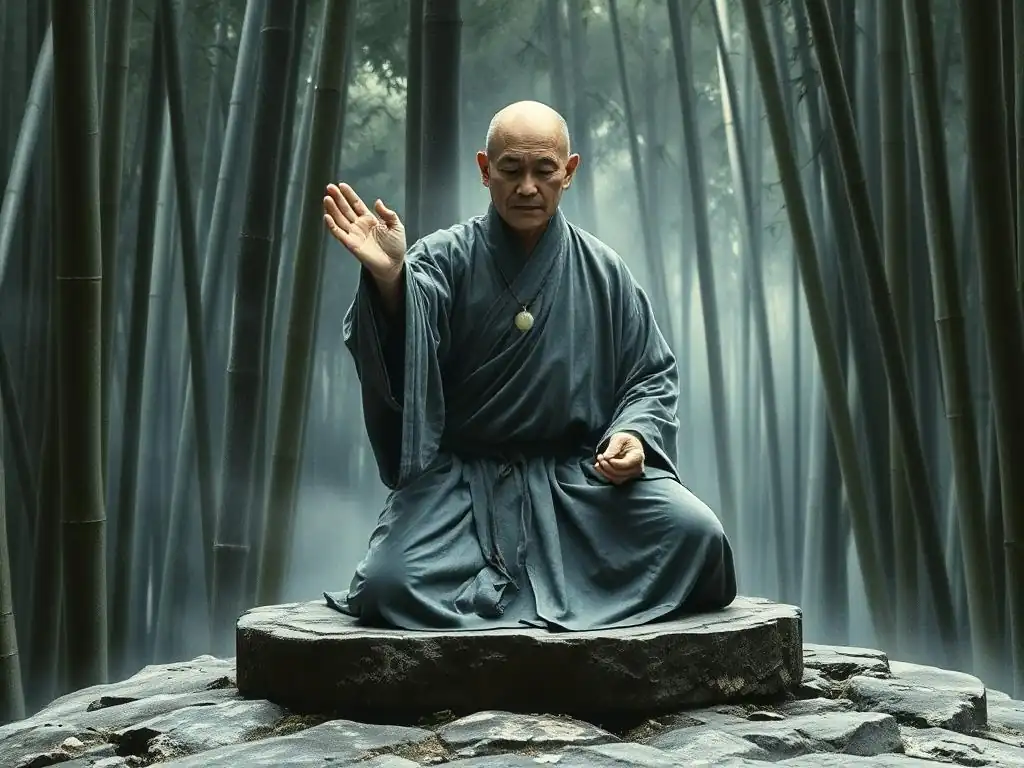
This exercise is performed in a low horse stance. The upper body sways downwards and around in a circular motion, while the hips and "tail" (lower back/tailbone) follow the sway. The movement is often performed by leaning to one side, bringing the head down towards the knee, sweeping across the front, and coming up on the other side, mimicking a large, calm stirring motion. This is done in both clockwise and counter-clockwise directions.
Calming the Mind and Balancing Emotions
"Swaying the Head and Waving the Tail" is traditionally associated with reducing "Heart-Fire" (Xin Huo) in TCM, which relates to agitation, anxiety, and emotional imbalance. The low stance strengthens the legs, grounding the practitioner, while the circular swaying motion of the torso is believed to massage the internal organs and promote a sense of calm and release.
The physical effort in the stance helps to channel excess energy downwards, away from the head and chest, thus "removing the fire." This exercise is highly effective for releasing tension in the hips and lower back while simultaneously soothing the nervous system and promoting emotional equilibrium.
Sixth Brocade: Two Hands Hold the Feet to Strengthen the Kidneys and Waist
From a standing position, the practitioner bends forward from the waist, reaching down to touch the feet or ankles, while keeping the legs relatively straight but not locked. After reaching down, the hands slide up the back of the legs and massage the lower back (kidney area) before slowly straightening up. This movement involves a significant stretch of the hamstrings and lower back. Breathing is usually exhaled on the forward bend and inhaled on the return to standing.
Benefits for Kidney Health and Lower Back Strength
This exercise directly targets the Kidneys and the lower back, areas considered vital energy centers in TCM. The forward bend stretches the Bladder meridian along the back of the legs and spine, while the massage of the lower back stimulates the Kidney points. Strengthening the lower back is crucial for overall structural support and is particularly important for martial artists. In TCM, strong Kidneys are associated with vitality, endurance, and bone health. This movement is believed to reinforce the Kidneys' function, improve lower back flexibility and strength, and alleviate pain in that region.
Seventh Brocade: Punching with Angry Eyes to Augment Strength
In a horse stance, the practitioner punches forward with one hand, twisting the wrist at the end of the punch, while the other hand remains at the hip. The eyes gaze intently forward with a fierce or "angry" expression (not angry in emotion, but focused and powerful intent). The punch is retracted forcefully as the other hand prepares to punch. This is performed alternately with each arm. The movement is dynamic and requires coordination of the stance, waist rotation, arm extension, and focused gaze.
Building Physical Power and Internal Energy
"Punching with Angry Eyes" is the most overtly martial-looking exercise in the set and is specifically designed to build physical power and cultivate explosive Qi (Fa Jin). The low stance and twisting motion generate power from the ground up, through the core, and out through the punch.
The "angry eyes" (Nu Mu) are not about aggression but about concentrating intent and spirit (Shen) behind the movement, directing Qi outwards. This exercise strengthens the arms, shoulders, chest, and waist, improves coordination, and teaches how to consolidate and release internal energy effectively, which is directly applicable to striking techniques in Shaolin Kung Fu.
Eighth Brocade: Bouncing on the Toes to Cure All Diseases
From a standing position, the practitioner rises up onto the balls of the feet, lifting the heels off the ground, and then gently drops the heels back down, allowing a slight vibration to ripple through the body. This "bouncing" or gentle dropping motion is repeated multiple times, often 10-20 times or more. The movement is subtle but the vibration is key. The hands usually remain relaxed at the sides.
Improving Circulation and Overall Well-being
This final exercise is simple yet profound. The gentle vibration generated by dropping the heels is believed to stimulate the entire body, promoting circulation of blood and Qi. In TCM, this vibration is thought to shake loose stagnant energy and stimulate the meridians, particularly those running through the legs and feet.
The title "Cure All Diseases" is a traditional exaggeration reflecting the belief that improving overall circulation and Qi flow enhances the body's natural healing abilities and resilience, contributing to general health and preventing illness. It provides a gentle conclusion to the set, helping to integrate the benefits of the previous movements.
Ba Duan Jin: Health Benefits and Scientific Research
Physical Benefits of Practicing the Eight Brocades
Regular practice of Shaolin Eight Brocades Qigong yields a wide array of physical benefits. The gentle, stretching movements improve flexibility, particularly in the spine, shoulders, and hips. The low stances in exercises like "Drawing the Bow" and "Swaying the Head" build significant leg strength and stability over time.
Coordination, balance, and posture are enhanced through the precise execution of each movement and the emphasis on maintaining a centered alignment. Furthermore, the controlled, deep breathing techniques employed throughout the set increase lung capacity and improve the efficiency of oxygen exchange. Many practitioners report reduced muscle stiffness and improved joint mobility, making it an excellent practice for maintaining physical function, especially as one ages.
Beyond flexibility and strength, Ba Duan Jin positively impacts the body's internal systems. The movements are designed to stimulate circulation, helping to move blood and lymph fluid more effectively throughout the body. This improved circulation supports organ function and aids in the removal of metabolic waste. The gentle massaging effect on internal organs, particularly noted in the first and fifth brocades, is believed to optimize their performance. Individuals practicing Ba Duan Jin often experience increased energy levels, reduced fatigue, and a greater sense of physical resilience, contributing to overall physical well-being.
Mental and Emotional Wellbeing Through Ba Duan Jin
The practice of Shaolin Eight Brocades Qigong is not solely focused on the physical body; it is equally powerful in cultivating mental and emotional balance. The emphasis on slow, deliberate movement and coordinated breathing naturally leads practitioners into a state of focused calm. This mindful engagement reduces mental clutter and promotes relaxation, effectively lowering stress levels. The controlled breathing techniques activate the parasympathetic nervous system, counteracting the body's stress response and inducing a state of tranquility.
Over time, consistent practice helps to regulate emotions. Exercises like "Swaying the Head and Waving the Tail" are specifically aimed at releasing emotional tension and promoting emotional stability. The focused intention required for movements like "Drawing the Bow" strengthens concentration and can improve cognitive function. Many practitioners report feeling more grounded, less anxious, and possessing a greater capacity to manage daily stresses. The cultivation of Qi and the sense of internal harmony fostered by Ba Duan Jin contribute significantly to enhanced mental clarity, emotional resilience, and a positive outlook.
Scientific Studies on the Effectiveness of Ba Duan Jin Qigong
In recent decades, scientific research has begun to investigate the health claims associated with Ba Duan Jin and other Qigong forms. Numerous studies, often published in journals related to complementary and alternative medicine, geriatrics, and rehabilitation, have explored its effects.
For example, systematic reviews and meta-analyses have indicated that Ba Duan Jin practice can lead to significant improvements in various health markers. Studies on elderly populations, for instance, have shown improvements in balance and a reduced risk of falls, with reported improvements in balance scores sometimes ranging from 10% to 30% over several months of regular practice compared to control groups.
Research has also documented positive effects on cardiovascular health, including reductions in blood pressure in hypertensive patients and improvements in heart rate variability, suggesting enhanced autonomic nervous system regulation. Studies have also explored its impact on respiratory function, demonstrating increased vital capacity.
Furthermore, investigations into the psychological effects consistently report reductions in stress, anxiety, and depression scores among practitioners. While the exact mechanisms are still being explored through a Western scientific lens, the cumulative evidence supports the traditional understanding that Shaolin Eight Brocades Qigong is a beneficial practice for improving physical function, mental health, and overall quality of life across different populations.
Integrating Shaolin Eight Brocades Qigong into Your Training
Learning Ba Duan Jin: Finding Qualified Instructors
To truly benefit from Shaolin Eight Brocades Qigong, learning from a qualified instructor is highly recommended. While instructional videos and books can provide a basic overview, the subtle nuances of posture, alignment, breath coordination, and internal focus are best transmitted through direct guidance. A good instructor can provide personalized feedback, correct improper form before bad habits develop, and explain the underlying principles of each movement in detail.
Look for instructors with a deep understanding of traditional Qigong principles, ideally with lineage connection or extensive experience teaching this specific set. Many martial arts schools, particularly those teaching traditional Chinese styles, or dedicated Qigong centers offer classes.
When seeking an instructor, consider their background and teaching methodology. Do they emphasize both the physical movements and the internal aspects (breath, intent, energy)? Do they offer modifications for different fitness levels or physical limitations? Attending a trial class or observing a session can help you gauge their suitability. Learning Shaolin Eight Brocades Qigong correctly from the outset ensures you build a strong foundation, allowing you to maximize its health benefits and safely progress in your practice without risking injury due to incorrect execution.
Ba Duan Jin for Martial Artists: Enhancing Kung Fu Performance
For practitioners of Shaolin Kung Fu or other martial arts, incorporating Ba Duan Jin offers significant advantages that directly translate to improved martial performance. The set builds foundational qualities essential for martial arts: strong, rooted stances ("Drawing the Bow," "Swaying the Head"), flexible and resilient joints and spine ("Separating Heaven and Earth," "Holding the Feet"), coordinated body movement, and the ability to generate and direct internal power ("Punching with Angry Eyes"). The focus on breath control and mental concentration enhances presence, reaction time, and the ability to remain calm under pressure.
Specifically, the leg strength and stability developed through the stances in Ba Duan Jin improve grounding and power generation for strikes and kicks. The spinal flexibility and core strength are crucial for effective waist rotation and body mechanics in forms and applications. The cultivation of focused intent and Qi circulation enhances endurance, resilience, and the ability to deliver powerful, unified movements. Many traditional martial arts masters consider internal practices like Shaolin Eight Brocades Qigong indispensable for reaching higher levels of skill and developing true internal power (Nei Jin) that complements external technique.
Daily Practice: Tips for Incorporating Ba Duan Jin into Your Routine
Making Shaolin Eight Brocades Qigong a consistent part of your routine is key to experiencing its full benefits. Aim for daily practice, even if it's just 15-20 minutes. The morning is often considered ideal for cultivating fresh energy, but practice can be beneficial at any time of day, avoiding immediately after heavy meals or strenuous exercise. Find a quiet space where you won't be interrupted. Consider adding practicing Shaolin Eight Brocades Qigong to your daily schedule:
- [ ] Wake up 20 minutes earlier.
- [ ] Designate a specific practice area.
- [ ] Practice before breakfast or in the early evening.
- [ ] Focus on deep, relaxed breathing throughout.
- [ ] Pay attention to physical sensations and energy flow.
- [ ] Maintain a calm, focused mind.
Consistency is more important than duration. Even a short, mindful session is more effective than occasional long practices. Listen to your body and adjust the movements as needed; Qigong should be gentle and feel comfortable, not forced. Over time, you may find yourself naturally integrating the principles of relaxed posture, deep breathing, and focused intent into your daily activities, extending the benefits of your Shaolin Eight Brocades Qigong practice beyond the formal session.
Common Mistakes and How to Avoid Them
Proper Form and Alignment in Ba Duan Jin
One of the most common mistakes in practicing Shaolin Eight Brocades Qigong is neglecting proper form and alignment. Rushing through the movements, using excessive force, or maintaining rigid postures diminishes the benefits and can potentially lead to strain. For instance, in "Two Hands Hold up the Heavens," locking the elbows or shoulders during the stretch inhibits energy flow.
In "Drawing the Bow," failing to maintain a stable horse stance or allowing the knee to collapse inwards compromises the leg strengthening aspect and puts undue stress on the joint. The spine should remain erect but relaxed in most exercises, avoiding slumping or hyperextension.
Avoiding these issues requires mindful attention to detail. Practice slowly and deliberately, focusing on the feeling within the body rather than just the outward appearance of the movement. Pay attention to instructions regarding joint relaxation (shoulders, elbows, wrists, hips, knees, ankles) and maintaining a sense of rootedness through the feet. If possible, practice in front of a mirror initially or, better yet, have an instructor or experienced practitioner observe you to provide corrections. Remember that the goal is gentle stretch and energy flow, not physical strain or performance speed.
Breathing Techniques for Optimal Results
Incorrect breathing is another frequent error that significantly reduces the effectiveness of Ba Duan Jin. Shallow, rapid, or forced breathing disrupts the flow of Qi and prevents the body from entering a relaxed, meditative state. Holding the breath during movements is also counterproductive. The breath should be deep, slow, and natural, typically coordinated with the movements – usually inhaling on expansive or upward movements and exhaling on contracting or downward movements. However, the specific timing can vary slightly between styles, but the principle of smooth, continuous breath remains constant.
To optimize results, cultivate abdominal breathing (Dantian breathing), where the abdomen gently expands on the inhale and contracts on the exhale, rather than relying solely on chest breathing. This deep breathing massages the internal organs and helps to anchor the mind. If the coordinated breathing feels challenging initially, simply focus on breathing naturally and deeply, letting the breath guide the movement rather than forcing the movement to fit a rigid breath count. With practice, the coordination will become more fluid and intuitive, enhancing relaxation and energy cultivation.
Modifications for Different Fitness Levels
Ba Duan Jin is designed to be accessible, but practitioners sometimes make the mistake of attempting movements beyond their current physical capacity, especially in low stances or deep stretches. For example, trying to achieve a very low horse stance in "Drawing the Bow" or "Swaying the Head" before the legs have built sufficient strength can lead to discomfort or injury. Similarly, forcing a deep forward bend in "Holding the Feet" if hamstrings are tight can strain the lower back. The principle is gradual progress.
Fortunately, Ba Duan Jin can be easily modified. Stances can be higher and narrower. Reaching movements can be less extreme (e.g., reaching towards the knees or shins in "Holding the Feet" instead of the ankles or feet). The range of motion for turns and bends can be reduced.
Individuals with specific physical limitations, such as knee issues or balance problems, can perform many of the exercises while seated. The core principles of breath, intent, and gentle movement can still be applied effectively regardless of the physical intensity. It is far better to perform a modified version correctly and comfortably than to struggle through the full version with poor form.
Ba Duan Jin vs. Other Qigong Forms: A Comparison
Differences and Similarities with Other Qigong Practices
Ba Duan Jin is one of many Qigong forms practiced worldwide, each with its unique focus and methodology. Other well-known forms include Yi Jin Jing (Muscle/Tendon Changing Classic), Wu Qin Xi (Five Animal Frolics), and Zhineng Qigong. A key difference lies in their specific emphasis: Ba Duan Jin focuses broadly on regulating the internal organs, strengthening the waist and legs, and harmonizing Qi.
Yi Jin Jing, traditionally also associated with Shaolin, places a greater emphasis on stretching and strengthening the tendons and muscles, often involving more dynamic and sometimes isometric tension. Wu Qin Xi mimics the movements and spirit of five animals (Tiger, Deer, Bear, Monkey, Bird) to cultivate different qualities and target various organ systems. Zhineng Qigong, a more modern form, focuses on connecting with universal Qi and using the mind to guide energy for healing.
Despite their differences in specific movements and focus, these Qigong forms share fundamental similarities. All involve slow, deliberate movements, coordinated breathing, and focused intention (Yi) to cultivate and regulate Qi. They all aim to improve physical health, calm the mind, and promote overall well-being.
The underlying principles of aligning the body, relaxing the joints, and breathing deeply are common across virtually all authentic Qigong practices. While Shaolin Eight Brocades Qigong has a particular historical connection to martial arts conditioning and internal organ regulation, the choice between it and another form often comes down to individual needs, preferences, and the specific health goals one wishes to address.
Choosing the Right Qigong Form for Your Needs
Selecting the most suitable Qigong form depends on your personal health objectives, physical condition, and what resonates with you. If your primary goals are improving general health, regulating internal organ function, strengthening the core and legs, and finding a balanced practice that is relatively easy to learn, Shaolin Eight Brocades Qigong is an excellent choice. Its straightforward structure and clear connection to foundational health benefits make it accessible for beginners and valuable for experienced practitioners alike. Its popularity stems from its effectiveness and relative simplicity compared to more complex forms.
If you are a martial artist specifically looking to increase tendon strength, flexibility, and dynamic power, Yi Jin Jing might be a complementary practice. If you are drawn to more fluid, expressive movements and wish to explore different energetic qualities, Wu Qin Xi could be appealing. For those interested in medical Qigong and using visualization for healing, Zhineng Qigong might be more suitable.
Ultimately, the "right" form is one you will practice consistently. Trying introductory sessions of different forms, including Shaolin Eight Brocades Qigong, can help you discover which one feels most beneficial and enjoyable for your personal journey towards health and vitality.
Conclusion: The Enduring Legacy of Shaolin Eight Brocades
The Power of Ba Duan Jin for Long-Term Health and Vitality
Ba Duan Jin, the Shaolin Eight Brocades Qigong, stands as a testament to the profound wisdom embedded in ancient Chinese health practices. Developed over centuries, it offers a powerful yet gentle method for cultivating physical strength, flexibility, and internal energy. Its structured sequence of eight distinct movements, each targeting specific areas and functions of the body, works synergistically to harmonize the flow of Qi, regulate the internal organs, and strengthen the musculoskeletal system. The benefits extend far beyond the physical realm, fostering mental clarity, emotional balance, and a deep sense of inner peace.
The enduring legacy of this Shaolin Qigong set lies in its accessibility, effectiveness, and adaptability. It requires no special equipment and can be practiced by people of virtually all ages and fitness levels, with appropriate modifications. For martial artists, it provides an invaluable foundation for developing internal power and resilience.
For those seeking better health and stress reduction, it offers a practical pathway to improved well-being. As scientific research increasingly validates its traditional benefits, the Shaolin Eight Brocades Qigong continues to be a cornerstone practice for promoting long-term health, vitality, and a balanced life in the modern world, just as it has for generations within the hallowed halls of Shaolin.
Frequently Asked Questions
What is Ba Duan Jin (Eight Brocades) Qigong?
It is an ancient Shaolin Qigong practice comprised of eight distinct exercises. These movements are designed to promote health, vitality, and overall well-being by stimulating energy flow throughout the body.
What are the primary benefits of practicing Ba Duan Jin?
Practicing Ba Duan Jin can improve physical strength, increase flexibility, and enhance mental clarity. It also aids in stress reduction and promotes overall balance in the body.
Ba Duan Jin is deeply rooted in the Shaolin tradition and is considered a foundational practice. It helps practitioners develop the internal strength and energy cultivation needed for advanced martial arts training.
Is Ba Duan Jin suitable for beginners?
Yes, Ba Duan Jin is generally suitable for beginners due to its low-impact nature and adaptable movements. However, proper instruction is recommended to ensure correct form and avoid injury.
Where can I learn more about Ba Duan Jin and other Shaolin practices?
You can explore resources on websites like MartialArtsMastery.org. They offer detailed information on historical overviews, training techniques, and the philosophical underpinnings of various martial arts, including Shaolin Eight Brocades Qigong.
Final Reflection: The Enduring Legacy of Shaolin's Eight Brocades
The enduring power of the Ba Duan Jin lies not just in its ancient origins, but in its continued relevance to modern well-being. In a world increasingly dominated by sedentary lifestyles and chronic stress, the gentle yet profound movements of this Shaolin Qigong offer a pathway to physical and mental harmony, a sanctuary from the relentless demands of contemporary life.
The Eight Brocades have subtly yet profoundly shaped our understanding of holistic health, demonstrating the interconnectedness of mind, body, and spirit. My own practice has revealed a deeper appreciation for the body's innate capacity for healing and resilience. The body is your most precious possession. Take care of it.
- Joseph Pilates. This simple truth, embodied in the Eight Brocades, reminds us to prioritize self-care and cultivate inner peace.
Now, I invite you to consider how you can integrate the wisdom of the Shaolin Eight Brocades into your own life. Whether it's through a dedicated practice or simply incorporating mindful movement into your daily routine, embrace the opportunity to unlock your own potential for health, vitality, and inner peace. Let the ancient wisdom of Shaolin guide you on your journey to a more balanced and fulfilling life.
Unleash Your Inner Vitality: Embrace the Eight Brocades!
Thank you for exploring the ancient wisdom of Ba Duan Jin with us! We hope this article has inspired you to take charge of your health and well-being through this remarkable Qigong practice. Now, let's put that knowledge into action!
- Make today the day you start! Dedicate just 15 minutes to practicing the Eight Brocades exercises. Feel the energy flow and the tension melt away.
- Share this article with your friends and family and encourage them to discover the benefits of Ba Duan Jin. Help us spread the word!
- Explore other Qigong and martial arts styles on Martial Arts Mastery. There's a whole world of wellness waiting to be discovered.
Ready to embark on your journey to greater health and vitality with Ba Duan Jin? What specific time will you set aside this week to start practicing?