
The Art of the StepBack Counter: Luring and Punishing Aggression


Welcome to Martial Arts Mastery, your ultimate resource for unlocking the secrets of combat and self-discovery! Delve into the rich tapestry of martial arts traditions, where discipline meets artistry. Are you ready to transform defense into a devastating offense? This week, we dissect the StepBack counter technique details, revealing how to seamlessly evade and punish aggression. Prepare to elevate your understanding and refine your skills; the journey to mastery begins now.
- Mastering the Pull Counter: Evasion and Precision in Boxing
- Introduction to the Pull Counter in Boxing
- Mastering the Pull Counter Technique
- Reading Your Opponent: Setting Up the Pull Counter
- Executing the Counter: Precision and Timing
- Advanced Pull Counter Variations and Applications
- Drills and Training for the Pull Counter
- Pull Counter: Defensive Applications and Ring Generalship
- Common Mistakes and How to Avoid Them
- The Pull Counter in Boxing History: Illustrious Examples
- Conclusion: The Pull Counter as a Key Defensive and Offensive Tool
-
Frequently Asked Questions
- What is the StepBack Counter technique and why is it important in martial arts?
- Which martial arts disciplines commonly utilize the StepBack Counter?
- What are the key elements for executing a successful StepBack Counter?
- What types of attacks are most vulnerable to the StepBack Counter?
- Beyond physical technique, what are the mental aspects of mastering the StepBack Counter?
- Final Reflection: Mastering the Art of Deception
- Unleash Your Counter Striking Prowess!
Mastering the Pull Counter: Evasion and Precision in Boxing
Introduction to the Pull Counter in Boxing
Understanding the Pull Back: A Fundamental Defensive Maneuver
The pull back is a foundational defensive movement in boxing, central to effective ring generalship and personal safety. At its core, this technique involves a sharp, controlled step backward, typically initiated by the lead foot, followed quickly by the rear foot. The primary objective is to create instantaneous distance between yourself and an attacking opponent, causing their punch to fall short.
This maneuver serves not merely as passive evasion but as a strategic tool to force an opponent to extend beyond their comfort zone, potentially disrupting their balance and rhythm. Mastery of the pull back is crucial; it's the bedrock upon which advanced counter-punching strategies, such as the pull counter, are built.
Beyond simple evasion, the pull back is a method of controlling the engagement range. By stepping back, a boxer dictates the distance at which exchanges occur, forcing a pursuing opponent to cover more ground and potentially overcommit. This controlled retreat allows the defender precious milliseconds to assess the situation, identify openings, or simply reset to a safer position. It is a dynamic defensive tactic that requires precise timing and footwork, differentiating it from a simple panicked step backward. A well-executed pull back is smooth, compact, and keeps the boxer in a balanced stance, ready for subsequent actions.
The Pull Counter: Transitioning from Defense to Offense
The pull counter transforms the defensive pull back into a potent offensive weapon. This technique involves executing the pull back maneuver to evade an incoming punch, but immediately following it with a counter punch launched as the opponent is recovering from their missed attack or still moving forward. The power of the pull counter lies in exploiting the opponent's forward momentum and vulnerability.
As they extend to land their punch and then find it short, they are often momentarily off-balance or exposed, providing a prime opportunity for a swift, accurate counter. This seamless transition from defense to offense is a hallmark of skilled counter-punchers.
Implementing a successful pull counter requires more than just footwork; it demands exceptional timing and anticipation. The boxer must read the opponent's attack, time the pull back precisely to make the punch miss by mere inches, and then launch their counter before the opponent can recover their guard or balance. This strategy is particularly effective against aggressive fighters who tend to lunge or overcommit to their punches.
By using their aggression against them, the pull counter artist can land significant blows while minimizing their own risk. It's a nuanced technique that turns an opponent's attack into their undoing, highlighting the strategic depth of boxing.
Mastering the Pull Counter Technique
Footwork and Balance for an Effective Pull Back
Effective footwork is the cornerstone of the pull back, and subsequently, the pull counter. The movement typically begins with a sharp, controlled step backward with the lead foot, followed immediately by sliding the rear foot back the same distance to maintain the original stance width. This ensures the boxer remains squared up and balanced, ready to launch a counter.
The key is to avoid crossing the feet or letting them get too close together, which compromises stability. The step should be just enough to evade the punch, usually only 6-12 inches for a straight punch, varying slightly for hooks or uppercuts. Practicing this specific step-slide motion repeatedly builds the muscle memory necessary for rapid, instinctive execution under pressure.
Maintaining balance throughout the pull back is non-negotiable for a successful counter. As the feet move, the weight distribution should remain centered or slightly shifted towards the back foot, providing a stable platform to push off for the counter punch. Leaning back excessively or letting the weight drift too far rearward will leave the boxer off-balance and unable to generate power or recover quickly.
The knees should remain slightly bent, and the core engaged, acting as shock absorbers and stabilizers. This grounded posture, even while moving backward, is vital for the immediate transition from evasion to a powerful, accurate counter-punch.
Maintaining Guard and Vision During the Pull
Simultaneous to the footwork of the pull back, maintaining a high, tight guard is paramount. As the opponent attacks, their hands are likely occupied, but they may still have a free hand or follow up with another punch quickly. Keeping the hands up, protecting the chin and sides of the head, minimizes the risk of being caught by a glancing blow or a subsequent attack if the timing is slightly off.
The guard should not drop during the backward movement; it should remain active and defensive, even as the focus shifts towards setting up the counter. Protecting oneself during the evasion phase is critical; a successful pull counter is one where you don't take damage while setting it up.
Equally important is maintaining clear vision of the opponent throughout the entire sequence. As you pull back, your eyes must remain fixed on your opponent's hands, body, and feet. This allows you to confirm their punch has missed, anticipate any follow-up attacks, and identify the precise moment and angle for your counter.
Looking down or away during the pull back leaves you blind to potential dangers and missed opportunities. Keeping the head up and eyes locked on the target ensures you are fully aware of the situation and can react instantly, transitioning from avoiding their fist to landing yours with maximum effectiveness.
Generating Power in the Counter Punch
Generating power in the counter punch immediately following a pull back requires efficient use of body mechanics, even from a seemingly defensive posture. The key is leveraging the rotation of the hips and core, combined with pushing off the back foot. As the rear foot lands or is about to land after the pull back, the boxer can initiate the rotation of their hips and shoulders towards the target.
This rotational force, originating from the lower body and transferring up through the core, is the primary source of power for the punch. It's not arm strength alone, but the coordinated kinetic chain from the ground up.
Timing this body rotation with the extension of the punching arm is crucial. As the opponent is recovering or slightly off-balance from their missed lunge, the counter punch is unleashed. The power is magnified by the opponent's own momentum coming forward, effectively meeting their face or body with your fist's force multiplied by their forward movement. Think of it as a collision; your punch provides the force, and their movement adds to the impact. This is why a well-timed pull counter, even if it doesn't look overtly powerful, can have devastating effects, often leading to knockdowns or knockouts.
Reading Your Opponent: Setting Up the Pull Counter
Identifying Telegraphic Punches
Recognizing telegraphic punches is a vital skill for setting up the pull counter. Telegraphing occurs when a fighter unintentionally gives away their intention to punch through subtle, pre-fight movements. These can include flaring the elbow before a hook, dropping the shoulder before a straight punch, taking a deep breath, or even a slight shift in weight distribution.
For instance, some boxers might subtly lean forward or shift their weight heavily onto their lead foot just before throwing a jab or cross. Learning to spot these tells allows you to anticipate the incoming attack fractions of a second before it's fully committed.
Developing this observational skill requires dedicated practice watching opponents, both live and on film. Analyzing fight footage, particularly of fighters known for telegraphing, can help train your eye to pick up these subtle cues. During sparring, actively look for these signs. Does your partner dip their shoulder before a right hand? Do they tense up their arm before a jab? Identifying these patterns in your specific opponent provides the advance warning needed to initiate the pull back at the perfect moment, making their anticipated attack the trigger for your defense-to-offense transition.
Recognizing Opponent's Commitment and Balance
The effectiveness of a pull counter is significantly amplified when the opponent is committed to their attack and potentially off-balance. A committed punch is one thrown with significant power and forward momentum, often with the intention of finishing the exchange. When a fighter throws a punch like this, they often extend their body weight towards the target, leaving their base less stable. For example, a fighter throwing a lunging right hand might have their front foot firmly planted and their back foot trailing, with their upper body leaning far forward.
Observing an opponent's balance during their attack is key. Do they stay grounded, or do they lean excessively? Do they recover their stance quickly after missing, or do they wobble slightly? Fighters who overcommit and lose balance are prime targets for a pull counter because they are slow to recover defensively and are vulnerable to incoming force while off-kilter. A well-timed pull counter when an opponent is leaning into their punch or stumbling slightly after missing can have double the impact, as their own momentum contributes to the force of the blow.
Utilizing Feints to Draw Out Attacks
Feints are indispensable tools for provoking an opponent into attacking, thereby creating opportunities for the pull counter. A feint is a deceptive movement designed to look like the beginning of an attack, without actually committing to the full punch. This could be a slight shoulder twitch, a half-step forward, a subtle hand movement, or a fake jab. The goal is to elicit a reaction from the opponent – ideally, causing them to throw a defensive punch or counter-punch of their own.
By using feints, you can essentially bait your opponent into throwing the exact punch you are prepared to counter with your pull back. For instance, a feinted jab might cause an opponent to instinctively react with their own jab or a straight right counter. Knowing this reaction is coming, you can then time your pull back precisely to evade their triggered response and land your counter. This strategic use of feints turns the pull counter from a purely reactive technique into a proactive trap, allowing you to dictate the terms of the engagement.
Executing the Counter: Precision and Timing
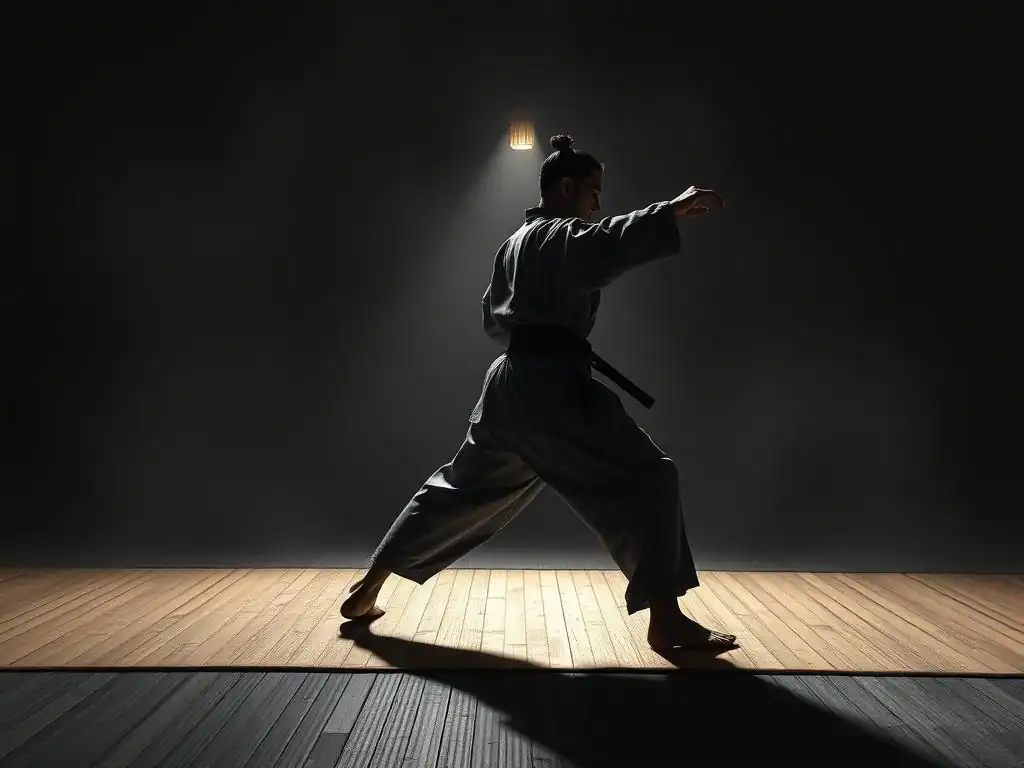
Optimal Timing for Initiating the Pull Counter
Perfect timing is the most critical element in executing a successful pull counter. The ideal moment to initiate the pull back is just as the opponent's punch is being launched or is halfway to its target – essentially, when they are fully committed and their arm is extended. Pulling back too early allows the opponent to adjust their punch or follow up; pulling back too late means you get hit.
It's a razor-thin window of opportunity that requires sharp reflexes and accurate distance judgment. Imagine the punch traveling towards you; you want to step back just enough so it passes harmlessly in front of your face or shoulder.
The counter punch should be launched almost simultaneously with the completion of the pull back, or even as the rear foot is still settling. The transition from backward movement to forward rotation for the punch must be instantaneous. This ensures the opponent hasn't had time to recover their guard or balance after their missed attack. Think of it as a single, fluid motion: step back, twist, punch. The timing is not two separate actions (pull, then counter), but a single, integrated maneuver that leverages the opponent's commitment and your defensive adjustment into an offensive strike.
Effective Pull Counter Punches: Cross, Hook, Uppercut
While various punches can be used for the counter after a pull back, certain strikes are particularly effective. The straight rear hand (cross) is a common choice, especially against an opponent who has lunged forward with their lead hand (jab or hook). As you pull back, you create the distance for their punch to miss, and the straight line of the cross travels directly into their exposed face or body as they recover. This punch is powerful and benefits greatly from the hip rotation as you plant your rear foot.
Another effective option is the lead hook or rear hook, particularly if the opponent has overextended with a straight punch or is susceptible to looping shots. As you pull back, you might angle slightly, opening up a line for a hook around their guard. For example, pulling back from a jab might set up a lead hook over their extended arm.
The uppercut can also be potent, especially if the opponent ducks or leans forward excessively after missing their punch. The pull back creates the vertical space needed to deliver an upward-traveling punch into their chin or solar plexus. The choice depends on the opponent's specific attack, their reaction to missing, and the angle created by your pull back.
Targeting Vulnerable Areas After the Pull
Successfully executing a pull counter involves not just evading and punching, but targeting specific vulnerable areas that are exposed when an opponent commits to an attack and misses. As a fighter throws a punch with power and forward momentum, their guard often becomes compromised in other areas. For instance, throwing a strong right hand might leave the left side of their face or body open. A lunging jab can expose the chin or leave the body vulnerable to a shot underneath the arm.
Common targets after a pull counter include the chin, temple, or jawline, particularly with a straight cross or hook. These areas are sensitive and can lead to knockdowns. Targeting the body is also highly effective.
A shot to the ribs, liver (on the right side), or solar plexus can take the wind out of an opponent or slow them down significantly. Because the opponent is often moving forward or slightly off-balance, even a moderately powered shot to these vulnerable spots can have a magnified effect. Identifying these fleeting openings requires sharp vision and the discipline to target them precisely in the fraction of a second they are available.
Advanced Pull Counter Variations and Applications
Pulling to the Inside: Creating Angles for Hooks and Uppercuts
An advanced application of the pull back involves pulling back not just linearly, but at a slight angle towards the opponent's lead side (your rear side). This is often referred to as pulling to the inside.
As you pull back and slightly off the line, you create an angle that can be highly advantageous for landing inside punches like hooks and uppercuts. For example, if an opponent throws a straight right hand, pulling back and slightly to your left (their right) takes you off the direct line of the punch and positions you to land a powerful lead hook around their guard or a rear uppercut as they recover.
This angled pull back requires more nuanced footwork and balance than a straight linear pull. It involves a slight pivot or adjustment of the feet during the backward movement to shift your position relative to the opponent. The benefit is that it doesn't just evade; it instantly sets you up for an attack from a flank, making it harder for the opponent to defend effectively. This technique demands a higher level of spatial awareness and footwork coordination, but it significantly expands the offensive possibilities stemming from the defensive pull back.
Pulling into a Pivot: Enhancing Evasion and Counter Opportunities
Combining the pull back with a pivot is another sophisticated variation that enhances both evasion and counter-punching angles. After initiating the pull back, the boxer pivots, typically on their lead foot, swinging their rear foot around. This movement takes the boxer completely off the line of the opponent's attack, often bringing them into a dominant side-angle position. For instance, pulling back from a straight punch and then pivoting clockwise (if you are orthodox) can leave you almost behind the opponent, with a clear shot at their side or back of the head (though the latter is illegal).
This pull-and-pivot technique is a masterful display of defensive footwork that instantly transitions into a powerful offensive opportunity. It not only makes the opponent miss but leaves them facing empty space while you are positioned to attack from a new, advantageous angle. It's a more complex maneuver than a simple linear pull back, requiring excellent balance and coordination to execute smoothly without losing posture. When performed correctly, it's incredibly difficult for an opponent to defend against, as they are caught off-guard by the sudden change in position.
Adapting the Pull Counter Against Different Styles [e.g., Pressure Fighters]
The pull counter technique details need adaptation depending on the opponent's fighting style. Against a relentless pressure fighter who is constantly swarming forward, a full, long pull back might not be feasible or safe, as they could quickly close the distance again. In such cases, the pull back needs to be shorter, sharper, and the counter punch thrown almost instantaneously, perhaps even during the final step of the pull.
The goal isn't just evasion, but creating just enough space for a quick, impactful counter that makes the aggressor think twice before rushing in. The counter might be a sharp jab or a short straight punch rather than a full-blown power shot.
Conversely, against an out-fighter or a counter-puncher who is hesitant to commit, setting up the pull counter requires more effort, often relying heavily on feints to draw them out. The pull back might be longer to ensure their longer-range punches fall short, and the counter could be a more powerful shot since you have more time and space. Adapting the depth of the pull, the speed of the counter, and the type of counter punch used based on whether you're fighting a swarmer, boxer-puncher, or pure boxer is key to the technique's success.
Drills and Training for the Pull Counter
Shadowboxing Drills for Coordination and Footwork
Shadowboxing is an invaluable tool for developing the fundamental mechanics of the pull counter. Start by focusing solely on the pull back footwork: practice stepping back sharply with the lead foot, followed by the rear foot, maintaining your stance and balance. Do this repeatedly, focusing on making the movement smooth and compact. Once comfortable, integrate the counter punch. Throw a phantom punch (like a jab or cross), then immediately execute the pull back as if evading a return shot, and launch your counter punch (e.g., a straight right or lead hook) as your rear foot lands.
Vary the type of incoming punch you are "evading" in your shadowboxing – practice pulling back from imaginary jabs, crosses, hooks, and uppercuts, adjusting your angle or the depth of the pull as needed. Focus on the transition from backward movement to forward rotation for the counter. The goal is to make this sequence feel natural and fluid, like a single, integrated movement. Spend several rounds per training session dedicated specifically to pull counter sequences, gradually increasing the speed and intensity. This repetition builds the muscle memory and coordination essential for executing the technique effectively in a live situation.
Partner Drills for Timing and Distance Control
Training with a partner is crucial for developing the timing and distance control required for the pull counter. A simple drill involves your partner standing in front of you and throwing specific punches at varying speeds and power levels. Your job is to practice pulling back just enough to make their punch miss, without getting hit, and immediately throwing your designated counter punch. Start slowly, with your partner throwing predictable, slow punches, and gradually increase the speed and unpredictability as you improve.
Another effective partner drill is using focus mitts or pool noodles. Your partner holds the mitt out as a target and simulates throwing a punch towards you. You practice the pull back to evade the simulated punch and then hit the mitt with your counter.
The partner can then immediately present another mitt for a follow-up punch, simulating a real exchange. Using a pool noodle is excellent for practicing evasion without impact; your partner lightly swings the noodle at you, and you must pull back to avoid being tagged, immediately countering. These drills help you judge the precise distance needed for the pull back and time your counter with the opponent's movement.
Sparring: Implementing the Pull Counter in Live Situations
Implementing the pull counter in sparring is the ultimate test and training ground. Start by focusing simply on executing the pull back defense against your sparring partner's attacks, without necessarily countering hard. Concentrate on timing the pull correctly to make them miss and maintaining your balance. As you become more comfortable making them miss consistently, begin adding the counter punch, initially with light power. The goal is to integrate the full sequence – read, pull back, counter – into the flow of a live exchange.
- Sparring Checklist for Pull Counter Practice:
- Focus one round solely on defensive pull backs.
- Incorporate light counter punches after successful pulls.
- Identify opponent's telegraphs or tendencies that create pull counter opportunities.
- Practice against different sparring partners with varying styles (aggressive vs. tactical).
- Note when pull counters land effectively and when they miss or leave you vulnerable.
- Experiment with different counter punches (cross, hook, uppercut) after the pull.
Gradually increase the intensity and power of your counter punches as your confidence and execution improve. It's important to be patient; you won't land every pull counter, and you may still get hit occasionally. The key is consistent practice and learning from each attempt, refining your timing, distance, and punch selection against a live, reacting opponent. The pull counter becomes a natural part of your boxing arsenal through dedicated sparring practice.
Pull Counter: Defensive Applications and Ring Generalship

Using the Pull Counter to Control Range
While primarily discussed as a counter-offensive technique, the pull counter's underlying movement, the pull back, is a powerful tool for controlling the range in a boxing match. By consistently using the pull back to make an opponent's punches fall short, a boxer dictates the fighting distance. If an opponent wants to fight on the inside, they must constantly pursue, covering the distance created by the pull. This forces them to expend energy and potentially overextend, making them vulnerable.
Furthermore, the threat of the pull counter can deter an opponent from rushing in recklessly. A fighter who knows that lunging forward will likely result in them missing and immediately getting hit by a sharp counter will be more hesitant to close the distance aggressively. This psychological effect allows the boxer using the pull counter to maintain their preferred range, forcing the opponent to fight on their terms. It's a defensive tactic that subtly shifts ring control and tempo.
Avoiding Corner Traps with the Pull Back
Getting trapped in a corner or against the ropes is a dangerous situation in boxing, significantly limiting movement and defense. The pull back, particularly when combined with an angle or pivot, is an excellent method for escaping these traps. Instead of simply covering up and absorbing pressure, a sharp pull back step, often combined with stepping slightly to the side (off the line), can create just enough space to pivot or circle out of the immediate danger zone.
For instance, if an opponent is crowding you towards the ropes, waiting for them to commit to a punch and then executing a sharp pull back and pivot can allow you to step off the ropes and regain a safer position in the center of the ring. This requires precise timing – waiting for the opponent to commit so they can't immediately follow you – and confident execution. It's a defensive escape route that utilizes the same core mechanics as the pull counter, emphasizing the versatility of this fundamental backward movement.
Resetting and Regaining Position with the Pull
In the ebb and flow of a boxing match, fighters often find themselves in awkward positions after exchanges, clinches, or moments of pressure. The pull back serves as an effective method to reset and regain a stable, dominant position. After a scramble or when feeling slightly overwhelmed, a controlled pull back creates immediate space, allowing the boxer to re-establish their stance, clear their vision, and regain composure.
This tactical retreat is not a sign of weakness but a strategic maneuver to reset the terms of engagement. By pulling back, a fighter can break the opponent's rhythm, prevent follow-up attacks, and return to a position where they can think clearly and plan their next move. It allows them to regain the center of the ring, set their feet, and resume fighting from a position of strength rather than disadvantage. The pull back is a micro-adjustment that has significant implications for maintaining control and tactical advantage throughout a round.
Common Mistakes and How to Avoid Them
Over-Pulling and Losing Balance
One of the most frequent mistakes when attempting the pull counter is over-pulling – stepping back too far or too aggressively. While creating distance is the goal, excessive backward movement leads to a loss of balance, making it impossible to launch a powerful counter punch. Imagine taking a giant leap backward; you'd likely land off-balance, with your feet too far apart or too close together, unable to generate rotational power. This also makes you vulnerable to follow-up attacks, as you're unstable and slow to recover.
To avoid this, focus on controlled, measured steps. The pull back should be just enough to make the punch miss, typically 6-12 inches for a straight punch. Practice the movement in shadowboxing and with partners, concentrating on keeping your stance width consistent and your weight centered. Your knees should remain slightly bent throughout the movement. Think "sharp step, not long jump." This ensures you remain grounded and poised to counter effectively.
Telegraphing the Pull Back
Just as an opponent can telegraph their punches, a boxer can telegraph their intention to pull back. This might involve leaning back slightly before the step, dropping the hands prematurely, or a noticeable change in posture or breathing. If an opponent sees you preparing to pull back, they can adjust their attack – perhaps faking the punch, changing the target, or not committing fully, thereby negating your counter opportunity.
To avoid telegraphing your pull back, integrate the movement into your natural footwork and rhythm. Don't make it a distinct, separate action. Practice moving backward subtly as part of your overall ring movement, so the defensive pull back feels like a natural extension of your stance adjustments. Maintaining a consistent, active guard and relaxed posture also helps conceal your intentions. Using your own feints can also mask your defensive movements, as the opponent is focused on your potential offense.
Neglecting the Follow Through on the Counter
A common error after successfully executing the pull back and initiating the counter punch is neglecting the follow-through. This means stopping the punch short after making contact or failing to complete the full rotational movement of the hips and shoulders. While precision is key, ending the punch prematurely reduces its power and effectiveness. The punch should drive through the target, not just to it.
Ensuring proper follow-through maximizes the force generated from your body mechanics. As you land the counter, continue the rotation of your core and hips, allowing your punching arm to extend fully (without hyper-extending the elbow). This ensures the full weight and power of your body are behind the impact. Practice extending fully in shadowboxing and on the heavy bag after simulating the pull back. Remember, the counter punch is your payoff for the defensive effort; don't shortchange its potential impact by neglecting the finish.
The Pull Counter in Boxing History: Illustrious Examples
Willie Pep: The Epitome of Elusiveness and the Pull Counter
Willie Pep, known as "Will o' the Wisp," is arguably the greatest defensive boxer of all time, and the pull back (or stepback counter) was a cornerstone of his unparalleled elusiveness. Pep's style wasn't about raw power; it was about making opponents miss, frustrating them, and countering with speed and precision.
His pull back was a masterpiece of timing and distance, often making opponents swing wildly at air. He famously won a round against Jackie Graves in 1946 without throwing a single punch, purely by making Graves miss for three minutes – a testament to his defensive footwork, including the pull back.
Pep's pull back wasn't just a linear retreat; he combined it with angles and pivots, constantly shifting his position just enough to evade incoming leather. He used the pull back to set up quick counters, often sharp jabs or straight rights, capitalizing on the opponent's momentary imbalance after missing. His mastery of this fundamental stepback counter technique details were so profound that opponents often became hesitant to throw punches, fearing they would only expose themselves to his lightning-fast replies. He demonstrated that defense could be a dominant strategy, frustrating aggressors into submission.
James Toney: Utilizing the Pull Counter with Power and Precision
James "Lights Out" Toney, a multi-division world champion, was a modern master of defensive counter-punching, heavily relying on the shoulder roll and the pull counter. Unlike Pep, who was known for speed and movement, Toney incorporated the pull counter into a more stationary, power-oriented counter-punching style. He would often stand just inside the pocket, using subtle head movement and small pull backs to evade punches, immediately firing back with devastating power.
Toney's pull back was often shorter and more compact than Pep's, designed to create just an inch or two of space needed to make a punch miss before unleashing a heavy counter, frequently a straight right hand or a shovel hook to the body. He was exceptionally skilled at using the opponent's forward momentum against them, landing clean, powerful shots as they closed the distance.
His fight against Michael Nunn in 1991, where he won the IBF Middleweight title, showcased his defensive prowess and ability to land fight-changing pull counters from seemingly precarious positions. Toney proved that the stepback counter technique details could be applied with devastating power, not just evasive grace.
Conclusion: The Pull Counter as a Key Defensive and Offensive Tool
Integrating the Pull Counter into Your Boxing Arsenal
The pull counter is far more than just a defensive reaction; it is a sophisticated technique that seamlessly blends evasion with immediate, punishing offense. Mastery of the pull back and its application as a counter allows a boxer to turn an opponent's aggression into their own vulnerability. It is a cornerstone of effective counter-punching, providing opportunities to land clean, impactful shots while minimizing the risk of taking damage. Integrating the pull counter into your boxing arsenal adds a powerful layer to both your defensive strategy and your offensive capabilities, making you a more unpredictable and dangerous fighter.
Developing proficiency with the pull counter requires dedicated practice of its fundamental components: precise footwork, maintaining balance, keeping a tight guard and clear vision, and generating power from a pulled-back stance. It demands sharp reflexes, excellent timing, and the ability to read your opponent's intentions. By drilling this technique in shadowboxing, partner drills, and sparring, you can make the pull counter a natural, instinctive response in the heat of competition.
Continuous Refinement: Perfecting Your Pull Counter Technique
Perfecting the pull counter is an ongoing process that evolves with experience and against different opponents. Continuously refine your timing by sparring with partners who have varying speeds and styles. Experiment with the depth of your pull back; sometimes a shorter pull is better, other times a longer one. Practice different counter punches – the straight cross, the lead hook, the uppercut – to see which is most effective against specific attacks and opponents.
Analyze footage of yourself and professional fighters known for their pull counters, like Willie Pep or James Toney, to identify nuances you can incorporate. Pay attention to how they set up the technique, their subtle movements, and their punch selection. The stepback counter technique details are deep and multifaceted. Through diligent practice and continuous refinement, the pull counter can become one of your most reliable and effective weapons in the ring, allowing you to evade aggression and punish opponents with precision and power.
Frequently Asked Questions
What is the StepBack Counter technique and why is it important in martial arts?
The StepBack Counter is a defensive maneuver where you quickly move backward to evade an attack, immediately followed by a counter-attack. It's crucial for controlling distance and exploiting an opponent's overextension.
Which martial arts disciplines commonly utilize the StepBack Counter?
Many disciplines, including boxing, karate, kung fu, and taekwondo, incorporate the StepBack Counter. Its adaptability makes it a valuable tool for evading and retaliating across various fighting styles.
What are the key elements for executing a successful StepBack Counter?
Timing, footwork, and awareness are crucial. The step back must be swift and precise, followed immediately by a well-timed counter. Maintaining balance is also extremely important.
What types of attacks are most vulnerable to the StepBack Counter?
Linear attacks like straight punches and charging kicks are particularly susceptible. The technique allows you to create space and capitalize on your opponent's commitment to the attack.
Beyond physical technique, what are the mental aspects of mastering the StepBack Counter?
Patience and observation are vital. You must lure your opponent into attacking and read their movements to anticipate their next move. Strategic thinking is key.
Final Reflection: Mastering the Art of Deception
The intricacies of the stepback counter, as explored throughout this article, are not merely a collection of techniques; they represent a profound understanding of human psychology and the dynamics of aggression. This understanding is more relevant than ever in a world increasingly defined by reactive responses and the need for strategic thinking. The stepback, when executed with precision, transforms defense into a potent offensive weapon, a principle applicable far beyond the basketball court.
The influence of the stepback counter extends beyond the realm of sports, permeating our understanding of conflict resolution and strategic negotiation. It teaches us the value of patience, observation, and the calculated exploitation of an opponent's eagerness. This resonates deeply with the human experience, reminding us that true strength lies not just in brute force, but in the ability to anticipate and redirect momentum. The supreme art of war is to subdue the enemy without fighting.
- Sun Tzu, highlighting the essence of the stepback's deceptive power.
Now, consider how you can apply the principles of the stepback counter in your own life. Are there situations where you can use anticipation and redirection to achieve your goals? Can you transform an opponent's aggression into an opportunity for your own advancement? Embrace the art of the stepback, not just as a basketball technique, but as a philosophy for navigating the complexities of life with grace, intelligence, and unwavering resolve.
Unleash Your Counter Striking Prowess!
Thanks for diving into the art of the StepBack Counter! We hope you've gained valuable insights into how to turn aggression into opportunity on the mats. Now, it's time to translate that knowledge into action.
- Master the StepBack: Dedicate at least 15 minutes to solely practicing the StepBack footwork and its variations each training session this week. Focus on speed, balance, and seamless transitions.
- Share Your Wisdom: Teach a fellow martial artist the StepBack Counter this week. Explaining it to someone else will solidify your understanding.
- Record your training session and post it to social media using #MartialArtsMasteryStepBack. Get feedback and insights from other martial artists!
Ready to make the StepBack Counter a core part of your arsenal?