
Essential Drills to Sharpen Your De Ashi Barai Sweep

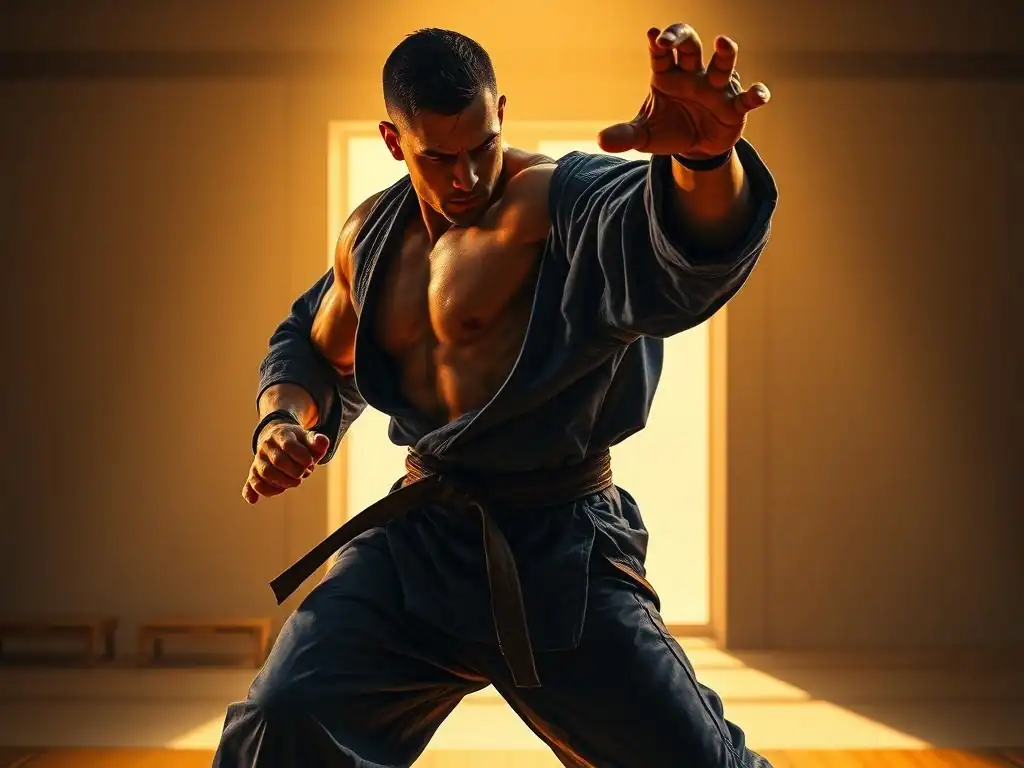
Welcome to Martial Arts Mastery, where the ancient traditions of combat meet modern training methodologies. Ever wondered how to execute the De Ashi Barai Sweep with the precision and power of a seasoned martial artist? Dive into our exploration of Essential Drills to Sharpen Your De Ashi Barai Sweep, uncovering the secrets to mastering this fundamental technique and unlocking a new dimension in your martial arts journey. The path to mastery starts here, so let's begin!
- Essential Drills to Sharpen Your O Goshi Hip Throw
- Mastering the O Goshi Hip Throw: An Introduction
-
O Goshi Hip Throw Drills: A Progressive Approach
- Drill 1: Footwork and Body Positioning for O Goshi
- Drill 2: Kuzushi (Breaking Balance) Practice for O Goshi
- Drill 3: Hip Contact and Rotation: Repetitive Motion Drills for O Goshi
- Drill 4: Leg Drive and Lifting: Developing Power in O Goshi
- Drill 5: Combining Kuzushi and the Throw: Full Movement Drills
- Advanced O Goshi Drill Variations
- Common Mistakes to Avoid in O Goshi Hip Throw Drills
- Integrating O Goshi Hip Throw Drills into Your Judo Training Regimen
- The Path to O Goshi Mastery: Consistent Practice
-
Frequently Asked Questions
- What is the De Ashi Barai sweep, and why is it important in martial arts?
- What are some essential drills to improve my De Ashi Barai sweep technique?
- How often should I practice De Ashi Barai sweep drills to see improvement?
- What are some common mistakes to avoid when practicing De Ashi Barai?
- Besides sparring, where else can I practically apply the De Ashi Barai sweep?
- Final Reflection: Mastering the Subtle Art of De Ashi Barai
- Unlock Your Sweep Potential Now!
Essential Drills to Sharpen Your O Goshi Hip Throw
Mastering the O Goshi Hip Throw: An Introduction
The O Goshi, or major hip throw, stands as one of the fundamental and most iconic techniques in Judo. It's often among the first throws taught to beginners due to its relatively straightforward mechanics, yet mastering it requires significant dedication and refinement. A powerful and well-timed O Goshi can lead to an ippon (full point) in competition, making it a crucial weapon in any Judoka's arsenal. Understanding the core principles – effective grip (kumi-kata), proper posture (shisei), disruptive balance breaking (kuzushi), precise entry (tsukuri), and dynamic execution (kake) – is the bedrock upon which proficiency is built.
While the basic movement of wrapping your arm around your opponent's back and turning your hip in seems simple, the nuances of weight distribution, timing, and body connection are complex. Without dedicated practice, the O Goshi Hip Throw can easily become ineffective, resulting in failed attempts or even being countered. Therefore, a structured approach to learning and refining this technique through targeted O Goshi Hip Throw drills is indispensable for anyone serious about developing a formidable hip throw.
Understanding the Fundamentals of O Goshi
At its heart, the O Goshi relies on using your hips as a fulcrum to lift and rotate your opponent ( Uke) over your lower back and side. The process begins with establishing a strong kumi-kata, typically a standard lapel and sleeve grip, though variations exist. Your shisei, or posture, must be stable and low, allowing you to drive into Uke and maintain balance. The crucial phase is kuzushi, where you break Uke's balance, usually forward or forward-diagonal, often by pulling and stepping.
Following kuzushi is tsukuri, the entry, where you step in deep, turning your hips and back towards Uke, bringing them close to your body with your hip below their center of gravity. Your lead arm, typically around Uke's back, pulls them close, while the sleeve grip helps control their balance. Finally, kake is the execution – driving through your legs, lifting with your hips, and rotating your upper body to throw Uke over your hip. Mastering these individual components and their seamless integration is the goal of effective O Goshi Hip Throw drills.
Importance of Drills for Perfecting the O Goshi Hip Throw
Repetitive drills are the cornerstone of developing muscle memory and refining the intricate coordination required for a successful O Goshi Hip Throw. Unlike practicing the full throw repeatedly, drills allow you to isolate specific phases of the technique – footwork, grip, balance breaking, entry, hip contact, and leg drive. By focusing intensely on one aspect at a time, you can correct subtle errors and build a strong foundation before attempting to combine everything. This targeted approach ensures that bad habits aren't reinforced and that the fundamental mechanics become second nature.
Consider the sheer number of repetitions needed to truly internalize a complex motor skill like the O Goshi. Elite Judoka often perform hundreds, if not thousands, of repetitions of specific movements daily. While beginners might not match this volume immediately, consistent practice of dedicated O Goshi drills is vital. These drills build strength, improve balance, enhance timing, and increase speed, making the technique more explosive and harder to defend against. Without these focused drills, the O Goshi remains a theoretical movement rather than a practical, high-percentage throw.
O Goshi Hip Throw Drills: A Progressive Approach
Developing a solid O Goshi Hip Throw requires breaking down the complex movement into manageable components and practicing them systematically. A progressive approach, starting with foundational elements and gradually integrating them into the full technique, is highly effective. These O Goshi Hip Throw drills are designed to build proficiency layer by layer, ensuring each aspect of the throw is strong before combining them. Consistency is key; aim to incorporate these drills regularly into your training sessions.
The following sections outline a series of O Goshi Hip Throw drills, moving from basic body mechanics to integrating balance breaking and full throws. Each drill focuses on a specific part of the technique, allowing practitioners to identify and correct weaknesses. While the order presented offers a logical progression, experienced Judoka may adapt or focus on specific drills based on their individual needs and areas for improvement in their O Goshi technique.
Drill 1: Footwork and Body Positioning for O Goshi
Effective footwork and precise body positioning are critical for a successful O Goshi Hip Throw. The entry must be deep enough to get your hips below Uke's center of gravity, and your feet must be positioned to provide a stable base for lifting and rotating. Many failed O Goshi attempts stem from poor entry mechanics, such as not stepping in deep enough, having feet too wide or too narrow, or failing to turn the hips fully. These drills isolate these movements to build correct muscle memory.
This foundational O Goshi drill often begins with solo practice, focusing purely on the steps and hip turn. Practitioners stand facing the direction they intend to throw, practice the entry step (typically bringing one foot back and turning the other foot inward), rotating the hips 180 degrees, and adopting the correct bent-knee posture as if Uke were there. Performing this motion slowly at first, perhaps 20-30 repetitions per side, allows for self-correction of posture and alignment. As proficiency increases, the speed can be increased, aiming for a fast, fluid entry while maintaining a low center of gravity, perhaps performing 50-100 repetitions rapidly per side to build endurance and speed.
Entering and Maintaining Correct Posture
The entry phase of the O Goshi requires getting your back close to Uke's front, with your hips deeply inserted. Correct posture involves bending your knees, keeping your back straight, and maintaining a strong core. A common drill involves standing with a partner ( Uke) who simply stands still. Tori practices the entry, focusing on stepping in, turning the hips, and achieving the correct low, stable stance with Uke snug against their back. Uke can provide feedback on Tori's hip depth and posture.
This drill is not about throwing; it's purely about the tsukuri. Perform the entry, hold the position for a few seconds, check alignment, and then disengage. Repeat this 30-40 times per side. A variation involves Uke holding a belt or gi top around their waist, and Tori practicing wrapping their arm around Uke's back and gripping the belt/gi, simulating the actual grip while focusing solely on the entry and posture. This helps integrate the grip action with the body movement, ensuring that the arms and legs work in concert during the O Goshi entry.
Footwork Drills to Improve Mobility and Positioning for O Goshi
Specific footwork patterns are essential for setting up and executing the O Goshi. One key movement is the pivot or turn that brings Tori's back towards Uke. A simple solo drill involves practicing the pivot step repeatedly, visualizing the opponent. Stand with feet shoulder-width apart, simulate a pulling action with the hands, step one foot back and pivot on the ball of the front foot, turning 180 degrees and ending in a low, stable stance.
Another effective footwork drill involves movement. Start facing a partner at a distance, simulate establishing a grip, and then practice closing the distance with the appropriate steps (often a pulling step followed by the pivot/entry step) to get into the O Goshi position. This can be done slowly to emphasize precision or quickly to build speed. Practice moving forward, backward, and laterally before entering, simulating realistic scenarios. Aim for 20-30 repetitions of moving entry drills per side, focusing on quick, efficient steps that minimize the distance between Tori and Uke during the tsukuri.
Drill 2: Kuzushi (Breaking Balance) Practice for O Goshi
Effective kuzushi is paramount for any successful Judo throw, and O Goshi is no exception. Attempting to throw a partner who is perfectly balanced is incredibly difficult and inefficient. The goal of kuzushi for O Goshi is typically to break Uke's balance forward or forward-diagonal, making them light on their heels or balls of their feet and disrupting their base. These O Goshi drills focus specifically on the pulling and pushing actions, combined with movement, that achieve this imbalance before the entry.
Many Judoka underestimate the importance of kuzushi, focusing too much on the lifting part of the throw. However, some estimates suggest that 70-80% of a throw's success comes from effective kuzushi and tsukuri. Practicing kuzushi in isolation, or with minimal resistance, allows Tori to feel how Uke's body responds to different pulling and pushing forces. It also helps develop the sensitivity needed to react to Uke's reactions and capitalize on their moments of imbalance.
Drills to Disrupt Uke's Balance Before the Throw
A fundamental kuzushi drill involves standing with a partner and focusing solely on pulling and pushing actions with the established kumi-kata. Tori practices pulling Uke forward, sideways, and diagonally, feeling how their weight shifts. Uke can resist slightly to provide feedback. The goal is not to throw, but to make Uke take a step or visibly lose balance. For O Goshi, the focus is on pulling Uke forward and slightly upward, often combined with a step, to get them leaning onto the balls of their feet.
Another variation is the "walking kuzushi" drill. Tori and Uke walk around the mat, maintaining a grip. Tori continuously applies subtle pulling and pushing forces, trying to disrupt Uke's walking rhythm and balance. When Tori feels a moment of imbalance (e.g., Uke leaning forward as they step), they practice a sharp pull to exaggerate the imbalance, without necessarily entering for the throw. This drill, practiced for 3-5 minute rounds, builds sensitivity and timing for recognizing and exploiting opportunities for kuzushi during movement.
Using Hand Techniques to Facilitate Kuzushi in O Goshi
The hands are the primary tools for applying kuzushi through the kumi-kata. In O Goshi, the lapel grip typically controls Uke's upper body posture and provides the main pulling force forward, while the sleeve grip helps control Uke's arm and can be used to guide their body or prevent them from posting. A specific hand drill involves standing with a partner and practicing only the hand actions used in the O Goshi kuzushi.
With a standard grip, Tori practices a sharp downward and forward pull with the lapel hand while simultaneously lifting and guiding with the sleeve hand. Repeat this motion 20-30 times per side, focusing on the coordination of both hands and the feeling of disrupting Uke's balance. Uke should react naturally to the pull, stepping forward if necessary. This drill can be combined with the footwork drills, practicing the hand action in sync with the entry step to ensure the kuzushi and tsukuri phases flow together smoothly in the O Goshi Hip Throw.
Drill 3: Hip Contact and Rotation: Repetitive Motion Drills for O Goshi
Once the entry and kuzushi are understood, the next critical step in the O Goshi is achieving deep, solid hip contact and executing the powerful rotation needed for the throw. Many beginners fail to get their hips close enough to Uke's body or don't rotate fully, resulting in a weak throw or an inability to lift Uke. These O Goshi Hip Throw drills isolate the hip action and rotation, building the necessary muscle memory and power.
Repetitive motion drills, sometimes called uchi-komi, are fundamental for developing the core mechanics of a throw. For O Goshi, this involves performing the entry and hip turn repeatedly with a partner, but without actually completing the throw. The focus is on getting into the correct position, feeling the connection with Uke's body on your hip, and practicing the initial lifting and rotating motion. This allows for high-volume practice of the most crucial part of the tsukuri and the beginning of the kake.
Focusing on Proper Hip Placement and Rotation
Proper hip placement means getting your hips below Uke's center of gravity and close to their body. A key O Goshi drill involves standing with a partner and practicing the entry ( tsukuri) repeatedly. Tori steps in, turns their hips, wraps their arm, and connects their hip to Uke's. They hold this position for a moment, focusing on the feeling of connection and the depth of the entry, before returning to the starting position.
Perform this entry practice 50-100 times per side. Uke provides passive resistance, allowing Tori to feel if their position is stable and deep enough. A variation involves Tori lifting Uke slightly off their feet using only the hip contact and leg drive, without completing the full rotation. This emphasizes the lifting power generated from the legs and hips. Aim for 20-30 slight lifts per side, focusing on the feeling of Uke's weight transferring onto your hip.
Practicing the Throwing Motion with a Partner
Building on the hip contact, the next step is to practice the rotation and initial lifting phase of the throw. In this O Goshi drill, Tori performs the full entry ( tsukuri) and then executes the beginning of the throw ( kake), lifting and rotating Uke partway before Uke steps out or Tori stops the motion. This is often done in a controlled environment where Uke is cooperative and expects the movement.
Perform this partial throw drill 30-50 times per side. The focus is on the coordinated action of the legs driving, the hips lifting and turning, and the arms maintaining control and guiding Uke. This drill helps develop the explosive power needed for the throw and refines the timing between the lift and the rotation. It's important that Uke stays relaxed and cooperative to prevent injury and allow Tori to focus purely on their mechanics.
Drill 4: Leg Drive and Lifting: Developing Power in O Goshi
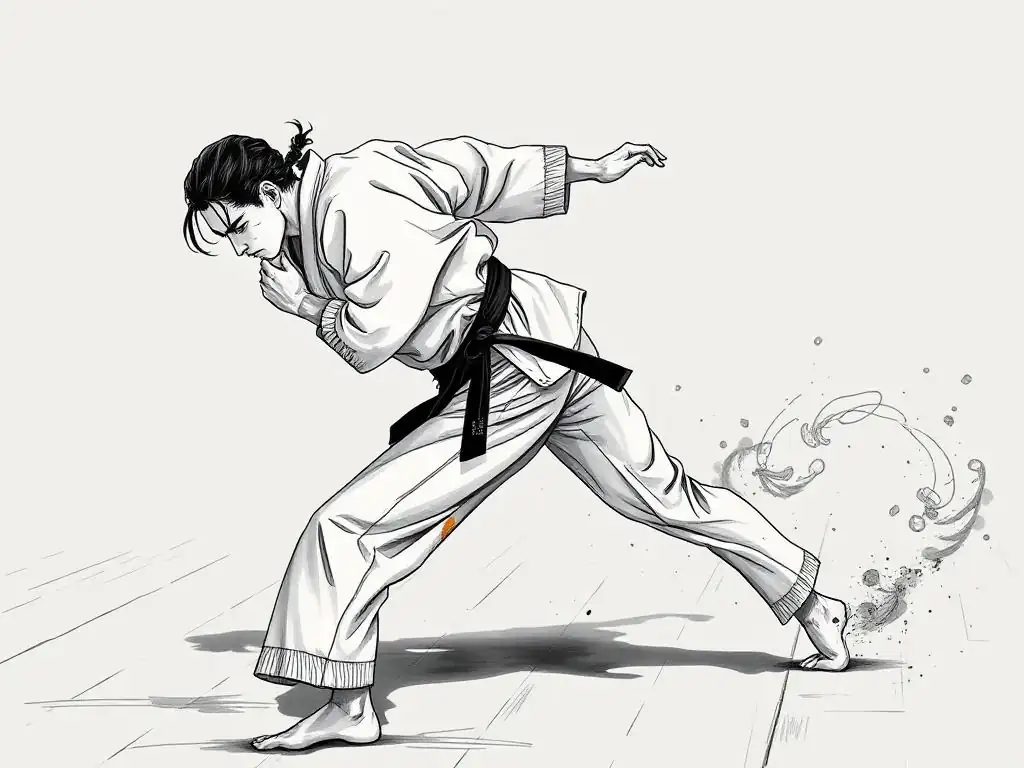
The O Goshi Hip Throw, despite its name, relies heavily on leg strength and drive, not just hip action. The power to lift Uke and rotate them over your hip comes primarily from the powerful extension of your legs and the core strength used to maintain posture and execute the turn. Many practitioners fail to generate enough power because they rely too much on pulling with their arms or bending at the waist instead of driving from their lower body. These drills focus on building the specific strength and explosive power needed for the kake phase.
Developing powerful legs is crucial for executing a high-amplitude O Goshi. Exercises like squats, deadlifts, and lunges build general leg and back strength. However, specific O Goshi drills can target the exact muscle groups and movements used in the throw. These include practicing the lifting motion repeatedly with a partner, focusing purely on the leg drive and hip extension, or incorporating resistance training that mimics the lifting action of the throw.
Strengthening Leg and Back Muscles for a Powerful Throw
General strength training is foundational. Incorporate exercises like back squats (3-5 sets of 5-8 reps), Romanian deadlifts (3-4 sets of 8-12 reps), and walking lunges (3 sets of 10-15 reps per leg) into your training regimen 2-3 times per week. These exercises build the posterior chain strength critical for the lifting component of the O Goshi. Additionally, core strengthening exercises like planks and twists improve stability during the rotation.
More specific to the O Goshi Hip Throw, practice partner lifts. With Uke positioned on your hip after a correct entry, practice lifting them off the ground using only your legs and hips, holding for a few seconds, and then lowering them gently. Perform 10-15 repetitions per side. This drill directly mimics the lifting action and helps build the necessary lower body strength and endurance specific to the O Goshi. Ensure you maintain good posture throughout to avoid back strain.
Incorporating Resistance Bands and Bodyweight Exercises
Resistance bands can be used to simulate the pulling action of the arms and the rotational force of the body during the O Goshi. Loop a resistance band around a sturdy post. Stand facing away from the post, holding the band with the same grip you would use for O Goshi. Practice the entry step and hip turn while pulling the band, simulating the force applied to Uke. This allows for solo practice with resistance, focusing on the coordination of the turn and the pull.
Bodyweight exercises that mimic the O Goshi movement can also be beneficial. Practice jump squats or box jumps to develop explosive leg power. Perform standing trunk rotations, with or without a light weight, to improve core strength and rotational speed. Combine these with shadow Judo practice, visualizing the O Goshi Hip Throw and performing the full motion explosively without a partner, perhaps performing 20-30 repetitions, focusing on speed and power in the execution phase.
Drill 5: Combining Kuzushi and the Throw: Full Movement Drills
Once the individual components – footwork, entry, kuzushi, hip contact, and lifting – are solid, the next step is to integrate them into a fluid, dynamic movement. These O Goshi Hip Throw drills focus on performing the entire technique from start to finish, albeit often in a controlled and cooperative environment initially. The goal is to seamlessly transition from breaking Uke's balance to executing the throw, ensuring the timing and coordination are correct.
This phase of O Goshi drills moves beyond isolated mechanics and into the application of the technique. It requires Tori to read Uke's reactions to the kuzushi and time their entry accordingly. It also helps Tori develop the feeling of connecting with Uke throughout the entire sequence, from the initial pull to the final rotation. Cooperative practice allows for higher repetition counts and refinement of the overall flow of the throw.
Integrating Balance Breaking and Throwing into a Single Motion
This drill starts with Tori and Uke in a grip. Tori initiates the kuzushi (e.g., a forward pull). As Uke reacts (e.g., steps forward or leans), Tori immediately transitions into the tsukuri and kake, executing the O Goshi. This is often performed as "throwing practice" ( nage-komi) where Uke falls safely.
Practice this drill 20-30 times per side. The focus is on the smooth, quick transition from kuzushi to the entry and throw. Tori should aim to make the kuzushi subtle yet effective, drawing Uke into the perfect position for the O Goshi. Uke's role is to react realistically to the kuzushi but fall cooperatively to allow Tori to practice the full motion. This drill is essential for developing the timing needed to throw a moving, reacting opponent.
Practicing with a Cooperative Partner
Cooperative nage-komi is a staple of Judo training and a crucial O Goshi drill. Tori and Uke agree on the throw to be practiced (O Goshi). Tori executes the full sequence from grip to throw, and Uke facilitates the throw by reacting appropriately and falling safely. This allows Tori to perform high repetitions of the full O Goshi Hip Throw technique.
Perform sets of 10-15 throws per side, resting between sets. The focus is on executing the throw with power and good form. Uke can provide feedback on timing, balance breaking, and entry depth. While cooperative, this drill still requires Tori to initiate the kuzushi and execute the tsukuri and kake correctly. It's a vital step before moving to more resistant or dynamic practice scenarios.
Advanced O Goshi Drill Variations
Once the basic O Goshi Hip Throw drills are mastered, practitioners can move on to more advanced variations that simulate realistic combat situations. These drills incorporate movement, deal with different opponent reactions and stances, and begin to integrate defenses and counters. Advanced O Goshi drills push the practitioner to apply the technique under increasing pressure and against less cooperative partners.
These variations are essential for making the O Goshi a truly effective competitive technique. Simply being able to perform the throw on a cooperative partner in a static position is not enough. Real Judo involves constant movement, shifting weight, and active resistance from Uke. Advanced O Goshi Hip Throw drills are designed to bridge the gap between static practice and live sparring ( randori).
Dynamic O Goshi Drills: Incorporating Movement and Reaction
Dynamic uchi-komi or nage-komi involves performing the O Goshi Hip Throw drills while moving around the mat. Instead of starting from a static position, Tori and Uke move forwards, backwards, and sideways, simulating the constant motion of randori. Tori looks for opportunities to apply the O Goshi as Uke steps or shifts their weight.
This drill, practiced for rounds of 3-5 minutes, requires Tori to develop a keen sense of timing and opportunity. They must be able to execute the kuzushi and tsukuri while both individuals are in motion. Uke can provide varying levels of resistance, from minimal to moderate, to simulate different opponent reactions. This dynamic practice is much closer to the demands of live sparring than static drills.
O Goshi Hip Throw Drills Against Different Opponent Stances
Opponents rarely stand in a perfectly square, cooperative stance. They may adopt a strong defensive posture, a forward-leaning offensive stance, or a bladed stance. Practicing O Goshi Hip Throw drills against partners adopting these different stances is crucial. Tori must learn how to adapt their kuzushi and entry to break Uke's balance regardless of their initial position.
For example, practicing O Goshi against a partner in a strong defensive posture (low hips, wide base) might require more significant kuzushi to get them to shift weight. Against a forward-leaning partner, the entry might be quicker, capitalizing on their existing forward momentum. Dedicate specific rounds (e.g., 2-3 minutes each) to practicing O Goshi entries against partners instructed to adopt and maintain different challenging stances. This builds versatility in applying the O Goshi technique.
Countering Common Defenses to O Goshi Through Drills
Skilled opponents will attempt to defend against the O Goshi. Common defenses include straightening up their posture, pushing back against Tori's hips, stepping out of the throw, or dropping their weight. Advanced O Goshi drills involve practicing how to overcome these specific defenses.
One drill involves Uke actively pushing back against Tori's entry. Tori must learn to absorb this pressure, maintain their low posture, and use leg drive to overcome the resistance. Another drill focuses on Uke stepping out; Tori practices adjusting their angle or transitioning to a different throw if the O Goshi opportunity is lost. Practice these counter-defense scenarios in controlled, repetitive drills (e.g., 10-15 repetitions focusing on a specific defense) before attempting them in randori.
Common Mistakes to Avoid in O Goshi Hip Throw Drills
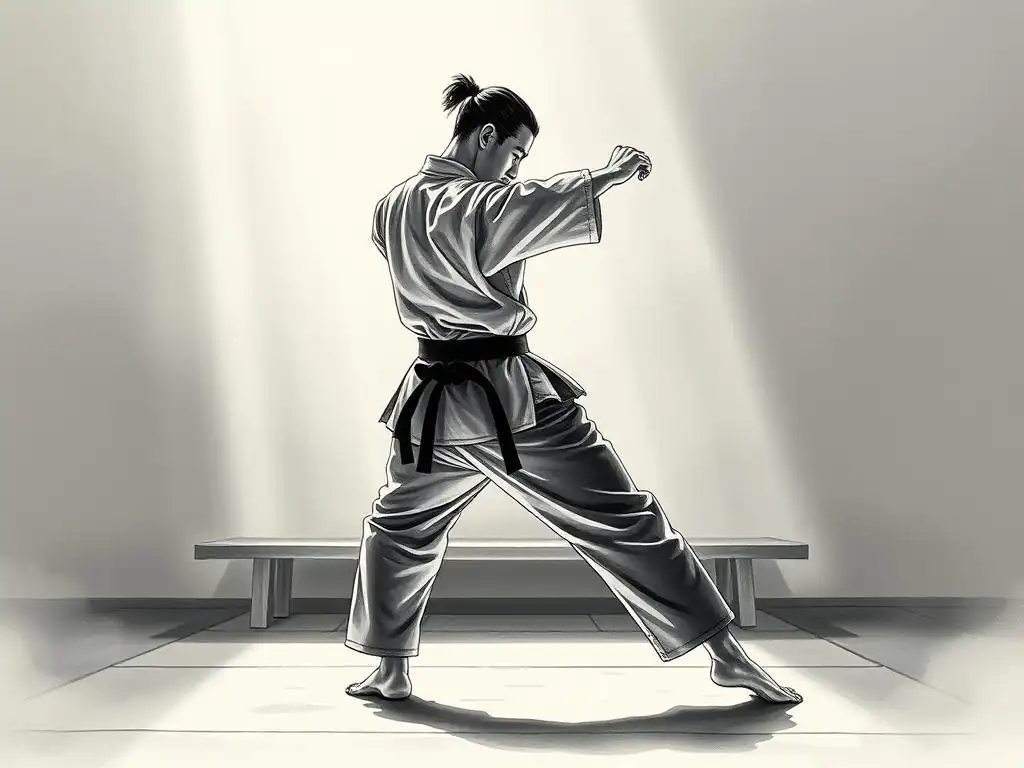
While practicing O Goshi Hip Throw drills is essential, it's equally important to be aware of common errors that can hinder progress and lead to injury. Identifying and correcting these mistakes early on prevents the development of bad habits that are difficult to break later. Focusing on proper form over quantity is crucial, especially in the initial stages of learning the O Goshi.
Many common mistakes relate to fundamental principles: incorrect posture, insufficient kuzushi, poor timing, or lack of commitment to the throw. Actively seeking feedback from instructors and training partners is invaluable. Filming your O Goshi drills can also provide objective insight into your mechanics, allowing you to spot errors you might not feel during the movement.
Identifying and Correcting Posture Errors
A frequent error in O Goshi is bending at the waist instead of the knees and hips. This leads to a weak, unstable position and puts strain on the lower back. During O Goshi drills, Tori should focus on keeping their back straight and lowering their center of gravity by bending their knees, as if sitting into a chair. Uke can provide feedback by noting if Tori's chest is collapsing forward.
Another posture error is not getting the hips deep enough. If Tori's hips are too high or too far away from Uke, the throw lacks leverage. In partner drills, Tori should aim to feel Uke's belt line resting just above their own belt line. Practicing the entry drill (Drill 1) repeatedly, focusing only on achieving deep hip contact and a low, stable base, is the best way to correct this. Aim for your hips to be directly under Uke's center of gravity.
Preventing Balance Issues During the Throw
Tori can also lose their own balance during the O Goshi, either during the entry or the execution. This often happens if the entry step is unstable, the feet are too close together or too wide, or Tori leans too far forward or backward. Maintaining a stable, low base is key.
During O Goshi Hip Throw drills, consciously check your foot position after the entry. Are your feet providing a wide enough base? Is your weight centered? If you feel unstable, stop the drill, adjust your stance, and restart. Practicing the footwork drills (Drill 1) and the entry/posture drill (Drill 1) with a focus on stability, perhaps performing them slowly while holding the position, helps build the proprioception needed to maintain balance throughout the technique.
Addressing Timing Problems in the O Goshi Technique
Timing is perhaps the most challenging aspect of the O Goshi Hip Throw. Entering too early or too late relative to Uke's balance can make the throw ineffective. Entering before kuzushi is achieved means trying to lift a stable opponent; entering after Uke has regained their balance means the opportunity is gone.
Dynamic O Goshi drills (Drill 5 and Advanced Drills) are crucial for improving timing. Practice initiating the kuzushi and immediately following with the entry as Uke is reacting. This requires sensitivity to Uke's weight shifts. Start slowly in practice, feeling how Uke reacts to your pulls and pushes, and timing your entry precisely when they are most off-balance. Gradually increase the speed as your timing improves. Consistent randori is also essential for developing the reactive timing needed for O Goshi.
Integrating O Goshi Hip Throw Drills into Your Judo Training Regimen
Simply knowing O Goshi Hip Throw drills isn't enough; they must be integrated effectively into a regular training schedule. A structured approach ensures consistent practice, progressive improvement, and balanced development alongside other Judo skills. Incorporating O Goshi drills into your warm-up, technical practice, and even cool-down can significantly accelerate your progress.
A well-rounded training plan should include dedicated time for fundamental O Goshi drills, partnered practice, and live application during randori. The frequency and intensity of O Goshi drills should vary based on your experience level and training goals. Beginners might spend more time on foundational drills, while advanced practitioners might focus on dynamic variations and integrating O Goshi into combinations.
Creating a Structured Training Plan
Allocate specific segments of your training sessions to O Goshi Hip Throw drills. For example, a 90-minute session might include:
- 10 minutes: Warm-up with O Goshi specific movements (entry steps, hip turns).
- 20 minutes: Fundamental O Goshi drills (footwork, entry, hip contact - Drills 1 & 3, perhaps 50-100 reps total per side).
- 20 minutes: Partnered O Goshi drills (
kuzushipractice, partial throws,nage-komi- Drills 2, 3, & 5, perhaps 20-30 full throws per side). - 30 minutes:
Randori, actively looking for opportunities to apply O Goshi. - 10 minutes: Cool-down and stretching.
This structure ensures dedicated practice time. Repeat this type of session 2-3 times per week for focused O Goshi development. Vary the drills used in the technical segments to address different aspects of the O Goshi technique.
Monitoring Progress and Adjusting Drills as Needed
Track your progress in O Goshi Hip Throw drills. Are your entries getting deeper? Is your kuzushi more effective? Are you able to throw a less cooperative partner? Use qualitative feedback from instructors and partners, and consider quantitative measures like the number of successful O Goshi throws attempted and completed during randori over a training cycle (e.g., a month).
Based on your progress and feedback, adjust your O Goshi drills. If your entries are shallow, spend more time on entry and posture drills. If you struggle with timing, focus on dynamic kuzushi and transition drills. If you lack power, increase your strength training and partner lifting drills. Periodically review and modify your training plan to target areas that need the most improvement in your O Goshi Hip Throw.
The Path to O Goshi Mastery: Consistent Practice
Mastering the O Goshi Hip Throw is a journey that requires consistent, deliberate practice over time. There is no shortcut; proficiency comes from countless repetitions, dedicated drills, and application in live situations. The O Goshi is a technique that continues to be refined throughout a Judoka's career, from white belt to black belt and beyond.
Embracing the process of continuous improvement is key. Don't get discouraged by failed attempts in randori. Instead, view them as opportunities to learn and identify areas for further drill work. The O Goshi Hip Throw drills discussed here provide a framework, but the real progress happens through persistent effort on the mat.
The Importance of Dedicated Training for O Goshi Proficiency
Dedication means showing up consistently and practicing with focus and intent. It means performing O Goshi Hip Throw drills even when you feel like working on something else. It means paying attention to the details – the angle of your foot, the tension in your grip, the timing of your pull. Judoka who dedicate specific time to refining their O Goshi technique are far more likely to make it a reliable and powerful weapon.
Set goals for your O Goshi practice, whether it's improving the depth of your entry by 2 inches, successfully executing O Goshi in randori X number of times per session, or being able to throw partners of a certain size or resistance level. Work towards these goals through your structured O Goshi drills and live practice. The cumulative effect of consistent, dedicated training is what ultimately leads to mastery.
Video Analysis and Competition Footage for O Goshi Improvement
Analyzing your own O Goshi Hip Throw drills and randori footage can provide invaluable insights. Set up a camera to record your practice sessions. Review the footage critically, comparing your technique to the principles discussed and demonstrated by skilled practitioners. Look for inconsistencies in your entry, kuzushi, hip contact, or execution.
Also, study competition footage of high-level Judoka successfully executing O Goshi. Pay attention to their kumi-kata, how they set up the throw, their timing relative to their opponent's movement, and the fine details of their body mechanics. Try to emulate elements of their technique in your own O Goshi Hip Throw drills. This combination of self-analysis and studying masters is a powerful tool for accelerating your path to O Goshi mastery.
Frequently Asked Questions
What is the De Ashi Barai sweep, and why is it important in martial arts?
The De Ashi Barai is a foot sweep technique used to disrupt an opponent's balance. It's important because it can create openings for attacks or immediately take an opponent down.
What are some essential drills to improve my De Ashi Barai sweep technique?
Essential drills include repetition drills focusing on timing and foot placement, partner drills for applying the sweep, and shadow sweeping to refine technique and visualization.
How often should I practice De Ashi Barai sweep drills to see improvement?
Consistent practice is key. Aim for at least 2-3 sessions per week, focusing on technique and precision rather than just speed.
What are some common mistakes to avoid when practicing De Ashi Barai?
Common mistakes include sweeping too high on the leg, lacking proper timing and distance, and failing to maintain balance during the sweep.
Besides sparring, where else can I practically apply the De Ashi Barai sweep?
The De Ashi Barai can be adapted for self-defense situations to unbalance an attacker. It's crucial to practice safe and controlled application in a training environment first.
Final Reflection: Mastering the Subtle Art of De Ashi Barai
The journey to mastering the De Ashi Barai Sweep is a testament to the power of focused practice and meticulous refinement. While the technique itself may appear simple, its effectiveness hinges on a deep understanding of timing, balance, and subtle movements, all honed through dedicated drilling. This is not just about learning a technique; it's about cultivating a deeper connection with judo principles.
The impact of mastering the De Ashi Barai extends beyond the dojo. It teaches us the importance of precision, patience, and the ability to seize opportunities, qualities that are invaluable in all aspects of life. The principle of judo is to adapt to the opponent's movements and use their strength against them.
This quote, though often attributed to Jigoro Kano, perfectly encapsulates the essence of De Ashi Barai, a technique that thrives on understanding and exploiting an opponent's imbalance.
Now, consider how you can apply the lessons learned from these drills to your own pursuits. Are you willing to embrace the repetition, the subtle adjustments, and the unwavering focus required to truly master a skill? The De Ashi Barai Sweep, like any worthwhile endeavor, demands dedication and a willingness to learn. Embrace the challenge, refine your technique, and discover the power that lies within the pursuit of mastery.
Unlock Your Sweep Potential Now!
Thank you for diving into the nuances of De Ashi Barai! We hope you found these drills valuable in understanding and refining your technique. Now, it's time to translate that knowledge into action and truly master this powerful sweep.
- Commit to practicing at least 15 minutes of De Ashi Barai drills every day for the next week. Consistency is key to building muscle memory and transforming theory into instinct.
- Share this article with a training partner and challenge each other to improve your sweeps. Mutual support and feedback can accelerate your progress.
- Consider filming your De Ashi Barai execution and analyzing it alongside the drills outlined. Spotting minor adjustments can lead to major improvements.
Ready to take your De Ashi Barai to the next level? What specific adaptation will you make to your training routine starting today?