
The Importance of Center (Hara) in Executing Tai Sabaki

Welcome to Martial Arts Mastery!
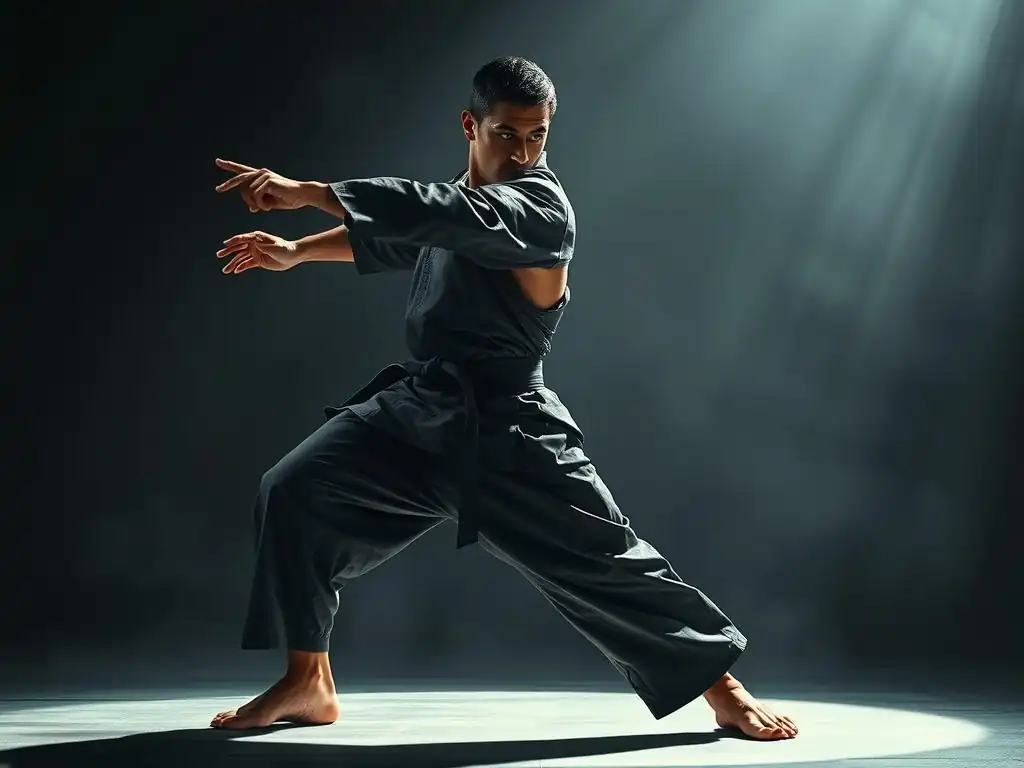
Delve into the intricate world where movement becomes art and the body a weapon. Ever wondered how masters achieve effortless grace and devastating power? This journey begins with understanding the core. Today, we unlock the secrets of Tai Sabaki Hara Balance, exploring how centering your hara is absolutely fundamental to mastering this crucial technique. Prepare to deepen your understanding of body mechanics and unlock a new level of control – let's begin!
- Understanding Tai Sabaki: The Foundation of Aikido Movement
- The Hara: Your Center of Gravity and Power
- Tai Sabaki and Hara: The Crucial Link
- How the Hara Improves Tai Sabaki Technique
- Practical Exercises for Developing Hara Awareness and Control
- Common Mistakes and How to Correct Them
- Integrating Hara into Advanced Tai Sabaki Applications
- Conclusion: Mastering Tai Sabaki Through Hara Awareness
-
Frequently Asked Questions
- What is Tai Sabaki and how does it relate to "Hara Balance"?
- Why is "Hara Balance" so vital when performing Tai Sabaki?
- How does understanding your "Center (Hara)" improve your Tai Sabaki technique?
- What are some practical exercises to develop better "Hara Balance" for Tai Sabaki?
- How can a martial artist apply the principles of "Tai Sabaki Hara Balance" in self-defense scenarios?
- Final Reflection: Embracing the Core for Fluid Movement
- Ignite Your Movement: Master the Hara!
Understanding Tai Sabaki: The Foundation of Aikido Movement
What is Tai Sabaki? Defining Body Shifting in Aikido
Tai Sabaki, often translated as "body management" or "body shifting," is a fundamental concept in Aikido and many other Japanese martial arts. It refers to the skilled movement of the body to position oneself advantageously relative to an opponent, creating opportunities for technique application while simultaneously avoiding their attacks. Unlike static blocking or direct confrontation, Tai Sabaki emphasizes dynamic movement, using footwork and body turns to enter, evade, or redirect an attacker's force.
The essence of Tai Sabaki lies not just in moving the feet, but in moving the entire body as a coordinated unit. This involves subtle shifts in weight, pivots, and turns that allow the practitioner to move off the line of attack and enter into a position where they can safely control the opponent. Different forms of Tai Sabaki exist, such as irimi (entering) and tenkan (turning), each serving specific strategic purposes within the flow of an encounter. Mastering these movements is crucial for effective defense and execution of Aikido techniques, laying the groundwork for dynamic and responsive action.
The Role of Movement in Aikido
Movement is not merely a supplementary element in Aikido; it is the very core of its principles. Aikido techniques are rarely applied from a static position; instead, they emerge from and are facilitated by continuous, harmonious movement. Tai Sabaki provides the vocabulary for this movement, enabling practitioners to blend with an attacker's energy rather than opposing it head-on. This principle of blending, known as aiki, relies heavily on the ability to move fluidly and precisely around the point of conflict.
Effective movement in Aikido allows the practitioner to disrupt the attacker's balance and structure while maintaining their own. By moving off the line, the Aikidoka can lead the attacker's energy past them, leaving the attacker vulnerable and off-balance. This dynamic approach to conflict resolution is what differentiates Aikido from arts that rely primarily on striking or direct force-on-force engagement. The constant cultivation of efficient and powerful Tai Sabaki is therefore paramount for developing proficiency in Aikido.
The Hara: Your Center of Gravity and Power
Locating and Understanding Your Hara (Tanden)
The Hara, often referred to in English as the "center" or "core," is a concept deeply rooted in traditional Japanese culture and martial arts. Physiologically, it is generally located a few inches below the navel and slightly inward, corresponding roughly to the body's physical center of gravity. In martial arts like Aikido, however, the Hara (specifically the seika tanden, or "lower cinnabar field") is understood as more than just a physical point; it is considered the center of vital energy (Ki), stability, and consciousness.
Training the Hara involves developing awareness and control over this area, learning to initiate movements and generate power from this central point rather than relying solely on the limbs. Cultivating a strong Hara is believed to ground the practitioner, providing a deep sense of stability and rootedness. This internal focus contrasts with external, muscular-based strength, emphasizing instead a relaxed yet powerful internal connection that facilitates coordinated and efficient movement.
The Hara as a Source of Stability and Balance
The Hara's location at the approximate physical center of gravity makes it inherently linked to the body's stability. When movement is initiated from the Hara, the rest of the body follows, maintaining a unified, balanced structure. This is particularly evident in postures and movements that require strong balance, such as standing rooted or executing dynamic turns. A practitioner who moves from their Hara is like a well-rooted tree, difficult to push over because their foundation is solid and centered.
Conversely, if movement originates from the extremities or upper body, the center of gravity can easily shift outside the base of support, leading to instability and loss of balance. Developing Hara awareness allows the practitioner to maintain their center even during complex or vigorous movements, providing a consistent source of stability. This internal stability is crucial for absorbing or redirecting external forces without being easily disrupted, a key aspect of effective Tai Sabaki Hara Balance.
Connecting the Hara to Ki (Energy) Flow
In many Eastern martial arts philosophies, the Hara is considered the primary reservoir and source of Ki, or vital energy. Training the Hara is seen as a way to cultivate and concentrate this internal energy, allowing it to flow freely throughout the body and manifest as power, resilience, and heightened awareness. When the Hara is engaged and relaxed, Ki is said to flow unimpeded, supporting coordinated movement and generating effortless power.
This connection between Hara and Ki is not purely theoretical; it has practical implications for martial technique. Initiating movement from the Hara, rather than tensing the muscles, allows for a more relaxed yet powerful execution of techniques. This internal power, often described as "connected strength" or "Ki power," is distinct from brute muscular force and is essential for the flowing, non-resistant nature of Aikido techniques. Cultivating the Hara is therefore synonymous with cultivating one's internal energy and power.
Tai Sabaki and Hara: The Crucial Link
Why Hara Control is Essential for Effective Tai Sabaki
Effective Tai Sabaki is fundamentally dependent on maintaining a stable and controlled center – the Hara. When executing body shifts, especially rapid pivots or evasive maneuvers, the body's balance is constantly challenged. If the movement is initiated from the limbs or upper body, the practitioner risks becoming easily unbalanced or susceptible to being pulled or pushed off center by an opponent. Hara control ensures that the core remains stable, acting as the anchor point around which the rest of the body moves.
Consider a simple pivot: if you turn primarily by twisting from the waist up, your lower body may lag, and your balance can be precarious. However, if you initiate the pivot from the Hara, shifting your weight and turning from the core, your entire body moves as a unit, maintaining structural integrity and balance throughout the motion. This allows for quicker, more stable, and more powerful transitions, directly impacting the effectiveness of your Tai Sabaki. The connection between Tai Sabaki Hara Balance is undeniable.
Maintaining Balance During Tai Sabaki Movements: A Hara-Centric Approach
Maintaining balance during dynamic Tai Sabaki is perhaps the most critical outcome of Hara-centric movement. As you move off the line of attack or enter an opponent's space, your base of support changes, and forces are applied to your body. If your center is weak or disconnected, you will struggle to remain upright and stable, making you vulnerable. A strong, engaged Hara provides the internal stability needed to absorb or redirect these forces.
A Hara-centric approach means that even during complex movements like tenkan (a 180-degree or 360-degree turn), the feeling is that the rotation originates from the lower abdomen, with the rest of the body following. This keeps the weight grounded and centered, preventing the upper body from becoming too light or leading the movement in a way that compromises stability. Developing this internal control is key to achieving fluid and resilient Tai Sabaki Hara Balance.
How the Hara Improves Tai Sabaki Technique
Enhancing Stability and Preventing Loss of Balance
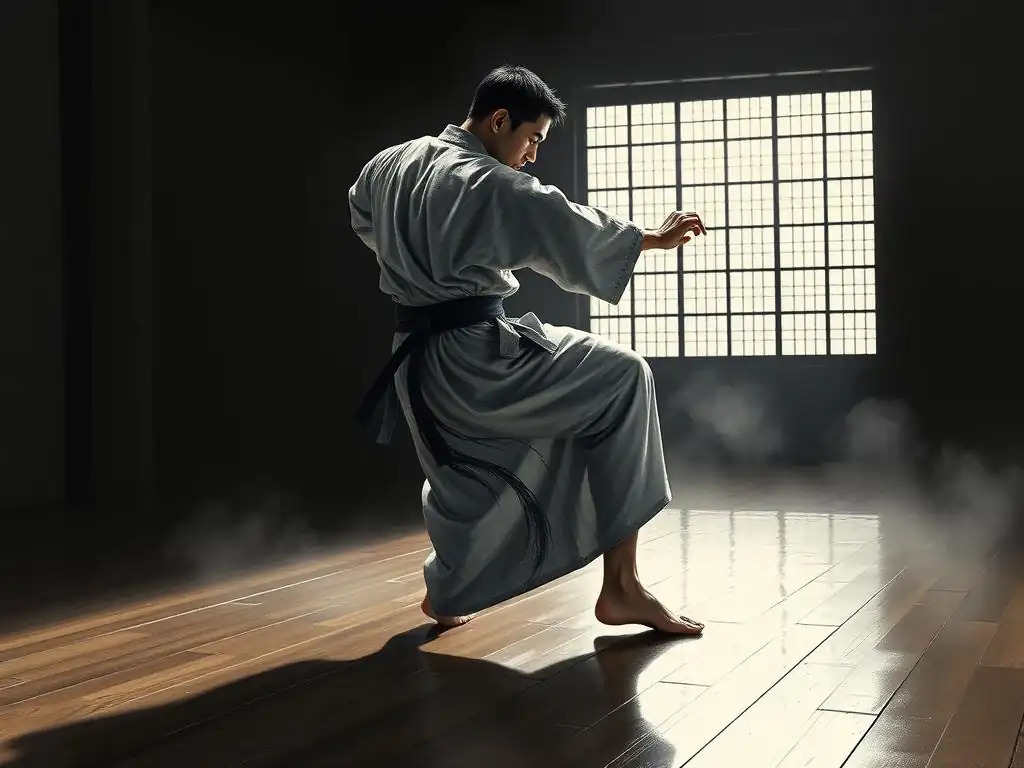
As previously discussed, the Hara acts as the body's natural stabilizer. By initiating and controlling movement from this center, you significantly reduce the likelihood of losing balance during dynamic Tai Sabaki. When performing a quick irimi entry, for example, engaging the Hara ensures that your body weight remains grounded and your posture remains strong, even as you move rapidly into the opponent's space. This enhanced stability allows you to maintain control and transition smoothly into your technique.
Without Hara engagement, common errors like leaning too far forward or backward, or letting the upper body drift independently of the lower body, become prevalent. These errors disrupt the Tai Sabaki Hara Balance and leave the practitioner vulnerable. By focusing on moving from the Hara, you cultivate a more integrated and stable body structure that can withstand external forces and maintain equilibrium during complex movements.
Generating Power and Momentum from the Hara
Power generation in Aikido, particularly for techniques that involve throwing or unbalancing, often originates from the core and is amplified through coordinated body movement, especially Tai Sabaki. The Hara is considered the primary source of this internal power. Rather than relying on isolated muscular strength in the arms or shoulders, power is generated as a unified wave starting from the Hara, extending through the limbs, and amplified by efficient body mechanics.
When executing a Tai Sabaki movement like tenkan to set up a throw, initiating the turn from the Hara allows you to utilize your entire body weight and structure to generate rotational force. This creates momentum that can be transferred to the opponent, requiring significantly less muscular effort than trying to power the movement solely with the arms or upper body. This Hara-driven power is more sustainable and less prone to causing tension or fatigue. Estimates suggest that connected, Hara-driven power can feel approximately 30-40% more efficient than isolated muscular strength for similar tasks in movement.
Improving Reaction Time and Agility Through Hara Awareness
Hara awareness is intrinsically linked to overall body awareness and responsiveness. When you are centered and connected to your Hara, your body moves as a single, integrated unit. This allows for quicker and more precise reactions to an opponent's movements. Instead of having to consciously coordinate multiple body parts, the response can feel more intuitive and instantaneous, originating from a central command point.
Furthermore, a strong Hara allows for smoother transitions between different Tai Sabaki movements. Agility is not just about speed, but also about the ability to change direction and posture efficiently. Moving from the Hara facilitates these rapid shifts in balance and direction, enabling the practitioner to flow seamlessly from one movement to the next, maintaining optimal positioning and Tai Sabaki Hara Balance throughout the encounter.
Achieving Smooth and Fluid Tai Sabaki with Hara Engagement
One of the hallmarks of advanced Aikido is the smooth, fluid execution of techniques and movement. Jerky, disjointed movements often indicate a lack of connection and control from the center. Engaging the Hara promotes a sense of integrated movement, where the entire body moves together harmoniously. This leads to Tai Sabaki that is not only effective but also aesthetically pleasing and efficient.
When Tai Sabaki originates from the Hara, the transitions between steps, pivots, and turns become seamless. There is no wasted motion or hesitation, as the body's energy flows continuously from the center. This fluidity allows the practitioner to blend more effectively with the opponent's energy, leading them into techniques with minimal resistance. Cultivating this smooth, Hara-driven Tai Sabaki is a lifelong pursuit in Aikido.
Practical Exercises for Developing Hara Awareness and Control
Breathing Exercises for Centering and Connecting to the Hara
Conscious breathing is a fundamental tool for developing Hara awareness. Exercises like diaphragmatic breathing, where you focus on expanding the lower abdomen as you inhale and contracting it as you exhale, directly engage the muscles in the Hara region. Practice sitting or standing quietly, placing a hand lightly on your lower abdomen. Breathe deeply, allowing the abdomen to rise and fall naturally.
A common practice is to inhale smoothly, allowing the breath to fill the lower abdomen, and exhale slowly, feeling the center contract. This simple act repeated for several minutes daily helps to build awareness of the Hara as a physical location and a center of sensation. Consistent practice, perhaps 5-10 minutes each morning, can significantly improve your ability to connect with this area during more dynamic movements, enhancing your Tai Sabaki Hara Balance.
Posture and Alignment Drills for Optimal Hara Engagement
Proper posture is essential for engaging the Hara effectively. Stand with your feet shoulder-width apart, knees slightly bent (but not locked), pelvis tucked slightly under, and shoulders relaxed. Imagine a string pulling you up from the crown of your head, while simultaneously feeling rooted to the earth through your feet. This alignment naturally encourages the engagement of the core muscles around the Hara.
Practice maintaining this posture while performing simple movements like shifting weight from one foot to the other or gentle pivots. The goal is to feel the movement initiating from the Hara, rather than the upper body swaying. Exercises like standing meditation ( Zazen or Ritsu Zen) with a focus on the Hara can also significantly improve postural alignment and central awareness, directly supporting better Tai Sabaki Hara Balance.
Tai Sabaki Practice Focused on Hara Movement
Integrate Hara awareness directly into your Tai Sabaki practice. When practicing fundamental movements like irimi or tenkan, consciously focus on initiating the turn or step from your lower abdomen. Visualize the movement unfolding from your center. For example, during a tenkan turn, feel the pivot starting from the Hara, with the feet following the direction dictated by the center.
Initially, this might feel awkward or slower than your usual movement. However, with practice, you will develop the ability to move the entire body as a unified whole, driven by the Hara. This focus transforms Tai Sabaki from mere footwork into integrated body movement, leading to greater stability, power, and efficiency, directly contributing to improved Tai Sabaki Hara Balance.
Kokyu Ho: Breathing Exercise for Centering
Kokyu Ho, often translated as "breath power exercise," is a specific Aikido practice that directly cultivates the connection between Hara, breath, and power. While often practiced with a partner, the solo aspect involves sitting in seiza (kneeling) or cross-legged, maintaining good posture, and focusing on deep, abdominal breathing. The emphasis is on cultivating a strong, stable center and projecting energy (Ki) outwards.
In partner practice, one person holds the other's wrists, and the goal is to unbalance or extend the partner through focused breath and Hara power, without relying on muscular strength. This exercise vividly demonstrates how power can be generated from the center and directed outwards, providing a tangible experience of connecting breath, Hara, and physical effect, which is then applied to movements like Tai Sabaki.
Shikko: Knee Walking for Hara Engagement
Shikko, or knee walking, is a traditional training method in many Japanese martial arts, including Aikido. Practiced from the seiza position, the practitioner moves across the mat by shifting weight and advancing one knee at a time. While seemingly simple, effective Shikko requires significant control and strength from the Hara and hips.
Attempting to move solely with the knees or upper body in Shikko is inefficient and unstable. To move smoothly and powerfully, the movement must originate from the Hara, driving the hips forward and allowing the knees to follow. Regular practice of Shikko builds strength and awareness in the core muscles, directly enhancing the practitioner's ability to initiate and control movement from the Hara during standing Tai Sabaki.
Common Mistakes and How to Correct Them
Leaning and Overextending: Hara Disconnection
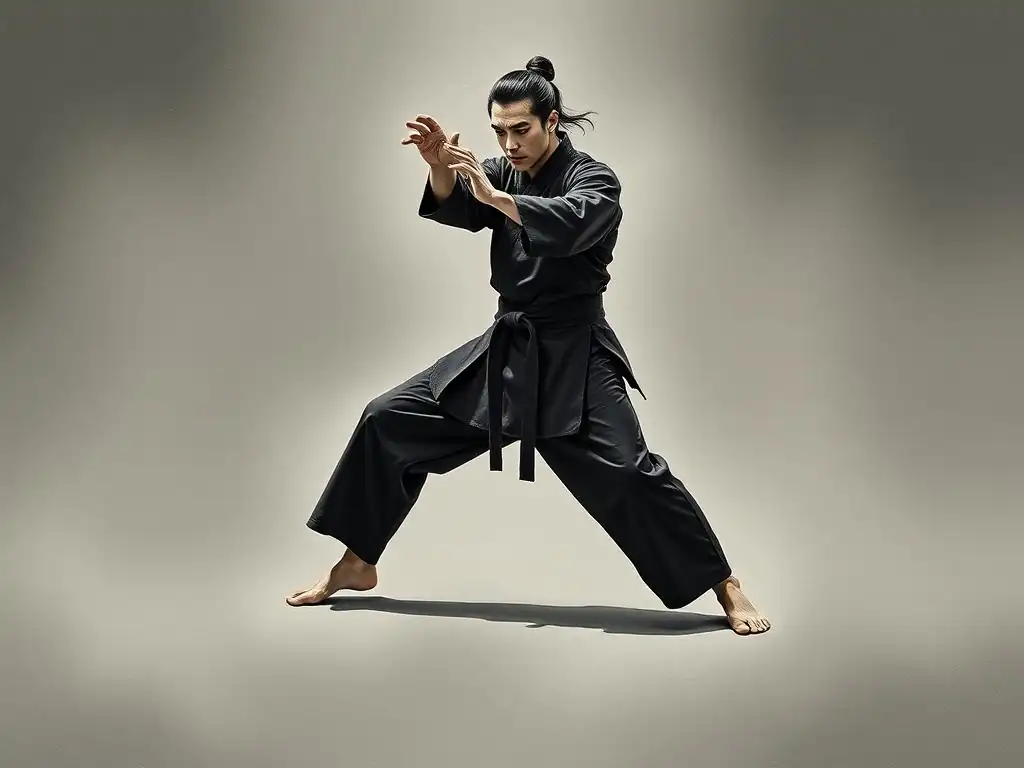
A common mistake in Tai Sabaki is leaning the upper body too far forward, backward, or to the side. This often happens when the movement is initiated from the head or shoulders rather than the Hara. Leaning shifts the center of gravity outside the base of support, compromising Tai Sabaki Hara Balance and making the practitioner vulnerable to being easily pushed or pulled.
Correction involves conscious effort to keep the spine upright and aligned over the Hara. During Tai Sabaki, focus on moving the entire body as a unit, maintaining a sense of being centered and grounded. Visualize a plumb line dropping from the crown of your head down through your Hara to the point between your feet. Regularly practicing basic posture drills and slow, deliberate Tai Sabaki movements while focusing on this alignment can help correct this habit.
Using Muscular Force Instead of Hara Power
Another frequent error is relying on brute muscular strength, particularly in the arms and shoulders, to power movements or techniques during Tai Sabaki. This leads to tension, reduces fluidity, and is inefficient. It also indicates a disconnection from the internal power generated from the Hara. For instance, trying to "muscle" your way through a pivot rather than letting the turn originate from your core.
To correct this, focus on relaxing the upper body and limbs. Practice generating movement from a relaxed yet engaged Hara. Exercises like Kokyu Ho help to differentiate between muscular tension and Hara-driven power. When practicing Tai Sabaki, deliberately try to move with less apparent physical effort, focusing instead on the internal feeling of the movement originating from your center, improving your Tai Sabaki Hara Balance.
Rushing the Movement: Losing Hara Control
Attempting to perform Tai Sabaki too quickly before developing proper Hara control can lead to sloppy, unstable movements. Rushing often bypasses the necessary coordination from the center, resulting in fragmented body movement where different parts of the body move independently, causing a loss of unity and Tai Sabaki Hara Balance.
Correction requires slowing down your practice. Focus on executing each Tai Sabaki movement deliberately, paying attention to the feeling of initiating from the Hara and maintaining central stability throughout the motion. Practice basic Tai Sabaki drills at a slow, controlled pace, gradually increasing speed only as your ability to maintain Hara awareness and control improves. Patience and consistent, mindful practice are key.
Integrating Hara into Advanced Tai Sabaki Applications
Tai Sabaki in Aikido Techniques: Irimi Nage & Shiho Nage
The principles of Tai Sabaki and Hara engagement are fundamental to executing core Aikido techniques like Irimi Nage (entering throw) and Shiho Nage (four-direction throw). In Irimi Nage, the practitioner uses irimi Tai Sabaki to enter directly into the opponent's space, disrupting their balance. Effective entry requires moving the entire body from the Hara, maintaining a strong forward intention without leaning or losing structural integrity. The power for the subsequent throw is generated from the Hara, channeled through the entering body movement.
Similarly, Shiho Nage relies heavily on tenkan Tai Sabaki to turn the opponent off balance and control their arm. The large, circular movement of Shiho Nage is powered and stabilized by the rotation originating from the Hara. A strong, centered Hara ensures that the practitioner remains stable while controlling the opponent's momentum during the turn. Without Hara engagement, these techniques become physically taxing and less effective, often resembling wrestling moves rather than true Aikido applications of Tai Sabaki Hara Balance.
Applying Hara Principles in Ukemi (Breakfalls)
While Tai Sabaki focuses on offensive and evasive movement, Hara principles are equally vital in Ukemi (breakfalls), the art of receiving techniques safely. Effective Ukemi requires the ability to relax, yield to the force, and roll or fall in a controlled manner. The Hara plays a crucial role in maintaining a sense of groundedness and control even while being thrown or unbalanced.
During a forward roll ( mae ukemi), engaging the Hara helps maintain a compact, rounded shape and prevents the body from becoming stiff or extended. In a backward breakfall ( ushiro ukemi), a strong Hara allows the practitioner to absorb the impact and control the descent. By remaining connected to their center, the Aikidoka can respond more fluidly to being thrown, diffusing the energy of the technique through their body and into the mat, minimizing the risk of injury and demonstrating Tai Sabaki Hara Balance even in receiving.
Conclusion: Mastering Tai Sabaki Through Hara Awareness
Frequently Asked Questions
What is Tai Sabaki and how does it relate to "Hara Balance"?
Tai Sabaki is a body shifting technique crucial in martial arts for evading attacks and creating advantageous positions. Hara Balance refers to maintaining your center of gravity, which is essential for effective and stable Tai Sabaki.
Why is "Hara Balance" so vital when performing Tai Sabaki?
Maintaining Hara Balance ensures stability during the shifting movements of Tai Sabaki. Without it, you're vulnerable to losing your balance, making you susceptible to counter-attacks.
How does understanding your "Center (Hara)" improve your Tai Sabaki technique?
Understanding your Hara allows you to generate power and control movement efficiently. A strong Hara provides a stable foundation for executing Tai Sabaki with speed and precision.
What are some practical exercises to develop better "Hara Balance" for Tai Sabaki?
Exercises like meditation, core strengthening, and stance training can significantly improve your Hara Balance. These practices enhance your body awareness and stability.
How can a martial artist apply the principles of "Tai Sabaki Hara Balance" in self-defense scenarios?
In self-defense, using Tai Sabaki with Hara Balance allows you to evade an attacker's force. This creates opportunities for counter-attacks while maintaining your equilibrium.
Final Reflection: Embracing the Core for Fluid Movement
The principles of Tai Sabaki Hara Balance extend far beyond the dojo, resonating with the very essence of centeredness in our daily lives. While this article has focused on the specific application of Hara in executing Tai Sabaki, the underlying concept of finding and maintaining one's core equilibrium is profoundly relevant in navigating the complexities and challenges of the modern world. A stable center allows for adaptable and efficient movement, both physically and metaphorically.
The cultivation of Hara, the understanding of one's center, has deeply influenced martial arts traditions for centuries, and its impact continues to ripple through various disciplines, from dance to meditation. Personally, exploring the concept of Hara has highlighted the interconnectedness of mind, body, and spirit, reminding me that true strength lies not just in physical prowess, but in the unwavering stability of one's core. The center is everywhere, and the circumference nowhere.
- Nicholas of Cusa, a quote that encapsulates the elusive yet pervasive nature of this inner balance.
As you reflect on the principles discussed in this article, consider how you can apply the concept of Hara to your own life. Cultivate awareness of your physical and mental center. Seek balance in your actions and reactions. Embrace the power of a stable core to navigate life's challenges with grace, efficiency, and unwavering resolve. The journey to mastering Tai Sabaki Hara Balance begins with a single step – a conscious effort to find and maintain your center.
Ignite Your Movement: Master the Hara!
Thank you for delving into the crucial role of the Hara in executing effective Tai Sabaki. Now, it's time to translate theory into action and unlock the power within.
Here's how you can deepen your understanding and refine your technique:
- Practice Mindful Centering: Dedicate 15 minutes each day to focused breathing exercises, visualizing your Hara as the center of your balance and movement.
- Explore different martial arts forms that emphasize core engagement and stability, like Aikido or Iaido, to see how they integrate the concept of Hara.
- Share this article with fellow martial artists and discuss your experiences with applying the principles of Hara in your training.
What's one specific adjustment you can make to your next Tai Sabaki practice to better engage your Hara?