
Unveiling "Yin Shou Gun": A Detailed Guide to this Powerful Staff Taolu

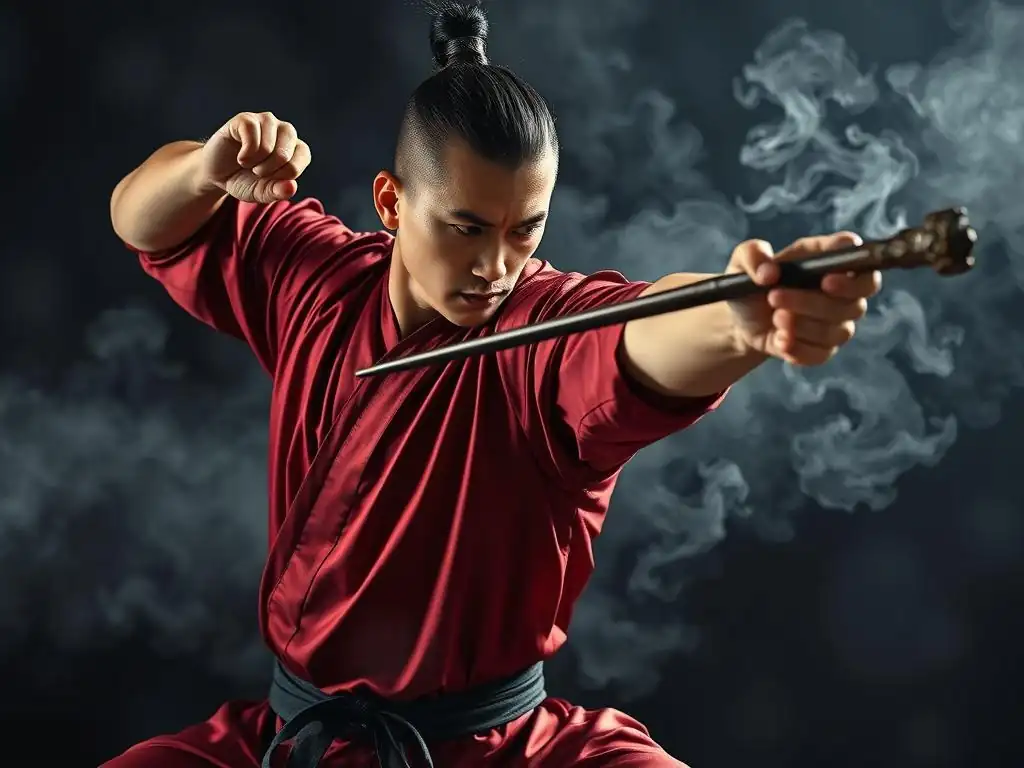
Welcome to Martial Arts Mastery, where we delve into the profound depths of combat traditions! Ever wondered about the hidden power within seemingly simple movements? Today, we unlock the secrets of the Yin Shou Gun technique, a formidable staff taolu steeped in history and practical application. Prepare to be amazed as we dissect its intricacies and reveal the devastating potential hidden within this ancient form. Intrigued? Let's begin your journey to mastery...
- Unveiling Emei Staff: A Detailed Guide to this Powerful Staff Taolu
- Introduction to Emei Staff: A Deep Dive into the Art of Staff Mastery
- Decoding the Emei Staff Form: Step-by-Step Breakdown
- Emei Staff Techniques: A Comprehensive Analysis
- Emei Staff Training Methodology: Developing Skill and Power
- Emei Staff Applications: Practical Self-Defense Strategies
- The Legacy of Emei Staff: Preserving and Promoting the Art
- Frequently Asked Questions
- Final Reflection: Embracing the Flow of Yin Shou Gun
- Embrace the Power: Ignite Your Yin Shou Gun Journey!
Unveiling Emei Staff: A Detailed Guide to this Powerful Staff Taolu
Introduction to Emei Staff: A Deep Dive into the Art of Staff Mastery
What is Emei Staff? Exploring the Origins and History
The Emei Staff, known in Chinese as Emei Gun (峨眉棍) or sometimes referred to by its specific techniques like Yin Shou Gun (阴手棍 - Hidden Hand Staff), is a distinctive and highly effective martial art form originating from the Emei Mountain region of Sichuan province, China. Unlike many other staff forms that emphasize large, sweeping movements, the Emei Staff technique is characterized by its compact, agile, and often deceptive movements.
Its history is deeply intertwined with the martial traditions developed by practitioners and monks residing in and around the sacred Emei Mountain, one of the four holy Buddhist mountains of China. These arts were historically influenced by the unique geographical terrain, requiring practicality and adaptability.
Historical accounts suggest the development of Emei martial arts, including staff techniques, spanned centuries, with influences from various schools and individuals who sought refuge or trained in the region. While specific founding figures and precise dates are often debated and obscured by time and legend, the style is generally believed to have solidified its core principles during the Ming and Qing dynasties (roughly 14th to 20th centuries).
The emphasis on close-quarters combat, rapid transitions, and the clever use of both ends of the staff for striking, blocking, and manipulating reflect a system designed for practical self-defense in varied environments, from mountain paths to crowded marketplaces. The Yin Shou Gun technique specifically highlights the subtle, 'hidden' or unexpected applications of the staff.
Emei Staff in the Context of Emei Kung Fu
Emei Staff is not typically a standalone discipline but is instead an integral part of the broader system of Emei Kung Fu (峨眉武术). Emei Kung Fu is renowned for its diverse array of forms, encompassing empty-hand techniques, various weapons, qigong, and philosophical principles. Within this comprehensive system, the staff holds a place of high importance, often considered one of the foundational long weapons. Its training complements empty-hand skills by extending reach and power, while also laying groundwork for other long weapons.
The principles governing Emei Staff movement, such as swiftness, precision, and adaptability, are mirrored throughout the entire Emei martial arts curriculum. Practitioners are encouraged to understand how the body mechanics used in staff work translate to punches, kicks, and other weapon forms. This holistic approach ensures that mastering the Yin Shou Gun technique enhances overall martial prowess, fostering a deeper understanding of energy flow, balance, and timing that is applicable across all aspects of Emei Kung Fu.
Understanding the Philosophical Underpinnings of Emei Staff Technique
The Emei Staff technique, like much of traditional Chinese martial arts, is deeply rooted in philosophical principles, primarily drawing from Taoism and Buddhism which flourished in the E Emei Mountain region. A core tenet is the concept of adaptability and yielding, much like water flowing around obstacles, rather than meeting force with brute force alone. This is reflected in the staff's agile movements, parries that redirect rather than simply stop an attack, and the fluid transitions between techniques.
Another significant philosophical influence is the balance of Yin and Yang. The "Yin Shou" (Hidden Hand) aspect of the technique itself alludes to the interplay of apparent and concealed movements, hard and soft applications, and the element of surprise. The staff is used with both obvious powerful strikes (Yang) and subtle, deceptive manipulations or hidden parries (Yin). Training in Emei Staff encourages not just physical conditioning but also mental cultivation, emphasizing focus, patience, and the development of 'shen' (spirit or awareness) to anticipate an opponent's intentions and respond intuitively.
Decoding the Emei Staff Form: Step-by-Step Breakdown
The Core Principles of Emei Staff Movement
The Emei Staff technique is governed by a set of core principles that distinguish it from many other staff styles. Foremost among these is the emphasis on using the entire body in coordination with the staff. Power is generated from the ground up, through the legs and waist, transferring efficiently into the staff's movements. This ensures that even seemingly simple strikes or blocks possess significant force and stability. Another key principle is the concept of "sticking" or "adhering" to the opponent's weapon, maintaining contact and control to disrupt their balance or create openings.
Agility and continuous movement are also critical. The form flows seamlessly from one technique to the next, often incorporating rapid changes in direction and level. Unlike styles that might hold static poses, Emei Staff emphasizes dynamic transitions, making the practitioner a difficult target and allowing for relentless offense or defense. The principle of using both ends of the staff equally and interchangeably is fundamental to mastering the complex Yin Shou Gun technique, allowing for strikes, blocks, and controls from either tip or the middle section.
Stance Work: Building a Solid Foundation for Emei Staff
Solid and adaptable stance work is the bedrock upon which effective Emei Staff technique is built. Stances in Emei Kung Fu, including those used for the staff, are typically lower and more compact than some other styles, providing a stable base while allowing for quick transitions and agile footwork. Common stances include the Bow Stance (Gong Bu), Horse Stance (Ma Bu), and various forms of Empty Stance (Xu Bu) and Cat Stance (Mao Bu).
The purpose of these stances is not just static stability but dynamic readiness. For instance, transitioning rapidly from a low Bow Stance to an Empty Stance allows for sudden forward momentum for a thrust or backward evasion. The weight distribution within each stance is crucial; it must be balanced to allow for immediate movement in any direction. Mastering the subtle shifts in weight and body alignment within these foundational stances is essential for generating power and maintaining balance during complex Yin Shou Gun technique sequences.
Grip Techniques: Mastering the Emei Staff Hand Positions
The effectiveness of Emei Staff technique relies heavily on precise and fluid grip changes. Unlike styles that maintain a single, fixed grip, Emei Staff utilizes a dynamic approach where the hands constantly adjust their position along the staff. The basic grip is typically with hands shoulder-width apart, but this changes rapidly depending on the technique being executed. For thrusts, one hand might slide down towards the end, while for sweeping strikes or blocks, the grip might widen or shift to one end.
A defining characteristic, particularly relevant to the "Yin Shou" aspect, involves using a "hidden" or less obvious hand position, often involving one hand loosely guiding or even momentarily releasing its grip to allow the staff to spin or pivot rapidly. This dynamic gripping allows for unexpected angles of attack or defense and facilitates the fluid transitions between techniques. Mastering these grip changes requires significant dexterity and coordination, enabling the practitioner to fully exploit the versatility of the staff.
Footwork Patterns in Emei Staff: Enhancing Mobility and Power
Footwork is arguably as crucial as handwork in mastering the Emei Staff technique. The agile nature of the style demands constant, intelligent movement. Emei Staff footwork patterns are characterized by their speed, evasiveness, and ability to position the practitioner advantageously relative to an opponent. Common patterns include rapid forward and backward steps (Jin Bu, Tui Bu), sidestepping (Ce Bu), circular movements (Yuan Quan Bu), and intricate shuffling steps.
These footwork patterns are not merely about moving around; they are integral to generating power and controlling distance. A sudden forward step combined with a thrusting grip change amplifies the force of the strike. Circular footwork can be used to evade an attack while simultaneously positioning for a counter-strike. The seamless integration of footwork with staff movements is what gives the Yin Shou Gun technique its characteristic fluidity and effectiveness, allowing the practitioner to flow around obstacles and deliver power from any angle.
Emei Staff Techniques: A Comprehensive Analysis
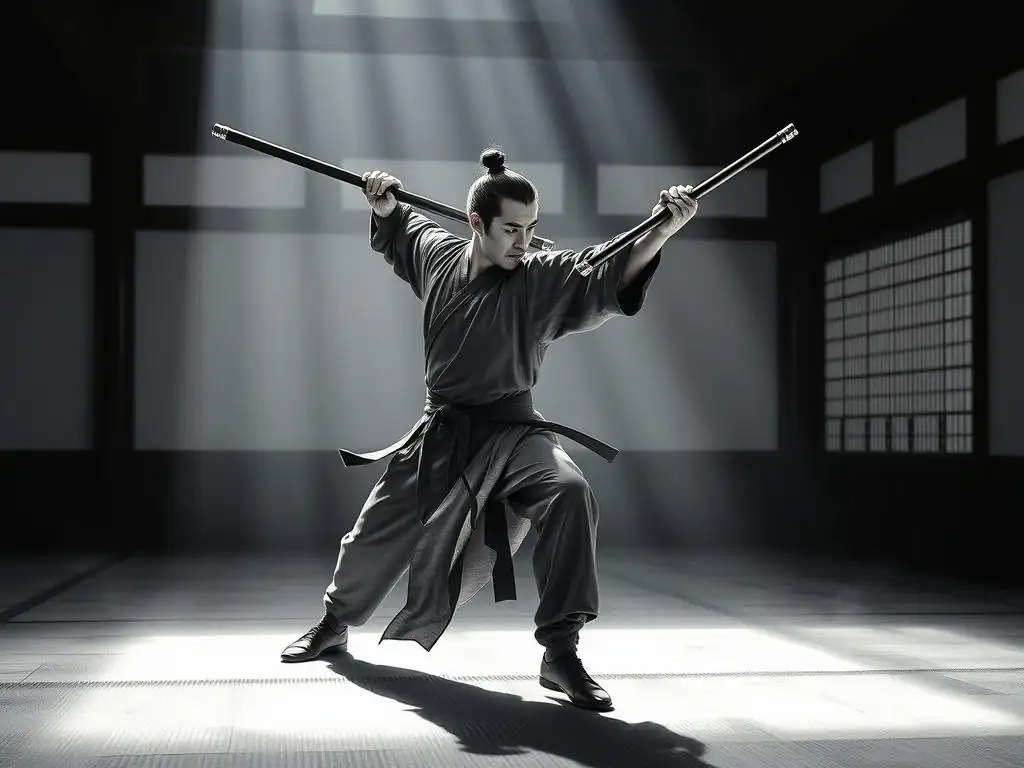
Defensive Techniques: Blocking and Parrying with the Emei Staff
Defensive techniques in Emei Staff are not solely about stopping an attack but often involve redirecting or absorbing force while simultaneously setting up a counter-attack. The staff's length and material make it an excellent tool for creating distance and intercepting incoming strikes. Blocks are typically executed with power and precision, using different sections of the staff depending on the angle and force of the incoming attack.
Parrying, which involves deflecting the opponent's weapon or limb off-line, is a critical component of the Yin Shou Gun technique. This utilizes the staff's surface to guide the incoming force away, disrupting the opponent's balance or opening their guard. Effective defense requires sensitivity to the opponent's energy and intent, allowing the practitioner to choose the most appropriate blocking or parrying technique instantly.
High Blocks (Shang Ge): Protecting the Head and Upper Body
High blocks, or Shang Ge, are fundamental defensive techniques in Emei Staff used to protect the head, neck, and shoulders from overhead or high-level attacks. These blocks typically involve raising the staff horizontally or diagonally above the head, using the middle section or one end of the staff to intercept the incoming strike. The grip is usually widened slightly for stability, and the block is often executed with a slight rotation of the waist to add power and absorb impact.
An effective Shang Ge requires not just lifting the staff but driving it into position with intent, creating a solid barrier. For instance, against a downward sword cut, a practitioner might rapidly raise the staff horizontally above the head, using the robust middle section to meet the blade. The force of the block should ideally deflect the weapon upwards or to the side, leaving the opponent momentarily off-balance and exposed for a follow-up Yin Shou Gun technique.
Low Blocks (Xia Ge): Defending Against Low Attacks
Low blocks, or Xia Ge, are employed to defend against attacks directed at the legs, knees, or lower body. These techniques involve bringing the staff down horizontally or diagonally to intercept kicks, low weapon strikes, or sweeps. The practitioner typically lowers their center of gravity, perhaps entering a lower stance like a Horse Stance, to achieve better stability and coverage.
Executing a strong Xia Ge involves driving the staff downwards with force, using either the middle section or one end depending on the angle of the attack. For example, to defend against a low sweeping kick, the practitioner might rapidly bring the staff down horizontally in front of the shins. The block should aim to either stop the attack dead or, preferably, deflect it outwards, potentially causing the opponent to lose balance. Mastery of Xia Ge is vital as leg attacks are common in combat scenarios.
Sideways Blocks (Ce Ge): Redirecting Attacks from the Side
Sideways blocks, or Ce Ge, are used to defend against attacks coming from the left or right, such as horizontal strikes or hooks. These techniques involve moving the staff laterally to intercept and redirect the incoming force. Ce Ge often utilizes the principle of parrying, guiding the opponent's weapon past the practitioner's body rather than simply stopping it head-on.
A typical Ce Ge might involve using one end of the staff to sweep outwards and upwards or downwards, depending on the height of the attack, using a fluid, circular motion. This kind of blocking often incorporates significant waist rotation and footwork to facilitate the redirection of energy. For instance, against a horizontal staff strike to the ribs, a practitioner might use a Ce Ge to parry the incoming staff outwards, rotating their body away from the line of attack and immediately preparing for a counter-attack utilizing a swift Yin Shou Gun technique.
Offensive Techniques: Striking and Thrusting with the Emei Staff
Offensive techniques form the core of the Emei Staff's combat application, utilizing the staff's length and weight to deliver powerful strikes and precise thrusts. Emei Staff offense is characterized by its rapid succession of techniques, often combining strikes, thrusts, and manipulations. The goal is to overwhelm the opponent with a flurry of attacks from multiple angles, exploiting openings created by defensive maneuvers or footwork.
Power generation for strikes and thrusts comes from the whole body, coordinated through the waist and directed through the staff. The dynamic grip changes and agile footwork allow for instantaneous shifts between different types of attacks. Mastering the different angles, targets, and power delivery methods is essential for effective offensive Yin Shou Gun technique.
Basic Strikes (Pi, Sao, Beng): Understanding the Fundamental Movements
Basic strikes form the foundation of offensive Emei Staff techniques. Pi (劈) refers to a chopping or splitting strike, typically delivered downwards or diagonally from above, using the force of gravity and body weight to power the impact. This strike is effective against the head, shoulders, or collarbone. Sao (扫) describes a sweeping strike, executed horizontally at various heights, often targeting the legs, midsection, or head. Sweeps are powerful for controlling space or knocking an opponent off balance.
Beng (崩) translates to a bursting or collapsing strike, often a short, sharp upward or forward strike delivered with sudden force, perhaps targeting the chin or groin. These basic movements are practiced extensively to build fundamental power, accuracy, and coordination. While simple in concept, their execution in Emei Staff involves subtle body mechanics and grip adjustments that make them highly effective and versatile within a Yin Shou Gun technique sequence.
Advanced Strikes (Dian, Gun, Hua): Elevating Your Emei Staff Offense
Beyond the basic strikes, Emei Staff incorporates more complex and nuanced offensive techniques. Dian (点) means 'point' or 'tap,' referring to rapid, precise strikes delivered with the tip of the staff, often targeting vulnerable points like the eyes, throat, or hands. These are quick, deceptive attacks designed to disrupt or injure with minimal telegraphing, embodying the 'Yin' aspect of Yin Shou Gun technique.
Gun (滚) means 'roll,' and refers to rolling or spinning movements of the staff, often used to strike multiple times in rapid succession or to transition between other techniques. This can involve spinning the staff in front of the body for defense or using the centrifugal force to power a strike. Hua (化) means 'transform' or 'dissolve,' and in the context of striking, it can refer to fluid, whip-like strikes or movements that seamlessly blend defense and offense, often involving complex wrist and grip manipulations to deliver strikes from unexpected angles.
Thrusting Techniques (Ci): Precision and Power in Emei Staff
Thrusting techniques, or Ci (刺), are crucial in Emei Staff, allowing the practitioner to attack linear targets with speed and force. Thrusts are typically delivered with one end of the staff, aiming for vital areas such as the chest, abdomen, or throat. Effective thrusting relies on powerful forward momentum generated from the legs and waist, channeled through the staff with a firm grip.
Precision is paramount in thrusting; the technique requires accurate targeting and control of the staff tip. Thrusts can be delivered from various stances and angles, often following a block or parry. A common Yin Shou Gun technique involves a rapid, almost hidden thrust delivered immediately after a defensive maneuver, exploiting the momentary opening. Mastering thrusts requires significant practice to develop accuracy, speed, and the ability to retract the staff instantly after the strike.
Emei Staff Training Methodology: Developing Skill and Power
Essential Drills for Mastering Emei Staff Movements
Mastering the complex and fluid movements of the Emei Staff requires dedicated and systematic training, incorporating various drills. Fundamental solo drills include practicing basic strikes (Pi, Sao, Beng) and thrusts (Ci) repeatedly to develop muscle memory, power, and accuracy. Spinning drills, where the practitioner rotates the staff around their body or hands, are essential for developing wrist strength, dexterity, and control over the staff's momentum.
Transition drills focus on smoothly moving between different stances, grips, and techniques, ensuring the form flows without hesitation. For example, a drill might involve transitioning rapidly from a high block ( Shang Ge) to a low sweep ( Sao) followed by a forward thrust ( Ci). Practicing these transitions helps build the continuity and adaptability that define the Yin Shou Gun technique. Shadow boxing with the staff, performing sequences of techniques against imaginary opponents, helps develop timing, distance judgment, and strategic thinking.
Partner Training: Applying Emei Staff in Sparring Scenarios
Partner training is indispensable for applying Emei Staff techniques in a dynamic, interactive context. Basic partner drills involve one person attacking with pre-arranged strikes while the other practices specific blocks and parries ( Ge, Ce Ge). These drills gradually progress to less predictable scenarios, where partners might use light contact or foam staffs to practice free-form sparring, reacting spontaneously to incoming attacks.
Sensitivity drills, often involving partners maintaining light contact with their staffs, help develop the ability to feel the opponent's energy and intentions through the weapon, allowing for intuitive redirection and counter-attack. Sparring, even at a controlled pace, is crucial for learning timing, distance management, and how to apply learned techniques under pressure. Effective partner training allows practitioners to understand the practical application of each Yin Shou Gun technique.
Strength and Conditioning for Emei Staff Practitioners
Effective Emei Staff technique demands a high level of physical conditioning. Strength training is necessary, particularly for the core, shoulders, arms, and wrists, to handle the staff with power and control. Exercises like staff rotations, wrist curls, and shoulder presses are beneficial. Grip strength is also vital for maintaining control during rapid movements and impacts; exercises like farmer's walks or using grip strengtheners can be incorporated.
Endurance is also important, as performing the full Emei Staff form or engaging in extended sparring requires stamina. Cardiovascular training, such as running or skipping rope, improves overall fitness. Flexibility, especially in the shoulders, hips, and wrists, is crucial for executing the full range of motion required by many Emei Staff techniques without strain or injury. A well-rounded conditioning program supports the technical mastery of the Yin Shou Gun technique.
Common Mistakes in Emei Staff and How to Correct Them
Several common mistakes can hinder progress in learning Emei Staff technique. One prevalent error is using only upper body strength to power movements, neglecting the crucial role of the legs and waist. This results in weaker strikes and less stable defense. Correction involves focusing on driving power from the ground up, ensuring the whole body moves in unison with the staff. Drills emphasizing hip rotation and weight transfer can help.
Another common issue is stiffness or tension. The Emei Staff style emphasizes fluidity and adaptability, but beginners often hold the staff too tightly or move rigidly. This impedes speed and makes transitions awkward. Correcting this requires conscious effort to relax the grip and shoulders, focusing on smooth, continuous movements. Practicing movements slowly at first, emphasizing relaxation, can be beneficial. Poor footwork and balance are also frequent problems, leading to being easily uncentered. This is addressed through dedicated stance and footwork drills, emphasizing rooting and dynamic balance.
Emei Staff Applications: Practical Self-Defense Strategies
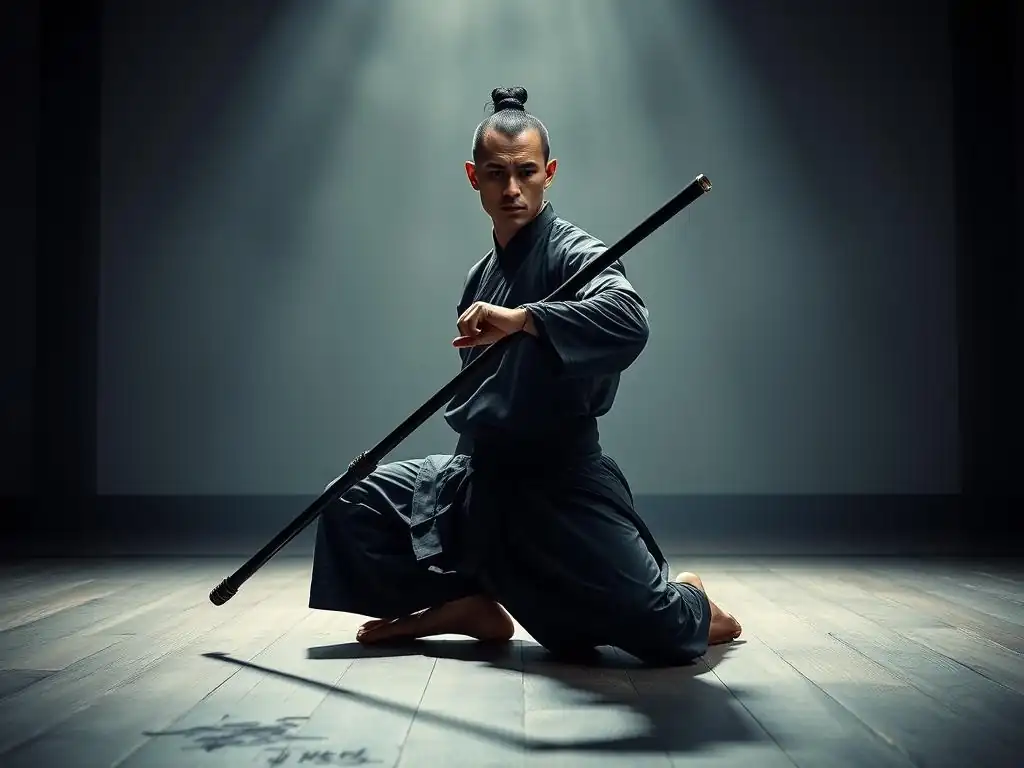
Adapting Emei Staff Techniques for Real-World Scenarios
While traditional Emei Staff forms are practiced with a full-sized staff, the underlying principles and techniques are highly adaptable for practical self-defense using readily available objects. The core movements of striking, blocking, and manipulating can be applied with improvised weapons of similar length, such as a sturdy walking stick, an umbrella, or even a broom handle in an emergency. The focus remains on using the object to create distance, protect vital areas, and deliver effective strikes to vulnerable targets.
Understanding the principles of leverage and force generation learned through Emei Staff technique allows a practitioner to maximize the defensive potential of even a non-traditional object. For example, the blocking principles can be used with a walking stick to deflect an attack, and the thrusting movements can be adapted for a sharp poke. The emphasis on fluid transitions and using both ends of the object translates directly to effective improvised weapon defense, making the Yin Shou Gun technique highly practical.
Using the Emei Staff for Disarming Techniques
The Emei Staff is particularly effective for disarming an opponent, especially one wielding a shorter weapon like a knife or even an empty-hand attacker. Disarming techniques often involve using the staff's length to keep the opponent at bay while simultaneously trapping or manipulating their weapon or limb. Techniques might involve using the staff to pin the opponent's wrist against their body or the ground, leveraging the staff to twist a weapon out of their grip, or striking nerve points on the arm to force a release.
These disarming applications often utilize the 'sticking' or 'adhering' principle, maintaining contact with the opponent's weapon to control its movement. For instance, a practitioner might use a parrying motion ( Ce Ge) to guide a knife-wielding hand off-line, then quickly transition to trapping the wrist against their own body or the staff itself. The rapid, deceptive movements characteristic of the Yin Shou Gun technique make it difficult for an opponent to anticipate or resist these disarming actions.
Emei Staff as a Tool for Evasion and Control
Beyond direct offense and defense, the Emei Staff excels as a tool for evasion and control. Its length allows the practitioner to maintain distance from an attacker, using sweeps or pokes to keep them at bay. The agile footwork associated with the style enables rapid retreats or lateral movements to evade incoming attacks. The staff can also be used to control an opponent's movement without necessarily inflicting injury, such as using it to hook a leg, push them off balance, or create a barrier.
Control techniques might involve using the staff to manipulate an opponent's joints, similar to joint locks, or using the staff to create space to escape a dangerous situation. For example, a quick sweep across the legs can disrupt an attacker's balance, allowing the practitioner to evade. Using the staff to control an opponent's arms or body can prevent them from launching further attacks. These aspects highlight the versatility of the Yin Shou Gun technique beyond just striking and blocking.
The Legacy of Emei Staff: Preserving and Promoting the Art
Resources for Learning and Practicing Emei Staff
Accessing authentic instruction in Emei Staff, or Yin Shou Gun technique, can be challenging outside of specific lineages and schools dedicated to Emei Kung Fu. Traditional learning paths often involve finding a qualified master or instructor who has inherited the knowledge through a direct lineage. These schools may be located in China, particularly Sichuan province, or in various locations globally where Emei Kung Fu masters have established schools.
While direct instruction is ideal, some resources may be available through martial arts publications, instructional videos (though quality varies), or seminars conducted by visiting masters. Martial arts organizations dedicated to promoting traditional Chinese martial arts may also provide information or connect interested individuals with practitioners. Persistence and research are often required to find reputable sources for learning the intricate details of the Emei Staff technique.
Conclusion: Embracing the Power and Beauty of Emei Staff
The Emei Staff, or Yin Shou Gun technique, represents a sophisticated and dynamic approach to staff combat within the rich tradition of Emei Kung Fu. Its emphasis on agility, precision, fluid transitions, and the interplay of 'hidden' and overt movements makes it a truly unique and powerful martial art. From its historical roots in the mountains of Sichuan to its complex techniques for offense, defense, disarming, and control, the Emei Staff offers a deep and rewarding path for martial arts practitioners.
Mastering the Emei Staff requires not only physical prowess but also mental discipline, patience, and a deep understanding of the principles of movement and energy. Training in this art provides invaluable lessons in adaptability, strategic thinking, and the effective use of leverage and timing. Embracing the study of Emei Staff allows one to connect with a profound legacy of martial wisdom and unlock the potential for truly dynamic and versatile combat application through the mastery of its intricate Yin Shou Gun techniques.
Frequently Asked Questions
What exactly is Yin Shou Gun?
Yin Shou Gun is a powerful staff taolu (form) originating from traditional Chinese martial arts. It emphasizes fluid movements, precise strikes, and effective defense using a staff.
Where does the Yin Shou Gun technique originate from?
While the article doesn't explicitly state the exact origin, it's implied that Yin Shou Gun comes from traditional Chinese martial arts. Further research would be needed to pinpoint its specific lineage and school.
What are some key characteristics of the Yin Shou Gun taolu?
The Yin Shou Gun taolu is characterized by its emphasis on fluidity, powerful strikes, and practical self-defense applications. It's a comprehensive system for staff fighting.
Does MartialArtsMastery.org offer training in Yin Shou Gun?
While the article provides a detailed guide, it's not explicitly stated if MartialArtsMastery.org offers direct training or courses in the Yin Shou Gun technique. Check their training section for more information.
What are the practical applications of learning Yin Shou Gun?
Learning Yin Shou Gun can improve coordination, strength, and self-defense skills. The techniques can be adapted for practical weapon disarming and close-quarters combat scenarios, using the staff as an extension of the body.
Final Reflection: Embracing the Flow of Yin Shou Gun
The journey into the heart of Yin Shou Gun, as explored in this guide, reveals more than just a martial art technique; it unveils a pathway to understanding balance, power, and fluidity in motion. The principles of Yin and Yang, so central to this staff form, resonate deeply in a world constantly seeking equilibrium. This ancient practice, far from being a relic of the past, offers profound lessons applicable to our modern lives.
The enduring appeal of Yin Shou Gun lies in its ability to cultivate not only physical prowess but also mental discipline and spiritual awareness. The dedication required to master this taolu mirrors the dedication needed to navigate the complexities of life, fostering resilience and adaptability. The softest thing cannot be snapped. The firmest thing cannot be bound. There is a power in the yielding.
This ancient wisdom, embodied in the Yin Shou Gun, reminds us that true strength lies not in brute force, but in the ability to adapt and flow with the currents of change.
As you delve deeper into the practice of Yin Shou Gun, or simply reflect on its underlying principles, I encourage you to consider how its lessons can enrich your own journey. Embrace the balance, cultivate the flow, and discover the power within. Let the spirit of Yin Shou Gun guide you towards a more harmonious and fulfilling existence.
Embrace the Power: Ignite Your Yin Shou Gun Journey!
Thank you for delving into the art of Yin Shou Gun with us! We hope you've gained a deeper appreciation for this dynamic and challenging staff form. Now, it's time to put that knowledge into action.
- Commit to mastering the first three movements of the Yin Shou Gun form this week, focusing on precision and proper stance.
- Explore related staff forms like the Five Element Staff to broaden your understanding of staff techniques.
- Share your Yin Shou Gun training progress with the Martial Arts Mastery community and inspire others on their journey.
What's one specific challenge you anticipate facing as you begin practicing the Yin Shou Gun, and how do you plan to overcome it?