
Conditioning Your Fists for Lethwei: The BareKnuckle Path


Welcome to Martial Arts Mastery, your ultimate resource for unraveling the world's fighting arts.
Ever wondered how Lethwei fighters achieve such devastating power with their bare fists? Dive into the ancient secrets of "Lethwei conditioning fist techniques" and discover the rigorous training methods that transform ordinary hands into formidable weapons. Prepare to explore the dedication and discipline required to walk the bareknuckle path, and learn how you can apply these time-tested principles to your own martial arts journey.
- Introduction to Lethwei Fist Conditioning
- Lethwei Hand Wrapping Techniques: Preparing for Impact
- Building Bone Density for Bare-Knuckle Lethwei
- Targeted Fist Conditioning Exercises for Lethwei
- Strengthening Supporting Muscles for Powerful Lethwei Strikes
- Iron Palm Training for Lethwei: Myths and Realities
- Preventing and Treating Hand Injuries in Lethwei
- The Mental Aspect of Lethwei Fist Conditioning
- Advanced Lethwei Striking Drills: Putting it All Together
- Conclusion: Mastering the Art of Lethwei Fist Conditioning
-
Frequently Asked Questions
- What is Lethwei and why is fist conditioning important for it?
- What are some basic Lethwei conditioning fist techniques beginners can start with?
- How does conditioning fists for Lethwei differ from boxing or Muay Thai?
- How frequently should I practice Lethwei conditioning fist techniques to see noticeable results?
- What are some potential risks associated with Lethwei conditioning fist techniques and how can they be avoided?
- Final Reflection: Embracing the Bareknuckle Spirit
- Unleash Your Inner Lethwei Warrior!
Introduction to Lethwei Fist Conditioning
The Importance of Fist Conditioning in Bare-Knuckle Fighting
In the brutal art of Lethwei, often called Burmese Boxing, the hands are primary weapons, used without the thick padding common in Western boxing gloves. This bare-knuckle reality places immense stress directly onto the bones, joints, and connective tissues of the fist and wrist upon impact. Unlike gloved sports where much of the force is absorbed and distributed by padding, Lethwei strikes deliver the full, raw power through a hardened fist.
Without adequate preparation, the risk of severe injury—such as metacarpal fractures (commonly known as 'boxer's fractures'), sprains, dislocations, and deep bruising—is exceptionally high. Proper Lethwei conditioning fist techniques are not merely about hitting harder; they are fundamentally about building resilience and durability to withstand the repetitive, high-impact forces inherent in this style.
Developing robust, conditioned fists is paramount for longevity and effectiveness in Lethwei. A fighter with fragile hands, no matter how skilled, will be severely limited or sidelined entirely by injury. The goal of Lethwei conditioning fist techniques is to gradually strengthen the bones, compact the tissues surrounding the knuckles, and improve the overall structural integrity of the hand and wrist complex.
This systematic process allows fighters to deliver powerful strikes repeatedly throughout a bout, including punches and specific bare-knuckle techniques, without compromising their ability to continue fighting. It's an essential component of a Lethwei fighter's training regimen, as critical as cardio or technical skill development.
Understanding the Unique Demands of Lethwei Striking
Lethwei striking differs significantly from other stand-up martial arts due to its bare-knuckle nature and the inclusion of headbutts. While punches are a staple, the direct impact of bone on bone, especially against hard targets like the skull or elbows, requires a level of structural integrity in the hand not typically developed in gloved sports. The force generated by a well-executed punch can easily exceed 1000 pounds on impact, and without the shock absorption of gloves, this force must be managed by the body itself. Effective Lethwei conditioning fist techniques must account for this direct, high-intensity impact.
Furthermore, the dynamic and often chaotic nature of Lethwei exchanges means strikes can land at various angles and against unpredictable surfaces. This necessitates conditioning not just the primary striking knuckles but also the surrounding bones and tissues of the hand and wrist to prevent injury from glancing blows or impacts that don't land perfectly square. The wrist's stability is also crucial, as hyperextension or bending upon impact can lead to sprains or fractures. Therefore, a comprehensive approach to Lethwei conditioning fist techniques involves strengthening the entire hand-wrist-forearm unit, preparing it for the unique, unforgiving demands of bare-knuckle combat.
Lethwei Hand Wrapping Techniques: Preparing for Impact
Traditional Lethwei Hand Wraps: A Step-by-Step Guide
Traditional Lethwei hand wrapping is distinct from boxing wraps. It primarily uses tape (often athletic or medical tape) to secure the wrist and hand bones together, providing minimal padding over the knuckles. The focus is on stabilizing the structure of the hand to prevent small bones from shifting or breaking upon impact, rather than cushioning the striking surface. A basic method involves starting the tape around the wrist multiple times to create a strong anchor point. Typically, 3-5 wraps around the wrist are sufficient to provide a stable base, ensuring the wrist joint is supported.
From the wrist, the tape is often run up and around the knuckles, specifically the metacarpophalangeal joints, but without building up a thick layer of padding. The goal is to slightly compress the knuckles together, making the fist a more solid unit. Tape is also often woven between the fingers (usually between the ring and middle finger, and the middle and index finger) before looping back around the wrist.
This inter-finger taping helps keep the wrap secure and further binds the bones. Finally, more wraps are applied around the wrist and across the back of the hand to lock everything in place.
The finished wrap should feel tight enough to provide support but not so restrictive that it cuts off circulation or limits the ability to form a tight fist. This minimalist approach is fundamental to bare-knuckle Lethwei conditioning fist techniques, as it allows the hand to adapt to direct impact.
Modern Adaptations in Lethwei Hand Protection
While traditional tape-only wraps remain common, some modern adaptations are being explored, though the core bare-knuckle rule set remains. These adaptations often involve using slightly different types of tape or incorporating a thin layer of gauze or a single piece of foam under the tape, strictly applied away from the primary striking surface (like over the back of the hand or wrist) to offer marginal protection or support without violating the spirit of bare-knuckle combat.
Some fighters might experiment with different tape widths or materials to find what offers the best balance of support and flexibility for their hand structure.
However, it is crucial to understand that any significant padding over the knuckles is not permitted in official Lethwei rules, as it would fundamentally change the nature of the sport and the necessity of bare-knuckle Lethwei conditioning fist techniques. Therefore, modern adaptations are subtle and focus on enhancing the structural integrity provided by the tape itself or improving comfort and sweat management, rather than adding cushioning. The emphasis remains on the conditioned hand as the primary protective element, supported by a stabilizing wrap, rather than a padded glove absorbing the impact.
Building Bone Density for Bare-Knuckle Lethwei
The Science Behind Bone Hardening: Wolff's Law
The principle governing bone adaptation to stress is known as Wolff's Law, formulated by German anatomist Julius Wolff in the 19th century. This law states that bone in a healthy person or animal will adapt to the loads under which it is placed. If loading on a particular bone increases, the bone will remodel itself over time to become stronger to resist that type of loading.
Conversely, if the loading decreases, the bone will become weaker. In the context of Lethwei conditioning fist techniques, applying controlled, progressive impact stress to the bones of the hand and wrist stimulates osteoblasts, the cells responsible for bone formation, leading to increased bone density and structural robustness over time.
This process is not instantaneous; significant measurable changes in bone density take months, or even years, of consistent training. Studies in athletes involved in impact sports like gymnastics or martial arts have shown higher bone mineral density in stressed areas compared to non-impact athletes.
For Lethwei practitioners, this means that the repetitive, controlled stress from exercises like knuckle push-ups or hitting a Makiwara, when applied correctly and progressively, triggers the body's natural remodeling response, making the metacarpals and phalanges more resistant to fracture and impact trauma. It is a biological adaptation driven by the mechanical demands placed upon the bone tissue.
Progressive Overload for Fist Conditioning: A Safe Approach
Applying Wolff's Law safely for Lethwei conditioning fist techniques requires a principle called progressive overload. This means gradually increasing the stress placed on the bones and tissues over time, allowing the body to adapt without causing acute injury. Starting too aggressively can lead to fractures, severe bruising, or long-term joint damage. The process must begin gently, typically with exercises that apply minimal impact, and slowly increase the intensity, duration, or resistance.
A safe progression might involve starting knuckle push-ups on a soft surface like a carpet or padded mat, then moving to a harder surface like wood, and eventually concrete or asphalt as conditioning improves. Similarly, striking conditioning tools like a Makiwara should initially be struck softly, focusing on technique and alignment, before gradually increasing the force and number of strikes over weeks and months.
The body provides feedback through discomfort or pain; distinguishing between the expected soreness of conditioning and the sharp pain of injury is crucial. A typical progression might involve increasing the number of repetitions, the hardness of the striking surface, or the velocity of the strike by small increments (e.g., 5-10% increase per week or two), allowing the bones and surrounding tissues sufficient time to adapt and strengthen.
Targeted Fist Conditioning Exercises for Lethwei
Knuckle Push-Ups: Variations and Progression
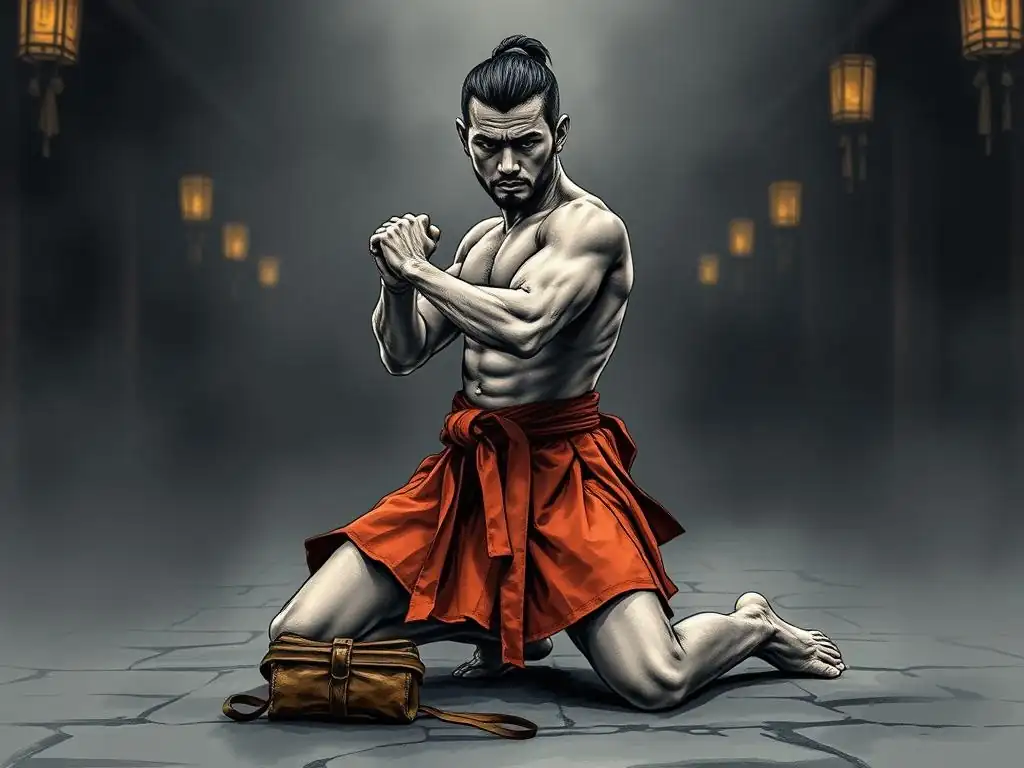
Knuckle push-ups are a foundational exercise in Lethwei conditioning fist techniques, directly loading the bones and joints of the knuckles. They involve performing a standard push-up motion but resting on the knuckles of a clenched fist rather than the flat palms. This positions the wrist in a stable, neutral alignment and applies body weight pressure through the striking surface of the fist.
Starting progression involves performing them on a soft surface like thick carpet, a folded mat, or even a soft lawn. This reduces the initial impact and pressure, allowing the knuckles and underlying tissues to begin adapting without excessive trauma.
As strength and conditioning improve, the surface can be progressively hardened. Moving to a thin mat, then bare wooden floorboards, and eventually concrete or asphalt increases the density of the contact surface, providing greater stimulus for bone remodeling.
Furthermore, variations can increase difficulty: elevating the feet puts more weight on the hands, performing the exercise on fewer fingers (e.g., the main two striking knuckles) increases localized pressure, and eventually, explosive variations can be introduced. A typical beginner might start with 3 sets of 5-10 repetitions on a soft surface, gradually increasing reps, sets, and moving to harder surfaces over several months.
Rice Bucket Training: Strengthening Hand and Wrist
Rice bucket training is an excellent method for developing strength and endurance in the muscles, tendons, and ligaments of the hands, wrists, and forearms, all crucial components supporting powerful Lethwei strikes. It involves filling a bucket with rice (or sand, or even small gravel for advanced practitioners) and performing a series of movements with the hands submerged. The resistance of the rice provides a unique challenge to the intrinsic muscles of the hand and wrist stabilizers that are hard to target with standard weights.
Key exercises within rice bucket training include:
- Fist Clenching: Repeatedly opening and closing the fist within the rice.
- Wrist Flexion/Extension: Bending the wrist up and down against the rice resistance.
- Wrist Deviation: Moving the wrist from side to side (radial and ulnar deviation).
- Pronation/Supination: Rotating the wrist palm-up and palm-down.
- Finger Spreads: Spreading the fingers wide and closing them tight.
Performing each movement for 1-3 minutes per hand, for 2-3 sets, several times a week significantly enhances grip strength, wrist stability, and muscular endurance, complementing the impact-based Lethwei conditioning fist techniques. This training helps prevent injuries by strengthening the supporting structures that absorb and control the forces generated during bare-knuckle striking.
Makiwara Training: Developing Impact Power
Makiwara training is a traditional conditioning method, originating from Okinawan Karate, that is highly relevant to Lethwei conditioning fist techniques. A Makiwara is a striking post, typically made of wood, anchored at the base and designed to flex upon impact. It is often wrapped with rope or padding at the striking end. Striking the Makiwara helps develop impact power, proper striking alignment, and conditions the knuckles and forearms. Starting with a well-padded Makiwara and striking softly is crucial to avoid injury.
The key to Makiwara training is focusing on striking with the correct two knuckles (index and middle finger metacarpals) and ensuring the wrist is perfectly straight and locked upon impact. The slight flex of the Makiwara provides resistance and feedback, teaching the fighter to generate power and maintain structural integrity through the strike. Progression involves increasing the force of the strikes, the number of repetitions, and potentially using a Makiwara with less padding or greater stiffness over many months or years.
A typical session might involve 50-100 strikes per hand, focusing on technique and increasing power gradually. Consistent Makiwara practice is a cornerstone of impact-focused Lethwei conditioning fist techniques.
Heavy Bag Work: Refining Technique and Power
While heavy bag work is a staple across many combat sports for developing power, endurance, and technique, its role in Lethwei conditioning fist techniques is slightly different. Since Lethwei uses bare knuckles (or thin tape), hitting a standard, dense heavy bag without adequate prior conditioning can lead to immediate injury. Therefore, heavy bag work for Lethwei practitioners should only be undertaken after a solid base of bone and tissue conditioning has been established through exercises like knuckle push-ups and Makiwara.
When ready, heavy bag training allows fighters to practice delivering full-power strikes with proper body mechanics against a yielding, but resistant, target. It helps integrate the power generated from the legs and core through the conditioned fist. Starting with lighter contact and gradually increasing power is essential.
Focus should be placed on hitting with the correct knuckle alignment and maintaining a straight wrist upon impact. Using a slightly softer heavy bag initially or wrapping the bag itself with extra material can aid in this transition. Heavy bag work complements other Lethwei conditioning fist techniques by allowing the fighter to apply conditioned hands in a dynamic striking context, building power and refining the connection between technique and impact force.
Strengthening Supporting Muscles for Powerful Lethwei Strikes
Forearm Exercises for Increased Punching Power
Strong forearms are vital for powerful and stable Lethwei strikes. They not only contribute directly to the force generated but also provide crucial stability to the wrist upon impact, preventing it from collapsing or bending in a way that could cause injury. Exercises targeting forearm flexors, extensors, and rotators are essential components of a comprehensive Lethwei conditioning fist techniques regimen.
Effective forearm exercises include:
- Wrist Curls: Holding a weight with palms up, curl the wrist upwards.
- Reverse Wrist Curls: Holding a weight with palms down, curl the wrist upwards.
- Hammer Curls: Holding dumbbells with palms facing each other, curl the weight up.
- Rice Bucket Drills: As mentioned earlier, excellent for targeting forearm muscles and wrist stabilizers through various ranges of motion against resistance.
- Plate Pinches: Holding weight plates together using only finger and thumb strength.
Performing 2-3 sets of 10-15 repetitions for these exercises, 2-3 times per week, can significantly enhance forearm strength, grip power, and wrist resilience, directly supporting the effectiveness and safety of bare-knuckle Lethwei striking.
Shoulder Strengthening for Stability and Control
Shoulder strength and stability are critical for delivering powerful punches and absorbing impact in Lethwei. The shoulder joint is the base from which much of the punching power originates and is transmitted. Weak or unstable shoulders can lead to inefficient power transfer, increased risk of injury to the shoulder itself, and can compromise the structural integrity of the entire striking chain, including the hand and wrist. Strengthening the rotator cuff muscles and the larger muscles of the shoulder girdle (deltoids, trapezius, rhomboids) is therefore integral to developing effective Lethwei conditioning fist techniques and overall striking ability.
Exercises targeting shoulder strength and stability include:
- Overhead Press: Using dumbbells, barbells, or resistance bands to press weight overhead.
- Lateral Raises: Lifting weights or bands to the sides.
- Front Raises: Lifting weights or bands to the front.
- Rows: Pulling weight towards the body (e.g., bent-over rows, seated rows) to strengthen the upper back and rear deltoids, crucial for balancing the pushing movements of punching.
- Rotator Cuff Exercises: Using light weights or bands for internal and external rotations to stabilize the shoulder joint.
Incorporating these exercises into a training routine 2-3 times per week, with 2-3 sets of 10-15 repetitions, builds the necessary strength and stability in the shoulder joint to support the dynamic and forceful movements required for powerful and safe bare-knuckle striking in Lethwei.
Core Training for Rotational Power in Lethwei
The core muscles (abdominals, obliques, lower back, and hips) are the powerhouse for generating rotational force in striking arts like Lethwei. Power originates from the ground, travels up through the legs and hips, is transmitted through the core via rotation, and culminates in the strike. A strong and stable core allows for efficient transfer of energy, significantly increasing punching power and speed.
Weak core muscles can act as a 'leak' in the kinetic chain, diminishing strike power and potentially leading to lower back issues. Therefore, comprehensive core training is essential for maximizing the effectiveness of Lethwei conditioning fist techniques by ensuring the power generated can be fully expressed through the conditioned hands.
Effective core exercises for rotational power and stability include:
- Planks and Side Planks: Building isometric strength and stability.
- Russian Twists: With or without weight, focusing on controlled rotation.
- Medicine Ball Slams/Rotational Throws: Dynamic exercises that mimic the rotational movement of striking.
- Cable Wood Chops/Lifts: Targeting the obliques and rotational muscles under resistance.
- Leg Raises and Crunches: Strengthening the abdominal muscles.
Integrating a variety of core exercises into the training regimen 3-4 times per week, with 2-3 sets focusing on both endurance (e.g., plank holds) and dynamic power (e.g., rotational throws), ensures that the fighter can generate maximum rotational force and maintain stability, translating into more powerful and effective bare-knuckle Lethwei strikes.
Iron Palm Training for Lethwei: Myths and Realities
Understanding the Principles of Iron Palm Conditioning
Iron Palm is a traditional martial arts conditioning method, often associated with Chinese martial arts, that aims to harden the hands and forearms for striking. While sometimes shrouded in mystique and claims of supernatural abilities, the physical principles behind Iron Palm conditioning are directly relevant to Lethwei conditioning fist techniques.
At its core, Iron Palm involves repeatedly striking hard surfaces or specialized bags filled with materials like sand, gravel, or beans, often accompanied by specific liniments (Dit Da Jow) and exercises. The physical reality is that this repetitive, controlled stress, similar to the principles of Wolff's Law, stimulates bone remodeling, thickens connective tissues (tendons, ligaments), and desensitizes nerve endings in the hands.
The traditional practice often emphasizes proper body mechanics, alignment, and a focus on internal energy (Qi). While the concept of Qi is rooted in traditional belief systems, the physical benefits come from the systematic application of stress and the body's adaptive response. The process is gradual and requires immense patience and discipline.
The goal is to build hands capable of withstanding significant impact without injury, allowing for powerful open-hand strikes (chops, slaps) and closed-fist strikes. For Lethwei, the bare-knuckle nature makes the principles of controlled impact and tissue adaptation central to effective fist conditioning, aligning closely with the physical goals of Iron Palm training, even if the specific techniques or philosophical underpinnings differ.
Safe Iron Palm Training Methods for Lethwei
Applying Iron Palm principles safely for Lethwei conditioning fist techniques involves a structured and progressive approach, prioritizing injury prevention. The process must begin with very light impact on soft surfaces or specialized Iron Palm bags filled with softer materials like beans or sand. The focus initially should be on proper striking alignment – ensuring the wrist is straight and the intended striking surface (knuckles, palm heel, forearm) makes contact correctly. Rushing the process or striking too hard too soon is a direct path to severe injury, including bone fractures, joint damage, and chronic pain.
A safe training method typically involves:
- Starting Soft: Striking bags filled with beans, sand, or soft pellets.
- Low Volume: Beginning with a small number of strikes per hand (e.g., 20-30 strikes), focusing on relaxation and alignment.
- Gradual Progression: Slowly increasing the number of strikes over weeks and months.
- Hardening the Surface: Gradually moving to bags filled with harder materials (gravel) or striking harder surfaces like a Makiwara with less padding.
- Using Liniment: Applying traditional Dit Da Jow or a similar liniment before and after training is believed to help promote circulation, reduce bruising, and aid in the healing and conditioning process by preventing stagnation of blood and energy according to traditional Chinese medicine. While scientific evidence for specific liniments varies, the massage action can aid recovery.
- Rest and Recovery: Allowing sufficient time for the tissues to adapt and heal between sessions. Training too frequently or intensely prevents the necessary biological adaptations and increases injury risk.
This systematic approach, prioritizing safety and gradual progression, allows the body to build the necessary resilience in the bones, connective tissues, and nerve endings for effective bare-knuckle striking in Lethwei, drawing on the principles of Iron Palm without the associated risks of improper practice.
Avoiding Injuries in Iron Palm Practice
Injuries are a significant risk in Iron Palm training if not approached with caution and discipline. The most common injuries include bone fractures (especially metacarpals and phalanges), joint damage (leading to arthritis over time), tendonitis, severe bruising, and nerve damage (resulting in numbness or chronic pain). These typically occur from hitting too hard, too soon, using improper technique, training on surfaces that are too hard for the current level of conditioning, or failing to allow adequate recovery time.
To avoid these injuries when incorporating Iron Palm principles into Lethwei conditioning fist techniques:
- Prioritize Technique Over Force: Ensure your striking mechanics and alignment are perfect before increasing power. A misaligned strike can cause immediate damage.
- Listen to Your Body: Distinguish between muscle soreness/conditioning discomfort and sharp or persistent joint pain. Pain is a warning sign.
- Progress Slowly: The adaptation process takes time. Be patient and increase intensity and volume gradually over many months or years.
- Use Appropriate Surfaces: Start with soft targets and only move to harder ones when your hands are clearly conditioned to handle the increased stress.
- Warm-Up and Cool-Down: Prepare the hands and wrists before training and use liniments or massage afterward to aid recovery.
- Avoid Training While Injured: Do not train on already bruised, sprained, or fractured hands. Allow complete healing.
- Seek Experienced Guidance: If possible, learn from someone experienced in traditional conditioning methods who can guide your progression and technique.
By adhering strictly to these safety principles, practitioners can harness the benefits of Iron Palm-like conditioning for Lethwei bare-knuckle striking while minimizing the significant risks associated with improper or overly aggressive practice.
Preventing and Treating Hand Injuries in Lethwei
Common Hand Injuries in Bare-Knuckle Fighting
Bare-knuckle fighting, by its nature, carries a high risk of hand injuries. The most common injury seen in sports involving striking with the fist is the metacarpal fracture, particularly the fracture of the fifth metacarpal (the bone leading to the little finger), often called a "boxer's fracture." This occurs when the force of impact, especially on a glancing blow or improper alignment, causes the bone to break. Fractures of other metacarpals or the phalanges (finger bones) are also frequent.
Beyond fractures, sprains of the wrist and finger joints are common, resulting from hyperextension or lateral bending upon impact. Tendonitis (inflammation of tendons) can develop from repetitive stress without adequate recovery. Cuts and abrasions on the knuckles are almost guaranteed due to the bare-knuckle contact, and severe bruising is a regular occurrence. Less common but more serious injuries include dislocations of the carpal bones or fingers, and nerve damage, which can lead to chronic pain or numbness. Effective Lethwei conditioning fist techniques aim to mitigate these risks, but understanding their potential is crucial for prevention and treatment.
Proper Warm-Up and Cool-Down Routines
A thorough warm-up is essential before any training involving striking or conditioning the hands for Lethwei. A proper warm-up increases blood flow to the muscles, tendons, and ligaments, making them more pliable and less susceptible to tears or sprains. It also prepares the joints for impact. A warm-up should include light cardio to raise the body temperature, dynamic stretching focusing on the wrists, fingers, elbows, and shoulders, and gentle range-of-motion exercises for the hands and wrists (e.g., wrist circles, finger extensions and flexions). Applying a warming liniment can also be part of the warm-up routine.
Equally important is a cool-down after training. This typically involves static stretching of the forearms, wrists, and fingers to help maintain flexibility. Applying a cooling or traditional liniment (like Dit Da Jow) after impact conditioning is a common practice believed to reduce inflammation and promote healing. Gentle massage of the hands and forearms can also aid recovery. Proper warm-up and cool-down routines, while seemingly simple, are fundamental preventative measures that support the long-term effectiveness and safety of Lethwei conditioning fist techniques.
First Aid and Rehabilitation for Hand Injuries
Despite the best Lethwei conditioning fist techniques, injuries can still occur. Knowing basic first aid is crucial. For minor injuries like bruises or sprains, the RICE protocol (Rest, Ice, Compression, Elevation) is the standard initial treatment. Rest the injured hand, apply ice packs wrapped in a cloth for 15-20 minutes at a time several times a day, use a compression bandage to reduce swelling (ensure it's not too tight), and elevate the hand above the heart.
For suspected fractures or dislocations, immediate medical attention is necessary. Do not attempt to reset a bone or joint yourself. Immobilize the hand and seek professional medical evaluation (X-rays are usually required). Rehabilitation after an injury, whether a sprain or a fracture, is critical for a full recovery and safe return to training.
This often involves physical therapy to regain strength, flexibility, and range of motion. Returning to Lethwei conditioning fist techniques or striking too soon can lead to re-injury or chronic issues. A gradual, supervised rehabilitation plan is key to ensuring the hand is fully healed and reconditioned before resuming the demanding practice of bare-knuckle Lethwei.
The Mental Aspect of Lethwei Fist Conditioning
Developing Mental Toughness for Bare-Knuckle Combat
Lethwei conditioning fist techniques are as much a mental challenge as a physical one. The process of repeatedly subjecting the hands to impact, even controlled and progressive impact, involves discomfort and requires a high degree of mental fortitude.
Developing mental toughness is essential for pushing through the initial pain and soreness, maintaining discipline in the face of slow progress, and overcoming the natural aversion to hitting hard surfaces with bare knuckles. This mental resilience is cultivated through consistent practice and a clear understanding of why the conditioning is necessary – to survive and thrive in the unique environment of bare-knuckle Lethwei.
Training the mind to accept the impact, to control the flinch response, and to focus on technique even when experiencing discomfort is a critical part of the conditioning journey. This mental hardening goes hand-in-hand with the physical process. It allows the fighter to remain composed and effective in the ring, trusting in their conditioned hands even when delivering or receiving powerful strikes. The psychological edge gained from knowing your hands are prepared for the rigors of bare-knuckle combat is invaluable in a fight.
Visualization Techniques for Enhanced Performance
Visualization is a powerful tool in any athletic endeavor, and it holds significant value in Lethwei conditioning fist techniques. Mentally rehearsing the process of conditioning, such as visualizing your hands hitting a Makiwara with perfect form and increasing power, or seeing yourself perform knuckle push-ups on harder surfaces with ease, can enhance motivation and reinforce proper technique. Beyond conditioning drills, visualizing delivering powerful, effective bare-knuckle strikes in sparring or a fight, feeling the impact resonate through your conditioned hands without pain or hesitation, can build confidence and prepare the mind for real-world application.
Visualizing the desired outcome – hands that are resilient, powerful, and capable of withstanding the demands of Lethwei – helps maintain focus on the long-term goal during the often tedious and sometimes painful conditioning process. Spending a few minutes each day visualizing successful conditioning sessions and effective striking can reinforce the neural pathways associated with these actions and build a strong mental connection between the physical training and its application in combat. This mental preparation is an often-underestimated part of mastering Lethwei conditioning fist techniques.
Overcoming Fear and Hesitation in Lethwei Striking
A natural human instinct is to protect the hands. Overcoming the inherent fear of injury and hesitation when striking with bare knuckles is perhaps the most significant mental hurdle in Lethwei. This fear can manifest as pulling punches, hitting with poor alignment to avoid full impact, or being reluctant to engage in close-range exchanges where hand injuries are more likely. Effective Lethwei conditioning fist techniques, coupled with mental training, are designed to systematically dismantle this fear.
The gradual, progressive nature of conditioning builds confidence as the hands become physically more resilient. Each successful conditioning session, each knuckle push-up on a harder surface, each powerful strike on the Makiwara without injury, reinforces the belief that the hands can withstand impact.
Mental techniques like positive self-talk, mindfulness during training to focus on the present action rather than potential future pain, and systematic desensitization through controlled, light-contact sparring can help override the fear response. Ultimately, trusting in the process of Lethwei conditioning fist techniques and seeing the physical results allows fighters to strike with commitment, power, and reduced hesitation, unlocking their full potential in bare-knuckle combat.
Advanced Lethwei Striking Drills: Putting it All Together
Integrating Fist Conditioning into Sparring
Once a solid foundation of Lethwei conditioning fist techniques has been established, the next step is to integrate this newfound resilience into live application. This is done through controlled sparring. Initially, sparring should be light to moderate, focusing on technique, timing, and range while using the conditioned hands. The goal is to get comfortable delivering strikes with bare knuckles (or thinly taped hands in training) against a moving opponent, managing distance to ensure clean contact, and absorbing the minimal impact that occurs in light exchanges.
As conditioning and confidence grow, the intensity of sparring can be gradually increased. However, even at higher intensities, the emphasis should remain on control and realistic application rather than simply trying to hurt the opponent. Advanced drills might involve specific rounds focused solely on bare-knuckle punching exchanges, requiring fighters to trust their conditioning and defensive skills.
Sparring partners should be aware of the conditioning level and work together safely. This integration is crucial because hitting static targets like Makiwara or heavy bags is different from the dynamic, unpredictable nature of hitting a moving human target. Applying Lethwei conditioning fist techniques in controlled sparring bridges the gap between isolated training and actual combat.
Partner Drills for Accuracy and Power
Partner drills are invaluable for refining striking accuracy, power generation, and target acquisition with conditioned hands in Lethwei. Holding focus mitts or Thai pads allows a partner to provide a moving target, simulating combat scenarios more closely than a static bag. These drills can specifically focus on delivering bare-knuckle punches with maximum power and correct alignment, ensuring the force is transmitted effectively through the conditioned fist.
Drills might include:
- Accuracy Drills: Rapid-fire punching combinations targeting specific points on the mitts.
- Power Drills: Single, full-power strikes focusing on generating force from the ground up and delivering it through the conditioned knuckles.
- Combination Drills: Practicing sequences of punches, elbows, and headbutts, integrating the bare-knuckle hand strikes seamlessly.
- Defensive Integration: Combining striking with blocking and parrying, using the conditioned forearms and hands to absorb or deflect incoming strikes.
Using pads allows for repetitive, high-intensity striking practice that might be too risky in sparring. The feedback from the pad holder on technique, power, and alignment is critical. Consistent partner drilling helps reinforce the proper mechanics learned during isolated Lethwei conditioning fist techniques and allows fighters to apply their conditioned hands effectively and powerfully in a simulated combat context.
Developing a Personalized Lethwei Training Regimen
Developing a personalized training regimen is crucial for long-term progress and injury prevention in Lethwei, especially concerning bare-knuckle conditioning. There is no one-size-fits-all approach; individual factors like age, experience level, natural bone density, recovery rate, and specific goals must be considered. A beginner will focus heavily on foundational Lethwei conditioning fist techniques like knuckle push-ups on soft surfaces, rice bucket drills, and very light Makiwara work, perhaps dedicating 2-3 sessions per week specifically to hand conditioning.
An advanced practitioner, with years of conditioning, might incorporate harder surface work, higher volume Makiwara striking, and full-power heavy bag work, integrating it more seamlessly into their overall striking practice. Their regimen might involve shorter, more intense conditioning bursts or maintenance work.
The frequency, intensity, and volume of conditioning exercises, as well as the specific types of drills, should be tailored to the individual's current level of conditioning and their body's response. Regularly assessing progress, adjusting the intensity, and incorporating adequate rest and recovery are key components of a successful personalized Lethwei conditioning fist techniques regimen that evolves with the fighter.
Conclusion: Mastering the Art of Lethwei Fist Conditioning
The Ongoing Journey of Skill Development in Lethwei
Mastering Lethwei conditioning fist techniques is not a destination but an ongoing journey. The human body is constantly adapting, and maintaining the high level of bone density, tissue resilience, and muscular strength required for bare-knuckle combat necessitates consistent, disciplined training over a fighter's entire career. The conditioning achieved through diligent practice of exercises like progressive knuckle push-ups, rice bucket drills, and Makiwara training provides the essential physical foundation, but it must be maintained and built upon.
As fighters advance, their training evolves, incorporating more dynamic drills, higher intensity, and integrating conditioning seamlessly into their overall striking and sparring practice. The mental aspect – overcoming fear, building confidence, and maintaining discipline – remains equally critical. True mastery involves not just the physical hardening of the hands but the complete integration of conditioned hands into a skilled, intelligent fighting style. It's a testament to the dedication required in Lethwei, where the fighter and their body are the primary weapons, demanding continuous refinement and preparation.
Resources for Further Lethwei Training and Information
For those serious about pursuing Lethwei conditioning fist techniques and the art of Burmese Boxing, seeking guidance from experienced coaches and practitioners is invaluable. While written resources and videos can provide foundational knowledge, the nuances of proper form, progressive overload, and injury prevention are best learned under the watchful eye of someone with direct experience in this demanding sport. Look for gyms or instructors specifically teaching Lethwei or traditional martial arts with a strong emphasis on impact conditioning.
Furthermore, reputable martial arts websites and forums dedicated to Lethwei and traditional conditioning methods can offer supplementary information, training tips, and insights from other practitioners. Engaging with a community can provide motivation and answer specific questions about training methods, liniments, or dealing with common issues. Remember that patience, consistency, and a safety-first mindset are paramount in this challenging aspect of Lethwei training. By utilizing available resources and committing to the process, practitioners can effectively develop the formidable hands required for bare-knuckle combat.
Frequently Asked Questions
What is Lethwei and why is fist conditioning important for it?
Lethwei is a traditional Burmese bare-knuckle martial art. Fist conditioning is crucial because strikes are delivered without gloves, requiring hardened knuckles to minimize injury and maximize impact.
What are some basic Lethwei conditioning fist techniques beginners can start with?
Beginners often start with makiwara training, light knuckle push-ups, and rice bucket drills. These exercises gradually toughen the skin and strengthen the bones in the hands.
How does conditioning fists for Lethwei differ from boxing or Muay Thai?
The key difference lies in the absence of gloves. Lethwei conditioning focuses on bone density and skin resilience, whereas boxing/Muay Thai conditioning often emphasizes power and speed while relying on glove padding.
How frequently should I practice Lethwei conditioning fist techniques to see noticeable results?
Consistency is key. Aim for at least 3-5 sessions per week, gradually increasing intensity and duration. Listen to your body and allow for adequate rest and recovery to prevent injuries.
What are some potential risks associated with Lethwei conditioning fist techniques and how can they be avoided?
Potential risks include bone bruising, fractures, and skin abrasions. Proper technique, gradual progression, and consistent monitoring of pain levels are essential to minimize these risks.
Final Reflection: Embracing the Bareknuckle Spirit
The journey through Lethwei conditioning, as we've explored, is more than just hardening fists; it's about forging a resilient spirit. The techniques discussed are not relics of the past, but living practices that demand respect, discipline, and a deep understanding of the body's capabilities. In a world increasingly focused on instant gratification, Lethwei's commitment to gradual, mindful conditioning offers a powerful counterpoint, reminding us that true strength is built over time.
The influence of Lethwei extends beyond the ring, shaping a cultural landscape where perseverance and unwavering dedication are deeply valued. This ancient art, with its emphasis on bareknuckle combat, serves as a potent reminder of our innate human capacity for resilience and the importance of facing challenges head-on. The pain you feel today will be the strength you feel tomorrow.
This quote encapsulates the essence of Lethwei conditioning, highlighting the transformative power of pushing beyond perceived limitations.
Now, as you reflect on the Lethwei conditioning techniques we've explored, consider how you can apply these principles of discipline and mindful progression to your own life. Whether you're pursuing physical strength, mental fortitude, or any other personal goal, remember that true mastery requires patience, dedication, and a willingness to embrace the challenges along the way. Let the spirit of Lethwei inspire you to forge your own path, one deliberate strike at a time.
Unleash Your Inner Lethwei Warrior!
Thank you for exploring the path of bareknuckle conditioning with us! Now that you've learned the fundamentals, it's time to translate knowledge into action and forge your own legendary fists.
Here's how to take your Lethwei training to the next level:
- Commit to a consistent knuckle conditioning routine: Dedicate at least 15 minutes, 3-5 times a week, to gradually toughen your hands using methods like knuckle push-ups or controlled bag work. Consistency is key!
- Record your training progress in a dedicated journal, noting improvements in endurance, pain tolerance, and the development of calluses. Documenting your journey will keep you motivated and allow you to track your advancement.
- Share your conditioning journey with fellow martial artists on our forums at MartialArtsMastery.org. Discuss your techniques, challenges, and successes to foster a supportive community and learn from others' experiences.
Ready to transform your fists into formidable weapons? What specific conditioning exercise will you begin with this week?