
Sukui Nage Explained: Mastering the Scooping Throw in Judo

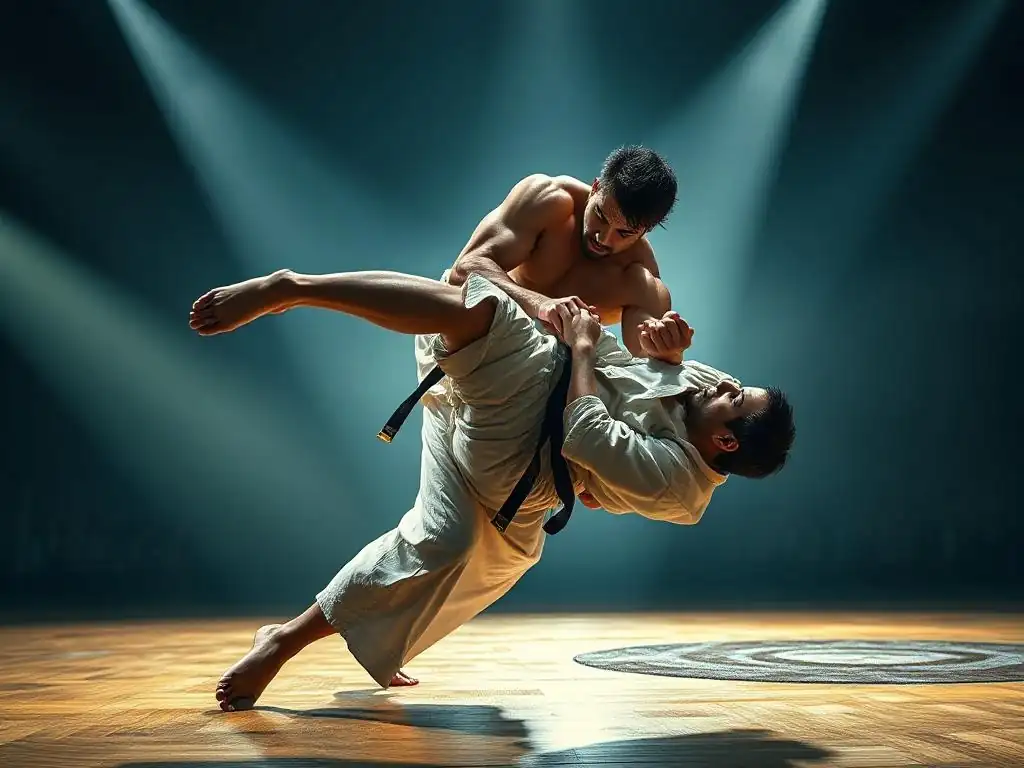
Welcome to Martial Arts Mastery, your portal to unlocking the secrets of combat traditions worldwide. Delve into the rich history, rigorous training, and profound philosophies that shape these disciplines. Are you ready to expand your Judo repertoire? This article dives deep into the Judo Sukui Nage Technique, a powerful scooping throw that can turn the tide of any match. Uncover the nuances of this effective maneuver and learn how to integrate it into your training.
- Osoto Gari Explained: Mastering the Major Outer Reaping Throw in Judo
- Introduction to Osoto Gari in Judo: A Comprehensive Guide
- Historical Context of the Osoto Gari Judo Technique
- Osoto Gari Technique Breakdown: Step-by-Step Guide
- Key Elements for Mastering the Judo Osoto Gari
- Common Mistakes to Avoid When Performing Osoto Gari
- Drills and Training Exercises for Osoto Gari Proficiency
- Osoto Gari in Competitive Judo: Strategic Applications
- Advanced Osoto Gari Variations and Combinations
- Safety Considerations When Practicing Osoto Gari
- Conclusion: Elevating Your Judo Game with Osoto Gari Mastery
- Frequently Asked Questions
- Final Reflection: The Enduring Power of Judo's Sukui Nage
- Unlock Your Judo Potential: Embrace the Sukui Nage!
Osoto Gari Explained: Mastering the Major Outer Reaping Throw in Judo
Introduction to Osoto Gari in Judo: A Comprehensive Guide
What is Osoto Gari? Understanding the Judo Major Outer Reaping Throw
Osoto Gari, meaning "major outer reaping," is one of the fundamental and most effective throwing techniques in Judo. It belongs to the ashi-waza (foot techniques) category within nage-waza (throwing techniques).
At its core, the Osoto Gari technique involves unbalancing the opponent (uke) towards their rear corner and then reaping their leg away from under them using your own leg, causing them to fall backward. It's a technique taught early in a judoka's training, appearing in the Gokyo no Waza (traditional list of 40 throws) and forming a cornerstone of competitive Judo strategy due to its power and relative simplicity compared to more complex throws.
This powerful Judo technique relies heavily on proper body mechanics, timing, and creating a significant disruption in the opponent's balance. A well-executed Osoto Gari can result in an immediate ippon (a decisive match-ending score) in competition. While seemingly straightforward, mastering the Osoto Gari technique requires dedicated practice to refine elements like entry footwork, grip pressure, timing the reap with the opponent's movement, and maintaining your own balance throughout the execution. It's a technique that scales with a judoka's skill level, remaining effective from beginner ranks through to elite competition.
The Significance of Osoto Gari within Judo Throwing Techniques (Nage-waza)
Within the vast repertoire of Judo's nage-waza, Osoto Gari holds a place of paramount importance. It is considered one of the "basic eight" throws ( Happo-no-kuzushi) that are foundational for understanding the principles of kuzushi (breaking balance). Its effectiveness stems from directly attacking one of the opponent's primary supports – their leg – while they are unweighted or moving in a vulnerable direction. The Judo Osoto Gari technique is often a high-percentage throw when the conditions are right, particularly against opponents who shift their weight or move defensively backwards.
Furthermore, the principles learned from practicing the Osoto Gari technique are transferable to many other throws. Understanding how to generate power through hip extension, use leg momentum for reaping, and coordinate upper body pull with lower body action are skills honed through Osoto Gari practice that benefit throws across ashi-waza, koshi-waza (hip techniques), and even some te-waza (hand techniques). Its strategic value in competition is undeniable; it can be used as a primary attack, a counter to certain movements, or as part of a combination attack, making the Judo Osoto Gari technique a versatile tool in any judoka's arsenal.
Historical Context of the Osoto Gari Judo Technique
Origins and Evolution of the Major Outer Reaping Throw
The roots of Osoto Gari can be traced back to the classical Japanese martial art of Jujutsu, from which Judo was developed by Jigoro Kano in 1882. Techniques resembling Osoto Gari existed in various Jujutsu schools, employing principles of off-balancing and leg attacks. Kano systematized these techniques, refining their execution and integrating them into the educational framework of Kodokan Judo. He emphasized the principles of maximum efficiency with minimum effort, which are clearly embodied in a well-executed Osoto Gari technique where leverage and timing overcome brute force.
Over the decades, the Osoto Gari technique has seen subtle evolutions in competitive Judo as practitioners adapted it to changing rules and opponent strategies. Early iterations might have focused more on a direct power-reap, while modern competitive applications often involve more complex entries, grip fighting setups, and combination attacks. Despite these adaptations, the core mechanics — breaking balance to the rear and reaping the leg — have remained constant, a testament to the fundamental effectiveness of the original Judo Osoto Gari technique as codified by Kano.
Notable Judo Practitioners Known for Osoto Gari
Many legendary judoka have been renowned for their mastery of the Osoto Gari technique, often making it their signature throw. Isao Okano, the Japanese Olympic gold medalist (1964) and World Champion (1965), was celebrated for his powerful and precise Osoto Gari. His technique was a benchmark for many aspiring judoka, demonstrating the potential for ippon with this throw at the highest level. Another notable figure is Yasuhiro Yamashita, the four-time World Champion and 1984 Olympic gold medalist, who utilized Osoto Gari effectively, often setting it up with incredible grip fighting and movement.
In more recent times, judoka like Teddy Riner of France, the multiple Olympic and World Champion, frequently employs variations of the Osoto Gari technique as part of his devastating attacking repertoire. These champions exemplify how the Osoto Gari technique, when perfected through thousands of repetitions, becomes an incredibly potent weapon. Their success highlights that while the basic movement is simple, true mastery involves deep understanding of timing, distance, and opponent reaction, allowing them to apply the Judo Osoto Gari technique against world-class competitors.
Osoto Gari Technique Breakdown: Step-by-Step Guide
Identifying the Ideal Opponent and Setup for Osoto Gari
The Osoto Gari technique is often most effective against an opponent (uke) who is either moving directly backward, has their weight predominantly on one leg (the leg you intend to reap), or is posturing stiffly upright. An opponent with a wide stance or someone leaning back slightly can also present good opportunities. The ideal setup typically involves establishing a strong grip that allows you to control their upper body and pull them off balance. A standard lapel and sleeve grip is common, but variations exist depending on your strategy and the opponent's posture.
Setting up the Judo Osoto Gari technique requires creating the right moment. This might involve feinting another attack to draw a reaction, pulling them forward and then pushing back to create backward momentum, or simply waiting for them to take a step backward naturally. The key is to manipulate their weight and balance before attempting the reap. Look for moments when one of their feet is planted and bearing weight, particularly if it's the leg you can reach and reap from your dominant side (e.g., their right leg if you are right-handed tori).
Grip Variations for a Successful Osoto Gari Execution
While the standard kumi-kata (grip fighting) with a grip on the opponent's lapel and sleeve is fundamental for the Judo Osoto Gari technique, effective execution often benefits from specific grip variations tailored to the situation. A deep grip on the lapel, high on the chest or even behind the neck, provides strong control over the opponent's upper body and facilitates kuzushi by allowing a powerful upward and backward pull. The sleeve grip on the opposite arm helps control their balance laterally and prevents them from effectively posting or blocking with that arm.
Other effective grip variations for Osoto Gari include a grip over the opponent's shoulder ( kata-guruma style grip setup), which allows strong chest-to-back contact and powerful forward pressure before switching to the reap. Another is the "collar and elbow" grip, providing close control. The choice of grip depends on the opponent's stance, movement, and your own preference, but the goal remains the same: establish dominance and control over their posture and balance to create the opening for the Judo Osoto Gari technique.
Step-by-Step Execution of the Judo Major Outer Reaping Throw
Executing the Judo Osoto Gari technique involves a coordinated sequence of actions:
Step 1: Initial Footwork and Grip Establishment
Begin from a balanced stance with a strong grip established (e.g., lapel and sleeve). Take a preparatory step with your non-reaping leg (e.g., left leg if you are right-footed) past the opponent's foot on the side you intend to throw them (e.g., past their right foot). This step should bring your hips close to theirs and align your body for the subsequent action.
Step 2: Kuzushi (Breaking Balance) to the Rear Corner
Simultaneously with your entry step, use your grips to break the opponent's balance diagonally backward towards the corner on the side of the leg you will reap (e.g., their rear right corner). Pull strongly with your sleeve hand while lifting and pushing/pulling with your lapel hand. This action should make their weight shift heavily onto the leg you are targeting.
Step 3: Reaping Leg Placement and Execution
As their balance is broken and weight is on the target leg, bring your reaping leg (e.g., right leg) straight back behind you, creating momentum. Swing your reaping leg forward and upward in a powerful arc, aiming to connect the back of your leg (from hamstring to calf) with the back of their thigh/calf just above the knee. Your leg should be relatively straight but not locked at the knee.
Step 4: Completing the Throw and Maintaining Control
Drive your hips forward into the opponent while continuing the reaping action with your leg. Maintain strong upper body control with your grips, driving them backward and downward. Your reaping leg sweeps their supporting leg out from under them. Follow through with your body, maintaining control with your grips until the opponent lands safely, and be ready to transition into groundwork if necessary.
Key Elements for Mastering the Judo Osoto Gari
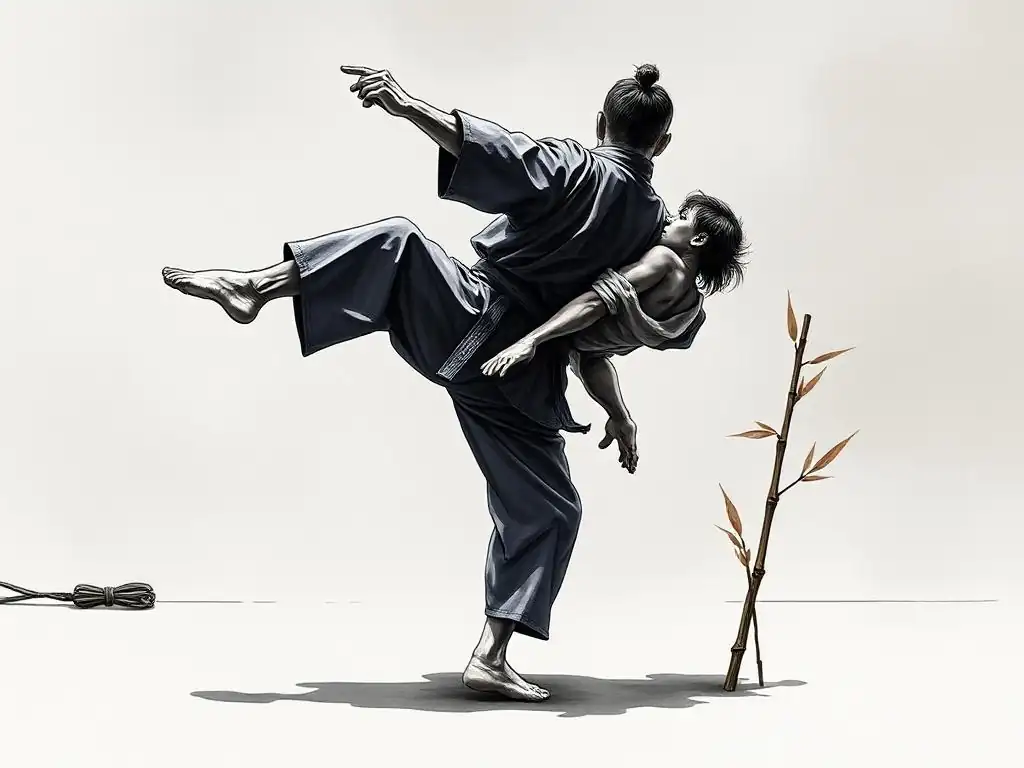
Balance and Stability: Maintaining Center of Gravity
Maintaining your own balance and stability is crucial for executing the Judo Osoto Gari technique effectively and safely. As you step in and reap, your supporting leg must be firmly planted, and your core engaged. A common mistake is losing your own balance during the entry or the reap, which can lead to a failed attempt or even being countered. Your center of gravity needs to remain stable as you disrupt your opponent's.
Developing strong leg and core muscles is essential for maintaining balance during the dynamic movement of Osoto Gari. Practice drills that focus on single-leg stability and exercises like squats and lunges can significantly improve your base. Remember, you are essentially standing on one leg while exerting force and momentum with the other, so a solid foundation is non-negotiable for mastering this Judo technique.
Timing and Coordination: Perfecting the Entry and Reaping Action
Timing is perhaps the single most critical factor in a successful Osoto Gari technique. The reap must coincide precisely with the moment the opponent's weight is shifted onto the target leg and their balance is broken. Reaping too early or too late will likely result in a failed throw, as they will either have weight off the leg or have recovered their balance. This coordination between your upper body pull ( kuzushi), lower body entry, and the reaping action is the hallmark of a skilled Osoto Gari execution.
Developing this timing requires countless repetitions with a partner, focusing on feeling their weight distribution and movement. Drills that involve reacting to a partner's steps or slight pushes can help cultivate the necessary sensitivity and reaction speed. Perfecting the timing and coordination of the Judo Osoto Gari technique transforms it from a mere physical action into a highly effective application of Judo principles.
Power Generation: Utilizing Body Weight for Maximum Impact
While Osoto Gari isn't solely about brute strength, generating power efficiently is vital for throwing a resisting opponent. This power comes not just from the strength of your reaping leg but primarily from the coordinated use of your entire body weight and momentum. As you step in and reap, driving your hips forward and slightly upward, combined with the powerful swing of your leg and the pull from your grips, creates a unified force directed at taking the opponent down.
Focusing on hip extension and core rotation as you reap amplifies the power of the Judo Osoto Gari technique. Think of your body as a single unit, driving through the opponent. Resistance training, particularly exercises like deadlifts, squats, and kettlebell swings, can build the foundational strength needed to generate significant power through this coordinated movement.
Common Mistakes to Avoid When Performing Osoto Gari
Incorrect Leg Placement and Angle
A frequent error when attempting the Osoto Gari technique is improper placement or angle of the reaping leg. If the reaping leg is bent too much, the power is significantly reduced. If it's too straight and locked, it can be unstable and less effective at sweeping. Furthermore, the angle of the reap matters; it should sweep out and back their leg, not just push it forward. Reaping too far behind their leg or not making solid contact also diminishes the technique's effectiveness.
Another aspect of incorrect leg placement is the position of the supporting leg. If your supporting leg is too far away or too close to the opponent, your base will be unstable, and you won't be able to generate maximum power or maintain balance during the Judo Osoto Gari technique. Proper footwork ensures you are close enough to make effective contact and have a stable platform to drive from.
Insufficient Kuzushi and Weakening Balance
Attempting the Osoto Gari technique without adequately breaking the opponent's balance ( kuzushi) is a recipe for failure. If the opponent still has their weight firmly planted on the target leg or can easily shift it, your reap will be ineffective. Insufficient kuzushi means you are trying to move a stable object, requiring excessive force and increasing your risk of being countered.
Neglecting the upper body pull and push is a common cause of insufficient kuzushi. The grips are not just for control; they are primary tools for disrupting posture and weight distribution. Without a sharp, well-timed action from the hands and arms to pull the opponent onto their heel and backward, the Judo Osoto Gari technique loses its fundamental principle of off-balancing.
Telegraphing the Attack and Losing Surprise
A major pitfall in competitive Judo is telegraphing your intentions, especially with a fundamental technique like Osoto Gari. If your opponent can see your attack coming – perhaps through a change in posture, grip, or a preparatory movement that is too obvious – they will be ready to defend or counter. Losing the element of surprise significantly reduces the chance of success for the Judo Osoto Gari technique.
Avoiding telegraphing requires smooth, fluid transitions and using subtle setups. Integrating the Osoto Gari entry into natural movement or using it immediately after a failed attempt at another technique can mask your intention. Practicing the entry and reaping motion with speed and fluidity, without unnecessary preliminary movements, is key to making the Judo Osoto Gari technique a surprising and effective attack.
Drills and Training Exercises for Osoto Gari Proficiency
Solo Practice Drills for Footwork and Leg Extension
Solo drills are essential for developing the muscle memory and coordination required for the Judo Osoto Gari technique. Practice the entry step, focusing on getting your non-reaping foot past where the opponent's foot would be and aligning your hips. Simultaneously, practice the arm action for kuzushi – imagining pulling and lifting. Then, practice the reaping motion itself, swinging your leg back and then forward in a strong, controlled arc, focusing on hitting the correct point with the back of your leg.
Repeat these movements hundreds of times, first slowly to ensure correct form, then increasing speed. Visualize an opponent and the timing. You can use a resistance band tied to a stationary object to practice the reaping motion against some tension, simulating the force required to move a leg. This solo practice hones the individual components of the Judo Osoto Gari technique before combining them with a partner.
Partner Drills for Timing and Reactive Execution
Partner drills allow you to practice the Judo Osoto Gari technique against a moving, reacting opponent. Start with static drills where your partner stands still, allowing you to focus purely on entry, kuzushi, and reaping timing. Gradually progress to dynamic drills: have your partner walk backward, step backward, or resist slightly. Practice reacting to their weight shifts and movements to find the opportune moment for the throw.
Specific drills include:
- Walking Osoto Gari: Both partners walk, and tori attempts Osoto Gari when uke steps backward.
- Resistance Osoto Gari: Uke provides slight resistance, forcing tori to improve kuzushi and power generation.
- Counter Osoto Gari: Uke attempts a simple forward movement or throw, and tori counters with Osoto Gari as uke commits their weight forward.
These partner drills are critical for developing the sensitivity and timing needed to apply the Judo Osoto Gari technique effectively against a live opponent.
Resistance Training Exercises to Enhance Leg Strength and Hip Mobility
Complementing on-mat practice with resistance training can significantly enhance your Osoto Gari technique. Exercises that build leg strength, particularly in the hamstrings, quadriceps, and glutes, are vital for the reaping action and maintaining your own balance. Squats, deadlifts, lunges, and hamstring curls are excellent choices.
Hip mobility is also key for achieving the correct angle and power in the reap. Exercises like hip flexor stretches, leg swings (forward/backward and side-to-side), and dynamic stretching can improve your range of motion. Furthermore, core strength exercises (planks, Russian twists) improve stability and the ability to transfer power from your lower body through your torso to your grips, making your Judo Osoto Gari technique more potent.
Osoto Gari in Competitive Judo: Strategic Applications
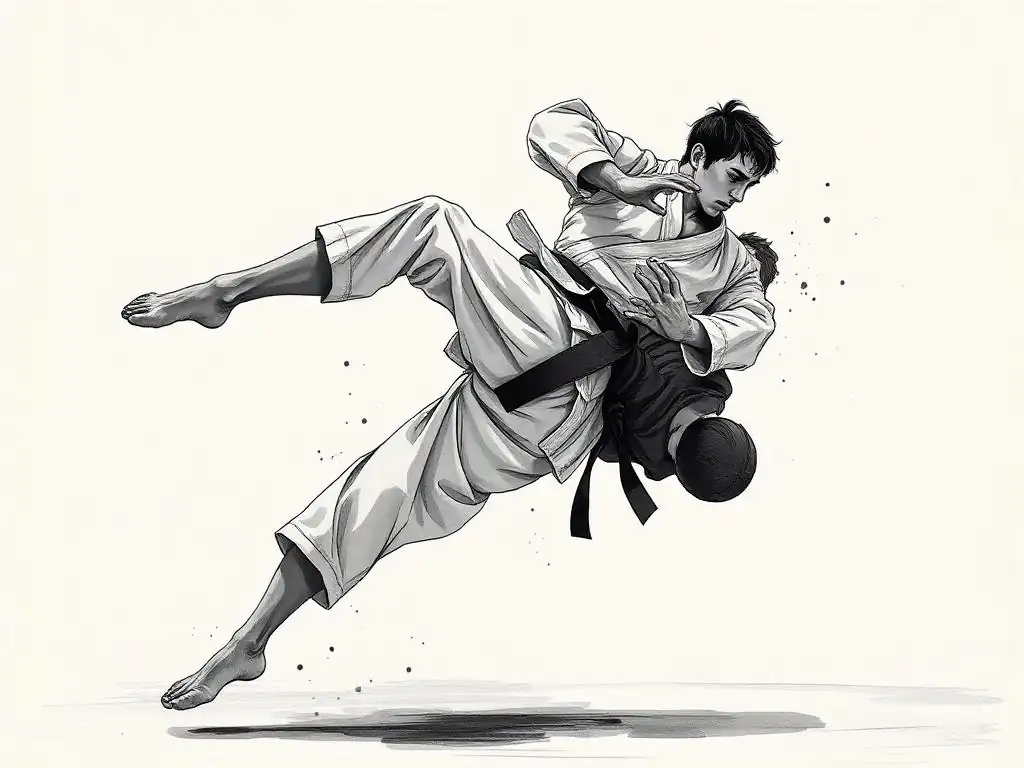
Identifying Opportunities to Utilize Osoto Gari in a Match
In a competitive Judo match, opportunities to apply the Osoto Gari technique often arise during transitions or when an opponent is moving predictably. Look for moments when your opponent steps backward to defend against a forward attack, shifts their weight heavily onto one leg while grip fighting, or attempts to circle away from you. These are prime instances where their balance is momentarily compromised, creating an opening for the major outer reaping throw.
Observing your opponent's habits is crucial. Do they favor a certain direction when moving? Do they stiffen up when pulled? Do they lean back when you apply forward pressure? Recognizing these tendencies allows you to anticipate their reactions and time your Osoto Gari technique entry precisely. Effective grip fighting is also fundamental to creating these opportunities; dominating the grip exchange often dictates the possibilities for throwing.
Combining Osoto Gari with Other Judo Techniques
Osoto Gari is rarely used in isolation at the highest levels; it is frequently combined with other techniques to create complex attacks or take advantage of failed attempts. A common combination is Osoto Gari followed by Ouchi Gari (major inner reaping) or vice versa. If the opponent defends against Osoto Gari by pulling their leg away, they often shift their weight to the other leg, creating an opening for Ouchi Gari. Conversely, if they defend Ouchi Gari by stepping back, Osoto Gari becomes available.
Other effective combinations include setting up Osoto Gari with Kouchi Gari (minor inner reaping) or using the threat of a forward throw like Ippon Seoi Nage (one-arm shoulder throw) to draw a backward reaction, opening the door for the Judo Osoto Gari technique. Mastering combinations makes your attacks less predictable and increases your chances of success.
Countering Opponents' Defenses Against the Major Outer Reaping Throw
Opponents will naturally defend against the Osoto Gari technique. Common defenses include pulling the target leg away, stiffening their posture, pushing back against your entry, or attempting their own throw or counter-attack. Recognizing these defenses is the first step to overcoming them.
If an opponent pulls their leg back, you might immediately switch to Ouchi Gari on the other leg or transition into a different attack like Koshi Guruma (hip wheel) if you can control their head and upper body. If they stiffen and push back, you might use their resistance to execute a forward throw like Tai Otoshi (body drop). Learning to chain techniques and react fluidly to defenses is key to making the Judo Osoto Gari technique a consistent threat, even against opponents who know it's coming.
Advanced Osoto Gari Variations and Combinations
Exploring Different Entries and Follow-up Techniques
Beyond the standard entry, advanced practitioners explore variations to make the Osoto Gari technique more adaptable. One variation involves stepping outside the opponent's foot rather than just past it, creating a different angle of attack. Another might use a more dynamic entry, like a hopping motion, to close the distance quickly and surprise the opponent.
Follow-up techniques are also crucial. If the initial Osoto Gari attempt doesn't result in a full throw but off-balances the opponent significantly, transitioning immediately into groundwork ( ne-waza) is a common strategy. Pinning techniques ( osae-komi-waza) or armlocks ( kansetsu-waza) can often be applied effectively if the opponent lands in a compromised position after defending the Judo Osoto Gari technique.
Linking Osoto Gari with other Nage-waza Techniques (e.g., Ouchi Gari)
As mentioned earlier, combining Osoto Gari with Ouchi Gari is a classic example of linking ashi-waza. However, Osoto Gari can also be linked with techniques from other categories. For instance, attempting a forward throw like Morote Seoi Nage (two-arm shoulder throw) and getting a defensive reaction where the opponent leans back strongly creates an excellent opportunity for a rapid transition to the Osoto Gari technique.
Similarly, using Osoto Gari as a setup for a hip throw like Harai Goshi (sweeping hip throw) is possible. By attacking with Osoto Gari, you might force the opponent to defend by shifting their weight forward onto their other leg, making them vulnerable to a hip technique. Mastering these links requires a deep understanding of Judo principles and how different techniques affect the opponent's balance.
Adapting Osoto Gari to Different Opponents and Situations
A truly advanced understanding of the Judo Osoto Gari technique involves the ability to adapt its execution based on the opponent's build, stance, movement patterns, and the specific situation in a match. Against a taller opponent, the angle and height of the reap might need adjustment. Against a shorter opponent, getting low and close becomes even more critical.
Adapting also means recognizing when Osoto Gari is not the right technique. Against a very low, defensive opponent who is difficult to off-balance backward, other techniques might be more suitable. The ability to read the opponent and the situation, and then modify or abandon the planned Osoto Gari technique accordingly, is a sign of advanced Judo skill.
Safety Considerations When Practicing Osoto Gari
Proper Ukemi (Breakfalls) to Prevent Injuries
Safety is paramount in Judo, especially when practicing throwing techniques like Osoto Gari. For the person receiving the throw ( uke), executing proper ukemi (breakfalls) is absolutely essential to prevent injuries. When thrown with Osoto Gari, uke should tuck their chin to their chest, slap the mat with their arm on the side of the fall to dissipate impact, and roll safely onto their back or side.
Practicing ukemi should be a regular part of every Judo training session, independent of throwing practice. A judoka who cannot breakfall safely is at high risk when practicing nage-waza. Tori also has a responsibility to execute the throw cleanly and control the opponent's fall as much as possible, guiding them safely to the mat rather than just dropping them.
Spotting Techniques to Ensure Safe Practice
When practicing the Judo Osoto Gari technique, particularly during initial learning or when working on variations, using spotting techniques can significantly enhance safety. A spotter (often another training partner or instructor) stands nearby, ready to intervene if either tori or uke loses control or balance in a dangerous way.
The spotter can help guide uke to a safe fall or prevent tori from falling onto uke. This is particularly important when practicing dynamic entries or against resistance. While spotting is common in throws where tori lifts uke (like Uchi Mata or Harai Goshi), it can also be beneficial for throws like Osoto Gari during early stages or when practicing with beginners.
Recognizing and Addressing Potential Risks
Practicing the Judo Osoto Gari technique carries potential risks, primarily related to falls. Knee injuries can occur if the reaping leg makes awkward contact or if uke attempts to resist the throw improperly. Ankle sprains are also possible during entries or falls. Head injuries, though rare with proper ukemi, are a serious concern if breakfalls are neglected.
Both tori and uke must be aware of these risks. Tori should focus on controlled execution and ensure uke is ready. Uke must commit to breakfalling and communicate if they feel uncomfortable or unsafe. Instructors play a vital role in supervising practice, ensuring techniques are performed correctly, and stopping practice if safety protocols are not followed. Addressing minor discomfort or pain immediately prevents small issues from becoming serious injuries, allowing for consistent, safe practice of the Judo Osoto Gari technique.
Conclusion: Elevating Your Judo Game with Osoto Gari Mastery
The Importance of Consistent Practice and Refinement
Mastering the Judo Osoto Gari technique is a journey that requires consistent, dedicated practice. It is not a technique learned in a single session but refined over years through countless repetitions. Regular practice, both solo and with partners, focusing on the fundamental principles of kuzushi, timing, entry, and power generation, is essential. Each practice session should aim to improve a specific aspect of the technique, whether it's the sharpness of the reap, the depth of the entry, or the timing of the pull.
Refinement involves paying close attention to detail, seeking feedback from instructors and experienced partners, and analyzing your own execution. Even seemingly minor adjustments to foot position, hip drive, or hand action can significantly impact the effectiveness of the Osoto Gari technique. This ongoing process of practice and refinement is what separates competent execution from true mastery.
Resources for Further Learning and Development of Osoto Gari Skill
To further develop your Osoto Gari technique, utilize the resources available within the Judo community. Your dojo instructors are invaluable sources of knowledge and can provide personalized feedback based on your individual mechanics. Training partners offer the essential element of realistic resistance and reaction.
Beyond in-person training, studying instructional materials such as books and videos from reputable sources can provide different perspectives and insights into the Osoto Gari technique. Observing high-level competitors execute the throw in matches can also reveal advanced strategies and subtle nuances. Engaging with the Judo community, perhaps through seminars or clinics focused on ashi-waza, can further deepen your understanding and proficiency in this fundamental and powerful Judo technique.
Frequently Asked Questions
What is Sukui Nage in Judo?
Sukui Nage is a Judo throwing technique where you scoop up your opponent's legs or body to lift and throw them. It is classified as a hand technique (Te-waza).
What are the key elements of a successful Sukui Nage?
The key elements include precise timing, a strong grip to secure your opponent, and the ability to lift your opponent's weight effectively while maintaining balance.
What are some common mistakes to avoid when performing Sukui Nage?
Common mistakes include poor posture, failing to secure a proper grip, and lifting with your back instead of your legs, which can lead to injury.
Is Sukui Nage considered a high-risk technique in Judo competition?
Yes, Sukui Nage can be considered high-risk because it involves lifting the opponent and can be countered if executed improperly.
How can I improve my Sukui Nage performance?
Focus on strengthening your core and legs, practice drilling the technique repeatedly with a partner, and study videos of experienced Judoka performing Sukui Nage effectively.
Final Reflection: The Enduring Power of Judo's Sukui Nage
The journey through the intricacies of the Sukui Nage technique reveals more than just a Judo throw; it unveils a philosophy of leverage, balance, and adaptability that resonates far beyond the dojo. The enduring relevance of Sukui Nage lies in its ability to demonstrate how understanding fundamental principles can lead to mastery, not just in Judo, but in any endeavor requiring strategic thinking and precise execution. This throw, often underestimated, embodies the core tenets of Judo: maximum efficiency with minimal effort.
The impact of Judo, and techniques like Sukui Nage, extends beyond physical prowess. It cultivates discipline, respect, and a deep understanding of one's own capabilities and limitations. Personally, exploring the Sukui Nage has reinforced the importance of continuous learning and adaptation, both on and off the mat. The principles of balance and leverage, so crucial to this throw, are equally applicable to navigating the challenges of everyday life. Judo is the way to the most effective use of both physical and spiritual strength. By training you in attacks and defenses it refines your body and your soul and helps you make the spiritual essence of Judo a part of your very being.
- Jigoro Kano. This quote perfectly encapsulates the transformative power of Judo, where physical technique intertwines with personal growth.
Now, consider how the principles of Sukui Nage – leverage, balance, and adaptability – can be applied to your own life. Where can you find greater efficiency in your actions? How can you better understand your own strengths and weaknesses? Embrace the spirit of Judo, not just as a martial art, but as a philosophy for living a more balanced, strategic, and ultimately, more fulfilling life. Let the Sukui Nage serve as a reminder that even the most challenging obstacles can be overcome with the right technique and a unwavering commitment to improvement.
Unlock Your Judo Potential: Embrace the Sukui Nage!
Thank you for diving into the art of Sukui Nage! We hope you’ve gained valuable insights into mastering this powerful scooping throw. Now, let's put that knowledge into action and elevate your Judo game.
Here are a few steps you can take to deepen your understanding and improve your technique:
- Prioritize perfecting your grip and balance. Consistent practice will lead to a stronger, more effective throw.
- Explore variations of Sukui Nage. Experiment with different entries and setups to discover what works best for your style.
- Share this article with your fellow Judoka and start a discussion on the best training drills for improving Sukui Nage.
Ready to refine your Sukui Nage and surprise your opponents? What specific aspect of the scooping throw are you most eager to practice this week?