
Tyr: The OneHanded God and the Norse Code of Combat Justice

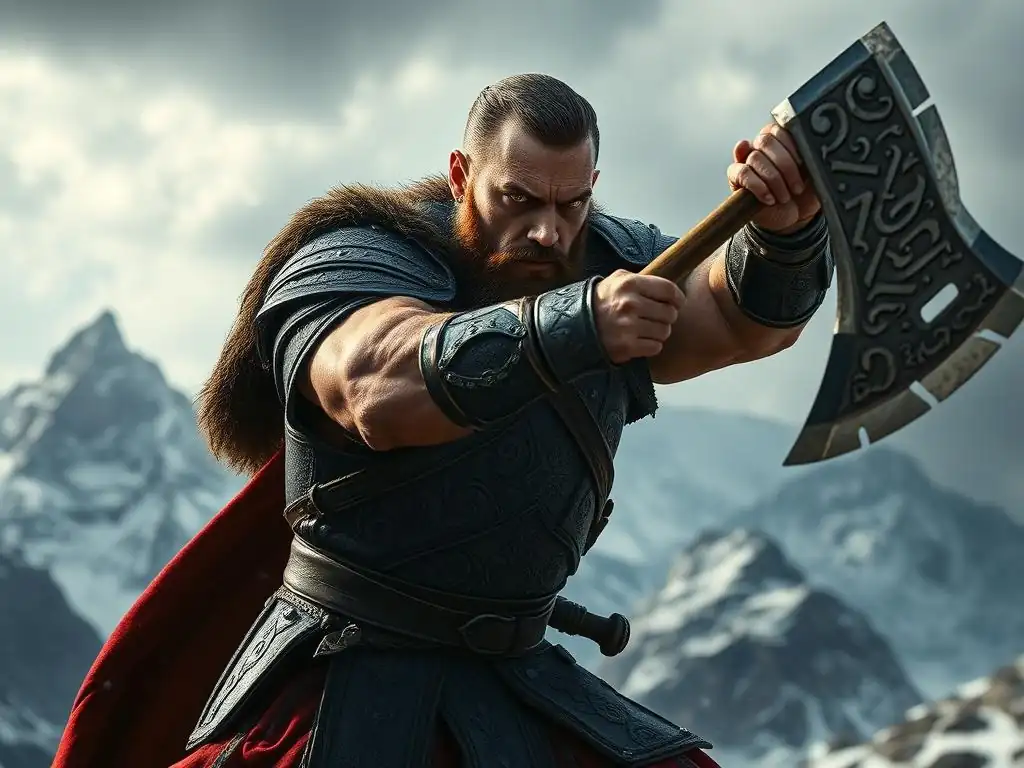
Welcome to Martial Arts Mastery, where history and combat intertwine!
Delve into the fascinating world of ancient warfare as we explore the forgotten fighting styles of the Vikings. This week, uncover the secrets of Norse martial arts techniques and discover how the legendary god Tyr, the one-handed deity of justice, influenced the Norse code of combat. Are you ready to unlock the warrior spirit within? Continue reading to embark on a journey through history and uncover the brutal beauty of Norse combat.
- Introduction: Tyr, Norse Mythology, and the Roots of Martial Honor
- The Legend of Tyr: Sacrifice and Justice in Norse Mythology
- Tyr and the Norse Code of Combat Justice: A Historical Perspective
- Norse Combat Techniques: Reflections of Tyr's Principles
- Tyr's Influence on Modern Martial Arts: Concepts of Sacrifice and Discipline
- The Legacy of Tyr: From Ancient Myths to Modern Martial Honor
-
Frequently Asked Questions
- What is the connection between Tyr and Norse martial arts techniques?
- Does "MartialArtsMastery.org" offer specific training programs in Norse martial arts techniques?
- Are there documented Norse martial arts techniques that can be learned today?
- What are some examples of values from the "Norse Code of Combat Justice" that might influence fighting styles?
- How does "MartialArtsMastery.org" cover the history of martial arts beyond Eastern traditions?
- Final Reflection: The Enduring Legacy of Tyr's Justice
- Unleash Your Inner Warrior: Embrace Tyr's Code!
Introduction: Tyr, Norse Mythology, and the Roots of Martial Honor
Exploring the Connection Between Norse Gods and Concepts of Justice
Norse mythology is rich with powerful deities, each embodying different aspects of existence. While figures like Odin are associated with wisdom, magic, and war, and Thor with strength, thunder, and protection, other gods represent fundamental societal structures and values. Tyr, in particular, stands out as a deity deeply connected to law, justice, and honorable conduct.
These divine associations were not abstract concepts but were believed to influence the very fabric of Viking society, including their approach to conflict resolution and combat. The principles associated with gods like Tyr provided a moral framework that underpinned many aspects of life, from legal assemblies to personal duels.
The Norse worldview often saw the divine directly influencing human affairs, including the outcome of battles and legal disputes. Gods like Tyr were invoked not just for victory, but for righteous outcomes. This intertwining of divine authority with concepts of justice and honor is crucial for understanding the underlying philosophy of Norse combat and the development of specific Norse martial arts techniques. It suggests that mere physical prowess was insufficient; combat was often imbued with deeper meaning related to oaths, honor, and the perceived will of the gods.
Tyr: More Than Just a God of War, A Paragon of Law and Sacrifice
While sometimes listed among the Æsir gods associated with war, Tyr's primary domain is law, justice, and the solemnity of oaths. He was a central figure in the Thing, the ancient Norse assembly that served as both a legislative body and a court of law. Here, disputes were settled, laws were debated and upheld, and judgments were passed. Tyr's presence symbolized the sanctity of these proceedings and the commitment required to uphold the law, even at personal cost.
Tyr's connection to combat stems from his role as a patron of duels, particularly the holmgang, a formal, often legally sanctioned single combat used to settle disputes. In such contexts, combat was not merely about brute strength but about honor, adherence to rules, and the belief that the outcome might reflect divine judgment. Tyr's association with oaths also made him a god invoked before battles or duels, ensuring that warriors fought bravely and honestly, embodying the principles of justice and unwavering commitment that are also foundational to mastering Norse martial arts techniques.
The Legend of Tyr: Sacrifice and Justice in Norse Mythology
Tyr's Role in Binding Fenrir: A Testament to Courage and Strategic Sacrifice
Tyr's most famous myth illustrates his profound dedication to justice and order through extraordinary sacrifice. The monstrous wolf Fenrir, son of Loki, grew to such an immense size and ferocity that the gods feared he would destroy the cosmos. After two attempts to chain him with mighty fetters (Laeding and Dromi) failed, the gods commissioned the dwarves to create Gleipnir, a magical ribbon forged from impossible things like the sound of a cat's footfall and the breath of a fish. Though seemingly flimsy, Gleipnir was unbreakable.
The gods presented Gleipnir to Fenrir, claiming it was a test of his strength. However, Fenrir was suspicious of the ribbon's apparent weakness and demanded that one of the gods place their hand in his mouth as a pledge of good faith while he attempted to break free. Only Tyr, known for his courage and commitment to oaths, was willing to step forward, knowing the likely consequence. This act of calculated risk and personal sacrifice was essential to achieving the strategic goal of binding the threat of chaos embodied by Fenrir.
The Significance of Tyr's Lost Hand: A Symbol of Justice and Unwavering Commitment
As expected, Fenrir was unable to break free from Gleipnir. When he realized the gods had tricked him, he bit off Tyr's hand at the wrist. This gruesome sacrifice is central to Tyr's identity. The loss of his hand is not depicted as a sign of weakness or defeat, but as the ultimate price paid for upholding order and justice. It symbolizes the harsh reality that maintaining balance and peace often requires significant personal cost and unwavering commitment.
Tyr's severed hand serves as a powerful metaphor for the demands of justice: it may require giving up something precious. This resonates deeply within the context of martial arts, including the practice of Norse martial arts techniques. Mastery requires immense personal sacrifice – time, comfort, enduring pain, and persistent discipline. Tyr's story teaches that true strength lies not just in physical capability but in the moral fortitude to make sacrifices for a greater principle, whether it's protecting the community or upholding the honor of one's martial discipline.
Tyr and the Norse Code of Combat Justice: A Historical Perspective
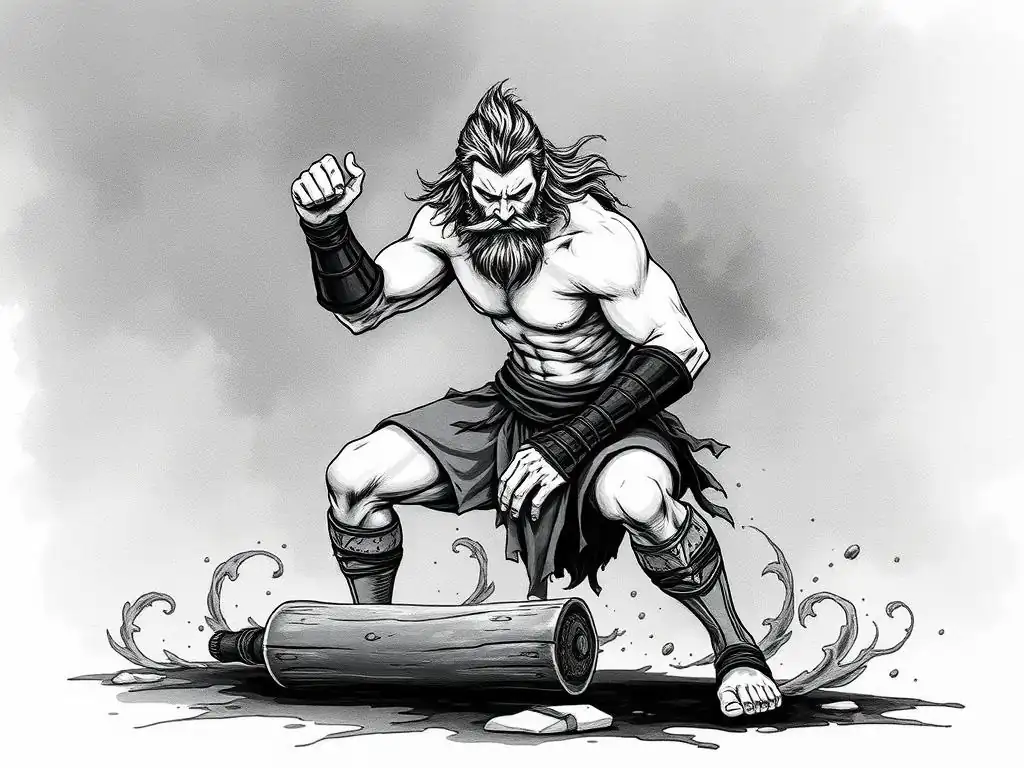
"Holmgang": Ritual Combat in Viking Society and the Pursuit of Justice
Holmgang, or island-going, was a legally recognized duel practiced in Viking and early medieval Scandinavian societies, often used to settle disputes over property, honor, or legal rights when other methods failed. These duels were not chaotic brawls but followed specific rules, though these varied over time and region. Typically, they were fought on a cloak or animal hide laid on the ground, marking the boundaries, often measuring around 3x3 meters. Specific weapons were sometimes prescribed, and shields were commonly used.
The holmgang was overseen by arbitrators and witnessed by others, emphasizing its function as a legal process rather than mere violence. While the victor usually won the case, the duel was seen by some as a form of divine judgment, with Tyr potentially overseeing the outcome.
A fighter could yield or be disarmed, ending the fight without death, though serious injury or death was common. The holmgang provides a concrete historical example of how combat was integrated into the Norse legal framework, distinct from battlefield warfare, and reflective of a code of justice where disputes could be settled through ritualized physical confrontation, drawing upon specific Norse martial arts techniques within a controlled setting.
Tyr's Influence on Viking Honor and Fair Fighting Principles
The values embodied by Tyr – courage, integrity, commitment to oaths, and justice – significantly influenced the Viking concept of honor, particularly as it related to combat. While Viking warriors were renowned for their ferocity in raids and battles, internal societal interactions and formal duels were often governed by unwritten codes of conduct. Standing one's ground, fighting bravely even against overwhelming odds, and keeping one's word were paramount aspects of a warrior's honor.
Tyr's patronage of oaths and law meant that breaking a sworn agreement or violating the rules of holmgang was a grave offense, potentially incurring divine disfavor. Fair fighting, within the context of formalized combat, was thus linked to religious and social standing. While battlefield tactics might involve stratagems, formal duels and challenges were expected to be met with courage and adherence to form. This emphasis on honor and principle informed the mindset behind the application of Norse martial arts techniques, particularly in contexts requiring adherence to specific rules or oaths.
Legal Implications of Tyr in Norse Society: Upholding Laws and Ensuring Justice
Beyond the holmgang, Tyr's influence permeated the broader legal system centered around the Thing. As a god of law and justice, he provided a divine sanction to the proceedings. The Thing was where free individuals gathered to make laws, elect leaders, and administer justice. Decisions were often reached through consensus or arbitration, but the underlying authority derived from established customs and the perceived will of the gods, particularly Tyr.
The legal framework of Norse society, overseen in part by Tyr, governed aspects relevant to conflict and combat, including inheritance disputes settled through holmgang, compensation for injuries or killings ( wergild), and the outlawry of individuals who violated fundamental laws or oaths. Tyr's association with upholding the sacredness of oaths also meant that promises made, whether in trade, alliance, or combat, carried significant weight. This legal structure, rooted in concepts of justice associated with Tyr, provided the societal context within which Norse martial arts techniques were developed and applied, both for warfare and for maintaining order.
Norse Combat Techniques: Reflections of Tyr's Principles
The Glima System: A Reflection of Norse Grappling and Combat Prowess
Glima is the traditional wrestling system of Norway and Iceland, recognized as a form of Norse martial arts techniques with ancient roots. It encompasses various styles, but the most well-known is lausatök (loose grip), characterized by competitors gripping each other's belt and trousers. The objective is typically to throw the opponent to the ground while remaining standing. It emphasizes balance, leverage, and quick footwork rather than brute force.
Glima is a practical combat form that could be used in disputes or as training for warfare. Its focus on achieving a throw and maintaining control reflects a strategic approach to combat, aligning with the calculated sacrifice seen in Tyr's myth. Unlike styles solely focused on striking, Glima emphasizes control and positioning. This form of Norse martial arts techniques highlights the importance of skill and technique over raw power, embodying a disciplined and strategic approach to physical confrontation.
Weaponry and Combat Styles of the Vikings: Axes, Swords, and Shields in Viking Warfare
Viking warriors were proficient in a variety of weapons, the most common being the axe, spear, and shield. Single-handed axes, often weighing between 2 to 4 pounds, were versatile tools and formidable weapons, capable of hooking shields or delivering powerful blows. Swords, though prestigious, were less common initially, typically single-edged and used for cutting and slashing. Spears were widely used for thrusting and throwing, effective in close quarters and at range.
The shield was arguably the most crucial piece of equipment. Round shields, typically 30-36 inches in diameter, were used for defense and offense, bashing opponents or creating space. Combat often involved shield walls, formations where warriors stood shoulder-to-shoulder, interlocking shields to create a defensive barrier while using axes, swords, and spears over or around the shields. Mastering the coordination required for the shield wall and effective weapon use within it represented key Norse martial arts techniques for group combat.
The Importance of Strategy and Tactics in Norse Warfare: Calculated Risks and Decisive Action
Viking military success wasn't solely based on individual ferocity but also on effective strategy and tactics. Their longships provided unparalleled mobility, allowing for rapid raids and the ability to choose the time and place of engagement. On land, they favored tactics that utilized terrain to their advantage, such as ambushes or fighting on difficult ground where their opponents' cavalry might be less effective.
While direct confrontation was common, Vikings were also capable of tactical feints and maneuvers. The ability to take calculated risks, like Tyr's sacrifice to bind Fenrir, was crucial. Decisive action, once a plan was formed, was key to seizing the initiative. This blend of individual fighting skill (Norse martial arts techniques with weapons and grappling) and group strategy underscores the comprehensive nature of Norse combat, where courage, discipline, and intelligent planning were all vital components.
Tyr's Influence on Modern Martial Arts: Concepts of Sacrifice and Discipline
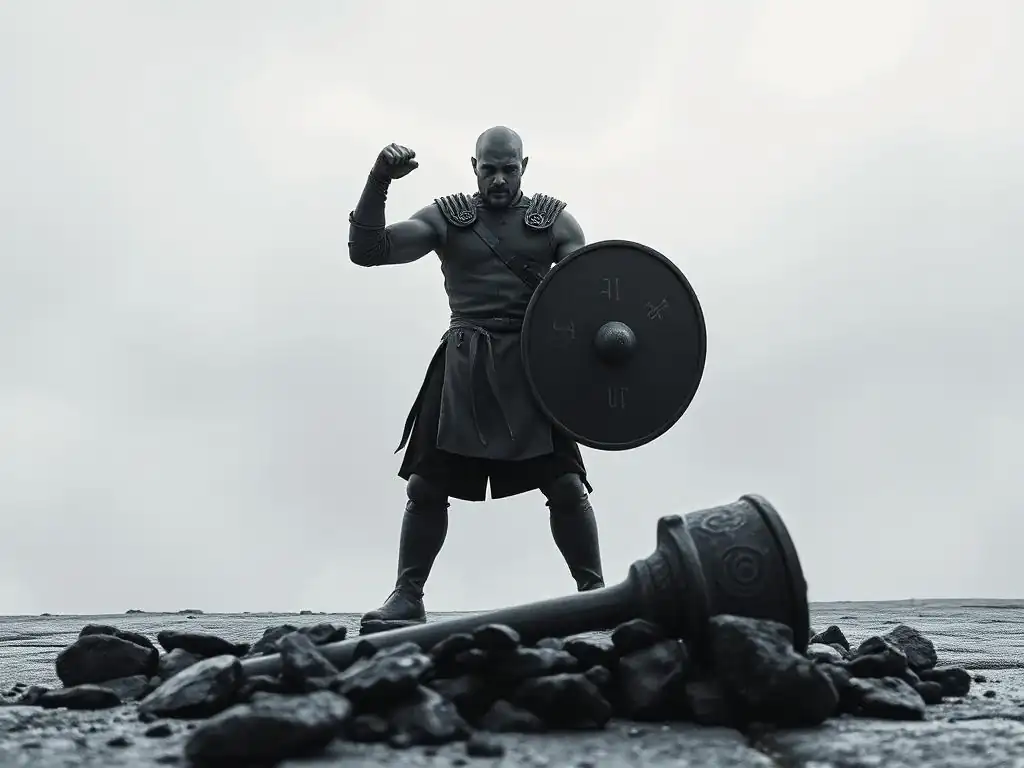
How Tyr's Story Inspires Modern Martial Artists
The myth of Tyr and Fenrir offers a powerful narrative that resonates with the challenges and commitments inherent in modern martial arts training. Tyr's willingness to sacrifice his hand for the greater good and to uphold an oath serves as an allegory for the dedication required to achieve mastery. Training in martial arts demands significant personal sacrifice: giving up leisure time, enduring physical discomfort, pushing past mental barriers, and committing years, sometimes decades, to practice.
Tyr's unwavering commitment, even in the face of certain loss, inspires perseverance. Martial artists face frustration, plateaus in skill development, and the challenge of maintaining discipline over the long term. The story of Tyr provides a mythological archetype for the courage needed to confront these difficulties and the understanding that significant progress often comes at a personal cost, reflecting the deep discipline embedded in effective Norse martial arts techniques and other combat systems.
Parallels Between Norse Combat Ethics and Modern Martial Arts Philosophies
Many modern martial arts philosophies emphasize principles that find parallels in the ethical code associated with Tyr and Norse combat traditions. Concepts such as respect for instructors and training partners, discipline, humility, perseverance, and ethical conduct are universal values taught in dojos and training halls worldwide. The Norse emphasis on courage, standing firm, and upholding one's word in combat or legal disputes aligns conceptually with the integrity expected of a martial artist.
While the historical context differs, the underlying idea that physical skill should be tempered by moral character and ethical responsibility is a common thread. The focus on controlled combat in holmgang, overseen by principles of justice, echoes the importance of self-control and the responsible application of learned techniques in modern martial arts. Exploring Norse martial arts techniques historical context reveals these shared ethical underpinnings.
Aikido and Judo: Martial Arts Emphasizing Sacrifice, Discipline, and Respect
Certain modern martial arts systems particularly highlight principles that align with Tyr's story. Aikido, a Japanese martial art, emphasizes harmonizing with an opponent's energy and redirecting force, often through throws and joint locks. This requires the practitioner to yield or blend with an attack, a form of physical 'sacrifice' of their initial position to achieve a strategic outcome, mirroring the calculated nature of Tyr's action. Aikido also places high value on respect ( Rei) and ethical conduct.
Judo, derived from Jujutsu, focuses on throws ( nage-waza) and grappling on the ground ( katame-waza). Like Aikido, it requires immense discipline, rigorous practice, and respect for opponents and the art itself, embodied in rituals like bowing.
The pursuit of skill in Judo involves countless hours of training, pushing physical and mental limits – a clear parallel to the sacrifice required for mastery. Both Aikido and Judo demonstrate how modern martial arts embody the spirit of discipline, controlled force, and ethical engagement, conceptually linked to the principles of justice and sacrifice seen in Tyr and the historical practice of Norse martial arts techniques.
The Legacy of Tyr: From Ancient Myths to Modern Martial Honor
Preserving the Values of Justice and Courage in Martial Arts Training
The enduring legacy of Tyr serves as a powerful reminder that martial arts mastery is not solely about physical technique. It's about cultivating character, embodying courage, and upholding principles of justice and honor. Modern martial arts training can consciously integrate these values by emphasizing ethical behavior, respect for opponents, the importance of discipline, and the understanding that true strength includes the moral fortitude to do what is right, even when difficult.
Instructors can use stories and historical context, including the principles behind Norse martial arts techniques and the myths of figures like Tyr, to teach students about the deeper meaning of their practice. By fostering an environment that values integrity and perseverance, martial arts schools contribute to developing not just skilled fighters but also responsible and honorable individuals who understand the weight and responsibility that comes with physical capability.
Historical Reenactment Groups: Modern Interpretations of Norse Combat
Historical reenactment groups provide a tangible link to ancient combat practices, including the exploration and reconstruction of Norse martial arts techniques. Groups dedicated to Viking age combat study sagas, archaeological finds (weapons, armor, burial sites), and historical accounts to recreate fighting styles, weaponry, and tactics as accurately as possible.
These practitioners engage in various forms of training, from weapon handling (axes, swords, spears, shields) to forms of wrestling resembling Glima. They often practice controlled sparring to test their understanding of historical techniques. This active engagement with the past allows for a deeper appreciation of the physical demands, strategic thinking, and perhaps even the mindset of historical Norse warriors, keeping the knowledge of Norse martial arts techniques alive and offering practical insight into their application.
Conclusion: The Enduring Impact of Tyr on Concepts of Honor and Justice in Combat
Tyr, the one-handed god of law and justice, remains a potent symbol in Norse mythology and provides valuable insights into the historical and philosophical underpinnings of combat. His sacrifice in binding Fenrir highlights the principle that upholding order and justice often requires immense personal cost and unwavering commitment. This resonates deeply with the discipline, perseverance, and sacrifice required in mastering any martial art, including historical Norse martial arts techniques.
From the ritualized combat of holmgang to the strategic shield wall and the practical grappling of Glima, Norse combat practices were intertwined with concepts of honor, oaths, and justice, overseen by deities like Tyr. Today, Tyr's legacy continues to inspire martial artists to cultivate not only physical prowess but also moral courage, integrity, and a commitment to ethical conduct. The enduring impact of his story underscores the timeless truth that true strength in combat is a fusion of skill, strategy, character, and an unwavering dedication to justice and honor.
Frequently Asked Questions
What is the connection between Tyr and Norse martial arts techniques?
Tyr, the Norse god of justice and war, is often associated with the values of combat and fair fighting, which may have influenced the development and ideals surrounding Norse martial arts. He represents courage, discipline, and strategic thinking important for any warrior.
Does "MartialArtsMastery.org" offer specific training programs in Norse martial arts techniques?
Currently, MartialArtsMastery.org focuses on providing historical overviews and philosophical insights related to martial arts, including Norse traditions. The site doesn't directly offer structured training programs in specific Norse martial arts techniques.
Are there documented Norse martial arts techniques that can be learned today?
While specific, detailed manuals are rare, historical sources suggest techniques focused on weaponry, such as sword fighting, axe combat, and wrestling-like grappling. Modern practitioners reconstruct and interpret these techniques based on sagas and archaeological findings.
What are some examples of values from the "Norse Code of Combat Justice" that might influence fighting styles?
Values such as honor, fairness, and respect for one's opponent likely played a role. The concept of wyrd (fate) might also influence a warrior's acceptance of risk and outcome in combat.
How does "MartialArtsMastery.org" cover the history of martial arts beyond Eastern traditions?
The site aims to provide a global perspective on martial arts, including exploring the historical and cultural contexts of fighting systems from various regions, including Norse combat traditions.
Final Reflection: The Enduring Legacy of Tyr's Justice
The exploration of Tyr, the one-handed god of justice and combat, reveals that the principles of fair play and strategic sacrifice are not relics of the past, but vital components of any successful endeavor, from martial arts to modern negotiations. Understanding the Norse code of combat justice, as embodied by Tyr, offers a powerful lens through which to view our own approaches to conflict and competition.
The influence of Tyr extends beyond the battlefield, shaping our understanding of honor and integrity. His willingness to sacrifice his hand for the greater good underscores the importance of ethical considerations in all aspects of life, a lesson that resonates deeply in a world often driven by self-interest. The wise warrior knows when to strike, but the wiser one knows when to sacrifice.
This ancient wisdom reminds us that true strength lies not only in physical prowess but also in moral fortitude.
As we conclude this journey into the world of Tyr and the Norse martial arts techniques he represents, I invite you to reflect on the sacrifices you are willing to make for the sake of justice and honor. Embrace the spirit of Tyr, not just as a warrior, but as a champion of fairness and a beacon of integrity in your own life. Let his example guide you to act with courage, wisdom, and a unwavering commitment to what is right.
Unleash Your Inner Warrior: Embrace Tyr's Code!
Thank you for exploring the legend of Tyr and his powerful lessons in combat justice. Now, it's time to translate that knowledge into action!
Here are a few ways to continue your journey:
- Commit to a personal code of honor in your training and life, reflecting Tyr's unwavering dedication to fairness and justice. This is your primary action.
- Research historical combat techniques related to one-handed fighting styles or weapon usage to deepen your understanding of the martial arts world.
- Share this article with fellow martial artists and discuss how Tyr's principles can improve our training environment and personal conduct.
What steps will you take to embody Tyr's spirit of justice and courage in your own martial arts journey?