
The 1964 Tokyo Olympics: Judo's Debut and its Impact on Western Perceptions

Welcome to Martial Arts Mastery, where we delve into the captivating world of combat traditions! Discover the rich tapestry of martial arts disciplines, from ancient philosophies to modern training techniques. Today, we explore a pivotal moment in martial arts history: the 1964 Tokyo Olympics and Judo's impact on perceptions. How did this debut shape the Western understanding of this elegant and powerful art? Uncover the untold stories and lasting legacy within.
- Western Perceptions of Judo Before 1964
- Judo's Olympic Debut: Changing Western Perspectives
- Immediate Impact: The Surge in Judo Popularity in the West
- Long-Term Effects: Judo's Enduring Influence on Western Martial Arts
- Judo vs. Western Wrestling: A Comparison of Styles and Philosophies
- The Legacy of the 1964 Tokyo Olympics for Judo
-
Frequently Asked Questions
- What was the significance of Judo's inclusion in the 1964 Tokyo Olympics?
- How did the 1964 Tokyo Olympics affect Western perceptions of Judo?
- Before the 1964 Olympics, what were some common Western misconceptions about Judo?
- What specific aspects of Judo displayed during the 1964 Olympics contributed to shifting Western opinions?
- Did the 1964 Olympics lead to increased participation in Judo in Western countries?
- Final Reflection: Judo's Enduring Legacy
- Ignite Your Judo Journey: Embrace the Spirit of '64!
Western Perceptions of Judo Before 1964
Limited Exposure: Judo's Presence in the West Pre-Olympics
Before the 1964 Tokyo Olympics, judo's presence in Western countries was largely confined to small, dedicated communities. Access to authentic instruction was challenging, requiring either travel to Japan or finding one of the few qualified instructors who had emigrated or visited. This limited exposure meant that Western perceptions of judo were often fragmented and based on incomplete information.
While some individuals had encountered judo through military service, particularly in occupied Japan, or through early cultural exchanges, the art was far from mainstream. Dojos, or training halls, existed in major cities like London, Paris, and New York, but their membership numbers were relatively small, likely only a few hundred dedicated practitioners across several countries compared to established Western sports.
The understanding of judo outside these small circles was often superficial. It was sometimes conflated with other Asian martial arts or viewed primarily as a curiosity or an exotic form of self-defense. The structured ranking system (kyu/dan) and the emphasis on philosophical principles were not widely known or appreciated by the general public.
This lack of broad understanding meant that judo’s impact on perceptions in the West was minimal, confined mostly to enthusiasts and academics studying Japanese culture. The public had little frame of reference for what judo truly entailed beyond perhaps seeing a throw demonstrated in a staged setting or reading about it in niche publications.
Early Judo Pioneers and Their Influence on Western Understanding
The initial introduction of judo to the West was primarily the work of dedicated pioneers, both Japanese instructors who traveled abroad and Westerners who studied in Japan and returned home. Figures like Ernest J. Harrison in the UK, who studied at the Kodokan in the early 20th century and authored one of the first English-language books on judo, played a crucial role.
Similarly, instructors like Mikinosuke Kawaishi in France were instrumental in establishing early dojos and developing teaching methodologies adapted for Western students. These individuals worked tirelessly to promote judo, often facing skepticism and a lack of understanding from the wider public.
Their influence on Western understanding was significant within the nascent judo communities they built. They introduced the core techniques, the etiquette, and some of the underlying philosophy of judo to their students. However, their reach was limited by the communication and travel technologies of the era. While they laid essential groundwork, their efforts primarily impacted a small segment of the population. The broader Western perceptions of judo remained largely untouched by these early endeavors, as mass media coverage was minimal and the art was not yet showcased on a global stage that could capture widespread attention.
Accounts of Judo's Portrayal in Pre-1964 Western Media
Before the 1964 Olympics, Western media coverage of judo was sparse and often sensationalized or inaccurate. When judo was mentioned, it was frequently in the context of self-defense demonstrations, focusing on dramatic throws or joint locks rather than the competitive or philosophical aspects. Newsreels or short film segments might occasionally feature judo, but these were often brief and lacked depth, portraying it perhaps as a mysterious or even dangerous foreign art. The nuanced techniques and the sporting structure were rarely explained.
Newspaper articles, when they appeared, might discuss judo clubs forming or report on local demonstrations, but comprehensive features or analyses were uncommon. The lack of a major international platform meant there were no globally recognized events for the media to cover extensively. This limited and often superficial portrayal meant that the public's perceptions of judo were often based on stereotypes or incomplete information. It was not widely understood as a legitimate sport with rules, weight classes, and a rich history, nor were its benefits for physical fitness and mental discipline widely recognized by those outside the small judo community.
Judo's Olympic Debut: Changing Western Perspectives
The Spectacle of Judo Competition at the Tokyo Games
The inclusion of judo in the 1964 Tokyo Olympics marked a pivotal moment for the martial art's global recognition and dramatically shifted Western perspectives. For the first time, millions of people outside of Japan and the small existing judo communities were able to witness the sport performed at the highest level on a major international stage. The Olympic competition showcased judo not as just a collection of self-defense techniques, but as a dynamic, strategic, and physically demanding sport with clear rules, competitive structure, and impressive athletic performance.
The television broadcasts, though not as ubiquitous as today, brought the matches into homes across North America and Europe. Viewers witnessed powerful throws, intricate groundwork, and the intense mental focus required of the athletes. This visual spectacle provided a stark contrast to the often vague or stereotypical pre-Olympic understanding of judo. It allowed people to see the techniques applied in real competition and appreciate the skill, strength, and strategy involved. This direct, high-profile exposure was the most significant factor in altering Western perceptions of judo, presenting it as a legitimate and exciting athletic endeavor.
Anton Geesink's Victory: A Turning Point in Judo's Global Recognition
One of the most impactful moments of the 1964 judo competition, particularly for Western audiences, was the victory of Anton Geesink from the Netherlands in the Open weight category. Geesink, a non-Japanese competitor, defeated the favored Japanese champion Akio Kaminaga in the final. This was a monumental upset, as Japan had been expected to dominate the judo medals, especially in the open division. Geesink's victory demonstrated that judo was not solely the domain of Japan but was a sport that could be mastered by athletes from any nation.
Geesink's win shattered the perception that judo was an ethnic or culturally exclusive art form. It proved that with dedication and training, practitioners from anywhere in the world could reach the pinnacle of the sport. This had a profound impact on Western perceptions, making judo seem accessible and achievable for Westerners. His success served as a powerful inspiration, encouraging many to take up judo, believing they too could compete at the highest levels. Geesink became an international judo icon, further solidifying judo's status as a truly global sport.
Judo Techniques on Display: A Revelation for Western Audiences
The Olympic judo competition provided Western audiences with their first detailed look at the diverse techniques of judo in action. Commentators explained throws like ippon seoi nage (one-arm shoulder throw), osoto gari (major outer reaping), and ground techniques ( newaza) such as pins ( osaekomi waza) and armlocks ( kansetsu waza). Unlike simplified self-defense demonstrations, the Olympic bouts showed the strategic setup for techniques, the timing required, and the resilience of the athletes.
Witnessing the full range of techniques used in competitive scenarios offered a far more comprehensive understanding than previously available. The dynamic nature of the standing techniques ( tachi waza) and the intricate grappling on the ground revealed the depth and complexity of the art. This exposure directly challenged previous limited perceptions of judo, showing it was far more than just falling down or simple joint manipulation. It highlighted the physical and mental demands, the strategic planning involved, and the sheer athleticism of the competitors, captivating a new audience in the West.
Immediate Impact: The Surge in Judo Popularity in the West
Increased Judo School Enrollment in Western Countries: Examples from the US, UK, and France
Following the 1964 Tokyo Olympics, judo experienced a significant surge in popularity across Western countries, directly reflected in increased enrollment in judo schools and clubs. In the United States, organizations like the US Judo Federation saw a notable rise in membership applications. While precise national figures from that specific period can be hard to consolidate, reports from major cities indicated that existing dojos saw their student numbers grow substantially, with some reporting enrollment doubling or even tripling in the years immediately after 1964. New judo clubs also began to form in communities where none had existed before.
Similarly, in the United Kingdom, judo clubs affiliated with organizations like the British Judo Association saw a marked increase in interest. Anecdotal evidence and club records from the era suggest that waiting lists for classes became common, particularly for beginner sessions. France, which already had a stronger judo base than many other Western nations thanks to pioneers like Kawaishi, also saw accelerated growth.
The Olympic exposure legitimized the sport in the eyes of the public and potential students, leading to a wave of new practitioners eager to learn what they had seen on screen. This immediate growth underscored the profound impact on Western perceptions catalyzed by the Games.
Media Coverage and its Role in Shaping Public Opinion of Judo
The success of judo at the 1964 Olympics spurred a dramatic increase in media coverage in the West, playing a crucial role in shaping public opinion. Newspapers, magazines, and television networks that had previously given judo minimal attention began to feature it more regularly. Articles discussed the Olympic heroes, explained the rules of the sport, and highlighted the benefits of training. Life magazine, for instance, featured stories that brought judo into mainstream American homes.
This sustained media attention moved judo beyond the realm of exotic curiosity and positioned it as a legitimate, exciting, and accessible sport. Feature stories often emphasized the discipline, physical fitness, and character development aspects of judo, appealing to parents looking for activities for their children and adults seeking physical and mental improvement. This positive and increased portrayal significantly influenced Western perceptions of judo, replacing previous stereotypes with a more informed understanding and fostering widespread interest and acceptance.
The Rise of Judo Stars and Their Appeal to Western Audiences
The Olympic Games created instant judo stars who resonated with Western audiences. Beyond Anton Geesink, who became a global icon, other medalists and prominent competitors gained recognition. While many were Japanese, their performance on the world stage brought them international fame. Western audiences, newly introduced to the sport, could now identify with specific athletes, follow their stories, and be inspired by their achievements.
These judo stars, through their skill and demeanor, embodied the principles of judo – discipline, respect, and perseverance. Their public profiles helped to demystify the art and make it more relatable. They became role models, attracting new practitioners and solidifying the positive impact on Western perceptions that the Olympics had initiated. The era saw the emergence of Western judoka who would go on to achieve international success, further proving the sport's universality and inspiring future generations.
Long-Term Effects: Judo's Enduring Influence on Western Martial Arts
Judo's Contribution to the Development of Mixed Martial Arts (MMA)
Judo's enduring influence on Western martial arts is particularly evident in the development of Mixed Martial Arts (MMA). While MMA as a sport gained prominence much later, the grappling principles and techniques central to judo were foundational for many early and current MMA fighters. Judo's emphasis on throws ( nage waza) and ground fighting ( newaza), including pins, controls, and submissions (primarily armlocks and chokes allowed in competition), provided a crucial skill set.
Many early pioneers and champions in MMA had backgrounds rooted in judo or incorporated significant judo training into their regimen. For example, Ronda Rousey, an Olympic judo medalist, became a dominant force in women's MMA, showcasing the effectiveness of judo throws and armlocks (specifically ude hishigi juji gatame). Judo's systematic approach to taking an opponent down and controlling them on the ground proved highly applicable in the multi-disciplinary environment of MMA, solidifying judo’s practical impact on perceptions of effective combat sports.
The Integration of Judo Principles into Western Self-Defense Systems
Beyond competitive sport, judo principles have been integrated into various Western self-defense systems. The core concept of using an opponent's weight and momentum against them ( jita kyoei - mutual welfare and benefit, often interpreted in technique as maximum efficiency with minimum effort) is highly effective for self-defense, particularly for individuals who may be smaller or less physically strong than an assailant. Techniques like breakfalls ( ukemi), essential for safely falling, are crucial for preventing injury in real-world altercations.
Many self-defense programs teach simplified versions of judo throws and control techniques as practical methods for escaping holds, creating distance, or incapacitating a threat. The emphasis on leverage and balance, rather than brute force, makes judo-derived techniques valuable for personal safety. This practical application has further reinforced a positive impact on Western perceptions of judo, viewing it not just as a sport but also as a valuable skill for personal safety.
Judo's Philosophical Impact on Western Culture: Discipline, Respect, and Self-Improvement
Judo is more than just physical techniques; it is underpinned by a profound philosophy emphasizing discipline, respect, and mutual welfare. These principles, inherent in the dojo environment and the teachings of Jigoro Kano, have had a subtle but enduring philosophical impact on Western culture, particularly within the martial arts community. The strict etiquette observed in the dojo, such as bowing, listening attentively to instructors, and showing respect to training partners, instills discipline and humility.
The concept of jita kyoei promotes cooperation and mutual learning – practitioners help each other improve. This stands in contrast to purely combative approaches. The pursuit of jigyo jita (self-perfection and contributing to society) encourages continuous self-improvement on and off the mat. These philosophical tenets resonated with many Westerners seeking not just physical training but also character development. This deeper understanding contributed significantly to how judo impacted perceptions beyond just its physical techniques, highlighting its value as a path for personal growth.
Judo vs. Western Wrestling: A Comparison of Styles and Philosophies
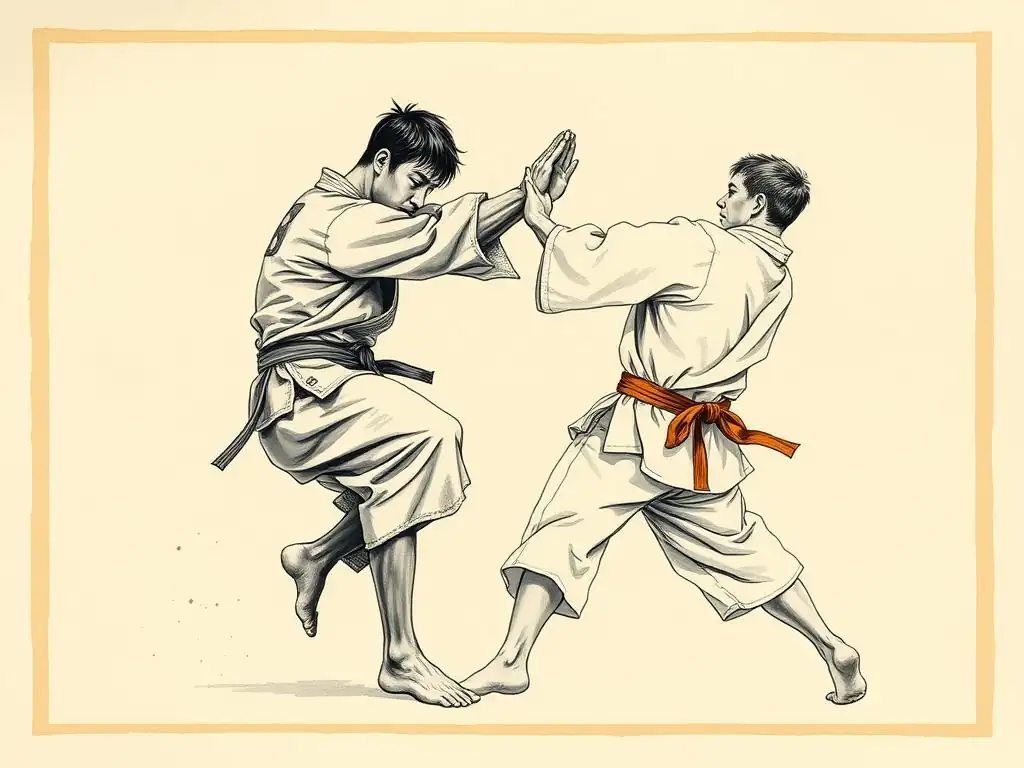
Contrasting Approaches to Grappling: Judo's Emphasis on Technique vs. Wrestling's Power
While both judo and Western wrestling (such as Freestyle and Greco-Roman) are grappling arts involving throws and takedowns, they have distinct approaches rooted in their origins and objectives. Judo, stemming from Japanese Jujutsu, traditionally emphasizes throws designed to take an opponent directly to their back for an ippon (instant win) or to transition into ground control or submission. The goal is often a decisive throw or a pin/submission on the ground. Technique, leverage, and timing are paramount in judo's throwing game.
Western wrestling, particularly folkstyle wrestling common in the US high schools and colleges, often focuses on securing control and gaining points through takedowns, escapes, reversals, and near falls, with the ultimate goal being a pin (holding the opponent's shoulders to the mat). While technique is vital, wrestling can sometimes place a greater emphasis on physical power, endurance, and aggressive control from the outset.
This contrast in focus – judo's pursuit of the decisive throw or submission versus wrestling's points-based control and pin – represents a fundamental difference in their grappling philosophies, shaping how judo impacted perceptions when compared to familiar Western forms.
The Influence of Judo on Western Wrestling Techniques
Despite their differences, there has been a notable cross-pollination of techniques between judo and Western wrestling, particularly after judo gained international prominence. Western wrestlers, exposed to judo through international competitions and increasing availability of training, began to recognize the effectiveness of certain judo throws and grips. While wrestling has its own rich repertoire of takedowns (like double-leg and single-leg shots), judo offers powerful standing techniques that can complement a wrestler's arsenal.
The low stances and powerful hip throws characteristic of judo, such as uchi mata (inner thigh throw) and harai goshi (sweeping hip throw), have been studied and adapted by wrestlers. Similarly, judo's emphasis on grip fighting ( kumikata) to control an opponent's posture and movement has influenced wrestlers looking to gain an advantage before attempting a takedown. This exchange highlights how judo's techniques were recognized for their effectiveness, leading to a practical impact on perceptions within the Western grappling community itself.
Examples of Judo Techniques Adopted by Western Wrestlers: Throws and Groundwork
Several judo techniques have found their way into the repertoire of Western wrestlers. The seoi nage (shoulder throw) is a classic judo technique where the practitioner turns their back to the opponent and throws them over their shoulder. Variations of this throw, often adapted slightly for wrestling rules and stances, are used effectively by wrestlers to take opponents down. Another example is the osoto gari (major outer reaping), a powerful leg sweep that disrupts balance and takes the opponent to the mat.
On the ground, while wrestling rules differ significantly from judo newaza (ground techniques), some judo principles of control and positioning have been influential. Judo's systematic approach to pinning and transitioning between positions offers insights valuable to wrestlers aiming to maintain control or secure a pin. Although submissions are not allowed in most forms of Western wrestling, the control elements taught in judo ground fighting can be adapted. The adoption and adaptation of these techniques by wrestlers demonstrate the practical value of judo, further solidifying how judo impacted perceptions of effective grappling methods in the West.
The Legacy of the 1964 Tokyo Olympics for Judo
Solidifying Judo's Place as a Global Sport
The most significant and lasting legacy of the 1964 Tokyo Olympics for judo was its solidification as a truly global sport. Its debut on the world's largest athletic stage instantly elevated its status from a relatively niche martial art to an internationally recognized competitive sport. The Olympic platform provided unparalleled exposure, demonstrating judo's structure, excitement, and universal appeal to a vast audience worldwide.
Following 1964, judo was included in subsequent Summer Olympics (with the exception of 1968), cementing its place in the international sporting calendar. This consistent inclusion ensured continued media coverage, investment in national judo programs, and the establishment of international competition circuits. The Olympic recognition was instrumental in changing Western perceptions of judo from an exotic practice to a respected athletic discipline pursued by athletes in countries across every continent.
Inspiring Future Generations of Judo Practitioners Worldwide
The spectacle of the 1964 judo competition and the subsequent inclusion of judo in the Olympics inspired countless individuals across the West and globally to take up the sport. Seeing athletes compete with such skill, discipline, and spirit motivated people of all ages to seek out judo dojos. The stories of Olympic champions and the visibility of the sport provided aspirational figures for aspiring martial artists.
This surge of interest led to the establishment of new judo clubs, the growth of national judo federations, and increased participation rates that have continued for decades. The foundational impact on Western perceptions created in 1964 fueled generations of judoka, many of whom would go on to become instructors, competitors, and promoters of the art themselves, ensuring judo's continued growth and development outside of Japan.
Judo's Continued Evolution and Adaptation in the West
Since its Olympic debut, judo in the West has continued to evolve and adapt, influenced by both international competition standards and local cultural contexts. While maintaining the core principles and techniques established by Jigoro Kano, Western judo has seen developments in training methodologies, coaching, and sports science applied to the art. The focus on high-level competition has driven technical refinement and physical conditioning.
Furthermore, judo's principles and techniques have continued to influence related fields, from self-defense instruction to the ever-evolving landscape of mixed martial arts. The legacy of 1964 is not just in the increased numbers of practitioners but in the dynamic way judo has integrated into the Western athletic and martial arts landscape. This ongoing adaptation demonstrates the enduring relevance and profound impact on Western perceptions that began with its historic Olympic introduction.
Frequently Asked Questions
What was the significance of Judo's inclusion in the 1964 Tokyo Olympics?
Judo's inclusion marked its global recognition and legitimization as a modern sport. It also served as a powerful symbol of Japan's post-war recovery and cultural influence.
How did the 1964 Tokyo Olympics affect Western perceptions of Judo?
The Olympics exposed Judo to a vast Western audience, shattering previous stereotypes and showcasing its skill, discipline, and strategic depth. It helped move Judo beyond just a perceived form of self-defense.
Before the 1964 Olympics, what were some common Western misconceptions about Judo?
Many viewed Judo as simply a brutal fighting style or a less effective version of other martial arts. The Olympics helped to dispel these misconceptions by showing the art's nuanced techniques.
What specific aspects of Judo displayed during the 1964 Olympics contributed to shifting Western opinions?
The technical prowess of Judo practitioners, the clear rules of competition, and the emphasis on ippon (decisive throw) demonstrated Judo's skillful and strategic nature. This was a stark contrast to prior negative perceptions.
Did the 1964 Olympics lead to increased participation in Judo in Western countries?
Yes, the Olympic debut significantly boosted Judo's popularity in Western countries. It inspired many to begin training and led to the formation of new Judo clubs and organizations.
Final Reflection: Judo's Enduring Legacy
The 1964 Tokyo Olympics marked a pivotal moment, not just for Japan, but for the global understanding of Judo. Judo's Olympic debut irrevocably altered Western perceptions, moving it from a niche martial art to a recognized and respected international sport. The Games showcased Judo's discipline, skill, and philosophy, challenging preconceived notions and paving the way for its widespread adoption and appreciation.
The influence of Judo extends far beyond the sporting arena. It has subtly shaped cultural understanding and fostered a greater appreciation for Japanese values like respect, discipline, and perseverance. Witnessing Judo's elegance and power firsthand, both in the Olympics and through subsequent exposure, has profoundly impacted how the West views Japanese culture and martial arts in general. Judo is more than just a sport; it's a way of life.
- Jigoro Kano, Judo's founder. This philosophy continues to resonate, inspiring individuals to embrace its principles of self-improvement and mutual welfare.
As we reflect on the legacy of the 1964 Tokyo Olympics and Judo's transformative impact, let us consider how we can apply its core tenets to our own lives. Embrace the spirit of continuous improvement, strive for mutual respect in all your interactions, and remember that true strength lies not just in physical prowess, but in the cultivation of character. The mat may be where Judo is practiced, but its lessons can be lived every day.
Ignite Your Judo Journey: Embrace the Spirit of '64!
Thank you for diving into the history of Judo's Olympic debut and its profound impact! Now that you've discovered the roots, it's time to take the next step and connect with the art form itself.
- Find a local Judo dojo and attend a trial class. Experience the discipline and dynamism firsthand!
- Explore documentaries and historical footage from the 1964 Tokyo Olympics to deepen your understanding of Judo's global influence.
- Share this article with fellow martial arts enthusiasts to spark discussions about the evolution and cultural impact of Judo.
What aspect of Judo's Olympic debut inspires you the most to begin (or continue) your training?