
Exploring Spinal Manipulations in Catch Wrestling: Techniques & Risks


Welcome to Martial Arts Mastery, your ultimate resource for exploring the depth and breadth of global martial arts. Delve into the intricate world of grappling with us as we unravel the techniques and potential pitfalls of a controversial practice. Are you ready to explore the Spinal manipulation catch wrestling risks? Join us as we dissect this complex aspect of catch wrestling, examining both its efficacy and the crucial safety considerations involved. Prepare to expand your understanding and approach this powerful art with informed awareness.
- Body Locks and Compression Holds
-
Frequently Asked Questions
- What is spinal manipulation in the context of Catch Wrestling?
- What are the potential risks associated with spinal manipulation in Catch Wrestling?
- Is formal training required to safely practice spinal manipulations in Catch Wrestling?
- How does the history of Catch Wrestling influence the use of spinal manipulations?
- What are some alternatives to spinal manipulation for achieving similar outcomes in Catch Wrestling?
- Final Reflection: Embracing Calculated Risks in Catch Wrestling
- Unleash Your Grip: Master the Art of Control!
Body Locks and Compression Holds
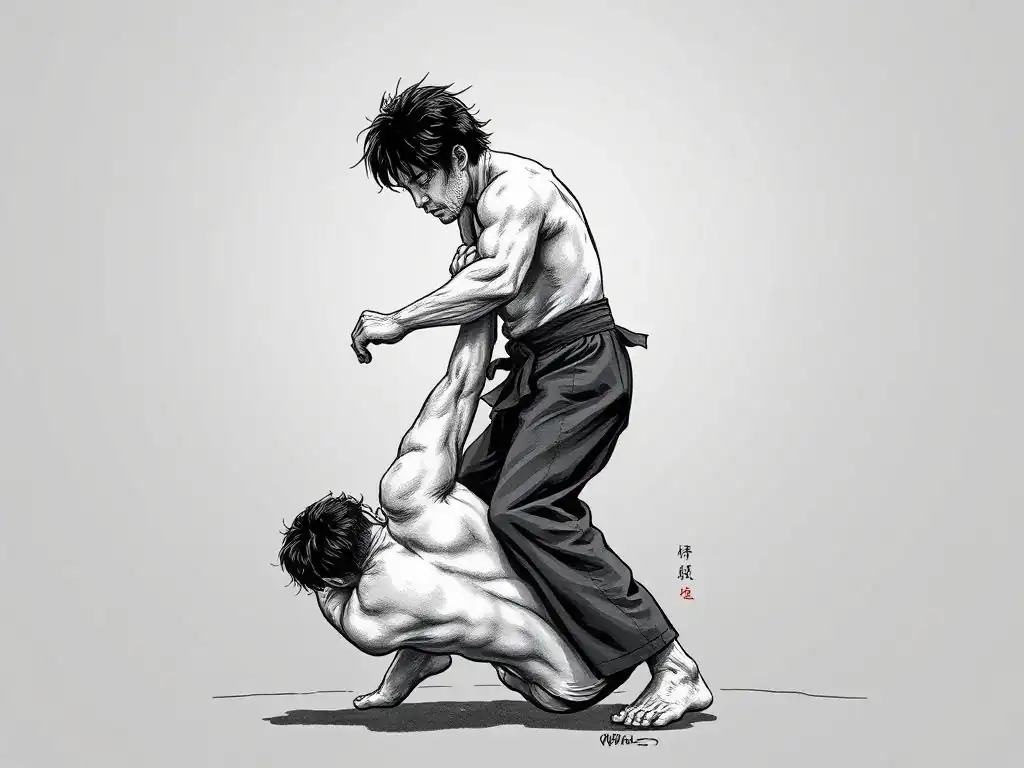
The Body Scissors and Rib Compression
Body scissors and rib compression are foundational elements in catch wrestling, often employed to control an opponent's lower body and torso, restricting movement and setting up submissions. The body scissors involves wrapping one's legs around the opponent's torso, creating immense pressure and often targeting the ribs, diaphragm, and sometimes the lower back.
This technique is not typically a direct joint lock, but rather a powerful compression that aims to force a submission through pain or restrict breathing, making escape difficult and tiring for the opponent. Variations exist, including different leg placements (e.g., locking ankles, crossing feet, or simply squeezing) and accompanying upper body control to maximize the pressure.
The primary goal of rib compression, whether through body scissors or specific upper body holds like a side body lock, is to inflict pain and discomfort by squeezing the rib cage. This can lead to difficulty breathing, forcing a tap due to the inability to take a full breath or the intense pressure on the ribs. While seemingly less dangerous than joint locks, the force applied can be significant.
Potential injuries include bruised ribs, fractured ribs (especially in individuals with lower bone density or if force is applied incorrectly), and damage to the cartilage connecting the ribs to the sternum. Recovery from a simple bruised rib can take several weeks, while a fracture might require 6-8 weeks or more, impacting training significantly.
The Twister and Spinal Lock
The Twister, often referred to as a type of spinal lock, is a controversial submission hold in grappling sports, including catch wrestling. It is a powerful form of spinal manipulation that involves controlling the opponent's head and one leg simultaneously, then rotating the head away from the side of the controlled leg while pulling the leg upwards. This creates a twisting force along the opponent's spine, specifically targeting the thoracic and lumbar regions.
The technique leverages the natural flexibility (or lack thereof) of the spine to create excruciating pain and force a tap, or worse, cause injury. While popularized in recent decades, the underlying principles of spinal manipulation have roots in various historical grappling arts.
The risks associated with the Twister and similar spinal locks are among the most severe in grappling, directly contributing to spinal manipulation catch wrestling risks. Unlike joint locks that target limbs, spinal locks directly impact the central nervous system's protective structure. Applying excessive or sudden force can lead to herniated discs, vertebral fractures, ligamentous tears in the spine, and severe nerve damage.
In extreme cases, improper application or refusal to tap can result in permanent paralysis or even fatality due to spinal cord injury. The unpredictable nature of spinal flexibility and the potential for catastrophic outcome make this technique one of the highest spinal manipulation catch wrestling risks and often restricted or banned in many competitive formats due to the inherent danger.
Frequently Asked Questions
What is spinal manipulation in the context of Catch Wrestling?
Spinal manipulation in Catch Wrestling involves techniques that target the vertebral column to gain control, create pain, or force a submission. It's a subset of joint manipulation, aiming to affect the opponent's spine.
What are the potential risks associated with spinal manipulation in Catch Wrestling?
The risks include nerve damage, spinal injury, and potential paralysis if performed incorrectly or without proper training. These techniques can be incredibly dangerous.
Is formal training required to safely practice spinal manipulations in Catch Wrestling?
Absolutely. Extensive and qualified instruction is crucial to understand the biomechanics, proper application, and risk mitigation. Never attempt these techniques without expert guidance.
How does the history of Catch Wrestling influence the use of spinal manipulations?
Catch Wrestling's history, rooted in submission grappling, has led to the development of various spinal manipulation techniques. However, its evolution also highlights the need for responsible training and awareness of the potential dangers.
What are some alternatives to spinal manipulation for achieving similar outcomes in Catch Wrestling?
Alternatives include joint locks, chokes, and positional control. These methods can be safer while still allowing for effective submission and control.
Final Reflection: Embracing Calculated Risks in Catch Wrestling
The exploration of spinal manipulations within catch wrestling, while seemingly niche, highlights a broader truth: the pursuit of mastery often necessitates navigating inherent risks. This article has delved into the techniques and, crucially, the potential dangers associated with these maneuvers, underscoring the importance of informed practice and responsible application. The knowledge shared here serves not only to educate practitioners but also to promote a safer, more sustainable approach to this demanding art.
This topic has profoundly influenced my understanding of the delicate balance between ambition and caution in physical disciplines. The inherent vulnerability of the spine demands respect and a deep understanding of anatomy and biomechanics. The only way to do great work is to love what you do,
a sentiment often attributed to Steve Jobs, resonates deeply here. Loving the art of catch wrestling requires a commitment to understanding its complexities, including its potential pitfalls, and acting with unwavering responsibility.
Now, I invite you to reflect on your own pursuits, whether in catch wrestling or elsewhere. Are you truly aware of the risks involved? Are you taking the necessary precautions to mitigate them? Embrace the challenge of pushing your boundaries, but always do so with a clear understanding of the potential consequences and a commitment to prioritizing safety and well-being. Let the lessons learned here inspire you to approach your passions with both fervor and prudence, ensuring a long and fulfilling journey.
Unleash Your Grip: Master the Art of Control!
Thanks for delving into the world of spinal manipulations in catch wrestling! We hope you’ve gained valuable insights into these powerful techniques and their inherent risks. Now, it's time to put that knowledge into action!
- Commit to safe practice: Dedicate time under qualified instruction to learn proper techniques and risk mitigation. This is paramount to avoid injury to yourself and your training partners.
- Explore related grappling styles: Dive deeper into styles like sambo or luta livre, which also incorporate spinal manipulations. Understanding these connections enriches your skillset.
- Share your insights with the community: Discuss your thoughts and experiences with spinal manipulations in catch wrestling on forums or social media to promote responsible training.
What specific spinal manipulation technique are you most eager to safely explore under proper guidance, and why?