
Deciphering the Names of Shaolin Forms: Symbolism and Meaning

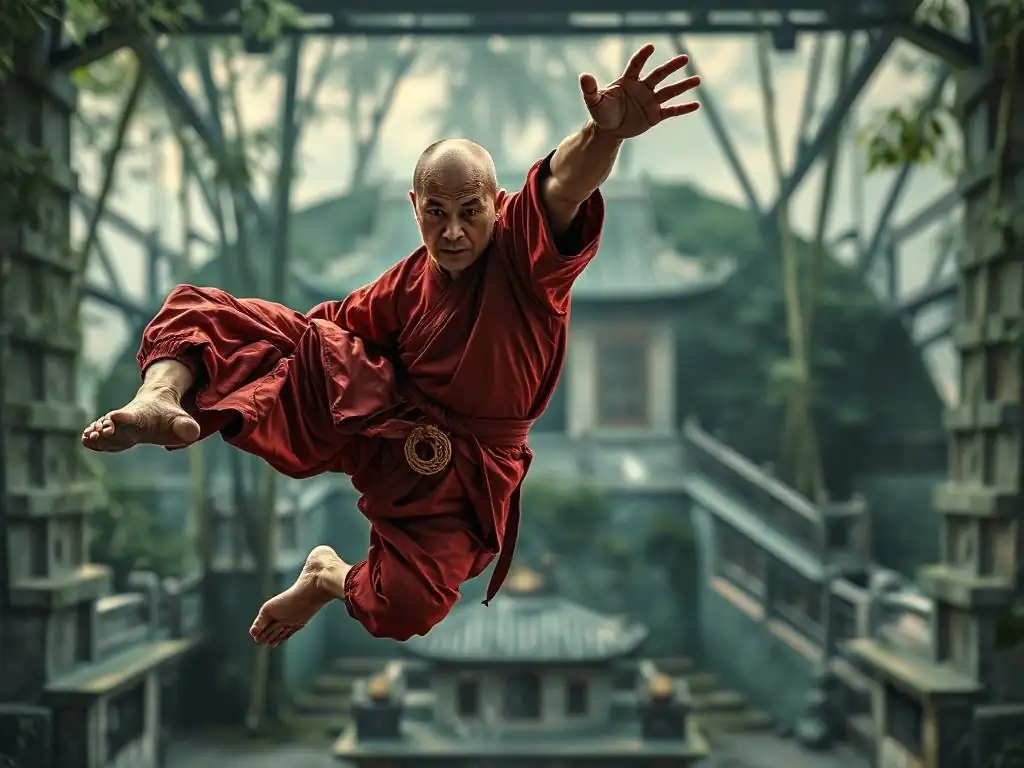
Welcome to Martial Arts Mastery!
Delve into the rich tapestry of martial arts, where every movement tells a story. Here, we explore the historical roots, intricate techniques, and profound philosophies that shape these ancient disciplines. Today, we unravel a fascinating aspect of Shaolin Kung Fu: the symbolism embedded within the names of Shaolin forms. But what secrets do these names truly hold, and how do they illuminate the deeper meaning of each posture? Join us as we decipher the hidden language and uncover the profound wisdom woven into the very fabric of Shaolin training.
- Understanding Shaolin Form Names: An Introduction to Symbolism in Kung Fu
- The Language of Shaolin: Exploring the Linguistic Roots
- Symbolism in Shaolin Form Names: Unveiling Hidden Meanings
-
Examples of Shaolin Form Names and Their Detailed Interpretations
- Analyzing the Name of Xiao Hong Quan (Small Red Fist): Detailed Explanation of the Name's Symbolism
- Deconstructing the Name of Luohan Quan (Arhat Fist): Detailed Explanation of the Name's Symbolism
- Exploring the Origins of Mei Hua Quan (Plum Blossom Fist)'s Name: Detailed Explanation of the Name's Symbolism
- Shaolin Form Names: More Than Just Labels
- Conclusion: The Enduring Significance of Shaolin Form Names and Their Symbolism
-
Frequently Asked Questions
- What is the significance of Shaolin form names?
- Do the names of Shaolin forms reveal clues about their techniques?
- How does understanding the symbolism in Shaolin form names enhance training?
- Are there common themes or symbols found across different Shaolin form names?
- Where can I learn more about the specific meanings behind individual Shaolin form names?
- Final Reflection: Unveiling the Essence of Shaolin
- Unlock the Secrets: Step Into Shaolin's Legacy!
Understanding Shaolin Form Names: An Introduction to Symbolism in Kung Fu
The Importance of Names in Shaolin Kung Fu
The names assigned to Shaolin Kung Fu forms, known as Taolu, are far more than mere labels for sequences of movements. They serve as vital mnemonic devices, encapsulating the essence, purpose, and underlying principles of the form. Historically, in the absence of widespread written manuals, these names were crucial for the transmission of knowledge from master to disciple. A name like "Small Red Fist" or "Plum Blossom Fist" immediately conjures images and concepts that guide the practitioner in understanding the form's characteristics, intended applications, and even its historical context or lineage.
Moreover, the names imbue each form with a unique identity and a connection to the rich cultural and philosophical tapestry of China. Understanding the symbolism behind Shaolin form names is fundamental to grasping the depth of the martial art. It moves beyond rote memorization of movements, encouraging practitioners to delve into the form's spirit, strategic approach, and the natural principles it emulates, whether those are derived from animal movements, philosophical concepts, or historical events. This deepens the learning process and fosters a more profound connection to the art form.
Shaolin Forms (Taolu) and Their Significance
Shaolin Taolu, or forms, are prearranged sequences of techniques, including strikes, blocks, stances, footwork, and sometimes throws or joint locks, performed in a continuous flow. These forms are the foundational elements of Shaolin Kung Fu training, serving multiple critical functions. Primarily, they are repositories of techniques and combat strategies, preserving the accumulated knowledge of generations of practitioners. By practicing forms, students learn the fundamental movements and combinations that are then applied in sparring and self-defense.
Beyond technique, Shaolin forms cultivate crucial physical attributes such as strength, flexibility, balance, coordination, and stamina. They also train mental discipline, focus, and body control. The significance of Shaolin form names symbolism lies in how it informs the way a form is practiced. For instance, a form named after a tiger suggests power and explosive force, while one named after a crane implies lightness and evasiveness. Deciphering the symbolism provides insight into the form's intended energy, rhythm, and application, making the practice more effective and meaningful.
The Language of Shaolin: Exploring the Linguistic Roots
Classical Chinese and the Interpretation of Form Names
The names of traditional Shaolin forms are typically derived from classical Chinese, a language rich in nuance, metaphor, and historical context. Unlike modern Mandarin, classical Chinese often uses single characters packed with complex meanings that can vary depending on context and combination. Interpreting Shaolin form names symbolism requires a basic understanding of these characters and the cultural concepts they represent within the framework of ancient Chinese thought, particularly as it relates to martial arts, nature, philosophy, and spirituality.
The precise meaning of a form name can sometimes be debated, as classical Chinese allows for multiple layers of interpretation. For example, a character might represent a physical action, a philosophical concept, or an animal characteristic simultaneously. This complexity is part of the richness of Shaolin form names symbolism, encouraging deeper study and contemplation. Translating these names directly into English often loses much of this subtlety, highlighting the importance of understanding the original Chinese characters and their associated cultural and martial meanings.
Common Terms and Characters in Shaolin Form Nomenclature
Several characters and terms appear frequently in the names of Shaolin forms, providing clues to their nature. The term Quan (拳), meaning "fist," is ubiquitous, indicating a bare-hand form. Gun (棍) denotes a staff form, and Dao (刀) refers to a broadsword form. Characters representing animals like Hu (虎 - Tiger), Long (龙 - Dragon), He (鹤 - Crane), Bao (豹 - Leopard), and She (蛇 - Snake) are common, signifying forms that emulate the characteristics of these creatures.
Other frequent terms relate to numbers, like Shi Ba (十八 - Eighteen), as seen in Shi Ba Luohan Quan (十八罗汉拳 - Eighteen Arhat Fist). Geographical references or historical figures are also sometimes incorporated. Understanding these common components is the first step in deciphering Shaolin form names symbolism. For example, recognizing Luohan (罗汉 - Arhat) immediately links a form to Buddhist imagery and the legendary protectors of the Dharma, suggesting a connection to spiritual practice and formidable martial skill.
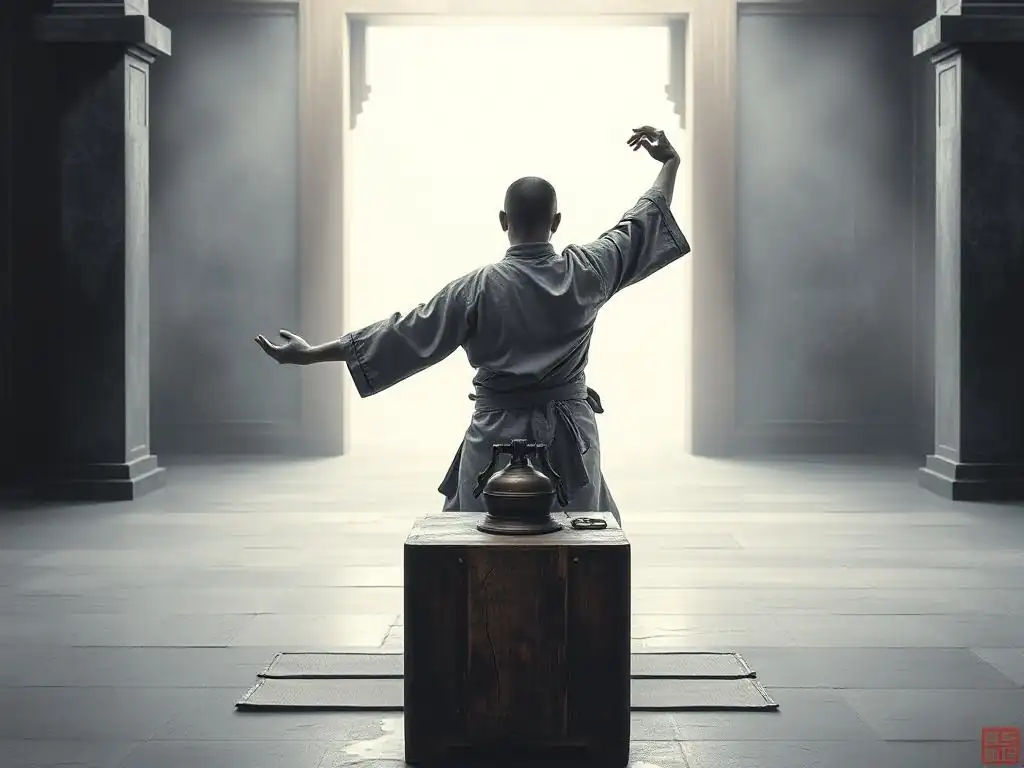
Animal Symbolism in Shaolin Forms: Tiger, Dragon, Crane, Leopard, and Snake
The Five Animal Styles are perhaps the most famous examples of animal symbolism in Shaolin Kung Fu, representing core principles and techniques. While forms bearing these names don't always solely belong to a single animal style (many forms blend elements), their names highlight the dominant characteristics they aim to embody. Understanding this animal symbolism is crucial to appreciating Shaolin form names symbolism.
The Tiger Form: Power and Ferocity
Forms named after the Tiger ( Hu Quan - 虎拳) emphasize raw power, explosive force, and aggressive attacks. The movements are typically rooted and powerful, focusing on striking techniques that generate significant impact. The symbolism reflects the tiger's predatory nature, its pouncing attacks, and its immense physical strength. Practitioners training Tiger forms focus on developing strong stances, powerful strikes (especially claw-like hand shapes and palm strikes), and the ability to generate force from the ground up. The energy of the form is direct, fierce, and unyielding, mirroring the tiger's dominance in the animal kingdom.
The Tiger's ferocity is not just physical but also mental. Training these forms helps cultivate courage, determination, and an unwavering spirit. The techniques often target vital points and aim to overwhelm an opponent with sheer power. Historical accounts and oral traditions often link Tiger forms to the development of bone strength and muscular power, making them foundational for developing a robust physical structure capable of delivering devastating force.
The Dragon Form: Spirituality and Fluidity
The Dragon ( Long Quan - 龙拳) holds a unique place, representing not a physical creature but a mythical symbol of power, spirituality, and change. Dragon forms emphasize fluid, continuous movements, deceptive footwork, and the ability to adapt and control space. The symbolism relates to the dragon's association with clouds, water, and the heavens – elements that are formless, ever-changing, and pervasive. Techniques often involve circular motions, joint locks, throws, and strikes that target pressure points.
Practicing Dragon forms focuses on developing internal energy (Qi), flexibility, and seamless transitions between techniques. The goal is to move like the dragon, unpredictable and omnipresent. The fluidity allows the practitioner to evade attacks while simultaneously setting up opportunities for counter-attacks. The spiritual aspect of the dragon connects the form to higher principles, emphasizing mastery over oneself and the environment, rather than just brute force.
The Crane Form: Grace and Balance
Crane forms ( He Quan - 鹤拳) embody grace, balance, and evasiveness. Inspired by the white crane, these forms feature upright postures, precise balance on one leg, and techniques that utilize the arms like wings and the fingers or fist like a beak. The symbolism highlights the crane's ability to stand serenely, its quick and precise striking movements, and its capacity to evade predators by taking flight or using its long legs to strike at a distance.
Training Crane forms develops exceptional balance, agility, and precision strikes, particularly to vulnerable areas like the eyes and throat. The focus is on efficient movement, conserving energy, and striking with speed and accuracy from a stable, yet mobile, base. Evasion is a key strategy, using footwork and body angling to avoid incoming attacks before counter-striking. The grace implied by the crane's movement also speaks to a relaxed tension and fluid coordination necessary for executing techniques effectively.
The Leopard Form: Speed and Agility
The Leopard form ( Bao Quan - 豹拳) is characterized by speed, agility, and rapid, multiple strikes. The symbolism reflects the leopard's ability to stalk prey stealthily and then unleash a burst of incredible speed and power in a flurry of attacks. Leopard techniques often involve short, choppy movements, rapid-fire punches, and low stances that facilitate explosive bursts of movement.
Practitioners of Leopard forms focus on developing fast twitch muscle fibers, explosive power over short distances, and the ability to overwhelm an opponent with a barrage of strikes. The emphasis is on being unpredictable and relentless, striking multiple times before the opponent can react effectively. This style is often seen as developing practical, aggressive combat skills focused on overwhelming an opponent quickly.
The Snake Form: Flexibility and Evasiveness
Snake forms ( She Quan - 蛇拳) are known for their flexibility, fluid movements, and striking with precision to vital points. The symbolism is drawn from the snake's ability to coil, strike swiftly from unexpected angles, and move silently and evasively. Techniques often involve undulating body movements, finger strikes (like a snake's fangs), and strikes that target soft tissue and pressure points.
Training Snake forms cultivates flexibility, body control, and the ability to generate power through whipping or coiling motions. The focus is on subtle movements, evading attacks, and striking with speed and accuracy at vulnerable targets. The evasiveness of the snake is a key principle, allowing the practitioner to slip away from danger before delivering a precise counter-attack. This style emphasizes internal power and the ability to strike effectively with minimal external effort.
Philosophical Concepts Embedded in Shaolin Form Names
Beyond animal characteristics, Shaolin form names symbolism often draws heavily from the philosophical traditions that influenced the monastery, particularly Buddhism and Taoism. These concepts are not just abstract ideas but are meant to inform the practitioner's approach to training, combat, and life itself.
The Influence of Buddhism and Chan (Zen)
Buddhism, specifically the Chan (Zen) school, is central to Shaolin philosophy. Concepts like mindfulness, emptiness (Sunyata), compassion, and the pursuit of enlightenment subtly permeate the martial arts. Form names might reference Buddhist figures ( Luohan - Arhats) or concepts, suggesting a connection between physical practice and spiritual development. The disciplined, repetitive nature of form practice itself can be seen as a form of moving meditation, cultivating focus and presence, key elements of Chan practice.
The concept of "emptiness" in Chan Buddhism, for example, can be interpreted in martial arts as not being fixed or rigid, but being adaptable and responsive to the opponent's actions. A form's name might subtly hint at this adaptability. The famous Luohan Quan (Arhat Fist) forms, for instance, are associated with the 18 Arhats, enlightened disciples of the Buddha known for their wisdom and power, suggesting that the form embodies both spiritual attainment and formidable martial skill. This aspect of Shaolin form names symbolism highlights the art as a path to self-mastery, not just combat proficiency.
Taoist Principles in Shaolin Kung Fu and Form Names
Taoism, with its emphasis on natural harmony, the flow of Qi (life energy), Yin and Yang, and effortless action (Wu Wei), also significantly influenced Shaolin Kung Fu. While Shaolin is a Buddhist monastery, historical interaction and shared cultural context led to the integration of Taoist ideas into martial theory and practice. The concept of generating power from the coordinated movement of the entire body, for example, aligns with Taoist principles of harnessing natural energy flow.
Form names or movements might subtly reference Yin/Yang principles, such as the interplay of hard and soft techniques, or fast and slow movements within a sequence. The idea of Wu Wei (无为), often translated as "non-action" or "effortless action," can be seen in the ideal execution of techniques – powerful yet relaxed, efficient rather than forced. While less overtly referenced in specific form names compared to animal or Buddhist terms, Taoist principles provide a crucial layer of understanding to the underlying philosophy and body mechanics embedded within many Shaolin forms, adding another dimension to Shaolin form names symbolism.
Number Symbolism in Shaolin Forms: Eighteen Arhats Fist
Numbers often carry symbolic weight in Chinese culture, and this is reflected in Shaolin form names. The most prominent example is the number eighteen, featured in Shi Ba Luohan Quan (十八罗汉拳 - Eighteen Arhat Fist). The number eighteen is significant in Buddhism, often associated with the 18 Arhats, the guardians of the Dharma. These forms are among the oldest and most fundamental in the Shaolin curriculum, believed to have been developed early in the monastery's history, possibly even linked to Bodhidharma himself in legend (though historical evidence for this direct link is scarce).
The symbolism of "Eighteen" here represents completeness, a full set of foundational techniques, and a connection to these powerful, enlightened figures. It suggests that mastering these forms provides a comprehensive basis in Shaolin combat. Other numbers, like Xiao (小 - Small) or Da (大 - Large) in names like Xiao Hong Quan (小洪拳 - Small Red Fist) and Da Hong Quan (大洪拳 - Large Red Fist), might indicate variations, difficulty levels, or the relative length/complexity of the form, but "eighteen" specifically carries strong cultural and religious weight within the context of Shaolin form names symbolism.
Examples of Shaolin Form Names and Their Detailed Interpretations
Analyzing specific form names provides concrete examples of how symbolism is embedded within Shaolin Taolu. Let's examine a few well-known forms to illustrate the process of deciphering Shaolin form names symbolism.
Analyzing the Name of Xiao Hong Quan (Small Red Fist): Detailed Explanation of the Name's Symbolism
Xiao Hong Quan (小洪拳) is one of the most fundamental and widely practiced forms in the traditional Shaolin curriculum. Its name, "Small Red Fist," is seemingly simple but carries layers of meaning related to its characteristics and significance.
The Meaning of "Xiao" (Small) in Xiao Hong Quan
The character Xiao (小), meaning "small," in Xiao Hong Quan does not necessarily refer to the physical size of the movements, although the form is relatively compact compared to some larger, more expansive forms. Instead, "Small" primarily signifies that it is a foundational or introductory form. It is often one of the first forms taught to new students, providing the basic stances, footwork, and fundamental techniques upon which more advanced forms are built. It is "small" in the sense of being the starting point or the essential core.
Furthermore, "Small" can imply efficiency and compactness. The form is relatively short and utilizes direct, economical movements. This interpretation aligns with the principle of minimizing wasted motion in combat. So, while it's an entry-level form, "Small" also hints at the efficiency and directness of its techniques, making it a vital building block for understanding more complex Shaolin form names symbolism in larger sets.
The Significance of "Hong" (Red) in Xiao Hong Quan
The character Hong (洪 or 洪), meaning "red" or sometimes associated with "flood" or "vast," is the most debated part of the name. "Red" (红) is a highly auspicious color in Chinese culture, symbolizing good fortune, vitality, energy, and prosperity. In the context of martial arts, "Red" could symbolize the vital energy ( Qi) cultivated through practice, the passion and spirit of the practitioner, or the auspicious beginning of one's martial journey.
Alternatively, if Hong refers to "flood" (洪), it could symbolize the power generated by the coordinated body, like a rushing river, or the overwhelming nature of the techniques when applied. Some historical accounts suggest a connection to the "Hongmen" (洪门) secret society, which had ties to martial arts and anti-Qing sentiment, though this is less directly related to the form's technical content. Regardless of the exact interpretation of "Hong," its presence alongside "Small" indicates a foundational form imbued with significant cultural or martial energy, underscoring the depth of Shaolin form names symbolism even in basic sets.
Deconstructing the Name of Luohan Quan (Arhat Fist): Detailed Explanation of the Name's Symbolism
Luohan Quan (罗汉拳), or Arhat Fist, refers to a family of forms associated with the Arhats, enlightened disciples of the Buddha. These forms are among the oldest within the Shaolin tradition and are highly respected for their depth and effectiveness.
The Symbolism of "Luohan" (Arhat) in Luohan Quan
The term Luohan (罗汉) is a transliteration of the Sanskrit word Arhat, meaning one who has attained a high level of spiritual realization, nearing Nirvana. In Mahayana Buddhism, the Arhats are often depicted as powerful protectors of the Dharma, possessing extraordinary abilities, including physical strength. Associating a martial arts form with the Arhats imbues it with spiritual significance and suggests that the form embodies not only formidable physical techniques but also the wisdom, discipline, and inner power associated with these enlightened beings.
The symbolism implies that practicing Luohan Quan is a path to developing both martial prowess and spiritual insight. It suggests that the techniques are not merely physical actions but are infused with the spirit and strength of the Arhats. There are often sets of 18 or 108 Luohan forms or techniques, numbers significant in Buddhism, further reinforcing the spiritual connection within Shaolin form names symbolism.
The Context of "Quan" (Fist) in Luohan Quan
As mentioned earlier, Quan (拳) simply means "fist" and indicates that this is a bare-hand form. In the context of Luohan Quan, "Fist" refers to the comprehensive system of hand techniques, stances, and body movements that constitute the form. It grounds the spiritual symbolism of "Luohan" in the physical reality of martial practice.
While Quan is a common term, its pairing with Luohan elevates it beyond a simple description of technique. It signifies a "Fist" system that is enlightened, powerful, and protective, reflecting the attributes of the Arhats. Thus, the name Luohan Quan encapsulates the duality of Shaolin practice: the rigorous cultivation of physical combat skills ( Quan) pursued within a framework of profound spiritual and philosophical understanding ( Luohan), showcasing the intricate layers of Shaolin form names symbolism.
Exploring the Origins of Mei Hua Quan (Plum Blossom Fist)'s Name: Detailed Explanation of the Name's Symbolism
Mei Hua Quan (梅花拳), or Plum Blossom Fist, is another well-known Shaolin form whose name is rich in natural symbolism. The Plum Blossom ( Mei Hua) is a highly significant symbol in Chinese culture, particularly admired for its ability to bloom beautifully in the harshness of winter.
"Mei Hua" (Plum Blossom) and its Connection to Resilience
The Plum Blossom ( Mei Hua) is a powerful symbol of resilience, perseverance, purity, and hope. It is the first flower to bloom after the cold winter, representing the triumph of life and vitality over hardship. In the context of Mei Hua Quan, this symbolism is profound. It suggests that the practitioner, like the plum blossom, must cultivate inner strength and resilience to overcome adversity, whether in combat or in life. The form's movements might embody this principle through techniques that are sharp, precise, and delivered with unexpected vitality amidst seemingly fluid or yielding movements.
The structure of Mei Hua Quan is sometimes said to be based on the five petals of the plum blossom, perhaps influencing the form's footwork patterns or directional movements, often centered around a core position and branching out in five directions. This geometrical interpretation further links the natural symbol to the martial practice, adding another layer to the Shaolin form names symbolism.
"Quan" (Fist) and its Representation of Kung Fu Principles
Again, Quan (拳) signifies that this is a bare-hand form. However, in Mei Hua Quan, "Fist" represents the martial application of the principles embodied by the Plum Blossom. It's not just any fist technique; it's fist technique infused with resilience, purity, and the ability to flourish under pressure.
The combination of Mei Hua and Quan creates a name that speaks to both the technical content and the spirit of the form. It is a form that trains the body ( Quan) while cultivating the spirit of the Plum Blossom ( Mei Hua) – the ability to endure, adapt, and strike effectively even in challenging circumstances. This blend of natural symbolism and martial terminology is characteristic of the rich Shaolin form names symbolism.
Shaolin Form Names: More Than Just Labels
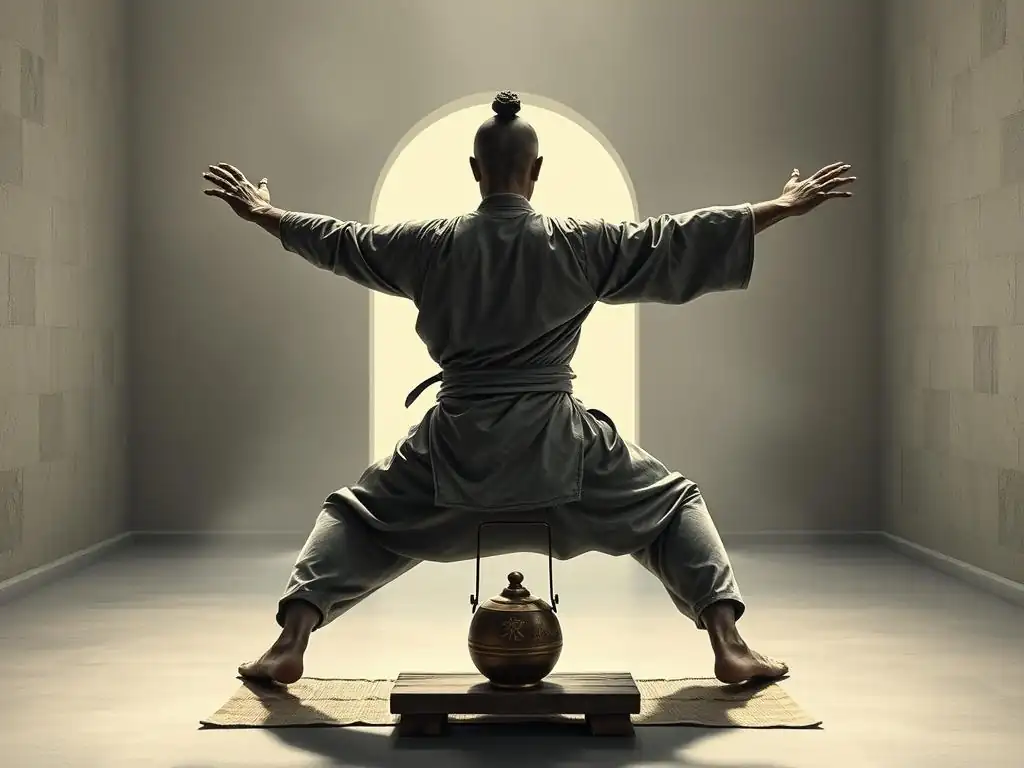
The Role of Form Names in Learning and Understanding Kung Fu
The names of Shaolin forms play a crucial pedagogical role. They provide practitioners with immediate clues about the form's characteristics, helping them to grasp its essence and purpose more quickly than simply memorizing a sequence of numbers or abstract terms. A name like "Tiger" immediately suggests power and aggression, guiding the student on how to execute the movements with the appropriate energy and intent. This connection between name and technique facilitates deeper learning and retention.
Furthermore, understanding Shaolin form names symbolism encourages students to look beyond the superficial execution of movements. It prompts them to inquire about the history, philosophy, and underlying principles of the form, fostering a more holistic understanding of Shaolin Kung Fu. This inquiry transforms practice from a purely physical exercise into an intellectual and spiritual pursuit, aligning with the monastery's historical emphasis on Chan Buddhism. The name becomes a gateway to understanding the complete system.
Preserving the Legacy: The Importance of Accurate Interpretation
Accurate interpretation of Shaolin form names and their symbolism is vital for preserving the integrity and depth of the Shaolin tradition. As forms are passed down through generations and across different lineages, the nuances of names can sometimes be lost or misinterpreted. Ensuring that the traditional meanings are understood helps maintain the connection to the original intent and philosophy behind the forms.
This preservation is not just academic; it directly impacts the quality of training. If a student misunderstands the symbolism of a form name – for instance, viewing "Crane" only in terms of physical balance rather than also including evasiveness and precise striking – their practice will be incomplete. Dedicated research, studying classical Chinese characters, consulting historical texts (where available), and learning from authentic masters are all essential steps in ensuring that the rich Shaolin form names symbolism continues to inform and enrich the practice for future generations.
Conclusion: The Enduring Significance of Shaolin Form Names and Their Symbolism
The names of Shaolin forms are intricate keys that unlock deeper layers of understanding within the art of Shaolin Kung Fu. Far from being arbitrary labels, they are repositories of historical knowledge, philosophical principles, natural observations, and martial strategies. Deciphering Shaolin form names symbolism reveals the profound connections between physical technique, mental discipline, and spiritual cultivation that define the Shaolin tradition.
From the raw power of the Tiger and the fluid spirituality of the Dragon to the resilience of the Plum Blossom and the enlightened strength of the Arhats, the symbolism embedded in these names guides the practitioner, enriches their understanding, and connects them to a lineage spanning over a thousand years. Appreciating the symbolism behind Shaolin form names is essential for anyone seeking to truly master not just the movements, but the spirit and essence of this legendary martial art.
The continued study and accurate interpretation of this symbolism ensure that the legacy of Shaolin Kung Fu remains vibrant and meaningful.
Frequently Asked Questions
What is the significance of Shaolin form names?
Shaolin form names are not arbitrary; they are carefully chosen to reflect the essence of the movements, the philosophical underpinnings of the form, and its intended purpose.
Do the names of Shaolin forms reveal clues about their techniques?
Yes, the names often offer hints about the techniques contained within the form, the animalistic inspirations, or the strategic applications for combat.
How does understanding the symbolism in Shaolin form names enhance training?
Knowing the symbolism allows practitioners to deepen their understanding of the form's purpose, leading to more focused practice and a stronger connection to Shaolin tradition.
Are there common themes or symbols found across different Shaolin form names?
Yes, common themes include animal movements, references to nature, and Buddhist philosophical concepts, all reflecting the Shaolin worldview.
Where can I learn more about the specific meanings behind individual Shaolin form names?
MartialArtsMastery.org provides detailed articles and resources that explore the history, symbolism, and applications of various Shaolin forms.
Final Reflection: Unveiling the Essence of Shaolin
The journey through the names of Shaolin forms reveals more than just labels; it unveils a profound tapestry of philosophical and martial wisdom. This exploration of Shaolin form names symbolism is not merely an academic exercise but a vital connection to the heart of Shaolin's enduring legacy. Understanding the meaning behind each movement, each posture, allows us to transcend the physical and tap into the spiritual core of this ancient practice, making it relevant and powerful even in our modern world.
The impact of Shaolin extends far beyond the walls of the monastery, shaping perceptions of martial arts, discipline, and inner peace worldwide. My own fascination with Shaolin stems from the belief that its principles offer a path to self-discovery and resilience, a timeless antidote to the chaos of modern life. As the saying goes: The true warrior is not one who never falls, but one who rises every time.
This sentiment, deeply embedded in the Shaolin ethos, resonates deeply and continues to inspire countless individuals to strive for self-improvement.
Now, dear reader, consider the power of names, the weight of symbolism, and the potential for transformation that lies within the Shaolin tradition. Let the insights gleaned from this exploration not remain confined to the page. Instead, let them ignite a deeper appreciation for the art, a renewed commitment to your own personal growth, and a conscious effort to embody the principles of Shaolin in your daily life. Embrace the wisdom of the forms, and allow their names to guide you on your own path to strength, balance, and enlightenment.
Unlock the Secrets: Step Into Shaolin's Legacy!
Thank you for exploring the profound world of Shaolin forms with us! We hope this journey into their names and meanings has deepened your appreciation for this ancient martial art. Now, it's time to put that knowledge into action.
Here are a few ways to continue your Shaolin adventure:
- Commit to truly understanding the Yi Jin Jing form by dedicating extra time to its practice this week. Visualize the meaning behind each movement as you perform it.
- Share your favorite Shaolin form and its symbolic meaning with fellow martial arts enthusiasts in our forum at MartialArtsMastery.org!
- Challenge yourself: Try creating your own short Shaolin-inspired sequence, incorporating symbolism that resonates with your personal martial arts journey.
Which Shaolin form’s name and meaning most inspires you, and how will you integrate that inspiration into your practice this week?