The Weight of a Near Submission: How Judges Score Unfinished Business
⚖️ Judging near submission grappling fights is a nuanced art. Discover how martial arts judges weigh the impact of nearly completed holds,…
Read article

Dive into the electrifying world of competitive martial arts, where split-second decisions can spark fierce debate. 🥋⚡ Our expert analysis dissects the most talked-about judging and scoring controversies, from questionable point allocations to game-changing penalties in Karate, Taekwondo, Judo, and MMA. We break down the intricate scoring systems, highlight iconic tournament blunders, and explore how rule interpretations shape champions. Whether you’re a fighter, coach, or passionate fan, gain critical insights into what really happens behind the referee’s table and learn how to navigate the drama with confidence. Stay ahead of the curve with actionable breakdowns and historical context that sharpen your competitive edge. 🏆

⚖️ Judging near submission grappling fights is a nuanced art. Discover how martial arts judges weigh the impact of nearly completed holds,…
Read article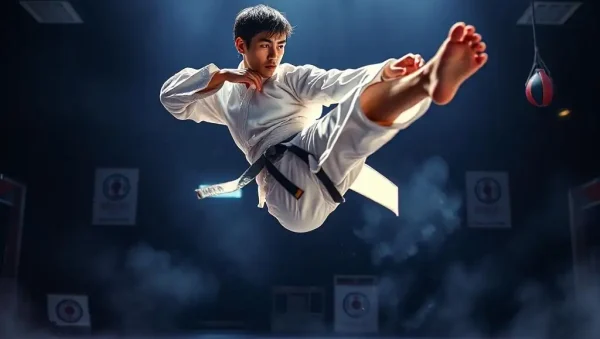
🤔 Taekwondo's embrace of electronic scoring promises unparalleled accuracy, potentially eradicating human bias and ushering in a new era of fair competition.
Read article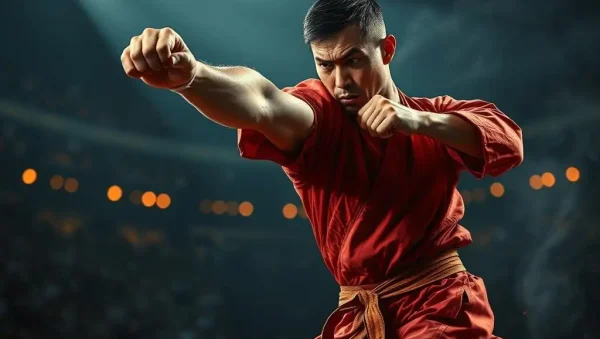
🤔 Ever wonder why judges see different outcomes in martial arts bouts? Explore the fascinating world of mixed scorecard analysis in martial…
Read article
🤔 ParaMartial Arts judging bias sparks heated debate on MartialArtsMastery.org. Explore the unique challenges and subjective interpretations that shape competition outcomes, revealing…
Read article
🤖 Witness the evolution of competition as AI martial arts scoring ushers in an era of unparalleled precision and fairness, revolutionizing how…
Read article
🏆 Unlock the nuances of "Martial arts scoring criteria" with this essential guide. Master judges' perspectives to elevate your understanding and performance,…
Read articleWelcome to the definitive resource on the most debated aspect of combat sports—how victories are determined. At Martial Arts Mastery, we dissect the intricate rules, subjective interpretations, and structural flaws that fuel controversies in judging and scoring across karate, taekwondo, MMA, boxing, and grappling. Whether you’re a competitor, coach, or passionate fan, understanding these systems transforms how you watch and participate in the sport. This subcategory offers deep-dive analyses, historical context, and practical insights into the decisions that spark outrage and admiration worldwide.
Point karate and Olympic taekwondo rely on human judges to award instantaneous scores for controlled, technical strikes. The core controversy lies in the speed versus power dilemma—faster techniques often lack visible impact, while powerful hits may be deemed excessive. Judges must interpret “proper form” within milliseconds, leading to wildly inconsistent scores across different panels and tournaments. This subjectivity is magnified in WKF karate, where a single kick to the head (Ippon) can decide a match, yet the definition of “landing” varies by referee. We analyze specific match footage and tournament data to show how bias, angle of vision, and even crowd noise influence decisions, offering a forensic look at why identical techniques receive different outcomes.
Furthermore, the rise of electronic scoring systems in taekwondo was intended to reduce human error, yet it introduced new controversies—sensor sensitivity, impact threshold calibration, and the “gaming” of rules through frequent, weak kicks. Our analysis explores the balance between technological objectivity and the loss of traditional martial artistry. You’ll learn how competitors adapt their striking styles to please sensors, not judges, and why this shift has polarized fans and purists. This section provides actionable advice for athletes to maximize scoring under ambiguous rules and for referees to minimize subjective calls through better positioning and consistent criteria.
In Brazilian Jiu-Jitsu and submission grappling, scoring is famously complex, rewarding positional dominance, guard passes, and sweep attempts rather than strikes. Controversies frequently arise when a competitor threatens a submission but fails to complete it—points are still awarded for the attempt, but judges often disagree on “effective” aggression. Conversely, wrestling and judo use a points-and-penalty structure that can be gamed through stalling, leading to accusations of “safe” fighting that prioritize point accumulation over finishing the match. We break down the fundamental differences between the 10-point must system (boxing/MMA) and positional points systems, highlighting where they fail to reward true combat effectiveness.
Our deep dive into MMA judging reveals a persistent controversy: the overvaluation of takedowns and top control over striking damage and submission threats. Statistical analysis shows that judges frequently reward “octagon control” even when the grounded fighter absorbs minimal damage but stalls in a dominant position. We examine the evolution of the “effective striking vs. grappling” criteria and propose reforms inspired by other combat sports. For practitioners, we explain how to craft a fight strategy that clearly appeals to judges, such as finishing rounds with visible aggression or choosing positions with obvious scoring potential, reducing reliance on subjective interpretation.
Modern combat sports are increasingly turning to advanced analytics to audit and predict judging outcomes. This section explores how machine learning models can analyze wide-angle footage to track strikes landed, submission attempts, and positional control with greater consistency than human judges. We examine case studies from promotions like the PFL and Bellator, which have experimented with real-time statistic overlays. However, the human element remains central—models cannot factor in the “damage assessment” that judges perceive through impact sounds, fighter reactions, and visible swelling. We weigh the pros and cons of replacing humans with algorithmic scores, referencing sports like gymnastics and figure skating that abandoned purely human scoring for a hybrid system.
For analysts and enthusiasts, we provide practical frameworks to evaluate a judge’s performance over a season, spotting bias toward aggressive fighters, local favorites, or stylistic preferences. You’ll discover how to access public fight data, track scorecards versus community consensus, and identify systemic errors like “round-washing” or “score drift” in live bouts. This analysis empowers athletes and coaches to pre-empt controversial decisions by understanding the statistical tendencies of specific judging panels, making preparation more strategic and less reliant on luck.
Every sport has its defining scandals—the matches where results shook the credibility of the judging system. We revisit infamous decisions like the 2020 UFC bout between Diego Sanchez and Michel Pereira, where the odd scorecard stunned fans, and the 2016 Olympic taekwondo match where a disputed kick flipped a gold medal result. Additionally, we analyze boxing’s “robbery” tradition, from Lewis-Holyfield I to Mayweather-Castillo, dissecting how promoter bias, round scoring quirks, and even hometown judges influence outcomes. Each case is broken down round-by-round, comparing official scorecards against independent fan polls and retrospective expert reviews, highlighting the recurring patterns of controversial scoring.
These historical controversies have catalyzed rule changes, like the adoption of open scoring in some promotions and the introduction of instant replay in mixed martial arts championships. However, we argue that most fixes address symptoms, not the root cause—the inherent imperfection of human judgment under pressure. By studying these iconic failures, we identify common mistakes, such as overemphasizing the final round or ignoring accumulated strikes in favor of single knockdowns. This section not only recalls the drama but offers concrete lessons for viewers to recognize questionable scorecards in real-time and for regulators to implement fail-safes, like neutral officials and immediate review protocols.
International competitions often expose nationalistic tendencies in judging, where panel members unconsciously favor athletes from their own country or allied federations. This is especially pronounced in karate and taekwondo, where national governing bodies nominate officials, leading to accusations of home-team advantage. We analyze studies that statistically prove higher average scores for athletes when a judge shares their nationality or when the event is held in a home country, controlling for skill level. This bias isn’t necessarily malicious—it surfaces as a halo effect, where a fighter’s reputation and uniform colors trigger subconscious preference. We explore cases from the Olympics and Asian Games that resulted in official protests and subsequent disqualifications of prejudiced judges.
For global athletes, understanding this bias is crucial for competitive strategy. We provide tips on how to adopt styles that are less dependent on subjective favor, such as finishing fights early or appealing to universal scoring criteria, like in judo where ippon is unambiguous. Additionally, we advocate for more transparency in judge selection and rotation, including avoiding judges from federations with direct rivalry. This section also educates fans on how to identify potential bias in live broadcasts, such as watching for hesitant flags or suspicious score card timings. By exposing these cultural undercurrents, we hope to push for a more level playing field in international martial arts events.
The most common controversy is inconsistent application of “effective aggression” vs. “technical points.” In striking arts, judges vary on whether a fast, non-damaging punch should outscore a slower, heavier one. In grappling, the dispute centers on whether control time matters more than submission threat. These inconsistencies lead to identical fights receiving wildly different scores across panels.
Judges can reduce bias by using standardized training videos with calibrated answers, blind scoring where possible, and adopting single-elimination panels that rotate officials. Implementing instant replay reviews for controversial exchanges also helps. Additionally, providing judges with real-time statistical overlays (strike counts, control time) can anchor decisions to objective data rather than gut impressions.
Electronic systems eliminate obvious bias like favoritism but introduce sensor calibration issues. For striking, they reward volume and impact thresholds over technical precision, de-emphasizing martial artistry. In grappling, sensors cannot assess positional control or submission depth. The best practice is a hybrid—electronic data as a primary reference, with human judges for subjective damage and intent.
Fighters should aim for clear, visible dominance: finish rounds with definite strikes, secure takedowns with obvious control, and avoid extended stalemates. In grappling, prioritize positions that are easy for judges to recognize, like mount or back mount. Also, avoid leaving the round outcome to interpretation by scoring points in the first two minutes, not just the final minute.
Cultural bias can manifest as lower scores for foreign opponents or inflated scores for locals, especially in subjective categories like kata or sparring precision. Statistical research shows a 5-10% score advantage for home-country athletes. To counter this, governing bodies now use random judge selection, hide fighters’ nationality from officials during review, and allow protests with video evidence.